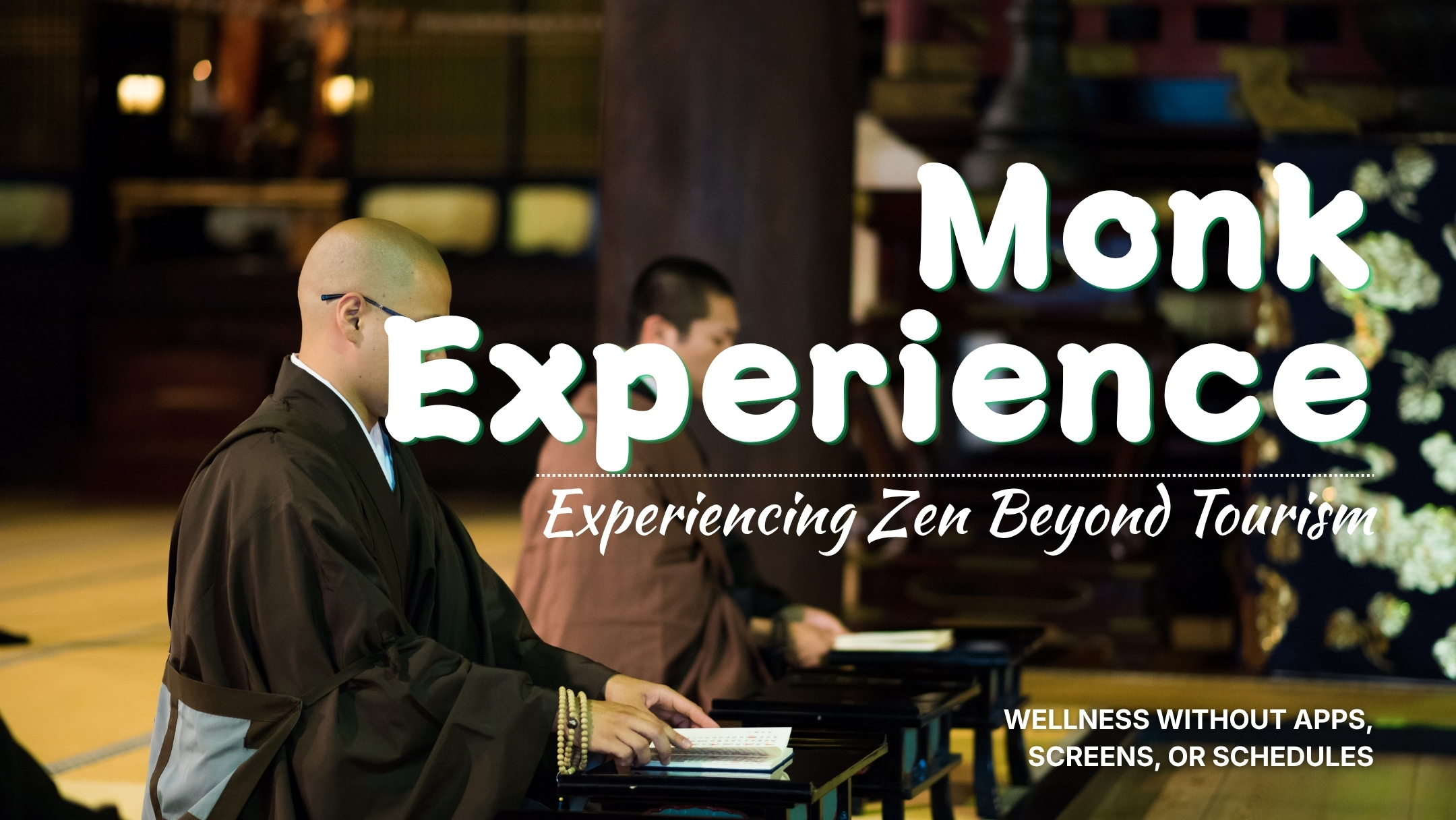
While the term shukubo (temple lodging) is becoming increasingly familiar to international audiences, the way these experiences are valued has begun to shift in recent years. Rather than simply staying overnight at a temple, visitors are increasingly seeking immersive “monk experiences” that allow them to step directly into the daily life of Buddhist practitioners.
A monk experience is not a performance designed for tourists. It is a form of stay that follows the rhythm of monastic life, beginning with early morning prayers and continuing through cleaning duties, quiet meals, Zen meditation, and sutra copying. Participants are not positioned as spectators. Instead, they become part of the same daily routine, sharing the rhythm of life practiced within the temple.
This type of experience is rooted in the unique nature of Japanese temple culture. For centuries, Buddhist temples in Japan have served not only as places of religious training but also as institutions closely connected to local communities. Rather than functioning as isolated spaces reserved exclusively for monks, temples have traditionally existed where everyday life and spiritual practice intersect. As a result, there is a long-standing history of ordinary people being welcomed to spend time within these environments and experience aspects of monastic life firsthand.
The reason this model is attracting growing international attention is clear. Around the world, interest in wellness and mindfulness continues to expand, but so too does a sense of fatigue toward experiences that have become overly commercialized and consumption-driven. Many modern wellness offerings emphasize convenience, comfort, and quick results. Monk experiences stand in sharp contrast. They are quiet, intentionally simple, and make no promises of immediate transformation.
Yet people continue to seek them out because they offer something increasingly rare: time to reset. Rather than adding new information or stimulation, these experiences temporarily dismantle everyday routines and create space to rebuild them. Japan's temple culture, particularly the shukubo traditions associated with places such as Mount Koya, provides an environment uniquely suited to this process.
For international visitors, monk experiences are not simply a way to learn about Japanese culture. Increasingly, they are seen as a framework for reflecting on one's own lifestyle, priorities, and values. In that sense, monk experiences are evolving beyond tourism and religious participation, emerging instead as a uniquely Japanese model for intentional living.
Monk Experience Overview
A monk experience is an immersive program in which participants stay at a temple for a designated period and follow the daily rhythm of monastic life. Unlike the tourism-oriented programs or workshops that many people may imagine, the focus is not on explanations or staged activities, but on the daily routine itself. Morning prayers, temple work known as samu, vegetarian Buddhist meals known as shojin ryori, zazen meditation, and sutra copying are all part of the experience. These are not special events created for visitors, but rather elements of a way of life that temples have maintained for generations.
A monk experience is an immersive program in which participants stay at a temple for a designated period and follow the daily rhythm of monastic life. Unlike the tourism-oriented programs or workshops that many people may imagine, the focus is not on explanations or staged activities, but on the daily routine itself. Morning prayers, temple work known as samu, vegetarian Buddhist meals known as shojin ryori, zazen meditation, and sutra copying are all part of the experience. These are not special events created for visitors, but rather elements of a way of life that temples have maintained for generations.
Participating is relatively straightforward. Visitors typically make a reservation with a temple or shukubo in advance and stay according to a predetermined schedule. During their stay, participants are generally expected to follow the temple's daily routine, although specific rules vary by location. Some temples offer a more rigorous training environment, while others are designed to accommodate first-time visitors. What remains consistent is that the experience places greater emphasis on surrendering to an established rhythm of life than on personal comfort or flexibility.
Costs vary considerably. A single night's stay may cost only a few thousand yen, while multi-day programs can reach tens of thousands of yen. Price differences are usually determined by factors such as the number of meals provided, the length of the stay, and the range of activities included, rather than by the luxury of the facilities. A higher price does not necessarily indicate a more valuable experience. Instead, the value is often measured by the extent to which participants can step away from their everyday routines and immerse themselves in a different way of living.
The experience serves a wide range of purposes. Individuals often participate for personal reflection, while others choose it during career transitions or significant life changes. It is also used for educational retreats and corporate training programs. Across these different contexts, a common characteristic is the intentional creation of time free from the pressures of productivity and measurable outcomes. Rather than focusing on acquiring new knowledge or skills, participants are encouraged to reset their relationship with daily life. The monk experience is designed to provide an environment for exactly that purpose.
For international visitors, the appeal often lies in the opportunity to engage with a way of life rather than a set of religious doctrines. Prayer and meditation are not treated as extraordinary activities, but exist alongside cleaning, meals, and other everyday tasks. This integration allows concepts such as mindfulness and wellness to be understood through direct experience rather than abstract explanation. In this sense, the monk experience offers a rare opportunity to encounter Japanese Buddhist culture through one of its most complete and enduring expressions of daily living.
Why Eiheiji Is Considered The Definitive Example
Source: ZENTABI Navi Homepage
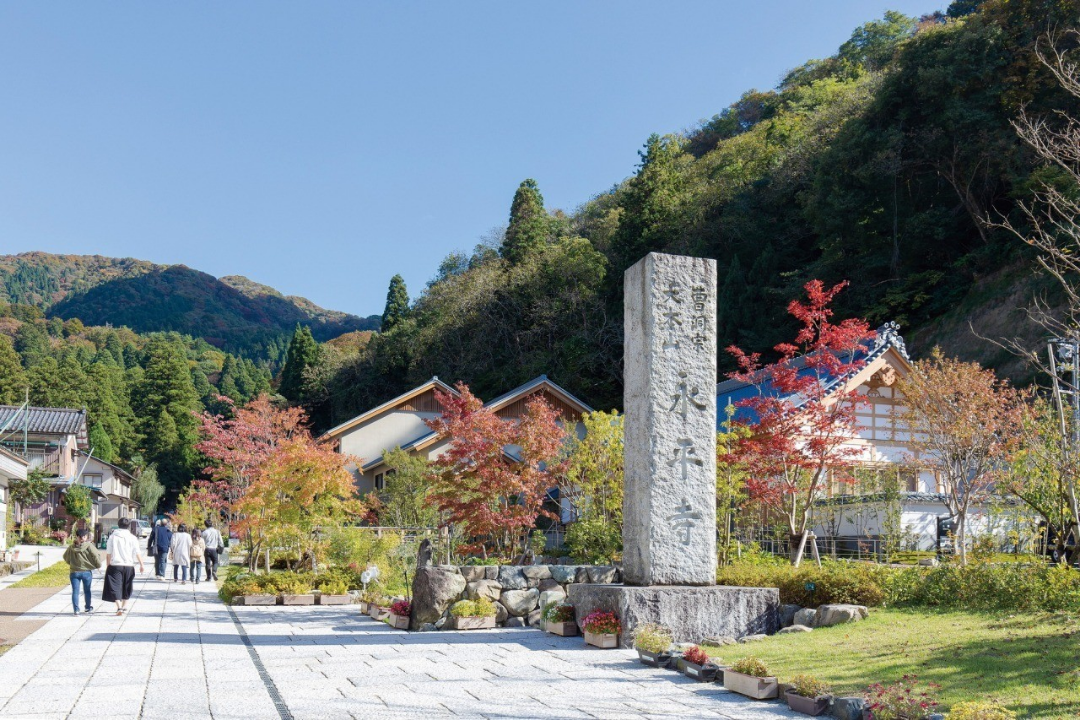
Eiheiji is widely regarded as the definitive example of the temple stay experience because it continues to preserve the original form of the practice in its living, day-to-day reality. While many temples have developed experiential programs specifically for visitors, at Eiheiji the foundation of the experience remains the daily life of its training monks.
From the temple's perspective, the monk experience is not a new business venture or an added service. Rather, it is the opening of an existing monastic environment to outsiders under carefully defined conditions. As a result, the experience is not designed around explanations or demonstrations. Instead, participants are immersed in the same schedule, routines, and disciplines that structure the lives of the monks themselves.
The Raw Reality of Soto Zen
Eiheiji's authority and reputation stem largely from its position as the head temple of the Soto school of Zen Buddhism. For generations, it has served as a benchmark for monastic training in Japan and abroad. Its approaches to zazen meditation, samu (temple work), and daily practice have influenced countless other temples. Consequently, an experience at Eiheiji is often viewed not as one example among many, but as a reference point against which other temple stay experiences are measured.
Its position within the broader landscape of temple stays is also distinct. Eiheiji does not place primary emphasis on accessibility, convenience, or participant comfort. Instead, it intentionally preserves a level of discipline necessary for the environment to remain a genuine place of practice. This commitment to authenticity is what distinguishes Eiheiji from many temple lodgings and simplified meditation programs that are designed primarily for visitors.
Recognition Within Japan
In Japan, Eiheiji is widely regarded as one of the most iconic institutions associated with Zen practice, monastic training, and zazen. It has been featured in numerous books, documentaries, and educational programs, often in the context of spiritual culture and religious training rather than as a tourist destination.
Training experiences and Zen retreats at Eiheiji have also maintained steady interest over many years, largely independent of changing trends. While they rarely generate viral attention on social media, they are frequently the subject of detailed personal reviews and ongoing discussion by participants. This suggests a level of support and engagement that extends beyond short-term popularity.
Who Chooses A Monk Experience, And Why?
A monk experience is not a niche activity reserved for a particular demographic. In practice, participants come from a wide range of age groups, nationalities, and professional backgrounds. What they often share is a desire for time to pause and reflect. Rather than being consumed as a sightseeing activity, the experience is typically chosen as a way to rethink how time is spent and experienced.
The largest group of participants consists of individuals seeking personal reflection. Many choose to stay at a temple during periods of transition in their careers or personal lives, motivated by a desire to reduce external distractions and spend time in a quieter environment. International visitors, in particular, are often drawn to temples not primarily to learn about Japanese culture, but to create space for self-reflection and personal recalibration. The structured rhythm of temple life offers a clearly defined daily framework that is difficult to find in urban hotels or resort settings.
Beyond Commercial Tourism
Within Japan, temple stays are also used for educational purposes. Universities, vocational schools, and other educational institutions sometimes organize temple-based retreats as part of seminars or training programs. The objective is not necessarily discussion or performance, but the experience of sharing the same daily rhythm. Conditions such as limited phone use, communal activities, and early mornings often create an environment that encourages concentration, cooperation, and deeper interpersonal understanding.
Although less common, some companies also make use of monk experiences. Unlike conventional corporate training programs, these stays are not primarily focused on skill development or goal setting. Participants temporarily step away from their organizational roles and performance evaluations, taking part in the same activities regardless of rank or position. Through shared participation in temple work and daily rituals, the experience can help reset workplace dynamics and encourage more open communication. While the results may be difficult to quantify, many participants report noticeable improvements in the quality of dialogue and relationships within their teams.
Longer-term stays are another notable form of participation. Some visitors remain for several days or even more than a week, focusing almost entirely on temple life rather than sightseeing. Mount Koya, in particular, has a long history of accommodating extended stays, and many shukubo temple lodgings have developed practical approaches to integrating guests into the daily rhythm of the community without disrupting its routines.
Across all of these examples, a common theme emerges. The purpose is often less about gaining something new and more about letting go of something familiar. Participants step away from the constant flow of information, responsibilities, and decisions that shape everyday life and instead entrust themselves to an established rhythm and structure. In this sense, the monk experience offers a practical and increasingly relevant way to create distance from the demands of modern life.
The Value Of Not Making The Experience Too Accessible
One of the defining characteristics of the monk experience is that it has not been overly optimized for tourism. Many experiential services rely on extensive explanations and carefully curated activities to help participants understand what they are experiencing. Monk experiences offered at Japanese temples have taken the opposite approach. Explanations are kept to a minimum, periods of silence are common, and participants are left to interpret the experience for themselves.
This approach is intentional. Traditionally, monastic life has placed greater importance on embodying teachings through repeated practice than on understanding them through words alone. Cleaning, sitting, eating, and praying are not treated as separate activities. Each exists as part of a continuous practice of discipline and cultivation. The monk experience opens this structure to outsiders without fundamentally altering it.
A Legacy of Practice
This is particularly evident in the shukubo temple lodgings of Mount Koya. Although the environment feels removed from everyday life, it is not heavily staged or packaged for visitors. The buildings are historic, but they are not museum exhibits. Participants are not treated as observers. Instead, they become temporary members of the daily rhythm of the temple. This shift in perspective significantly changes the nature of the experience.
The contrast becomes even clearer when compared with retreats and spiritual programs in other countries. Many international retreats are designed around comfort, personal growth, or measurable outcomes. Japanese monk experiences, by comparison, intentionally retain certain restrictions and inconveniences. Days begin early, meals are simple, and free time is limited. Yet despite these constraints, participant satisfaction remains consistently high.
The reason is that the experience is based on participation rather than consumption. Visitors are not positioned as recipients of a service, but as temporary participants in a shared way of life. As a result, the value of the experience does not depend on achieving a specific goal or gaining a particular insight. Simply living within a different rhythm of time becomes meaningful in itself.
More Than a Destination
The model is also difficult to replicate. While architecture, rituals, and individual practices can be imitated, a way of life that has been sustained continuously for centuries cannot be recreated in a short period of time. The unique value of the monk experience lies not in technique or presentation, but in the accumulation of time itself. Generations of lived practice form the foundation of the experience.
As a result, the monk experience continues to be offered in a form that may initially seem difficult to interpret. Yet this very lack of immediate clarity is part of its appeal. By leaving room for personal reflection rather than providing predefined conclusions, the experience often leaves a deeper and more lasting impression. Those who are willing to embrace moments that are not fully explained are often the ones who find the greatest value in the experience.
Why The Experience Is Not Separated From Its Place
Source: ZENTABI Navi Homepage
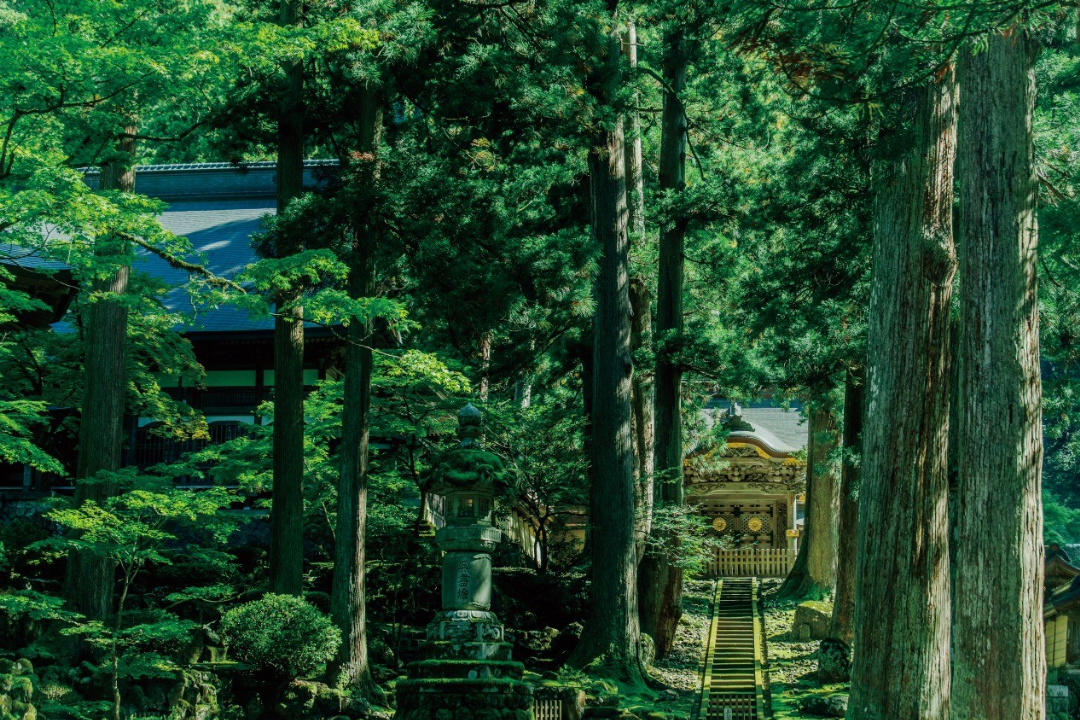
The monk experience does not exist as something confined to the temple alone. In Mount Koya in particular, the experience is closely connected to the broader spatial and social structure of the area. Temples, shukubo lodgings, pilgrimage paths, shops, cemeteries, and mountain trails function not as separate elements, but as part of a single, continuous living environment. This integration is a key factor supporting the quality of the experience.
Mount Koya is a religious site, but it is not a tourism-only town. Many temples remain active centers of practice, and monks and related communities continue to live their daily lives there. The sounds of morning and evening services resonate throughout the town, and activities such as cleaning the approach paths and preparing for rituals are part of the everyday landscape. Participants are not simply experiencing monastic life within the walls of a lodging. Instead, they are placed within an environment where that rhythm of life extends across the entire town.
The Definitive Institution for Zen Training
This structure is precisely what prevents the monk experience from becoming a staged version of “constructed otherness.” The moment one steps outside a shukubo, there are still people living within the same temporal flow. Interactions at local shops, the movement of pilgrims, and the quiet progression of evening all continue seamlessly. Everything exists as an extension of the experience rather than something separated from it. This lack of a clear boundary between “experience” and “everyday life” is what leaves such a strong impression on participants.
The connection to traditional culture also goes beyond formal presentation. Practices such as sutra copying, religious services, and annual rituals are not performed for explanatory purposes. They are carried out because they are necessary within the rhythm of that specific day and season. Participants are placed in a position where they are allowed to take part in these activities rather than observe them from the outside. This implicit hierarchy shifts the experience into a more restrained and reflective mode. It requires participants to behave not as recipients of a service, but as temporary participants within an ongoing environment.
Why It Continues to Function as an Experience While Remaining a Religious Institution
The monk experience is not a one-off event but something that has been offered consistently over many years, supported by a clear operational philosophy on the part of temples. What is referred to here as a “production system” does not mean a manufacturing factory in the literal sense. Rather, it refers to a framework for maintaining daily life itself in a form that can be shared with people from outside the temple.
A Pillar of Tradition
First and foremost, temples are not institutions that exist to provide experiential programs. Their primary functions are monastic training, religious services, and engagement with the local community, and these daily responsibilities take priority. For this reason, monk experiences are only offered within the limits of what can be naturally integrated into that routine. The fact that schedules may shift according to temple needs is an extension of this philosophy. While this introduces an element of unpredictability for participants, it is also an essential part of what makes the experience a shared form of daily life.
Facility management in shukubo temple lodgings also follows a different standard from that of hotels. Rather than focusing on luxury or modernity, the emphasis is placed on cleanliness and a sense of quiet. Even in older buildings, maintenance is carried out rigorously, and daily cleaning and upkeep form the core of quality control. The fact that cleaning is not outsourced to specialized staff but performed by the monks themselves is directly connected to the quality and authenticity of the experience.
Steady Interest in a Fast World
Food follows the same principle. Shojin ryori, or Buddhist vegetarian cuisine, is not prepared as a special menu for guests but as part of the temple’s everyday meals. As a result, it naturally reflects seasonality and basic nutritional balance, without excessive presentation or embellishment. Participants are not simply eating “food that is served to them.” Instead, they share the experience of eating the same meals at the same time as the temple community. This sense of alignment contributes significantly to the overall credibility of the experience.
In terms of safety, there are few explicit warnings or detailed instructions. Instead, a system of implicit rules is at work. Behavior in the early morning or at night, how to move within buildings, and how to manage noise are less often explained in detail and more often understood through context and atmosphere. Learning to read and respond to this unspoken framework becomes part of the experience itself.
In particular, Mount Koya has a long history of accepting both training monks and pilgrims, so the presence of outsiders in daily temple life itself is not considered unusual. This accumulated experience of hosting guests over many years has, in effect, become the foundation for operational quality control.
The reason monk experiences are possible is not the result of special manuals or facilities. Rather, they take shape naturally as a byproduct of maintaining an uninterrupted way of life over time. In this sense, continuity itself serves as the most important form of quality assurance.
The Most Memorable Part Is the Time When Nothing Happens
Source: ZENTABI Navi Homepage
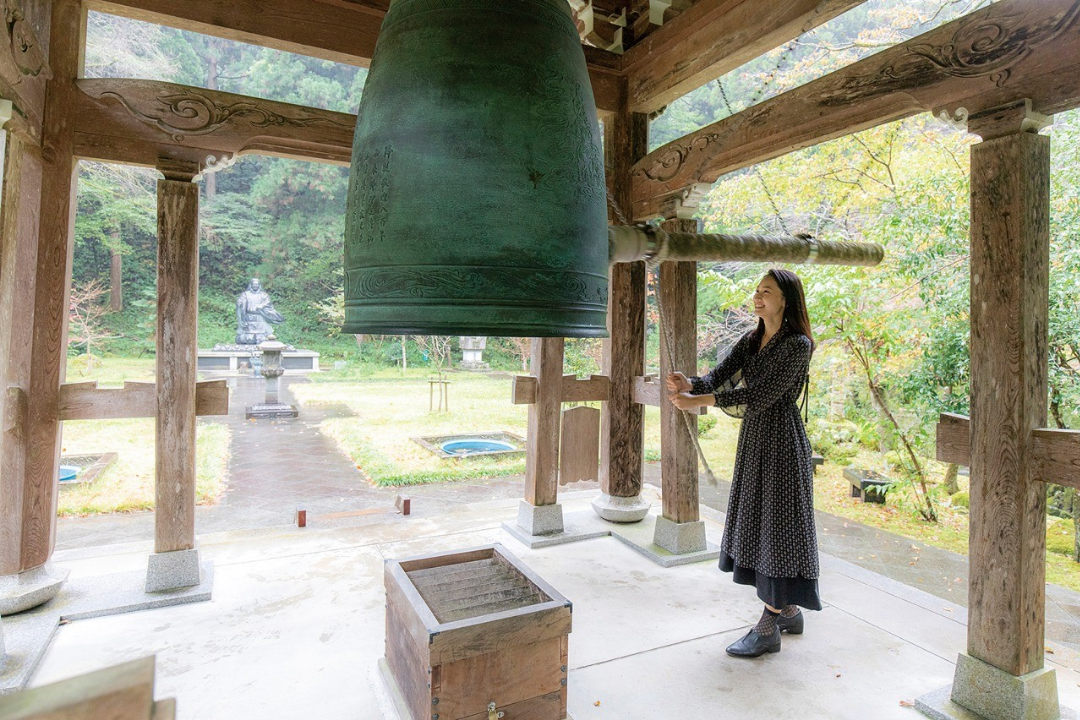
When listening to participants describe their monk experience, what stands out is not a particular event or moment of excitement. Instead, the memories that remain strongest are often those of uneventful hours and the feeling of a day passing quietly and without interruption.
Many international visitors initially find the experience disorienting. There is little explanation, the schedule begins early, and free time is limited. Opportunities to use smartphones naturally decrease, and periods of silence become a normal part of the day. Yet as the stay progresses, this lack of freedom often transforms into a sense of comfort. Not having to decide what to do next, and being able to surrender daily choices to a predetermined rhythm, reduces mental and physical strain.
Participant reviews frequently include reflections such as, "I realized how constantly my mind was moving," or, "I haven't felt a day this long in years." Expressions of achievement or dramatic personal transformation are relatively uncommon. Instead, people often describe the experience in a calm and matter-of-fact way. That understated tone is, in many ways, evidence of the experience's depth.
Japanese participants often share similar impressions. Rather than emphasizing the hardship traditionally associated with monastic training, many speak about a renewed sense of order in daily life. Cleaning carefully, finishing every meal, and waking up and going to bed at fixed times are not extraordinary actions. Yet repeating these simple routines over several days can gradually quiet the mental noise of everyday life. Participants often say that they did not learn a particular teaching so much as rediscover a way of living.
Reactions on social media also tend to differ from those associated with visually driven travel experiences. Instead of dramatic photographs or highly polished posts, many participants share brief reflections and understated observations. Comments such as "It's difficult to put into words" or "I can't fully explain it, but it was time I needed" are common. What people share is not an accomplishment, but a sense of space and stillness.
These reviews reveal an important characteristic of the monk experience: its value is difficult to measure through conventional satisfaction metrics. It cannot easily be judged by whether it was entertaining or exciting. Yet many participants express a desire to return, often saying that they would like to come back at another stage of life or during a future turning point. That desire to return is perhaps the clearest indication of the experience's lasting value.
Why Are Monk Experiences Gaining Interest Beyond Japan?
The growing international interest in monk experiences cannot be explained simply by an admiration for Japanese culture. What many people find valuable is the way these experiences provide a structured rhythm of daily life without imposing a particular religion or ideology.
Globally, the wellness and mindfulness markets continue to expand, yet many offerings are designed around comfort, convenience, and quick results. Monk experiences at Japanese temples take a different approach. They do not promise transformation or measurable outcomes. Instead, participants are expected to accept periods of silence, simplicity, and even inconvenience as they are. For people who have grown weary of highly curated experiences, this approach can feel surprisingly refreshing.
Most international participants are not seeking a deeper understanding of Buddhist doctrine. Their interest lies in how time is used and how daily life is organized. Waking up at a fixed hour, repeating simple tasks, and eating meals quietly at set times create a rhythm that naturally calms the mind. This value transcends cultural differences and does not depend heavily on knowledge of Japanese traditions.
Another important aspect is that monk experiences are not easily exportable. Attempts to recreate them overseas often lack the history, environment, and accumulated way of life that give the experience its meaning. As a result, interest is directed toward experiencing them in Japan itself. This has made monk experiences a compelling reason to visit Japan and has encouraged longer stays and travel beyond major cities.
Koyasan, in particular, serves as a symbolic destination for many international visitors. The entire mountain functions as a living religious community where daily life continues much as it has for generations. The environment itself is recognized as something that can only be experienced in Japan.
From the perspective of international audiences, monk experiences require little adaptation. With basic translation and minimal guidance, the essence of the experience can be communicated without alteration. In fact, avoiding excessive explanation often helps preserve its value. This characteristic remains rare among cultural experiences seeking global appeal.
Conclusion
When discussing monk-for-a-day experiences in Japan, Eiheiji is not an institution that promotes itself through easily understood titles such as “the first” or “the largest.” Yet when considering what an authentic Buddhist training experience should look like in Japan, it remains a benchmark to which people continually return. By refusing to separate training from daily life and avoiding the excessive commercialization of the experience, Eiheiji has built a level of trust that has been cultivated over centuries.
The monk experience at Eiheiji does not promise participants any particular achievement or transformation. Rather than being a place to gain something, it is designed as an environment where individuals can spend time living within the same rhythm and discover for themselves what they feel and notice. In a society that often prioritizes efficiency and immediate results, this structure that offers no predefined answers has become increasingly rare and valuable.
For international organizations and visitors alike, the appeal lies not in elaborate presentations or short-term satisfaction. The more important question is why this way of life has endured for hundreds of years and how it has maintained its form despite changes in systems, trends, and society. The answer lies not in religious authority, but in a way of life built upon the careful repetition of everyday actions. Eiheiji demonstrates this not through explanations or slogans, but through a daily routine that continues to this day.
This experience is also not designed as a model for large-scale expansion or global replication. Precisely because it cannot be easily reproduced elsewhere, experiencing it in Japan carries a unique significance and requires a certain level of commitment from participants. That very inefficiency creates a deeper and more memorable experience.
For those exploring Japanese values in areas such as spiritual culture, wellness, education, and leadership, Eiheiji’s monk experience offers a particularly insightful case study. It does not introduce a new service or ideology. Instead, it simply opens an existing way of life to outsiders without altering, simplifying, or exaggerating it. That authenticity is ultimately why Eiheiji’s monk experience continues to attract quiet but enduring interest from both domestic and international participants.
FAQ About Monk Experience
1. What Is a Monk Experience?
A monk experience is an immersive program that allows participants to stay at a temple and spend a day following the daily rhythm of Buddhist monks. Activities often include early morning prayers, temple cleaning duties, meditation, sutra copying, and traditional Buddhist vegetarian cuisine. Rather than simply observing a temple as a tourist attraction, participants become part of its daily routine, gaining firsthand insight into Japanese spiritual culture and ways of life.
2. How Does It Differ From Regular Temple Sightseeing?
The key difference is that participants become active participants rather than observers. Traditional temple sightseeing focuses on viewing architecture, historical sites, and cultural artifacts. A monk experience, by contrast, places visitors within the temple’s daily routine. Instead of enjoying a specially staged attraction, participants share in practices and customs that have been passed down for generations.
3. What Activities Can Participants Experience?
Activities vary by temple but commonly include meditation, sutra copying, chanting, temple work, and Buddhist vegetarian meals. These are not activities created specifically for tourists; they are based on the daily practices of monks. Spending time in a structured and peaceful environment offers a different perspective on everyday life.
4. Why Are Monk Experiences Gaining Attention?
Interest in monk experiences has grown as more people seek opportunities to step away from busy lifestyles and reconnect with themselves. Modern life is filled with constant information and decision-making. In contrast, a monk experience places participants within a simple, structured routine and encourages periods of quiet reflection. It is often valued not for adding more to life, but for creating space to let go of unnecessary distractions.
5. Can People Participate Without Knowledge Of Buddhism?
Yes. A monk experience is not solely about learning Buddhist teachings. It is an opportunity to engage with temple culture through everyday activities such as cleaning, sitting quietly, and eating mindfully. Rather than requiring religious understanding, the experience encourages participants to focus on how they personally engage with and reflect on the time spent at the temple.
6. Why Is Time Spent At A Temple Considered Valuable?
Temples preserve ways of living that have continued for centuries, which gives the experience a unique value. Life within a temple often prioritizes mindfulness and repetition over efficiency and convenience. By slowing down and engaging in simple routines with intention, participants can become more aware of aspects of life that are often overlooked in daily routines.
7. What Makes Monk Experiences Appealing To International Visitors?
Monk experiences allow visitors to understand Japanese culture by living it rather than simply observing it. Beyond appreciating temple architecture and history, participants gain insight into Japanese approaches to time, routine, and daily life. As interest in mindfulness and wellness continues to grow globally, the emphasis on quietness, simplicity, and reflection has attracted increasing international attention.
8. Are There Distinctively Japanese Elements In A Monk Experience?
Yes. One distinctly Japanese aspect is the emphasis on finding meaning in ordinary daily actions rather than extraordinary events. Activities such as cleaning, eating, and sitting quietly are approached with care and intention. This reflects a cultural perspective that values mindfulness in everyday life and sees personal growth as something cultivated through consistent practice.
9. Why Have Monk Experiences Remained Popular Over Time?
They offer an opportunity to reconnect with qualities that are often missing from modern life. Rather than providing entertainment or easily measurable outcomes, monk experiences create space for reflection and self-awareness. Because the experience can feel different depending on a person’s stage of life or personal circumstances, many participants return at significant moments throughout their lives.
10. What Is The Greatest Appeal Of A Monk Experience?
The greatest appeal is the opportunity not only to gain something, but also to let go. By stepping away from schedules, information overload, and everyday pressures, participants can immerse themselves in a simpler way of living. Sharing in the daily routines of a temple community and practices that have been passed down for hundreds of years provides a rare opportunity to reflect on one's life and priorities from a different perspective.