Like a Restaurant at Sea: Inside Zauo, the Fishing Boat Izakaya Where You Catch and Eat Your Own Fish
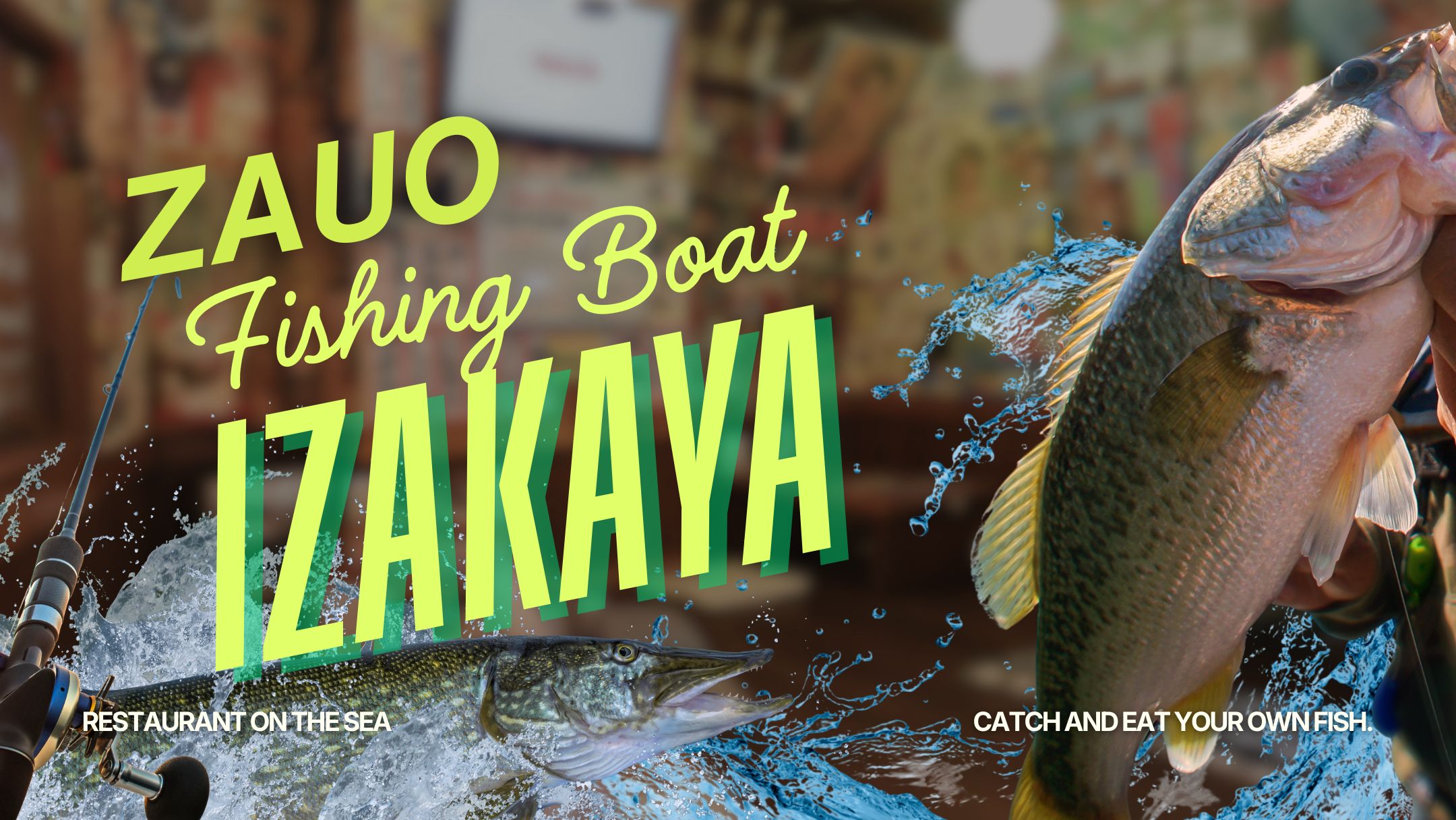
There are countless restaurants around the world, but only a few where the meal itself becomes an experience. Beyond taste, price, or atmosphere, establishments that offer a clear and compelling reason to visit are rare in any country.
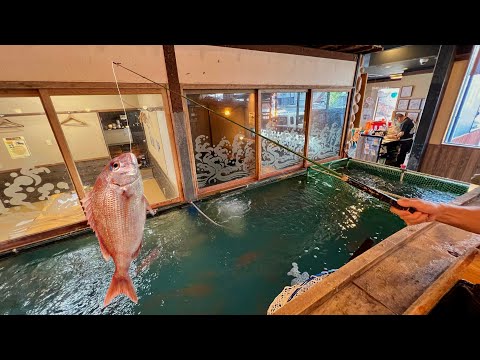
In Japan, there is a highly unique dining concept that meets this standard: the fishing pond izakaya. Guests take their seats, but before choosing from a menu, they first pick up a fishing rod. They catch fish from the tank right in front of them, have it prepared on the spot, and then eat it. This entire process culminates in a fully immersive dining experience.
The leading name behind this concept is Zauo. Zauo is operated by Harbor House Co., Ltd., a company that has approached the question, “What is dining out?” by designing not only the food and service, but the entire experience itself.
Zauo was born out of Japan’s izakaya culture. Izakayas have evolved not simply into places to eat but into spaces where people gather, converse, and share time together. Within that context, Zauo pushed far beyond the boundaries of a traditional restaurant by placing “fun” and “surprise” at the center of the dining experience.
Fishing Pond Izakaya Zauo Overview
Zauo is a restaurant where guests catch fish from indoor tanks and enjoy them prepared in their preferred style. The meal does not begin with placing an order—it begins with the act of fishing. This sequence of experience itself is Zauo’s defining feature.
“Fishing Pond Izakaya Zauo” Operated by Harbor House Co., Ltd
Source: Harbor House Homepage
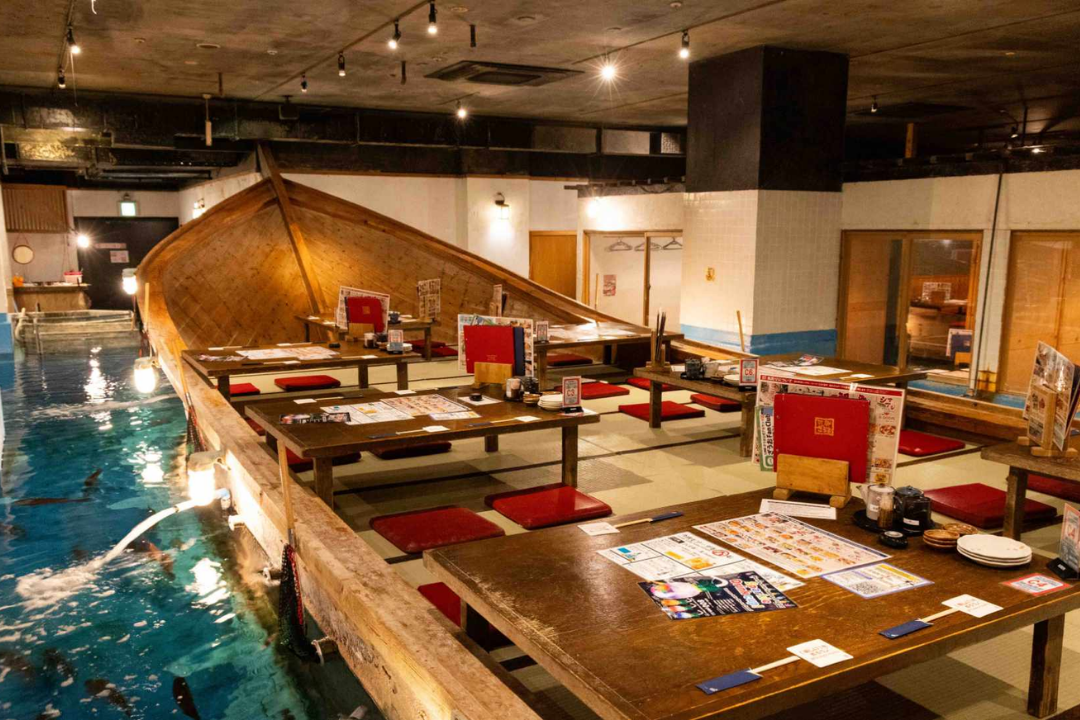
Zauo, operated by Harbor House Co., Ltd., is not simply a restaurant where guests can catch fish. The essence of this concept lies in the deliberate design of the entire experience—from the moment guests step inside to the meal's conclusion. The large live fish tank positioned at the center of the restaurant, the seating layout that naturally draws attention toward it, and even the way staff and nearby diners call out in excitement when someone makes a catch—all of these elements work together to shape a cohesive dining experience.
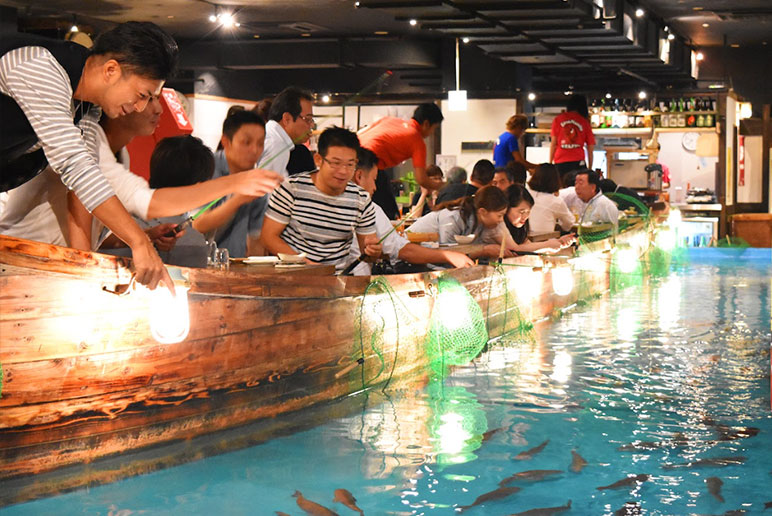
At Zauo, the meal does not begin by scanning a menu. It begins with the choice of which fish to catch. Once caught, the fish is handed to the staff and prepared according to the guest’s preference—whether as sashimi, grilled, or simmered. The sequence of catching, celebrating, cooking, and eating flows seamlessly, transforming diners from passive recipients into active participants in their meal. This structure elevates dining out from a simple act of consumption into an interactive event.
No special knowledge or preparation is required to participate. Even those unfamiliar with fishing can easily engage, thanks to thoughtful design and attentive staff support. As a result, the concept appeals not only to families and groups of friends, but also to tourists and international visitors. Because the experience is intuitive and “self-explanatory,” it can be enjoyed without relying heavily on language, making it highly accessible across cultures.
In terms of pricing, Zauo is positioned not as a premium entertainment venue, but as an approachable izakaya. By maintaining a price range consistent with everyday dining, it remains accessible not only for special occasions or tourism but also as a casual meal option. Over time, this balance has allowed the concept to gain support from a broad demographic—from children to adults—and to be used in diverse settings, including group gatherings and corporate dinners.
Why is it Meaningful to Introduce this Concept Globally Now?
In the global food service industry, the shift from “product consumption” to “experience consumption” is accelerating. Simply serving good food is no longer enough to stand out. We are in an era where a restaurant’s value depends on how well it creates memorable experiences.
From this perspective, the fishing pond izakaya model offers powerful insights. It does not separate dining from entertainment, but instead integrates them into a single, cohesive experience. Moreover, the act of fishing itself does not rely on language. It can be enjoyed intuitively, regardless of nationality or age. This is an extraordinary advantage when considering international expansion.
While Zauo is a dining experience that could only have originated in Japan, it also represents a highly refined response to the challenges facing the global restaurant industry today. That is precisely why it deserves to be introduced not merely as a “unique Japanese restaurant,” but as a successful example of experience-driven design.
Designing an Experience Where Dining and Entertainment Are One
The greatest uniqueness of Fishing Pond Izakaya Zauo lies in the fact that it does not treat “food” and “experience” as separate sources of value. In many restaurants, the cuisine is the main attraction, while the interior design and staging play a supporting role. At Zauo, however, that relationship is reversed. The experience itself serves as the central axis, and the food is naturally integrated into that flow.
Fishing traditionally belongs to the context of outdoor recreation and leisure. By bringing it into an indoor dining space and redesigning it so that anyone can enjoy it safely, Harbor House’s design philosophy becomes clear. The cheers that erupt at the moment a fish is caught, and the shared sense of excitement among nearby guests, are carefully crafted elements—yet they never feel forced or artificial.
Moreover, this experience does not rely heavily on language. The sequence—fish swimming, a line cast into the water, a catch made, and the fish prepared and eaten—is visually complete and intuitively understood, even by first-time visitors. This “experience that communicates without explanation” represents an exceptional strength when considering international expansion.
Raising a Question for an Era When Dining Out Rarely Becomes a Memory
The fishing-pond izakaya concept was born of a broader challenge within the restaurant industry. As price, speed, and efficiency have come to dominate, dining out has increasingly become just another part of everyday consumption—less likely to leave a lasting impression.
Harbor House Co., Ltd. revisited the original value of restaurants as places where people gather and share time. It is not enough to focus solely on the food's taste; the entire process leading up to the meal, as well as the spatial experience itself, must be intentionally designed. From this perspective emerged the idea that a meal should begin not with ordering but with catching.
By introducing the act of fishing, a narrative is created even before the food is served. Conversation begins, anticipation builds, and the atmosphere naturally warms. In that context, even the same dish can be received in a completely different way. Zauo can be seen as a concept that consciously designs for this psychological shift, transforming dining into a memorable, shared experience.
From Everyday Dining to Tourism and Corporate Use
Zauo is not a restaurant limited to a single purpose. It is used in a wide range of settings, including family outings, gatherings with friends, tourist experiences, and even corporate dinners and networking events. The reason lies in the concept's clarity and participatory nature.
Rather than placing one person at the center, the experience allows everyone present to share in the same activity. As a result, even first-time acquaintances naturally begin to converse. For tourists in particular, it strongly resonates with the desire for an “authentically Japanese” experience, allowing the meal itself to become a lasting travel memory.
In corporate settings as well, Zauo functions as more than just a place to dine. It serves as a mechanism to soften the atmosphere. Because the experience encourages shared excitement beyond hierarchy or job title, the quality of communication shifts. This is a form of value that traditional restaurants often struggle to provide.
The High Level of Operational Precision Required by an Experience-Driven Model
Source: Harbor House Homepage
Because Zauo handles live fish, quality control and safety management are critical components of the business. Without consistent oversight of water quality, fish health, and the entire process from sourcing to preparation, the experience itself could not be sustained.
In addition, conducting fishing activities inside a restaurant requires careful attention to safety. The handling of fishing rods and hooks, the spacing between guests, and the staff’s support system must all be thoughtfully managed. Only through the accumulation of detailed operational rules can a safe and enjoyable environment be maintained. Zauo’s ability to operate successfully over many years is rooted in this steady and disciplined management structure.
Behind the lively atmosphere and engaging presentation lies a foundation of reliable operations. This structure is what prevents an experience-driven concept from becoming a short-lived novelty and allows it to endure over time.
Turning Dining Out from Consumption into Memory
What Harbor House has consistently valued is ensuring that dining out is not merely an act of consumption. It is not simply about eating and leaving, but about creating experiences that can be remembered and shared later. To achieve this, a restaurant must seriously engage with every element beyond the food itself.
Fishing Pond Izakaya Zauo is the clearest expression of that philosophy. Fun and surprise are not left to chance—they are intentionally designed. This mindset runs through every aspect of the concept, from spatial design to daily operations.
Bringing Japan’s Sea-Centered Food Culture into the City
Behind Fishing Pond Izakaya Zauo lies a defining characteristic of Japanese food culture: its close relationship with the sea. In Japan, fish has long been a natural part of everyday meals rather than a special or rare ingredient. Eating fish caught near local ports or preparing fish one has personally caught from rivers or the ocean has been woven into daily life for generations.
However, as urbanization progressed, the experience of “catching your own fish” gradually became separated from everyday life. Buying fillets at a supermarket and consuming pre-prepared food became the norm, and opportunities to connect with the origins of ingredients diminished. Zauo functions as a bridge to fill that gap.
By bringing a live fish tank—a kind of “simulated sea”—into an urban indoor space, Zauo narrows the distance between people and fish once again. Through the act of catching, guests directly experience that their meal comes from a living being, and dining becomes a natural extension of that realization. In this sense, the concept can be seen as a modern reinterpretation of Japan’s traditional food culture.
Evolving as a Model for Experiential Dining
As the restaurant industry enters a period of significant transformation, experience-driven concepts like Zauo are likely to take on even greater importance. It is no longer enough to simply serve good food; competitiveness increasingly depends on how well a restaurant creates value that can only be experienced in that specific place and moment.
Harbor House Co., Ltd. does not view the fishing pond izakaya as a one-time success. Its goal is to continuously refine the know-how of designing, operating, and sustaining immersive experiences. Zauo stands as a symbolic embodiment of that philosophy, with the flexibility to evolve in response to changing times and usage scenarios.
For example, there is potential to align more closely with tourism demand, collaborate with regional resources, or partner with businesses in other industries. The key is not to remain fixed solely on the element of “fishing,” but to continue evolving the broader concept of experiential dining with flexibility and creativity.
An Experience That Moves Emotion Before Words
What Zauo’s guests consistently mention is not just the taste of the food, but the feeling of “it was so much fun.” The surprise at the moment a fish is caught, the cheers from those nearby, and the excitement of gathering around the freshly prepared dish—these emotional moments naturally lend themselves to sharing through photos and videos on social media. The experience itself becomes the message.
For international visitors in particular, one striking aspect is that the experience works even without understanding Japanese. It is visually intuitive and physically engaging, allowing people to participate with their bodies rather than relying on language. As a result, it transcends cultural differences and is often described as “the most memorable dining experience in Japan.”
These responses highlight that the value Zauo provides cannot be measured solely by flavor or price. It lies in the emotional resonance created through the experience itself.
Why It Didn’t End as a Passing Trend
Source: Harbor House Homepage
Fishing Pond Izakaya Zauo has been operating in Japan for many years. That longevity itself is a significant achievement for an experience-driven restaurant concept. Dining models that emphasize entertainment often gain strong attention when they first open, but as the novelty fades, customer interest can decline over time.
What makes Zauo distinctive is that it did not become a “one-time visit” destination. While it appeals to special occasions such as tourism or celebrations, it has also maintained its position as a viable everyday dining option. Despite being experience-based, it keeps its pricing within the range of a typical izakaya, allowing guests to visit without special preparation or commitment. This balanced positioning has enabled repeat visits and sustained relevance.
Another key factor is the consistency of its operations. Handling live fish and enabling fishing inside a restaurant creates a high level of operational complexity. Even minor lapses could undermine the overall experience. Rather than relying solely on flashy presentations, Zauo has maintained quality through careful attention to detail—water management, safety protocols, staff coordination, and timely interaction with guests.
As a result, Zauo has evolved from being seen as merely a “unique restaurant” to being recognized as a leading example of experiential dining. Its true accomplishment lies not in temporary buzz, but in the operational excellence that has sustained its appeal over time.
“Catch, Eat, Enjoy” A Universal Human Experience
Zauo’s potential in overseas markets does not rely solely on the uniqueness of Japanese culture. The act of catching fish and eating it is a deeply primal human experience—one that transcends region and culture. For that reason, this concept holds a dual value: it is distinctly Japanese, yet universally understandable.
Many restaurant concepts originating in Japan require a certain level of familiarity with language or cultural context. In contrast, Zauo’s experience is visually and physically complete. Even without explanation, guests can follow the flow: watch the fish swim, cast a line, make a catch, and eat what they have caught. This sequence is intuitive and accessible, even for first-time visitors.
Moreover, because the core structure of the experience is so clear, there is significant room for localization. While the types of fish and preparation methods can be adapted to align with local food cultures, the central experience—eating what you catch yourself—remains unchanged. This flexibility is a major advantage for overseas companies seeking to tailor the concept to their domestic markets.
As experiential dining continues to gain global attention, Zauo holds the potential to be recognized not only as a Japanese success story, but as a replicable model for experience-driven restaurants worldwide.
Why International Companies Should Pay Attention Now
Zauo, the fishing-pond izakaya concept born in Japan, is not only a unique restaurant model but also a business that has redefined what dining experiences can be. What Harbor House Co., Ltd. has built over the years is more than a clever idea. It is a philosophy and operational practice centered on designing experiences and sustaining them over the long term.
Rather than relying solely on flavor or price competition, Zauo focuses on creating moments that stay in people’s memories. Its answer to the question of how to make dining meaningful is clear: put the experience at the center. By making the act of fishing the starting point, the concept brings people closer together, transforms the atmosphere of the space, and turns a meal into an event. This structure is likely to become even more important in the future of the global restaurant industry.
For overseas companies, Zauo is not simply something to replicate. It is a case study filled with insight into where value should be placed and what must be continuously refined when building an experience-driven business. What has long functioned naturally within Japan can, from a different perspective, offer a new option and new inspiration for the global dining industry.
FAQ About Zauo
1. What Kind of Restaurant Is Zauo?
"Zauo" is a "fishing pond izakaya" operated by Harbor House Co., Ltd. Its biggest feature is that customers can catch fish themselves from a live tank inside the restaurant and have it prepared in their preferred cooking style. It has attracted significant attention both domestically and internationally as a "restaurant that transforms dining itself into an experience."
2. How Is It Different From a Regular Izakaya?
The biggest difference is that "the experience begins before you even order." At Zauo, your meal starts by picking up a fishing rod and catching your own fish before you even look at the menu. The key design element is that customers become active "participants in the meal," rather than passively waiting for their food.
3. Can Fishing Beginners Enjoy It Too?
Yes, no special knowledge or skills are required. The staff supports you with fishing techniques, and the layout and systems inside the restaurant are designed to be easy to understand. This allows children and tourists alike to enjoy it intuitively.
4. Why Is It So Popular Among International Tourists?
Because the flow of "catch → eat" can be understood without relying on language. The experience of seeing the fish swimming, catching it yourself, and eating it is visually and physically self-contained. It is highly rated as an "experiential restaurant" that can be fully enjoyed even without knowing Japanese.
5. Why Is Zauo Gaining Attention as an "Experiential Dining" Concept?
Because it transforms dining out from a mere "meal" into a "memorable time." The act of catching fish naturally sparks conversation and excitement, engaging customers' emotions before the food even arrives. As a result, the structure makes it easy for the "happy memory" to stick with people even more than the food itself.
6. Is It Suitable for Families or Corporate Events?
Yes, it is used for a wide range of occasions, including family trips, gatherings with friends, and corporate networking events. Since everyone present shares the same experience—rather than just one person—it naturally fosters easy communication among the group.
7. How Are Safety and Quality Control Managed?
Management is consistent across the board, from the water quality of the live tanks and the health of the fish to the cooking process. Furthermore, because fishing rods and hooks are handled, an operational system that prioritizes safety is in place. A safe environment is maintained through staff support and careful layout design.
8. How Does It Connect to Japanese Food Culture?
In Japan, the culture of "catching and eating fish" has been deeply rooted in daily life since ancient times. Zauo reconstructs that "closeness to the sea" within an urban restaurant setting. It offers an experience where you can feel the sensation of "receiving life," something that cannot be gained simply by buying pre-cut fillets at a supermarket.
9. Why Has It Continued to Be Supported for So Many Years?
Because it balances "practical utility" with "experiential value," rather than just being a temporary trending spot. While maintaining a price range that makes it easy to use as a regular izakaya, it has consistently delivered an experience design that generates excitement no matter how many times you visit. This has led to its long-term support.
10. What Is Zauo's Biggest Appeal?
That "it is fun even before you eat." Through the act of fishing, the meal itself transforms into an event, creating conversations and memorable moments with others. Zauo is not just a regular izakaya, but holds a unique value as an "experiential restaurant that turns dining out into a memory."
Related Videos
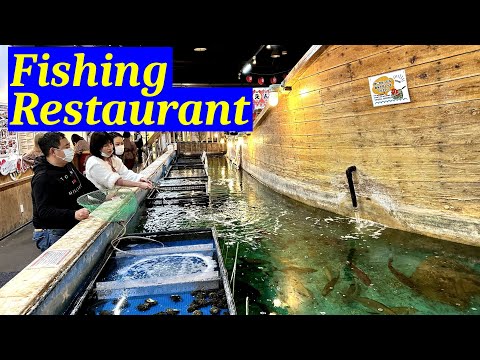
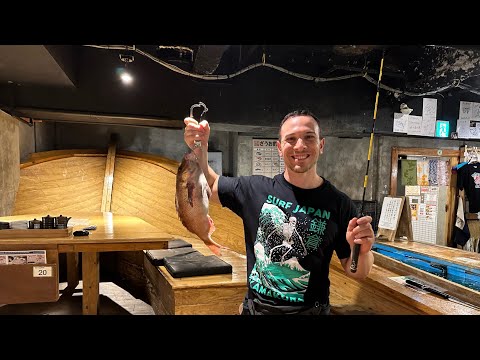
If you're interested in Japan’s interactive dining experiences, the video below introduces Zauo, a fishing boat-themed izakaya where customers catch their own fish before enjoying it as a meal. This video shows how entertainment and dining come together to create a one-of-a-kind experience that feels like a restaurant at sea.