Coffee is one of the world's most widely consumed beverages. It accompanies the start of the day, fills moments between meetings, and often serves as the backdrop for conversations with friends and colleagues. Yet few of us regularly stop to consider where that coffee came from, who grew it, or what it took to bring it to our cup. We see the roasting, grinding, and brewing. The much longer story that comes before those steps often disappears behind the speed and convenience of modern consumption.
Today, however, the global coffee industry is facing growing challenges. Climate change is making harvests less predictable, international coffee prices continue to fluctuate, and many producing regions are struggling with aging farming populations and a lack of successors. Together, these issues have sparked a growing realization that coffee may no longer be a product we can simply take for granted.
In Europe and North America, conversations around these challenges often revolve around sustainable coffee, ethical sourcing, and responsible consumption. Japan has generally approached the same issues differently. Rather than relying on bold campaigns or moral appeals, many Japanese initiatives focus on helping consumers develop a deeper understanding through everyday experiences. One such initiative is YOINED.
Rather than functioning as just another coffee brand, YOINED is better understood as a framework for rethinking the relationship between coffee and the people connected to it. Beyond flavor, aroma, and quality, the project seeks to bring attention to the producers and communities behind each cup. It encourages consumers to view coffee not only as something they drink, but also as something that connects people across continents and cultures.
The name "YOINED" combines Japanese concepts associated with "good" and "connection." At its core is the idea that a single cup of coffee can create meaningful links between producing regions and consuming markets, between farmers and consumers, and ultimately between people themselves. The project's goal is not to force those connections, but to make them more visible and accessible.
This article explores how YOINED emerged, the values behind its design, and why its approach offers a distinctive perspective on sustainability in the coffee industry. Rather than relying on slogans, YOINED asks a quieter but perhaps more important question: How can we build relationships that last?
YOINED Overview
YOINED is a coffee initiative developed by UCC Ueshima Coffee Co., one of Japan's most influential coffee companies. Rather than focusing solely on products, the project aims to redefine coffee's value through the lens of relationships.
Traditional measures of coffee quality, such as bean selection, roasting expertise, and flavor profiles, remain important. However, YOINED also highlights the environments where coffee is grown and the people whose work makes each harvest possible. These stories are presented as part of the coffee experience itself rather than as separate marketing messages.
The project places particular emphasis on specific coffee-growing regions and farms, offering consumers a clearer understanding of how coffee is produced. Importantly, this is not designed to promote sustainability as a moral obligation. Instead, it seeks to create opportunities for consumers to make informed choices based on a deeper understanding of the product they enjoy.
A Sustainability Philosophy That Goes Beyond Marketing Slogans
One of the most distinctive aspects of YOINED is its reluctance to place the word "sustainability" at the center of its messaging.
Over the past decade, terms such as sustainable and ethical have become increasingly common in consumer markets worldwide. While this has raised awareness of important issues, it has also created situations where the language itself becomes disconnected from its original meaning. Consumers may feel pressure to make the "right" choices without fully understanding the realities behind those choices.
YOINED takes a different approach.
Seeing the Journey from Farm to Grinder
Rather than leading with environmental claims or social impact messaging, it starts with the enjoyment of coffee itself. The experience of drinking coffee remains the primary focus. Information about producers, growing conditions, and supply chains is then introduced gradually, allowing consumers to explore deeper layers of understanding if they choose to do so.
This distinction matters because sustainable consumption is most effective when it is based on understanding rather than obligation. YOINED provides context about where beans are grown, the conditions under which they are produced, and the factors that influence pricing. These details are offered as tools for informed decision-making, while the final judgment remains with the consumer.
The approach also requires a certain level of transparency from the company. Sharing information means accepting scrutiny and acknowledging imperfections. Rather than presenting an image of flawless sustainability, YOINED leaves room for ongoing improvement and honest dialogue.
In this sense, the project is less concerned with declaring itself sustainable and more interested in explaining how it engages with the people and communities behind coffee production. Through careful design rather than marketing rhetoric, YOINED seeks to narrow the distance between coffee and the broader social realities that make it possible.
Reconnecting Producers and Consumers Through Relationships

Source: YOINED Homepage
At the heart of YOINED is the belief that producers and consumers should be viewed not merely as participants in a transaction, but as participants in an ongoing relationship.
In conventional coffee supply chains, producing regions and consuming markets are often separated by enormous physical and psychological distances. Consumers may know the quality of a coffee or its price point, yet have little understanding of the people responsible for growing it.
YOINED attempts to bridge this gap not through an overwhelming amount of information, but through context.
Interlinking Communities Across Continents
Simply listing the name of a farm or its location rarely creates a meaningful connection. What matters is understanding the circumstances in which coffee is cultivated, the decisions producers make throughout the growing process, and the challenges they face in maintaining both quality and long-term sustainability. When these stories are shared in a way that consumers can relate to, a stronger sense of connection begins to emerge.
Importantly, YOINED does not portray producers as passive recipients of support. Instead, farmers are presented as skilled professionals actively balancing quality, environmental pressures, and economic realities. This framing encourages consumers to move beyond charity-driven thinking and toward a more equal and respectful understanding of the people behind their coffee.
Consumers also play an active role within this framework. The project invites them to think not only about price and convenience, but also about the kinds of relationships their purchasing decisions support. While YOINED does not tell consumers what choices to make, it provides the information needed to make those choices more thoughtfully.
Creating direct connections between producers and consumers is rarely simple. Yet it is possible to bring them closer together through shared understanding. By leaving space for consumers to explore and interpret these connections themselves, YOINED uses an everyday product to experiment with a different kind of relationship between the people who grow coffee and the people who enjoy it.
Coffee Consumption vs. Production: An Increasing Disconnect
The challenges facing the global coffee industry are often discussed in isolation. Climate change, volatile coffee prices, aging farming populations, and a shortage of successors are all real concerns. Yet when these issues are viewed separately, it becomes difficult to understand the bigger picture. In reality, they are deeply interconnected structural challenges, and addressing just one of them is unlikely to create a truly sustainable future for coffee.
Global Pressures: Climate Change, Pricing, and Aging Populations
Climate change, for example, can reduce yields and make crop quality less predictable. Lower and less stable harvests often lead to financial uncertainty for coffee farmers, making the profession less attractive to younger generations. As fewer people choose to continue farming, valuable knowledge and cultivation techniques become harder to pass on. This, in turn, can further affect quality and productivity. It is a cycle that cannot be solved through individual effort alone.
Rather than simplifying these issues or presenting easy solutions, YOINED takes a different approach: making the invisible visible. The project seeks to share the conditions behind coffee production, helping consumers understand why these challenges exist and how they influence the coffee they enjoy every day. This transparency is not about assigning blame. Instead, it is about creating a more informed conversation around the realities of coffee production.
Companies are uniquely positioned to play this role. Because they operate between coffee-producing regions and consumers, they can connect the different pieces of the story and present them as a whole. In this sense, YOINED does not position UCC as a problem-solver with all the answers. Instead, it acts as a translator, helping consumers better understand the complex relationships that shape the coffee industry.
For many consumers, learning about structural issues can feel overwhelming. Yet continuing to make purchasing decisions without any awareness of these realities can unintentionally reinforce the status quo. YOINED offers a middle ground. It allows people to engage with these topics at their own pace and to the depth they choose, using something as familiar and approachable as a daily cup of coffee as the starting point.
Sustainable Coffee in the West and the Different Approach Taken by YOINED

Source: YOINED Homepage
In many Western markets, sustainable coffee initiatives are often built around clear and direct value statements. Issues such as environmental protection, fair labor practices, and ethical consumption are presented through strong messaging that encourages consumers to make conscious choices. While this approach can inspire action, it can also create a sense of pressure, where choosing the "right" product becomes a moral obligation.
YOINED takes a more understated path. Rather than beginning with what consumers should do, it focuses on helping them understand why coffee exists in its current form and what factors shape its journey from farm to cup. The emphasis is placed on understanding rather than persuasion, leaving room for individuals to draw their own conclusions.
This reflects broader characteristics of Japanese consumer culture. In Japan, highly assertive messaging or overt moral positioning can sometimes create distance rather than engagement. As a result, YOINED prioritizes preserving the simple pleasure of coffee. Flavor, aroma, and everyday enjoyment remain at the center of the experience, while information about origins and production is introduced naturally as an extension of that experience.
A Distinctive Perspective on Ethical Sourcing
Another notable difference is how change is framed. Many Western sustainability-focused brands position themselves as agents of transformation, seeking to challenge existing systems. YOINED, by contrast, focuses on renewal. Rather than replacing long-standing relationships with producing regions, it seeks to strengthen and adapt those relationships in response to changing social and environmental conditions. This gradual, relationship-based approach reflects a distinctly Japanese preference for continuity and long-term stability.
YOINED does not reject global sustainability trends. Instead, it translates them into a form that aligns with Japan's cultural context. By addressing the same challenges through a different lens, it offers an alternative model that may prove particularly effective over the long term.
How Deeply Can YOINED's Vision of the Future Coffee Experience Enter Everyday Life?
The future coffee experience envisioned by YOINED is not limited to special events, campaigns, or niche consumer groups. Its goal is much more ambitious: to become part of everyday life.
Whether it is a busy morning before work or a brief pause during the day, coffee is often consumed without much thought. YOINED asks a simple question: can those everyday moments also create a quiet connection to the people, places, and stories behind the coffee itself?
Many sustainability initiatives place a strong emphasis on education and awareness. While well-intentioned, this can sometimes make participation feel like work. YOINED deliberately avoids this pitfall. The priority is that the coffee tastes good and provides an enjoyable experience. The background story is there for those who want to explore it, but it never becomes a requirement. This balance helps make the experience sustainable in a practical sense, not just an environmental one.
Changing the Conversation Through Everyday Experience
Importantly, YOINED goes beyond simply providing information. Rather than presenting facts and challenges in a one-sided manner, it seeks to create a narrative that helps consumers understand why a particular cup of coffee exists in front of them at that moment. Stories have a unique ability to create emotional connections without demanding agreement or action. Through these stories, consumers gradually become participants in a broader relationship.
This approach also requires patience from the company itself. The benefits may not be immediately measurable, and there is no guarantee of short-term sales growth. However, if coffee is to remain a meaningful and valued part of people's lives for generations to come, building lasting relationships may be just as important as improving products. YOINED embraces this longer time horizon.
The future of coffee is not defined solely by new brewing methods, innovative technology, or unique flavor profiles. It is also shaped by how naturally the stories behind coffee can be shared. YOINED's answer is to weave those stories into everyday life without disrupting the enjoyment of the coffee itself.
The Responsibility of Companies in an Era of Designed Relationships
Source: YOINED Homepage
The questions raised by YOINED extend far beyond coffee. At its core, the project asks what role companies should play in shaping relationships within society.
Businesses with global supply chains influence countless people and communities through their products. Whether they acknowledge it or not, their decisions affect lives far beyond the point of purchase. Traditionally, companies fulfilled their role by providing clear consumer benefits such as quality, convenience, and affordability. Today, however, increasingly complex social and environmental challenges have expanded expectations.
Consumers are paying closer attention to where products come from, how they are produced, and whether they can remain viable in the future. These considerations are becoming part of how companies are evaluated.
Why We Can No Longer Take Coffee for Granted
YOINED does not attempt to position itself as an authority with definitive answers. Instead, it focuses on openly sharing how relationships are built and maintained across the coffee value chain. It acknowledges that uncertainty, challenges, and imperfections exist, and that these realities are part of the conversation. By doing so, it creates space for dialogue rather than delivering one-sided conclusions.
Relationships are also not static. Conditions in producing regions evolve, consumer values change, and new challenges emerge. YOINED is designed with this reality in mind. Rather than striving for perfection, it prioritizes continuity and adaptation. This emphasis on long-term trust over short-term recognition is central to the project's philosophy.
Today, the question of how companies engage with society goes beyond corporate social responsibility or brand image. It increasingly revolves around the kinds of relationships companies create through the products they bring into the world. In that regard, YOINED offers a practical and thoughtful model worth examining.
A Cup of Coffee That Quietly Brings the World Closer
YOINED does not treat coffee as a tool for solving social problems. Instead, it begins with what people already love about coffee: its flavor, aroma, comfort, and place in daily life. From there, it gently broadens the conversation to include the people and places behind each cup. The approach may seem understated, but that restraint is precisely what gives it lasting potential.
The challenges facing the coffee industry are complex. Climate change, price instability, and generational transitions cannot be solved through a single initiative. Rather than promising solutions, YOINED focuses on a different question: how can we continue building meaningful relationships despite these challenges?
For readers in North America, Europe, and other English-speaking regions, YOINED may initially appear modest compared to more activist-oriented sustainability programs. Yet within the Japanese context, this quiet approach is a strength. It integrates naturally into everyday life, respects individual choice, and encourages relationships to develop gradually over time.
A single cup of coffee will not change the world. But becoming more aware of where that coffee comes from, who helped create it, and what relationships made it possible can change how we see our place within it. YOINED is a thoughtful attempt to foster that awareness, one cup at a time.
Conclusion
YOINED suggests that the future of coffee is not defined solely by better beans, more advanced roasting techniques, or stronger sustainability claims. It may also depend on the quality of the relationships that exist behind every cup.
By placing producers, growing regions, and long-term partnerships alongside flavor and craftsmanship, UCC offers a different way of thinking about coffee. Rather than asking consumers to change their behavior through guilt or obligation, YOINED encourages curiosity. It invites people to enjoy coffee first and, if they choose, to discover the people and places that made that experience possible.
This approach reflects a broader Japanese perspective on sustainability—one that emphasizes continuity, trust, and gradual understanding over dramatic messaging. In a global industry facing climate change, economic uncertainty, and shifting consumer expectations, those qualities may prove just as valuable as technological innovation or certification programs.
A single cup of coffee cannot solve the structural challenges facing coffee-producing communities. But it can become the beginning of a more thoughtful relationship between consumers and the people who cultivate one of the world's most beloved beverages. In that sense, YOINED reminds us that coffee is more than a product. It is a network of people, places, and shared experiences that deserves to be understood as much as it is enjoyed.
FAQ About YOINED
1. What Is YOINED?
YOINED is a coffee initiative developed by UCC Ueshima Coffee. Rather than being simply a product brand, it aims to communicate the value of coffee through not only its quality and flavor but also the relationships behind it, including the people and communities involved in its production. Through this approach, YOINED seeks to create new ways for people to connect with coffee.
2. What Makes YOINED Unique?
Its defining feature is the way it views coffee not only as something to drink, but also as a means of connecting people with the producers and regions behind each cup. By sharing information about cultivation practices, growing environments, and production backgrounds, YOINED encourages consumers to make more informed and meaningful choices.
3. Why Doesn't YOINED Place Sustainability At The Forefront?
Rather than asking consumers to pursue sustainable behavior actively, YOINED prioritizes the enjoyment of coffee itself. It then provides opportunities for those who are interested to naturally learn more about the people, communities, and environmental factors behind the product. The goal is to foster understanding through curiosity rather than obligation.
4. What Challenges Is YOINED Seeking To Address?
YOINED was created against the backdrop of several long-term challenges facing the coffee industry, including the effects of climate change on production, fluctuations in global coffee prices, aging farming populations, and a shortage of successors in coffee-growing communities. The initiative seeks to strengthen lasting connections between coffee-producing regions and consumers.
5. How Does YOINED Connect Producers And Consumers?
Rather than simply identifying the farm or origin of a coffee, YOINED shares the stories, environments, and circumstances behind its production. By providing this broader context, it aims to help consumers feel a more meaningful and ongoing connection with the people who grow their coffee.
6. How Does YOINED Differ From Sustainable Coffee Initiatives In Western Countries?
While many sustainable coffee initiatives in Western countries place strong emphasis on ethical consumption and environmental responsibility, YOINED focuses more on fostering understanding than promoting a particular viewpoint. It encourages consumers to enjoy coffee first, while naturally developing an interest in the broader story behind it.
7. How Does YOINED Communicate The Challenges Facing The Coffee Industry?
Rather than oversimplifying complex issues or presenting a single solution, YOINED introduces topics such as climate change, market volatility, and the realities facing coffee producers in an accessible way. The initiative emphasizes helping consumers understand the context so they can make informed decisions for themselves.
8. Does YOINED Encourage A Particular Type Of Consumer Behavior?
No. YOINED is not designed to pressure consumers into making specific choices or adopting a particular lifestyle. Instead, it provides clear and accessible information about the producers and regions behind each coffee, allowing individuals to make their own decisions based on a deeper understanding of the product.
9. What Is YOINED's Vision For The Future Coffee Experience?
YOINED envisions a coffee experience in which people can enjoy their daily cup while naturally feeling connected to the communities and individuals involved in its production. Rather than focusing on education alone, it seeks to cultivate these connections as a natural extension of everyday coffee enjoyment.
10. What New Value Does YOINED Propose?
YOINED encourages people to look beyond flavor and price when choosing coffee and to consider the people, communities, and environments connected to each cup. Through coffee, it proposes a new approach to fostering long-term relationships between producing regions and consumers, creating value through connection as well as consumption.
Related Videos
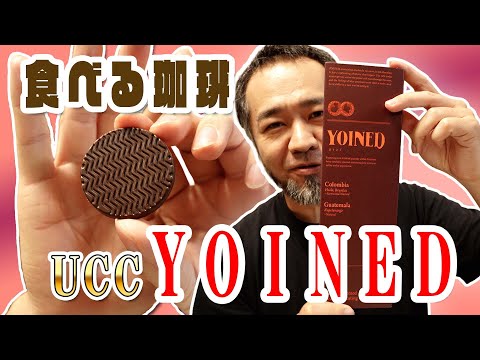
If you're interested in how coffee can bring people together, the video below introduces YOINED, a café concept that reimagines the relationship between coffee, community, and everyday life. This video shows how a simple cup of coffee can become a meaningful way to connect people and create shared experiences.