
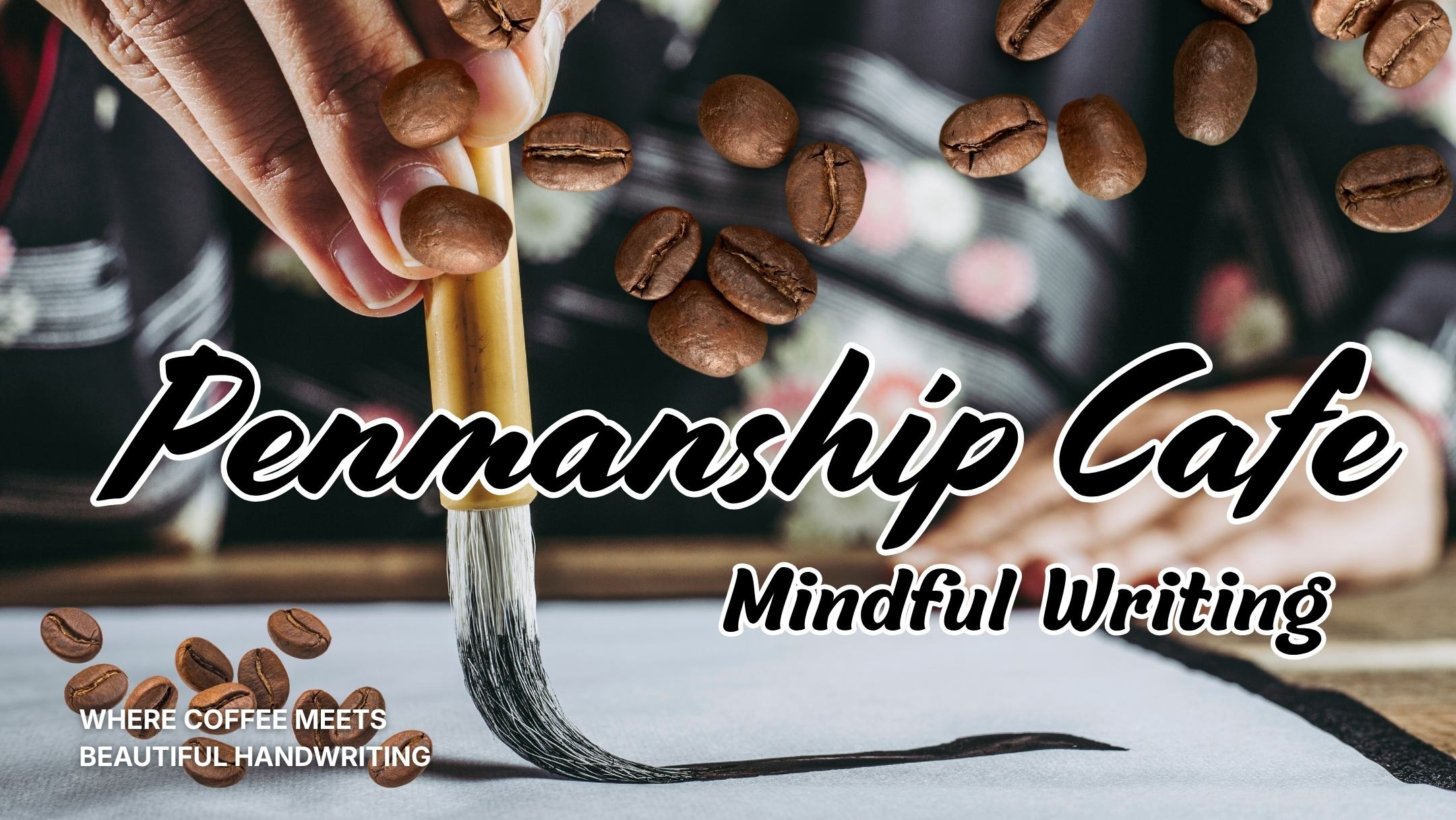
Generally, cafes are seen as places to enjoy conversations over coffee, or to work and study. In recent years, however, a new type of space called a "penmanship cafe" has been drawing attention in Japan. This refers to a place where visitors can enjoy practicing handwriting or calligraphy-related activities in a relaxed cafe atmosphere.
Traditionally, penmanship and calligraphy were activities practiced in classrooms, schools, or at home. They were often tied to specific times and places, giving them a somewhat formal impression. On the other hand, penmanship cafes provide an environment where one can easily engage with "writing" within a cafe space that feels like an extension of daily life.
This culture is deeply connected to Japan's unique writing culture. The Japanese language uses multiple writing systems—Kanji, Hiragana, and Katakana—and many situations require writing to be beautiful and expressive. Handwritten characters have been valued not merely as a means of transmitting information, but as an element that reflects a person's impression and politeness.
Additionally, in today's increasingly digitalized world, the value of "writing by hand" is being reevaluated. While opportunities to type characters on smartphones and computers have increased, opportunities for handwriting have decreased. However, in response, more people are finding value in writing by hand. Penmanship cafes can be seen as a new culture born out of this trend.
Furthermore, values such as "mindfulness" and "slowing down" are spreading globally. In a busy daily life, taking the time to concentrate on something slowly is increasingly valued. Writing fits these needs well, and penmanship cafes also serve as spaces to calm the mind.
Penmanship Cafe Overview
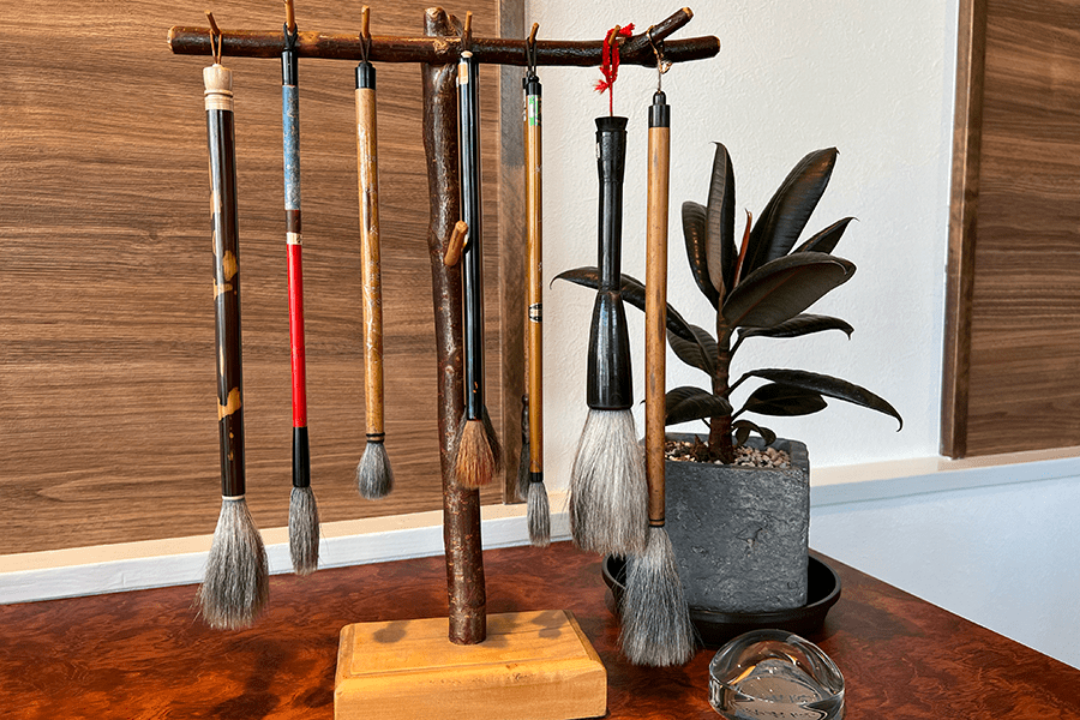
Fude to Coffee is a café and calligraphy space in Ibaraki City, Osaka, designed to make Japanese calligraphy and handwriting more approachable in a relaxed everyday setting. Rather than requiring visitors to attend a formal calligraphy school, the café allows people to enjoy writing while having coffee, food, or other drinks, with lessons available for beginners as well as those pursuing more advanced calligraphy skills. The café describes its concept as a place where people can freely learn or simply enjoy calligraphy, while also providing a comfortable environment for reading, working, relaxing, or spending time with others.
The café offers several types of writing classes, including traditional calligraphy, brush-pen and color brush-pen courses, and ballpoint-pen handwriting classes. Lessons are designed around individual needs and can range from learning basic techniques to creating works of calligraphy or preparing for qualifications.
By combining Japanese writing culture with the familiar atmosphere of a café, Fude to Coffee creates a more accessible way for people to reconnect with handwriting while enjoying a slower, more mindful experience.
What Is a Penmanship Cafe?
Source: Fude to Coffee Homepage
A penmanship cafe is a location or service format where individuals can practice penmanship and writing in a cafe setting. Customers order a drink and can spend time writing freely, using either the provided learning materials or their own notebooks.
Many penmanship cafes prepare learning materials for everyone, from beginners to experienced writers. The content is often structured step by step, covering basic Hiragana and Kanji practice, character balancing, and brush/pen pressure control. In some cases, instructors are present, and visitors can receive corrections and advice upon request.
The style of use is relatively flexible. Rather than following a set curriculum, customers can practice at their own pace, making it possible to drop in casually and practice for just a short time. This flexibility differs significantly from traditional penmanship schools.
Moreover, because these spaces function as cafes, they allow for learning in a relaxed environment. Spending time writing characters while enjoying coffee in a quiet space creates an experience where focus and relaxation happen at once. Unlike studying or working, it is often utilized as a "time for centering oneself."
Furthermore, a penmanship cafe is not merely a learning environment; it also has aspects of community. People sharing an interest in writing gather here, sometimes leading to interaction. Consequently, it functions not only as a personal hobby space but also as a place for social connection.
In this way, the penmanship cafe is a new space that integrates elements of a cafe, learning, and relaxation. Moving beyond the boundaries of traditional handwriting practice, it redefines the act of "writing" in a format adapted to modern lifestyles.
A Cafe-Style Handwriting Experience That Blends Learning Into Daily Life
The penmanship cafe's primary uniqueness lies in its fusion of "learning" and "everyday spaces." Traditional penmanship and calligraphy typically required attending a school and practicing at designated times. In contrast, penmanship cafes integrate learning into the casual setting of a cafe, making it more approachable.
A particularly distinctive aspect is that the experience feels more like "spending time" than "taking lessons." At a penmanship cafe, users can write at their own pace without being bound by compulsory curricula or strict rules. The experience of letting a pen glide across paper in a quiet space while enjoying coffee holds a different value from conventional classroom-style learning.
A Modern Way to Experience Japan’s Calligraphy Culture
The low psychological barrier is also an important factor. Even those who feel that attending a formal handwriting school has a "high threshold" can easily walk into a cafe. It is highly accessible for beginners, allowing them to try it out briefly. This accessibility encourages patronage from a wide range of users.
Furthermore, penmanship cafes also function as a space for self-expression. Writing characters is not merely a technical skill but an act that reflects an individual's personality and emotions. Being able to enjoy one's own writing style and expression—rather than just aiming for flawless characters—is a feature not typically found in other learning services.
In addition, the ability to obtain both relaxation and focus simultaneously is unique. The calm atmosphere of a cafe provides an environment where one can concentrate without feeling excessive tension. This holds value as a "third place," distinct from the office or home, functioning as a comfortable environment for focus that modern people seek.
Thus, the penmanship cafe is not simply a place for writing, but an entity that represents the "redesign of learning." By naturally incorporating learning into daily life and providing an environment where one can continue without undue strain, it presents a new style of learning.
Digitalization and the Reevaluation of the Value of Handwriting
The emergence of penmanship cafes is backed by major shifts in modern society, at the center of which is the progress of digitalization. With the widespread adoption of smartphones and computers, opportunities for handwriting in daily life have drastically decreased. Since notes, communications, and drafting are largely replaced by keyboard typing and flick input, the act of writing characters itself is becoming something special.
On the other hand, a movement to reevaluate the value of handwriting has also emerged. Precisely because we live in an era where characters can be input effortlessly through digital means, more people are finding meaning in writing by hand. Handwritten characters possess individuality and warmth, and the same words can leave a vastly different impression when written by hand. Handwriting is still highly valued in key situations, such as on resumes, letters, and message cards.
How Japanese Writing Culture Is Finding a New Home in Cafés
Japan's specific cultural background also plays a role. The Japanese language places high importance on the balance and beauty of characters, and writing beautiful characters has long been respected. Handwriting lessons are part of the school curriculum, and structuring characters beautifully is regarded as a basic skill. Because of this culture, penmanship continues to maintain steady demand.
At the same time, conventional penmanship schools present significant constraints in terms of time and location, making it difficult for busy modern people to continue. Commuting to a classroom at fixed times while juggling work and household chores poses a high hurdle. As a result, there is demand for a more casual format that can be incorporated into daily life.
Furthermore, values such as mindfulness and self-care have spread in recent years. In a busy daily life, deliberately taking slow, quiet time has become highly valued. Writing characters has a calming effect while promoting focus, making it highly compatible with these contemporary needs.
Penmanship cafes were born where these multiple trends intersect. They reevaluate the value of handwriting, which is being lost to digitalization, and redesign it to fit modern lifestyles. The essence of this concept lies in transitioning the practice from a conventional "place of study" to a "place of daily enjoyment."
A Space Utilized as a "Time for Centering Oneself" in Daily Life
Source: Fude to Coffee Homepage
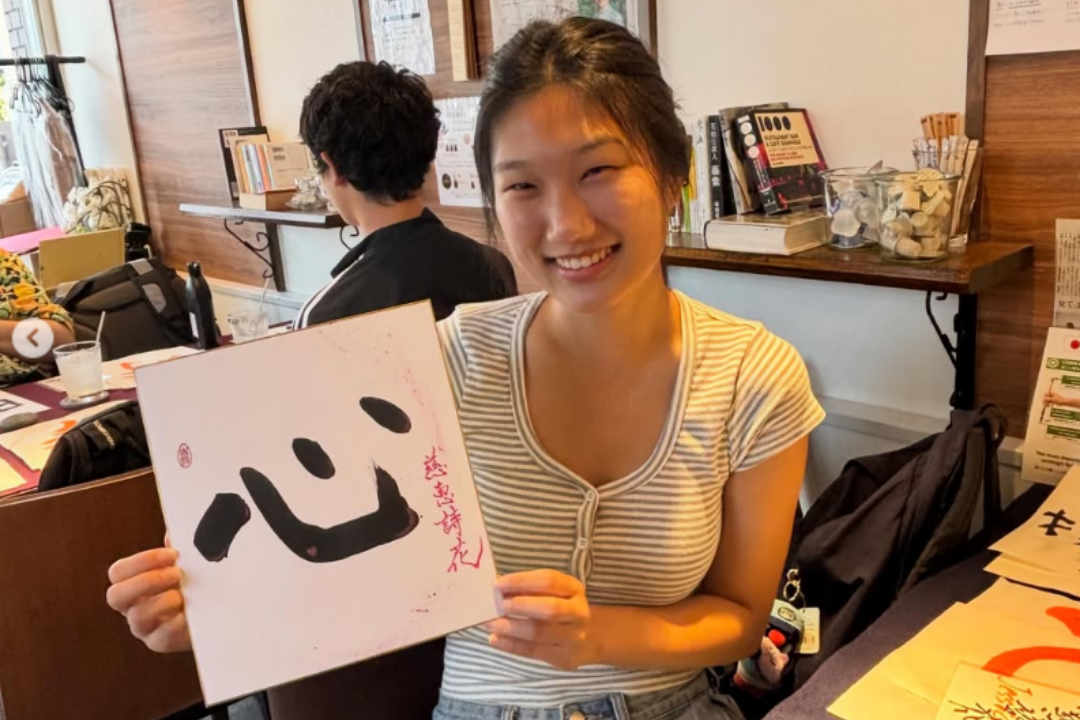
Unlike traditional classrooms, a penmanship cafe is a place people can casually stop by in daily life. Visitors often drop in on their way home from work, on weekends, or during brief moments of free time to secure even a short period for writing. Since there is no need to be bound by specific days of the week or times, a major characteristic is the ability to use the space according to one's personal lifestyle rhythm.
Users visit for various purposes. While some simply want to improve their handwriting, many visit to enhance their concentration or change their mood. Penmanship serves not only as a skill-building tool but also as a means of mental refreshment. By moving a pen in a quiet space, users can secure time away from daily distractions.
How Writing by Hand Can Create a Moment of Calm
The typical flow of use is simple. Customers order a drink as in a standard cafe, sit down, and practice using the provided learning materials or their own notebooks. The materials illustrate character balance, stroke order, and line drawing step by step, making the content highly accessible even for beginners. If desired, visitors can also receive advice from staff or instructors.
In some cases, it is also used alongside work or study. For instance, incorporating penmanship between tasks can help reset one's focus. For those whose tasks are primarily digital, writing by hand serves as a pleasant distraction that can ultimately improve productivity.
Furthermore, penmanship cafes serve as a community. People writing characters in the same space naturally connect, occasionally leading to information exchanges and social interaction. A notable feature is that it functions not merely as a lesson space, but as a gathering place for people with shared interests.
In this manner, rather than being treated strictly as a "place of study," the penmanship cafe is utilized as a "place to spend time centering oneself in daily life." Consciously taking slow, quiet time is valuable for busy modern people, and penmanship cafes are expanding as spaces designed for this purpose.
Social Background That Values Character Culture and "Politeness"
The establishment and expansion of penmanship cafes in Japan is supported by Japan's unique character culture and values. The Japanese language utilizes multiple writing systems—Kanji, Hiragana, and Katakana—each requiring beauty in shape and balance. Therefore, rather than simply writing legible characters, the act of "writing well-structured characters" has been highly valued as a distinct skill.
Particularly in Japan, handwritten characters have a significant impact on the impression a person makes. Handwriting is often expected in serious situations such as resumes, New Year's cards, and letters, where the beauty of the characters is evaluated alongside politeness and trustworthiness. This cultural background supports a steady demand for penmanship.
Japan's educational system also reinforces this culture. Handwriting classes are conducted in elementary schools, providing opportunities to learn correct stroke forms and balance from childhood. Through this education, the awareness of "structuring characters" is naturally acquired, and it remains into adulthood. This foundation makes services like penmanship cafes easy to accept.
Furthermore, the value of "living mindfully and politely" is well supported in Japan. While daily actions are carried out with care and personal time is valued, writing characters can be seen as a symbolic part of this lifestyle. Penmanship cafes align well with these values.
Additionally, the development of cafe culture is an important element. In Japan, cafes are widely used not merely as places to eat and drink, but as spaces for working, reading, and studying. Because of this culture, the new format of "practicing penmanship at a cafe" was naturally accepted.
In this way, the penmanship cafe emerged from the convergence of multiple elements, including Japanese writing culture, education, values, and cafe culture. Rather than being just a novel service, it is a cultural form that reflects the "politeness" and "aesthetic awareness" present in Japanese society.
Expanding in Connection With Calligraphy and Mindfulness
Although the penmanship cafe has developed uniquely in Japan, the concept of "a space to enjoy writing" is expanding internationally in various forms. In Western countries, in particular, established cultures of calligraphy and hand lettering mean many people enjoy writing characters as an art form or hobby.
While these activities are generally offered as workshops or classes by foreign organizations and studios, formats combined with cafes or co-working spaces have also increased in recent years. Events where participants write while enjoying coffee, or services that offer time to enjoy writing in a relaxed space, share common elements with penmanship cafes.
Creating Space for Mindfulness Through Writing
Furthermore, concepts such as "mindfulness" and "well-being" are widely integrated internationally. Like meditation and yoga, dedicating time to focus on something is considered beneficial for mental health, and writing characters is sometimes positioned as one such practice. The experience of organizing thoughts and relaxing by slowly moving a pen is globally recognized for its value.
Moreover, growing interest in Japanese culture is also an influencing factor. Calligraphy and Kanji culture are popular internationally, and writing Japanese characters is sometimes offered as experiential tourism content. In tourist areas and cultural experience facilities, calligraphy experiences are occasionally integrated into programs, with "writing" recognized as a part of Japanese culture.
However, cases where these spaces have taken root as "places to visit routinely," like Japanese penmanship cafes, are still relatively rare. Internationally, event-based or workshop-based formats remain the mainstream, and establishing them as a daily habit is still in its early stages.
In this way, while the concept of "enjoying writing" is expanding worldwide, the Japanese penmanship cafe is characterized by integrating it into daily routines. In the future, this Japanese style could influence international markets.
Value as an Analog Experience Against "Digital Fatigue"
Source: Fude to Coffee Homepage
One reason penmanship cafes are garnering international attention is their connection to widespread "digital fatigue" in modern society. In an era where smartphones and computers lie at the center of life, living while constantly looking at screens has become the norm. As a result, more people experience reduced concentration or mental fatigue, strengthening the movement to seek "time to step away from digital devices."
From Digital Screens to Handwritten Characters
Writing characters offers one solution to this challenge. By writing characters slowly by hand, individuals can avert their gaze from screens and organize their thoughts. Penmanship cafes are valued for providing these analog experiences. The ability to secure this time simply by entering a cafe, without any special preparation, is highly appealing to many.
This is also strongly linked to the value of "slowing down." In a society that emphasizes efficiency and speed, deliberately taking slow, quiet time has become important. Writing characters is an activity that focuses on the process rather than rushing toward the result, making it highly compatible with these values. Penmanship cafes serve as places to slow down amid busy daily routines consciously.
Furthermore, it is attracting interest from the perspective of self-growth and personal development. There are still situations where analog skills, such as the beauty and politeness of handwriting, are valued alongside digital skills. Particularly in business settings and personal communication, writing beautiful characters remains a factor that influences impressions. Consequently, many people find value in the act of "structuring characters" itself.
In addition, its role as a community is highly regarded. Amid the mainstream of online connections, gathering in the same physical space and quietly sharing the same activity is received as a refreshing experience. Penmanship cafes can be described as a new form of communication space that functions smoothly without the need for excessive conversation or stimuli.
Thus, penmanship cafes are not merely hobby spaces, but are drawing attention as a response to the challenges faced in a digital society. The value of centering one's mind through analog activities is a shared concept across nations and cultures, and this concept, originating in Japan, has the potential to expand further in the future.
Conclusion
Penmanship cafes are a new learning space originating in Japan, created to enjoy "writing" in daily life. Unlike traditional penmanship classrooms, they allow people to engage with characters at their own pace in a relaxed cafe environment.
This concept emerged against a backdrop of declining handwriting opportunities due to digitalization, while its value is being reevaluated. Writing characters is not merely a technical skill but an act that leads to concentration, mental stability, and self-expression, carrying significant meaning for modern individuals.
Furthermore, factors such as Japanese writing culture, values that prioritize "politeness," and the development of cafe culture support the viability of this service. Thanks to this background, penmanship cafes are expanding as a cultural practice naturally integrated into daily life, rather than just a passing trend.
Moreover, overlapping with global trends such as digital fatigue and a preference for slowing down, similar movements are beginning to appear internationally. The reevaluation of the simple act of writing characters as an experience to center the mind is a value shared across national boundaries.
Penmanship cafes represent a new space that merges learning and relaxation, redefining "writing" in a manner adapted to contemporary lifestyles. This culture, originating in Japan, is expected to continue growing in importance as a place that gives many the time to reflect on themselves.
FAQ About Penmanship Cafe
1. What Kind of Place Is a Penmanship Cafe?
A penmanship cafe is a new learning space where you can enjoy practicing penmanship and handwriting while relaxing at a cafe. While enjoying a drink, you can write at your own pace. In addition to providing learning materials for beginners, some locations also offer advice and corrections from instructors.
2. Can Beginners Use a Penmanship Cafe?
Many penmanship cafes offer learning materials and practice menus designed for beginners, allowing even those who lack confidence in their handwriting to start with ease. Since some locations also offer instruction and feedback from teachers, they provide an environment where you can learn the basics comfortably. Some shops don't require reservations, adding to the appeal of enjoying penmanship at your own pace.
3. What Is the Difference From a Traditional Handwriting School?
While traditional handwriting schools generally involve learning at fixed times and following a set curriculum, penmanship cafes offer a high degree of freedom, allowing you to practice at any time that suits your schedule. Learning in a relaxed atmosphere also makes it easier to keep practicing.
4. Who Is a Penmanship Cafe Suitable For?
It is recommended not only for those who want to improve their handwriting, but also for those looking to refresh themselves between work or study, or those wishing to start a new hobby. It is also suitable for individuals who want to spend time concentrating in a calm environment.
5. Why Are Penmanship Cafes Drawing Attention?
While opportunities for handwriting have decreased due to the widespread use of smartphones and computers, the warmth of handwriting and the value of time to concentrate are being rediscovered. Penmanship cafes are drawing attention from many as spaces that balance learning with relaxation.
6. Is There a Similar Culture to Penmanship Cafes Internationally?
Internationally, workshops and events hosted by foreign organizations to enjoy calligraphy and hand lettering are being held. While the specific format of a "penmanship cafe" like those in Japan is not yet common, interest in spaces for enjoying the act of writing is rising globally.
7. Is There Potential for Penmanship Cafes to Expand Further in the Future?
With growing interest in digital fatigue and mindfulness, the need for time to calm the mind through handwriting is expected to continue. Therefore, new learning styles like penmanship cafes could attract attention not only in Japan but also internationally.
8. What Should You Bring to a Penmanship Cafe?
Many penmanship cafes provide learning materials and writing utensils, so you can often visit empty-handed. However, if you want to use your favorite pen or notebook, you are welcome to bring them. It is recommended to check the specific shop's guidelines in advance.
9. Where Can You Find a Penmanship Cafe?
Penmanship cafes are gradually increasing, primarily in urban areas. In addition to specialized shops, they are sometimes held as regularly scheduled events or workshops at standard cafes. Since operating days and reservation requirements vary by location, check their official website or social media beforehand.
10. What Is the Main Appeal of a Penmanship Cafe?
The main appeal of a penmanship cafe is the ability to focus on writing in a relaxed environment. Beyond simply acquiring the skill of beautiful handwriting, it allows you to step away from daily busyness and spend time reflecting on yourself. It is attracting attention as a new lifestyle choice that offers both learning and refreshment simultaneously.