
The Scent of “First Love” in a White Strawberry: The Story of a Japanese Fruit the World Has Yet to Discover
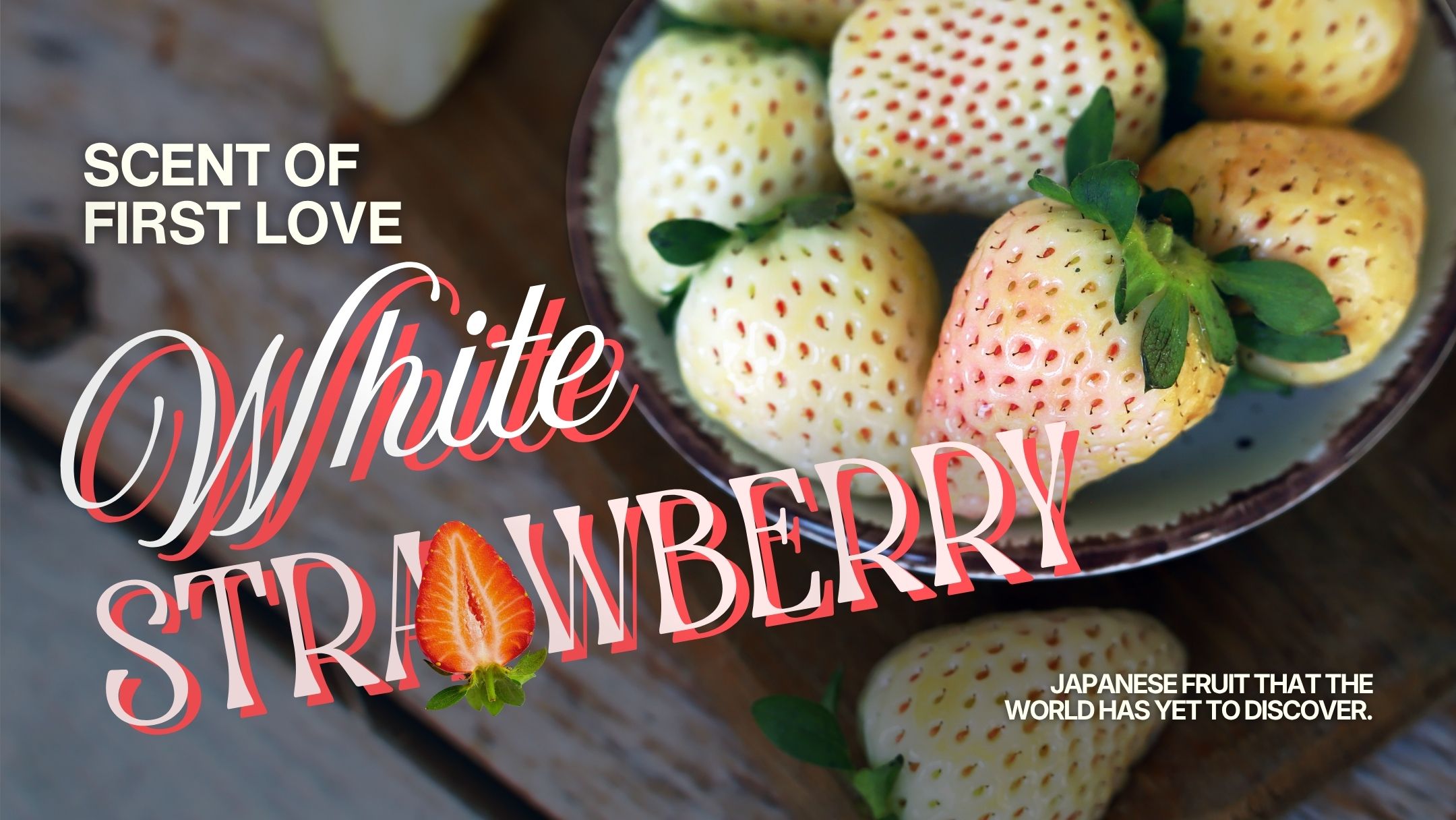
Miyoshi Agri-Tech Co., Ltd. is a company that has consistently challenged itself to redefine value in Japanese agriculture, looking beyond simple production volume and efficiency. The white strawberry it produces can be seen as a symbol of this philosophy.
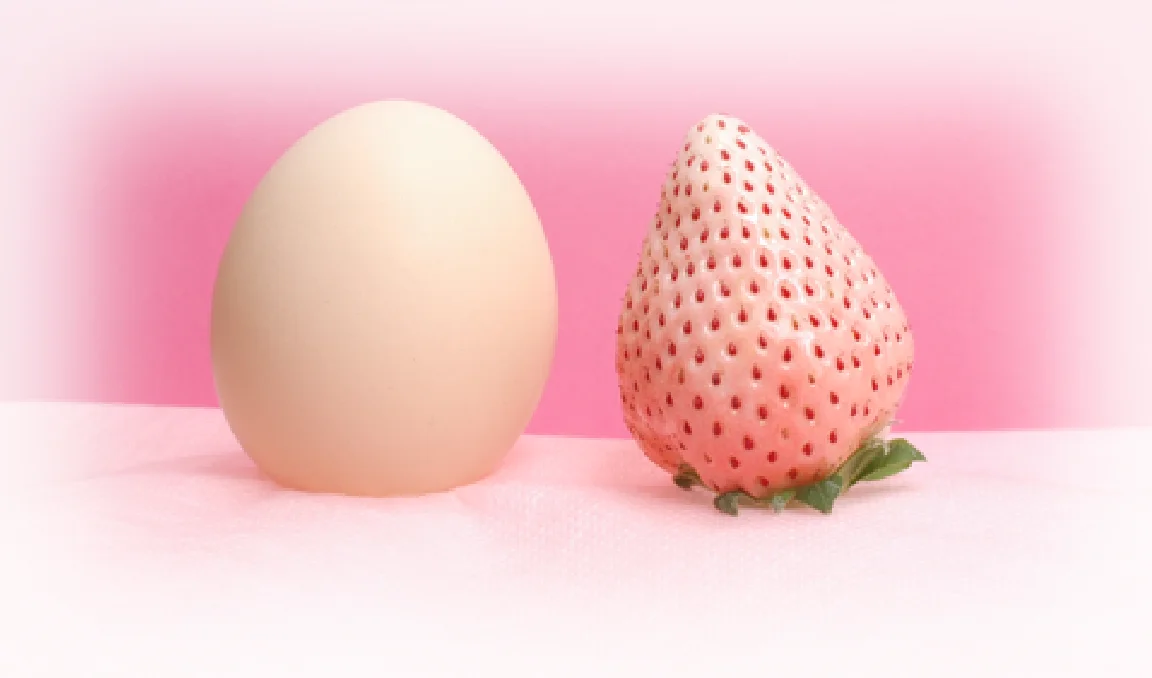
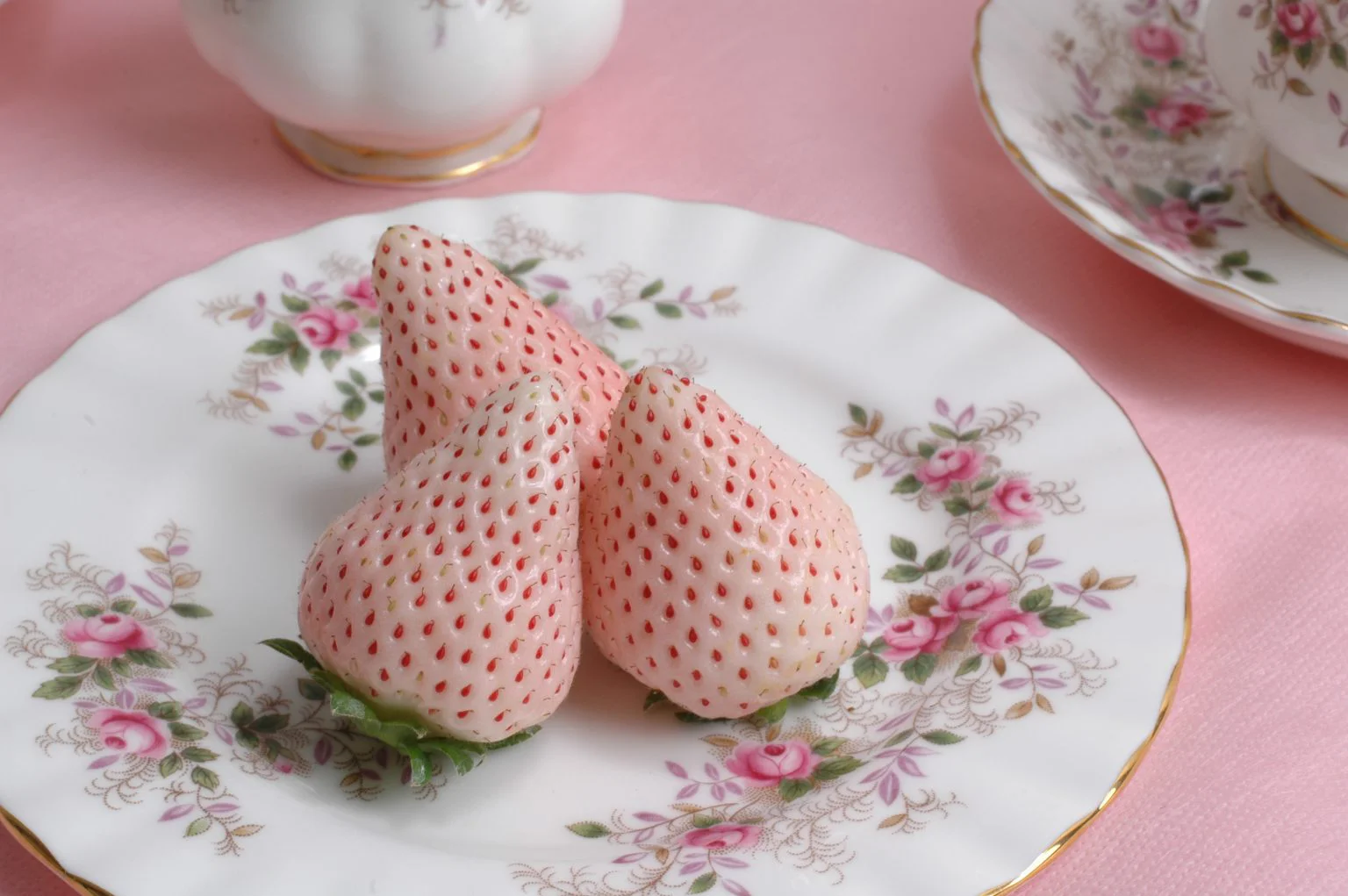
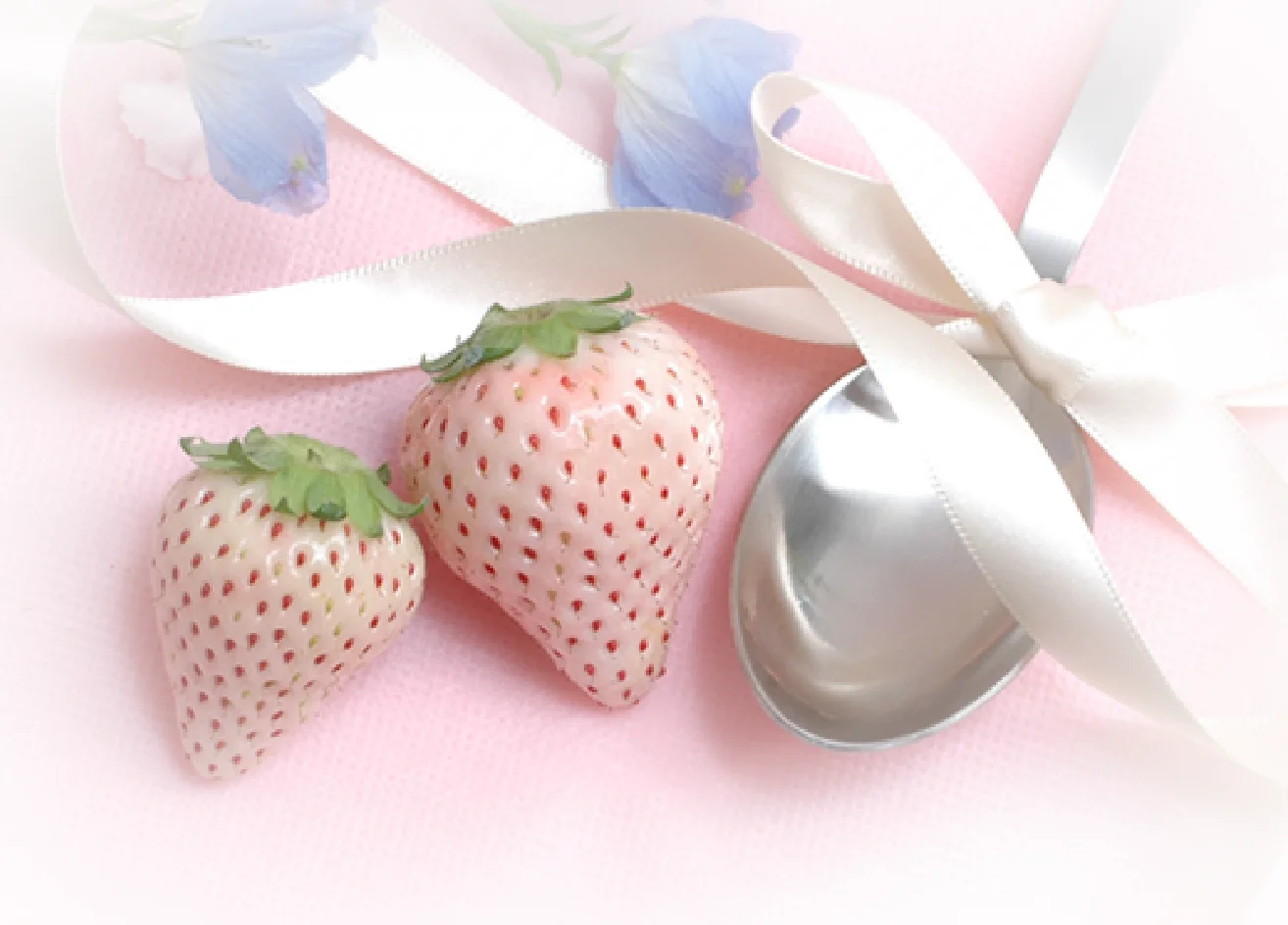
The white strawberry is a unique agricultural product originating in Japan. Unlike conventional red strawberries, it ripens while its skin remains white, creating a striking visual impression for those seeing it for the first time. Its appeal lies not only in its unusual appearance, but also in its fragrance, sweetness, and the rarity itself—each of which contributes to its value.
Why is it meaningful to introduce this white strawberry to overseas markets now?
In recent years, the global fruit market has shown growing interest not only in mass-produced, low-cost produce, but also in high-value fruits with a story and distinctive background. This trend is especially evident in the luxury gift market, fine dining restaurants, and high-end hotels, where experience and narrative are valued as much as flavor.
While Japanese agriculture may find it difficult to compete internationally on scale and price alone, it has developed unique strengths in plant breeding, cultivation techniques, and quality control. The white strawberry is one of the clearest expressions of those strengths. Through this product, Miyoshi Agri-Tech aims to demonstrate Japan’s ability to create extraordinary value—even on a small scale.
The white strawberry is not merely a rare fruit. It is also a statement about where Japanese agriculture is heading next.
White Strawberry Overview
White strawberries are a rare variety distinguished by the fact that their fruit does not turn red even when fully ripe. Because of their striking appearance, they are sometimes mistaken for being unripe. In reality, however, they develop a high sugar content, along with a rich fragrance and gentle sweetness. Unlike conventional strawberries, ripeness must be judged not by color but by aroma and taste—one of the defining characteristics of white strawberries.
This fruit exists only because of Japan’s advanced variety selection and cultivation techniques. Since growers cannot rely on color as an indicator of maturity, careful management is required throughout the growing process. Controlled cultivation environments must account for the fruit’s delicate nature, and strict quality control is essential from harvest through distribution. As a result, production volumes are limited, and white strawberries have naturally been positioned as a high-value fruit.
White strawberries are most commonly found in gift markets, fine-dining restaurants, luxury hotels, and department stores, where they are appreciated as a fruit that creates a “special experience.” Their appeal lies not only in flavor but also in the sense of surprise and narrative they bring to the table.
The White Strawberry Produced by Miyoshi Agri-Tech Co., Ltd.
The white strawberry produced by Miyoshi Agri-Tech Co., Ltd. cannot be defined merely by the surface-level characteristic of being “a white strawberry.” In developing this fruit, the company has focused on reexamining the very criteria by which strawberries are traditionally evaluated. In Japan, the value of strawberries has long been judged by visual and numerical standards such as deep red coloration, uniform shape, and sugar content. The belief that a strawberry must be vividly red and perfectly formed to be considered high quality is deeply rooted not only among consumers but also within the production field itself.
Against this backdrop, the white strawberry stands as a distinctly unconventional presence. Its skin never turns red, even at full ripeness, and at first glance, it may appear unripe. As a result, its value cannot be measured by conventional standards. Precisely because of this, white strawberries require a shift in perspective—one that emphasizes sensory qualities such as flavor, aroma, and the impression the fruit leaves the moment it touches the palate. Miyoshi Agri-Tech believes that within this shift lies a new possibility for Japanese agriculture.
A Shift Toward Sensory Value in Agriculture
White strawberries are positioned not as a fruit for everyday mass consumption but as ones that create a special moment. In gift settings, the surprise upon opening the box and the mix of curiosity and anticipation sparked by the sight of a white strawberry already form part of the experience. When finally tasted, the contrast between its appearance and its actual flavor leaves a lasting impression. This entire sequence—visual surprise, sensory discovery, and emotional response—constitutes the essence of its value.
In terms of price, white strawberries occupy a clearly different range from conventional varieties. Production volumes are limited, cultivation requires advanced techniques and careful management, and their rarity elevates their market position. However, Miyoshi Agri-Tech does not frame this pricing simply as a luxury strategy. Rather, it is seen as a fair return on challenge and technological expertise. Instead of pursuing efficiency and mass production, the company chooses to carefully deliver its product to those who understand and appreciate its value. That philosophy sustains the world and identity of the white strawberry as a whole.
A Strawberry Evaluated by Aroma and Finish, Not Color
The uniqueness of the white strawberry lies in the difficulty of both cultivating and evaluating it. With conventional strawberries, harvest timing can be determined by the fruit’s color development. For white strawberries, however, that indicator cannot be used. Growers must instead assess maturity by carefully observing multiple factors—how the aroma develops, the firmness of the flesh, and the rise in sugar content. This process requires a highly refined level of judgment from producers.
White strawberries also demand a new kind of experience from those who eat them. The unconscious expectations people hold about red strawberries—such as “it looks sweet” or “it will probably be tart”—do not apply. As a result, the taster is compelled to focus purely on flavor. The aroma that spreads the moment it is bitten into, the gentle sweetness that lingers on the tongue, and the light, clean finish ultimately define its value. This quality—of being something that cannot be understood without experiencing it—elevates the white strawberry beyond mere curiosity and transforms it into a fruit that leaves a lasting impression.
The cultural dimension is equally significant. In Japan, the color white is often associated with purity, refinement, and ceremony, making it well-suited to celebratory occasions and gift-giving contexts. Because of this, the white strawberry carries not only sensory appeal, but also cultural meaning embedded within its very color.
An Alternative Path for Japanese Agriculture Beyond Price Competition
Behind Miyoshi Agri-Tech Co., Ltd.’s commitment to white strawberries lies a structural challenge long faced by Japanese agriculture. Competing directly with overseas producers through mass-production-based models, large-scale distribution, and price competition has become increasingly difficult. For years, the industry has faced the question of what value domestic agriculture can truly offer.
The path the company chose was not one defined by volume or low cost, but by uniqueness and experiential value. The white strawberry stands as a symbol of that decision. From a production efficiency standpoint, it is far from the most rational choice. Yet by creating a fruit unlike any other, Miyoshi Agri-Tech sought to demonstrate the technological strength and creative vision inherent in Japanese agriculture.
This challenge extends beyond the development of a single variety. It represents an effort to broaden the very framework by which agriculture itself is evaluated.
The Real Challenge Is Not “Growing It White,” but Delivering It Consistently
Source: Miyoshi Agri-Tech Homepage
In cultivating white strawberries, the greatest difficulty is not simply achieving their white color. The more fundamental challenge lies in determining ripeness without relying on color and delivering consistent quality to the market. What Miyoshi Agri-Tech Co., Ltd. has faced in producing white strawberries is a series of situations in which conventional assumptions about strawberry cultivation no longer apply.
White strawberries are highly sensitive to subtle differences in sunlight exposure, temperature control, and moisture levels, all of which can significantly affect their aroma and sweetness. With red strawberries, growers can gauge harvest timing by the degree of coloration. That method does not work with white strawberries. Instead, each fruit must be carefully observed, with growers assessing sugar content, flesh firmness, and aroma development to determine the optimal harvest moment.
Blending Human Intuition with Data-Driven Research
This process is difficult to mechanize or automate and depends heavily on human senses and experience. Drawing on decades of expertise as a seed and seedling company, Miyoshi Agri-Tech has accumulated and analyzed cultivation data through its research farms. Detailed records of growth variations across temperature ranges and seasonal differences in flavor and aroma are carefully documented and reflected in future cultivation planning. This steady, methodical effort underpins the quality of the white strawberry.
In terms of quality control, the company prioritizes flavor stability over appearance uniformity. While white strawberries may show more visible variation from one fruit to another, strict shipping standards are in place to ensure consistency in taste and aroma. Rather than increasing shipment volume, the company places greater importance on preserving experiential value. This decision reflects a commitment to long-term trust over short-term sales.
A Seed Company’s Commitment to Questioning the “Obvious”
Miyoshi Agri-Tech Co., Ltd.’s work with white strawberries did not emerge from a sudden idea. Since its founding in 1967, the company has continuously engaged with the realities of agricultural production as a seed and seedling developer. Throughout its history, it has maintained a consistent mindset: questioning standards taken for granted.
A Legacy of Challenging Industry Assumptions
In agriculture, long-standing customs and rules of thumb are deeply rooted. They are often rational and, in many cases, correct. At the same time, however, they can make it difficult for new forms of value to emerge. The white strawberry was born from precisely this kind of questioning. Must strawberries be red? Does color have to be the central measure of quality? Rather than leaving these questions as theoretical discussions, the company chose to embody them in a tangible product. That decision reflects its core philosophy.
Underlying this approach was also a concern about the future of Japanese agriculture. As challenges such as a shortage of successors and intensifying price competition became more pronounced, the company believed that agriculture needed “achievements to be proud of” to remain attractive to younger generations. The white strawberry represents one such answer. By taking on a crop that is technically demanding and difficult to replicate, Miyoshi Agri-Tech sought to make visible the creativity and technological strength inherent in agriculture.
A Quiet Challenge Nurtured in Onomichi
The base of Miyoshi Agri-Tech Co., Ltd. is located in Onomichi, a region where agriculture and maritime trade have coexisted for generations. The area’s steep terrain and mild climate have supported distinctive forms of farming, yet it is not well-suited to large-scale agriculture focused solely on efficiency. As a result, a culture that values quality over quantity has naturally taken root.
The development of white strawberries is deeply connected to this regional character. Rather than pursuing mass production, the approach emphasizes careful, attentive cultivation. This philosophy aligns closely with the agricultural identity of Onomichi itself. By conducting technical verification at local research farms, the company has also built ties with the community through employment and the transfer of agricultural knowledge and skills.
White strawberries are not marketed primarily as a regional brand product, yet the land undeniably shapes their story. Grown patiently in a quiet environment, the fruit reflects a distinctly Japanese vision of agriculture—one defined not by scale, but by time, care, and refinement.
A White Strawberry Valued for Trust, Not Just Rarity
Source: Miyoshi Agri-Tech Homepage
While white strawberries often attract attention for their striking appearance, in Japan, they have not remained a passing trend. Instead, they have earned sustained recognition over time. In particular, their continued presence in highly selective distribution channels—such as department stores and premium fruit boutiques—speaks volumes about their credibility.
In these environments, products that are merely visually unusual do not last. Without consistent flavor and quality, repeat customers do not return, and items quickly disappear from shelves. The fact that white strawberries have continued to be carried at such venues indicates they meet a high standard as finished products.
Achieving Longevity in Premium Retail Channels
White strawberries are also not the type of product that experiences sudden surges in demand through media exposure or viral social media attention. Rather, within limited production volumes, they have been carefully delivered only to places where they are truly needed. This deliberate and measured approach has helped build brand value without diminishing its integrity.
In the culinary world, white strawberries are often featured on special menus or in limited-time desserts, and they have gradually earned the respect of chefs and pastry professionals. Despite being a delicate and technically challenging ingredient to handle, they continue to be chosen for their irreplaceable presence. Their track record in Japan has not been built on flashy numbers or mass sales, but on the steady accumulation of trust.
A Fruit That Communicates How Japan Creates Value in Agriculture
Source: Miyoshi Agri-Tech Homepage
The global potential of white strawberries goes far beyond their distinctly Japanese rarity. What truly deserves attention is the way they embody a unique method of creating value. While global agricultural distribution is often driven by efficiency and price competition, markets that prioritize experiential value and storytelling have been steadily expanding in recent years.
White strawberries function as a complete experience, integrating appearance, aroma, flavor, and the technology and philosophy behind their cultivation. This structure aligns particularly well with the luxury and premium food sectors, especially among affluent consumers in Asia, Europe, and North America, where layered value and narrative are more readily appreciated.
Another defining characteristic is that white strawberries do not need to emphasize “Japaneseness” to succeed overly. Unlike products such as sushi or traditional Japanese cuisine, which often require cultural context to be fully understood, white strawberries can be appreciated as fruit through an intuitive sensory experience. For that reason, they are well-positioned to cross linguistic and culinary boundaries.
In overseas markets, presentation methods can also be flexibly adapted to local food cultures and preferences. Beyond fresh consumption, opportunities in dessert and processed applications enable communication of the fruit’s value from multiple angles. The technical expertise cultivated by Miyoshi Agri-Tech Co., Ltd. provides the foundation to support such diversified expansion.
Why Global Companies Should Pay Attention to White Strawberries
The white strawberry produced by Miyoshi Agri-Tech Co., Ltd. is not only a unique agricultural product from Japan, but also an effort to redefine the value of agriculture itself. By stepping away from easily understood standards such as color and appearance, the fruit is evaluated through aroma, eating experience, and the philosophy behind its cultivation. Its presence points to another possibility for Japanese agriculture.
How can value be created without being drawn into price competition—and in a way that cannot be easily replicated? The white strawberry offers a concrete answer to that question. Rather than relying on mass production, it delivers value born from technology, expertise, and careful attention. This mindset extends beyond agriculture and speaks to product development across industries.
For overseas companies, white strawberries are not merely an imported commodity. They represent an opportunity to learn from Japan’s approach to value design and brand building, and to explore partnerships that create new markets together. The path demonstrated by white strawberries may be quiet, but in the global market of the future, it is likely to carry lasting significance.
FAQ About White Strawberries
1. What Kind of Fruit Is the White Strawberry?
White strawberries (white strawberry) are a rare variety of strawberry whose skin remains white and does not turn red even when fully ripe. "Hatsukoi no Kaori" (Scent of First Love), a representative white strawberry developed by Miyoshi Agritech Co., Ltd., is known not only for its unique appearance but also for being a high-value-added fruit with a rich aroma and gentle sweetness.
2. Is It Really Ripe Even Though It Stays White?
Yes, white strawberries are a variety that does not turn red even when fully ripe. Because of this, their ripeness cannot be judged by "color" like general strawberries; instead, they are harvested by comprehensively assessing their aroma, sugar content, and flesh firmness. The gap between appearance and taste creates a surprise unique to white strawberries.
3. How Is It Different From a Regular Strawberry?
The biggest difference is that "it is evaluated by its aroma and lingering aftertaste rather than its color." While it is easy to imagine the sweetness or tartness of a red strawberry just from its appearance, preconceived notions do not apply to white strawberries. As a result, this fruit naturally directs one's attention toward the aroma that spreads the moment it enters the mouth and the gentle sweetness itself.
4. Why Are White Strawberries Treated as a Luxury Fruit?
This is because production volume is limited, and cultivation and quality control require advanced techniques. Since harvest timing cannot be determined by color changes alone, growers must meticulously assess aroma and sugar content to find the perfect moment. This time, effort, and technique underpin the rare value of white strawberries.
5. Why Is There High Demand for It as a Gift?
Because the "surprise" moment the box is opened becomes an experiential value in itself. The white fruit has a strong visual impact and evokes a feeling of "never having seen this before." Furthermore, in Japan, "white" is often perceived as a color symbolizing cleanliness and luxury, making it highly regarded as a gift fruit.
6. Is It Also Attracting Attention in International Markets?
Yes, it is drawing interest from luxury markets, high-end restaurants, and the hotel industry. In recent years, demand has risen for "high-value-added fruits with a story and background" rather than "mass-produced, inexpensive fruits," and the white strawberry is gaining attention as an iconic symbol of this trend.
7. What Is the Most Difficult Part of Cultivating White Strawberries?
Rather than "growing them white," it is "consistently delivering stable quality." The aroma and sweetness vary easily with sunlight, temperature, and moisture levels, and harvest timing cannot be judged by color. Therefore, delicate management based on experience and intuition is required.
8. Why Did Miyoshi Agritech Co., Ltd. Take on the Challenge of White Strawberries?
To change how value is created in Japanese agriculture. Instead of engaging in price competition or mass production, the company chose to create agricultural products evaluated for their "uniqueness" and "experiential value." The white strawberry is positioned as a product that symbolizes this philosophy.
9. Why Didn't the White Strawberry End up as a Passing Fad?
Because it has continued to be evaluated for its "taste and quality," not just its novelty. Its continued adoption by markets with strict quality standards—such as department stores, luxury fruit specialty shops, and high-end restaurants—proves the white strawberry's reliability.
10. What Is the Biggest Appeal of the White Strawberry?
The "visual surprise" and the "gap the moment you eat it" work together as a single experience. The white strawberry is not just a rare fruit but also a unique "experiential fruit" where you can savor Japanese agricultural technology, sensibility, and value design itself.
Related Videos
If you're interested in Japan’s extraordinary fruit culture, the video below introduces the rare white strawberry, known for its delicate sweetness and elegant appearance. This video shows how Japanese farmers carefully cultivate these premium strawberries, creating a fruit that symbolizes luxury, craftsmanship, and the nostalgic scent of first love.