
“It’s embarrassing not to have friends at your wedding.” For many, hearing such words would make their heart skip a beat. On social media, someone’s wedding seems to appear every week, filled with glamorous dresses and happy smiles. Yet the reality is that there are also people who, for various reasons, cannot invite friends, have distant workplace relationships, or are estranged from relatives, living with a quiet loneliness.
In this context, what is quietly drawing attention is the “wedding attendance stand-in service.” It may sound like something out of a drama, but it is a real, professional service whose user base has been growing year by year. These stand-in attendees, playing the roles of close friends, coworkers, or relatives as requested, are not there to tell lies but to serve as behind-the-scenes supporters for the client’s important moments.
Of course, some may question whether it is simply about “showing off.” However, a wedding is not only about the bride and groom, but it is also a ceremony that reflects the relationship between the two families and their social connections. Decisions such as who to invite and how to arrange the seating can significantly influence the relationship with the other family. This is why having all the seats “filled” carries a meaning that goes beyond appearances.
The “wedding attendance stand-in service” offered by Family Romance is gaining strong support as one option to address this modern concern. Rather than “staging” family or social relationships, it serves to “supplement” them. By adding a sense of reassurance to the start of a new family’s journey, this service may one day become a natural, accepted choice.
Stand-in Wedding Attendance Overview
One of the reasons Family Romance Co., Ltd. has earned strong public support is its extensive track record of more than 15,000 requests over its 14 years of operation. The company conducts thorough consultations to understand even the smallest details of each request, enabling precise role preparation and reliable service execution that sets it apart from competitors.
With 14 years of experience since its founding, Family Romance has accumulated a wealth of know-how and continues to apply it directly in real-world situations. This long history of consistent effort has built a high level of trust among clients. To date, the company has handled over 15,000 requests, and the number of inquiries continues to grow year by year.
Creating the Perfect Guest Experience
The “Wedding Attendance Stand-In Service” is a unique offering by Family Romance Co., Ltd. that fills the “empty seats” at life’s milestone events. Professional performers attend the ceremony as friends, coworkers, or relatives, accurately portraying the roles requested by the client to help create the desired atmosphere for the event. Details such as the number of attendees, their relationships, and their behavior during the ceremony are carefully coordinated through thorough consultations to support the client’s vision of an “ideal wedding.”
What sets this service apart is its ability to recreate genuine relationships rather than providing a purely formal stand-in. From heartfelt speeches to natural gestures, the performers can portray every detail, helping to create a “perfect day” without causing any discomfort to relatives or other guests.
Service Details and Pricing Structure
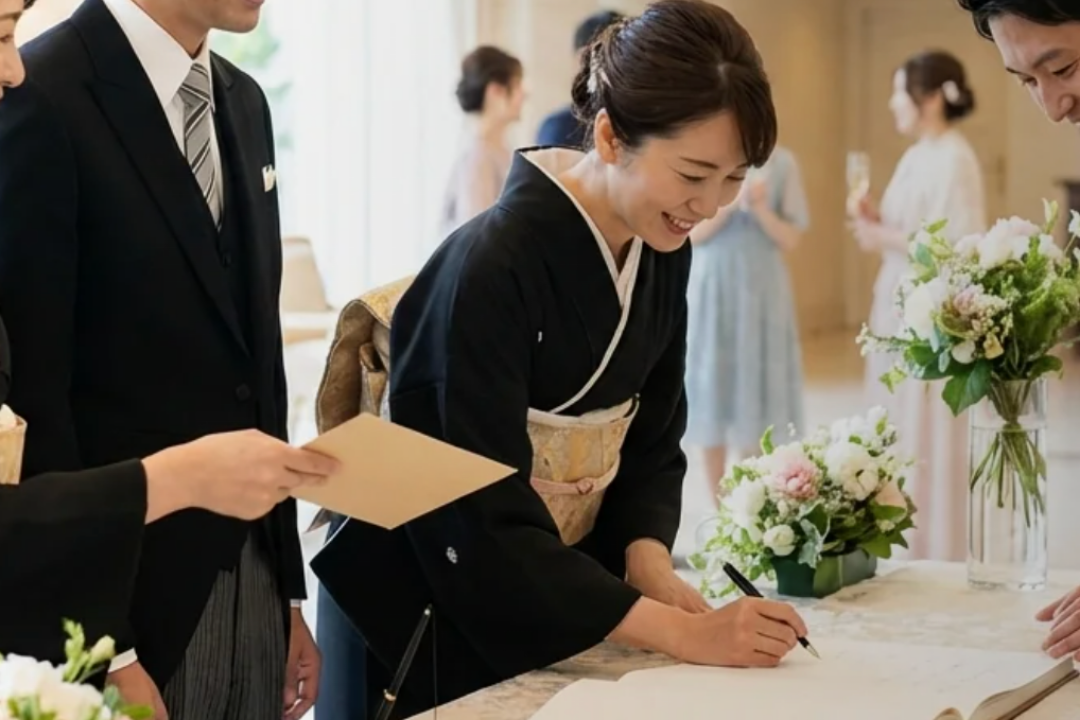
Source: Family Romance Homepage
Family Romance’s wedding attendance stand-in service is designed to be flexible and meet each client’s needs. The cost is generally set on a “per person, per event” basis, with the following pricing structure.
Basic Attendance Fee: From 12,000 yen per person (tax included)
Pre-Event Meeting/Rehearsal: From 8,000 yen per session, as needed
Additional Options for Speeches or Performances: 5,000–10,000 yen
Cost of Outfit Rental and Transportation: Billed at actual expense
Early Morning/Late Night Surcharge, Accommodation Fee: Added as needed
Why Stand-In Services Exist: Understanding Japan’s Social Dynamics
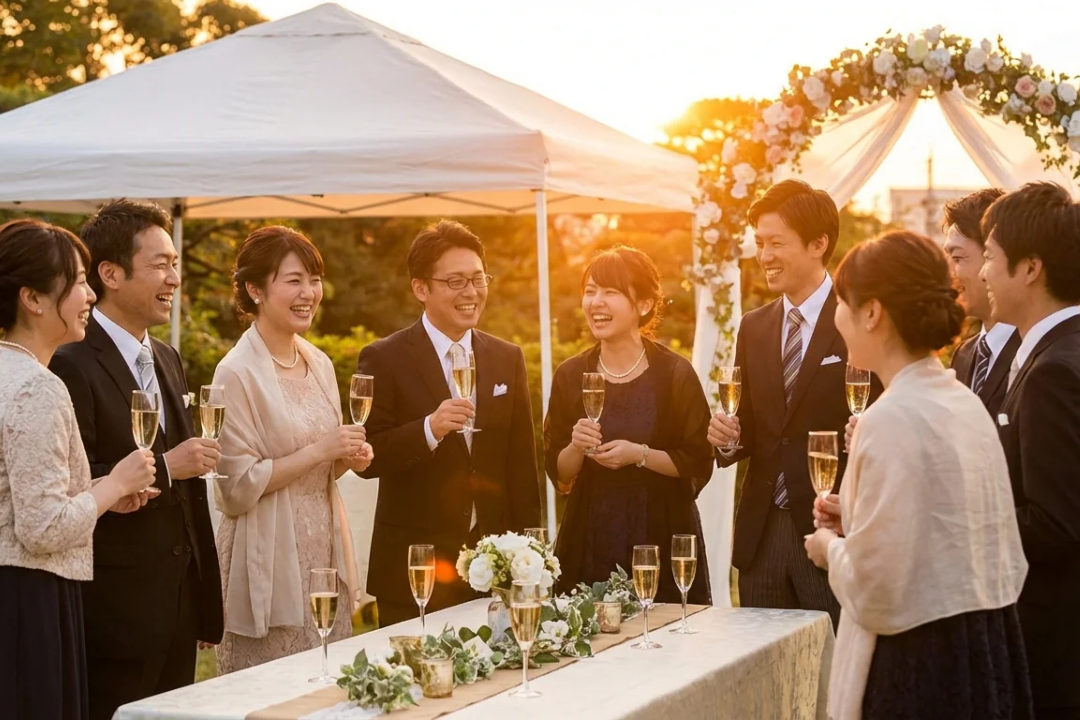
Source: Family Romance Homepage
In Japan, cultural values such as “reading the atmosphere,” “maintaining harmony with others,” and “avoiding embarrassment” are deeply ingrained. Against this backdrop, there is a strong emphasis on preserving social appearances and relationships. This tendency becomes especially apparent on celebratory occasions such as weddings.
The Social Atmosphere and Human Relationships Behind It in Japan
In modern Japan, factors such as the declining birthrate, the rise of nuclear families, and the weakening of local communities have made personal connections more fragile than in the past. For example, some people lose touch with friends from their school days, while others fail to build social networks due to frequent job changes. The circumstances vary from person to person, but the situation of “having no one to invite” is by no means uncommon.
In this social context, the demand to “fill empty seats” is steadily growing. Rather than being about appearances, it often comes from a sense of consideration, such as wanting to avoid causing unnecessary concern for the other party or their family, and maintaining a smooth relationship with them.
Interestingly, Japan also has other stand-in services such as “resignation agency services,” “friend rentals,” and “partner rentals.” These were born from the needs of people who feel uncomfortable with direct communication or who wish to avoid conflict. The wedding attendance stand-in service is similarly accepted as part of this broader aim of “reducing friction in human relationships.”
In other words, this service is not about “acting” or “deception,” but rather an efficient solution born from the consideration and social etiquette deeply rooted in Japanese society.
Why People Turn to Stand-In Services
Looking into the backgrounds of people who have actually used this service reveals a wide variety of circumstances. For example, a groom who had been largely reclusive for many years rented “coworkers” to balance the guest lists of both families. In another case, a bride who had no friends in Japan due to studying or working abroad hired several “close friend” stand-ins.
The service is also sometimes used by LGBTQ couples or in international marriages when gaining an understanding of relatives is difficult. In cases where there are people the couple does not want to know about their actual relationship, introducing “assigned relatives” can help avoid potential conflicts.
Many users express relief, saying things like “I’m so glad the ceremony went smoothly” and “My parents felt reassured.” Since the number of attendees and the “depth of relationships” can influence the overall impression of the ceremony, arranging these elements carries a meaning that goes beyond mere presentation.
On the other hand, the responsibility placed on stand-ins is significant. They must behave naturally, be familiar with past episodes involving the client, and be prepared to handle unexpected situations. This is why the role is not just a part-time job, but a field where experienced professionals thrive, with demand continuing to grow.
Rebuilding Human Relationships Through the Service
At first glance, the wedding attendance stand-in service may seem like “telling a lie.” However, at its core, it is rooted in the client’s sincere desire to avoid isolation and to avoid causing unnecessary concern for those around them.
In today’s world, where personal connections tend to be fragile, realizing one’s “ideal wedding” can be an act that requires a certain amount of courage. Knowing that there is a service to support this can be a great source of reassurance for clients.
Interactions with stand-in attendees can also change the way clients view relationships. There have even been cases where someone who played the role of a “close friend” at the wedding continued to stay in touch afterward. In other words, this service can serve not just to “act out” relationships but also to rebuild them.
In cases where multiple stand-ins are requested or where complex interactions with relatives are involved, additional fees may apply. While the cost may seem somewhat high, for clients, it can be seen as an investment in peace of mind to ensure that a “once-in-a-lifetime ceremony” is just right.
In thorough pre-event meetings, everything is carefully addressed, from setting roles and sharing past episodes to establishing emergency response procedures, ensuring that any potential slip-ups or exposure are prevented on the day. The fact that the cast members possess not only acting skills but also exceptional hospitality and communication skills is another reason they earn clients' trust.
The Reality of Being a Stand-In Attendee: Professionalism and Ethics
The cast members who stand in as attendees are not merely “hired guests.” They approach their work with the awareness of being “actors” and with a strong sense of responsibility to be present for one of the most critical days in the client’s life. At Family Romance, strict standards are in place for recruitment, with candidates selected only after a comprehensive evaluation of their trustworthiness, manners, and social skills.
Even after being hired, they cannot go straight into the field. During initial training, they receive detailed instruction on polite language, natural speech delivery, body language, and even how to appear in photos. Through repeated, thorough role-playing, they internalize “natural acting.” This naturalness is the key to the service’s success.
Alongside acting skills, a strong sense of ethics is also essential. Family Romance’s basic policy clearly distinguishes between “performing a role” and “telling a lie.” The role is to respect the client’s life and help set the stage as a form of support, never with the intent to deceive the person concerned.
In actual situations, the ability to respond flexibly to unexpected troubles or questions is also essential. Even to questions like “What’s your relationship with that person?” the stand-in must be able to give a natural answer based on the details discussed in advance with the client, or a sense of inconsistency will arise instantly. These moment-to-moment judgments are what support the success of the ceremony.
Because they are entrusted with the important mission of being involved in a client’s life, the cast members maintain a serious and sincere attitude at all times. Professional pride and conviction form the foundation of the service.
User Experiences and Feedback: A Choice to Create Reassurance, Not Just Fill a Gap

Source: Family Romance Homepage
The official Family Romance website features numerous stories from clients who have used the service. One example is a woman who had been living away from her hometown for many years and did not want to leave her friends’ seats empty, so she requested cast members to attend as friends. Through pre-event meetings, the cast refined their behavior to appear natural on the day. In their speeches, they spoke of shared “memories,” creating such a convincing performance that relatives and other guests were surprised and asked, “Have you been friends for a long time?”
In another case, a man who had been estranged from his family for many years requested stand-ins to act as his parents. The cast moved those around them to tears as they tearfully celebrated their “son’s” new beginning. In moments like these, the cast goes beyond simply playing a role, becoming deeply involved in the client’s life. The client himself expressed his gratitude, saying it had become “a wedding I will never forget,” showing that this service is far more than just “filling seats.”
In some cases, relatives of the bride and groom who were initially skeptical, wondering “Is it really necessary to go that far?” later remarked after the ceremony, “I’m truly glad they came.” People cannot be judged by appearance or first impressions alone. The cast’s genuine effort to blend seamlessly into the occasion can make a moment in the memory all the more meaningful.
These examples clearly show that the service is not about “acting out a lie,” but about providing reassurance. While the appearance may be a “performance,” at its core lies empathy for the client’s feelings and wishes. This commitment to being there for the client is what drives the creation of the most important “connections” at a wedding.
Conclusion
The wedding attendance stand-in service is not merely a “performance” or a “lie,” but a form of kindness that helps address the loneliness and fractured relationships present in modern society. Behind the glamorous wedding scenes that fill social media, many people struggle with worries like “I have no one to rely on” or “I’m anxious about being alone.” In response to this reality, Family Romance’s stand-in service gently supports clients’ feelings by having professional performers give shape to “human connections.”
A wedding is, by nature, not only “a place of celebration” but also “a place where relationships are made visible.” That is why the presence of “someone” there can become an element that richly colors the story of the bride and groom’s lives. Having attendees provides reassurance. Just having someone to talk to can make the ceremony a special memory. This system, which delivers such ordinary comforts with care as a “service,” can be considered an excellent solution unique to our times.
In a society where increasing individualization and isolation are expected, services that “create connections” like this may become ever more important. Overcoming the negative connotations associated with the word “stand-in,” they deliver the value of warmth and human bonds in a new form. Wedding attendance stand-ins are at the forefront of this movement, serving as a source of support for many people.
FAQ About Stand-In Wedding Attendance
1. What Is A Wedding Attendance Stand-In Service?
A wedding attendance stand-in service provides professional actors who attend weddings in the role of friends, colleagues, or relatives. Based on advanced consultations, specific personalities and relationships are established so they can blend naturally into the event and help create a balanced atmosphere.
2. Why Do People Use This Type Of Service?
It is often used when personal or family circumstances make it difficult to invite enough guests. Rather than being about appearances, many clients use the service to avoid making their partner or family feel uncomfortable, or to maintain the overall balance of the wedding.
3. Do Other Guests Usually Notice?
In most cases, no. Detailed preparation is carried out beforehand, including relationship settings, expected conversations, and behavior during the event. Experienced cast members are trained to interact naturally, helping them blend seamlessly into the wedding.
4. What Types Of Roles Can Be Requested?
A wide range of roles can be arranged, including friends, coworkers, and relatives. Additional options, such as giving speeches or participating in entertainment segments, may also be requested, allowing flexible support based on the flow of the ceremony.
5. What Is The Typical Cost?
Pricing generally starts at around 12,000 yen per person, including tax. Additional costs may apply for options such as speeches, rehearsals, or transportation expenses. Total pricing varies depending on the number of participants and the requested services.
6. Are There Risks Of Problems Or Complications?
The service is designed to minimize risks through detailed planning. Preparations typically include role settings, event flow coordination, and responses to possible questions from guests. This structured approach helps ensure smooth operation on the day of the wedding.
7. Are There Ethical Concerns About The Service?
The service is positioned not as an attempt to deceive others, but as a way to provide support where certain social roles are needed. It is intended to help clients navigate important life events smoothly while respecting their personal circumstances and emotional concerns.
8. Who Is This Service Best Suited For?
It is often used by people with limited social circles or those unable to invite enough guests due to family or work commitments. It may also be useful in situations such as international marriages or LGBTQ couples, where adjusting social dynamics may require additional support.
9. Do Relationships Ever Continue After The Event?
In most cases, the relationship ends after the event. However, there have been cases where communication continued afterward. For some clients, the experience can become an opportunity to rebuild social connections.
10. What Is The Biggest Advantage Of This Service?
Its greatest benefit is reducing anxiety related to empty seats or social balance at a wedding, allowing clients to approach the day with greater peace of mind. Beyond maintaining appearances, it can also help ease emotional stress and improve overall satisfaction with the ceremony.