Whether you're exploring a new city as a tourist or traveling for business, one challenge almost everyone encounters is what to do with their luggage. Arriving before hotel check-in, checking out hours before your flight, or facing a long airport layover can leave you carrying heavy bags that limit where you can go and what you can do. In busy urban destinations, luggage is more than an inconvenience. It can shape travel decisions, reduce mobility, and prevent people from fully enjoying their surroundings.
Japan's ecbo cloak addresses this universal problem with a simple yet innovative solution. The platform allows users to search for, reserve, and use temporary luggage storage locations through a smartphone app or web browser. Instead of relying solely on coin lockers, travelers can book nearby partner shops and businesses in advance, securely store their belongings, and pick them up whenever they're ready.
The service emerged as Japan experienced a rapid increase in international tourism. Popular cities such as Tokyo, Kyoto, and Osaka have struggled with shortages of coin lockers, especially during peak travel seasons. For overseas visitors, finding an available locker can also involve navigating unfamiliar stations, language barriers, and payment systems. These challenges have created demand for more flexible luggage storage options that serve not only tourists but also local residents and business travelers.
The need for this type of service extends far beyond Japan. As tourism continues to grow worldwide, cities are welcoming more independent travelers, hosting larger events, and adopting mobile-first reservation systems. Traditional lockers and staffed baggage counters are often unable to keep pace with changing travel habits. Platforms like ecbo cloak demonstrate how on-demand, digitally managed luggage storage can become an essential part of modern urban infrastructure.
In this article, we'll explore how ecbo cloak was created, how the platform works, and why its approach has attracted attention as a new model for improving mobility in cities. More than just a convenient travel tool, ecbo cloak illustrates how rethinking everyday problems can create value for travelers, local businesses, and entire urban communities.
ecbo cloak Overview
ecbo cloak is an online platform that connects people looking for temporary luggage storage with businesses that have unused space available. Through the company's website or mobile app, users can search for nearby storage locations, reserve a spot in advance, and drop off their luggage during their selected time slot. Their belongings are securely stored until they return to collect them.
Unlike traditional coin lockers, which often require travelers to search for available spaces in person, ecbo cloak lets users reserve storage before they arrive. The service also accommodates larger items that frequently don't fit inside standard lockers, including oversized suitcases, sports equipment, and event gear. Pricing varies depending on the size of the luggage and the storage duration, giving travelers greater certainty before they begin their journey.
While international tourists and business travelers make up a significant portion of its users, ecbo cloak also serves event attendees and local residents who need a temporary place to store their belongings. For anyone looking to move freely through a city without carrying heavy bags, the service offers a practical way to expand their mobility.
Solving an Urban Problem That Coin Lockers Could Not

Source: ecbo Homepage
The idea behind ecbo cloak emerged from two major changes taking place across Japan: the rapid growth of inbound tourism and the evolving needs of modern cities. As more international visitors arrived, it became increasingly common to see travelers pulling large suitcases through busy shopping districts, train stations, and sightseeing areas. Yet despite this shift, Japan's luggage storage infrastructure remained heavily dependent on traditional coin lockers.
Coin lockers have long been a convenient solution, but they come with significant limitations. Travelers typically have to search for an available locker in person, availability is unpredictable, and locker sizes often cannot accommodate oversized suitcases, sports equipment, or other bulky items. Many lockers are also concentrated inside railway stations, making them less convenient for people already exploring shopping districts or tourist attractions away from transportation hubs.
International visitors often face additional challenges. Some locker systems offer limited multilingual support, while others still require cash payments or have interfaces that can be confusing for first-time users. As Japan's tourism industry continued to grow, it became clear that simply installing more lockers would not solve the underlying problem.
How ecbo cloak Turns Empty Space into Storage Hubs
Rather than expanding fixed locker infrastructure, ecbo Inc. approached the issue from a completely different perspective. Instead of building new storage facilities, the company looked at the countless unused spaces already scattered throughout cities. Cafes, retail shops, hotels, tourist information centers, and other businesses often have spare storage capacity that sits unused during parts of the day. By connecting these spaces through a digital platform, they could collectively function as a distributed luggage storage network.
ecbo cloak makes this possible by allowing users to search for nearby storage locations, reserve a spot in advance, and complete payment online before arriving. Instead of wandering around looking for an empty locker, travelers can secure a convenient storage location near their destination and spend less time carrying heavy bags.
The model also creates value for participating businesses. Offering luggage storage brings new visitors into stores, increasing opportunities for additional purchases and greater brand exposure. Rather than leaving unused space idle, businesses can generate supplemental income while creating new customer touchpoints.
Ultimately, ecbo cloak is about much more than storing luggage. It rethinks the assumption that people must carry their belongings everywhere they go, redesigning urban mobility through a distributed network rather than relying solely on fixed infrastructure. What appears to be a shortage of coin lockers is actually part of a broader challenge involving how cities manage pedestrian movement, tourism, and public space. ecbo cloak represents one practical answer to that larger urban design problem.
Rethinking Urban Freedom Through the Lens of Luggage
Tourism growth was only part of what inspired ecbo Inc. to build its luggage storage platform. At its core, the company was responding to a more fundamental observation: carrying luggage quietly limits how people experience a city.
Whether someone is traveling, shopping, commuting, or attending an event, they are often moving through the city with something in hand. Suitcases, shopping bags, work equipment, and event gear are essential, but they also influence countless small decisions. People avoid climbing stairs, skip narrow streets, decline spontaneous detours, or shorten their sightseeing simply because carrying heavy belongings becomes exhausting. Over time, these small compromises reshape the entire urban experience.
Rather than trying to eliminate luggage itself, ecbo asked a different question: what if people could simply separate themselves from their belongings for a few hours?
By making safe storage locations visible and bookable throughout the city, the company believed it could dramatically increase people's freedom of movement. The real problem was not a lack of storage space. Cities already contained countless unused areas. The missing piece was a system capable of connecting those spaces efficiently.
The "Airbnb" of Luggage
This philosophy aligns closely with the principles of the sharing economy. Cities contain enormous amounts of underutilized space, but those resources are scattered across thousands of independent businesses. ecbo cloak transforms these fragmented spaces into a unified storage network through digital technology. In that sense, the company is addressing not only the shortage of lockers but also the inefficient use of existing urban resources.
Building that network required more than technology alone. Trust was equally important. At first, many people naturally hesitated at the idea of businesses storing someone else's personal belongings. To overcome these concerns, ecbo cloak developed standardized reservation management, centralized payment systems, clear service policies, and customer support processes that created confidence for both users and partner businesses. The company focused not only on matching customers with storage locations but also on designing a reliable operational framework.
The ultimate goal was never to increase the number of places where luggage could be stored. Instead, ecbo cloak aims to increase the amount of time people can enjoy a city without worrying about their belongings. Removing that burden encourages people to explore more freely, visit more places, and enjoy richer experiences. From that perspective, luggage becomes the starting point for redesigning how people interact with urban environments.
Designed as an Urban Network, Not Just Another Locker Service
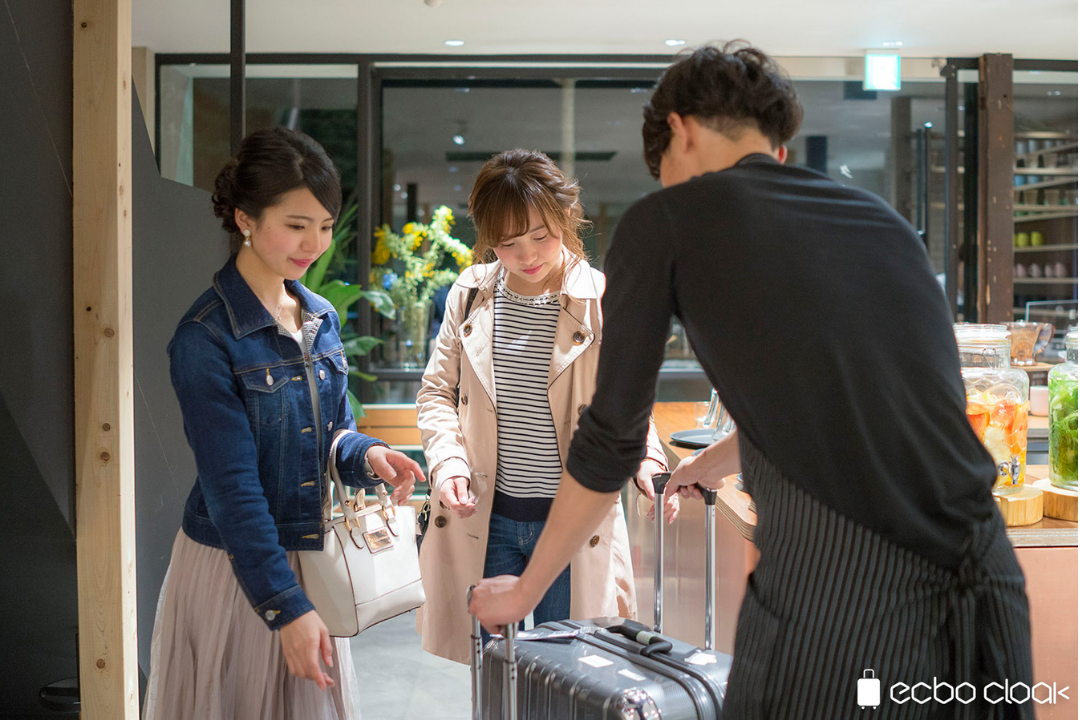
At first glance, ecbo cloak appears to be a straightforward service. Users search for nearby storage locations through the website or mobile app, choose a convenient location and time, reserve their spot, and drop off their luggage at the selected business. When they are ready to leave, they simply return to pick it up.
The simplicity of the experience, however, hides a much broader design philosophy.
Traditional coin lockers revolve around physical boxes. Their value depends almost entirely on whether one is available and whether the luggage fits inside. ecbo cloak shifts the focus away from lockers and instead connects existing businesses into a citywide network. Because participating stores use available storage space rather than standardized lockers, they can often accommodate larger suitcases and items that would not fit inside conventional lockers. This also allows storage locations to exist in shopping districts and tourist areas where traditional lockers may be scarce.
Advance reservations are another important difference. Instead of arriving and hoping an empty locker is available, travelers can secure storage before leaving their hotel or boarding a train. Solving the luggage question during the planning stage gives people greater confidence to build more flexible itineraries and make spontaneous travel decisions.
The platform itself also plays an important role. Storage locations are displayed within a centralized system where reservations, payments, and management are handled digitally. Clear rules, standardized procedures, and platform support reduce many of the uncertainties that typically arise in informal peer-to-peer arrangements. This operational consistency distinguishes ecbo cloak from a simple marketplace that merely connects users with businesses.
Why Japanese Businesses are Welcoming Your Bags
From a business perspective, ecbo cloak also functions as a customer acquisition tool. Many people dropping off luggage are visiting the participating store for the first time. A cafe may gain additional food and beverage orders, while a retail shop may benefit from visitors browsing products before or after collecting their bags. In this way, luggage storage becomes more than a standalone service. It creates opportunities for businesses to attract new customers and increase foot traffic.
Although ecbo cloak does not rely on advanced robotics or automated storage technology, its innovation lies in how it digitally connects existing urban spaces. Instead of investing in expensive new infrastructure, the platform unlocks the potential of places that already exist, allowing the network to expand quickly and efficiently.
The true value of ecbo cloak is not simply providing somewhere to leave a suitcase. It creates moments where people no longer have to think about carrying their luggage at all. By temporarily removing one of the most common constraints of urban travel, it makes cities feel lighter, more accessible, and easier to explore.
How Luggage Storage Creates More Exploration and New Business Opportunities
Source: ecbo Homepage
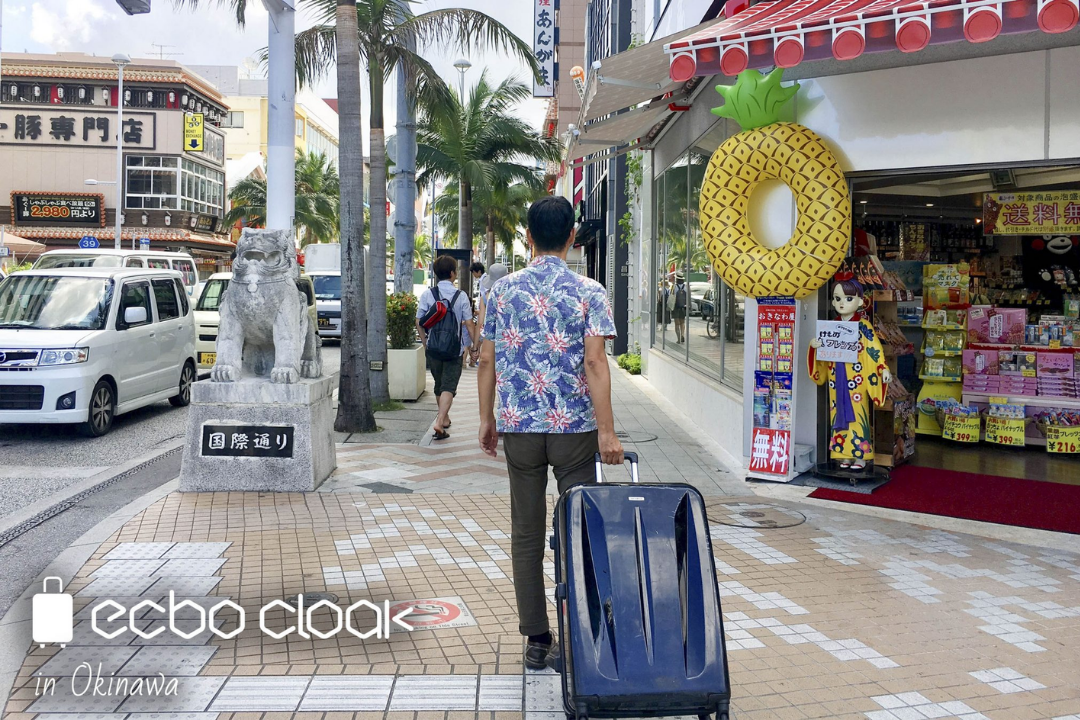
Wherever ecbo cloak has been introduced, its impact extends far beyond simply increasing the number of places where people can leave their bags. In tourist destinations and busy city centers, the service is changing how people move through urban spaces by giving them the freedom to explore without being weighed down.
This is especially noticeable around hotel check-in and check-out times, when many travelers spend several hours sightseeing with large suitcases. Carrying heavy luggage often leads people to skip hilly neighborhoods, avoid crowded shopping streets, or cut their sightseeing short. When an ecbo cloak storage location is nearby, visitors can leave their bags behind and continue exploring comfortably. As a result, they often spend more time in the area and are more likely to visit additional shops, restaurants, and attractions.
The same effect can be seen in commercial districts and business centers. Event attendees and business travelers who store their luggage are more likely to browse stores, enjoy meals, or extend their stay in the area instead of heading directly to their next destination. Removing the burden of carrying bags encourages people to spend more time, and often more money, within the local economy.
Partner businesses also benefit in tangible ways. Many customers who visit a store to drop off their luggage are first-time visitors. Some choose to shop or dine before leaving, while others return after collecting their belongings. Instead of functioning solely as an additional source of income, luggage storage becomes a practical way to introduce new customers to local businesses.
The service has also proven valuable during large-scale events such as trade shows, sporting events, and music festivals, where participants often carry bulky luggage or equipment. By creating a network of nearby storage locations, event organizers can reduce congestion and avoid the logistical challenges of managing attendees' belongings themselves. Outsourcing luggage storage improves both operational efficiency and the overall visitor experience.
These benefits extend across multiple groups. Travelers gain greater freedom of movement, businesses attract new customers while generating additional revenue, and cities become easier to explore. What appears to be a simple luggage storage service ultimately contributes to a more vibrant and accessible urban environment.
Although luggage storage may not seem like an exciting innovation at first glance, it has the potential to reshape how people experience cities. ecbo cloak is becoming part of the invisible infrastructure that helps modern urban tourism function more smoothly.
Building the Trust That Makes a Shared Service Possible
For any luggage storage platform, trust is the foundation of the entire business. Since customers are leaving valuable personal belongings with someone else, safety, transparency, and reliability must be built into every stage of the experience.
ecbo cloak manages the entire reservation process online, from booking to payment. Users select a storage location, choose their preferred drop-off and pickup times, and complete payment before arriving. Because every step is recorded digitally, the storage period, pricing, and reservation details are clearly defined, reducing misunderstandings and minimizing problems at the store.
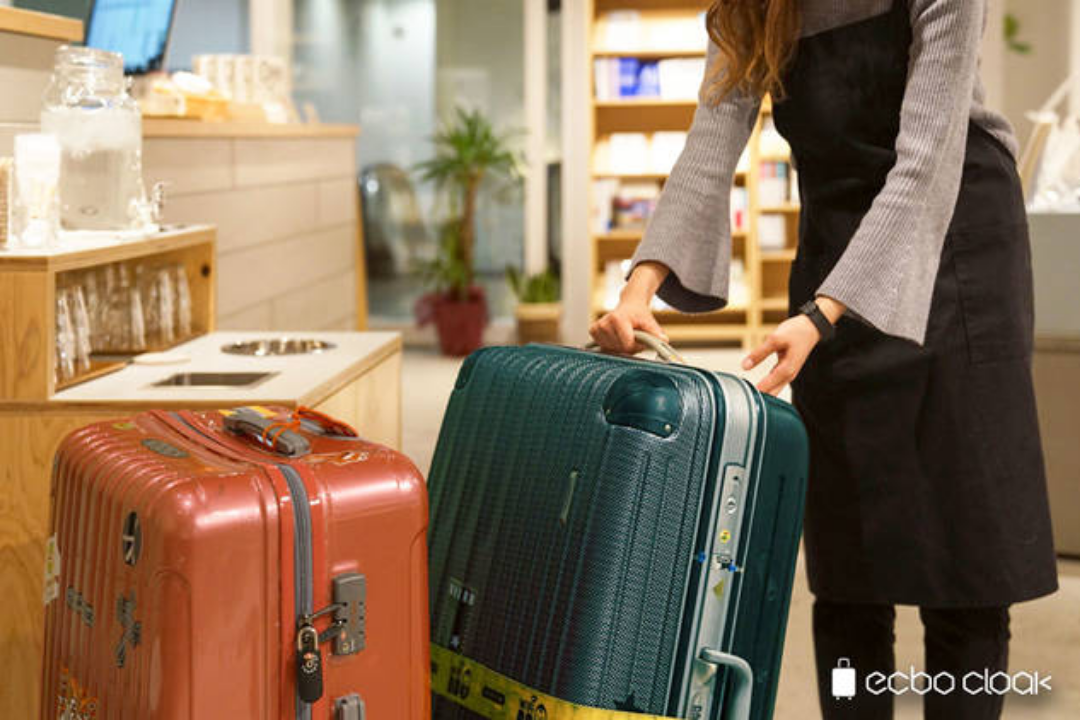
Partner businesses also operate under standardized procedures. Guidelines for accepting, storing, and returning luggage help create a consistent customer experience across the network. Rather than simply renting out spare space, participating locations become part of a professionally managed service with shared operating standards.
Comprehensive user policies and customer support further strengthen confidence in the platform. Clear procedures for handling unexpected situations help reassure both customers and partner businesses. In a sharing economy model like this, operational design often matters just as much as the technology itself.
ecbo cloak’s Strategic Role in Japanese Tourism
From a business perspective, these standardized operations are particularly important. Tourist attractions, shopping centers, and commercial facilities naturally consider issues such as liability, customer complaints, and operational workload before adopting an outside service. By centralizing reservations, payments, and management, ecbo cloak reduces the administrative burden on partner businesses while maintaining consistent service quality.
The platform also generates valuable operational data. By analyzing when and where reservations are made, ecbo can identify demand patterns, optimize storage locations, and improve future partnerships. This ability to use digital data for continuous improvement is a significant advantage over traditional locker-based systems.
Ultimately, ecbo cloak offers much more than a way to store luggage. It provides the operational framework needed to connect hundreds of independent businesses into a unified service. Behind the technology is a carefully designed system built to earn and maintain trust.
ecbo's Vision for the Future of Urban Mobility
Although ecbo cloak is known as a luggage storage service, the company was founded with a much broader vision. At its core is a simple but powerful question about how cities function and how people interact with them.
The company's mission, "Free ownership," goes beyond luggage itself. Personal belongings naturally accompany people throughout their daily lives, but ecbo asks whether those items really need to remain with us every moment of the day. That question became the starting point for rethinking how urban spaces can better support freedom of movement.
Cities are filled with underused resources, from storage rooms and back offices to unused retail space during quieter hours. Individually, these spaces have limited value. Connected through a digital platform, however, they become part of a new type of urban infrastructure. ecbo cloak was designed to unlock the potential of these overlooked spaces.
Rather than focusing on the physical limitations of cities, the company's founders saw a different challenge: the inefficient use of existing resources. Instead of building more lockers, they chose to repurpose spaces that were already available. While this approach shares similarities with the broader sharing economy, the goal extends beyond matching supply and demand. The larger objective is to make cities easier, lighter, and more enjoyable to experience.
The Empty-Handed Traveler
When people are no longer burdened by heavy luggage, they gain greater freedom to explore. That freedom often leads to longer visits, increased spending, and richer travel experiences, benefiting not only individuals but also local businesses and the city as a whole. Designing this positive cycle lies at the heart of ecbo's long-term vision.
Although ecbo is a technology company, its focus is not on hardware innovation. The app and reservation platform are simply tools that support a larger mission of improving urban environments. Rather than replacing existing infrastructure, ecbo aims to complement it and make cities more convenient for everyone.
In that sense, ecbo cloak is both a luggage storage platform and a tool for increasing urban mobility. Its future lies not in adding more features, but in helping people experience cities with greater freedom.
Why Japan Was the Ideal Place for ecbo cloak
Source: ecbo Homepage
To fully understand ecbo cloak, it helps to understand the unique characteristics of Japanese cities.
Japan has one of the world's most extensive railway networks, with shopping centers, entertainment districts, and tourist attractions often clustered around major stations. At the same time, the rapid growth of inbound tourism has made large suitcases an increasingly common sight in these busy urban areas.
In cities such as Tokyo, Kyoto, and Osaka, travelers frequently spend hours between hotel check-out and check-in carrying heavy luggage while waiting to continue their journeys. The rise of vacation rentals and hotels located farther from major stations has made this challenge even more noticeable.
Japanese cities are also designed to be explored on foot. Narrow streets, traditional shopping arcades, historic neighborhoods, and stair-filled districts encourage walking rather than driving. Carrying bulky luggage limits visitors' ability to fully enjoy these environments, making convenient luggage storage especially valuable.
Lessons in Meticulous Service Design from Japan
Another important factor is Japan's large number of independently operated shops and small local businesses. Rather than creating entirely new storage facilities, ecbo cloak connects these existing businesses into a distributed network, linking local commerce with tourism. As a result, the platform contributes not only to visitor convenience but also to the vitality of neighborhood economies.
As Japan continues to position itself as a leading tourism destination, improving the visitor experience has become increasingly important. Giving travelers the freedom to explore without luggage enhances both satisfaction and the overall appeal of a destination. ecbo cloak achieves this without requiring expensive infrastructure projects, making it an efficient and scalable solution.
Although the service was developed specifically for Japan's urban environment, the challenges it addresses are far from unique. Understanding the Japanese context simply makes it easier to see why the concept has broader international potential.
A Distributed Luggage Infrastructure With Global Potential
While ecbo cloak was born from Japan's tourism boom and urban landscape, the concept itself addresses challenges faced by cities around the world.
Major destinations across Europe and North America are also seeing growing numbers of tourists and business travelers carrying luggage through busy city centers. Historic districts often feature cobblestone streets, staircases, and crowded public transportation that make moving with large suitcases difficult. Major airports face similar challenges, as travelers look for ways to enjoy long layovers without dragging luggage from terminal to terminal.
Although many cities offer lockers or staffed baggage counters, these services are often limited in number, restricted to transportation hubs, or unavailable for advance reservations. Expanding physical infrastructure can also be expensive and difficult as demand fluctuates.
This is where ecbo cloak offers a different approach. By utilizing unused space inside existing businesses, the platform can expand its storage network without requiring significant investment in new facilities. Because the model relies on existing urban resources, it can be adapted to cities of different sizes, layouts, and cultures.
Advance reservations combined with online payments also make the service particularly attractive for international travelers. Digital booking reduces language barriers while creating a smoother experience for visitors from around the world.
From a business perspective, the model has clear appeal for shopping centers, tourist attractions, airports, and event organizers. Outsourcing luggage storage improves customer satisfaction while encouraging visitors to stay longer and explore more of the surrounding area.
Ultimately, ecbo cloak is more than a local Japanese service. It offers a scalable framework for making cities easier to navigate, a concept with applications anywhere tourism and urban mobility intersect.
Building Trust Through Proven Success in Japan
Since its launch, ecbo cloak has steadily expanded its network throughout Japan. The platform now partners with a wide variety of businesses, including cafes, retail stores, hotels, and other facilities, creating a distributed storage network across major tourist destinations and urban centers.
Demand has been particularly strong in areas popular with international visitors, where luggage storage has become an increasingly important service as inbound tourism has recovered. The platform continues to gain attention as a practical solution for improving urban mobility and enhancing the visitor experience.
The company has also formed partnerships with major organizations. One notable example is its collaboration with Seven-Eleven Japan, which extends luggage storage through one of the country's largest convenience store networks. By leveraging familiar neighborhood stores, ecbo cloak helps transform luggage storage from a specialized service into something that feels like part of everyday city infrastructure.
A Japanese Model for Global Urban Mobility
In addition to industry recognition and startup awards, ecbo cloak has attracted attention as an innovative solution to urban mobility challenges. It is increasingly viewed not as a niche travel service but as infrastructure that supports modern cities.
Perhaps most importantly, the company's credibility comes from real-world operation rather than technological novelty. Thousands of successful transactions, an expanding partner network, and continued user adoption demonstrate that the business model is both practical and sustainable.
This proven track record also strengthens ecbo's international potential. A service that has already been validated in one of the world's busiest tourism markets provides confidence for future partners considering adoption in other countries.
Conclusion: Creating a New Kind of Urban Infrastructure
Source: ecbo Official Website
At its core, ecbo cloak is about much more than storing luggage. The service challenges one of the basic assumptions of urban travel: that people must carry everything they own wherever they go. By connecting digital technology with underused physical spaces, ecbo has redesigned part of the urban travel experience without requiring new large-scale infrastructure.
The company's vision is not to replace coin lockers. Instead, it seeks to build a distributed network that makes cities easier to navigate by temporarily removing one of the biggest barriers to exploration. Giving people the freedom to separate themselves from their luggage encourages longer visits, richer experiences, and greater economic activity throughout the city.
For businesses, ecbo cloak functions as more than a convenience service. Shopping centers, tourist attractions, and event organizers can improve customer satisfaction while simplifying operations, all without investing in expensive new facilities. Because the platform makes use of existing spaces, it offers a flexible and cost-effective solution that can grow alongside demand.
As tourism continues to recover worldwide and cities compete to offer better visitor experiences, the ability to move freely without heavy luggage is becoming an increasingly valuable advantage. ecbo cloak's distributed approach provides an adaptable alternative to traditional fixed infrastructure.
Rather than simply improving luggage storage, ecbo cloak introduces a broader way of thinking about cities. By making better use of existing space and giving people greater freedom to move, the company demonstrates how thoughtful digital platforms can reshape urban life. Although the concept was developed in Japan, the challenges it addresses and the opportunities it creates are shared by cities around the world.
FAQ About ecbo cloak
1. What Is ecbo cloak?
ecbo cloak is a Japanese luggage storage service that connects people who need to store their bags with shops and facilities that have available space. Users can search for and reserve a storage location through their smartphone or computer, making it easy to temporarily store luggage while traveling or exploring the city. Rather than relying solely on coin lockers, ecbo cloak offers a more flexible, citywide storage solution.
2. How Is ecbo cloak Different From Coin Lockers?
The biggest difference is that ecbo cloak uses existing space in local businesses and facilities instead of fixed locker units. While coin lockers are limited by location, availability, and size, ecbo cloak allows users to reserve storage in advance. Its concept is to transform an entire city into a distributed luggage storage network.
3. Why Is a Luggage Storage Service Necessary?
Carrying luggage can limit how people move around a city. Large suitcases and bulky bags often influence where travelers go and which attractions or shops they choose to visit. By providing a convenient place to temporarily store luggage, ecbo cloak gives people more freedom to explore and enjoy their time without unnecessary burdens.
4. When Do People Use ecbo cloak?
ecbo cloak is commonly used before or after hotel check-in, while sightseeing, during business trips, and when attending events. For travelers carrying large suitcases, being able to move around hands-free is a significant advantage. Storing luggage allows them to make better use of their limited time.
5. What Benefits Does ecbo cloak Offer to Partner Stores?
Partner businesses can generate value from unused space while attracting new visitors. People who stop by to store their luggage may discover the shop for the first time and later make a purchase or enjoy a meal. As a result, ecbo cloak creates value not only for travelers but also for local businesses and communities.
6. Why Did ecbo cloak Become Popular in Japan?
As tourism increased in Japan, moving around with luggage became a growing challenge, particularly near train stations and popular attractions. At the same time, many shops and facilities had unused space that could be repurposed. By connecting these existing locations, ecbo cloak introduced a solution that fit Japan's urban environment without requiring major new infrastructure.
7. How Does ecbo cloak Improve the Travel Experience?
It allows travelers to choose destinations based on what they want to experience rather than what their luggage allows. Large bags often discourage people from walking through crowded streets, narrow alleys, or areas with many stairs. By storing their belongings, users can move freely and enjoy the city without those limitations.
8. Why Is ecbo cloak Appealing From an International Perspective?
The service offers a practical way to solve luggage challenges in tourism-focused cities without expensive infrastructure investments. Instead of building more lockers, it makes use of existing shops and available space, allowing the model to adapt to different cities and local conditions. It also has the potential to improve the overall visitor experience.
9. What Is ecbo cloak's Long-Term Vision?
ecbo cloak aims to create cities where people can move freely without being constrained by their belongings. Rather than simply storing luggage, the company seeks to connect unused urban spaces into a network that makes cities easier to navigate and more enjoyable to experience. It views luggage storage as an essential part of modern urban infrastructure.
10. What Is ecbo cloak's Greatest Strength?
Its greatest strength is expanding people's freedom to move and explore by removing the burden of carrying luggage. Instead of asking travelers to tolerate the inconvenience of heavy bags, ecbo cloak redesigns the urban experience by making better use of existing spaces throughout the city. This approach creates an environment where people can enjoy greater mobility and richer experiences.
Related Videos
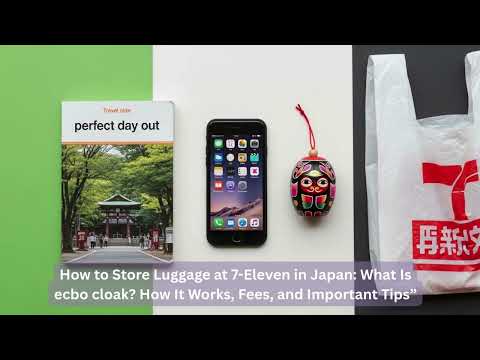
If you're interested in smarter ways to explore Japanese cities, the video below introduces ecbo cloak, a luggage storage service that connects travelers with available space inside local businesses. This video highlights how the platform makes urban travel more convenient while creating new opportunities for participating shops.