Japan Post's Nationwide Elderly Monitoring Service: How 20,000+ Post Offices Are Supporting an Aging Society
When people think of Japan Post, they usually picture mail delivery, parcels, and post offices. However, the company has gradually expanded its role beyond logistics. Today, it also provides services designed to address one of Japan's biggest demographic challenges: supporting an aging population.
Through its Post Office Elderly Monitoring Service (Yūbinkyoku no Mimamori Service), Japan Post regularly checks on older adults living alone, reports their well-being to family members who live elsewhere, and, in some cases, uses monitoring technology to detect changes in daily activity. Rather than building an entirely new care network, the company is repurposing its existing nationwide postal infrastructure into a community support system.
Population aging is becoming a global challenge. Japan has one of the world's oldest populations, with rising numbers of older adults living alone, continuing rural depopulation, and younger generations increasingly concentrated in major cities. As a result, monitoring the safety and well-being of aging parents has become a social issue that families often cannot manage by themselves.
Many countries offer elderly monitoring services, but these are typically operated by individual companies or local governments and rarely achieve consistent nationwide coverage. Japan Post occupies a unique position because it already maintains one of the country's largest physical networks, with employees serving communities across Japan every day.
This article explores the philosophy behind Japan Post's elderly monitoring service, why the postal network has expanded into community care, the service's underlying design, and why this model could offer valuable lessons for other countries facing similar demographic challenges.
Post Office Elderly Monitoring Service Overview
The Post Office Elderly Monitoring Service is a senior support program operated by Japan Post Co., Ltd. It is designed primarily for families who live far away from aging parents and want reassurance that their loved ones are safe and doing well.
The service consists of several options, including:
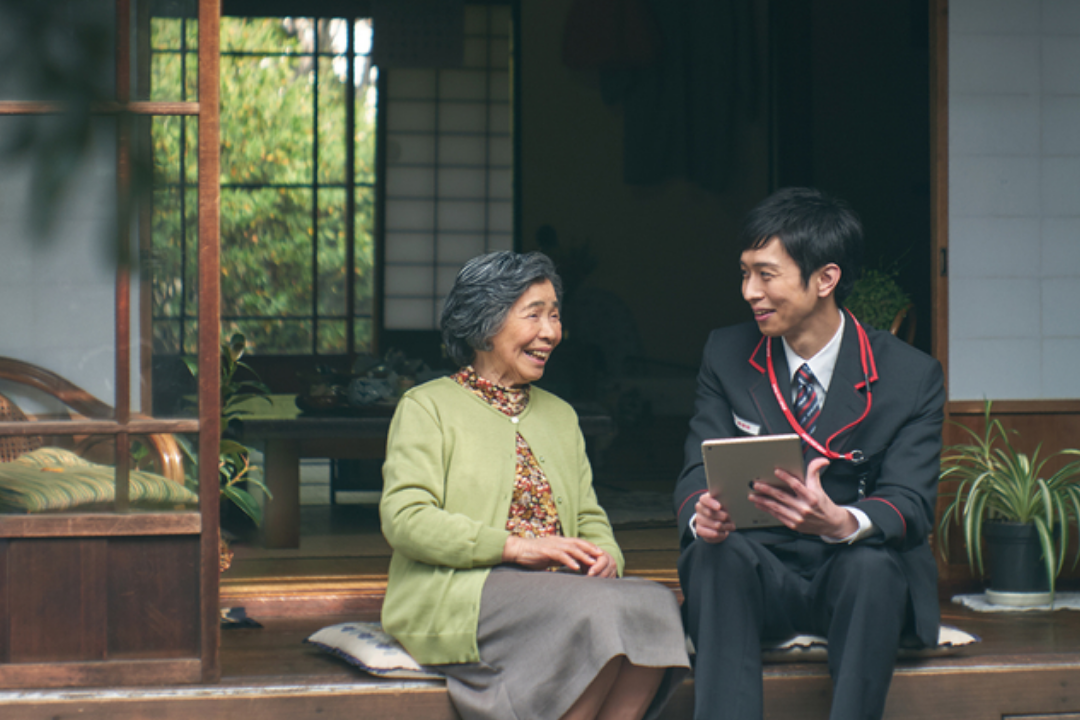
Home Visit Monitoring, where Japan Post employees visit seniors on a regular schedule, check on their health and daily living conditions, and send reports to designated family members.
Telephone and Remote Monitoring Services, which use phone calls or communication devices to confirm the user's well-being and notify family members if necessary.
With the home visit service, a postal employee visits the customer's home, typically once each month, and speaks with them in person. Rather than simply confirming that someone is home, the employee checks on their overall condition and daily life before sharing a standardized report with family members. The service operates on a monthly subscription basis, with pricing varying slightly by region while remaining relatively affordable.
The remote monitoring option relies on telephone contact or dedicated communication devices to verify a person's well-being. This approach is particularly suitable for households seeking a lower-cost solution or for areas where in-person visits may be less practical.
The primary customers are adult children who live away from their elderly parents. In Japan, it is increasingly common for older parents to remain in rural communities while their children relocate to large cities for work or education. The service helps bridge that geographical gap by providing regular updates and peace of mind.
Why Japan Post Expanded Into Elderly Monitoring
Japan Post's decision to launch an elderly monitoring service reflects the structural challenges facing Japanese society.
Japan has one of the oldest populations in the world, with nearly 30 percent of its population aged 65 or older. Rural communities have experienced decades of population decline as younger generations move to cities, resulting in growing numbers of elderly couples and seniors living alone. The traditional assumption that multiple generations live together is no longer the norm.
At the same time, many adult children now live hundreds of kilometers away from their parents. Careers, education, and raising families often make frequent visits impossible. Phone calls and occasional trips home provide some reassurance, but they cannot fully reveal changes in a person's health or daily routine. Concerns about isolation, illness, and unexpected emergencies have become major social issues.
How Social Needs Drive Institutional Innovation
Historically, elderly monitoring has been handled by local governments, private security companies, or community volunteers. However, limited budgets, staffing shortages, and uneven regional coverage make it difficult to provide consistent services nationwide. These challenges are particularly pronounced in rural areas, where operating such programs is often less economically viable.
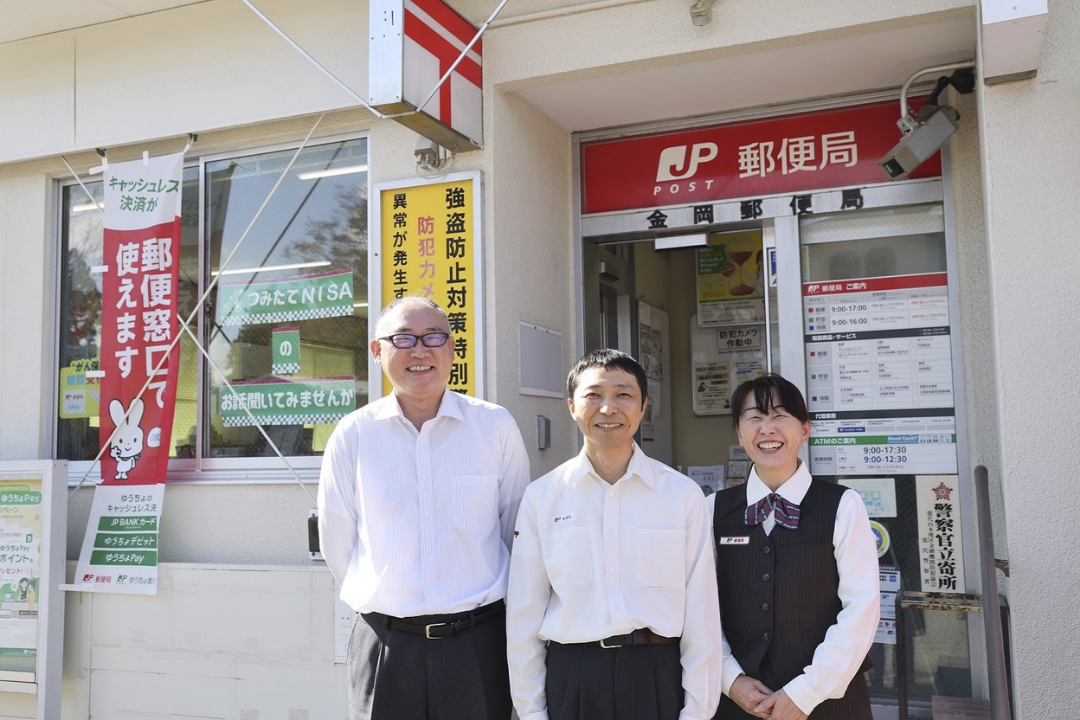
Japan Post already possesses a nationwide network of approximately 24,000 post offices and employees who visit neighborhoods every day. Postal workers frequently develop long-term relationships with residents, creating a level of familiarity that would take new market entrants years to establish.
This led to a simple but important question: could this nationwide network be used for more than delivering mail?
The answer was to expand an existing logistics infrastructure into a community support network. Rather than creating an entirely new business, Japan Post redefined the role of the post office itself.
Instead of being viewed solely as a place that delivers letters and packages, the post office has become another point of contact that helps support everyday life within local communities.
How Japan Post Expanded From Logistics to Community Support
Source: Japan Post Elderly Monitoring Service Homepage
The Post Office Elderly Monitoring Service was not created simply to generate a new source of revenue.
Following the privatization of Japan Post, the company faced the challenge of balancing commercial profitability with its long-standing public role as a nationwide infrastructure provider. One of its key strategic questions became how to make better use of its extensive network of post offices.
The Future of the Post Office
Traditional mail volumes have steadily declined as digital communication has replaced physical correspondence. Although parcel delivery continues to grow alongside e-commerce, competition in the logistics industry has become increasingly intense. Relying solely on conventional postal services no longer offers the same long-term stability.
Against this backdrop, Japan Post began exploring new ways its nationwide network could support everyday life beyond logistics.
Elderly monitoring emerged as a natural fit. The company already had employees visiting homes across the country as part of their regular duties, making it relatively straightforward to incorporate wellness checks into existing operations rather than building an entirely new service from scratch.
From Delivering Mail to Sustaining Communities
Partnerships with local governments also played an important role. Municipalities throughout Japan face growing financial and staffing pressures as demand for senior support continues to rise. Collaborating with an organization capable of operating nationwide provides an efficient solution. The trusted reputation of local post offices also makes the service more approachable for both seniors and their families.
To accommodate different needs, Japan Post developed both in-person visits and remote monitoring options. Face-to-face visits emphasize personal interaction and reassurance, while telephone-based services offer a more affordable alternative. Families can choose the approach that best suits their circumstances and location.
Perhaps the most significant change is the expanded role of postal employees themselves. They are no longer seen solely as delivery personnel. They also serve as trusted community contacts who help confirm the well-being of older residents. This represents not only an expansion of their responsibilities but also a new way of strengthening the relationship between the postal network and the communities it serves.
Rather than entering the senior care industry as an entirely new business, Japan Post has demonstrated how an existing national infrastructure can be adapted to address emerging social challenges.
Combining In Person Visits and Remote Monitoring Creates a More Flexible Support Model
The Post Office Monitoring Service is not a single product. Instead, it combines multiple approaches to create a support system that can accommodate different lifestyles and care needs. At its core are two service types: scheduled in person visits and remote monitoring.
The in person visit service involves postal employees visiting a customer's home on a regular schedule, typically once a month. Rather than simply confirming that someone is at home, staff members speak directly with the resident about their health and daily life before preparing a standardized report for family members. Using a consistent reporting format helps provide more objective information instead of relying solely on personal impressions.
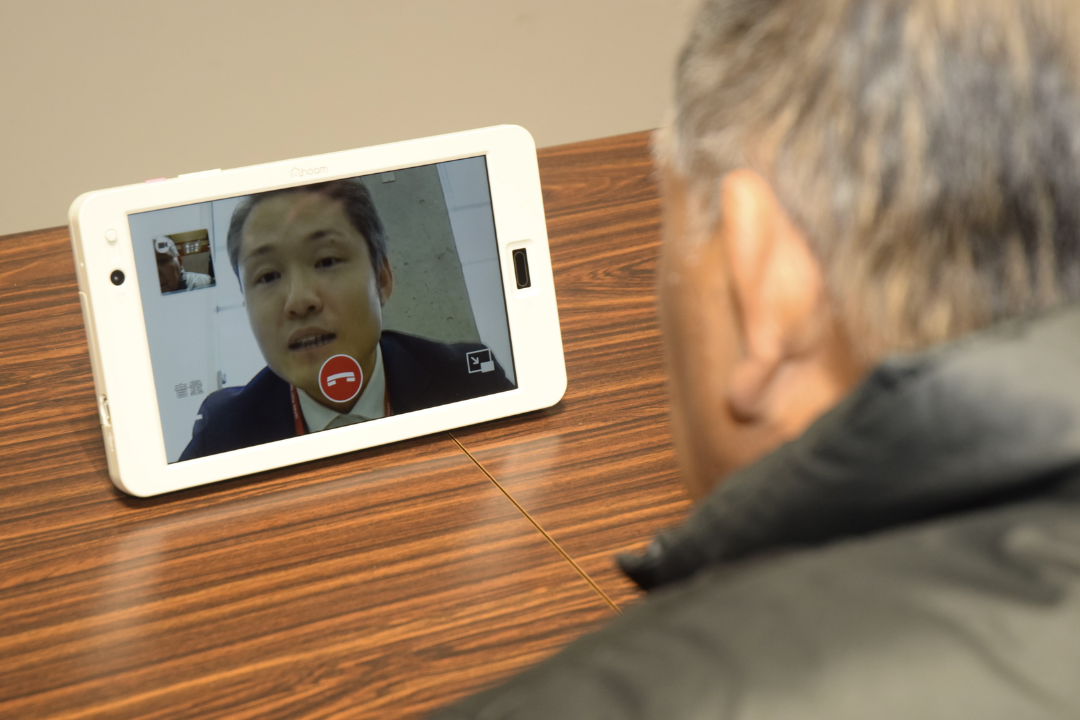
The remote monitoring service uses telephone check ins or dedicated communication devices to confirm the customer's wellbeing. When the customer responds, family members can be reassured that daily life is continuing as usual. If there is no response, designated family members are notified. Because this option requires fewer on site visits, it offers a more affordable solution for households that may not require regular face to face support.
Building a Society Where No One is Overlooked
What differentiates Japan Post from many other monitoring providers is its ability to offer these services nationwide using an existing workforce. Many private security companies and technology providers concentrate their services in urban areas. Japan Post already maintains offices in remote mountain communities, rural towns, and isolated islands, giving it a level of geographic coverage that few organizations can match.
The trust associated with local post offices also plays an important role. For many older adults, familiar uniforms and postal workers they have known for years create a greater sense of comfort than an unfamiliar service provider.
From a B2B perspective, the service can also complement partnerships with local governments and community care organizations. Municipalities can use Japan Post's existing network to extend support into areas that public services alone may struggle to cover.
Rather than functioning solely as a welfare service, the Post Office Monitoring Service demonstrates how an existing logistics network and trusted community relationships can be transformed into a distributed support infrastructure for an aging population.
How The Service Strengthens Connections Between Families And Communities
Source: Japan Post Elderly Monitoring Service Homepage
The greatest impact of the Post Office Monitoring Service is often psychological rather than physical.
For families living far from aging parents, maintaining peace of mind can be difficult. Adult children who have moved away for work or family reasons often rely on occasional phone calls or visits home. Yet, these interactions rarely provide a complete picture of a parent's daily wellbeing. A regular report prepared by a neutral third party offers more objective insight into everyday life and can significantly reduce anxiety.
Older adults also benefit from regular social interaction. Even one scheduled visit each month helps maintain routines while reducing feelings of isolation. Conversations with postal employees become more than routine welfare checks. They provide meaningful human contact that helps older residents remain connected to their communities.
Local governments also gain an important partner. Community care centers and volunteer organizations often lack the resources to monitor every household that may require assistance continuously. By supplementing these efforts, the nationwide post office network helps strengthen local support systems.
The model also creates opportunities for collaboration with insurance companies, financial institutions, and other organizations serving older customers. Monitoring services can become one component of broader senior support programs that combine financial planning, healthcare, and daily living assistance.
Perhaps most importantly, the service is designed to function as part of a wider community network rather than as a standalone solution. Families, municipalities, healthcare providers, local organizations, and private businesses each contribute to a layered support system that provides greater resilience than any one organization could achieve alone.
As a result, the service delivers benefits that extend well beyond simply confirming someone's safety. It strengthens communication, reduces isolation, and reinforces community support networks.
Operational Design And Trust Behind Nationwide Delivery
Monitoring services are only valuable when they can be delivered consistently over long periods. That makes operational design and quality control just as important as the visits themselves.
Every visit follows a standardized reporting format. Rather than relying on subjective observations such as "they seemed fine," postal employees record information according to established criteria. This gives family members more reliable information that can help them identify changes over time.
Employee training is another key component. Although postal workers are primarily responsible for deliveries and counter services, staff participating in monitoring programs receive guidance on communicating appropriately with older adults, respecting privacy, and responding to potential emergencies. While they are not healthcare professionals, they follow standardized procedures that support consistent service quality nationwide.
Data management is equally important. Information about a person's health and daily life is highly sensitive, requiring careful handling, secure storage, and clearly defined notification procedures. Japan Post already manages financial services and other confidential information, giving it experience with large scale information security and privacy management.
The pricing model also supports long term relationships. Customers subscribe every month rather than using the service as a one time request, allowing ongoing monitoring instead of isolated visits.
Clear escalation procedures are built into the system as well. If scheduled communications receive no response, established notification processes guide contact with family members and, when appropriate, other relevant organizations. These standardized procedures help maintain service reliability across the country.
Rather than operating as a charitable initiative, the Post Office Monitoring Service represents a carefully structured support model built on standardized operations and existing national infrastructure.
A Business Philosophy That Balances Public Service And Commercial Operations
Japan Post occupies an unusual position. Although it operates as a private company, it also continues to fulfill many responsibilities associated with national public infrastructure.
Since Japan's postal privatization reforms, the company has needed to balance commercial efficiency with its long standing responsibility to provide universal nationwide services.
Post offices are far more than delivery centers. Across Japan, they function as community hubs where residents access financial services, complete government procedures, and purchase everyday products. Their presence in major cities, rural communities, mountain villages, and remote islands gives Japan Post an infrastructure that few other organizations could realistically replicate.
The Monitoring Service naturally extends this broader public role. From a purely commercial perspective, checking on older residents might appear unrelated to mail delivery. However, Japan Post views itself as an organization that supports local communities, making daily living assistance a logical extension of its existing responsibilities.
Rather than serving primarily as a corporate social responsibility initiative, the service represents a redefinition of infrastructure. By repurposing its nationwide network to address emerging social challenges, Japan Post creates value for both society and the business itself.
Equally important is the long term nature of the program. Through partnerships with municipalities and regional community care organizations, the service has become part of broader local support systems instead of remaining an isolated corporate project.
The result is a model that seeks to balance commercial sustainability with the responsibilities traditionally associated with essential public infrastructure.
A Japanese Model For Supporting Aging Societies
The Post Office Monitoring Service reflects several long term demographic trends that have reshaped Japanese society.
Japan's rapidly aging population has coincided with major changes in family structure. Multigenerational households have become less common, while single person senior households and elderly couples living alone continue to increase. At the same time, many younger generations have relocated to major cities for work, leaving parents in smaller regional communities. As a result, daily family caregiving is often no longer practical.
Japan has traditionally benefited from strong local communities, but depopulation has weakened many rural neighborhoods. In some areas, even informal support from nearby residents has become increasingly difficult, raising important questions about who should provide ongoing assistance beyond formal public welfare programs.
This is where Japan Post's nationwide network becomes especially valuable. Nearly every municipality already has a post office, and postal employees maintain regular contact with households through their daily work. Instead of building entirely new facilities, the Monitoring Service makes use of existing infrastructure.
Public trust also contributes to the model's effectiveness. Post offices have served Japanese communities for generations, making visits from postal employees feel familiar and reassuring for many older adults compared with unfamiliar private service providers.
The model emerged from the combination of three uniquely Japanese factors: an aging population, geographically dispersed families, and an extensive nationwide infrastructure that could be adapted to meet changing social needs. Many other countries experiencing similar demographic changes may find aspects of this approach relevant.
Repurposing National Infrastructure For Elder Care Around The World
Source: Japan Post Elderly Monitoring Service Homepage
Although the Post Office Monitoring Service was developed to address challenges specific to Japan, the underlying concept has relevance far beyond the country.
Population aging is accelerating across much of the world. Countries throughout Europe, as well as South Korea and Taiwan, are experiencing demographic shifts similar to Japan, including increasing numbers of seniors living alone, urban migration among younger generations, and declining rural populations.
Many of these countries also operate nationwide postal services or other public delivery networks that maintain regular contact with households. However, these organizations often remain focused exclusively on logistics rather than integrating broader community support functions.
Japan Post demonstrates the value of redesigning existing infrastructure instead of constructing entirely new systems. Leveraging established networks can be considerably more cost effective than building new care facilities, making this a practical option for governments and national postal operators facing similar demographic pressures.
From a B2B perspective, partnerships are essential. Postal operators can work alongside governments, insurance providers, telecommunications companies, and healthcare organizations to develop integrated support systems for older adults. Monitoring services can become an entry point for broader healthcare, financial, and wellness services.
The concept may also have value in developing countries where postal networks remain one of the few nationwide public infrastructures connecting urban and rural communities. Even basic monitoring services could help reduce social isolation without requiring significant new investment.
Ultimately, the key innovation lies less in advanced technology than in institutional design. Sophisticated sensors and artificial intelligence can enhance these systems, but they are not prerequisites. The real challenge is determining how existing people, facilities, and organizations can be reorganized to meet emerging social needs.
Conclusion
At first glance, the Post Office Monitoring Service appears to be simply another elder care program. In reality, it represents a broader rethinking of national infrastructure.
Japan Post operates a network of roughly 24,000 post offices supported by approximately 170,000 employees across the country. While this infrastructure was originally built to deliver mail and parcels, changing demographics have encouraged the company to expand its role into community support.
Population aging is not unique to Japan. Many developed nations face similar challenges, and creating entirely new welfare systems requires substantial time and investment. Repurposing existing national infrastructure offers a more practical path toward delivering support on a large scale.
For international businesses and policymakers, the model offers three important lessons. First, existing nationwide assets can be adapted rather than replaced. Second, combining in person support with remote monitoring creates greater flexibility for different communities. Third, collaboration among governments, families, healthcare providers, and private companies produces stronger and more resilient support systems.
Such partnerships also create value for every participant. Postal operators can diversify their services, local governments can strengthen community care, and insurance providers and healthcare organizations can enhance customer offerings through integrated support programs.
Japan Post's achievement is not simply that a postal company entered the elder care sector. It demonstrates how national infrastructure can evolve into social infrastructure by responding to changing societal needs.
As populations continue to age around the world, the question is no longer whether existing infrastructure should evolve, but how. The Post Office Monitoring Service offers one compelling example of how long established public networks can be reimagined to support the communities they have served for generations.
FAQ About Japan Post's Nationwide Elderly Monitoring Service
1. What Is The Japan Post Monitoring Service?
The Japan Post Monitoring Service is a senior wellbeing support service provided by Japan Post Co., Ltd. Through regular home visits by postal employees and telephone check-ins, the service helps monitor the daily wellbeing of older adults and shares updates with family members who live elsewhere.
2. What Types Of Japan Post Monitoring Services Are Available?
Japan Post offers several monitoring options, including the Home Visit Monitoring Service, in which postal employees visit a customer's home regularly, and the Telephone Monitoring Service, which uses scheduled phone calls to check on the customer's wellbeing. Families can choose the service that best suits their needs and circumstances.
3. Who Can Use The Japan Post Monitoring Service?
The service is primarily intended for older adults, including those living alone or elderly couples living independently. In many cases, family members who live far away enroll their parents or relatives as a way to stay informed about their wellbeing.
4. What Is Checked During A Home Visit?
During each visit, a Japan Post employee checks on the customer's health and general living conditions through face-to-face conversation. The findings are then shared with registered family members using a standardized reporting process.
5. Is The Japan Post Monitoring Service Available Nationwide?
The service is offered through Japan Post's extensive nationwide post office network. However, available service options and coverage areas may vary by region, so it is recommended to check the official website for the latest information.
6. What Kind Of Company Is Japan Post Co., Ltd.?
Japan Post Co., Ltd. is the core operating company of the Japan Post Group, providing postal, logistics, and post office counter services throughout Japan. Leveraging its nationwide network of post offices, the company also delivers a variety of community-based services beyond traditional mail and parcel delivery.
7. Does The Japan Post Monitoring Service Work With Local Governments?
Yes. In some regions, Japan Post collaborates with local governments, community comprehensive support centers, and other regional organizations to strengthen local monitoring and support systems. The specific partnerships vary depending on the municipality.
8. Does The Japan Post Monitoring Service Require A Monthly Fee?
Yes. The service is offered on a monthly subscription basis. Pricing depends on the type of monitoring service selected, so the latest fees should be confirmed on the official website.
9. Who Is The Japan Post Monitoring Service Best Suited For?
The service is well suited for people who are concerned about aging parents or relatives living far away, especially those who live alone. It provides families with regular updates and greater peace of mind while allowing older adults to continue living independently.
10. Why Does Japan Post Offer A Monitoring Service?
Japan Post developed the service to help address social challenges such as Japan's aging population and the growing number of older adults living alone. By leveraging its nationwide post office network and long-standing relationships within local communities, the company aims to support residents not only through postal and logistics services but also through everyday community care.
Related Videos
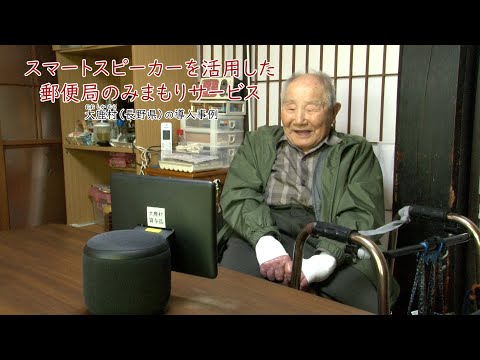
If you're interested in how Japan is addressing the challenges of an aging society, the video below explores Japan Post's elderly monitoring service, which leverages its nationwide network of post offices to support older adults. This video shows how familiar community infrastructure is being used to provide regular check-ins and greater peace of mind for families.