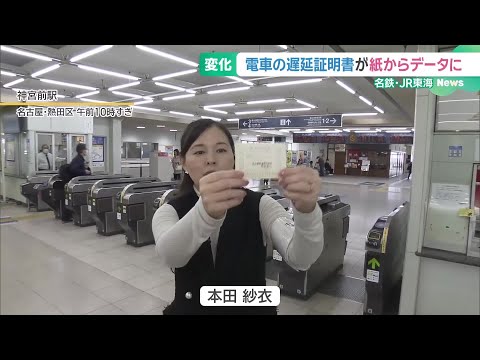

In many countries, arriving late because of public transportation problems usually requires an explanation. In Japan, it often requires documentation.
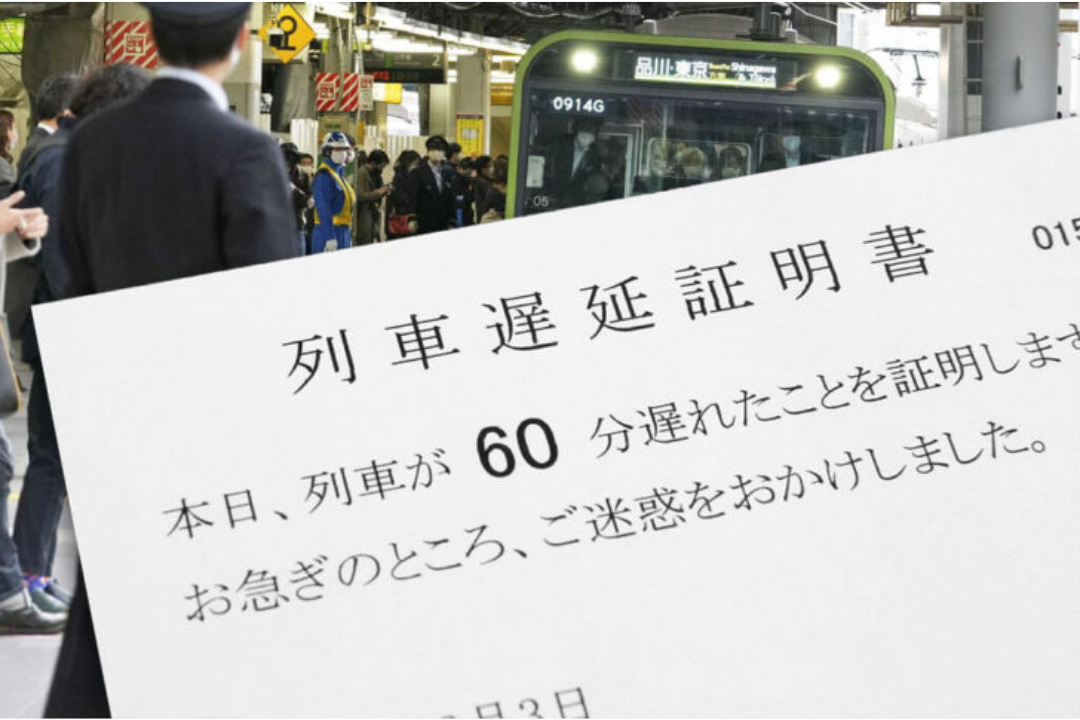
A train delay certificate, known in Japanese as a chien shoumeisho (遅延証明書), is an official document issued by railway operators that certifies the length of a train delay. It is primarily used by commuters and students who need to explain their late arrival to employers, schools, or examination venues.
In Japan's major cities, railways serve as the backbone of daily mobility. Millions of people depend on trains to arrive at work or school on time, and even delays of only a few minutes can affect enormous numbers of passengers. Rather than treating those delays as the responsibility of individual commuters, the delay certificate formally identifies the disruption as an operational issue caused by the transportation provider.
The process is remarkably simple.
When delays occur, passengers can visit the official website of the relevant railway company and access a certificate corresponding to the affected route and time period. In the case of JR East, delays are categorized by line and by duration, allowing passengers to retrieve documentation that matches their journey. The certificate can be printed or displayed directly on a smartphone, making it practical for immediate use.
The service is completely free.
Although individual commuters are the direct users, the system's real customers are arguably businesses and educational institutions. From a B2B perspective, companies can use delay certificates as objective evidence when managing attendance records, ensuring fairness and consistency across the workforce. Schools similarly use them to maintain transparency in attendance management.
The train delay certificate is more than a piece of paperwork. It is an institutional mechanism designed to preserve trust in time itself within one of the world's busiest urban rail systems. In a country where railways function as critical social infrastructure, the delay certificate acts as an important bridge between transportation systems and the obligations of work and education.
East Japan Railway Overview
JR East is one of the largest railway operators in the world by passenger volume, operating an extensive network across eastern Japan and the Tokyo metropolitan area.
The company's delay certificates are issued directly based on its own operational data. They are not third-party reports or unofficial notices. They represent the railway operator's formal acknowledgment that delays occurred during a specific time period.
The reliability of the system depends on several capabilities working together simultaneously: real-time train tracking, timetable control, operational oversight, and rapid information disclosure.
This makes delay certificates less of a standalone digital service and more of an extension of the railway infrastructure itself.
Internationally, JR East is often recognized for the precision of its operations and the transparency of its public information systems. Delay certificates have become one example of how that operational philosophy is translated into customer-facing services.
The certificates do not directly generate revenue or strengthen the company's brand in the way a commercial product might. Their role is instead to protect trust in the railway system and the broader social systems that depend on it.
A System Designed To Officially Recognize Even Small Delays
What makes Japan's train delay certificates unusual is not the existence of delays, but the fact that railway operators formally acknowledge them and publish them in a format intended for third party submission.
Many countries provide live service updates when trains run behind schedule, but relatively few have standardized systems that produce official documents employees or students can submit to their workplace or school. In Japan, the practice of categorizing delays and issuing formal certificates has become deeply embedded in everyday life.
Preserving Trust in Time Itself: Why Japan Formalizes Railway Disruptions
Japan’s railway system depends heavily on real time operational data.
Railway operators continuously track train positions, timetable adherence, and operational performance. When delays exceed predetermined thresholds, the information is automatically reflected in the delay certificate system. The result is not merely a public announcement but an official document recognized by employers and institutions.
Cultural factors also play an important role.
Japanese society places a strong emphasis on punctuality, and even minor delays may require explanation. As a result, systems that objectively separate personal responsibility from external circumstances have become institutionally important. Delay certificates serve as a mechanism for maintaining social trust around timekeeping and accountability.
Another notable feature is the level of precision and transparency.
Certificates are often categorized in intervals of only a few minutes and can be obtained online almost immediately after the disruption occurs. This level of detail reflects the extraordinary operational accuracy of Japan's rail network. Ironically, because train delays are relatively uncommon compared with many countries, documenting them has become more important when they do occur.
The train delay certificate is therefore less a technological innovation and more an example of infrastructure management and social systems working together. It exists because a culture that values punctuality intersects with one of the world's densest railway networks.
The Standard Form Of Time Verification For Companies, Schools, And Public Institutions

Source: JR East Homepage
Although delay certificates are typically associated with commuters and students, the primary beneficiaries are often the organizations receiving them.
In metropolitan areas where rail travel is the dominant commuting method, train delays are an unavoidable reality. Rather than investigating individual explanations for late arrivals, employers can rely on official documentation issued by railway companies to maintain fairness in attendance management.
The Official Note for Lateness
For businesses, this significantly reduces administrative costs.
Human resources departments no longer need to make verification calls or evaluate personal circumstances on a case-by-case basis. Instead, attendance decisions can be made using standardized evidence. For large organizations employing thousands of workers, having a common verification system can dramatically reduce operational complexity.
Educational institutions benefit in similar ways.
Many high schools and universities in Japan accept train delay certificates as official justification for late arrivals or absences related to transportation disruptions. Rather than depending on explanations from students, administrators can rely on information provided directly by railway operators, improving transparency and consistency.
The system is also used in public institutions and examination settings.
For national licensing exams and professional certification tests, arriving late can have serious consequences. Delay certificates provide objective evidence that transportation disruptions, rather than personal negligence, caused the delay.
While train delay certificates appear to be a consumer service, they function more accurately as institutional infrastructure for businesses and schools. Many organizations have built their attendance policies around the assumption that these certificates exist.
Behind what appears to be a simple document lies an important mechanism supporting one of society's most fundamental rules: time management.
Integrating Real Time Operations With Official Public Communication
Unlike a physical product, train delay certificates are entirely dependent on operational systems and information management.
Their reliability is determined not by manufacturing quality but by the accuracy of train data and the transparency of the publication process.
Railway operators monitor train locations, timetables, and operational performance in real time. Once delays exceed certain thresholds, that information is reflected within official systems and published as a delay certificate accessible through the operator's website.
This distinction matters.
A delay certificate is not simply an online notice stating that trains are late. It represents an officially recognized operational result issued directly by the organization responsible for running the railway.
Accuracy therefore becomes the highest priority.
Minutes as Evidence
Publishing incorrect delay information could influence decisions made by employers, schools, and examination administrators. As a result, railway operators maintain internal verification processes to ensure the information released is reliable. While digitalization has enabled near instantaneous issuance, the underlying systems supporting trust have remained equally important.
Security and authenticity also require consideration.
Certificates follow standardized formats that clearly display the railway operator's name, the affected line, and the relevant date and time period. These measures help prevent tampering and make verification straightforward for organizations receiving the documents.
The shift from paper certificates issued at station counters to digital certificates delivered through official websites has significantly reduced administrative costs while improving convenience for passengers. Today, many commuters simply display the certificate directly on their smartphone when arriving at work or school.
This represents the convergence of digital infrastructure and public transportation management.
The quality of a train delay certificate is ultimately defined not by materials or design but by the accuracy, consistency, and credibility of the information it contains. The systems that protect the integrity of that information are what allow Japan's railways to maintain trust in time itself.
A System Designed to Support One of the World's Most Punctual Rail Networks
The delay certificate system did not emerge by accident. It is deeply tied to Japan's urban structure and its culture of punctuality.
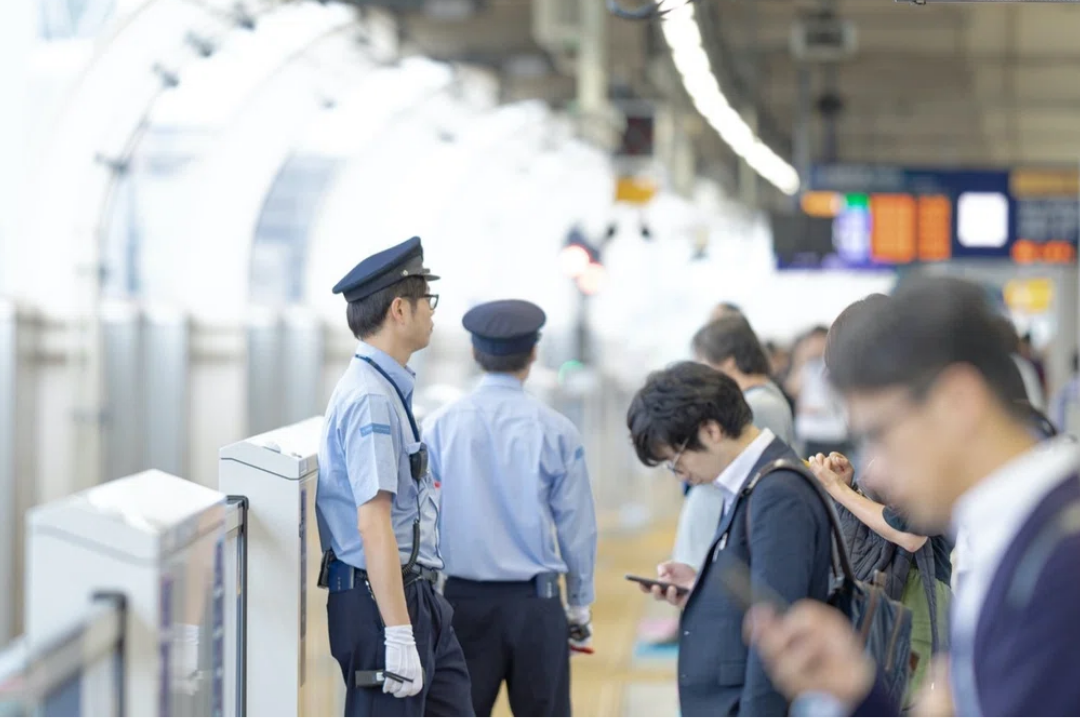
In metropolitan regions such as the Tokyo and Osaka areas, railways serve as the primary means of commuting for millions of people every day. Trains operate at extremely high frequencies, often running every few minutes during rush hour. In a transportation ecosystem built around tightly coordinated schedules, even a five-minute delay can affect thousands of commuters.
Transparency as Part of Public Infrastructure Management
Japanese society also places a strong emphasis on punctuality. Arriving late to meetings, work, or classes is often viewed as an individual's responsibility. At the same time, delays caused by public transportation are outside the commuter's control. Delay certificates emerged as an official mechanism to distinguish between the two.
Japan's railway operators are internationally recognized for their exceptionally high on-time performance. Because trains normally arrive within seconds or minutes of schedule, delays become notable events that require documentation. In countries where delays are more routine, there may be less incentive to formalize such a system. In Japan, reliability is the norm, making exceptions more visible.
Demand for delay certificates also varies by region. Large metropolitan areas with heavy rail dependence generate frequent usage, while rural lines may see little demand due to lower passenger volumes and greater reliance on cars.
For this reason, delay certificates are more than a web service. They are an institutional response shaped by dense urban rail networks and a culture that values punctuality.
The Psychological Value of an Official Explanation
Source: JR East Homepage
The primary benefit of a delay certificate is not convenience, but reassurance.
When commuters find themselves stuck on a delayed train, one of their first concerns is often not the delay itself, but how they will explain it to their employer, professor, or school administrator. A delay certificate transfers that explanation from the individual to the railway operator.
The user experience is intentionally simple. Travelers visit the railway company's website, select the affected line and date, and display the certificate. It can be printed or shown directly on a smartphone screen. This speed matters when someone is rushing into the office or arriving moments before class begins.
During major disruptions, links to delay certificates are often shared on social media among commuters. This helps reduce confusion and creates a common reference point for large groups of affected passengers.
Employers and schools benefit as well. Instead of evaluating individual explanations on a case-by-case basis, organizations can apply a standardized rule based on official information. The result is less friction for everyone involved.
Delay certificates rarely attract headlines, but they quietly reduce stress in everyday life by absorbing minor disruptions through institutional design rather than personal negotiation.
Could Delay Certificates Become an Exportable Idea?
Source: JR East Homepage
At first glance, delay certificates appear uniquely Japanese. However, the underlying challenge is universal.
Public transportation delays occur in cities around the world. The real question is not whether delays happen, but how societies choose to manage them.
Many transportation agencies already provide real-time service updates through websites and mobile applications. What remains uncommon is the creation of official documents specifically designed for submission to employers, schools, or examination venues.
Japan's model standardizes this process. Railway operators officially classify delays by time period and provide documentation that can be presented to third parties. From a governance perspective, this creates a transparent and objective approach to attendance management.
Cities with heavy dependence on public transportation, such as London, Paris, New York City, and Seoul, could potentially benefit from similar systems, particularly where punctuality and service reliability are highly valued.
For multinational companies operating across multiple cities, standardized delay verification could simplify attendance policies and improve consistency. It may even align with broader governance and transparency initiatives.
Because delay certificates are not physical products, their international expansion would likely take the form of institutional know-how rather than exports. Shared standards for transit data and digital verification systems could make similar models feasible elsewhere.
As cities become increasingly dependent on public transportation, the question of how to preserve trust in timekeeping becomes more important. Japan's delay certificate system offers one possible answer.
International Comparisons and Current Adoption Globally
Based on publicly available information, there are currently no confirmed examples of overseas railway operators adopting Japan's delay certificate system in its original form.
Many transit agencies publish service alerts and historical delay information online. However, systems that provide downloadable or displayable documents specifically intended for submission to employers or schools remain relatively rare.
Some cities allow passengers to review delay histories through websites or apps, but Japan's approach of organizing delays by route, time period, and official certification status remains unusual.
There have also been no public announcements indicating that East Japan Railway Company has exported the delay certificate system to foreign railway operators.
That said, Japanese railway expertise in timetable management and punctual operations is frequently referenced in international transportation projects. It is possible that aspects of delay transparency and passenger communication could eventually influence overseas systems as well.
For now, delay certificates remain a distinctly Japanese institution. Their value lies less in technology and more in the design of information-sharing frameworks between transportation providers, employers, and educational institutions.
Institutionalizing Accountability in a Punctual Society
The widespread adoption of delay certificates reflects Japan's long-standing expectations around punctuality.
In cities where trains are the primary method of commuting, arriving at work or school on time is generally assumed to be the norm. Even minor delays may require explanation.
At the same time, passengers have little control over disruptions affecting public transportation. Rather than placing responsibility on individuals, Japanese railway operators provide official confirmation that the delay occurred.
The system developed alongside Japan's rapid urbanization during the postwar economic boom. As passenger numbers grew and train schedules became increasingly precise, there was a growing need for a standardized method of handling exceptional situations.
Companies also became more rigorous in attendance management. Verbal explanations alone created inconsistencies, while standardized documentation allowed organizations to apply policies fairly and efficiently.
As a result, delay certificates evolved into a shared operational tool connecting railway operators, employers, and educational institutions.
This is not simply a customer service improvement. It is a mechanism designed to preserve trust in time itself within a society that depends heavily on synchronized schedules and mass public transportation.
Conclusion
Delay certificates were not created around a founder's vision or a startup business model.
East Japan Railway Company was established in 1987 following the privatization and division of the former Japanese National Railways. Since then, the company has inherited responsibility for operating critical transportation infrastructure.
Its core mission centers on safety, reliability, and stable transportation services. Delay certificates fit naturally within that philosophy.
Instead of hiding delays or leaving passengers to explain them individually, the company publicly acknowledges disruptions and provides documentation that can be shared with third parties. This reflects a broader commitment to transparency.
Operational accuracy is also a competitive advantage for railway operators. On-time performance influences public trust, and accountability during disruptions forms part of that reputation.
From a management perspective, delay certificates also standardize customer support. Rather than responding to individual requests for verification, railway operators can provide a common reference used by passengers, employers, and schools alike.
Delay certificates are not flashy innovations.
They are, however, a visible expression of a transportation operator's commitment to maintaining trust in public infrastructure and in the value of time itself.
Frequently Asked Questions About Japan's Train Delay Certificates
1. What Is A Train Delay Certificate?
A train delay certificate, known in Japanese as chien shoumeisho (遅延証明書), is an official document issued by a railway or public transportation operator to certify that a delay occurred. Commuters and students can submit it to their employer or school to show that their late arrival was caused by transportation disruptions rather than personal tardiness.
Rather than functioning as simple service information, delay certificates serve as an important form of social documentation that helps keep workplaces and educational institutions operating fairly and transparently.
2. How Is A Delay Certificate Different From Simply Checking Service Updates?
The key difference is that a delay certificate functions as an official document that can be presented to third parties.
Service updates simply communicate the current status of train operations, while a delay certificate records exactly when the delay occurred, which line was affected, and how long the disruption lasted. This gives employers and schools an objective basis for attendance decisions.
3. Why Are Certificates Issued Even For Delays Of Just A Few Minutes?
In Japan, railway schedules are deeply connected to work, school, and daily life. Millions of commuters plan their journeys around train timetables that operate with minute-level precision.
As a result, even a short delay can cause someone to arrive late for work or class. Delay certificates help frame those delays as transportation-related events rather than personal failures, allowing the impact to be shared and understood objectively.
4. How Can Passengers Obtain A Delay Certificate?
Passengers can access delay certificates through the official websites of railway operators by selecting the affected train line and date.
Today, certificates can often be displayed directly on a smartphone screen in addition to being printed on paper. This allows commuters to access the information immediately without needing to visit a station office or complete additional procedures.
5. Why Are Delay Certificates Important For Employers And Schools?
Delay certificates provide a fair and standardized way to manage attendance.
Rather than investigating transportation disruptions on an individual basis, organizations can rely on official information provided by the railway operator. This creates a process that is easier for both commuters and administrators to accept and trust.
In many ways, delay certificates have become part of the social rules that support time management in Japan.
6. Why Did Delay Certificates Become Established In Japan?
The system developed as a result of Japan's dense railway networks and strong culture of punctuality.
In major Japanese cities, millions of people rely on trains every day and organize their schedules around highly accurate timetables. Because delays are relatively uncommon, there has long been a need for a formal mechanism to explain and document exceptions when they occur.
7. What Role Do Delay Certificates Play For Railway Companies?
For railway operators, delay certificates are a way to maintain transparency and trust with passengers.
Rather than hiding delays or minimizing disruptions, railway companies officially acknowledge the incident and provide documentation that passengers can use when necessary. This approach reflects the accountability expected of public transportation infrastructure.
Transparent communication is considered just as important as operational reliability.
8. What Makes Japan's Delay Certificates Unique From An International Perspective?
One of the most distinctive aspects of Japan's delay certificates is that they support trust in timekeeping across society as a whole.
Many countries provide real-time delay information, but relatively few offer official documents that passengers can submit to employers or schools. By allowing transportation providers, businesses, and educational institutions to work from the same information, the system reduces confusion and improves efficiency.
9. How Has Digitalization Changed Delay Certificates?
Digitalization has transformed delay certificates into an instantly accessible information service.
In the past, passengers often collected paper certificates directly from station staff. Today, many railway operators publish certificates online, allowing commuters to access them immediately through a website or smartphone.
This reduces administrative burden while making official information available more quickly and conveniently.
10. What Is The Most Unique Feature Of Japan's Delay Certificate System?
The defining feature of the system is its ability to turn small disruptions into shared and verifiable information.
Even a delay of only a few minutes may affect work schedules, classes, meetings, or examinations. By officially documenting those disruptions, Japan treats time not only as a personal responsibility but also as a shared social resource.
That balance between transportation accuracy and social trust is what makes Japan's delay certificate system so distinctive.
Related Videos
If you're interested in Japan's unique administrative systems, the video below explores official delay certificates that provide verifiable proof when public transportation disruptions affect commuters. This video shows how a simple document helps employees, students, and organizations manage unexpected delays with greater transparency.