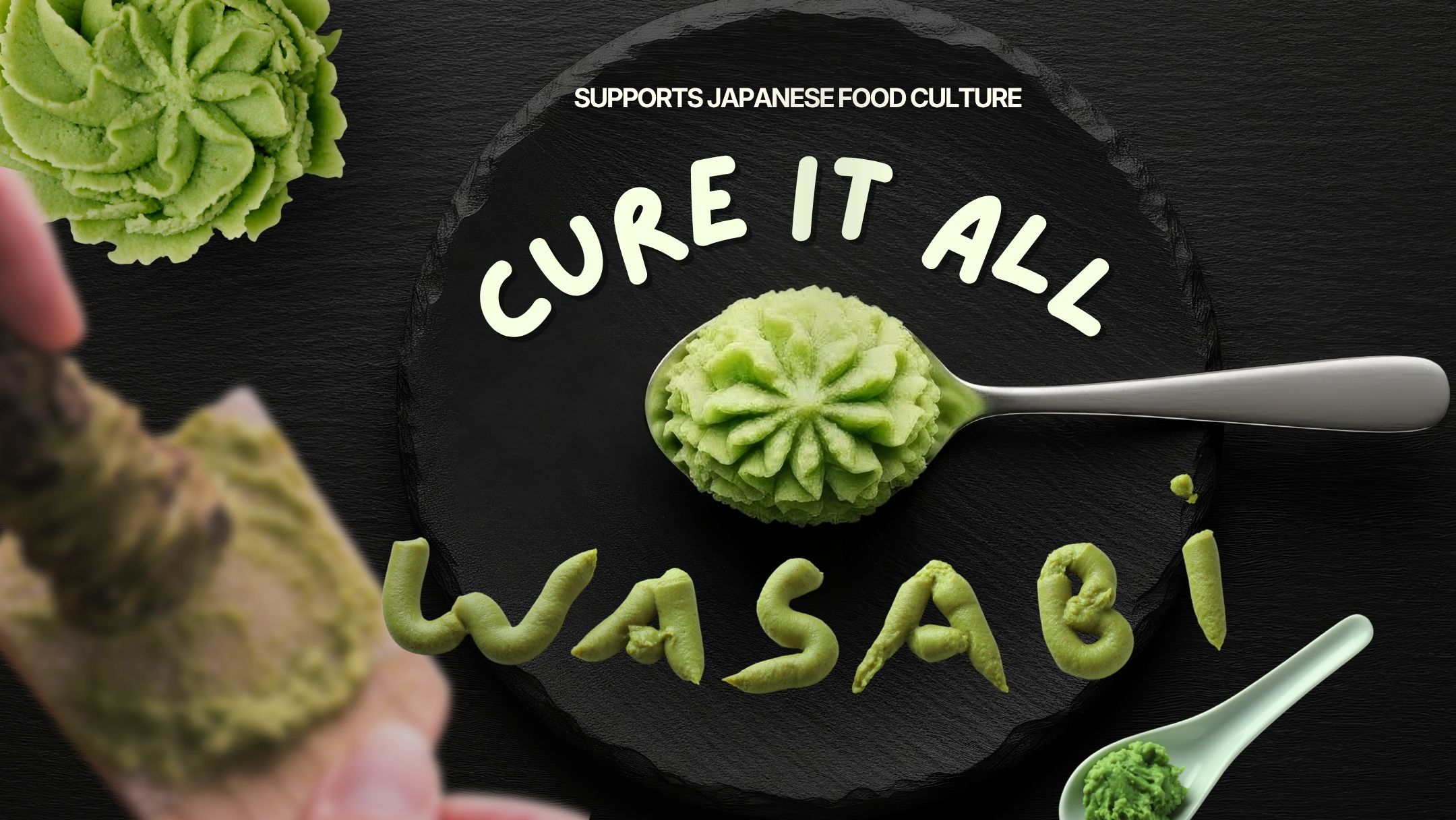
When eating sushi or soba, there is that refreshing sharpness that clears the nose in an instant. Even for Japanese people who accept its presence as something natural, wasabi is, upon reflection, a remarkably mysterious ingredient. Its heat disappears almost as quickly as it arrives, leaving behind a surprisingly clean finish. Its aroma is crisp and invigorating, yet faintly evokes the scent of soil and flowing water. The sensation it creates is neither the lingering “heat” of chili peppers nor the dry “spiciness” of black pepper. Wasabi exists in a category entirely its own.
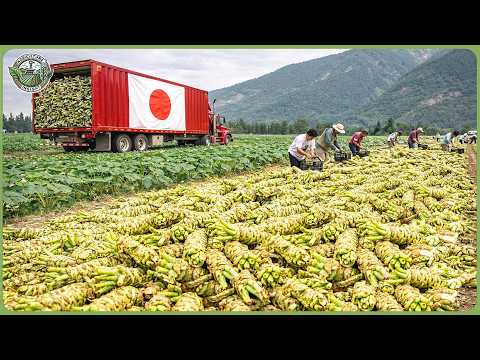
As Japanese cuisine has spread across the globe, the word “WASABI” has become widely recognized overseas. However, much of the green paste consumed outside Japan differs significantly from authentic hon-wasabi. Genuine wasabi is an exceptionally rare plant that can only be cultivated under highly specific conditions—abundant, clean running water, precise humidity levels, and carefully managed temperatures. Wasabi fields found in Japan’s mountainous regions and along clear streams represent a distinctive agricultural landscape rarely seen elsewhere in the world.
Looking back through history, wasabi’s value extends far beyond that of a simple condiment. During the Nara and Heian periods, it was used as a medicinal herb. By the Edo period, it became more widely adopted as a food ingredient alongside the development of sushi culture. In particular, Edo-style nigiri sushi required a degree of preservation when handling raw fish, and wasabi—known for its antibacterial properties—became indispensable. It was not merely a flavoring but a practical, rational ingredient that allowed people to enjoy fresh fish more safely.
Why, then, has wasabi become such a profound presence? In what kind of environment does it grow, and how are its distinctive aroma and sharpness created? And why are chefs around the world increasingly turning their attention to Japanese wasabi?
This article explores the history, characteristics, cultivation challenges, and global reputation of wasabi, drawing on the latest research and historical evidence. Uncovering the story behind this small green ingredient that symbolizes Japanese culture can help us more fully understand its depth and appeal.
Wasabi (Hon-Wasabi)
Source: Japan Wasabi Association
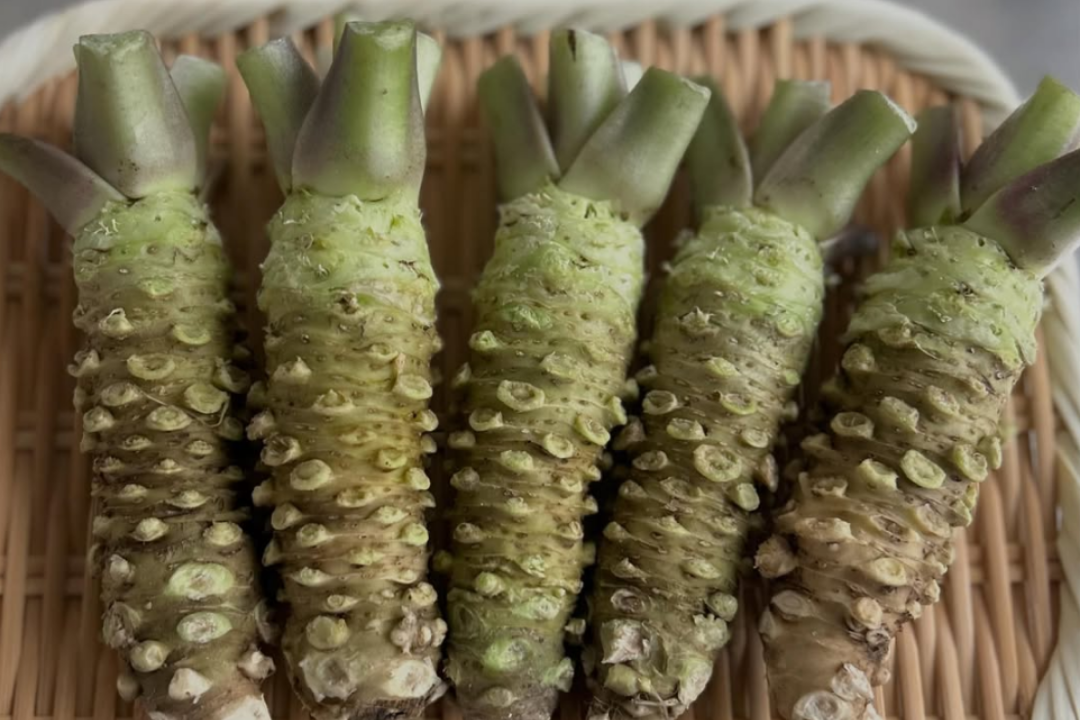
Wasabi (hon-wasabi) is one of Japan’s most iconic spices and has long been valued both for its medicinal properties and its role in food culture. It is a perennial plant in the Brassicaceae family native to Japan, and it thrives particularly in environments along clear, flowing mountain streams. Because it requires such specific conditions, the regions where it can be cultivated are limited.
Specialized cultivation areas known as wasabi fields create a distinctive agricultural landscape, utilizing abundant spring water, natural humidity, and carefully arranged stone beds in mountainous terrain. This method of farming represents a highly unique cultivation culture, rarely seen elsewhere in the world.
Wasabi’s defining characteristics lie in its aroma and sharpness. The fresh, vibrant heat that appears only when it is grated is caused by a volatile compound called allyl isothiocyanate. Unlike chili peppers, whose heat lingers on the tongue, wasabi produces a sensation that rises through the nose, leaving a clean, fleeting impression.
Because this compound quickly dissipates over time—causing the aroma to fade and the flavor to mellow—wasabi is best enjoyed immediately after grating. This is why sushi chefs and soba specialists place such importance on serving fresh wasabi: its delicate fragrance is at its peak only in that brief moment after preparation.
Historically, wasabi was valued as a medicinal herb before it became widely used as a food ingredient. As noted in historical records from the Nara and Heian periods, it was already described as a wild mountain plant eaten and used for its medicinal properties. Because of its strong antibacterial effects, it was also utilized as a natural preservative to help prevent foodborne illness. By the Edo period, as nigiri sushi culture spread, wasabi became indispensable to sushi made with raw fish. It not only helped reduce the fish’s natural odor but also helped ensure food safety.
Today, wasabi has moved beyond its role as a supporting condiment for sushi and soba and has become an ingredient of interest to chefs around the world. In particular, Japanese-grown hon-wasabi is prized for its refined balance of aroma and heat. Overseas, it is used as a distinctive accent in a wide range of dishes, from steak and sauces to even chocolate. It has also attracted attention as a health-focused ingredient, with scientific research exploring its antibacterial properties and deodorizing effects, further expanding its potential in the food industry.
With a history and cultural depth that go far beyond its refreshing sharpness, along with its delicate flavor and uniquely Japanese cultivation techniques, wasabi is more than just a condiment. It is considered a valuable plant that symbolizes Japan’s nature, agriculture, and culinary culture.
A Green Jewel Nurtured by Mist and Clear Streams: The Unique Environment Where Wasabi Grows
It would not be an exaggeration to call wasabi a “miracle crop” shaped by Japan’s climate and terrain. Unlike most vegetables or spices, wasabi can only grow under highly specific conditions. As a result, there are very few regions in the world where authentic hon-wasabi can be cultivated on a true commercial scale, and even within Japan, production is limited to certain mountainous areas. By understanding the environment in which wasabi grows, the reason behind its delicate and refined flavor becomes clear.
Above all, water is the most critical element for wasabi. Wasabi fields require a constant flow of clear spring water. The water temperature must remain stable throughout the year, typically around 50–59°F (10–15°C); if it becomes too hot or too cold, the plant will not thrive. This “natural cooling effect” created by flowing streams prevents stress on the wasabi rhizome and is essential for allowing it to develop its flavor slowly and fully.
Wasabi fields are often constructed along the terraced slopes found in Japan’s mountainous regions, using carefully stacked stones. This traditional agricultural technique is designed to regulate water flow evenly, ensuring that plants receive fresh, clean water continuously. Water diverted from nearby mountain streams passes through the fields, flows gently downward, and is constantly replenished by new sources. This natural circulation helps maintain the healthy environment essential for wasabi to thrive.
Even from a global perspective, this type of “flowing-water cultivation” is extremely rare, and wasabi is recognized as a crop unique to Japan, born from the combination of natural conditions and refined agricultural techniques. Western horseradish, which is widely distributed overseas as a substitute for wasabi, can be grown relatively easily in soil. In contrast, true hon-wasabi requires these highly specialized water conditions, making large-scale production difficult. In this sense, Japan’s wasabi fields are not simply farmland, but cultural landscapes shaped over generations through the collaboration of nature and human effort.
Wasabi is also highly sensitive to sunlight. To avoid direct exposure and create a partially shaded environment, growers use black netting or the natural shade of surrounding trees to prevent the leaves from burning. Only when water, temperature, and light are carefully balanced can wasabi develop into a fragrant, high-quality rhizome.
The difficulty of maintaining such precise environmental control is what gives hon-wasabi its rarity and depth of flavor. Its appeal lies not merely in its sharp heat as a spice, but in a refreshing aroma that evokes the air of the forest itself—an essence shaped by this extraordinary growing environment.
The Science Behind Its Aroma and Heat: A Flavor Born Only in the Moment It Is Grated
When describing the appeal of wasabi, the most striking qualities are its sharp heat that rises through the nose and its aroma that gently blooms outward. It is not the burning heat of chili peppers nor the lingering spice of black pepper. Instead, it emerges sharply in a single instant and then fades cleanly away. This distinctive combination of heat and fragrance is created by wasabi’s unique cellular structure and the chemical reactions that occur within it—an identity unlike any other spice.
The sharp heat that emerges the moment wasabi is grated comes from a volatile compound called allyl isothiocyanate. This compound is produced only when the plant’s cells are broken down, and its intensity is strongest immediately after grating. As time passes, the aroma rapidly dissipates, and the flavor softens. In other words, wasabi is designed to deliver its fullest flavor only when freshly grated on the spot. This is precisely why sushi chefs and soba artisans insist on using fresh wasabi.
Allyl isothiocyanate is found not only in wasabi but also in radish and mustard. However, in wasabi, the aroma quality is markedly different. Within its sharp heat lies a faint forest-like freshness and a crisp, green fragrance found only in hon-wasabi. This complexity comes from multiple aromatic compounds layered together, creating a depth of scent that often surprises chefs outside Japan.
Because this volatile compound stimulates the nose rather than lingering heavily on the tongue, the finish remains gentle. It is spicy yet not heavy, assertive yet never harsh. This distinctive lightness allows wasabi to enhance rather than overpower delicate ingredients such as seafood or soba. For that reason, it has long been treasured in Japanese cuisine.
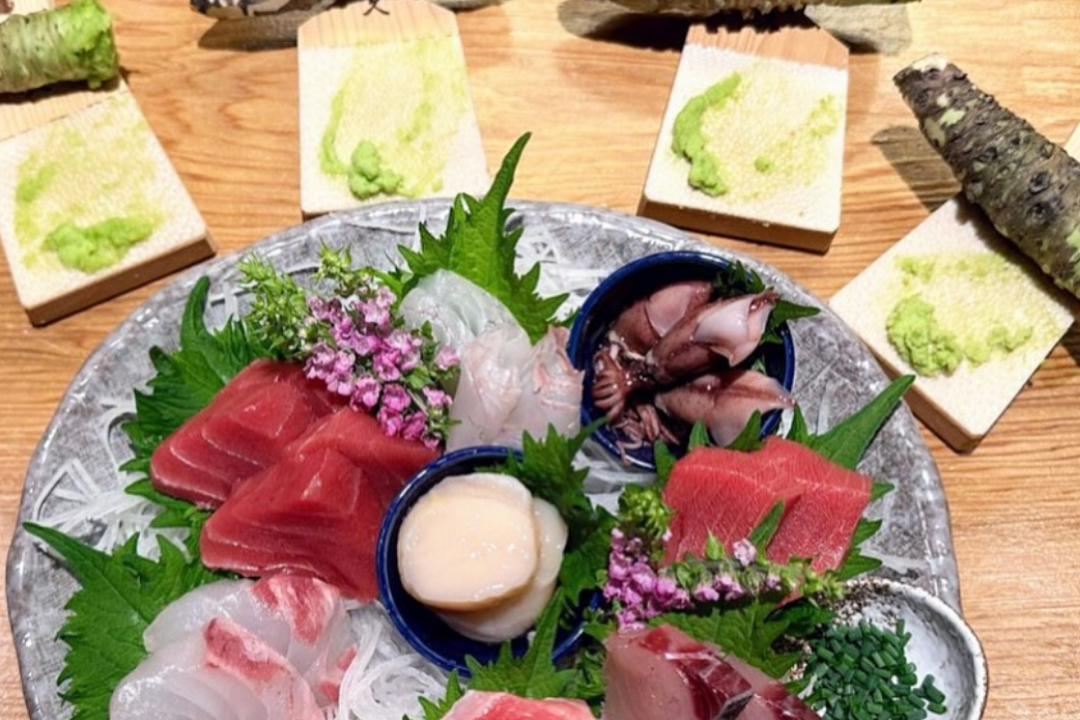
Interestingly, the tool used to grate wasabi also affects its aroma. The traditional sharkskin grater produces a fine, smooth paste by gently breaking down the fibers, resulting in a beautifully balanced expression of heat, sweetness, and fragrance. In contrast, a metal grater creates a coarser texture, altering how the aroma rises and how the paste feels on the palate. Wasabi is a remarkably delicate ingredient—its flavor can shift simply through the method of grating.
Chefs in Europe and North America have also been captivated by the immediacy and fleeting nature of wasabi’s aroma and heat. Its light, clean sharpness has inspired new culinary ideas, appearing in meat dishes, sauces, and even chocolate. In the world of gastronomy, wasabi is increasingly seen as a versatile and innovative ingredient.
Wasabi’s heat is stimulating yet somehow gentle. The reason lies in the plant’s cellular structure and its ability to release fragrance in a fleeting burst. It is truly a “momentary spice.” The flavor of wasabi exists only in that instant—an experience that can never be fully replicated again.
The Natural Antibacterial Power That Supported Sushi Culture
Source: Japan Wasabi Association
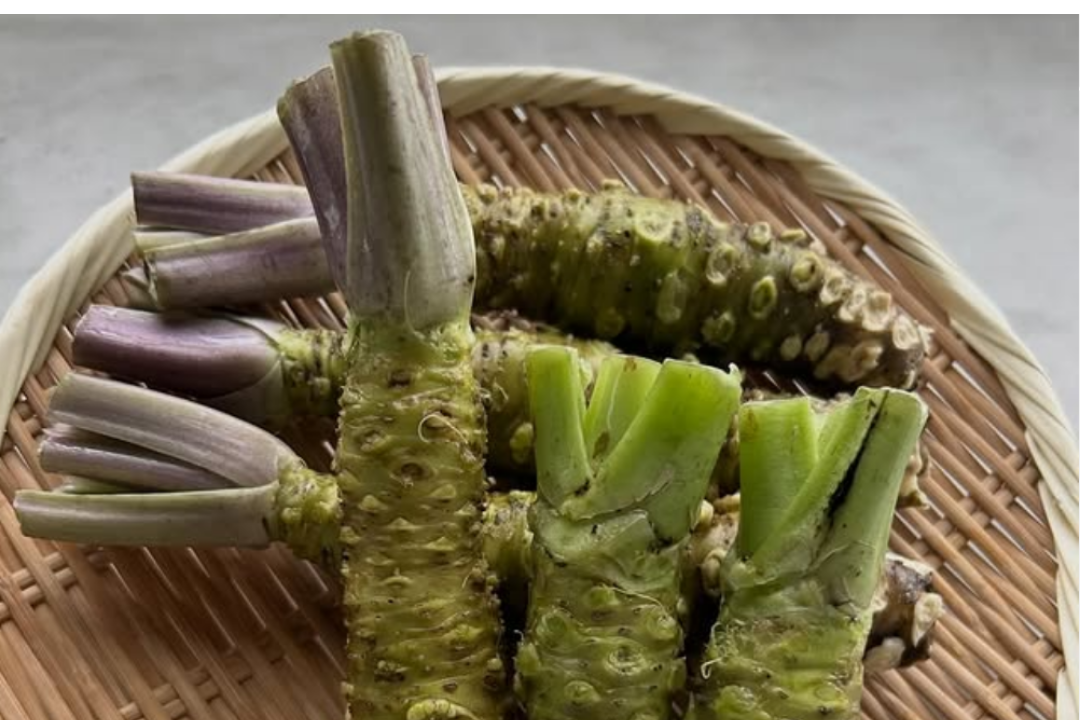
The history of wasabi is far older and deeper than many of us realize. Today, it is firmly established as a condiment for sushi and soba, but its origins were not culinary—it began as a medicinal herb. Wasabi first appears in written records during the Nara and Heian periods. Ancient texts describe it not only as a wild plant gathered in the mountains but also as a remedy for physical health.
Why was wasabi valued as medicine? One key reason is its distinctive antibacterial properties. The allyl isothiocyanate produced when wasabi is grated has strong antimicrobial and preservative effects, and it is believed that people of the time understood this through experience. In an era without refrigeration, this property was especially valuable, and wasabi served as a natural safeguard against foodborne illness.
As Japan moved into the Edo period, wasabi’s role changed dramatically. With the spread of sushi culture, the pairing of raw fish and wasabi became firmly rooted in culinary tradition. Nigiri sushi of that time did not rely on refrigerated fish as it does today; it had to be prepared and served quickly. In this context, wasabi’s antibacterial qualities were put to practical use—reducing the odor of raw fish while enhancing food safety. What now feels like an obvious combination was, in fact, a rational solution born from everyday wisdom and the power of nature.
Wasabi also contributed significantly to sushi culture through its aroma. Its light, clean heat does not overpower the richness or umami of fish. Instead, it enhances the natural fragrance of raw seafood and leaves a refreshing finish. Edo’s food culture prized speed and freshness, and wasabi aligned seamlessly with those values, becoming naturally and firmly accepted.
Historical accounts suggest that wasabi was also treasured by temples, shrines, and members of the aristocracy, sometimes presented as a gift. Because it could only be cultivated in deep mountainous regions, it was rare, and its image as a “special plant” likely began to take shape during this period.
In this way, the history of wasabi is not simply the story of a food ingredient’s development. It is closely intertwined with food safety, the evolution of culinary culture, and shifting social values. From medicinal herb to an essential presence in Japanese cuisine, wasabi has played a significant role in Japan’s cultural history.
WASABI Goes Global: The Difference Between Hon-Wasabi and Western Horseradish
In Japan, wasabi appears on the dining table as a matter of course. However, in many parts of the world, what is served as “WASABI” is often not the real thing. Much of the green paste commonly found in overseas sushi restaurants is actually made from horseradish (often called Western wasabi), blended with mustard powder and green coloring.
True hon-wasabi requires highly specific growing conditions and comes at a significantly higher cost, making large-scale global distribution difficult. For that reason, authentic Japanese wasabi is positioned in international markets as a rare and premium Japanese ingredient.
So what distinguishes Japanese wasabi from Western horseradish? At the most fundamental level, the flavor is different. True hon-wasabi offers a refreshing sharpness that rises through the nose along with a subtle lingering sweetness, and its heat fades quickly and cleanly. In contrast, Western horseradish delivers a stronger, longer-lasting heat with a slightly earthy flavor. This difference stems from the types and balance of aromatic compounds present. The complex and delicate fragrance of hon-wasabi is not easily replicated.
The texture is also significantly different. When true hon-wasabi is grated, it develops a moist, creamy consistency. Using a traditional sharkskin grater, finely breaks down the cells, creating a smooth paste that gently melts on the tongue. In contrast, horseradish paste tends to have coarser fibers and often leaves behind a slightly powdery, lingering sharpness. One reason chefs in Europe and North America are captivated by hon-wasabi is precisely this delicacy of texture and aroma.
In recent years, the rarity and exceptional quality of hon-wasabi have gradually gained recognition overseas. In Michelin-starred restaurants and fine dining establishments, it is increasingly used not only as an accent for meat dishes, butter sauces, and vinaigrettes, but even in desserts such as chocolate and gelato. Its sharp heat, which disappears in an instant, is prized for adding layered complexity without overwhelming other flavors.
However, the greatest challenge in expanding hon-wasabi worldwide lies in replicating its cultivation environment. Hon-wasabi depends on Japan’s clear mountain streams, climate, and terrain, and it is extremely difficult to reproduce these natural conditions in artificial facilities fully. As a result, the international market for authentic wasabi remains limited, and as appreciation for Japanese-grown wasabi increases, so does its sense of rarity and exclusivity.
At the same time, as the word “WASABI” has become widely recognized in global markets, more consumers and chefs have become curious about the authentic product. Hon-wasabi is increasingly viewed as a culinary experience in its own right and is becoming an important gateway to Japanese food culture.
Few ingredients have such a clear distinction between the genuine article and its substitute. That clarity is precisely why wasabi has secured a unique position in the global market.
Craftsmanship Behind Wasabi Cultivation and Its Future Potential
Wasabi is often called a “miracle crop of Japan” not only because of the special environment in which it grows, but also because of the generations of craftsmanship and agricultural culture behind it. Over many years, skilled growers have passed down techniques rooted in working alongside nature rather than against it. Wasabi fields are complex systems built into terraced mountain landscapes, where water volume, water flow, light, and temperature must be maintained in delicate balance. Managing these conditions by hand is far from simple; each step reflects the experience and intuition of dedicated artisans.
One of the most critical elements is adjusting the water flow. Because wasabi thrives in an environment where fresh water is constantly moving, growers carefully stack stones to design detailed water channels, ensuring the current is neither too strong nor too weak. The temperature of the flowing water must remain stable throughout the year, and decisions about how to draw in spring water and direct it through specific channels are themselves technical skills. Although the system may appear straightforward, it is far more delicate than it seems— even slight miscalculations can affect the entire cultivation process.
Light management is also essential. Because wasabi is sensitive to direct sunlight, growers must maintain a partially shaded environment by stretching black netting overhead or using the natural shade of surrounding trees. Preserving this balance allows the plant to avoid heat stress and gradually develop its distinctive aroma. The skill of combining natural light and shade has long relied on the intuition and experience of wasabi farmers, making it a true reflection of Japan’s artisan culture.
At the same time, wasabi cultivation is highly vulnerable to climate change. Unusual weather patterns, fluctuations in water temperature, and heavy rains that carry sediment into the fields have increasingly caused damage. Farmers continue to grow wasabi while confronting these risks, and in recent years, greater emphasis has been placed on preserving wasabi fields and passing down cultivation techniques. In some regions, efforts are even underway to protect these areas as cultural landscapes.
Wasabi fields themselves have also gained attention as tourist attractions. The sight of terraced fields with clear water quietly flowing through them represents a beautiful fusion of nature and agricultural technique, drawing strong interest from international visitors. People are captivated not simply by farmland, but by a landscape that feels like a work of art created through the collaboration of nature and human hands.
Looking ahead, wasabi holds promise not only as a culinary ingredient but also as a potential health food. Research into its antibacterial and deodorizing properties continues to expand, opening possibilities beyond the food sector. As growers respond to climate change, develop new cultivation technologies, and explore overseas markets, the future of wasabi continues to broaden.
Balancing tradition and innovation, wasabi will likely continue to evolve as a symbol of Japan’s food culture for years to come.
A Small Green Root That Tells Japan’s Story of Nature and Craftsmanship
Source: Japan Wasabi Association
Looking back at wasabi’s history, flavor, and cultivation background, it becomes clear how this small green root symbolizes the depth of Japanese culture. The refreshing sharpness we casually enjoy with sushi or soba is far more than a simple condiment. It is the result of pristine mountain streams, the craftsmanship of skilled growers, and a cultivation tradition refined over generations—a true expression of Japan’s unique food culture.
During the Nara and Heian periods, wasabi was used as a medicinal herb. In the Edo period, it supported sushi culture as a practical and rational pairing with raw fish. Today, it is spreading worldwide as a spice that represents Japanese gastronomy. The delicate aroma of hon-wasabi and its sharp heat, which vanish in an instant, transcend national and cultural boundaries, appealing directly to the senses and inspiring chefs worldwide with new ideas.
Wasabi is also a miracle shaped by its environment. Only when the temperature of the spring water, the balance of light, and the speed of the flowing stream are precisely aligned can the plant develop into an aromatic rhizome. Wasabi fields are living cultural heritage sites, created over generations through the partnership of nature and human skill. In an era of climate change, preserving these environments has become increasingly important. By understanding the conditions in which wasabi is born, we gain a renewed appreciation for the richness of Japan’s natural landscape and the meticulous care embedded in its agriculture.
Moreover, wasabi’s potential extends beyond its role as a culinary ingredient. Its antibacterial and deodorizing properties have already drawn attention in research fields, and there is growing expectation that it may find broader applications across food, health, and environmental sectors. Wasabi is an ingredient that honors tradition while still capable of evolving with the modern world.
No matter where it is tasted, that sharp, fleeting heat instantly evokes Japan. The reason is that wasabi is more than flavor—it is a concentration of Japan’s nature, history, culture, and craftsmanship. Within a small piece of root lies a story spanning more than a thousand years. With that understanding, the experience of tasting wasabi becomes deeper and more meaningful.
Wasabi is not merely a pungent ingredient—it is culture itself. And it will undoubtedly continue to carry the “aroma of Japan” to people around the world.
FAQ About Wasabi
1. What Kind of Plant Is Wasabi?
Wasabi (hon-wasabi) is a perennial plant in the Brassicaceae family native to Japan, and is one of the most iconic spices in Japanese cuisine. It grows in the unique environment of mountain valleys with flowing, clear streams and is characterized by a refreshing aroma and a sharp pungency that passes through the nose. It is known not simply as a condiment, but as a plant that symbolizes Japan's nature, agriculture, and food culture.
2. Why Does Wasabi Have a Pungency That "Passes Through the Nose"?
This is because allyl isothiocyanate, the pungent component unique to wasabi, is volatile. The component is generated the moment the plant is grated, and its cells are broken down, creating a distinct pungency that stimulates the nose rather than the tongue. Another key characteristic is that its aftertaste is light and does not linger as long as that of chili peppers.
3. Is Hon-Wasabi Different From "WASABI" Found Abroad?
Yes, much of the "WASABI" distributed in international markets is a substitute made by adding mustard and food coloring to horseradish (Western wasabi). While hon-wasabi has a delicate aroma and its pungency disappears in an instant, horseradish tends to have a stronger, longer-lasting effect.
4. Why Is Hon-Wasabi Rare?
This is because its cultivation environment is extremely limited. Hon-wasabi requires clear, stream water maintained at around 10 to 15 degrees Celsius year-round, along with a semi-shaded environment. Full-scale cultivation can only be achieved in limited areas, such as Japan's mountainous regions. The difficulty of mass production lends it rare value.
5. Why Does Wasabi Pair So Well With Sushi?
Because it possesses both a rich aroma and antibacterial properties. Wasabi helps neutralize the fishy odor of seafood while refreshing the palate. Additionally, because of its antibacterial properties, it was highly valued during the Edo period—when refrigeration technology was underdeveloped—as a safe ingredient for eating raw fish.
6. Has Wasabi Been Eaten Since Ancient Times?
Yes, it was already being utilized as a wild vegetable and a medicinal herb during the Nara and Heian periods. Initially, its aspect as a "medicine" was prominent, and it was prized as a plant with antibacterial properties and as one that conditioned the body. Later, it became widely established as a food ingredient alongside the sushi culture of the Edo period.
7. Why Is It Crucial for "Fresh Wasabi" to Be Consumed Right After Grating?
Because the pungency and aroma are lost over time, Allyl isothiocyanate is highly volatile, meaning the aroma is strongest and the stimulus is sharpest immediately after grating. The reason sushi restaurants and soba shops grate fresh wasabi on the spot is to maximize the enjoyment of this "momentary flavor."
8. Why Are Wasabi Fields Called a "Cultural Landscape"?
They are created through the integration of nature and human craftsmanship. Wasabi fields, which use stone masonry to regulate water flow and circulate mountain spring water to grow the plants, are the crystallization of Japan's unique agricultural techniques. The terraced landscape that spreads out is beautiful and has also drawn attention as a tourism resource in recent years.
9. Why Are International Chefs Paying Attention to Hon-Wasabi?
Because its "instantly vanishing pungency" and "delicate aroma" add a new depth to culinary creations. In recent years, it has been applied not only to sushi but also to steaks, sauces, desserts, and chocolates, making Japanese hon-wasabi a highly anticipated ingredient in the global high-end gastronomy market.
10. What Is Wasabi's Biggest Appeal?
It encapsulates not just "pungency" but also Japan's nature, history, and craftsmanship. The fragrance and flavor unique to hon-wasabi are born of the interplay of clear streams, mountainous terrain, artisanal techniques, and a food culture spanning over a thousand years. Wasabi is not merely a condiment but an experience that allows you to experience Japanese culture itself.
Related Videos
If you're interested in Japan’s traditional food culture, the video below introduces wasabi, a green spice that has long been valued for both its flavor and medicinal properties. This video shows how wasabi evolved from an aromatic herb into an essential ingredient that continues to shape Japanese cuisine today.