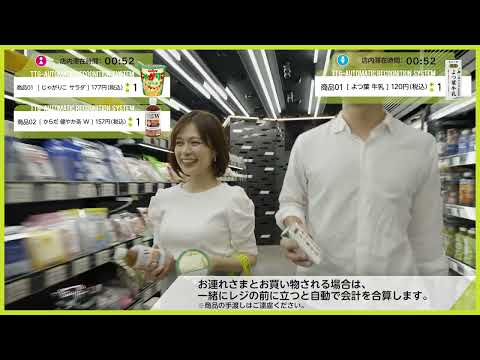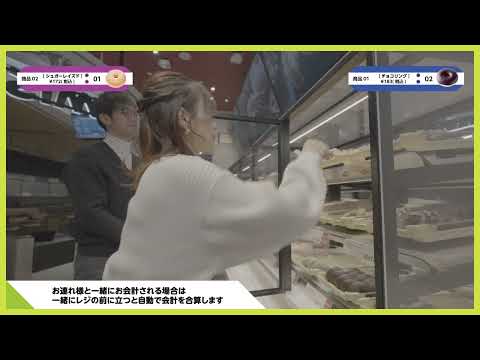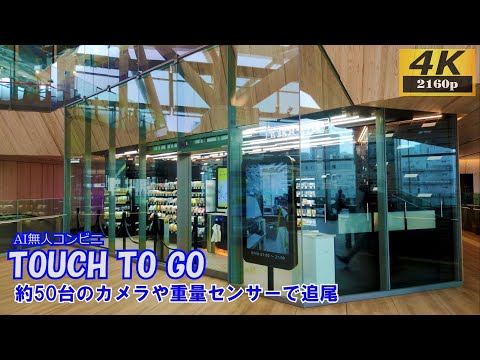
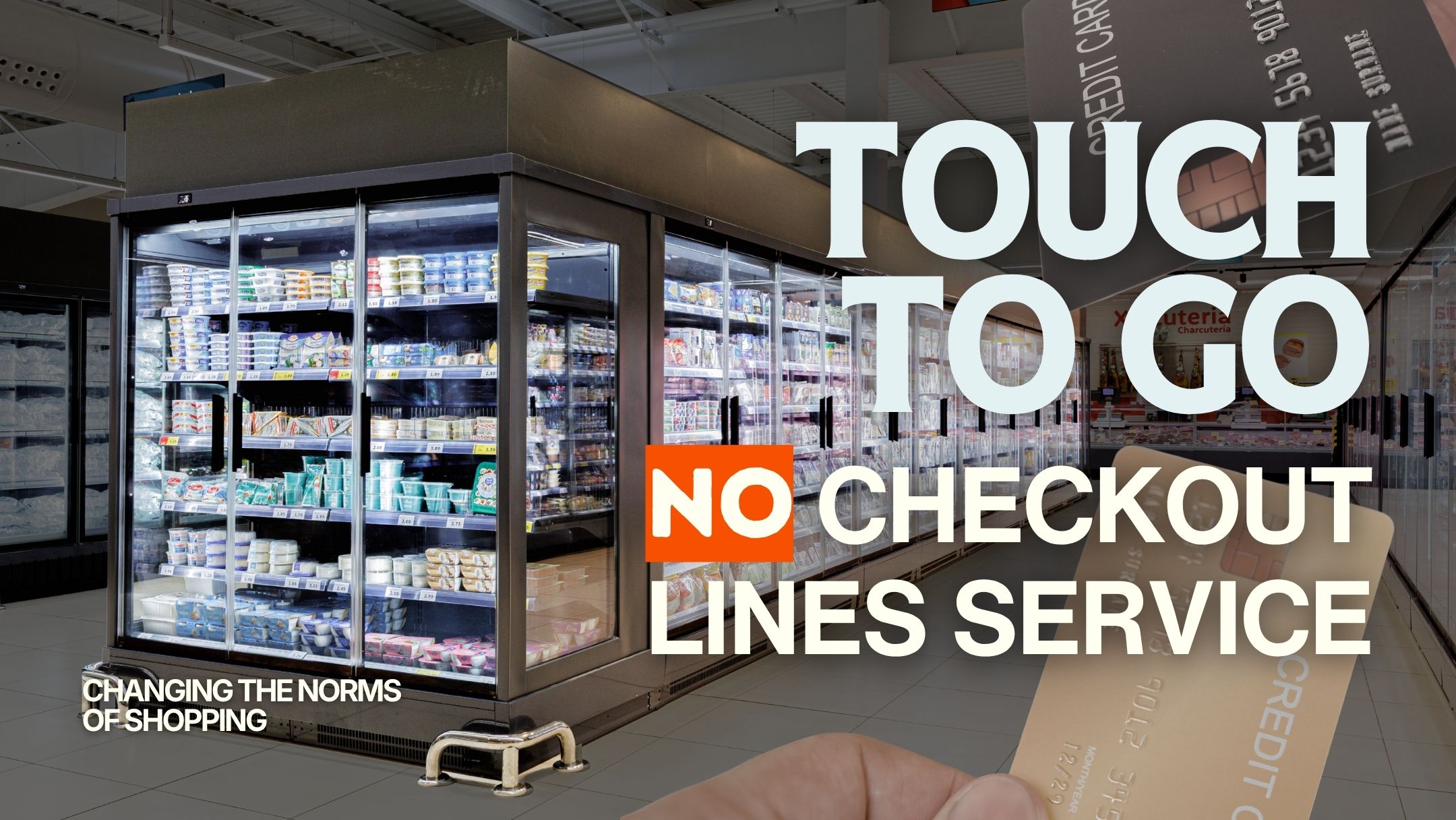
TOUCH TO GO is a company that has directly addressed the long-standing challenges faced by Japan’s retail and distribution sectors, designing cashierless stores not from the perspective of “eliminating people,” but of “optimizing operations.” Labor shortages, reliance on individual staff expertise, limited space, and time constraints are all practical realities in retail. The question has been how to implement technology effectively within those constraints. TOUCH TO GO’s suite of services represents one concrete answer to that question.
The cashierless stores developed by the company are not simply systems designed to remove human workers. While they utilize AI cameras and sensors, equal emphasis is placed on creating user flows that feel intuitive and secure for Japanese customers, as well as ensuring smooth integration with existing retail operations. Rather than idealizing full automation, TOUCH TO GO focuses on redefining the balance of roles between people and technology. That philosophy lies at the core of its products.
One reason TOUCH TO GO, a service born in Japan, is attracting attention lies in the environments where it has been implemented. The company has advanced real-world deployment in highly constrained spaces such as train stations, office buildings, and commercial facilities—settings that often present more limitations than comparable locations overseas. Limited floor space, diverse user groups, and fast purchasing behavior define these environments. A cashierless experience that works under such conditions is not merely a proof of concept, but something designed as part of everyday infrastructure.
Interest in autonomous stores and cashierless technology is rising worldwide. However, while adoption is often driven by technological momentum, many initiatives encounter challenges in real-world operations and scalability. Through the implementation capabilities and operational design it has cultivated in the Japanese market, TOUCH TO GO has demonstrated why its approach is practical and sustainable. For that reason, the service is not limited to Japan; it serves as a case study that overseas companies can also learn from.
TOUCH TO GO Overview
TOUCH TO GO does not simply provide an “unmanned store system.” Its service combines AI cameras, various sensors, and payment technology to create a cashierless experience in which customers can pick up items and leave the store, with payment completed automatically. However, the true value of this system lies not merely in its advanced technology but in its design for practical use in Japan’s real retail environments.
While many cashierless stores remain limited to pilot programs or controlled settings, TOUCH TO GO has steadily implemented its solutions within everyday traffic flows—such as train stations, office buildings, and commercial facilities. Customers are not required to learn special procedures; entry and purchasing flow naturally through familiar tools like IC cards or smartphones. This “no-instructions-needed” experience is a critical factor in integrating the service into Japan's daily-life infrastructure.
Moreover, TOUCH TO GO does not position full automation as its sole objective. It acknowledges the continued need for human involvement in areas such as restocking, cleaning, and operational management, while using technology to eliminate bottlenecks like checkout operations and waiting lines. As a result, it achieves both labor optimization and an improved customer experience. This pragmatic approach has enabled adoption across a wide range of retail formats.
vThe Cashierless Store System Developed by TOUCH TO GO Co., Ltd.
Source: TTG Homepage
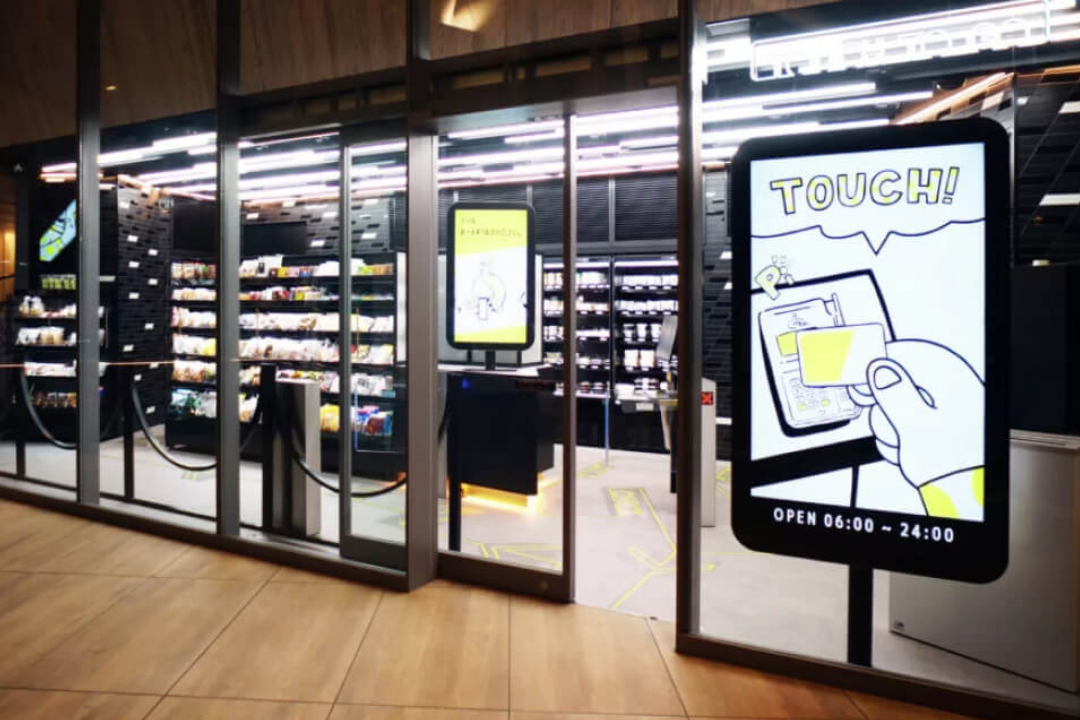
The cashierless stores provided by TOUCH TO GO are not simply “stores without checkout counters.” At their core is a redesign of the system itself, aimed at allowing the purchasing process to be completed as naturally as possible. Customers authenticate upon entry using an IC card or QR code, pick up the items they want, and leave the store—payment is completed automatically. This entire flow is designed to require no special actions or learning, enabling the experience to function with minimal change to the traditional shopping process.
Behind this design philosophy are the practical constraints faced by Japan’s retail sector: labor shortages, long working hours, the operational burden of late-night and early-morning shifts, and limited store space. TOUCH TO GO does not attempt to solve these challenges through technology alone. Instead, it reduces the overall operational burden by clearly defining which tasks should be handled by people and which should be entrusted to the system.
For example, areas where human judgment and attentiveness are essential—such as customer service, restocking, and merchandising—remain human responsibilities. Meanwhile, tasks that require speed and precision—such as payment processing and purchase data aggregation—are handled by the system. Because this division of roles is built into the model, it becomes possible to achieve both labor optimization and an improved customer experience without pursuing full automation as the ultimate goal.
Adapting Autonomous Retail to the Geometry of High-Traffic Hubs
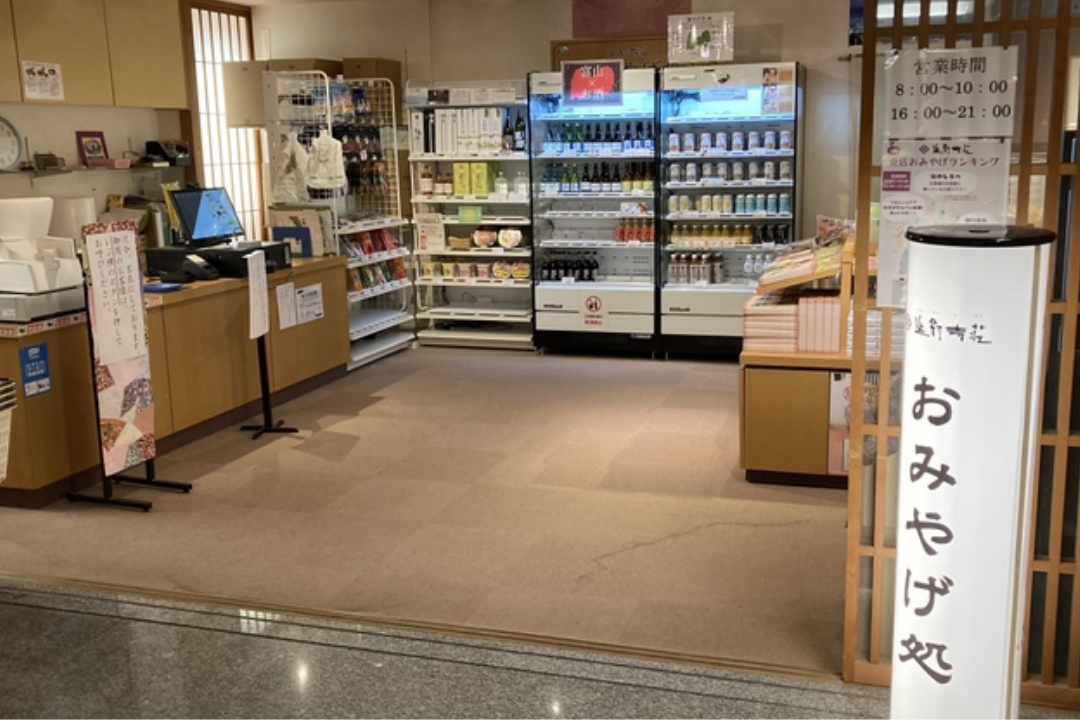
TOUCH TO GO’s cashierless stores also place strong emphasis on flexibility in implementation. Locations such as train stations, office buildings, hospitals, factories, and commercial facilities each have distinct traffic flows, operating hours, and customer demographics. The company’s system is designed to adapt to these conditions, allowing store size and equipment configurations to be adjusted accordingly. One of its defining features is the ability to operate effectively even in limited spaces. In doing so, TOUCH TO GO has challenged the conventional assumption that autonomous stores require large, expansive environments.
In terms of pricing, TOUCH TO GO does not assume an extremely high-cost model. Instead, it focuses on balancing initial implementation costs with ongoing operational expenses, keeping in mind what existing retailers can realistically adopt. As a result, its solutions have moved beyond pilot programs, with a growing number of stores operating continuously. This reflects not only technical capability, but also a clear understanding of how to make the model sustainable as a business.
Consequently, these cashierless stores are no longer limited to a specific industry or a handful of cutting-edge companies. As retailers, distributors, and facility operators across various sectors seek ways to reduce dependence on labor-intensive operations, TOUCH TO GO has emerged as a practical option. What the company is building is not a futuristic showcase, but a new form of store that exists as a natural extension of everyday life.
A Cashierless Store That Adapts to Each Operational Environment
One of the reasons TOUCH TO GO’s cashierless stores have been well received is the breadth of their implementation cases. Rather than being optimized for a single retail format or set of conditions, the system adapts its role to each specific use case. This flexibility is one of the service’s core strengths.
A representative example is its use in train stations. In these environments, where commuters and students are constantly moving, dwell time is extremely short, and congestion during peak hours can be intense. In traditional stores, even a short checkout line can cause customers to abandon their purchases. TOUCH TO GO’s cashierless stores minimize this time-related stress, creating an environment where people can “stop by and buy immediately.” This not only expands sales opportunities but also enhances convenience within highly public spaces like train stations.
Defeating the Commuter Rush
Implementation in office buildings is another important case. In workplace convenience stores used during lunch breaks or between meetings, labor shortages and limited operating hours have long been major challenges. By going cashierless, purchases can be completed quickly, while also enabling more flexible business hours and reduced staffing requirements. As a result, users gain access to a store when they need it, and operators can maintain services with limited personnel.
TOUCH TO GO’s system is also functioning effectively in on-site stores within facilities such as hospitals and factories. In these environments, unlike typical commercial settings, user traffic patterns and purchasing behavior tend to be relatively predictable. Cashierless stores can be installed in a way that integrates naturally into established flows, operating without adding a burden on staff or users. The ability to remain accessible during late-night or early-morning hours is a particular advantage not typically offered by conventional store formats.
Maximizing Revenue in Zero-Dwell Environments
In commercial facilities, the value of TOUCH TO GO lies in its compact store format. Because it can operate in a limited space, previously unused areas can now be utilized effectively. This contributes to improved overall facility profitability and suggests the potential for a new type of tenant model.
What these examples share is that TOUCH TO GO’s cashierless stores are not designed as systems for special or experimental locations, but as solutions that function as a natural extension of everyday life. Even as industries and settings vary, their core values remain consistent. It is this versatility that is the primary reason they continue to be implemented.
A Design Philosophy Built on the Assumption of “Stores That Keep Running”
One of the reasons TOUCH TO GO’s cashierless stores are valued in real-world operations lies in the company’s approach to quality control. When people hear about autonomous payment systems or AI cameras, attention often gravitates toward cutting-edge technology. However, the company prioritizes the system's ability to continue operating reliably over time. A store is not a laboratory—it is a place people use every day, where unexpected behavior and environmental changes constantly occur. The service as a whole is designed with that reality in mind.
A key characteristic is the avoidance of overly complex configurations in both hardware and software. While elements such as AI cameras and weight sensors are advanced, the overall system architecture is kept as simple as possible. This not only reduces the risk of failure but also eases the burden of maintenance and inspection. For store operators, systems that frequently require troubleshooting can be barriers to adoption and are not well-suited to long-term operation.
TOUCH TO GO also places strong emphasis on pre-installation verification. Because lighting conditions, customer flow patterns, and product placement vary from store to store, adjustments are made in environments that closely mirror actual operating conditions. This approach helps reduce misidentification errors and customer confusion that might otherwise arise after launch. Rather than relying on a perfect theoretical model, the company prioritizes fine-tuning based on real-world conditions—an attitude that directly contributes to operational stability.
From a quality-control perspective, it is also important that the company view the “entire store” as a single system rather than focusing solely on payment technology. A cashierless store does not succeed simply because the payment system functions accurately. It requires coordination across restocking schedules, shelf management, and customer flow design. By providing support that encompasses these surrounding operational elements, TOUCH TO GO helps minimize inconsistencies in quality.
In addition, the response framework for potential issues is grounded in practical reality. Because the system is not built on the assumption of full automation, room is intentionally left for human intervention when necessary. This built-in flexibility—essentially an intentional “fallback option”—reflects experience rooted in on-the-ground operations. As a result, it becomes easier to avoid critical failures that could undermine customer trust.
Through this accumulation of operational design and quality management practices, TOUCH TO GO’s cashierless stores have come to be recognized not as “innovative but unstable systems,” but as “innovative and dependable systems.” They may not be flashy, but they continue to function reliably in everyday life. That steady, practical approach represents the company’s strongest commitment to quality.
Why the Focus Was Not “Full Automation,” but “A System That Works on the Ground”
Source: TTG Homepage
Behind TOUCH TO GO’s entry into this field lies the structural challenges long faced by Japan’s retail and distribution industries. Labor shortages and rising personnel costs had been pointed out for years, yet operations were sustained by somehow making things work on-site. However, as Japan’s population continues to age and attitudes toward work evolve, that assumption itself has begun to erode.
In locations such as train stations, commercial facilities, and office buildings—where transactions are often brief—a significant workforce has traditionally been allocated to checkout operations. Staffing levels adjusted for peak hours create substantial cost burdens, while slower periods generate inefficiencies. This imbalance not only increases operational strain but can also affect service quality.
In response, TOUCH TO GO did not pursue “full automation” as an end in itself. Rather than eliminating people entirely, the company sought to create an environment in which staff could focus on the roles that truly require human judgment and interaction. Routine, high-load tasks such as payment processing and product recognition are delegated to the system. This approach goes beyond simple efficiency; it represents a broader reconsideration of how work is structured and how stores are operated.
From the beginning, the company was determined not to let its efforts remain confined to pilot programs. It was understood that introducing cutting-edge technology for publicity alone would not lead to long-term adoption. For systems to be used continuously in real operating environments, they must remain stable over time—even if that means accepting incremental improvements rather than theoretical perfection. This pragmatic awareness is deeply reflected in both system design and operational support.
The company has also been mindful of Japan’s cultural context, where tolerance for visible failure can be low. If users feel uneasy or confused, even a single negative experience can discourage further use. For that reason, TOUCH TO GO has emphasized creating an experience that does not rely heavily on explanation and feels intuitive even to first-time users. This design principle not only supports adoption in Japan but also provides an important foundation for potential overseas expansion.
Ultimately, TOUCH TO GO’s value lies not just in technological innovation but in its commitment to addressing real-world challenges directly. By avoiding both denial of existing issues and overreliance on idealistic solutions, the company has consistently chosen approaches that can be implemented and sustained. That accumulation of practical decisions has shaped the service as it exists today.
The Low-Stress Experience You Understand Once You Try It
The reasons TOUCH TO GO’s cashierless stores are highly regarded become even clearer when listening to feedback from adopting companies and users. One of the most common reactions is, “It felt more natural than I expected,” or “I was able to use it without thinking too much about it.” These responses highlight that, despite being a new cashierless system, the experience does not significantly deviate from familiar purchasing behavior.
For customers, shopping should not require deliberate attention. They simply pick up what they need and complete the necessary steps. What matters most is that the entire process flows smoothly. In TOUCH TO GO’s stores, the act of payment does not take center stage; instead, the experience is designed to feel almost as if “it’s finished before you realize it.” This subtlety helps reduce the psychological resistance that can accompany cashierless systems.
From the perspective of adopting companies, many report a noticeable reduction in operational burden. In particular, the ability to maintain store operations in locations or time slots where staffing is difficult has been a significant shift. While not fully unmanned, the reduction in time spent handling checkout allows staff to focus more on tasks such as restocking and floor management. As a result, overall store quality becomes easier to maintain consistently.
Where Comfort Meets Operational Utility
For overseas visitors, the system is also easy to understand. Because the experience relies primarily on visual cues and requires minimal language-based explanation, international travelers can use it with little confusion. In fact, there are many cases where first-time foreign users at train stations or in commercial facilities navigate the environment naturally and without difficulty. This point carries important implications for potential global expansion.
The use of operational data has also been positively received. As information such as purchase histories and time-of-day usage patterns accumulates, the accuracy of product assortment and restocking plans improves. This goes beyond simple labor optimization; it enhances the overall quality of store management. The combination of on-the-ground insight and data-driven decision-making further strengthens the system’s practicality.
Through the accumulation of positive user experiences and operational feedback, TOUCH TO GO’s cashierless stores are becoming established not because they are new, but because they are easy to use. Rather than relying on flashy presentation, their value lies in comfort that blends seamlessly into daily life—a value that continues to expand steadily.
Why It Didn’t End as Just a Pilot Program
TOUCH TO GO’s cashierless stores are no longer considered a novelty in Japan. Their continued operation in everyday locations—such as train stations, commercial facilities, and office buildings—demonstrates that the system did not end as a passing trend or short-term experiment, but has been integrated into daily infrastructure.
Many autonomous store concepts and next-generation retail models attract attention during the pilot phase, yet often face challenges in long-term operation due to cost burdens, operational complexity, or difficulty achieving sustained user adoption. In contrast, TOUCH TO GO has continued expanding its installations because of its field-oriented design and operational support framework.
What is particularly valued is post-implementation stability. If malfunctions or system errors occur frequently, store operators will quickly abandon the cashierless option. Rather than pursuing flawless automation at any cost, TOUCH TO GO has prioritized a level of functionality that can be realistically and consistently maintained in actual retail environments. This approach has enabled expansion to multiple locations and the establishment of permanent stores.
Broader social changes have also supported this growth. As labor shortages intensify and demand for contactless experiences increases, businesses are seeking solutions that balance workforce efficiency with customer satisfaction. TOUCH TO GO’s system has gained a degree of trust in Japan as a practical response to these evolving conditions.
The Strength of an Experience That Works Without Explanation
TOUCH TO GO’s potential in overseas markets does not depend solely on the sophistication of its technology. What is more important is the simplicity of the experience itself. Pick up an item and leave the store—that’s all it takes. This clarity makes the system easy to understand across language and cultural differences.
Retail industries around the world face challenges such as labor shortages, rising personnel costs, and increasing pressure for operational efficiency. At the same time, overly complex systems or models that require customers to learn new procedures often become barriers to adoption. TOUCH TO GO’s approach addresses these challenges by preserving the natural flow of everyday shopping rather than disrupting it.
Operational expertise developed in highly public settings such as train stations and office buildings can also be applied in urban areas overseas. While products and payment methods can be localized to suit each market, the core structure of the experience can remain intact. This flexibility represents a significant strength when forming partnerships or pursuing joint expansion with local companies.
Furthermore, the “failure-resistant design philosophy” developed through real-world implementation in Japan offers valuable insight for overseas companies. By not treating full automation as the ultimate goal and instead assuming a clear division of roles between people and systems, this approach may be more easily accepted in markets with different cultural and regulatory environments.
Why Global Companies Should Pay Attention to TOUCH TO GO
Source: TTG Homepage
TOUCH TO GO’s initiatives are not simply about following technology trends like cashier-less payment systems. Instead, they stem from addressing the real challenges faced by Japan’s retail and distribution sectors and from refining a system by asking one key question: how can it be used consistently in real-world operations?
What stands out is that technology itself is not pushed to the forefront, but instead integrated seamlessly into everyday life and workflows. The result is an easy, low-stress experience for users while remaining practical and sustainable for operators. Because this balance has been achieved, the system has moved beyond the experimental stage and now functions as part of daily life.
For overseas companies, TOUCH TO GO is more than just a provider of cashier-less systems. It represents the complete answer to how to design and establish new experiences. Rather than showcasing technology for its own sake, it focuses on integrating solutions into real environments. This approach provides a valuable reference for companies across the globe and industries looking to shape future products and services.
FAQ About TOUCH TO GO
1. What Kind of Service Is TOUCH TO GO?
"TOUCH TO GO" is a cashierless, unmanned payment store solution provided by TOUCH TO GO Co., Ltd. By utilizing AI cameras and sensors, it enables a system where payments are completed simply by the user picking up products and leaving the store.
2. How Is It Different From a Regular Self-Checkout?
The point of difference from a regular self-checkout is that "the user does not have to perform any checkout operations." While a self-checkout requires scanning items and operating the payment terminal, TOUCH TO GO automatically handles everything from product recognition to payment on the system side, creating a much smoother shopping experience.
3. Why Is TOUCH TO GO Not Aiming for "Complete Automation"?
Because the company emphasizes the "division of labor between people and technology" rather than "eliminating people." The system handles routine tasks such as checkout processing. In contrast, people handle areas that require human judgment—such as customer service, sales floor displays, and product restocking—thereby achieving both a reduced on-site workload and an improved customer experience.
4. Why Is Its Introduction Progressing Inside Train Stations and Offices?
Because it aligns well with the need for quick, short-term utilization, waiting in line at the register tends to be a major source of stress at stations and offices, but the TOUCH TO GO system significantly reduces checkout wait times, allowing for smooth shopping even within a limited timeframe.
5. Is It Easy to Use for First-Time Users?
Yes, its key feature is that there is no need to learn any special operations. Since payment is completed simply by entering the store with an IC card or smartphone, selecting products, and leaving, the experience is designed with an emphasis on "usable without explanation."
6. Why Did TOUCH TO GO Not End up as Just a Proof of Concept?
Because it was designed based on the premise of actual on-site operations. Rather than flashy technological appeals, the company prioritized "stable daily operation" and "effortless management for store staff," accumulating adjustments tailored to the layout and utilization environment of each specific site.
7. Can It Be Introduced in Any Kind of Location?
It accommodates various locations, including train stations, office buildings, hospitals, factories, and commercial facilities. Its key feature is that the store size and equipment configuration can be flexibly adjusted, making it easy to introduce even within limited spaces.
8. What Kind of Benefits Are There for the Management Side?
It allows them to address labor shortages and advance operational efficiency simultaneously. With the burden of register operation reduced, staff can dedicate their time to duties they should originally focus on, such as product restocking and sales floor management. Furthermore, it leads to operational improvements by leveraging purchasing data.
9. Is It Also Drawing Attention in International Markets?
Yes, the "experience that works without explanation" is highly evaluated. Because it is a simple purchasing experience that does not rely heavily on language, it is intuitively easy to use even for international users, attracting attention for its excellent compatibility with urban retail and transportation infrastructure.
10. What Is TOUCH TO GO's Biggest Appeal?
It is "making shopping comfortable without making the user conscious of the technology." Instead of pushing cutting-edge technology to the forefront, its greatest appeal lies in seamlessly blending it into the flow of daily life, implementing a "future where not lining up at the register becomes a matter of course" as a reality.
Related Videos
If you're interested in Japan’s retail innovations, the video below introduces TOUCH TO GO, a smart convenience store system that eliminates checkout lines through AI and sensor technology. This video shows how customers can simply pick up products and leave, creating a faster and more seamless shopping experience.