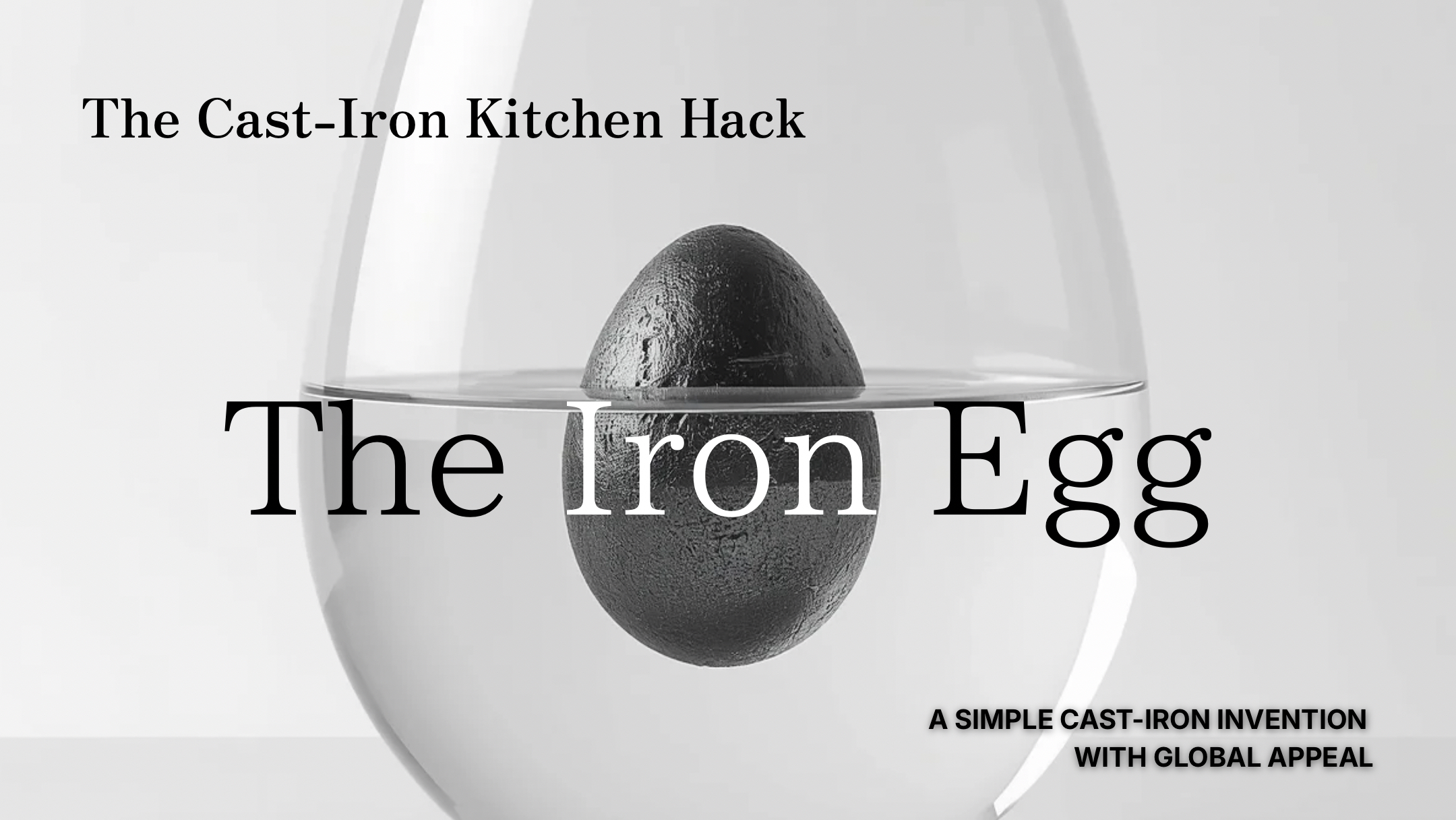
Just Drop It in the Pot: How Japan’s “Iron Fish” Alternative, The Iron Egg, Adds Iron to Everyday Cooking
Iron is one of the most important nutrients for maintaining good health, yet it is also one of the easiest to fall short on in daily life. In many countries, iron deficiency is typically addressed through supplements, fortified foods, or specialized nutrition programs. Japan, however, has long embraced a more subtle approach. Instead of treating iron as something that must be added separately, it can be incorporated through the cooking process itself.
One of the most interesting examples of this philosophy is the Iron Egg (Tetsu Tamago), a small cast-iron tool placed inside a pot or kettle while cooking. As it heats, trace amounts of iron are released into the water or food. No special preparation is required. No changes to recipes are necessary. It simply becomes part of an everyday kitchen routine.
While the concept may seem unusual to those unfamiliar with Japanese cookware traditions, it reflects a long-standing belief that the materials used in cooking matter. For centuries, Japanese households relied on cast-iron kettles and cookware, not only for their durability but also for the subtle ways they interacted with food and water. The Iron Egg takes that same idea and distills it into a simple, accessible tool.
Today, this Japanese invention is gaining attention beyond Japan because it aligns with several global trends. People are increasingly looking for health habits that are easy to maintain, sustainable products that reduce waste, and solutions that fit naturally into existing routines. The Iron Egg does not ask people to adopt a new lifestyle. Instead, it quietly integrates into one they already have.
Its appeal also extends to environmentally conscious consumers. Unlike supplements or single-use products, an Iron Egg can be used repeatedly for years. It requires no electricity, batteries, or disposable components. In many ways, it represents a broader Japanese approach to design: practical, long-lasting, and unobtrusive.
This article explores what the Iron Egg is, where the idea comes from, and why this humble piece of cast iron continues to resonate in an era focused on health, sustainability, and simpler living.
Iron Egg Overview
The Hatsumei Gakkai Net Shop is a visionary e-commerce platform that transforms independent grassroots creativity into commercial reality by offering a dedicated retail marketplace for independent Japanese inventors.
Co-managed by the long-established manufacturer Showamaichi Sangyo Co., Ltd. and the Japan Association of Inventors, the service specifically addresses the historically difficult distribution and logistical barriers that independent creators face when attempting to bring small-scale ideas to market. By transforming its platform into a low-risk, centralized fulfillment ecosystem that handles everything from secure storage and order dispatch to national media promotion, it connects consumers with highly unique, problem-solving daily gadgets that cannot be found anywhere else.
In an era where consumer industries are heavily driven by mass production, this platform serves as an essential framework for intellectual property democratization—proving that simple, localized human ingenuity can successfully scale into sustainable economic value and practical lifestyle enhancements.
What Is the Iron Egg?
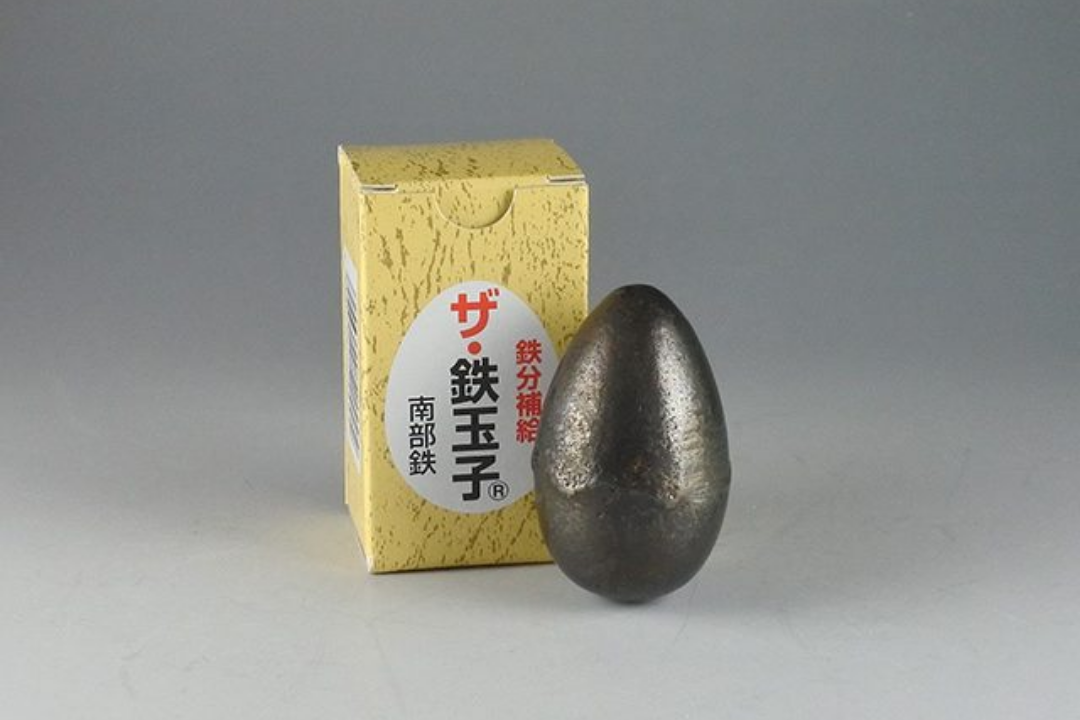
Source: Hatsumei Society Homepage
The Iron Egg is a small cast-iron object designed to be placed in a pot, kettle, or pan while water or food is being heated. Rather than functioning as a supplement or fortified food product, it works through the cooking process itself.
Its purpose is straightforward: to introduce small amounts of iron into water or food during heating. As the cast iron is exposed to heat and moisture, trace amounts of iron naturally transfer into the liquid. This is not the result of added chemicals or artificial fortification. It is simply a property of the material itself.
The design is intentionally simple. There are no moving parts, electronics, or complex mechanisms. Most versions are made from solid cast iron with minimal surface treatment. While many are shaped like eggs, others resemble animals, plants, or traditional Japanese motifs. Regardless of appearance, the design prioritizes practicality. It should be easy to place in a pot, easy to remove, and durable enough for repeated use.
Its versatility is one of its strengths. It can be used when boiling water, making soup, preparing stews, cooking pasta, or heating water for tea and coffee. Because it is not tied to any specific cuisine, the concept is easy to understand regardless of where someone lives.
Unlike supplements that need regular repurchasing, an Iron Egg is designed for long-term use. After cooking, it is simply washed, dried thoroughly, and stored until next time. It functions more like a trusted kitchen tool than a health product.
Perhaps most importantly, it is not exclusively for health enthusiasts. Anyone who cooks can use it without significantly changing their habits. This accessibility is one reason the concept translates so well across cultures.
A Japanese Approach to Health That Doesn't Feel Like a Health Routine
What makes the Iron Egg different from many wellness products is that it asks almost nothing from the user.
In many parts of the world, health routines require deliberate effort. People take supplements, track nutritional intake, follow schedules, or purchase specialized products. While these approaches can be effective, they also depend on consistency and motivation.
The Iron Egg takes a different path.
Rather than creating a new habit, it attaches itself to an existing one. If someone already boils water or cooks regularly, the Iron Egg simply becomes part of that process. There is no extra step beyond placing it in the pot.
This reflects a broader Japanese philosophy of gradual improvement. Rather than dramatically changing daily life, the goal is often to make small adjustments that are sustainable over time. The Iron Egg is not designed to deliver dramatic, overnight results. Its value lies in becoming part of everyday life and remaining there.
Why the Iron Egg Outperforms Complex Supplements
Its simplicity is also tied to a deep respect for materials. The Iron Egg does not rely on advanced engineering or added functionality. Instead, it uses a natural property of cast iron and allows the material to do the work.
This mindset can be seen throughout traditional Japanese cookware. Cast-iron kettles and pots were valued not only for durability and heat retention but also because the material itself influenced the cooking experience. The Iron Egg takes that centuries-old understanding and adapts it for modern kitchens.
Another notable aspect is its focus on long-term usability. The design is understated and practical. It is not intended to be visually flashy or technologically impressive. Every aspect of its form is geared toward repeated use. Easy cleaning, simple storage, and durability matter more than novelty.
That emphasis on longevity is a defining characteristic of many Japanese household tools. The best tool is often not the one that attracts the most attention, but the one people continue using years later.
Reconnecting With Iron Through Everyday Life
The origins of the Iron Egg are closely tied to changes in modern lifestyles.
In the past, many Japanese households routinely used cast-iron kettles and cookware. Cooking and boiling water naturally involved contact with iron, making it a quiet part of everyday life. No one viewed it as a nutritional strategy. It was simply how kitchens functioned.
Over time, that changed.
Modern cookware became lighter, cheaper, and easier to maintain. Stainless steel, aluminum, and non-stick materials replaced cast iron in many homes. These innovations brought undeniable convenience, but they also removed an everyday interaction that had existed for generations.
This shift was not unique to Japan. Around the world, cookware became increasingly standardized and optimized for efficiency. As a result, nutrition became something that often needed to be added back through supplements and fortified foods.
The Iron Egg emerged as a response to this transformation.
Reversing the Unintended Consequences of Kitchen Efficiency
Rather than introducing a new technology, it reintroduces an older relationship between people and materials. It offers a way to reconnect with a traditional cooking principle without requiring the maintenance demands of a full cast-iron cookware collection.
The concept is not about solving a crisis or correcting a major problem. Instead, it gently restores something that was gradually lost. It represents a belief that meaningful improvements can come from revisiting forgotten practices rather than constantly seeking new ones.
This perspective resonates strongly today, particularly as many people question whether every challenge requires a highly technological solution.
Where the Iron Egg Fits Into Modern Life
One reason the Iron Egg remains relevant is its adaptability. It is not limited to a specific environment or user group.
The most common setting is the home kitchen. Whether someone is making soup, boiling pasta, preparing stock, or heating water, the Iron Egg can be incorporated into existing routines without requiring recipe changes.
Because it functions as part of the cookware rather than as a health product, it often feels less intrusive than supplements or specialized nutrition programs. Families can use it collectively without needing separate routines for different household members.
Beyond the home, the concept also has potential in semi-public settings such as employee cafeterias, community kitchens, educational facilities, and care centers. Since it integrates directly into existing cooking processes, implementation requires little additional infrastructure.
Its simplicity can also be beneficial in care environments where managing supplements and individual nutritional plans can become complicated. While the Iron Egg is not a replacement for professional medical guidance, its integration into standard food preparation can make it easier to incorporate into daily operations.
Internationally, one of its greatest advantages is its compatibility with universal cooking behaviors. Virtually every culture boils water.
Whether for tea in the United Kingdom, coffee in North America, herbal infusions in Europe, or soups around the world, the act of heating water is nearly universal. Because the Iron Egg works within that shared behavior, it adapts more easily across cultural boundaries than products tied to specific cuisines.
Thoughtful Design Over Technical Complexity
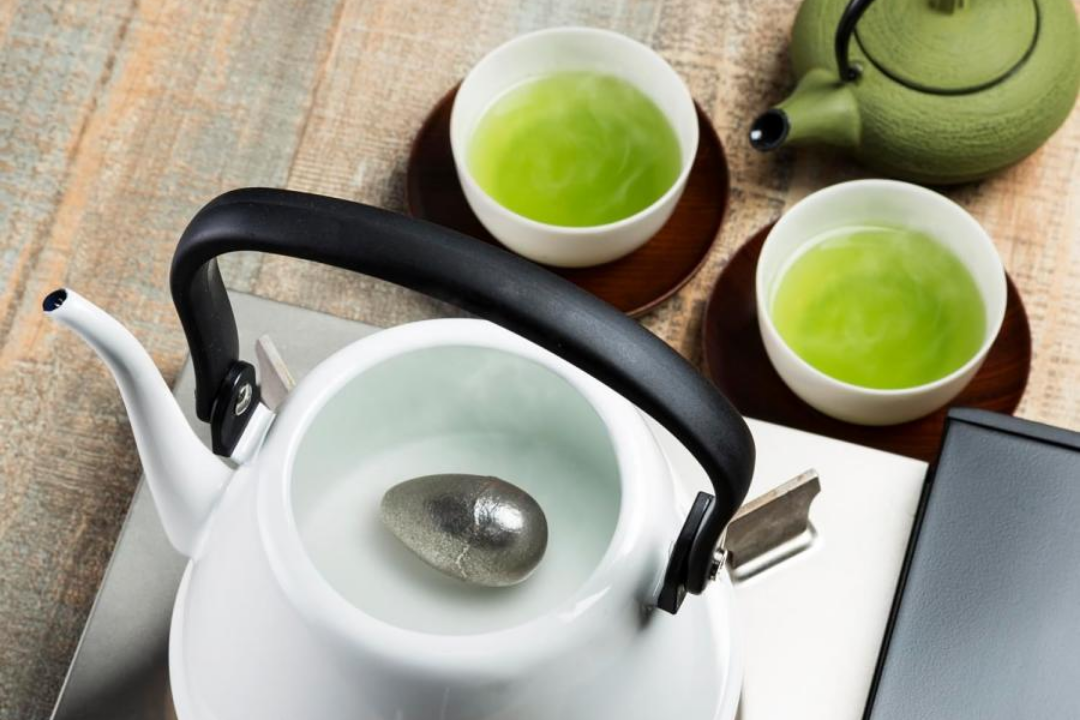
Source: Hatsumei Society Homepage
When examining the Iron Fish concept through a Japanese lens, what stands out is not technical performance or measurable specifications, but the way it has been quietly refined around everyday use. Japanese craftsmanship is often associated with precision and engineering excellence, but in this case, its defining strength lies elsewhere. The product is designed to fit naturally into daily life, minimizing friction and encouraging long-term use. This attention to practical details is what gives it its uniquely Japanese character.
A Distinctly Japanese Strength
In Japan, household tools have traditionally been valued for their ability to support daily life without drawing attention to themselves. Rather than becoming the center of attention, they are expected to work quietly in the background. Iron Fish reflects this philosophy. Its appearance is simple, its decoration minimal, and its design understated. This is not due to a lack of care, but the opposite. Every aspect is intended to ensure that it sits comfortably in a pot, remains easy to handle, and feels natural in almost any kitchen.
In many markets, products are designed to communicate their function immediately through visual cues and branding. Japanese design often places greater value on tools that feel intuitive enough to use without extensive explanation. Iron Fish follows this tradition by prioritizing usability over visual impact.
The approach to safety also reflects broader Japanese attitudes toward household products. Iron Fish is not something that is consumed directly, but a tool that works through the cooking process. As a result, the emphasis has traditionally been placed on reliability, ease of maintenance, and long-term everyday use rather than dramatic claims or exaggerated promises. It is designed to be durable, easy to care for, and forgiving in normal use. This reflects a broader philosophy of trusting users rather than constantly trying to manage their behavior.
There is also a cultural belief in Japan that tools become better companions through use. A well-made item is not considered complete the moment it is purchased. Instead, it gradually becomes integrated into daily routines and personal habits. Iron Fish follows this pattern. At first, users may consciously remember to place it in a pot before cooking. Over time, the action often becomes automatic. This gradual integration into everyday life represents an ideal that many Japanese household products strive for.
Why Japanese Tools are Considered Incomplete at Purchase
Compared with many international consumer products, this perspective can feel quite different. In many markets, value is expected to be obvious immediately after purchase. Consumers are often encouraged to seek visible results and quick satisfaction. Iron Fish, by contrast, is built around the assumption that meaningful value emerges through consistent use over time. While less dramatic, this long-term approach can ultimately have a deeper impact on daily habits.
Another factor supporting Iron Fish is Japan's tendency to blur the line between traditional craftsmanship and everyday utility. Products rooted in traditional manufacturing techniques are often still used as practical household items rather than treated solely as collectibles or decorative objects. Although Iron Fish draws on the heritage of traditional cast-iron craftsmanship, it requires no specialized knowledge or ritual. It has been simplified so that virtually anyone can use it.
For this reason, the Japanese strength behind Iron Fish is not found in technical superiority or impressive specifications. It lies in its respect for daily routines, its ease of use, and its ability to become part of ordinary life. That quiet practicality is what allows it to be presented internationally as something more meaningful than just another health-related product.
A Japanese Lifestyle Idea Finding Resonance Beyond Japan
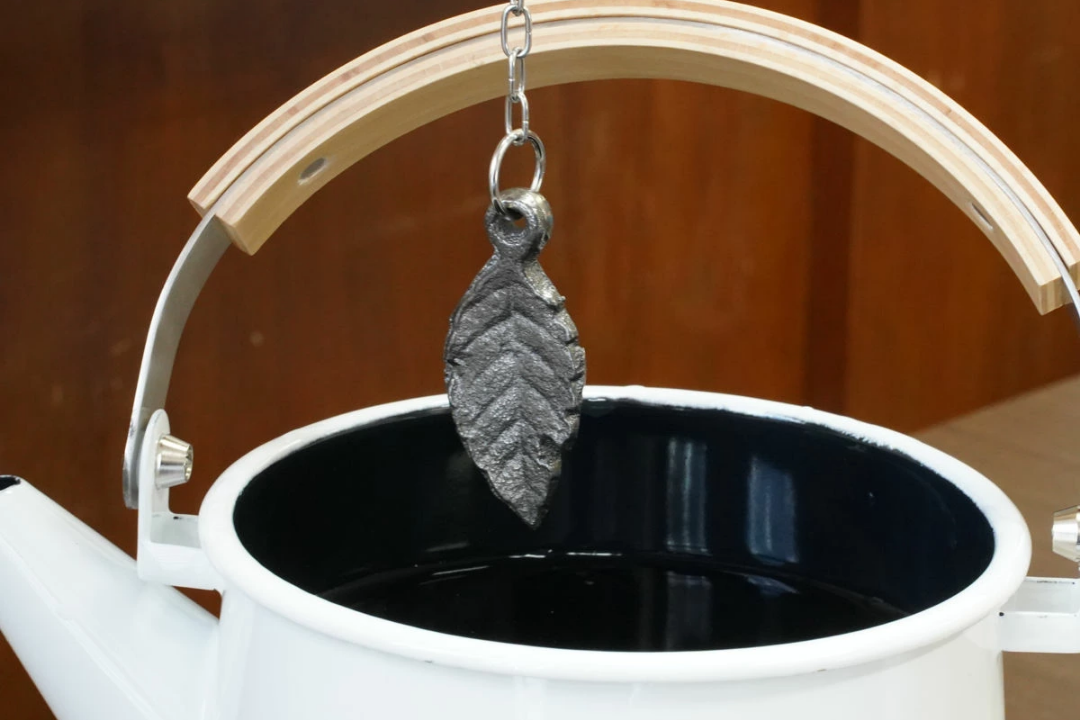
Source: Hatsumei Society Homepage
Although Iron Fish emerged from Japan's long relationship with cast-iron cookware, the underlying idea is not limited to Japanese culture. In fact, it speaks to challenges that are becoming increasingly common around the world. As modern life grows more convenient and efficient, many people are also searching for ways to reconnect with healthier and more sustainable everyday habits.
One reason the concept travels well internationally is that it is not tied specifically to Japanese cuisine. It is not dependent on dishes such as miso soup or other traditional foods. Instead, it connects to universal activities like boiling water and cooking meals. In Europe and North America, for example, soups and stews are staples in many households. Adding Iron Fish to a cooking pot requires no changes to recipes, making it relatively easy to incorporate into existing culinary traditions.
The same applies to cultures built around tea, coffee, or herbal infusions. Boiling water is a routine activity almost everywhere in the world. Because Iron Fish can be added to that process without changing the drink itself, it crosses linguistic and cultural barriers more easily than many health-focused products.
Another reason it resonates internationally is its understated approach to wellness. Many health products rely on bold claims and highly visible marketing. Iron Fish takes a different approach. It presents itself first as a practical household tool rather than a wellness solution. For people overwhelmed by constant health advice or attracted to minimalist lifestyles, this quiet approach can feel refreshing.
The concept also aligns well with growing interest in sustainability. Around the world, consumers are becoming more critical of disposable products and short-lived consumer goods. Durable tools that can be used for years without electricity or ongoing consumables are attracting renewed attention. Iron Fish fits naturally into this conversation. With proper care, it can remain in use for a long time while requiring very few resources.
At the same time, international audiences are increasingly interested not only in Japanese products, but in the philosophies behind them. People want to understand why a product was designed the way it was and what kind of lifestyle inspired it. Iron Fish is particularly effective in this context because it is small, easy to understand, and representative of broader Japanese values surrounding simplicity, practicality, and long-term use.
Its potential applications also extend beyond individual consumers. Eco-conscious accommodations, wellness retreats, cooking schools, and community-based sustainability projects may all find value in introducing Iron Fish as an example of how small changes can support healthier daily routines. Because it requires little explanation or specialized knowledge, it is easy to incorporate into a variety of environments.
The appeal of Iron Fish abroad is not based on novelty or technological innovation. Instead, it comes from its ability to fit quietly into activities that already exist in every culture: boiling water and preparing meals. Rather than overcoming cultural differences, it works by connecting to shared human habits. That universal relevance may be its greatest strength.
A Japanese Everyday Innovation That Aligns With Global Challenges
The growing international interest in Iron Fish can largely be explained by how naturally it aligns with issues that people around the world are already thinking about. Health, sustainability, and simpler living are no longer niche concerns. They are global conversations. Iron Fish addresses these themes not through grand promises or dramatic lifestyle changes, but through a modest adjustment to everyday routines.
From a health perspective, many countries face similar challenges. As processed foods and dining out become more common, nutrition increasingly requires conscious effort. At the same time, people are inundated with advice, products, and conflicting information. Iron Fish offers a remarkably simple alternative. It does not require learning a new system, tracking data, or making complex decisions. It simply becomes part of an existing cooking habit. For those experiencing information fatigue, that simplicity can be particularly appealing.
Its connection to sustainability is equally significant. Iron Fish requires no electricity and is designed for repeated long-term use. With proper care, it can remain functional for years, reducing the need for disposable or frequently replaced products. This aligns closely with growing efforts to reduce waste and make more sustainable consumer choices. In many Western countries, the tools people choose are increasingly seen as reflections of personal values. Iron Fish communicates those values through its design rather than through marketing slogans.
Accessibility is another important factor. The concept does not depend on age, specialized knowledge, or advanced technical skills. Anyone capable of preparing food can use it. This inclusiveness allows it to function as a household tool rather than a product intended only for a specific group of users. As accessibility becomes a greater priority in product design worldwide, this broad usability becomes increasingly valuable.
Iron Fish also offers an interesting counterpoint to the rise of hyper-connected technology. While smart appliances, apps, and digital health tracking continue to expand, many consumers are looking for simpler tools that do not require constant monitoring. Iron Fish has no screen, no software, and no complicated setup. Its purpose is immediately understandable. Ironically, as technology becomes more advanced, the appeal of such straightforward tools may become even stronger.
Without explicitly positioning itself around concepts like sustainability goals or wellbeing frameworks, Iron Fish naturally aligns with many of the same values. It supports healthier habits, reduces waste, and avoids adding unnecessary complexity to daily life. Few products accomplish all three at once.
As the future of consumer products continues to evolve, the greatest opportunities may not lie in inventions that radically transform everyday life, but in those that improve it quietly and sustainably. In that sense, Iron Fish represents something larger than a single product. It reflects a Japanese approach to living that balances practicality, restraint, and long-term thinking, qualities that are becoming increasingly relevant around the world.
Conclusion
The Iron Egg may be small, but the ideas behind it are remarkably expansive.
It reflects a distinctly Japanese way of thinking about health, not as something that requires constant effort and self-monitoring, but as something that can be gently woven into everyday life. By integrating into ordinary cooking routines, it shifts nutrition from a conscious task to a natural byproduct of daily habits.
Its value also extends beyond health. The Iron Egg embodies principles that resonate globally: sustainability, simplicity, durability, and thoughtful design. It requires no power source, creates minimal waste, and is built to be used for years rather than discarded after a single purpose has been served.
Perhaps most significantly, it offers a reminder that innovation does not always mean adding more technology. Sometimes, it means rediscovering the potential of materials and practices that have been with us all along.
For international audiences, the Iron Egg provides more than a glimpse into Japanese cookware traditions. It offers a practical example of how small, well-designed tools can quietly improve everyday life without demanding dramatic change.
In a world increasingly filled with complex solutions, that quiet simplicity may be exactly what makes it relevant.
FAQ About The Iron Egg
1. What Is The Iron Egg?
The Iron Egg is a cast iron cooking tool made using traditional Nambu Tekki techniques. It is placed inside a pot or kettle while heating, allowing small amounts of iron to dissolve naturally into the water or food during cooking. Rather than serving as a dietary supplement, it is designed to fit seamlessly into everyday cooking routines.
2. How Can It Help Increase Iron Intake Just by Placing It in a Pot?
The Iron Egg works by taking advantage of the natural properties of cast iron. As it is heated in water, tiny amounts of iron are released from its surface into the liquid. This process requires no special coatings or chemical additives, relying instead on the inherent characteristics of iron, a practice closely connected to Japan's traditional cooking culture.
3. How Is It Different From Taking Iron Supplements?
The biggest difference is that it does not require a separate health routine. While supplements need to be taken regularly as an additional habit, the Iron Egg simply becomes part of everyday cooking or boiling water. This makes it easier to incorporate into daily life without changing existing routines.
4. Why Has It Remained Popular for So Many Years?
Its appeal lies in its simplicity and durability. The Iron Egg requires no electricity, batteries, or disposable components. After use, it only needs to be washed and thoroughly dried before its next use. Although it has no flashy features, its practicality and long-lasting design have earned it enduring popularity.
5. What Types of Dishes Can It Be Used With?
The Iron Egg can be used in a wide range of heated dishes and beverages, including miso soup, soups, stews, pasta water, and even hot water for drinking. Rather than being intended for specific recipes, it can be naturally incorporated into almost any situation where a pot or kettle is used.
6. Why Has It Attracted International Attention?
Its philosophy of supporting healthier habits without making life more complicated resonates with people around the world. Instead of requiring major dietary changes, the Iron Egg quietly fits into existing cooking routines. Its simplicity and ease of use have contributed to its growing international appeal.
7. Why Is It Considered a Sustainable Product?
The Iron Egg is designed to be used repeatedly for many years without requiring electricity or disposable materials. With proper care, it can last for a long time, making it an example of the Japanese philosophy of creating tools that are meant to be maintained and used for decades rather than frequently replaced.
8. Why Is It Made From Nambu Tekki Cast Iron?
Nambu Tekki is one of Japan's most respected traditional cast iron crafts, backed by generations of expertise in iron casting. Its durability, strength, and suitability for everyday cooking make it an ideal material for producing the Iron Egg.
9. What Makes the Iron Egg Unique?
Its greatest distinction is that it encourages healthy habits without requiring extra effort. Rather than asking people to follow complicated routines or learn specialized knowledge, it simply becomes part of ordinary cooking, making it easier to maintain healthy habits over time.
10. What Is the Greatest Strength of the Iron Egg?
Its greatest strength is that it embodies the Japanese philosophy of improving daily life through thoughtfully designed tools. Instead of promising dramatic transformations, it quietly blends into everyday cooking and provides practical value through consistent, long-term use. That understated yet highly functional approach is what makes the Iron Egg so appealing.