Japanese Company Bringing Instant Manufacturing to Cities Through Seal Vending Machine Microfactories
In Japan, personal seals known as hanko have long served as an official form of personal identification. They have traditionally been used for signing contracts, opening bank accounts, completing real estate transactions, and handling countless administrative procedures. Today, there is a machine that can manufacture a custom seal on-demand, any time of the day. It is called the Hanko Vending Machine.
Developed by a Japanese company specializing in seal-related services, this system reimagines what was once a traditional storefront business by integrating manufacturing directly into urban infrastructure. Instead of placing an order and waiting for production, customers enter their information into the machine, which automatically engraves a personalized seal within minutes. Rather than functioning as a conventional vending machine, it operates as a compact microfactory capable of manufacturing products on-demand.
Around the world, instant production of personalized products is becoming an increasingly important retail trend. From 3D printing to on-demand customization, consumers increasingly value products that are created specifically for them at the point of purchase. Japan's Hanko Vending Machine anticipated this shift by embedding small-scale manufacturing directly into commercial spaces years before microfactories became a widely discussed concept.
So why is this uniquely Japanese system worth introducing to an international audience today?
This article explores the philosophy behind the company operating these machines, why the concept was developed, how the technology works, and what makes it an effective example of urban microfactory design. It also examines the business value for commercial property owners, the quality control systems that support automated production, and the potential for applying this model to international markets.
Hanko Vending Machine Overview
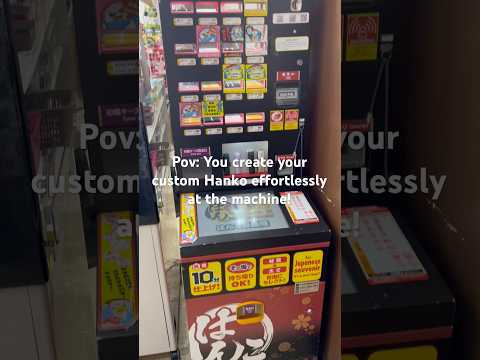
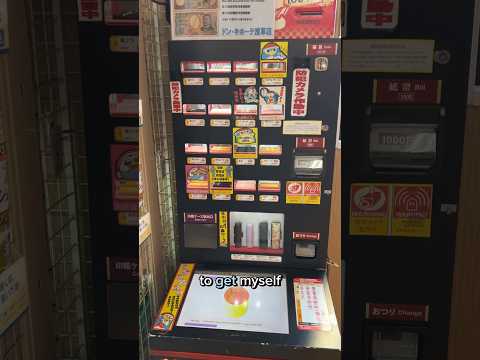
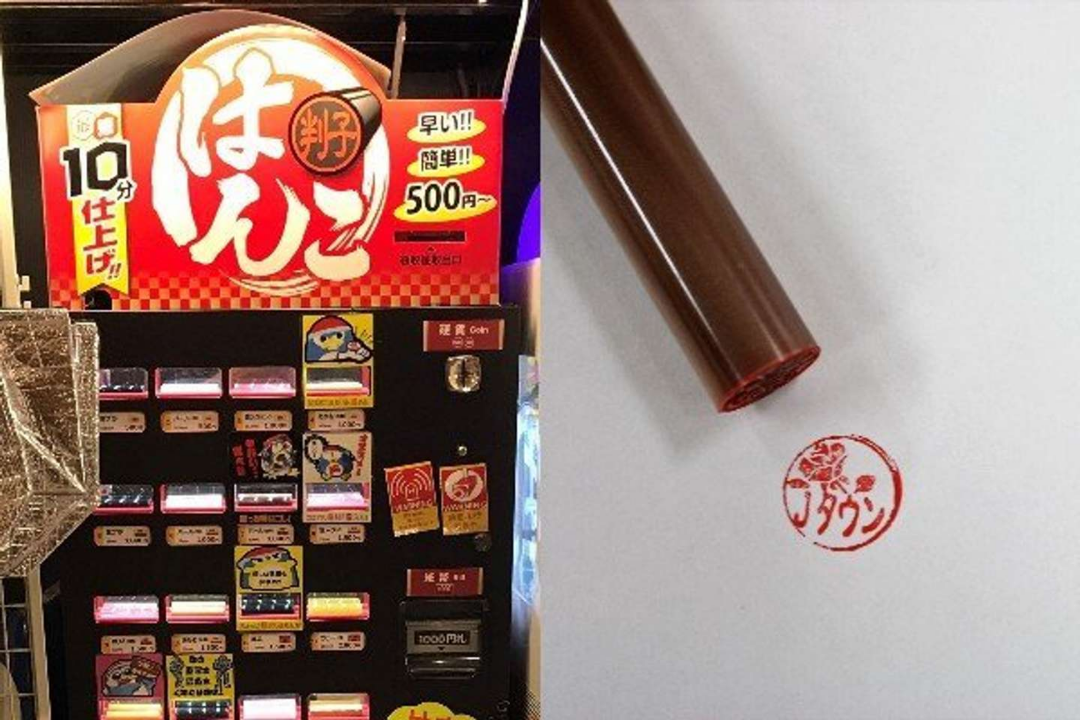
The Hanko Vending Machine is an automated manufacturing system that allows customers to design, produce, and purchase a personalized seal entirely on site. These machines are commonly installed inside shopping malls, train stations, and other commercial facilities, allowing people to obtain a custom seal almost immediately when they unexpectedly need one.
Using a touchscreen interface, customers enter their name, select their preferred typeface, and choose the seal size. The digital design is then transferred to an engraving unit inside the machine, which carves the selected material automatically. What traditionally required several hours or even days at a specialty seal shop can now be completed in just a few minutes through automated manufacturing. Pricing varies depending on the material and specifications, but the system is designed as a practical, on-demand production service rather than a novelty product.
Solving the Friction of "Suddenly Needing One"
Source: Hanko Vending Machine Homepage
Japan Commercial Facilities Co., Ltd. was not simply trying to solve the problem of unused retail space. The company also recognized a common inconvenience faced by everyday consumers.
In Japan, there are many situations where a personal seal becomes unexpectedly necessary. Opening a bank account, signing a lease, registering a new address after moving, or completing school paperwork for children can all require a seal, often with little advance notice.
Although most people do not use a hanko every day, when one is needed, there are often few practical alternatives. Traditionally, customers had to visit a specialty seal shop, place an order, and wait anywhere from several hours to several days for production. If the request came outside business hours, the wait became even longer. This hidden time cost represents a small but meaningful source of friction in daily life.
Japan’s Vision for Instant Urban Manufacturing
For shopping centers, these urgent needs also represent an opportunity. The more essential services a commercial facility can provide in one location, the more valuable it becomes as a destination. Japan Commercial Facilities approaches retail space not simply as an area for selling goods, but as part of a city's everyday infrastructure.
The Hanko Vending Machine reflects that philosophy. Instead of requiring customers to visit a specialty store during limited business hours, the machine produces a custom seal within minutes whenever it is needed. By placing a compact manufacturing unit directly inside a commercial facility, the waiting period traditionally associated with custom production is almost eliminated.
This is more than a convenience upgrade. It transforms unused retail space into a functioning microfactory. Rather than concentrating manufacturing in a single workshop, production is distributed throughout the city, aligning closely with the growing global movement toward localized, on-demand manufacturing.
Instead of focusing solely on improving retail efficiency, Japan Commercial Facilities redesigned commercial space to remove everyday friction from urban life.
Moving Beyond the Traditional Storefront
The Hanko Vending Machine was created in response to the limitations of the traditional seal shop model.
Conventional seal stores depend on skilled craftspeople, face-to-face customer service, and dedicated retail locations. As operating costs have risen in urban areas and small specialty stores have become more difficult to maintain, consumers have continued to face the same problem. They often cannot obtain a seal immediately when they need one.
Japan Commercial Facilities already specializes in maximizing the value of commercial spaces. A vending machine offers several practical advantages. It can operate continuously, requires minimal staffing, and occupies only a small footprint. By integrating automated manufacturing into that familiar format, the company combined production and retail into a single system.
Digitalizing a Centuries-Old Habit
Japan's sophisticated vending machine culture also helped make this possible. Vending machines already sell everything from beverages and snacks to tickets and daily necessities. Extending this trusted infrastructure to personalized manufacturing was a natural evolution.
The key innovation is not simply automating sales. It is automating manufacturing.
Instead of stocking thousands of pre-made products, the machine produces each seal only after receiving the customer's information. This eliminates inventory risk and enables true on-demand production, where every item is manufactured only when it has already been sold.
Because no dedicated store staff are required, commercial property owners also benefit from lower operating costs. The compact installation footprint allows previously unused retail space to generate additional revenue, making the system attractive from a business to business perspective.
Rather than replacing traditional seal shops entirely, the Hanko Vending Machine redefines where manufacturing and retail take place.
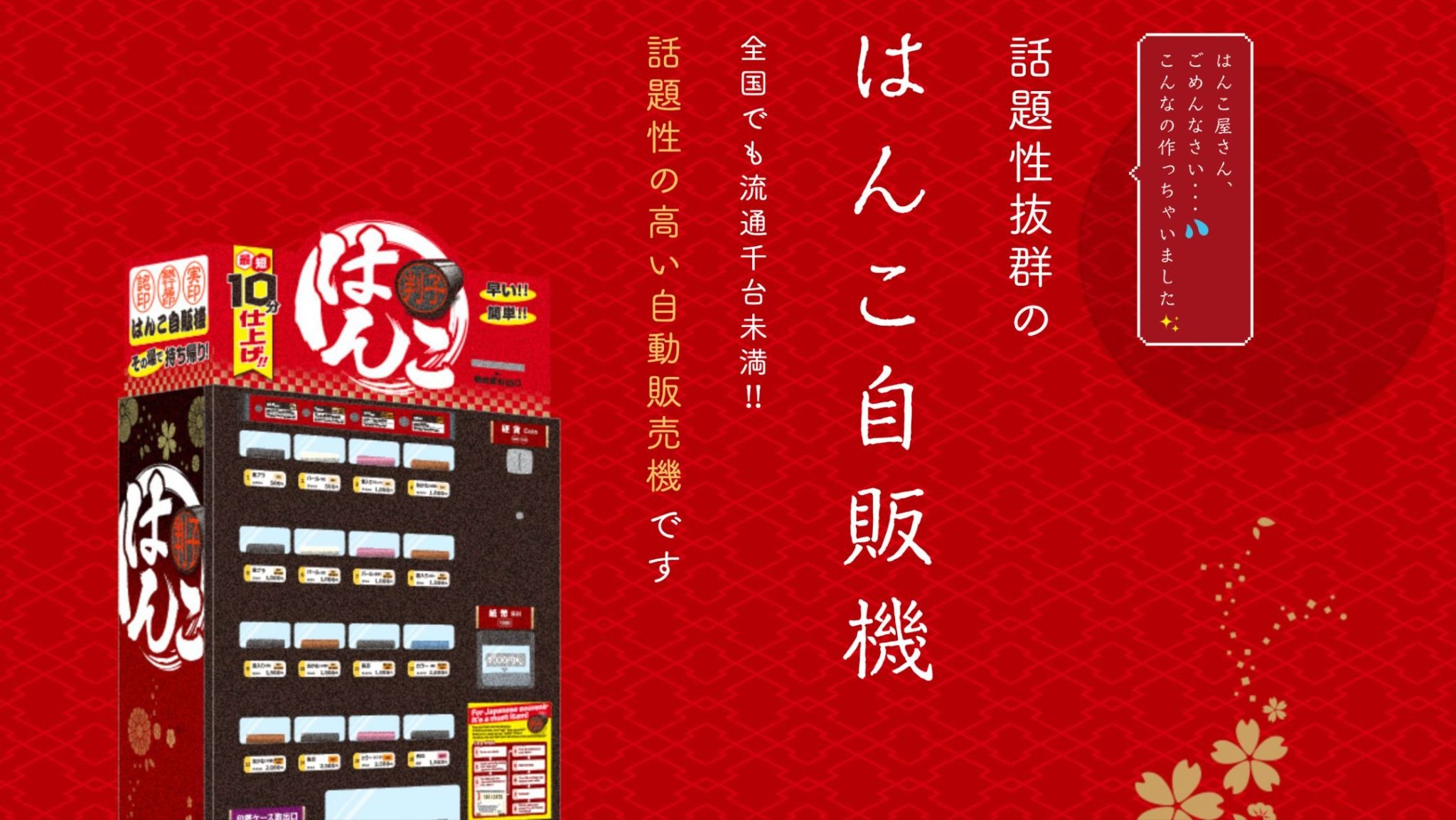
A Compact Manufacturing System That Engraves on Demand
Source: Hanko Vending Machine Homepage
At the heart of the Hanko Vending Machine is its built-in engraving system.
Customers enter their name through a touchscreen interface, choose a font style and seal size, and submit their order. That information is sent directly to the machine's internal control system, where an automated engraving unit carves the selected material. Within just a few minutes, the completed seal is dispensed to the customer.
This process differs fundamentally from conventional retail inventory. Instead of storing thousands of finished products, each seal is manufactured individually according to the customer's information. The on-demand production model minimizes excess inventory and reduces waste while accommodating Japan's enormous variety of family names without requiring pre-manufactured stock.
The High-Tech Hanko
Its competitive advantage lies in the automation and standardization of the production process. Seal engraving requires high precision because factors such as engraving depth and character balance directly affect usability. Consistently maintaining that quality through automated manufacturing is what makes this vending machine model commercially viable.
The machines are also designed specifically for installation inside commercial facilities. Standardized dimensions, electrical requirements, and maintenance procedures allow operators to deploy identical systems across multiple locations. For shopping centers, each machine functions as a compact revenue generating service that requires relatively little floor space.
User experience has also been carefully designed. The interface is simple and intuitive, allowing customers with no prior knowledge to complete the process easily. Decisions that once required guidance from a specialist, such as selecting a typeface, can now be completed independently through the touchscreen interface.
The Hanko Vending Machine represents a small scale distributed factory that combines manufacturing and retail into a single automated system. By embedding instant production directly into urban spaces, it offers a different vision of how personalized manufacturing can become part of everyday city infrastructure.
The Value of Being There When People Need It Most
The Hanko Vending Machine delivers more than just sales. It also provides something less tangible but equally valuable, peace of mind.
Most customers do not purchase a personal seal as part of a planned shopping trip. Instead, they use the machine when they suddenly realize they need one. Common situations include registering a new address after moving, signing an employment contract for a part time job, or completing banking procedures.
Because the machines are located inside shopping centers and other commercial facilities, customers can take care of the task while running other errands. Many locations also operate beyond the hours of traditional specialty stores, making the service available at night, on weekends, and during holidays. In this sense, the machine functions as an emergency convenience service rather than simply another retail product.
The Practical Genius of Automated Engraving
For commercial property owners, the system creates an additional reason for customers to visit. Purchasing a seal is not a frequent activity, but providing access to essential services strengthens the overall appeal of the facility and reinforces its role as a convenient destination.
The concept is particularly valuable in suburban areas and regional cities where specialty seal shops have become less common. In these locations, the machine fills an important service gap created by the decline of traditional retailers.
From a B2B perspective, the business model is equally attractive. Because the system operates automatically and requires only routine maintenance, staffing costs remain low while the operational burden on facility managers is minimal.
Ultimately, the Hanko Vending Machine is about more than selling a product. It reflects a broader shift in which shopping centers are evolving into places that solve everyday problems rather than simply offering retail space.
Precision and Reliability Behind Automated Manufacturing
Source: Hanko Vending Machine Homepage
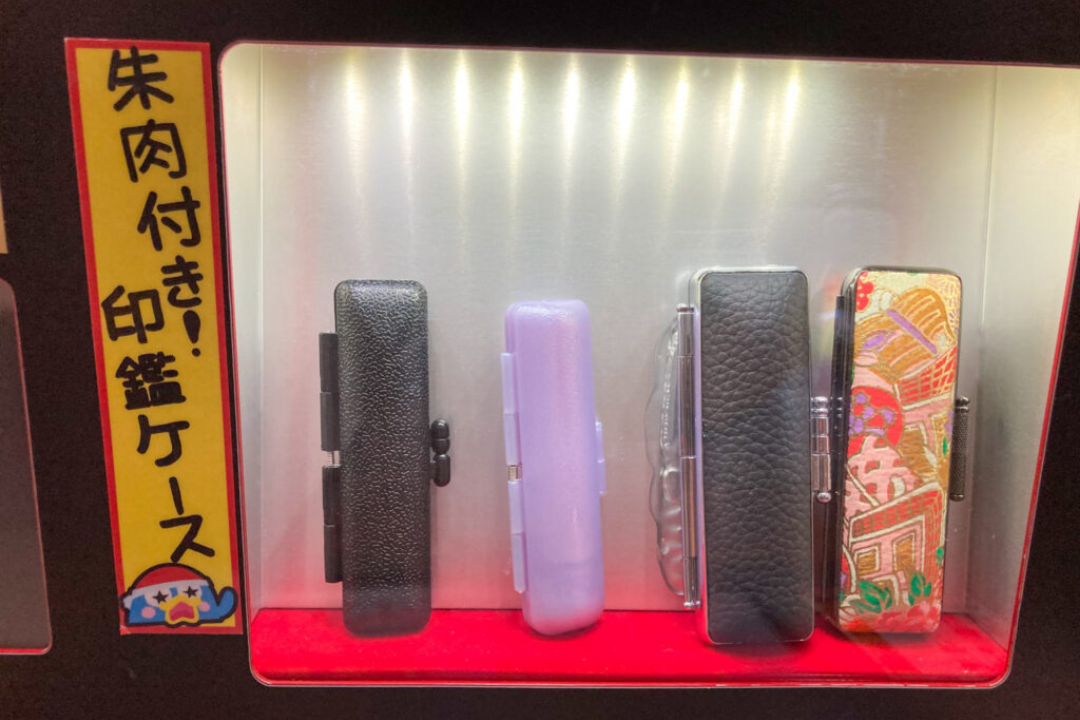
Personal seals are commonly used for contracts, banking procedures, and other official documents in Japan, making them functional tools rather than decorative items. The clarity of the engraved impression and the precision of the carving directly affect usability. An automated system must therefore meet consistent quality standards to gain customer trust.
Inside the machine, the customer's input is automatically converted into engraving data. Typeface selection, character placement, and layout are optimized using predefined design logic before the engraving process begins. While the system is not intended to replicate the work of a master craftsman, it is designed to produce reliable, practical seals suitable for everyday use with consistent quality.
Operational design also extends beyond the engraving process itself. Materials must be replenished regularly, worn components replaced, and cutting tools maintained to preserve engraving accuracy. Although it resembles a vending machine from the outside, the system is fundamentally a piece of precision manufacturing equipment.
Security is another critical consideration. Because customers enter their names into the machine, data handling policies are essential. Ensuring that personal information is not retained after production is an important part of maintaining user confidence.
The machines must also meet the safety standards required for equipment installed in public commercial spaces. Electrical systems, heat management, and protective shielding around moving components are all designed with continuous public operation in mind.
The Hanko Vending Machine is far more than a simple vending machine. It combines compact engineering with the quality control and operational discipline normally associated with industrial manufacturing.
Rethinking Where Manufacturing Takes Place
The Hanko Vending Machine reflects a broader reconsideration of the traditional separation between manufacturing and retail.
Japan Commercial Facilities specializes in maximizing the value of commercial spaces, but its objective extends beyond simply filling vacant areas. The company asks a different question. What services can be integrated into a shopping center to make it more valuable for visitors?
Solving the "I Need It Now" Emergency
Personal seals are a classic made to order product. Traditionally, customers visit a specialty store, place an order, and return later to collect the finished item. By bringing manufacturing directly into commercial facilities, this process is completed in a single location. Instead of relying on one centralized workshop, production is distributed across multiple compact manufacturing units installed throughout the city.
This approach aligns closely with global trends toward on-demand and distributed manufacturing. As technologies such as 3D printers and compact digital fabrication equipment become more accessible, producing products where they are needed instead of transporting them from centralized factories becomes increasingly practical. The Hanko Vending Machine represents an early example of this philosophy in action.
The role of commercial facilities is also evolving. Shopping centers are becoming multifunctional hubs that support everyday life rather than simply places to purchase goods. Alongside ATMs, photo booths, parcel lockers, and other public services, automated seal manufacturing has become another useful piece of urban infrastructure.
For Japan Commercial Facilities, the goal is not simply to increase product sales. It is to enhance the functionality of commercial space by transforming underused areas into services that benefit both property owners and visitors. The Hanko Vending Machine is one of the clearest examples of that strategy.
The Cultural Foundation Behind Japan's Seal Vending Machines
Source: Hanko Vending Machine Homepage
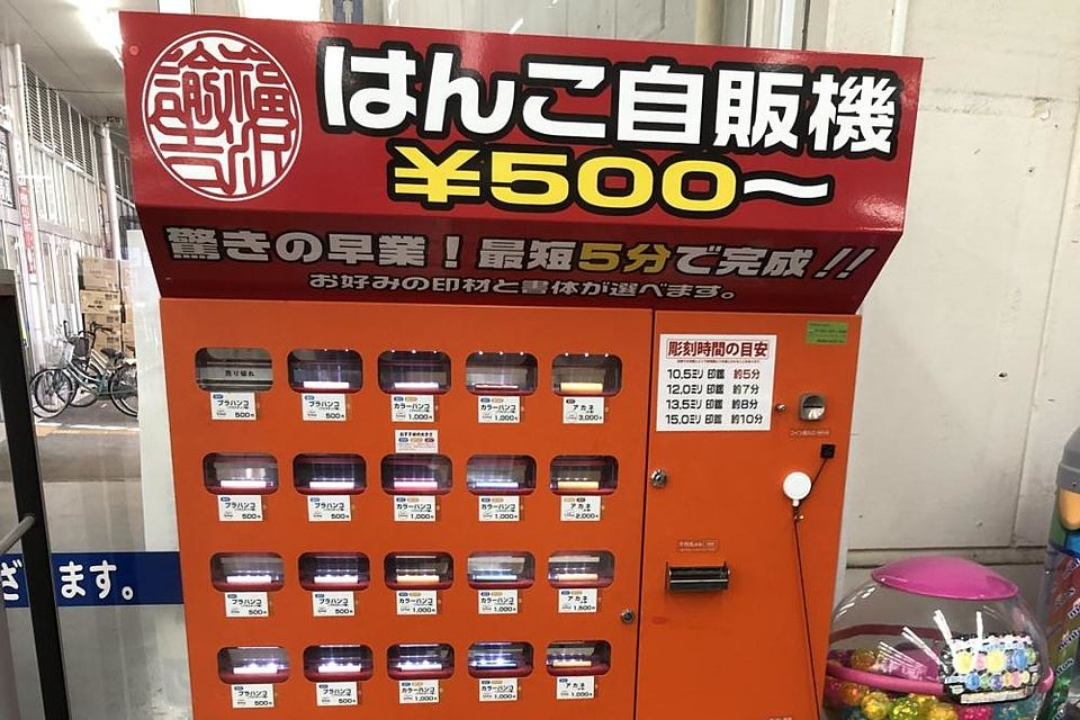
The Hanko Vending Machine exists because of Japan's long established seal culture.
For generations, personal seals have served as a common method of identity verification across Japan. Instead of relying solely on handwritten signatures, many official procedures such as opening bank accounts, signing rental agreements, and completing insurance paperwork have traditionally required a personal seal.
While digital transformation has accelerated in recent years through electronic signatures and online contracts, the transition remains incomplete. Personal seals are still required in certain situations, particularly within local government offices and some financial institutions.
Embedding Manufacturing Directly Into the City
Japan also has one of the world's most advanced vending machine cultures. Beyond drinks and snacks, vending machines have long been used to provide services such as photo booths, ticket sales, and other automated public conveniences. As a result, consumers are generally comfortable interacting with unattended machines in public spaces.
Japan's dense urban environment also contributes to this model. Shopping centers often function as everyday service hubs where visitors can access ATMs, postal services, administrative counters, and other essential facilities in a single location. The Hanko Vending Machine fits naturally into this ecosystem.
It is the combination of Japan's seal culture and its highly developed vending machine infrastructure that made this business model possible.
The Global Rise of Instant Personalized Manufacturing
Although the Hanko Vending Machine was created for Japan's seal culture, the underlying concept has much broader relevance. The real innovation is not the seal itself but the ability to manufacture personalized products instantly at the point of purchase.
Around the world, demand for on-demand customization continues to grow. Personalized smartphone cases, 3D printed accessories, and automated key duplication services all reflect the same shift toward localized manufacturing. Within this broader trend, the Hanko Vending Machine represents a compelling example of how microfactories can be integrated into everyday retail environments.
Markets that continue to use official seals or stamping systems may offer direct expansion opportunities. More broadly, the technology could also be adapted to produce personalized gifts, custom stamps, engraved products, or other made to order items. At its core, the machine is a compact manufacturing platform that transforms digital text into physical products.
From a B2B perspective, installations in shopping malls, airports, government buildings, and transportation hubs could provide valuable convenience services while generating additional revenue from previously unused floor space.
The connection between digital input and physical manufacturing also highlights the importance of secure data management. With transparent privacy policies and robust security measures, systems like this could become trusted platforms for personalized manufacturing across a wide range of industries.
Although the Hanko Vending Machine is rooted in a uniquely Japanese product, its microfactory model has universal relevance.
A Proven Model for Permanent Commercial Operation
The Hanko Vending Machine is not a temporary pilot project. It has been installed as a permanent service in numerous commercial facilities across Japan, demonstrating that the model is commercially sustainable rather than purely experimental.
Large discount stores and shopping malls increasingly compete by offering services that make everyday life more convenient. Just as ATMs and photo booths have become expected amenities, automated seal production has established itself as another practical service that customers appreciate when the need arises.
The system's scalability also depends on standardized operations. Installation, maintenance, material replenishment, and remote monitoring all follow consistent procedures, making it possible to operate multiple locations efficiently. This level of operational maturity is an important indicator that the concept can be replicated beyond individual sites.
The machines have also demonstrated their value during periods of peak demand, such as Japan's moving season and the beginning of the fiscal and academic year, when requests for personal seals increase significantly.
Their continued operation across Japan shows that this is more than an interesting idea. It is a practical service that has already proven its place within modern commercial spaces.
Conclusion
The Hanko Vending Machine was born from Japan's unique seal culture, but its significance extends well beyond personal seals. Its true innovation lies in embedding compact manufacturing directly into urban spaces, allowing customized products to be produced precisely when and where they are needed.
Commercial facilities are no longer simply places to shop. They are becoming integrated service hubs that support everyday life. Alongside ATMs, photo booths, and parcel lockers, the Hanko Vending Machine represents another service that solves immediate problems within a single location.
For international businesses, there are three particularly important lessons.
First, the system demonstrates how true on-demand manufacturing eliminates inventory by producing items only after they are ordered.
Second, it shows how underutilized commercial space can be transformed into revenue generating infrastructure.
Third, it illustrates how localized manufacturing aligns with the growing global demand for personalized products.
Future partnership opportunities could involve commercial property developers, vending machine operators, or retailers seeking to expand their service offerings. The technology itself could also be adapted beyond personal seals to support engraved gifts, customized stamps, and other personalized products.
Rather than concentrating manufacturing inside large centralized factories, Japan Commercial Facilities demonstrates an alternative approach by distributing small manufacturing units throughout the city. Producing only what is needed, where it is needed, offers a valuable perspective on the future convergence of retail and manufacturing.
The Hanko Vending Machine is both a practical solution for everyday life in Japan and a compelling real world example of how distributed urban microfactories can operate successfully.
FAQ About Japan’s Hanko Vending Machines
1. What Is A Hanko Vending Machine?
A Hanko Vending Machine is an automated manufacturing system that allows customers to create and purchase a personalized Japanese seal within minutes. Users simply enter their name, choose a font and size, and the machine engraves the seal on site. These machines are commonly installed in shopping malls, commercial facilities, and train stations.
2. Where Are Hanko Vending Machines Installed?
Hanko Vending Machines are primarily located in high traffic public spaces such as shopping malls, commercial centers, and railway stations. Their locations make it easy for people to obtain a seal quickly when they unexpectedly need one.
3. How Do You Use A Hanko Vending Machine?
Customers use a touchscreen to enter their name and select options such as the typeface and seal size. The machine then engraves the seal internally, and the finished product is dispensed within a few minutes.
4. What Makes Hanko Vending Machines Different From Traditional Seal Shops?
Unlike traditional retailers that sell pre-made products or require customers to wait for custom orders, Hanko Vending Machines use an on-demand manufacturing process. Every seal is produced individually based on the customer's input, eliminating the need for pre-manufactured inventory.
5. When Do People Typically Use Hanko Vending Machines?
They are often used when a personal seal is suddenly required for tasks such as opening a bank account, signing a rental agreement, starting a new job, enrolling in school, or completing other official procedures. Many machines are also available outside normal business hours, making them especially convenient.
6. What Is Japan Commercial Facilities Co., Ltd.?
Japan Commercial Facilities Co., Ltd. is a company that supports the operation of commercial properties through services such as tenant management, facility maintenance, and the installation of automated service equipment. It also develops ways to maximize the value of unused retail space by introducing convenient customer services.
7. What Benefits Do Hanko Vending Machines Offer Commercial Facilities?
The machines allow shopping centers and other commercial properties to make productive use of underutilized space while improving customer convenience. By providing a practical everyday service, they can also enhance the overall appeal of the facility and encourage additional visits.
8. How Is Quality Maintained In A Hanko Vending Machine?
The engraving process is automated using standardized manufacturing systems, while material management, routine maintenance, and regular replacement of components help ensure consistent product quality. These operational processes allow the machines to produce reliable seals over extended periods.
9. Could Hanko Vending Machines Be Used Outside Japan?
Potentially, yes. While the machines are designed for Japan's seal culture, the underlying technology could also be adapted for other on-demand personalized manufacturing applications, such as custom stamps, engraved products, or personalized merchandise. Successful international deployment would depend on local regulations, business practices, and cultural needs.
10. Why Are Hanko Vending Machines Attracting International Attention?
The machines demonstrate how compact manufacturing can be integrated directly into commercial spaces through a distributed microfactory model. By producing personalized products only when they are ordered, they combine on-demand manufacturing, efficient space utilization, and customer convenience in a way that reflects broader global trends in localized production.
Related Videos
If you're interested in how urban manufacturing is becoming faster and more accessible, the videos below showcase a Japanese company using seal vending machine microfactories to produce customized products on demand. These short videos highlight how automation and compact production systems are bringing manufacturing directly into everyday city spaces.