
For decades, one of Japan's most recognizable forms of street advertising has not been a billboard or a digital screen. It has been a free packet of pocket tissues handed out outside train stations, shopping districts, and busy intersections.
Behind this uniquely Japanese marketing medium is Kobori Sogo Kikaku Co., Ltd., a company that manufactures promotional paper products while transforming everyday necessities into advertising platforms. By combining practical consumer goods with printed marketing materials, the company has turned ordinary street distribution into a highly effective offline media channel.
Pocket tissue advertising has become a familiar part of daily life in Japan. Because people are far more likely to accept a useful item than a standalone flyer, advertisers can achieve significantly higher distribution and retention rates. Over time, this simple concept has evolved into a proven form of local area marketing for businesses of all sizes.
Today, this Japanese model is attracting renewed interest for a different reason. As digital advertising costs continue to rise and privacy regulations reshape online marketing, companies around the world are beginning to reconsider the value of physical customer touchpoints. Growing concerns about ad fatigue, cookie restrictions, and declining online engagement have encouraged marketers to look once again at tangible media that people willingly interact with.
This article explores why Japan's "everyday product plus advertising" model remains relevant today. We will examine Kobori Sogo Kikaku's business philosophy, explain how pocket tissue advertising works, and discuss why this uniquely Japanese promotional method could offer valuable lessons for businesses looking to diversify their marketing strategies. We will also explore its value for B2B advertisers, quality control standards, and its potential for international markets.
Pocket Tissue Advertising Overview
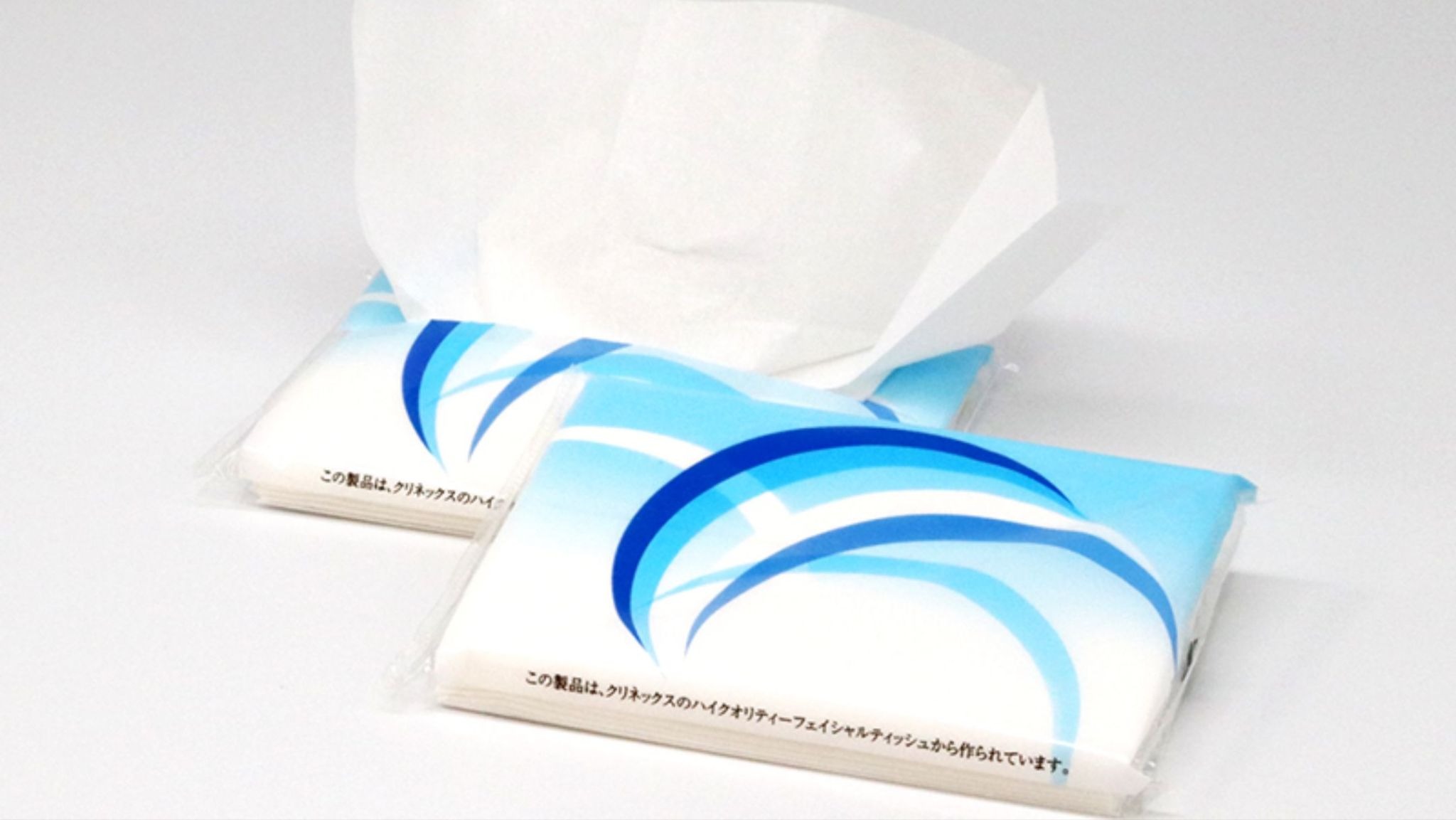
Pocket tissue advertising is a promotional method in which advertising flyers are inserted into pocket-sized tissue packs and distributed by hand in high-traffic locations such as train stations, commercial districts, and storefronts.
Unlike ordinary flyers that are often discarded immediately, pocket tissues serve a practical purpose. Because recipients are likely to keep and use them later, advertisers benefit from longer exposure times and higher retention rates than traditional handouts.
The format is widely used by businesses that depend on local customers, including:
- Medical clinics announcing new openings
- Private schools and tutoring centers
- Real estate agencies
- Recruitment and staffing companies
- Fitness centers
- Beauty salons
- Retail promotions
Distribution can be targeted by selecting specific neighborhoods, train stations, and time periods when the desired audience is most active. This allows businesses to concentrate their offline marketing efforts within clearly defined geographic areas.
Pricing varies depending on factors such as production volume, tissue specifications, flyer size, printing requirements, and distribution services. As a result, pocket tissue advertising is primarily offered as a B2B promotional solution that forms part of a company's broader advertising budget.
The Structural Challenge of Advertising in an Age When Ads Are Easily Ignored
Source: Kobori Sogo Kikaku Homepage
The challenge Kobori Sogo Kikaku set out to solve was not simply improving printed advertisements. It was addressing a much broader issue: declining trust and engagement with advertising itself.
Traditional paper flyers often suffer from extremely low acceptance rates, while online advertising continues to generate more impressions even as click-through rates steadily decline. Although digital advertising offers sophisticated targeting capabilities, increasing privacy regulations, widespread ad blockers, and growing consumer resistance have made it increasingly difficult for brands to reach their audiences effectively.
Street flyer distribution has long faced a similar problem. Many pedestrians instinctively refuse promotional leaflets, viewing them as unwanted clutter before even seeing the message. Under these conditions, simply printing more flyers rarely improves campaign performance.
For many years, the industry's standard approach focused on volume. Lower production costs made it possible to distribute larger quantities, but handing out more flyers did not necessarily translate into greater customer engagement or better conversion rates. In many cases, it only contributed to growing advertising fatigue.
Kobori Sogo Kikaku approached the problem from a completely different angle.
Instead of distributing advertisements on their own, the company integrated them into something people actually wanted to receive. By inserting promotional materials inside pocket tissue packs, the psychological barrier associated with accepting advertising became significantly lower. Rather than interrupting consumers, the advertisement became part of a useful everyday item that naturally fit into daily life.
This was not simply an exercise in promotional merchandise production. It represented a fundamental redesign of how advertising is delivered and experienced. By combining practical utility with marketing content, the company transformed advertising from something people avoid into something they willingly carry with them.
Rather than changing the message, Kobori Sogo Kikaku changed the medium itself.
Turning Everyday Necessities Into Advertising Media
The success of pocket tissue advertising is rooted in a simple psychological difference between being handed an advertisement and choosing to accept something genuinely useful.
Since its founding, Kobori Sogo Kikaku has focused on creating promotional materials that people naturally welcome instead of forcing marketing messages into their attention.
In Japan, pocket tissues are an everyday essential. They are commonly carried throughout the year, whether for seasonal allergies, colds, or simply maintaining personal hygiene. Because they are consumable products that people often keep in their bags or pockets until needed, they naturally remain with the recipient for longer periods than ordinary printed materials.
This characteristic became the foundation of the company's advertising model.
A conventional flyer may never be read before being discarded. A pocket tissue pack, however, is accepted because of its practical value. Since the advertisement is enclosed within the packaging, recipients are much more likely to notice it at least once when they eventually use the tissues. This creates a longer and more meaningful opportunity for brand exposure.
Although distribution takes place through traditional face-to-face street marketing, campaigns can still be carefully planned by selecting specific neighborhoods, transportation hubs, and time periods that match the intended audience. This makes the format particularly effective for local businesses promoting new store openings, limited-time offers, or community-based services.
Rather than making the advertisement itself the centerpiece, pocket tissue advertising succeeds by becoming part of everyday life. What Kobori Sogo Kikaku developed was not simply another promotional product but a new way of thinking about how consumers receive advertising.
Designing Street Marketing That Can Be Strategically Measured
At first glance, pocket tissue advertising may appear to be nothing more than a simple promotional giveaway. Its real value, however, lies in the planning behind each campaign.
Kobori Sogo Kikaku provides far more than tissue production and flyer insertion. The company offers a complete B2B promotional solution that covers campaign planning, production, packaging, and distribution strategy.
Advertisers begin by selecting their target locations, customer demographics, and distribution schedule. High-traffic areas such as train stations, office districts, and shopping centers are chosen based on where potential customers are most likely to be found. Unlike digital advertising, which relies on virtual impressions, street distribution creates direct physical interactions within clearly defined geographic areas.
Packaging design is another important component. Advertisers can customize the tissue packaging, determine the size of the enclosed flyer, and choose various printing specifications to maximize visibility while maintaining the product's usability. The challenge is balancing advertising space with the quality expected from an everyday consumer product.
One of Kobori Sogo Kikaku's key advantages is its integrated production model. In many advertising campaigns, printing companies and distribution agencies operate independently, making quality control and scheduling more complicated. By managing both paper product manufacturing and advertising production in-house, the company can streamline inventory management, production schedules, and delivery timelines.
Although pocket tissue advertising is entirely offline, it can still support measurable marketing campaigns. QR codes, promotional coupon codes, and dedicated landing pages can be printed on the enclosed materials, allowing businesses to track customer responses and connect physical distribution with online engagement.
This combination creates a hybrid marketing approach that bridges offline and digital channels.
At its core, every aspect of the product reflects one guiding principle: creating advertising that people are less likely to throw away. Because pocket tissues remain useful until they are consumed, the advertisement continues to exist alongside the product, providing significantly longer exposure than many forms of digital advertising that disappear after only a few seconds.
Rather than abandoning traditional street marketing, Kobori Sogo Kikaku has modernized it through thoughtful design, transforming a long-established promotional method into a media platform that remains relevant in today's marketing landscape.
Case Studies: How Pocket Tissue Advertising Improves Local Marketing Performance
Source: Kobori Sogo Kikaku Homepage
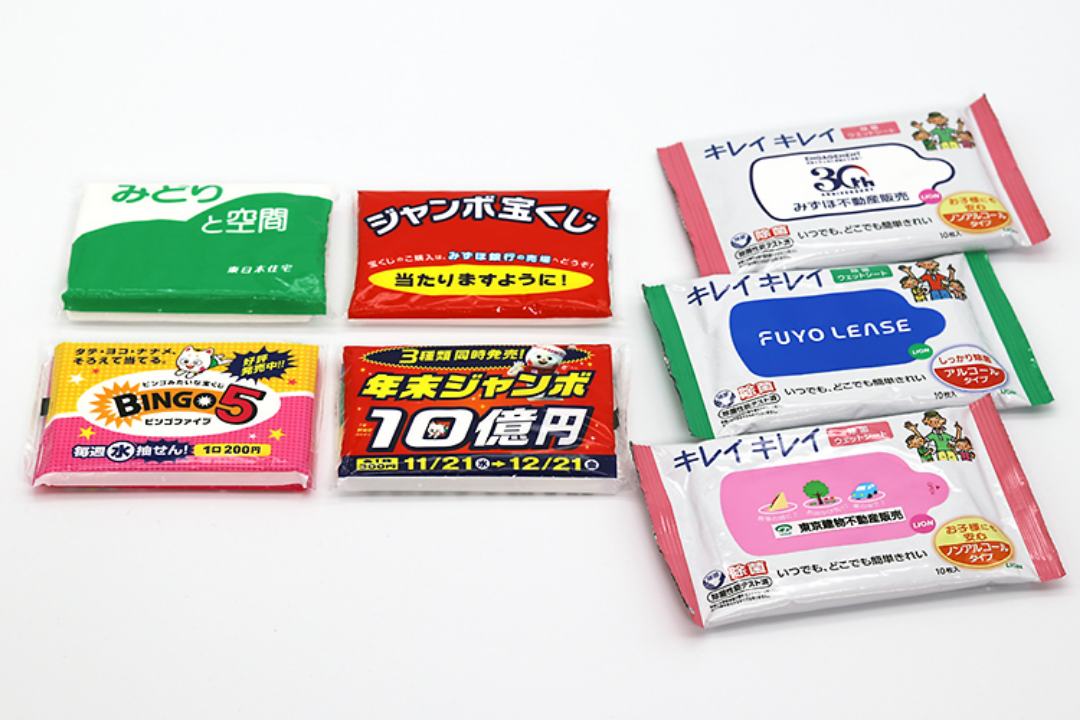
Pocket tissue advertising is particularly effective for businesses that struggle to convert local awareness into actual customer visits. Industries such as healthcare clinics, tutoring centers, real estate agencies, personal fitness studios, and beauty salons all rely on building trust within a specific neighborhood, making localized promotion especially valuable.
For example, a newly opened medical clinic needs nearby residents to know its specialties and opening date. While newspaper inserts reach households, they are less effective at targeting commuters, students, or younger audiences. Pocket tissues distributed outside train stations place promotional materials directly into the hands of people passing through the area. Because recipients accept them as useful everyday items rather than advertisements, rejection rates are significantly lower, increasing the likelihood that the message will be seen.
Real estate agencies and recruitment firms also use pocket tissue advertising to promote limited time campaigns. By including QR codes, coupon codes, or special offers inside the package, businesses can measure customer responses despite using an offline advertising format. This ability to connect physical distribution with measurable engagement makes the medium attractive for B2B marketing.
Distribution near shopping districts can also drive foot traffic to surrounding businesses. Rather than broadcasting advertisements across an entire city, companies can concentrate their campaigns within a few hundred meters of a target location. This level of geographic precision is difficult to replicate with many digital advertising platforms.
The true value for advertisers is not simply the number of people who receive the tissues. Instead, repeated exposure within a local community helps strengthen brand recognition. Since people often keep pocket tissues in their bags, cars, or homes until they are used, the advertisement remains visible much longer than many traditional flyers.
Ultimately, Kobori Sogo Kikaku does not simply manufacture promotional products. The company designs localized customer touchpoints that help businesses create repeated brand exposure within their target communities.
Quality Standards That Make Pocket Tissue Advertising Effective
Source: Kobori Sogo Kikaku Homepage
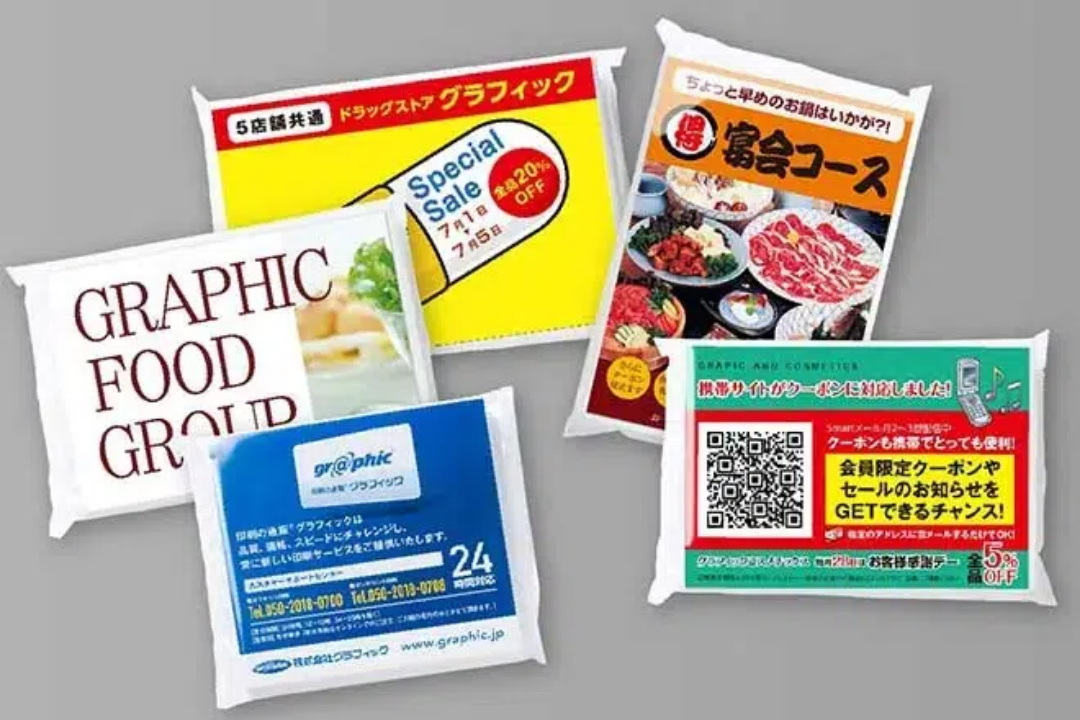
Before it was an advertising medium, pocket tissues were a hygiene product. If the product itself lacks quality, its advertising value quickly disappears. One reason Kobori Sogo Kikaku has maintained its business over many years is its emphasis on producing paper products that consumers actually want to keep and use.
Pocket tissues come into direct contact with the skin, so softness, absorbency, and durability are essential. If manufacturers sacrifice product quality to maximize advertising space, recipients are far more likely to discard the tissues immediately. A useful product naturally increases the lifespan of the advertisement it carries.
Manufacturing quality extends beyond the tissues themselves. The inserted promotional flyer must remain flat and undamaged, while the outer packaging must withstand handling during distribution. Careful production management ensures that every package reaches customers in good condition. For corporate clients, consistent quality control, reliable production schedules, and on time delivery are equally important.
Street distribution also requires products that can withstand outdoor conditions. Packaging must resist moisture, temperature fluctuations, and transportation without compromising appearance or functionality. Unlike ordinary printed flyers, pocket tissue advertising requires integrated product manufacturing and logistics management.
Printing quality is another important consideration. Since the tissues represent a company's brand, accurate color reproduction and high quality printing help preserve corporate identity and professionalism.
By managing paper product manufacturing and advertising production under one organization, Kobori Sogo Kikaku reduces coordination issues that often arise when printing, packaging, and distribution are handled by separate suppliers. This integrated approach lowers operational risk while maintaining consistent product quality.
Although pocket tissue advertising may appear to be an inexpensive promotional product, it is actually a sophisticated combination of manufacturing, printing, packaging, and logistics management.
Viewing Paper Promotional Products as Information Infrastructure
At the heart of Kobori Sogo Kikaku's business philosophy is the belief that paper promotional products are more than simple giveaways. The company views them as information infrastructure that connects businesses with consumers.
Traditional advertising focuses on maximizing message delivery, but Kobori Sogo Kikaku begins with a different question. How can advertising become something people willingly accept?
As digital advertising has become increasingly sophisticated, consumers are exposed to an overwhelming number of notifications, banners, video advertisements, and sponsored content. In such a crowded environment, physical advertising has become comparatively rare, giving it renewed value. Recognizing this shift, the company has continued to redefine the role of paper based promotional products.
Since its founding, Kobori Sogo Kikaku has specialized in paper novelties, but its business is closer to designing customer engagement than manufacturing products. Success depends on determining where, when, and to whom materials should be distributed. The distribution strategy and advertising message often matter more than the product itself.
Advertising also contributes to long term brand recognition rather than only immediate customer responses. Because recipients often keep pocket tissues in their homes, bags, or offices until they are needed, they may encounter the advertisement multiple times. This repeated exposure differs significantly from digital ads that disappear after only a few seconds.
Rather than allowing promotional products to become disposable giveaways, Kobori Sogo Kikaku integrates marketing messages into everyday items that naturally fit into daily life. This philosophy has remained consistent throughout the company's history.
A Marketing Model Shaped by Japan's Urban Culture
Pocket tissue advertising is closely tied to Japan's urban lifestyle. In densely populated cities such as Tokyo and Osaka, distributing promotional tissues outside train stations and busy shopping districts has become a familiar part of daily life. Because millions of people travel on foot between public transportation, offices, schools, and commercial areas, businesses can efficiently reach large numbers of potential customers.
Accepting a free packet of tissues is considered perfectly normal in Japan. Combined with the country's strong emphasis on cleanliness and everyday hygiene, this cultural acceptance has helped pocket tissue advertising become an established promotional medium.
Japan's local business landscape has also contributed to its success. Many businesses focus on attracting customers within only a few hundred meters of their location, creating strong demand for highly localized marketing instead of broad mass advertising. Pocket tissue advertising fits naturally into this business environment.
Japan's aging population is another factor. Many older consumers engage less frequently with digital advertising, making physical promotional materials particularly valuable for industries such as healthcare, senior care, and real estate.
Pocket tissue advertising did not emerge by chance. It developed from a unique combination of dense urban environments, pedestrian culture, strong hygiene awareness, and highly localized commercial districts, resulting in a marketing model that has matured over decades in Japan.
Could Pocket Tissue Advertising Work Outside Japan?
Although pocket tissue advertising developed within Japan's unique cultural environment, the underlying concept can be adapted to many international markets. As digital advertising becomes more expensive and privacy regulations become stricter, businesses are increasingly exploring offline marketing channels that create direct physical engagement with customers.
Across Europe and North America, widespread use of ad blockers and tighter cookie regulations have reduced the effectiveness of highly targeted digital advertising. Advertisers are once again searching for marketing methods that reliably reach real people. While physical advertising can be more difficult to measure, it offers the significant advantage of face to face distribution.
Cities where people regularly walk through downtown districts, university campuses, or commercial centers may be particularly well suited to this approach. Rather than simply handing out flyers, Japan's model combines practical everyday items with promotional messaging, making recipients more willing to accept them.
For startups and businesses serving specific local markets, building awareness within a limited geographic area is often more valuable than running broad digital campaigns. Pocket tissue advertising provides a relatively low risk, mid budget option for localized promotion.
International expansion would naturally require adapting to local customs and regulations surrounding public distribution and hygiene products. However, the core concept of combining useful products with advertising remains widely applicable. Incorporating environmentally friendly materials or recyclable packaging could further strengthen its appeal in sustainability focused markets.
Instead of treating digital and offline marketing as competing strategies, businesses can combine them by including QR codes, dedicated landing pages, or digital coupons inside each package. This creates a hybrid marketing approach that links physical interactions with measurable online engagement.
Long Term Business Relationships Reflect Strong Domestic Trust
Pocket tissue advertising is rarely used as a one time marketing campaign. For many local businesses, it serves as an ongoing promotional tool for seasonal announcements, recurring campaigns, and continuous community outreach. Kobori Sogo Kikaku's long history in the Japanese market reflects years of repeat business from corporate clients.
Industries including healthcare, real estate, education, and beauty services all depend on maintaining consistent visibility within their local communities. The continued use of pocket tissue advertising across these sectors suggests that advertisers recognize its long term value.
The company also produces a broad range of paper promotional products beyond pocket tissues, providing businesses with comprehensive support for their marketing activities rather than relying on a single product category.
Successful street distribution requires dependable logistics. Delivering products to the correct location at the scheduled time is essential for corporate marketing campaigns. Consistent production quality, careful inventory management, and reliable printing standards are all critical when representing a client's brand.
The continued demand for pocket tissue advertising also demonstrates that practical promotional products continue to occupy an important place within modern marketing strategies. Even as digital advertising dominates global spending, offline customer engagement has retained unique advantages that digital platforms cannot fully replace.
Through its paper promotional products, Kobori Sogo Kikaku has spent decades helping businesses connect with local communities. Its long standing client relationships provide strong evidence of the company's credibility and operational reliability.
Conclusion: A Japanese Advertising Model That Rethinks Urban Engagement
Source: Kobori Sogo Kikaku Homepage
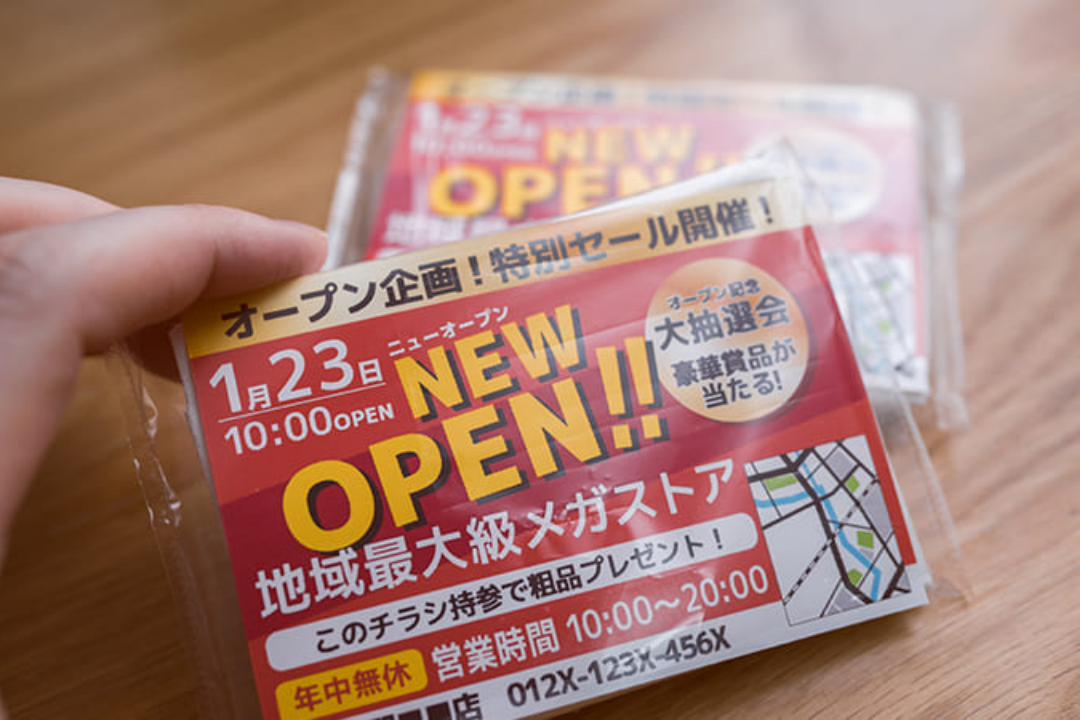
Pocket tissue advertising developed by Kobori Sogo Kikaku is far more than a promotional giveaway. It represents a different way of thinking about advertising by transforming marketing materials from something people avoid into something they willingly accept. By integrating promotional messages into practical everyday products, the company extends advertising exposure far beyond the moment of distribution.
As digital advertising continues to grow worldwide, challenges such as ad blockers, privacy regulations, rising acquisition costs, and consumer advertising fatigue have also increased. In this environment, physical media that create direct human interaction are receiving renewed attention. Pocket tissue advertising offers one practical solution.
For international businesses, the model offers three major advantages. It delivers highly localized geographic targeting, encourages stronger customer acceptance through practical products, and easily connects with digital marketing using QR codes and dedicated landing pages. Rather than replacing digital advertising, it complements existing marketing strategies.
International partnerships could involve local manufacturing or regional distribution networks combined with Kobori Sogo Kikaku's expertise in paper promotional products. This combination has the potential to create new localized marketing opportunities in cities around the world.
Ultimately, the company's goal is not simply to manufacture paper products. It is to design meaningful connections between businesses and consumers through items that naturally fit into everyday life. In an era dominated by digital media, this approach demonstrates that thoughtfully designed physical advertising can still play an important role.
Pocket tissue advertising may have matured within Japan's unique urban culture, but its underlying principles address marketing challenges shared by cities around the world. For businesses seeking new ways to strengthen local engagement, it represents a model worth exploring.
FAQ About Pocket Tissue Advertising
1. What Is Pocket Tissue Advertising?
Pocket tissue advertising is an offline marketing method in which promotional flyers are inserted into pocket-sized tissue packs and distributed in high-traffic locations such as train stations, shopping districts, and outside stores. Because people receive a useful everyday item rather than just a flyer, the advertising is more likely to be accepted and seen.
2. What Are The Benefits Of Pocket Tissue Advertising?
One of the biggest advantages is that people are more willing to accept a packet of tissues than a standalone flyer. Since recipients often keep the tissues until they are needed, the advertisement remains with them longer, increasing opportunities for repeated exposure. It is also highly effective for geographically targeted local marketing campaigns.
3. Which Industries Commonly Use Pocket Tissue Advertising?
Pocket tissue advertising is widely used by businesses that rely on attracting local customers, including medical clinics, tutoring centers, real estate agencies, recruitment companies, beauty salons, and fitness studios. It is especially effective for new business openings, seasonal promotions, and limited-time campaigns.
4. Why Are People More Likely To Accept Pocket Tissue Advertising?
Pocket tissues are practical products that people use in their daily lives, making them much easier to accept than ordinary promotional flyers. Because recipients take the tissues home or carry them in their bags, they are also more likely to notice the enclosed advertisement later.
5. How Is Pocket Tissue Advertising Different From Digital Advertising?
Pocket tissue advertising is an offline marketing channel that delivers promotional messages directly to consumers through face-to-face distribution. Campaigns can target specific neighborhoods, locations, and times of day. Businesses can also combine printed QR codes, coupons, or promotional links with digital campaigns to create a hybrid marketing strategy.
6. What Is Kobori Sogo Kikaku?
Kobori Sogo Kikaku is a Japanese company that plans, manufactures, and sells paper-based promotional products, including pocket tissues, wet tissues, sticky notes, memo pads, and other marketing materials. The company helps businesses promote their brands by transforming practical everyday products into effective advertising media.
7. Can Businesses Use Pocket Tissue Advertising?
Yes. Pocket tissue advertising can be used by businesses of all sizes, including retailers, healthcare providers, educational institutions, restaurants, and service companies. Campaigns can be customized by distribution area, quantity, packaging design, and promotional objectives.
8. What Marketing Challenges Does Pocket Tissue Advertising Address?
Pocket tissue advertising was developed to solve the problem of low acceptance rates for traditional flyers and the declining effectiveness of some digital advertising channels. By combining advertisements with useful everyday products, it creates more natural opportunities for consumers to engage with promotional messages.
9. Can Pocket Tissue Advertising Be Used Outside Japan?
Although the concept originated and became popular in Japan, it has potential in other countries, particularly in cities with high pedestrian traffic or businesses that focus on localized marketing. However, companies should consider local regulations governing street distribution as well as cultural attitudes toward receiving promotional items.
10. Why Was Pocket Tissue Advertising Developed?
Pocket tissue advertising was created because traditional flyers were often ignored or discarded. By combining advertisements with an everyday product that people willingly accept and use, businesses can introduce promotional messages more naturally and increase the likelihood that consumers will see them during their daily lives.