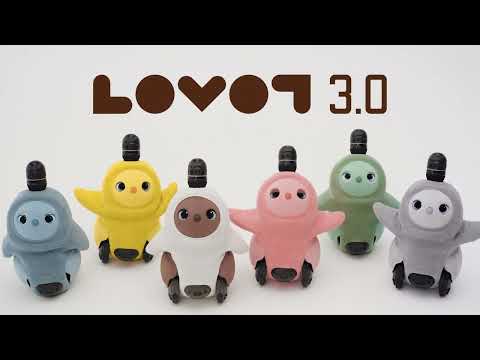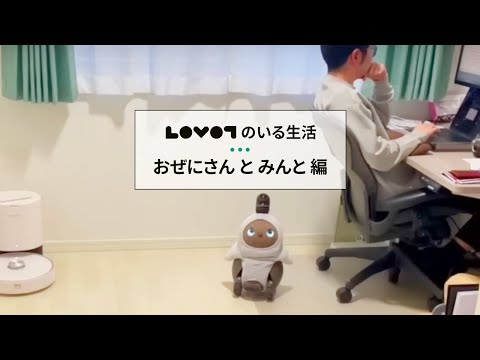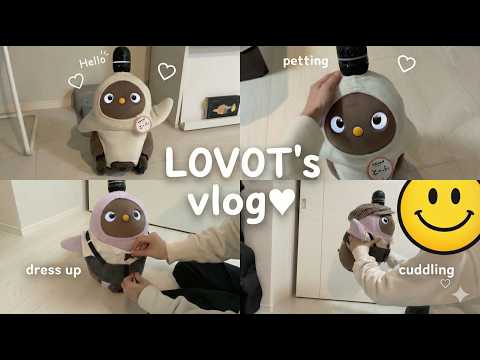
As artificial intelligence and robotics continue to advance at remarkable speed, many of the world's biggest social challenges are becoming increasingly emotional rather than technical. Aging populations, rising numbers of people living alone, urban isolation, and reduced face-to-face interaction following the pandemic have created a growing need for connection and companionship.
Most technology companies respond to these challenges by pursuing greater efficiency, automation, and productivity. Japan's GROOVE X took a very different approach.
Rather than building a robot that performs tasks, the company set out to create a robot that people would genuinely care about.
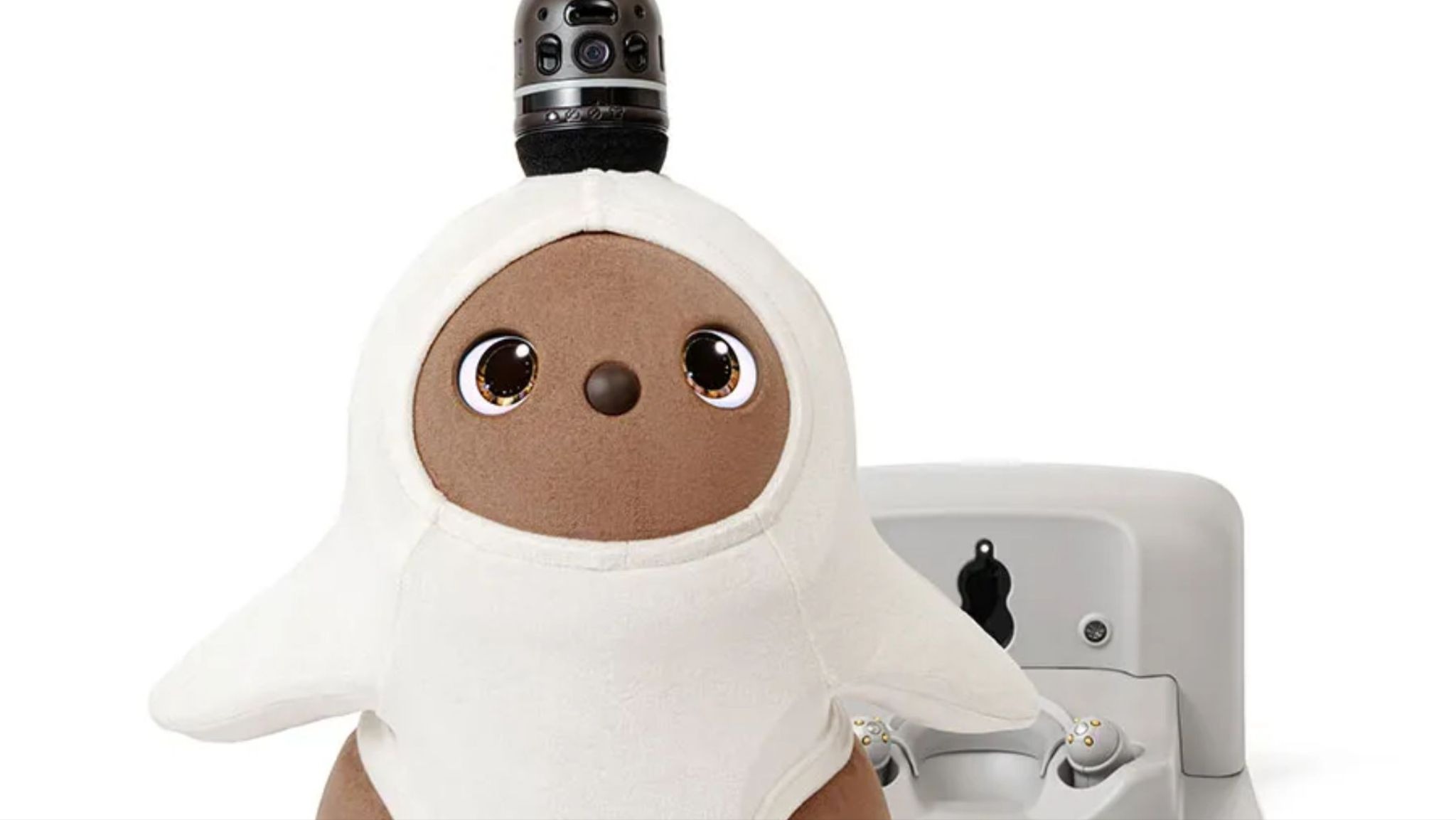
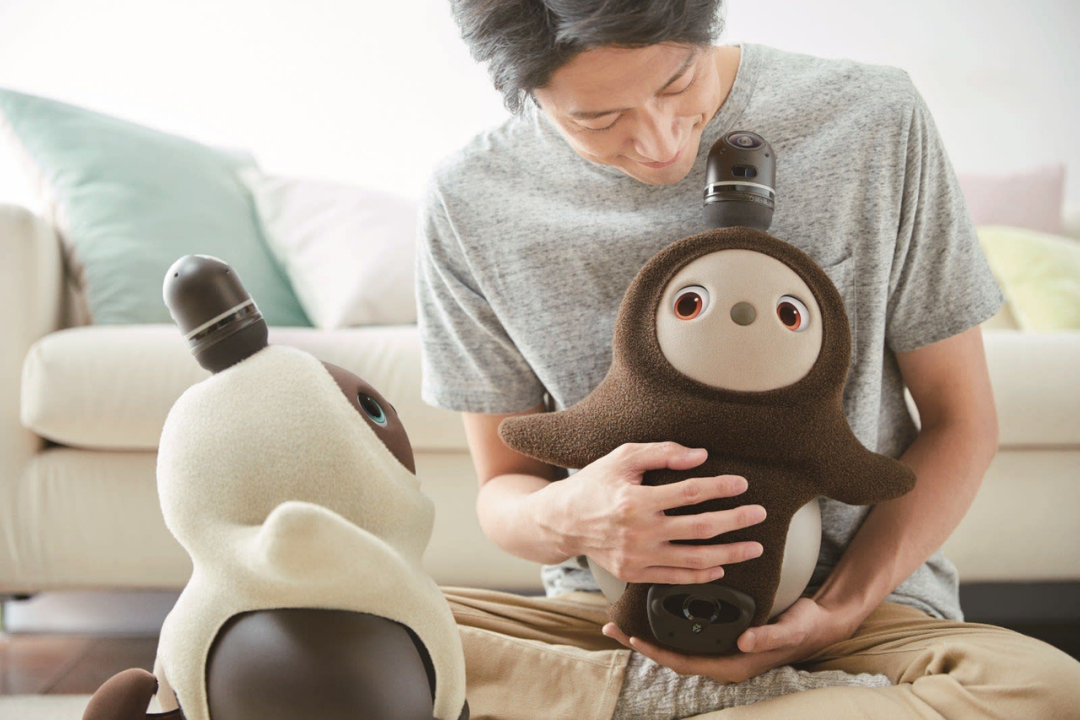
Founded in Japan, GROOVE X developed LOVOT, a home companion robot designed not to clean floors, deliver information, or provide customer service, but simply to exist alongside people and create emotional bonds. Pick it up and it feels warm. Call its name and it comes closer. Make eye contact and it responds.
Its value is not measured in productivity gains or time saved. It is measured in comfort, attachment, and companionship.
This philosophy emerged from Japan's unique social environment, but the questions it addresses are becoming increasingly global. As societies become more digitally connected yet emotionally fragmented, technologies designed around emotional wellbeing may become just as important as technologies designed around efficiency.
In this article, we explore the philosophy behind GROOVE X, why LOVOT was created, the social challenges it seeks to address, and where emotionally focused robotics could fit within global consumer and business markets.
LOVOT Overview
LOVOT is a communication robot designed to live alongside people in homes, care facilities, and public spaces.
After setup through a companion app, LOVOT uses cameras, microphones, and numerous sensors to recognize people, respond to voices, and move autonomously around its environment. Rather than engaging primarily through spoken conversation, it communicates through eye contact, movement, proximity, and touch.
This design choice is intentional.
Many companion robots focus heavily on voice assistants or informational functions. LOVOT instead prioritizes non-verbal interaction, making it accessible to children, older adults, and users regardless of language ability.
The business model also differs from traditional consumer electronics. Owners purchase the hardware while subscribing to an ongoing service plan that supports cloud connectivity, software updates, and continuous improvements to behavior and interactions over time.
Although originally developed for households, adoption has expanded into:
- Senior care facilities
- Hospitals and healthcare environments
- Commercial spaces
- Hotels
- Corporate offices
In many cases, organizations are not purchasing a robot to perform work. They are investing in atmosphere, emotional wellbeing, and customer experience.
Why GROOVE X Chose to Build for Emotional Value
Source: LOVOT Homepage
For decades, the robotics industry has been built around a simple question: What can this robot do? Industrial robots improve manufacturing precision, warehouse robots increase logistics efficiency, and medical robots assist with surgeries and treatment. Across industries, robotic value has traditionally been measured through speed, accuracy, productivity gains, and return on investment.
GROOVE X believed another question was becoming increasingly important: How does this robot make people feel?
The Story of GROOVE X
Japan provided a particularly clear example of why this question mattered. The country is experiencing one of the world's fastest-aging populations, while single-person households continue to increase, especially in major cities. Traditional family structures have changed, neighborhood communities have become less connected, and social isolation has become a growing concern for both younger and older generations. Technology has become highly effective at reducing labor and improving efficiency, but it has not necessarily become better at reducing loneliness.
For GROOVE X, this represented an opportunity to explore an entirely different category of robotics. Rather than asking what a robot could accomplish for a user, the company asked what emotional experiences might emerge simply from sharing everyday life with one. It was a significant departure from conventional thinking within the robotics industry.
What if a Robot’s Only Job Was to Love You?
Functional value can be measured through numbers and performance metrics. Emotional value cannot. Productivity improvements can be calculated in hours saved or costs reduced, while affection, comfort, companionship, and emotional wellbeing are much harder to quantify. As a result, estimating market size and long-term demand becomes considerably more difficult.
However, GROOVE X believed technology had finally reached a point where emotional interaction could move beyond science fiction and become commercially viable. Advances in artificial intelligence, sensor technology, battery miniaturization, and cloud computing created the foundation for robots that could do more than perform tasks. For the first time, robots could react, adapt, remember interactions, and develop behavioral patterns that evolved alongside their owners.
At the same time, industries related to emotional wellbeing were expanding around the world. Mental health services, pet technology, wellness products, and experience-driven consumer businesses were all experiencing significant growth. Consumers were increasingly willing to invest not only in convenience, but also in products and services that improved quality of life and emotional wellbeing.
GROOVE X was therefore not simply trying to compete within the robotics industry. The company was attempting to create an entirely new market centered around emotional value itself.
Most importantly, LOVOT was never the starting point of the company's journey. The original question was much broader and more ambitious: Can technology expand human happiness? LOVOT became one possible answer to that question.
The Founder and the Origins of LOVOT
The idea behind LOVOT originated with GROOVE X founder and CEO Kaname Hayashi, whose career included experience in both the automotive industry and advanced technology development. Throughout his time working in technology, Hayashi became increasingly aware of a contradiction that seemed to define modern society: technology continued to advance at extraordinary speed, yet improvements in technology did not necessarily translate into improvements in happiness.
Industrial robots could perform highly precise tasks, while service robots could follow instructions and automate repetitive work. These machines fulfilled important functions, but they remained tools designed to perform roles. They were not designed to build relationships.
Hayashi became particularly interested in the psychological effects that pets have on human beings. From a purely economic perspective, pets are remarkably inefficient. They require time, money, care, and attention while producing no measurable productivity gains. Yet millions of people willingly make those investments because the value pets provide is emotional rather than practical. The companionship itself becomes the benefit.
This insight fundamentally shaped the direction of LOVOT's development.
The Philosophy of Attachment in Japanese Engineering
The objective was never to build a more useful robot or a better smart home assistant. In many ways, the development team intentionally moved in the opposite direction. LOVOT does not clean homes, manage calendars, answer questions, or attempt to replace voice assistants. Instead, it approaches people, seeks eye contact, responds to affection, and encourages interaction.
From a conventional product development perspective, this approach appeared almost irrational. Products with fewer functions are generally considered less competitive, especially in consumer technology markets where specification comparisons often dominate purchasing decisions.
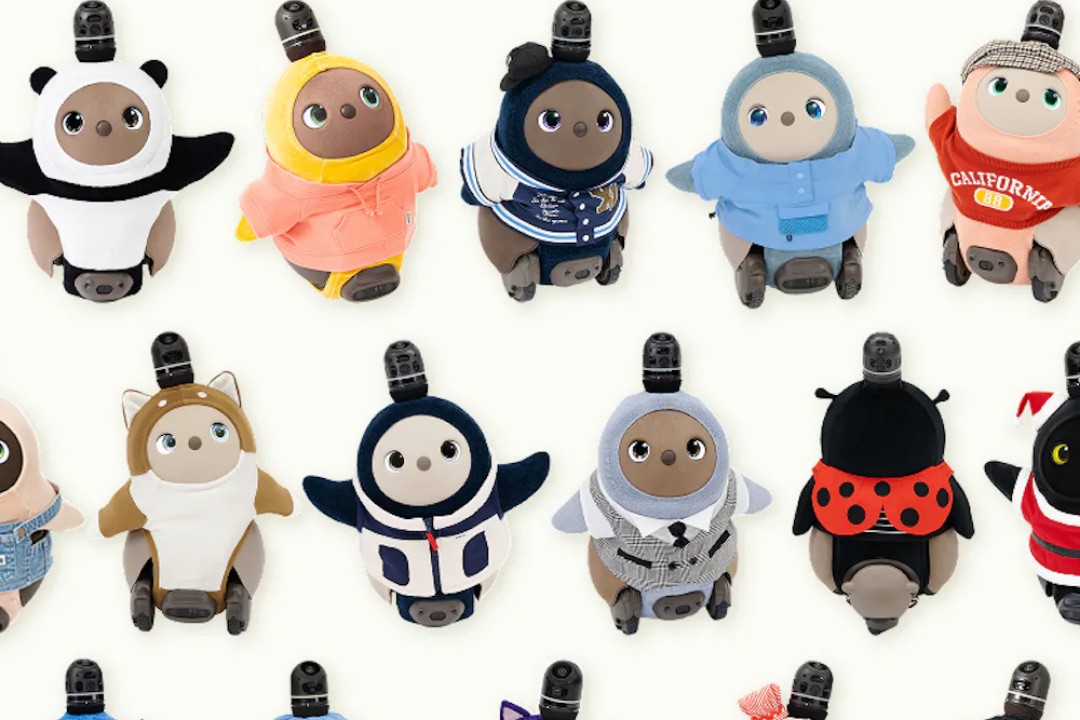
Nevertheless, GROOVE X invested heavily in recreating the subtle cues that humans unconsciously associate with living creatures. Engineers spent years refining eye movement, body warmth, weight distribution while being held, vocal characteristics, reaction timing, and the behavioral differences that make each individual LOVOT feel unique.
The goal was never perfect realism. The goal was familiarity.
Rather than relying on scripted animations or repetitive responses, LOVOT uses sensors and artificial intelligence to generate reactions in real time. Over time, each unit develops behavioral tendencies based on its interactions with its owner, creating the feeling of an evolving relationship rather than a static product experience.
Exploring Japan’s Unique Approach to Human-Robot Coexistence
One of the defining moments during development came during early household testing. Users stopped referring to the prototypes as machines and began referring to them as "this little one" or "our LOVOT." Families talked about being greeted when they came home and noticing the robot's absence when it was not present.
For the development team, this represented something far more important than technical validation. It demonstrated emotional attachment.
At that moment, GROOVE X realized it was not building another robotics product. It was creating a new category that existed somewhere between consumer electronics, pets, and companionship itself.
LOVOT may be a technology product, but its success cannot be measured through processing power, technical specifications, or benchmark performance. Its true value lies in the quality of the relationships it creates.
Designing Relationships Instead of Functions
Source: LOVOT Homepage
The most important thing to understand about LOVOT is that it was never designed around a task.
Traditional robots are created with a clearly defined purpose. They vacuum floors, deliver packages, guide customers through buildings, monitor facilities, or provide information. LOVOT does none of these things. Instead, it was designed with a far simpler objective: to share space with people and become part of everyday life.
This is not a limitation of the product. It is a deliberate design philosophy.
LOVOT contains sophisticated hardware, including multiple cameras, distance sensors, touch sensors, and environmental awareness systems. However, these technologies are not primarily intended for navigation or obstacle avoidance. They exist to recognize eye contact, respond to physical interaction, and modify behavior based on human responses.
Even the robot's warmth has been carefully engineered as part of the experience. When users hold a LOVOT, the sensation of body heat is not generated through a simple fixed-temperature heater. Temperature changes dynamically depending on the duration and context of the interaction, creating an experience that feels more organic and emotionally convincing.
Another critical element of the design is continuous cloud connectivity. Unlike traditional consumer electronics that remain largely unchanged after purchase, LOVOT continues to evolve through software updates and ongoing learning. Behavioral histories, interaction patterns, and preferences accumulate over time, allowing the robot's personality and relationship with its owner to gradually develop.
As a result, the lifespan of the product is not measured solely through hardware durability or years of operation. It is measured through the continuity of the relationship it creates.
The Warmth of Technology
Many communication robots place language at the center of the user experience through conversations, information delivery, and voice interaction. LOVOT takes a very different approach by minimizing dependence on language. Eye contact, physical proximity, movement, and touch become the primary forms of communication
This allows relationships to develop regardless of age, native language, or cognitive ability. It also creates an important advantage for international markets, where language barriers often limit the scalability of communication technologies.
Although GROOVE X does not publicly disclose all of the technologies behind LOVOT, it is clear that the product relies on a sophisticated integration of sensor fusion systems, behavioral generation algorithms, and emotional modeling technologies. The company's expertise lies not simply in building a robot, but in designing an experience.
As a result, LOVOT occupies a category that does not fit neatly into existing markets. It is not a household appliance, but it is not a pet either.
People do not purchase LOVOT because it makes their lives easier.
They purchase it because they want something to share their lives with.
That emotional value may be difficult to capture using traditional product metrics, but it aligns remarkably well with long-term engagement, subscription models, and ongoing customer relationships.
When Businesses Invest in Feelings Instead of Efficiency
Although LOVOT was originally developed for home use, its applications have expanded far beyond private households. Today, the robot can be found in nursing homes, hospitals, hotels, shopping centers, and corporate offices throughout Japan.
What these organizations are investing in is not labor reduction or operational efficiency.
They are investing in emotional experience.
In elderly care facilities, LOVOT has been used to encourage social interaction among residents. Conversations often begin with the robot and naturally expand to include caregivers, family members, and other residents. For older adults experiencing cognitive decline or reduced verbal communication abilities, eye contact and touch can become valuable channels for engagement and connection.
Why Companion Robots are Becoming Essential Infrastructure
Most importantly, LOVOT is not intended to replace caregivers or reduce staffing requirements. Instead, it functions as a communication support tool that helps create opportunities for interaction that might not otherwise occur.
Healthcare providers have explored different applications as well. In waiting areas and pediatric environments, LOVOT can help reduce anxiety and create a more welcoming atmosphere for patients and their families. While the robot does not contribute directly to diagnosis or treatment, it can significantly influence how patients experience healthcare environments.
In these situations, return on investment is measured less by increased revenue and more by patient satisfaction, emotional comfort, and improvements in the overall care experience.
Hotels, shopping centers, and commercial facilities use LOVOT in a different way. Unlike information kiosks or customer service robots, LOVOT creates emotional moments rather than transactional interactions. Visitors stop to take photographs, interact with the robot, and share those experiences online. The value comes from engagement, memorable experiences, and increased time spent within a location.
Corporate offices have also begun introducing LOVOT as part of employee wellbeing initiatives. As remote work continues to reduce informal workplace interaction, companion robots can serve as conversation starters and social anchors within office environments. Some organizations have also found value in using LOVOT as part of recruitment branding and company culture initiatives.
From a business perspective, LOVOT resembles experience investment more than infrastructure investment. Its primary contribution is not productivity gains or labor savings, but improvements in emotional wellbeing and brand experience.
This positions LOVOT at the intersection of two rapidly growing sectors: the wellbeing economy and the experience economy.
Perhaps the most significant shift is the way organizations evaluate success. Traditionally, businesses adopting robots asked what tasks the technology could replace. Increasingly, companies experimenting with companion robotics are asking a different question:
What emotional outcomes can this technology create?
That shift in perspective may ultimately prove more important than the robot itself.
Building Emotional Technology Requires Serious Engineering
Source: LOVOT Homepage
Although LOVOT is often discussed in terms of affection, companionship, and emotional wellbeing, those experiences only become possible because of an enormous amount of engineering taking place behind the scenes. Emotional technology cannot exist without physical reliability. For a robot expected to move freely around homes, elderly care facilities, hospitals, and environments with young children, safety and operational stability are not secondary considerations. They are the foundation upon which every emotional interaction depends.
LOVOT continuously monitors its environment through a network of cameras, distance sensors, and other sensing technologies that allow it to understand its surroundings in real time. These systems enable the robot to avoid furniture, navigate crowded spaces, detect obstacles, and prevent dangerous situations such as falls or collisions. Its physical construction reflects the same philosophy. Weight distribution is carefully designed to reduce tipping risks, exterior materials help soften accidental impacts, and moving components are engineered to minimize the possibility of injuries such as trapped fingers during interaction.
Because LOVOT relies heavily on cloud connectivity, security extends beyond the physical world. Interaction histories, behavioral data, and user information all require secure handling through encrypted communications and controlled access systems. In practice, this means LOVOT must be treated not simply as a household appliance but as a connected network device that requires the same level of cybersecurity consideration as any modern smart technology product.
The company's subscription model also plays an important role in long-term reliability. Rather than ending the customer relationship at the point of purchase, GROOVE X continues supporting the product through software updates, maintenance services, bug fixes, and behavioral improvements. New capabilities can be introduced over time while existing functionality can be refined based on operational experience and user feedback. This creates a product lifecycle that differs significantly from traditional consumer electronics, where hardware often becomes obsolete shortly after release.
Although GROOVE X does not publicly disclose every detail of its manufacturing and quality assurance processes, the fact that LOVOT was developed and commercialized within Japan's highly demanding consumer market is significant. Japanese customers typically maintain exceptionally high expectations regarding reliability, safety, durability, and after-sales support, particularly for products designed to operate continuously inside homes. Successfully meeting those expectations provides an important layer of credibility as the company considers future international expansion.
Ultimately, creating emotional attachment through technology requires far more than expressive eyes and charming movements. Long-term companionship depends equally on physical safety, cybersecurity, maintenance infrastructure, and operational reliability. Without those engineering foundations, the emotional experience that defines LOVOT would not be sustainable over time.
A Company Philosophy Built Around Happiness Rather Than Efficiency
Since its founding, GROOVE X has maintained an unusually consistent mission for a robotics company: to make people happier through robots. While many technology companies describe their goals in terms of productivity, automation, or optimization, GROOVE X approaches technology from a fundamentally different perspective. Its objective is not to replace labor, eliminate inefficiencies, or reduce operational costs. Instead, the company asks whether simply being present can create value.
Most technology businesses define social problems through the language of efficiency gaps. If a task consumes too much time, it should be automated. If a process costs too much money, it should be optimized. If human labor is limited, it should be supplemented with machines. GROOVE X chose to focus on a different category of challenges altogether: loneliness, emotional stress, declining face-to-face interaction, and reduced communication within families and communities.
These problems are difficult to quantify and even more difficult to solve through traditional engineering approaches. They rarely appear on balance sheets or productivity reports, yet they are becoming increasingly important as societies become more digitally connected and physically isolated at the same time. For GROOVE X founder Kaname Hayashi, this represented one of the defining contradictions of modern life. People now communicate more frequently than ever before through digital platforms, yet opportunities for physical presence and emotional connection have often declined.
How GROOVE X is Engineering Emotional Wellbeing
Rather than viewing technology as the cause of this problem, Hayashi became interested in whether technology could become part of the solution. The central idea behind LOVOT was not to improve efficiency but to recreate the emotional value of simply sharing space with another presence. The company wanted to explore whether robotics could contribute not only to what people accomplish, but also to how people feel.
This philosophy naturally pushes GROOVE X beyond the boundaries of traditional robotics companies. LOVOT is not designed to fit neatly into existing product categories. It is neither a household appliance nor a pet, neither a communication device nor a healthcare product. Instead, it represents an attempt to create an entirely new category built around shared living experiences and emotional companionship.
The company's long-term strategy reflects this broader ambition. Rather than focusing on maximizing one-time hardware sales, GROOVE X emphasizes long-term engagement through software updates, evolving behaviors, user communities, and relationships that deepen over time. In many respects, the company resembles an experience platform business more than a conventional robotics manufacturer.
As artificial intelligence continues transforming industries around the world, GROOVE X continues returning to a remarkably simple question: what actually makes people happy? The company's products, business model, and design philosophy all emerge from that single idea. While the answer may vary from person to person, GROOVE X believes technology should at least attempt to participate in the search.
Why Japan Became the Birthplace of Companion Robots
LOVOT's emergence in Japan was not accidental. The product was shaped by a unique combination of demographic pressures, social change, and cultural attitudes that make Japan one of the world's most interesting environments for emotional technologies. The country has one of the oldest populations on earth, while the number of elderly people living alone continues to rise year after year. At the same time, urbanization and shrinking household sizes have reduced opportunities for daily interaction between generations.
Under these circumstances, emotional support increasingly becomes as important as physical assistance. Japan already possesses an advanced market for caregiving technologies, monitoring systems, and support robots designed to help elderly individuals maintain independence. Most of these technologies, however, are built around management, supervision, and practical assistance. Their value comes from helping people perform tasks more safely or efficiently.
LOVOT approaches the problem from an entirely different direction. It was not designed to help people complete activities or manage daily routines. Its purpose is simply to exist alongside people and participate in everyday life. That distinction may appear subtle, but it fundamentally changes the nature of the relationship between humans and machines.
Japan’s Quest for the Ultimate Companion Robot
Cultural factors may also contribute to Japan's receptiveness toward companion robotics. Japanese popular culture has spent decades portraying robots, characters, and even ordinary objects as personalities capable of relationships and emotional expression. From animation and games to long-standing storytelling traditions, Japanese audiences are often comfortable assigning emotions and identities to non-living entities. This cultural environment may make emotional attachment to robotic companions feel more natural than it might in some other societies.
Practical living conditions reinforce this trend as well. Pet ownership can be challenging in many Japanese cities due to apartment regulations, allergies, demanding work schedules, travel requirements, and the financial costs associated with long-term care. LOVOT cannot replace a living animal, but it can recreate certain aspects of companionship while avoiding many of the practical difficulties that accompany pet ownership.
Together, these social, economic, and cultural factors transformed Japan into a natural testing ground for companion robotics. Consumers possess a relatively high level of acceptance toward emotionally expressive technology, while the social challenges that make such technology valuable are already highly visible.
Importantly, many of these demographic trends are beginning to emerge across other developed economies as well. Aging populations, urban isolation, and shrinking household sizes are no longer uniquely Japanese issues. Japan may simply be encountering these changes earlier than many other countries. In that sense, LOVOT can be viewed not merely as a product designed for Japan, but as an early response to social conditions that may eventually become global.
Where Could Emotional Robots Fit in Global Markets?
The future of LOVOT depends largely on how the market chooses to define it. If it is categorized simply as a household robot, its competitors become service robots, smart speakers, and AI assistants. If it is viewed instead as a wellbeing technology, the competitive landscape changes dramatically. Suddenly the product begins overlapping with industries such as pet technology, mental health support, wellness services, hospitality experiences, and experience-driven entertainment.
Many Western countries are already experiencing demographic shifts similar to those that influenced LOVOT's development in Japan. Northern Europe and Germany, for example, have high rates of elderly individuals living alone. Even where healthcare and social support systems are relatively strong, emotional isolation remains a significant concern. LOVOT is not a medical device and is unlikely to replace professional care services, but it could potentially contribute to emotional wellbeing within those environments.
Across Asia, different opportunities are emerging. Countries such as South Korea, Singapore, and China continue experiencing rapid urbanization and growth in single-person households. At the same time, pet ownership has expanded dramatically throughout many major cities despite housing restrictions and lifestyle constraints that make long-term animal care difficult for many residents. Companion robots may eventually occupy a position somewhere between traditional pets and consumer electronics.
The hospitality industry presents another promising opportunity. Luxury hotels, resorts, and experiential retail spaces increasingly compete by creating memorable experiences rather than simply delivering functional services. LOVOT's ability to attract attention, encourage interaction, and generate social sharing makes it particularly well suited for environments where emotional engagement directly contributes to customer satisfaction and brand differentiation.
Reclaiming Human Connection
International expansion will not be without challenges. Pricing remains a major consideration, particularly for products whose value proposition centers on emotional rather than practical benefits. Cultural acceptance may also vary significantly between regions, since emotional attachment is influenced by social norms and expectations surrounding technology. However, LOVOT's emphasis on non-verbal communication may help overcome some of these barriers. Eye contact, movement, physical proximity, and touch are among the most universal forms of interaction available to humans.
Although international deployment remains relatively limited today, the operational data and long-term user experiences accumulated in Japan provide a valuable foundation for future partnerships and expansion strategies. GROOVE X may ultimately find greater success positioning itself not solely as a robotics company but as a provider of wellbeing experiences that happen to be delivered through robotics.
Viewed through that lens, LOVOT becomes more than a Japanese robot. It becomes an emotional technology platform capable of crossing industry boundaries and creating entirely new markets.
Building Trust Through Real-World Deployment in Japan
LOVOT may have begun as an ambitious concept, but its credibility today comes from practical deployment rather than theory alone. In addition to thousands of household users, organizations across multiple industries in Japan have integrated LOVOT into real operational environments. These deployments provide evidence that emotional value can translate into meaningful outcomes across a wide range of settings.
Media attention surrounding LOVOT reflects this broad appeal. Coverage extends beyond technology publications into healthcare media, lifestyle magazines, business journals, and discussions surrounding social policy and wellbeing. This shift in attention is important because it signals that LOVOT is increasingly viewed not as a novelty gadget but as a technology connected to larger societal issues.
Corporate adoption spans elderly care facilities, hospitals, commercial spaces, hotels, and office environments. Despite the diversity of these industries, the reasons for adoption remain remarkably consistent. Organizations are rarely purchasing LOVOT to reduce staffing requirements or automate repetitive work. Instead, they are investing in improvements to emotional experience, social interaction, and psychological comfort.
Shifting the Metric from "Do" to "Feel"
The subscription model supports GROOVE X's long-term strategy by prioritizing retention, engagement, and continued usage over shipment volume. Success is measured not only by units sold but by lasting customer relationships, making the model well suited for enterprise partnerships and recurring services.
Japan's high consumer standards also strengthen the company's credibility. Earning trust in a market known for demanding quality, safety, and customer support provides strong proof of reliability for overseas partners and investors. This reputation is particularly valuable across Asia, where Japanese manufacturing continues to carry significant brand value.
Today, GROOVE X is more than an ambitious startup. With proven customer adoption and operational experience across multiple sectors, its strong domestic foundation positions the company well for future international growth.
Can You Export Something Designed to Be Loved?
Source: LOVOT Homepage
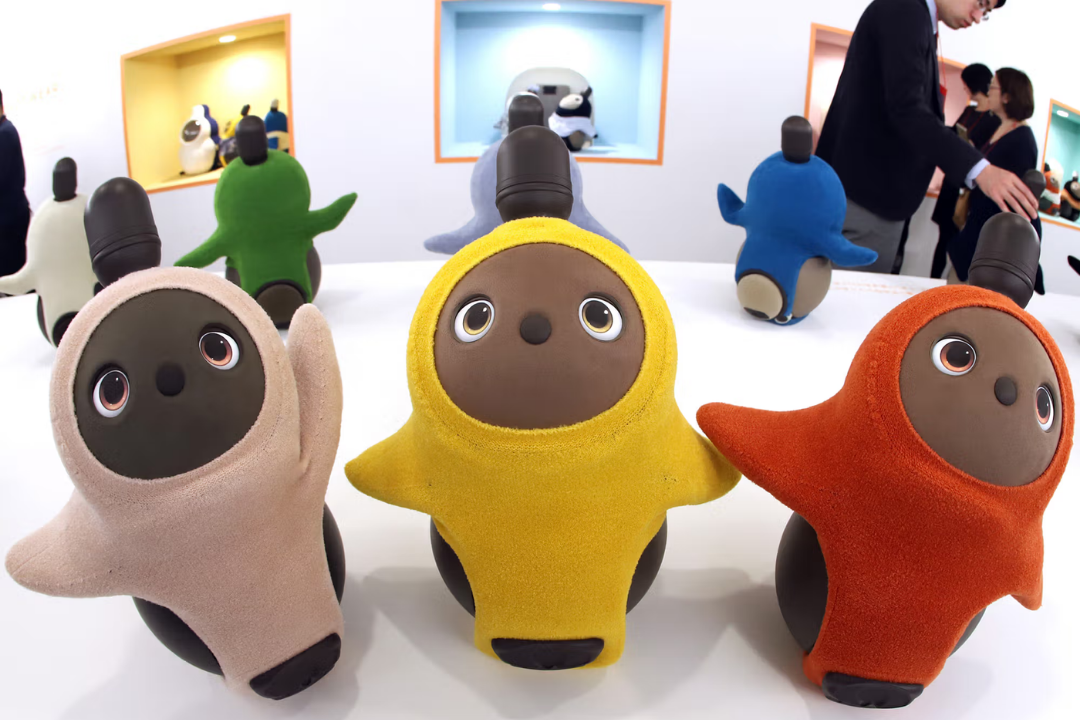
LOVOT does not fit comfortably within the traditional boundaries of the robotics industry because the question GROOVE X is exploring extends far beyond mere engineering. As artificial intelligence and automation rapidly transform global industries, they often prioritize efficiency and output at the cost of human connection. Consequently, many societies are experiencing a rise in loneliness and emotional fatigue. LOVOT addresses this contradiction by prioritizing presence over productivity and companionship over utility.
Redefining Value in the Age of Optimization
While emotional value is significantly harder to quantify than labor savings or cost reductions, the growth of the "wellbeing economy" suggests that these metrics are becoming increasingly vital. By designing for attachment and affection, GROOVE X is challenging the traditional business assumption that technology must be "useful" to be valuable. In an era defined by optimization, the company is betting that the most valuable thing technology can provide is the feeling of not being alone.
The Strategic Potential for Global Integration
For international organizations, the LOVOT model offers a unique strategic framework that transcends cultural and linguistic barriers. Unlike conversation-heavy AI systems, LOVOT relies on non-verbal communication—eye contact, touch, and movement—allowing it to integrate into diverse social environments without the need for complex translation. Furthermore, its business model successfully merges hardware with a cloud-based subscription, creating a long-term service relationship that ensures the robot’s behavior evolves alongside the user.
The potential applications for this "emotional infrastructure" span across multiple sectors. In hospitality, hotels can utilize LOVOT to create memorable, shareable guest experiences. In healthcare, it serves as a non-invasive form of emotional support for patients and the elderly. Even in corporate settings, these companion robots are being explored as tools for workplace wellbeing. In these contexts, LOVOT is not a competitor to traditional robotics but a partner in experience design, offering a tested solution to the demographic and psychological challenges facing modern societies.
Conclusion
Ultimately, GROOVE X is attempting to redefine the very purpose of robotics. Rather than building machines that extend human physical capabilities, the company is exploring whether technology can extend human emotional reach. This experiment suggests a gradual shift in the tech industry’s value system: moving away from what machines can do for us and toward what they can make us feel. By choosing to design for attachment, LOVOT serves as a powerful reminder that in an increasingly automated world, the ability to deliver a sense of being loved may become the most sophisticated technology of all.
FAQ About LOVOT
1. What Is LOVOT?
LOVOT is a home companion robot developed by Japan-based company GROOVE X. Unlike robots designed for cleaning, household chores, or productivity tasks, LOVOT was created to spend time with people and develop emotional bonds over time.
The robot makes eye contact, approaches people on its own, reacts to touch, and even feels warm when held. Rather than focusing on utility, LOVOT is designed to create experiences that encourage affection, companionship, and emotional connection.
2. How Is LOVOT Different From Traditional Robots?
The biggest difference is that LOVOT focuses less on what a robot can do and more on how people feel when they are with it.
Most robots are designed to improve efficiency, automate work, or perform specific tasks on behalf of humans. LOVOT was intentionally designed without a practical job to perform. Instead, the relationship itself becomes the product's value.
Rather than replacing human labor, LOVOT aims to become a presence that people enjoy sharing their daily lives with.
3. Why Did GROOVE X Choose To Build A Robot Designed To Be Loved Rather Than Useful?
As technology continues to advance, emotional wellbeing and human connection have become increasingly important social issues alongside productivity and efficiency.
Many modern challenges, such as loneliness, emotional stress, and social isolation, cannot be solved through automation alone. GROOVE X believed there was room for technology that supports emotional experiences rather than simply improving performance.
LOVOT represents an attempt to explore a new role for robotics as a source of comfort, companionship, and emotional support rather than convenience alone.
4. How Does LOVOT Build Relationships With People?
LOVOT uses cameras, sensors, and artificial intelligence to recognize voices, movement, touch, and interactions with people around it.
The robot may approach when called by name, maintain eye contact, seek attention, or display affectionate behaviors that evolve over time. Through repeated interactions, owners often begin to perceive unique personality traits in their individual LOVOT.
Importantly, the robot relies heavily on non-verbal communication such as movement, expressions, proximity, and touch rather than conversation alone.
5. Is LOVOT Intended To Replace Pets?
LOVOT is not intended to be a direct replacement for pets. Instead, it offers a different form of companionship and coexistence.
Although it is not a living creature, LOVOT was designed to encourage emotional attachment through interaction, care, and shared experiences. For people who cannot own pets due to housing restrictions, allergies, travel schedules, or lifestyle limitations, it can provide an alternative form of emotional connection.
6. Why Are Nursing Homes And Companies Adopting LOVOT?
Organizations often adopt LOVOT because it helps create connections between people.
In elderly care facilities, the robot can encourage conversations and social interaction among residents and caregivers. In corporate environments, LOVOT may serve as part of workplace wellbeing initiatives or help create a more welcoming office atmosphere.
While it does not replace employees or perform work tasks, it can generate meaningful psychological and social value.
7. How Does LOVOT Use Artificial Intelligence?
Artificial intelligence in LOVOT is used primarily to develop relationships rather than deliver information.
The robot adapts its behavior based on interactions with users and changes in its environment, allowing individual personalities to gradually emerge over time. Instead of simply responding to commands, the AI helps LOVOT become a more engaging companion that evolves through shared experiences.
The goal is not to create a smarter assistant, but a more natural companion.
8. Why Is LOVOT Interesting From An International Perspective?
One of LOVOT's most distinctive features is that it uses technology not only to improve efficiency but also to support happiness and wellbeing.
Around the world, most AI and robotics development focuses on automation and productivity improvements. LOVOT approaches technology from a different perspective by asking how robots can contribute to emotional wellbeing and human relationships.
This makes it an interesting example of how the role of robotics could evolve in the future.
9. What Kind Of Future For Robotics Does LOVOT Represent?
LOVOT suggests a future where robots are not only tools that perform work but also companions that share everyday life with people.
Technology has traditionally focused on making life more convenient and efficient. In the future, however, emotional comfort, peace of mind, and companionship may become increasingly important areas of innovation. LOVOT represents one possible direction for that evolution.
10. What Is LOVOT's Greatest Appeal?
LOVOT's greatest appeal is that its value comes not from what it does, but from the fact that it is there.
People do not live by efficiency alone. Experiences such as holding something close, calling its name, and spending time together can carry significant emotional meaning.
By creating those experiences, LOVOT explores an entirely new relationship between humans and technology—one built not around utility, but around companionship and presence.
Related Videos
If you're interested in how robotics can create emotional connections, the video below explores GROOVE X and its mission to bring lovable companion robots into everyday life. This video highlights how Japanese designers are rethinking robots not only as useful machines, but also as comforting members of the home.