Hotels connected to airports exist all over the world. In most cases, they serve a practical purpose. Travelers stay there before an early morning flight, after a late-night arrival, or during a layover. Convenience is their primary selling point, while the stay itself is rarely the main attraction.
The Superior Cockpit Room at Haneda Excel Hotel Tokyu challenges that assumption.
Created and operated by Japan's Tokyu Hotels & Resorts, this unique guest room transforms one of the airport's most ordinary features, the runway, into the centerpiece of the guest experience. Rather than treating the airport as something to block out, the room embraces its surroundings and turns them into part of the stay.
Located directly within Haneda Airport's domestic terminal complex, Haneda Excel Hotel Tokyu has long occupied a unique position in Japan's hospitality landscape. The Superior Cockpit Room was developed as an answer to a simple question: if guests are already staying at the airport, why shouldn't the airport itself become part of the experience?
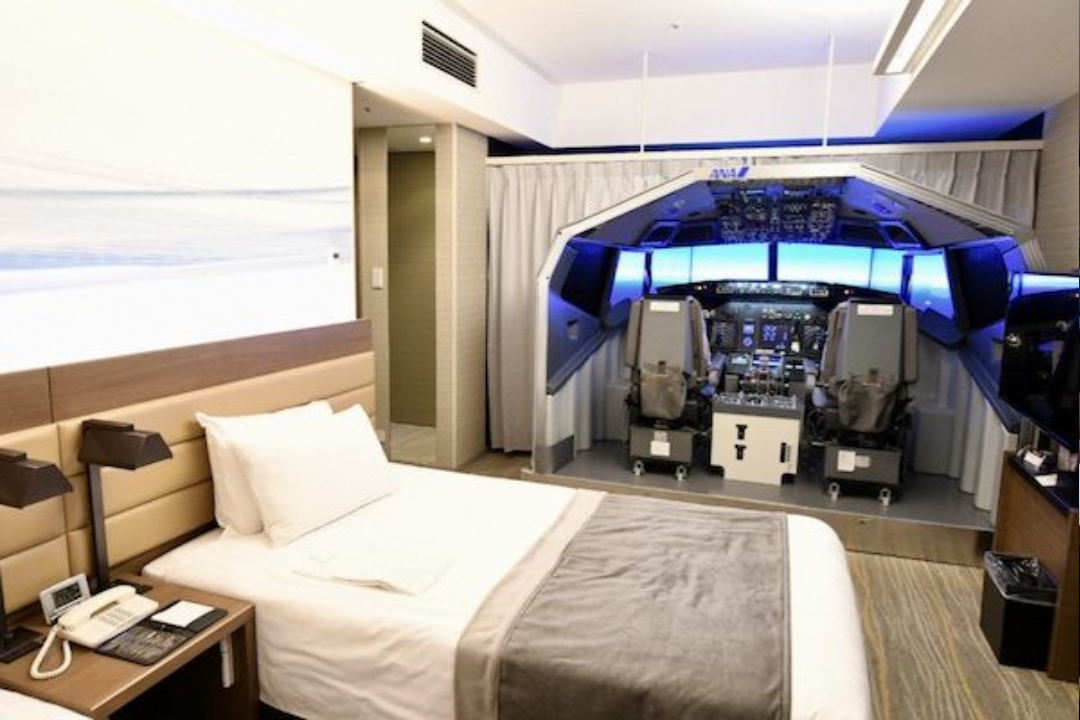
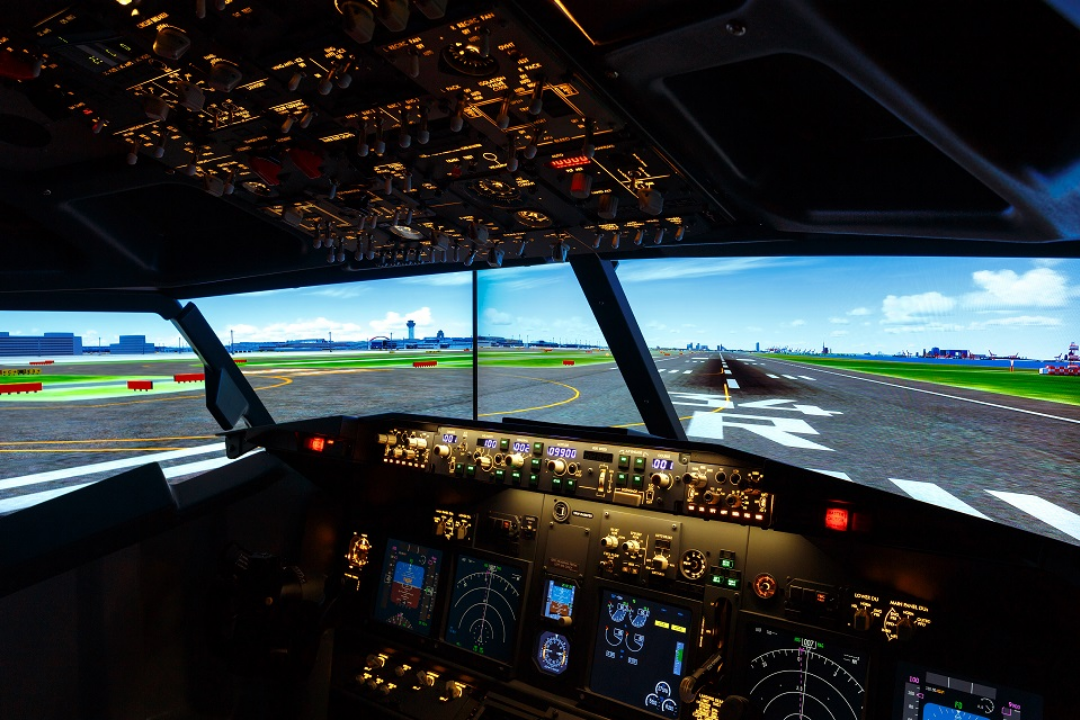
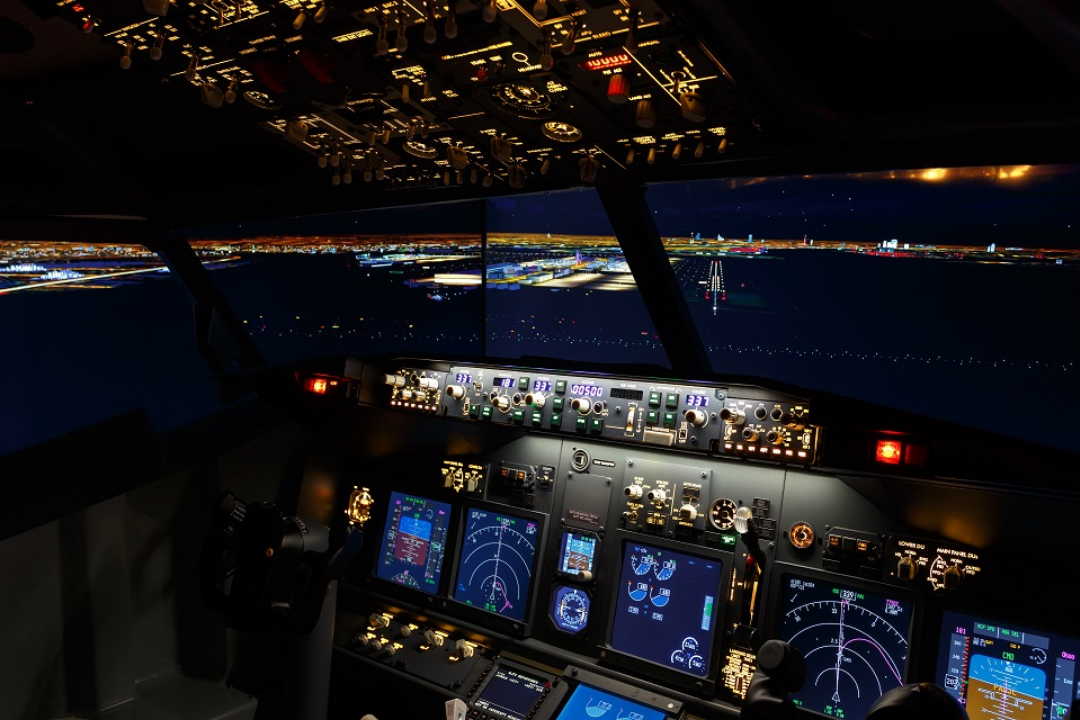
The room draws inspiration from an aircraft cockpit, but it is far more than a themed accommodation. Floor-to-ceiling runway views, aviation-inspired interiors, and an uninterrupted connection to the movement of aircraft create an environment where guests can experience the airport as a living, active space.
This concept has relevance far beyond aviation enthusiasts. As airports around the world increasingly resemble one another, travelers are searching for ways to make transit time more meaningful. The Superior Cockpit Room demonstrates how a hotel can transform a place designed for movement into a destination worth experiencing in its own right.
By turning an airport from a place people merely pass through into a place where they choose to spend time, Tokyu Hotels has created a compelling example of how location-driven hospitality can be reimagined.
Superior Cockpit Room Overview
The Superior Cockpit Room is an experience-focused guest room located inside Haneda Excel Hotel Tokyu, a hotel directly connected to Tokyo Haneda Airport's domestic terminal. While most airport hotels are designed primarily as places to rest before or after a flight, this room was created with a different goal: to make the airport itself part of the stay.
Its defining feature is the direct view of the runway. Guests can watch aircraft arrive and depart throughout the day while experiencing the constantly changing atmosphere of one of Japan's busiest transportation hubs. Daylight, weather conditions, aircraft movements, and nighttime runway lighting all become part of the room's appeal.
Positioned within the hotel's premium room category, the Superior Cockpit Room commands a higher rate than a typical airport hotel room. However, guests are paying not only for accommodation but for an experience that cannot easily be replicated elsewhere.
One of the room's greatest strengths is its accessibility to international travelers. No explanation is required to understand its appeal. The moment guests enter and look out the window, the concept becomes immediately clear. Because airports are a universal part of modern travel, the experience transcends language and cultural barriers.
How Tokyu Hotels Turned Location into Experience
The Superior Cockpit Room represents one of the clearest examples of Tokyu Hotels' philosophy in action.
What the room offers is not merely a good view. Its layout, window placement, and overall design are carefully arranged around the runway itself. Aircraft movements become part of the room's rhythm, allowing guests to feel immersed in the daily operations of the airport.
In many ways, staying here feels less like being next to the airport and more like being inside it.
What makes the concept especially effective is its simplicity. Guests do not need guided tours, interactive exhibits, or detailed explanations. The experience begins naturally the moment they enter the room.
This approach also works particularly well for international visitors. The appeal does not depend on understanding Japanese language, culture, or aviation terminology. The visual experience alone communicates the room's purpose.
Although the room is among the hotel's higher-priced offerings, its value is not derived from luxury furnishings or oversized floor plans. Instead, the premium comes from access to an experience that is uniquely tied to Haneda Airport itself.
The room appeals to a diverse audience, including aviation enthusiasts, business travelers staying before or after flights, international visitors, and anyone interested in making transit time more memorable.
From an industry perspective, the room also demonstrates an alternative model for airport hospitality. Rather than competing solely on convenience, Tokyu Hotels has shown how airport hotels can create genuine destination value through thoughtful experience design.
The company's achievement lies not in adding more services or amenities, but in changing how guests perceive the location itself. The runway is no longer something to hide behind soundproof glass. It becomes the centerpiece of the stay.
Transforming Airport Constraints into Hospitality Assets
The uniqueness of the Superior Cockpit Room comes not from its aviation theme, but from how it reinterprets the realities of an airport environment.
Many themed rooms rely heavily on decorations or immersive storytelling. This room takes a different approach. Instead of creating an artificial world, it embraces the real one outside the window.
The runway is not treated as scenery to be admired briefly. It becomes an evolving backdrop that changes continuously throughout the day. Aircraft departures, arrivals, changing weather, and shifting light conditions create a dynamic experience that rarely feels repetitive.
The interior design follows the same philosophy. While aviation-inspired elements are present, they never overwhelm the space. Guests' attention naturally gravitates toward the runway rather than the décor.
This restraint broadens the room's appeal. Visitors do not need a strong interest in aviation to enjoy the experience. The room remains approachable and engaging even for travelers with little knowledge of aircraft or airport operations.
The treatment of sound is equally notable. Most hotels attempt to eliminate all external noise. Here, the goal is balance rather than complete isolation. Guests remain aware of the airport's presence without sacrificing comfort. Subtle reminders of activity reinforce the feeling of being part of a functioning transportation hub.
Another distinguishing characteristic is how little effort the experience requires. Guests simply enter the room, open the curtains, and observe. There are no instructions, demonstrations, or required activities.
This understated approach reflects a design philosophy often associated with Japanese hospitality: allowing guests to discover meaning for themselves rather than prescribing exactly how they should experience a space.
As a result, the Superior Cockpit Room extends well beyond the niche category of aviation-themed accommodation. It offers a broader reflection on how people experience movement, transit, and time itself.
Reimagining the Purpose of the Airport Hotel
Source: Haneda Excel Hotel Tokyu Homepage
Behind the Superior Cockpit Room lies a broader question that Tokyu Hotels has been exploring for years.
Airport hotels are often highly practical but rarely memorable. Travelers appreciate their convenience, yet few choose them because they expect a meaningful stay. Tokyu Hotels challenged this assumption by asking a simple question:
Can an airport hotel become a destination in its own right?
Haneda Excel Hotel Tokyu enjoys one of Japan's strongest airport locations, sitting directly within Haneda Airport. At the same time, airport environments come with numerous challenges, including noise, operational restrictions, and typically short guest stays.
Conventional hospitality thinking would treat these factors as problems to minimize. Tokyu Hotels chose a different path. Instead of hiding the realities of the airport, it embraced them and transformed them into assets.
This perspective reflects the broader history of the Tokyu Group, whose businesses span railways, urban development, retail, and hospitality. Across these sectors, the company has long focused on how people move through cities and how their time can be enriched during that movement.
The Superior Cockpit Room reflects this mindset. Rather than creating a disconnected fantasy environment, it encourages guests to engage with the reality already surrounding them.
Aircraft takeoffs and landings are not staged attractions. They are part of Haneda Airport's everyday operation. By giving guests a front-row seat to that activity, the room turns waiting time into meaningful time.
Tokyu Hotels also deliberately avoided designing the room as a short-lived novelty. Highly themed accommodations can attract attention quickly but often struggle to remain relevant over time.
By relying on the real-world runway rather than elaborate storytelling, the Superior Cockpit Room gains a level of longevity that many themed rooms lack. The view changes every day, ensuring that the experience remains fresh.
Ultimately, the room reflects Tokyu Hotels' broader vision of hospitality: not simply providing accommodation, but interpreting a location and transforming it into an experience.
Turning Short Stays Into Meaningful Experiences
Although the Superior Cockpit Room is not designed for a specific industry or niche audience, its strongest appeal lies with travelers facing one common challenge: limited time.
Business travelers frequently use the room before early departures or after late arrivals. In many airport hotels, such stays become little more than a few hours of sleep. Here, even a short stay can feel memorable because the airport itself becomes part of the experience.
Transit passengers represent another natural audience. As international travel becomes increasingly interconnected, layovers and overnight connections are common. The room allows travelers to enjoy a sense of place without needing to leave the airport area, making even brief stays feel worthwhile.
Aviation enthusiasts are naturally drawn to the concept, but the room is not limited to that audience. Many guests with little prior interest in aircraft find themselves unexpectedly absorbed by the movement outside the window. Because the experience does not rely on specialized knowledge, it remains approachable for casual travelers and accompanying family members.
The room also works well for corporate travelers attending conferences, training programs, or events. It combines the practical advantages of an airport-connected hotel with a memorable experience that standard business accommodations rarely provide.
For international visitors, the room offers something particularly distinctive. Many travelers are fascinated by Japan's transportation systems, operational efficiency, and attention to detail. Watching Haneda Airport in action provides a direct, visual way to experience those qualities without requiring explanation.
Ultimately, the Superior Cockpit Room demonstrates that even short stays can be meaningful. Whether guests are in transit, on business, or simply passing through, the room shows that airport hotels can offer more than convenience. They can offer experiences worth remembering.
Operational Excellence in the Unique Environment of an Airport
The quality of the Superior Cockpit Room cannot be judged solely by its furnishings or amenities. Located inside Haneda Airport, the room exists in an environment where aircraft, vehicles, systems, and people are constantly in motion. Unlike a typical city hotel, it must function within one of the busiest transportation hubs in Japan. Tokyu Hotels has treated this operational reality as part of the guest experience itself.
One of the most critical considerations is noise and vibration control. Although the room offers close-up runway views, guests can still enjoy a comfortable stay thanks to carefully designed soundproofing and vibration mitigation measures. The goal is not to completely isolate guests from airport activity, but rather to allow them to experience it without discomfort. Maintaining that balance requires not only architectural planning but also ongoing maintenance and facility management.
Housekeeping standards are equally important. Airport hotels often deal with rapid guest turnover and shorter stays, making efficient yet meticulous cleaning essential. In the Superior Cockpit Room, even minor details matter because the room's value is closely tied to the view. Window cleanliness, lighting conditions, and the visual presentation of in-room facilities all contribute to ensuring that nothing distracts from the runway experience.
Although positioned as a specialty room, it was never intended as a temporary attraction. It is designed for long-term operation as a permanent product offering. As a result, the room incorporates durable materials and maintainable systems rather than overly delicate or trend-driven design elements.
Perhaps most importantly, Tokyu Hotels prioritizes consistency. The runway outside changes constantly depending on weather, traffic patterns, and time of day. What remains consistent is the room's ability to deliver comfort, immersion, and a clear connection to its surroundings. Managing that balance between changing external conditions and controlled internal quality is central to the room's success.
For Tokyu Hotels, a hotel is never a finished product. It is a space that continues to be completed through daily operations. The quality of the Superior Cockpit Room is sustained not only through design but through cleaning, inspections, maintenance, and staff expertise. The ability to maintain that standard within an active airport environment demonstrates the company's operational capabilities.
The Tokyu Group Philosophy: Connecting Mobility and Daily Life
Source: Haneda Excel Hotel Tokyu Homepage
The Superior Cockpit Room reflects more than a single hotel concept. It embodies a philosophy that runs throughout the broader Tokyu Group.
For decades, the Tokyu Group has developed railways, residential communities, commercial facilities, and hotels as interconnected parts of urban life. At the heart of this approach is a simple belief: transportation and everyday living should not be treated as separate experiences. People are always moving, but life continues during those moments of movement. Designing those in-between moments is part of the company's role.
This mindset strongly influences Tokyu Hotels. Rather than viewing hotels as standalone accommodation facilities, the company sees them as living spaces embedded within transportation networks and cities. That is why its station-connected and airport-connected properties focus not only on convenience but also on creating meaningful experiences within those locations.
Airports represent the ultimate transportation-focused environment. Most travelers pass through them as quickly as possible, viewing them merely as gateways to somewhere else. Tokyu Hotels challenged that assumption. Could time spent at an airport become something more than waiting? Could the transition itself become worthwhile?
The Superior Cockpit Room emerged from these questions.
Importantly, the goal was never to create an artificial attraction or a themed entertainment experience. Instead, Tokyu Hotels chose to embrace the reality of the airport. Aircraft takeoffs and landings are not special events at Haneda; they are everyday occurrences. By bringing that activity directly into the guest experience, the hotel creates a compelling reason to be present in that specific place.
This perspective reflects the mindset of a company deeply involved in transportation and urban development. Rather than asking, "What can we add?" Tokyu Hotels asks, "What is already happening here, and how can guests experience it?"
The company has also avoided relying on short-term novelty. Highly themed accommodations often generate attention quickly but may lose appeal over time. The Superior Cockpit Room takes the opposite approach. By focusing on a real and constantly changing environment, it creates a form of value that remains relevant regardless of trends.
Ultimately, the room represents a broader Tokyu Group objective: transforming places associated with movement into places where meaningful experiences can occur.
An Experience That Could Only Exist at Haneda
The Superior Cockpit Room is not simply an airport-view room. It is a room specifically designed around the unique characteristics of Haneda Airport.
Haneda occupies a rare position among major international airports. It serves as one of Japan's primary aviation hubs while remaining closely integrated with central Tokyo. Rather than existing on the distant edge of the city, Haneda is woven into the daily routines of business travelers, tourists, and residents alike.
This proximity creates a unique environment where everyday life and travel intersect.
The Haneda Excel Hotel Tokyu sits directly within this intersection. Unlike many airport hotels that require shuttle buses or separate transfers, the property is physically connected to the airport. Guests can move seamlessly from check-in to boarding without ever leaving the airport complex.
Because of this continuity, embracing the airport environment makes far more sense than trying to hide it.
The Superior Cockpit Room leverages this advantage fully. Many airports around the world cannot provide the same experience because they lack Haneda's combination of high traffic volume, operational density, and urban integration. Aircraft are constantly arriving and departing throughout the day, creating a continuously changing scene outside the window.
This movement gives the stay a natural rhythm. Guests are not simply looking at a static view. They are observing an active system in motion.
Haneda also serves as a showcase of Japan's operational precision. Punctuality, safety, air traffic coordination, and logistical efficiency are difficult concepts to communicate through words alone. Watching aircraft movements from the room offers a direct and intuitive understanding of how these systems function.
For international travelers, this provides a unique way to experience Japanese society. Instead of learning through museums or tourist attractions, they gain insight through observing infrastructure in action.
Unlike hotels that emphasize local crafts or regional décor, the Superior Cockpit Room derives its identity directly from the airport's daily operations. The experience is rooted in what already happens there every day.
As a result, this is not a concept that can simply be copied elsewhere. It depends on Haneda's location, traffic density, and relationship with Tokyo. In that sense, it is a highly site-specific product and a reflection of Tokyu Hotels' commitment to understanding place before designing experience.
Turning Location into a Strategic Asset
For Tokyu Hotels, the Superior Cockpit Room is more than a successful guest room. It represents a test case for the future of hotel development.
The room demonstrates that creating value does not always require additional facilities, larger investments, or more services. Sometimes the most powerful opportunity lies in reinterpreting assets that already exist.
Tokyu Hotels operates properties across a wide range of environments, including urban centers, resorts, and transportation hubs. Some locations may appear limited or difficult to differentiate. The Superior Cockpit Room shows that perceived limitations can become unique strengths when viewed through the right lens.
This approach is particularly significant because it operates at the room level rather than requiring large-scale renovations. Redesigning an entire hotel can be expensive and disruptive. Creating a specialized room allows hotels to experiment with new concepts while maintaining regular operations.
The success of this strategy could influence future developments across the company's portfolio. Other locations may eventually feature signature rooms that highlight the unique characteristics of their surroundings.
From an international perspective, the concept is equally relevant. The real value is not Japanese hospitality or interior design alone. It is the methodology of reading a location and translating its characteristics into an experience.
Airports, train stations, ports, and urban transition zones exist all over the world. The Superior Cockpit Room offers a practical example of how these environments can become hospitality assets.
As travel habits evolve and flexible work arrangements become more common, hotels are increasingly competing on the quality of time rather than simply accommodation. Airport hotels in particular may need to move beyond their traditional role as functional overnight facilities.
The Superior Cockpit Room anticipates that shift. Rather than relying on spectacle, it creates value through context. This approach is likely to remain relevant for years to come because it is rooted in the unique qualities of place rather than temporary trends.
Why the Experience Works Without Explanation
Guest reactions to the Superior Cockpit Room are often different from those associated with conventional hotel stays.
Instead of focusing solely on comfort, amenities, or views, many guests describe a change in how they perceive airports themselves. This suggests that the experience succeeds on a sensory and emotional level rather than through explanation or storytelling.
Domestic travelers frequently report that what began as a practical overnight stay before an early flight became unexpectedly memorable. Business travelers who regularly pass through Haneda often remark that it was the first time they had truly stopped to observe the airport.
The room requires very little interpretation. Guests naturally find themselves drawn to the movement outside the window. Time passes almost unnoticed as aircraft arrive, depart, and taxi across the airfield.
International visitors respond in a similar way. Many reviews note that the room communicates its purpose immediately upon entry. Without reading Japanese or understanding the airport's operational details, guests can still appreciate the precision and organization of the environment.
Interestingly, the room receives strong praise even from people who are not aviation enthusiasts. Traditional aviation-themed accommodations sometimes appeal primarily to hobbyists. The Superior Cockpit Room avoids that limitation because the experience does not depend on technical knowledge.
Many guests describe the simple pleasure of watching activity unfold without needing to understand every detail. The lack of explanation becomes part of the appeal.
Social media reflects this as well. Guests tend to share photos and videos of the runway itself rather than the room's interior. Because the scenery changes with weather, lighting, and traffic conditions, every stay feels slightly different.
Ultimately, the Superior Cockpit Room succeeds not because it teaches something, but because it allows guests to experience something directly. It is less about understanding and more about observing, which helps explain its broad appeal across cultures.
A Room Valued Through Context Rather Than Hype
Source: Haneda Excel Hotel Tokyu Homepage
The Superior Cockpit Room has not built its reputation through aggressive marketing campaigns or limited-time promotions.
Instead, it has earned recognition through consistent appreciation within the travel and hospitality industries.
Travel publications frequently cite it as an example of how airport hotels can move beyond purely functional roles. The focus is not simply the runway view itself but the way the hotel integrates its location into the guest experience.
Another notable indicator of success is repeat visitation. Guests often return during different seasons or times of day to experience changing conditions. Morning departures, nighttime runway lighting, and varying weather patterns all create distinct experiences despite being in the same room.
Among frequent domestic travelers, the room has become something of a personal reward. Rather than choosing the nearest airport hotel solely for convenience, guests intentionally select the Superior Cockpit Room for the quality of time it offers.
Its social media presence also reflects a different type of popularity. Instead of relying on hashtags or promotional campaigns, the room spreads organically through personal photographs and individual experiences. This type of visibility tends to build long-term credibility rather than short-term buzz.
Within Japan, the room has also helped challenge the common assumption that airports are merely places to pass through. It demonstrates that meaningful experiences can occur during transit itself.
Its success is therefore measured less by headline-grabbing publicity and more by continued demand and long-term relevance.
Transforming a Universal Infrastructure Into a Universal Experience
One of the greatest advantages of the Superior Cockpit Room for international audiences is that airports are a universal part of modern life.
Regardless of culture, language, or nationality, people understand what airports are and how they function. This makes the room's core concept easy to grasp.
Around the world, airport hotels are typically chosen for practical reasons such as early departures, late arrivals, or flight connections. The stay itself is often secondary.
The Superior Cockpit Room challenges that assumption by giving travelers a reason to value their time at the airport.
The concept may be particularly appealing in regions where air travel is deeply integrated into daily life, including major Asian hubs, European gateway cities, and North American metropolitan areas. For frequent travelers, the opportunity to enjoy a meaningful experience without requiring additional planning can be highly attractive.
International visitors also tend to have a strong interest in Japanese infrastructure and operational efficiency. Concepts such as punctuality, safety, and coordination are easier to appreciate when observed directly rather than explained.
The room allows guests to witness these qualities firsthand through the movement of aircraft and airport operations.
Importantly, the idea does not need to be replicated exactly in other countries. The real innovation lies not in the room design but in the underlying methodology: understanding a location deeply and transforming its everyday activity into an experience.
This philosophy can be applied to airports, train stations, ports, and countless other environments worldwide.
The approach also aligns with growing sustainability priorities. Rather than consuming significant resources to create artificial attractions, it derives value from existing surroundings. By reinterpreting what is already there, it offers a lower-impact path toward creating memorable hospitality experiences.
The Superior Cockpit Room may be a uniquely Japanese example, but the thinking behind it has global relevance.
Conclusion
The Superior Cockpit Room is not successful because it is dramatic or extravagant. Its significance lies in how it transforms a familiar environment into a meaningful experience.
Tokyu Hotels has effectively redefined what an airport hotel can be. Instead of treating the airport as something to hide from, it embraces the airport as the core of the stay itself.
For hospitality professionals and businesses worldwide, the room offers a valuable lesson. Airports, transit hubs, and waiting periods exist everywhere. The challenge is not necessarily adding more amenities, but learning how to reinterpret existing environments in ways that create emotional and experiential value.
This approach is both sustainable and durable. It relies less on expensive infrastructure and more on thoughtful design and operational excellence. As a result, it is less vulnerable to changing trends and more likely to retain relevance over time.
At its heart, the Superior Cockpit Room answers a fundamental question: Why should this hotel exist in this particular location?
That question extends far beyond Haneda Airport. It applies to hotels, transportation facilities, and destinations around the world. By answering it so effectively, the Superior Cockpit Room provides a compelling example of how a place itself can become a hospitality asset.
More than a single guest room, it is a demonstration of how thoughtful design can turn an ordinary location into an extraordinary experience.
FAQ About the Superior Cockpit Room
1. What Is the Superior Cockpit Room?
The Superior Cockpit Room is an experience-focused guest room at Haneda Excel Hotel Tokyu. Taking full advantage of its direct connection to Haneda Airport, the room offers runway views and an immersive aviation-inspired atmosphere, allowing guests to enjoy the experience of staying at the airport itself. Rather than serving only as a place to rest before or after a flight, it offers a new way to experience an airport hotel.
2. How Is It Different From a Typical Airport Hotel?
While most airport hotels focus primarily on convenience and providing a place to rest, the Superior Cockpit Room transforms the airport environment itself into part of the attraction. Runway views and the constant movement of aircraft become integral parts of the guest experience, making the stay itself a memorable part of the journey.
3. Can People Who Are Not Aviation Enthusiasts Enjoy It?
Yes. The room is not designed exclusively for aviation enthusiasts. Guests can simply relax while watching aircraft take off and land or enjoy the ever-changing airport scenery throughout the day. It is an excellent choice for anyone who wants to make the time before or after a trip feel more special or enjoy a hotel stay that offers something different from the ordinary.
4. Why Was the Room Designed Around Haneda Airport?
The concept was created to turn Haneda Airport itself into part of the accommodation experience. Airports are typically seen as transit points on the way to a destination, but the constant flow of aircraft and the unique rhythm of airport life have their own appeal. The Superior Cockpit Room captures those qualities, allowing guests to experience something that can only be enjoyed in this unique location.
5. Who Operates the Superior Cockpit Room?
The Superior Cockpit Room is offered at Haneda Excel Hotel Tokyu, operated by Tokyu Hotels & Resorts Co., Ltd. The company manages a variety of urban, resort, and airport hotels, creating accommodations that reflect the unique characteristics of each location and surrounding environment.
6. What Makes This Room Special?
Its greatest appeal is that guests can experience the energy of the airport without ever leaving the hotel. The view of the runway changes with the weather, lighting, and time of day, ensuring that every stay feels different. Rather than relying on artificial attractions, the room embraces the authentic scenery of a working international airport.
7. What Makes the Superior Cockpit Room Appealing to International Visitors?
It transforms the universally familiar setting of an airport into a unique accommodation experience. Regardless of language or culture, guests can appreciate watching aircraft movements and the expansive runway views. International visitors also gain a firsthand impression of Japan's highly organized airport operations and attention to detail.
8. Why Is It Considered an Experiential Hotel?
Because it adds value to the time spent at the hotel itself rather than simply providing a place to sleep. Instead of relying on luxurious amenities, the Superior Cockpit Room uses Haneda Airport's distinctive scenery and atmosphere to create an engaging stay. It turns the hotel from a stop along the journey into a memorable destination in its own right.
9. Does the Superior Cockpit Room Reflect Japanese Design Philosophy?
Yes. It demonstrates a distinctly Japanese approach of discovering new value within an existing environment. Rather than dramatically changing the airport, the concept simply encourages guests to experience it from a different perspective, transforming an everyday setting into something memorable.
10. What Is the Biggest Appeal of the Superior Cockpit Room?
Its greatest strength is the way it changes how people think about time spent at the airport. Instead of viewing the airport as merely a place to wait or transfer, guests are invited to observe, appreciate, and enjoy it. By making full use of Haneda's unique location, the Superior Cockpit Room creates meaningful experiences from moments that would otherwise pass unnoticed.