On any given morning at Tokyo Station, the platforms of the Tokaido Shinkansen are filled with business travelers in suits, families on vacation, and international visitors beginning their journey across Japan. Every few minutes, another high-speed train departs, carrying passengers between Tokyo and Osaka in roughly two and a half hours. More than just a transportation service, the Tokaido Shinkansen has become one of the foundations of Japan's economy, connecting the country's largest business centers with remarkable speed and reliability.
The company behind this iconic railway is Central Japan Railway Company (JR Central). Established in 1987 following the privatization of Japan National Railways, JR Central has grown far beyond the role of a traditional railway operator. It manages one of the world's busiest high-speed rail corridors while maintaining an exceptional balance between safety, punctuality, and operational efficiency. Its maintenance systems and train management technologies are frequently studied by countries developing their own high-speed rail networks.
Yet the purpose of business travel has changed dramatically in recent years. As remote work and virtual meetings became commonplace, companies began reducing unnecessary business trips. At the same time, travel for executive meetings, confidential negotiations, and high-level decision making has become even more valuable. Businesses increasingly expect travel time to be productive rather than simply time spent in transit.
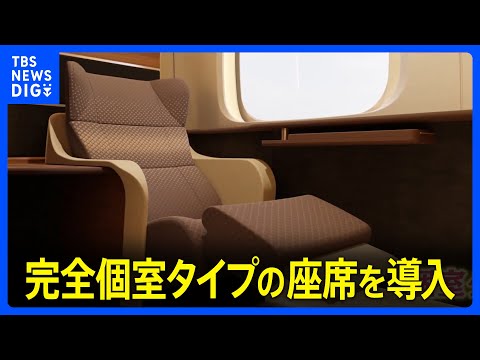
Against this backdrop, JR Central announced plans to introduce fully enclosed private suites on the Tokaido Shinkansen. Rather than serving as another premium seat above Green Car, these private rooms represent a fundamental redesign of the travel experience itself. The goal is to create a space where passengers can work, hold confidential conversations, and conduct business while still traveling on one of the world's busiest public rail systems.
Why is JR Central introducing private suites now? And what lessons could this offer for high-speed rail operators around the world? This article explores the business strategy, design philosophy, and broader significance behind one of the most ambitious changes to the Shinkansen in decades.
Tokaido Shinkansen Private Suite Seats Overview
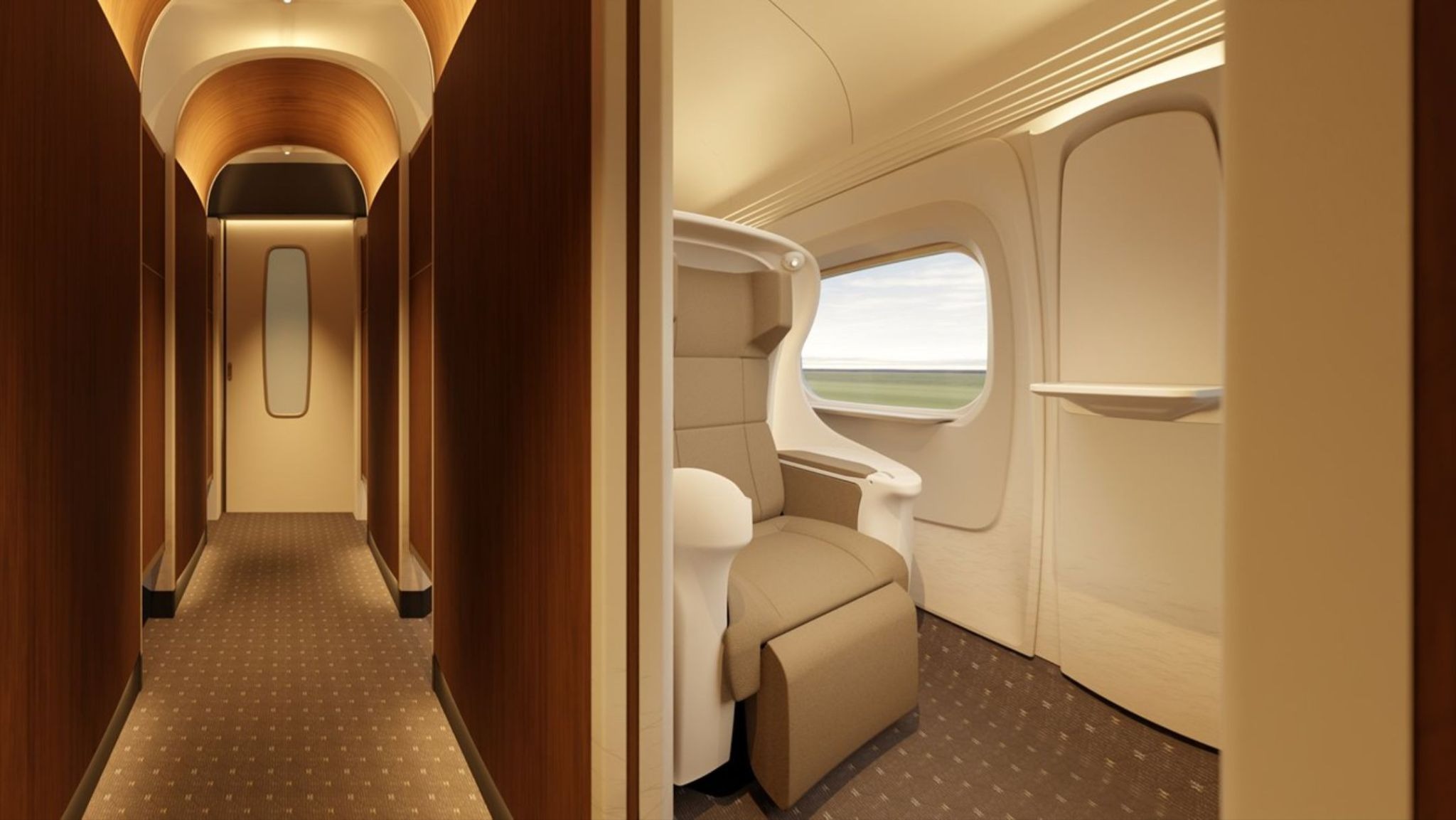
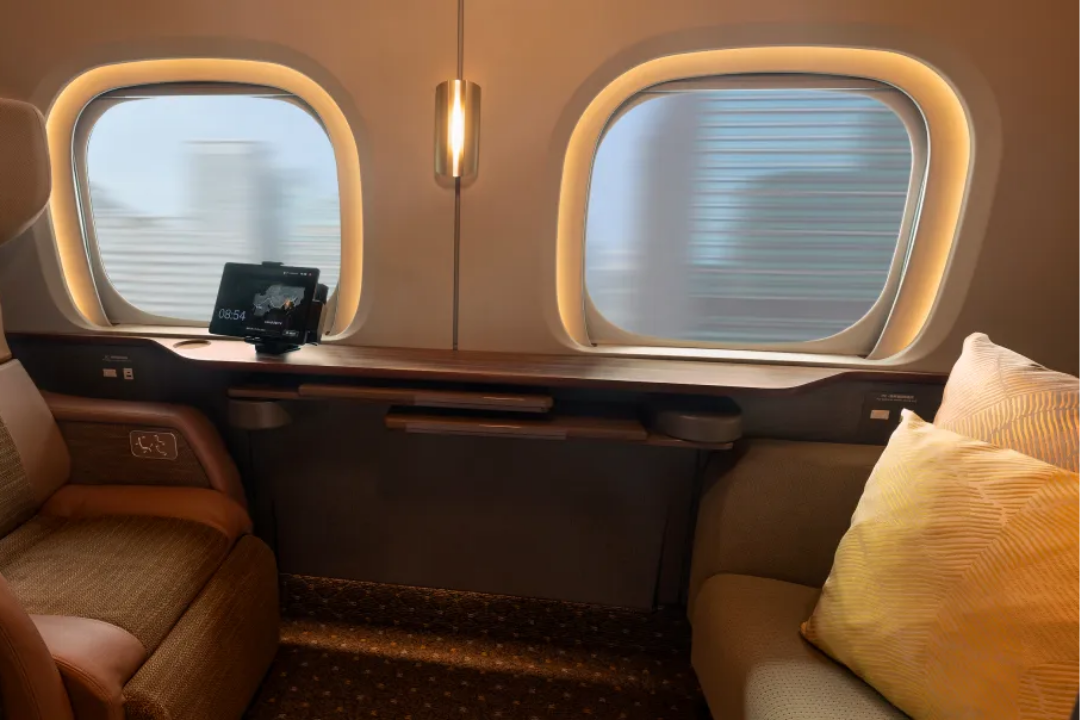
JR Central's newly announced private suite category introduces an entirely new concept for Japan's flagship bullet train. Unlike Ordinary Class or Green Car, these suites will provide passengers with fully enclosed personal spaces designed to minimize outside noise and visual distractions while ensuring a high degree of privacy throughout the journey.
The primary audience is expected to include corporate executives, government officials, and professionals traveling for confidential meetings or high-stakes negotiations. The suites are designed to support activities such as video conferences, reviewing sensitive documents, or holding small strategy discussions during the trip. In many ways, they bring some of the advantages traditionally associated with airline first class or business jets into the world of high-speed rail.
Pricing is expected to exceed current Green Car fares, positioning the service as a premium business solution rather than a luxury upgrade for everyday travelers. The concept is based on business value instead of indulgence. For many companies, the additional cost could be justified by increased productivity and improved information security during travel.
The Structural Challenge Facing the Tokaido Shinkansen
Source: Diamond Online Article
The Tokaido Shinkansen is one of the busiest high-speed rail lines in the world, carrying hundreds of millions of passengers every year. During peak periods, trains depart every few minutes, demonstrating an extraordinary combination of capacity, punctuality, and operational efficiency. However, the very model that made the railway successful also presents certain limitations. It was designed primarily around standardized, high-capacity transportation.
For decades, train interiors have been optimized to maximize seating while delivering consistent service across all passengers. Although travelers can choose between Ordinary Class and Green Car, the underlying philosophy has remained the same: transport as many people as possible safely and efficiently. This approach has served Japan exceptionally well for decades.
How JR Central is Adapting to the Post-Pandemic World
The business environment, however, has evolved. Since the COVID-19 pandemic, companies have become far more selective about business travel. Routine trips have declined, while executive meetings, strategic negotiations, and other high-value travel have become even more important. In other words, quality now matters more than quantity.
This shift has exposed a growing challenge: maintaining confidentiality in public spaces. Even Green Car offers only limited privacy. Many business travelers hesitate to display financial reports, contracts, or confidential presentations on their laptop screens when surrounded by other passengers. Holding online meetings also requires constant awareness of nearby travelers.
Airlines have increasingly addressed this issue by introducing private suites in first and business class on long-haul routes. High-speed rail, particularly systems designed for high-frequency mass transportation, has rarely adopted fully enclosed private rooms because doing so reduces seating capacity and presents operational challenges.
JR Central therefore faced a difficult question. How could it preserve the efficiency of one of the world's most successful mass transit systems while also meeting the needs of a smaller group of premium business travelers? The answer was not to transform every train into a luxury product, but to introduce a limited number of carefully designed private spaces that serve a specific market without compromising overall efficiency.
The planned private suites represent a strategic response to this challenge. Rather than simply adding another premium service tier, they reflect a broader effort to diversify JR Central's business model while preserving the strengths that have defined the Shinkansen for decades.
Why Private Suites Became the Right Solution
Several factors explain why JR Central chose private suites instead of simply upgrading existing premium seating.
First is the unique nature of the Tokaido Shinkansen corridor itself. The Tokyo, Nagoya, and Osaka route competes directly with domestic airlines, yet continues to dominate thanks to its city-center stations, frequent departures, and short overall travel times. For many business travelers, avoiding airport security and lengthy transfers still makes the Shinkansen the most practical choice.
However, airlines have steadily raised the standard for premium travel by introducing private business class suites and enclosed first-class cabins. While trains remain highly efficient, they have traditionally lacked the same level of privacy. Without evolving, JR Central risked losing some of its highest-value customers to competing forms of transportation.
The second factor is the growing importance of corporate information security. Companies around the world now place greater emphasis on protecting confidential information. Sensitive conversations, confidential documents, and laptop screens all present potential security risks during travel. For publicly listed companies and multinational corporations, safeguarding information while employees are in transit has become part of broader corporate risk management.
JR Central's approach attempts to balance these needs without fundamentally changing the public nature of rail travel. Instead of redesigning the entire passenger experience, the company is adding specialized spaces that serve travelers with particular requirements. This represents a functional expansion of existing infrastructure rather than a shift away from mass transportation.
The third factor involves long-term brand strategy. As JR Central continues developing the Chuo Shinkansen maglev project, simply reducing travel times is no longer enough. Future competitiveness will increasingly depend on improving the quality of time spent traveling. The introduction of private suites serves as an early demonstration of that broader vision.
These suites were not created simply as a luxury concept. They represent a carefully considered response to the evolving role of business travel. Rather than focusing solely on transportation efficiency, JR Central is increasingly focused on maximizing the value of passengers' time.
The Product Design Philosophy Behind the Private Suites
Source: Diamond Online Article
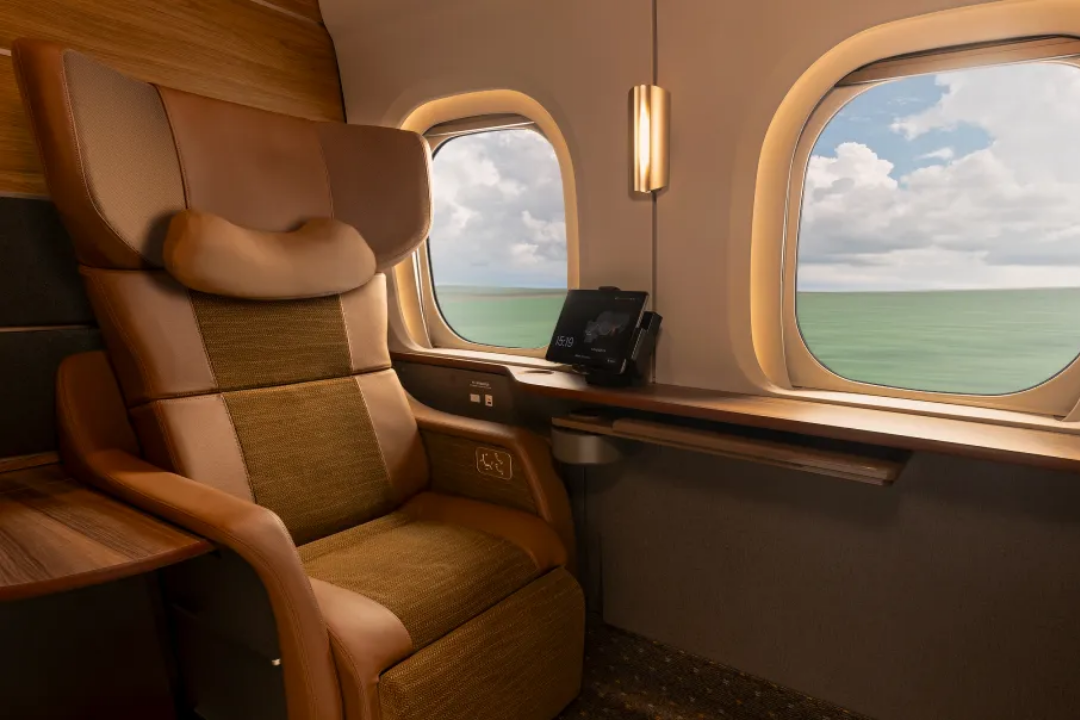
The planned private suites will be introduced by modifying sections of existing Shinkansen train cars to create fully enclosed personal spaces that reduce visual distractions and outside noise. The objective is not simply to add doors to existing seats, but to create a genuinely productive working environment while maintaining the strict operational standards required for high-speed rail.
Unlike hotel rooms or airport lounges, train interiors must comply with demanding safety requirements. Crew members need to monitor passengers efficiently, emergency procedures must remain effective, and evacuation routes cannot be compromised. Every aspect of the private suite design must coexist with the safety standards that have defined the Shinkansen since its introduction.
JR Central has spent decades refining train engineering through advances in lightweight construction, earthquake resistance, aerodynamic performance, and maintenance technology. Incorporating enclosed suites affects far more than the interior layout. Engineers must carefully consider weight distribution, cabin configuration, ventilation, emergency access, and operational efficiency.
Why Privacy is the New Priority for Japan’s Business Travelers
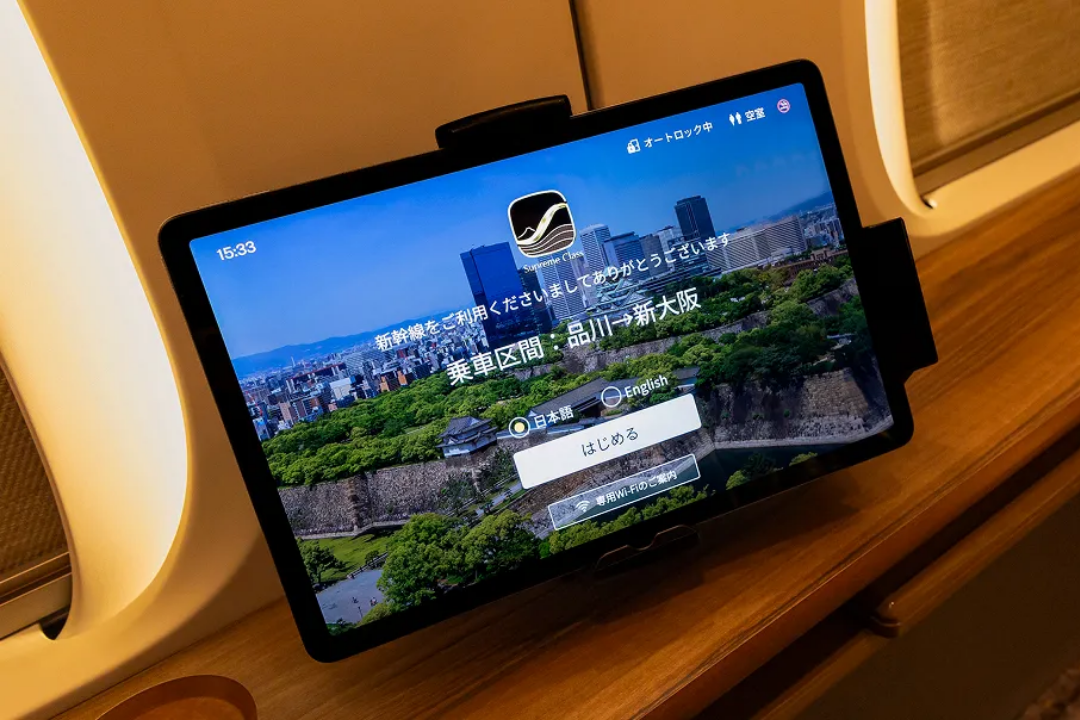
Acoustic performance is equally important. Business travelers need spaces suitable for confidential conversations and online meetings, supported by reliable power supplies and stable connectivity. The goal is not simply privacy for its own sake, but to create a mobile workspace that allows professionals to continue working without interruption.
This is where the Shinkansen differs significantly from commercial aviation. Aircraft generally carry fewer passengers and operate within highly controlled boarding environments. The Tokaido Shinkansen, by contrast, is designed for extremely frequent departures, rapid boarding, and short station stops. Any private suite must integrate seamlessly into this high-efficiency operating model without slowing overall service.
For that reason, these suites should not be viewed as luxury accommodations. They are carefully engineered spaces designed to balance operational efficiency, passenger safety, profitability, and brand value within one of the world's most demanding transportation systems.
Ultimately, JR Central is not simply increasing ticket prices. It is increasing the value of passengers' time by transforming travel hours into productive working time. That philosophy lies at the heart of the private suite concept.
How the Private Compartments Could Change Business Travel in Practice
Source: Diamond Online Article
If private compartments are introduced on the Tokaido Shinkansen, the most significant change will be how companies design business travel around the journey itself.
Until now, many organizations have treated Shinkansen travel as transit time. Important meetings and strategic decisions were typically scheduled after arrival, while passengers used the journey primarily to review documents or answer emails. Sensitive discussions were generally avoided because of the open environment.
Why JR Central is Targeting the High-Value Executive Market
Private compartments would fundamentally change that assumption. For example, executives traveling from Tokyo to Osaka could hold confidential online meetings during the roughly two-and-a-half-hour trip before walking directly into final negotiations upon arrival. Completing discussions before reaching the destination could shorten business trips and reduce overall travel costs.
From a B2B perspective, this is more than selling premium seats. It represents infrastructure that improves corporate productivity. Industries such as finance, consulting, and manufacturing headquarters frequently require travel between major cities, making the quality of travel time directly linked to operational efficiency. In many respects, a private compartment functions as a mobile meeting room.
The concept also has value for overseas executives operating in Japan. While the Shinkansen has long been regarded as an efficient way to travel domestically, it has traditionally remained a public environment. Adding private compartments makes it easier to meet the strict privacy and security expectations of many international companies.
If designed for multiple passengers, the compartments could also accommodate small strategic meetings during transit. This would allow them to partially replace airport lounges or hotel meeting rooms by integrating travel and collaboration instead of treating them as separate activities.
Not every traveler will require this level of privacy. Central Japan Railway's objective is not to make the entire railway more luxurious, but to provide additional options for passengers with clearly defined needs. By maintaining its high-capacity transportation network while enhancing premium services, the company can increase customer satisfaction and strengthen the overall value of the Tokaido Shinkansen brand.
Although a private compartment occupies only a small section of a train, its influence may extend far beyond the carriage itself by changing how businesses approach work, meetings, and business travel. Within one of the world's most mature high-speed rail systems, the very meaning of travel may begin to evolve.
Safety, Quality, and Operational Design Come First
When introducing private compartments on the Tokaido Shinkansen, profitability and publicity are secondary considerations. Safety remains the highest priority.
Since its establishment, Central Japan Railway has consistently operated under a management philosophy that places safety above all else. Every aspect of train design and scheduling is built around this principle.
The Shinkansen has maintained an extraordinary safety record, with no passenger fatalities resulting from train accidents since operations began. This achievement reflects decades of investment in operational control systems, maintenance programs, earthquake-resistant engineering, and employee training. Any new private compartment must fit within this established safety framework.
The Engineering Behind the Shinkansen’s First Enclosed Rooms
One concern surrounding enclosed spaces is visibility during emergencies. Train crews must still be able to monitor passenger conditions, evacuation routes must remain clear, and the new layout cannot negatively affect the train's weight distribution or center of gravity. These engineering requirements make railway compartment design fundamentally different from hotel room design.
Operational quality also presents challenges. The Tokaido Shinkansen operates on an extremely high-frequency schedule, requiring rapid cleaning and inspections between services. Additional enclosed spaces could increase maintenance complexity, making ease of cleaning an important consideration from the earliest design stages.
Business travelers also expect stable electrical power and reliable internet connectivity. Any interruption to power or communications would undermine the purpose of a private workspace, requiring careful integration with the train's existing infrastructure.
Central Japan Railway has spent decades developing its rolling stock and maintenance systems alongside group companies while accumulating extensive operational data. This experience enables the company to implement new interior concepts gradually without compromising reliability.
Rather than representing a dramatic innovation, private compartments are better understood as a carefully engineered evolution that enhances passenger value while preserving the operational excellence for which the Tokaido Shinkansen is known.
For infrastructure operators, innovation is not about rapid disruption. It is about improving services without sacrificing public trust. The private compartment project reflects exactly that philosophy.
The Company's Founding Philosophy and Long-Term Strategy
Central Japan Railway traces its origins to the privatization of Japanese National Railways in 1987. Since then, the company has built an independent business around the highly profitable Tokaido Shinkansen while maintaining a clear guiding principle: prioritize safety and continuously increase the long-term value of rail transportation.
The Tokaido Shinkansen is more than a transportation service. It connects Tokyo, Nagoya, and Osaka, three metropolitan regions that generate a substantial share of Japan's economic activity. As a result, the company's strategic decisions influence not only corporate performance but also the stability of Japan's broader economy.
This explains why Central Japan Railway consistently adopts a long-term perspective. The Chuo Shinkansen maglev project represents perhaps the clearest example, requiring investment and planning measured over several decades. Rather than responding to short-term market trends, the company designs infrastructure around future demographic shifts, urban development, and industrial patterns.
Redesigning the Transit Experience
Private compartments fit naturally within this long-term vision. As Japan's population declines, significant growth in passenger volume becomes increasingly difficult. At the same time, demand from premium travelers and global businesses remains strong. Instead of relying on higher passenger numbers, the company aims to sustain growth by increasing the value delivered to each traveler.
Another important characteristic of Central Japan Railway is that it views itself as more than simply a railway operator. Through station development, real estate projects, and initiatives that enhance communities along its network, the company has consistently integrated transportation with urban development. Redesigning onboard space is therefore part of a much broader business strategy.
Private compartments reflect this approach by introducing carefully controlled privacy within a fundamentally public transportation system. Rather than pursuing luxury for its own sake or focusing exclusively on efficiency, the company is redefining value within the practical constraints of high-speed rail operations.
Ultimately, Central Japan Railway seeks to deliver more than faster journeys. Its goal is to provide transportation that passengers can trust while enabling them to make better use of their time. Private compartments represent an early but highly symbolic step toward that vision.
Reflecting Changes in Japanese Society and Working Styles
The introduction of private compartments on the Tokaido Shinkansen is not simply a service upgrade. It also reflects broader structural changes taking place throughout Japanese society.
Japan remains one of the world's most urbanized countries, with a large share of its population and economic activity concentrated in the Tokyo metropolitan area while maintaining strong business connections with Nagoya and the Kansai region. The Tokaido Shinkansen has long served as the physical link connecting these three major economic centers.
The spread of remote work has also reshaped commuting and business travel. Many professionals now divide their time between regional homes and urban offices, traveling only for key meetings or important business events. While this has reduced the overall number of trips, each journey has become more valuable.
Making the Bullet Train an Extension of the Office
As a result, travel quality has become more important than travel frequency. When a trip supports major business decisions, travelers increasingly expect efficient use of time and an environment that allows productive work. Completing preparation or final discussions during transit effectively shortens the practical distance between cities.
Japanese corporate culture also continues to place considerable importance on face-to-face interaction. Final contract negotiations and executive meetings are often conducted in person, meaning business travel remains essential despite advances in digital communication. Rather than disappearing, travel is evolving into fewer but higher-value journeys.
Private compartments align closely with this reality by combining the accessibility of public transportation with the privacy required for confidential work and discussion. They bridge Japan's longstanding preference for in-person collaboration with today's increasingly digital work environment.
Japan's aging population adds another dimension. Improving comfort and making travel time more productive will become increasingly valuable as the workforce evolves. While business travelers may represent the primary audience initially, private compartments could also benefit researchers, healthcare professionals, and other specialized users.
The Tokaido Shinkansen has always been more than a transportation system. It is infrastructure that supports Japan's urban and economic structure. Redesigning the quality of space within that infrastructure may ultimately reshape how Japanese society thinks about work, travel, and connections between cities.
Potential Influence on the Global High-Speed Rail Market
Although private compartments are designed primarily for Japan's domestic market, they also offer valuable insights for the global high-speed rail industry.
High-speed rail networks continue to expand around the world. Europe is extending international rail connections, China has developed one of the world's largest high-speed networks, and countries across the Middle East and North America continue to explore new projects. Most of these systems, however, have focused primarily on speed and passenger capacity rather than differentiated onboard environments.
The Tokaido Shinkansen already operates as one of the world's busiest and most mature high-speed rail corridors. Introducing private compartments within such a high-capacity system effectively tests whether premium private space can coexist with mass transportation.
This question is especially relevant for routes spanning approximately 300 to 600 kilometers, where rail often competes directly with air travel. At these distances, differences in travel time are relatively small, making passenger experience a more important factor. Private compartments could provide rail operators with a meaningful competitive advantage over airlines.
Privacy also matters for senior executives, government officials, and multinational organizations that operate under strict security requirements. If Japan successfully commercializes compartment-based high-speed rail, it could provide a practical reference model for future railway projects worldwide.
Through its Chuo Shinkansen maglev initiative, Central Japan Railway is already looking toward international applications of advanced railway technology. By combining engineering excellence with innovative interior design and service concepts, Japan could further strengthen the global competitiveness of its high-speed rail expertise.
Importantly, the appeal of private compartments lies in practicality rather than luxury. Their purpose is to provide an efficient workspace rather than an extravagant travel experience. This practical positioning makes the concept especially relevant for mature transportation markets seeking to maximize revenue from limited train capacity.
Although developed for domestic operations, private compartments on the Tokaido Shinkansen may ultimately help define the next generation of intercity travel, demonstrating how premium services can coexist with high-capacity public transportation.
A Foundation Built on Proven Reliability
The remarkable operational history of the Tokaido Shinkansen supports Central Japan Railway's ability to pursue private compartments.
Since opening in 1964, the railway has grown alongside Japan's economy, becoming one of the busiest high-speed rail lines in the world. Connecting Tokyo, Nagoya, and Osaka, it carries hundreds of millions of passengers annually while maintaining exceptional punctuality and an internationally recognized safety record that includes no passenger fatalities resulting from train accidents.
This long history of operational excellence creates the foundation for service innovation.
Railways still developing basic reliability naturally focus first on safety and punctuality before introducing more advanced passenger experiences. The Tokaido Shinkansen, however, already operates on an exceptionally mature platform, allowing the company to refine how passengers use onboard space.
Central Japan Railway has also continuously modernized its rolling stock through successive generations, including the N700 Series, N700A, and later models. Alongside visible improvements, the company has steadily enhanced energy efficiency, noise reduction, ride comfort, and operational performance. Private compartments represent another step in this ongoing process of gradual improvement.
The concept has attracted attention from major business publications and media outlets not because it is merely novel, but because it illustrates how one of the world's leading infrastructure companies continues to evolve.
The company's commitment to the Chuo Shinkansen, a national-scale infrastructure project requiring decades of planning and investment, also reinforces its long-term perspective. Major service changes are unlikely to be driven by short-term trends but instead are carefully aligned with broader strategic objectives.
For infrastructure providers, reliability remains the most valuable asset. Private compartments are being built upon that established foundation, allowing passengers to embrace new travel experiences with confidence.
Why International Businesses Should Pay Attention Now
Source: Diamond Online Article
The introduction of private compartments on the Tokaido Shinkansen is far more than the launch of another premium seating option. It represents Central Japan Railway's effort to add a new dimension of time value to one of the world's most successful mass transportation systems.
Intercity travel is entering a period of transformation. Although remote work has reduced some business travel, high-value face-to-face meetings remain essential. As a result, each business trip carries greater importance, increasing demand for secure, productive environments throughout the journey.
The Tokaido Shinkansen already offers exceptional frequency, punctuality, and safety. Adding private compartments demonstrates that operational efficiency and premium passenger value can successfully coexist.
For countries operating high-speed rail over distances of approximately 300 to 600 kilometers, or regions where rail competes directly with aviation, this model offers valuable lessons. It explores how public transportation can preserve high capacity while serving premium travelers and how carefully designed private spaces can exist within shared infrastructure.
International companies stand to benefit in two important ways. First, business travel within Japan may become more secure and productive through access to confidential workspaces during transit. Second, the concept offers insights into future railway design that may influence global infrastructure projects and international partnerships.
Ultimately, Central Japan Railway is pursuing more than faster transportation. Its objective is to redesign how travel time itself is used. Rather than simply reducing journey times, the company seeks to transform travel into productive, meaningful working time.
A private compartment may occupy only a small portion of a single train, but it represents a much larger strategic vision. As Japan's leading rail operator redefines the role of intercity transportation, this initiative offers an important case study for the future of high-speed rail around the world.
Conclusion
The introduction of private compartment seating on the Tokaido Shinkansen represents more than a premium seating upgrade. It reflects a broader shift in how transportation is viewed in an era where time has become one of the most valuable business resources. Rather than treating travel as unavoidable downtime, private compartments transform it into productive, secure, and comfortable working time.
For Japan, this development aligns with changing work styles, continued business travel between major metropolitan areas, and the growing demand for flexible, high-value mobility. For overseas companies, it demonstrates how mature transportation infrastructure can evolve without compromising the safety, punctuality, and efficiency that have made the Tokaido Shinkansen a global benchmark.
As high-speed rail systems around the world look beyond speed alone, the Tokaido Shinkansen's private compartment concept offers a compelling example of how public transportation can better balance mass transit with personalized travel experiences. It is a small change inside the train, but one that could influence the future of business travel and intercity transportation worldwide.
FAQ About Tokaido Shinkansen Private Compartment Seats
1. What Are Tokaido Shinkansen Private Compartment Seats?
Tokaido Shinkansen private compartment seats are a new seating option that provides enclosed, private spaces within the train. They allow passengers to travel without distractions from surrounding noise or visibility, making the environment suitable for work, confidential conversations, or simply relaxing in privacy. The goal is to transform rail travel from merely getting to a destination into time that can be used more effectively.
2. How Are Private Compartment Seats Different From Green Car Seats?
The primary difference is not just comfort, but privacy. While Green Cars offer spacious seating and a quieter atmosphere, they remain shared spaces. Private compartment seats are designed for passengers who require greater privacy and confidentiality, providing an environment where they can concentrate on work or sensitive discussions during their journey.
3. Why Are Private Compartments Needed on the Shinkansen?
Modern work styles have increased the value of travel time. More travelers now need to participate in online meetings, review confidential documents, or complete important tasks while traveling—activities that can be difficult in a public environment. Private compartment seats are designed to meet this growing demand for secure and productive travel.
4. Why Is the Tokaido Shinkansen Introducing Private Compartments?
The purpose is not simply to create a more luxurious travel experience, but to offer passengers more choices based on their needs. The Tokaido Shinkansen remains one of Japan's most efficient mass transportation systems, but passenger expectations have become increasingly diverse. Private compartments allow the railway to serve new travel needs while maintaining its core strength in high-capacity transportation.
5. Who Are Private Compartment Seats Designed For?
They are primarily intended for business travelers heading to important meetings, passengers handling confidential information, and professionals who need to work while traveling. Whether reviewing documents or joining online meetings, private compartments provide a secure environment where productivity and information security can be maintained.
6. How Do Private Compartments Change the Value of the Shinkansen?
They expand the value of rail travel beyond simply reaching a destination quickly. By allowing passengers to prepare for meetings, complete work, or rest effectively during the journey, private compartments make travel time itself more valuable. This shifts the Shinkansen's role from a transportation service to a productive use of time.
7. Can Private Compartments Be Introduced Without Compromising Safety?
Yes. Railway private compartments require far more than simply adding walls or doors. They must allow train staff to monitor passenger safety, support emergency procedures, and comply with strict operational standards for public transportation. Privacy must always be balanced with the Shinkansen's long-established commitment to safety.
8. Why Are Tokaido Shinkansen Private Compartments Attractive to International Travelers?
They reflect a growing emphasis on making travel time productive rather than wasted. While high-speed rail systems around the world have traditionally focused on speed and capacity, future development is increasingly likely to prioritize the quality of time spent onboard. The Tokaido Shinkansen's approach provides a valuable example of how to combine efficient mass transportation with individualized passenger needs.
9. What Does the Future of Mobility Look Like Through Private Compartment Seats?
The concept is to transform travel time from something that is lost into time that serves a meaningful purpose. Whether passengers want to work, prepare for meetings, relax, or simply enjoy privacy, different travelers have different needs. Private compartments demonstrate that the value of transportation extends beyond speed alone.
10. What Is the Greatest Advantage of Tokaido Shinkansen Private Compartment Seats?
Their greatest strength is the ability to preserve the convenience of public transportation while providing passengers with their own private space. By creating an environment suitable for focused work, confidential conversations, or personal relaxation within one of the world's busiest high-speed rail systems, private compartments represent an important evolution in rail travel.
Related Videos
If you're interested in the future of premium rail travel, the video below explores how JR Central is introducing private Shinkansen suites designed for comfort, privacy, and productive business travel. This video highlights how Japan is reimagining high-speed transportation for executives and travelers seeking a more exclusive experience.