Wagashi, or traditional Japanese sweets, are among Japan’s most iconic culinary creations. Refined over centuries, their simple composition, primarily sugar and azuki beans, embodies the essence of Japanese food culture itself. Yet in modern life, wagashi like yokan (sweet bean jelly) have gradually become somewhat distant.
The reasons are simple: yokan needs to be sliced before eating, it requires careful storage once opened, and it can be tricky to portion. These small inconveniences have pushed it into the category of special occasion sweets or gifts, making it less of a part of everyday life. Its flavor is still loved, but the way it is traditionally used does not easily fit into modern routines.
Faced with this challenge, a long-established Kyoto confectionery took a quiet but clever approach. Rather than changing the flavor or creating flashy variations for younger audiences, they focused on one thing: rethinking the form of the yokan itself.
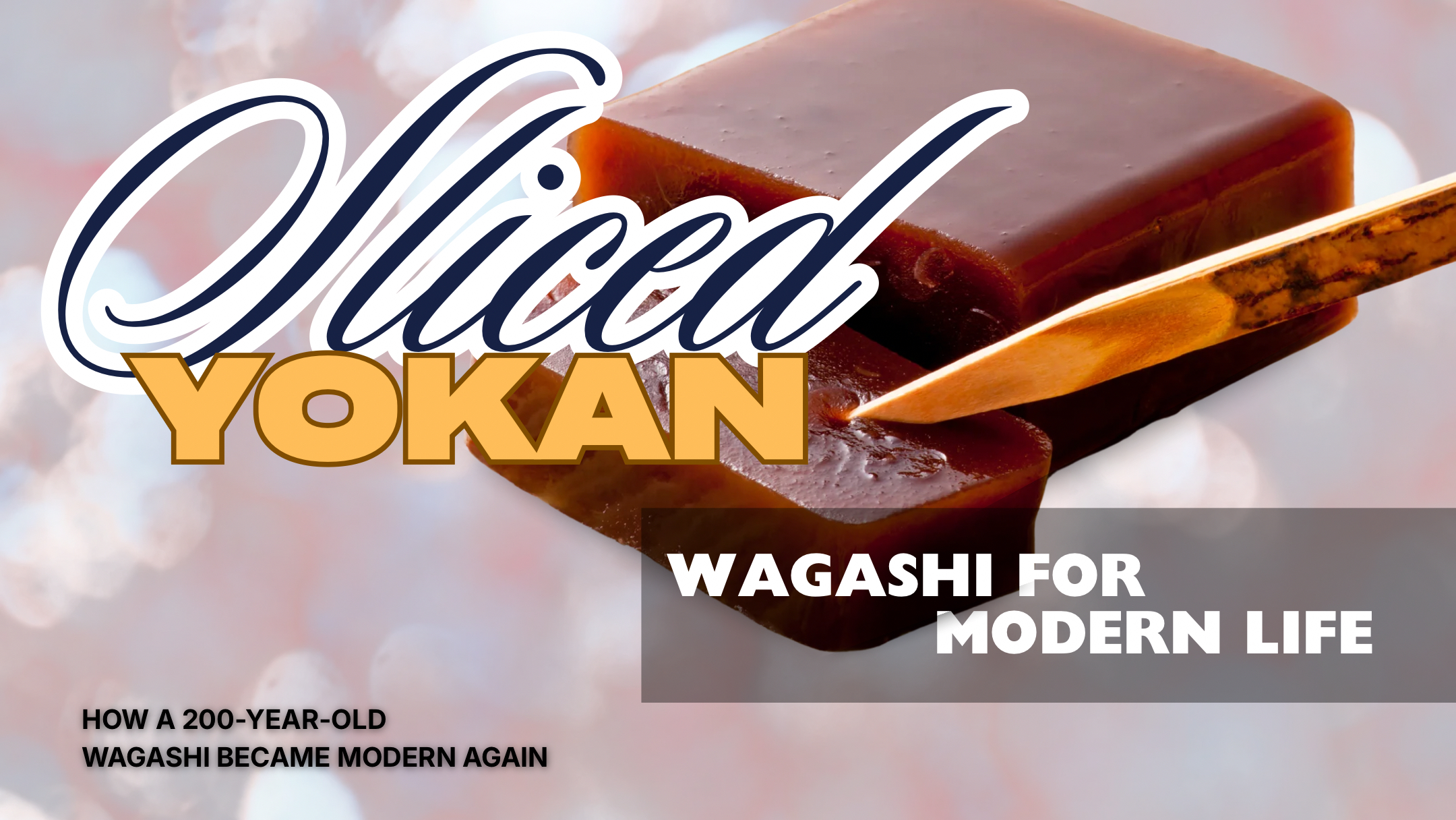
The result was the creation of ‘Sliced Yokan’
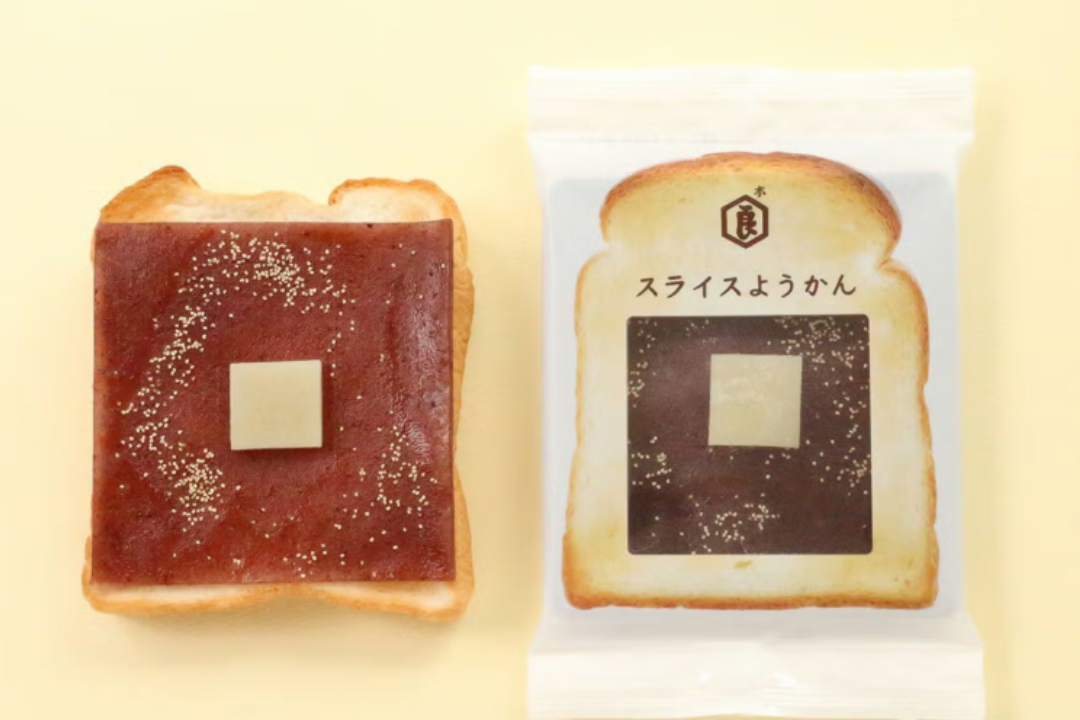
By simply slicing the yokan thin and individually wrapping each piece, the product was instantly integrated into modern daily life. This structural change eliminated the need for a knife and made portion control intuitive. Furthermore, it paved the way for a more natural acceptance of new culinary pairings, such as placing the slices on bread or crackers.
This simple change highlights an important point: for a traditional food to survive in the modern era, a flavor innovation is not always the answer. Sometimes, the most meaningful innovation comes from rethinking how it is used and in what setting it is placed.
The Sliced Yokan offers insights not just for the Japanese market, but for global consumers as well. Even without any cultural background, its purpose is immediately apparent. Anyone can see how to enjoy it; no explanation is needed to know that it works beautifully on bread. This intuitive quality makes it easier for traditional Japanese sweets to cross cultural boundaries.
Why is it valuable to introduce this yokan to the world now? The answer lies in the fact that Slice Yokan is more than just an attempt to protect Japanese tradition; it is a product thoughtfully designed for modern lifestyles.
Sliced Yokan Overview
Sliced Yokan represents a masterful evolution in traditional Japanese confectionery, seamlessly bridging centuries of Kyoto culinary heritage with the demands of modern daily life. By taking yokan—a beloved but traditionally cumbersome sweet bean jelly—and simply slicing and individually wrapping it, a long-established confectionery eliminated the inconveniences of cutting and storage without altering its authentic flavor.
The structural rethinking not only integrates the traditional sweet into fast-paced contemporary routines but also invites intuitive new culinary pairings, such as melting a slice over morning toast. Ultimately, Sliced Yokan demonstrates that preserving tradition in the modern era does not require flashy flavor innovations, but rather a thoughtful redesign of how a product is used. Its cross-cultural, explanation-free design makes it an ideal ambassador for global consumers, offering a universally accessible gateway to experiencing Japanese food culture.
Sliced Yokan by Kameya Yoshinaga
A new daily ritual born from the ‘ready-to-use’ concept
Sliced Yokan is a simple product. Yokan is cut into thin slices and individually wrapped. Yet the idea behind it is far from simple. This is a product redesigned not around how yokan is traditionally eaten, but around how it can fit naturally into everyday life.
Traditional yokan is designed as a single block. Eating it requires a knife and careful attention to portion size, depending on the number of people. This practice cultivated a culture of treating yokan with care; it also created a psychological barrier that made it difficult to reach casually in daily life.
SlicedYokan changes that premise entirely. By dividing it into individually wrapped slices, portioning becomes intuitive; no knife is needed, and any unused pieces can be stored as they are. This design fits seamlessly with the pace of modern life.
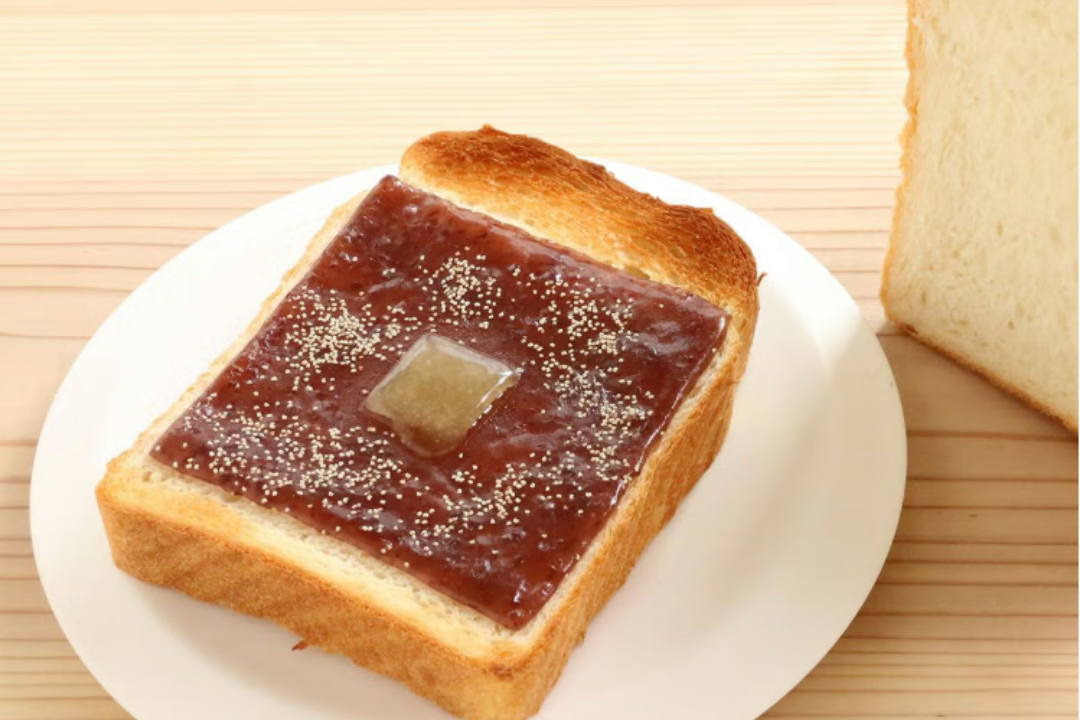
Its uses go beyond conventional wagashi. Placing a slice on toast and lightly heating it creates a unique sweet accent that differs from butter or cheese. When paired with crackers or biscuits, it becomes a unique dessert that stands apart from Western sweets. The beauty of the design is that these ideas emerge naturally without any suggestions.
The product is also psychologically easier to try than purchasing a full block of yokan. It encourages daily use and positions itself clearly as a staple that can be kept in the refrigerator. This does not undermine gift-giving traditions; rather, it broadens the appeal of wagashi to more everyday settings.
The target audience is equally diverse. It naturally appeals to long-time fans of Japanese sweets, but also carves out a place in the lives of younger generations and those with bread-centric diets. Furthermore, for global users, the sliced format is instantly recognizable and easy to adopt without the need for cultural translation.
Sliceable Yokan is not a conservative product meant to simply preserve tradition. It is a modern creation born from rethinking how wagashi can continue to be part of daily life by focusing on the practical side of living.
The Difficulty of Altering Form While Preserving Flavor
The most defining characteristic of Slice Yokan is its deceptively modest innovation. While the appearance is modern, the flavor remains traditional. This balance does not happen by accident. In much food development, introducing novelty often means altering flavor or ingredients. Kameya Yoshinaga chose a different path, focusing solely on redesigning form and how the product is used.
Yokan is a delicate confection. Its flavor and texture are directly influenced by precise temperature control and moisture during production. To slice it evenly and wrap each piece beautifully requires new techniques that differ from making a standard block. Challenges like cracking, drying, and surface texture must each be solved for the product to succeed.
Equally delicate is the cultural dimension. Traditionally, cutting yokan is tied to hospitality and sharing. Removing this act could be seen as diminishing wagashi culture. Sliced Yokan acknowledges this concern but prioritizes fitting naturally into modern life.
In practice, this change in form does not diminish the value of yokan. On the contrary, it creates new possibilities. By eliminating the need to cut, yokan becomes a single-serving treat that can be enjoyed anytime and anywhere. This marks a shift from shared wagashi to individual wagashi and directly responds to changing lifestyles.
The product also stands out in terms of user experience. The sliced format instantly suggests ways to enjoy it: on toast, sandwiched in something, or eaten as is. This intuitive design works across languages and cultures. For international users, a product that can be used without reading instructions is a significant advantage.
The uniqueness of Sliced Yokan does not lie in flashy inventions. Its essence is in quietly updating the way it is used while fully preserving tradition.
Choosing Not to Make Wagashi ‘Special’

Source: Kameya Yoshinaga Homepage
The creation of Sliced Yokan did not come from a flashy idea but from a sense of urgency. Kameya Yoshinaga is a long-established wagashi shop that has been crafting traditional Japanese sweets for over 200 years. Over its long history, it has witnessed eras when wagashi was at the center of daily life and eras when it gradually drifted away.
In recent years, the environment surrounding wagashi has changed dramatically. The Westernization of diets, smaller households, and the diversification of snacking all pose challenges. For yokan in particular, despite its rich flavor, factors such as its large size, the need to cut it, and the limited occasions to eat it gradually pushed it out of everyday life.
Faced with this situation, Kameya Yoshinaga chose not to cling to tradition for tradition's sake. Instead of keeping yokan as something special, the goal was to bring it back into daily life. And rather than altering the flavor, changing how it is used proved to be the more essential solution.
The sliced format was the answer. By removing the need to cut a block, each piece can be taken and enjoyed individually. This transformed yokan from a treat to prepare for someone else into something anyone could casually enjoy for themselves.
This approach was not about chasing trends. Rather, it was the result of looking closely at modern life to ensure that the culture of wagashi could endure.
To preserve its specialness, it deliberately chose to stop being special. This seemingly contradictory choice is at the heart of Sliced Yokan.
Versatility Across Occasions: From Daily Rituals to Thoughtful Gifts
Sliced Yokan is not a product limited to a specific occasion. Its design is rooted in the premise that it should adapt to the user and the occasion, resulting in an exceptionally broad range of applications.
The most obvious use is at home. Whether it is placed on morning toast, enjoyed as a quick snack, or served simply to a casual guest, these scenarios were rarely associated with traditional yokan. The sliced format makes such uses natural, and its convenience encourages everyday enjoyment without any special preparation.
It also works well in small gatherings or office settings. Since no slicing is required, it meets modern standards for hygiene and convenience. The individual packaging provides a sense of safety and allows for flexible serving, regardless of the number of people present.
For gift-giving, Sliced Yokan has carved out a unique place. Unlike the heavy, formal presence of a traditional block of yokan, the sliced version functions as a thoughtful gesture that does not overwhelm the recipient. It is appreciated by both those familiar with wagashi and those who rarely eat it, making it broadly approachable.
For international visitors or those interested in Japanese culture, the product is easy to understand. Its use is obvious at a glance, and it requires no special etiquette. This makes it a strong choice for people without shared cultural knowledge.
Sliced Yokan is not a product designed for a single niche. Its value comes from fitting into the many small moments of daily life. This adaptability is exactly why it continues to be enjoyed, time and again.
The Hidden Craftsmanship Behind Turning a Traditional Sweet Into a Daily Staple
Source: Kameya Yoshinaga Homepage
At first glance, Sliced Yokan appears to be a simple product. However, delivering each slice with consistent quality requires a completely different approach from traditional yokan production. Kameya Yoshinaga focuses not only on flavor and ingredients, but also on maintaining uniformity in every piece.
Yokan is highly sensitive to moisture and temperature, and even small variations can affect texture and the clean edges of a slice. While minor variations might be overlooked in a large single block, they become obvious defects when each piece is a complete product on its own. To keep every slice uniform in thickness, preventing cracks, and visually perfect, the production process must meet an incredibly high standard of precision.
Individual packaging plays a key role in maintaining quality. It minimizes exposure to air and humidity, ensuring that flavor reaches the consumer exactly as intended. Balancing freshness and convenience is not simply a matter of choosing the right packaging material, but requires careful planning throughout the product design.
Ingredient selection remains true to traditional yokan making. The quality of azuki beans and sugar forms the foundation of flavor, and Kameya Yoshinaga ensures that this foundation is never compromised, no matter the shape. While Sliced Yokan has a new form, its essence comes directly from decades of refined confectionery techniques.
Safety and hygiene are also central to its design. Individual slices make it easy to use at home, in the office, or on the go, providing peace of mind for modern lifestyles.
Sliced Yokan is not a simplified version of traditional yokan. If anything, creating a convenient and versatile product requires extra attention to detail and careful adjustments behind the scenes. This dedication is what allows a traditional sweet to fit seamlessly into modern daily life.
Changing Form to Preserve Tradition
Kameya Yoshinaga has been crafting Japanese sweets for over two hundred years. Shops with such long histories are often praised for keeping things unchanged. However, Sliced Yokan shows a different approach. They deliberately changed the form to preserve tradition. This choice reflects a deep awareness of the challenges facing Japanese confectionery culture.
Modern life is very different from the time when traditional sweets first emerged. Families rarely gather to share a single confection, and snacks are now often enjoyed individually. The way we use our time has changed, leaving less room for the slow rituals once required to enjoy traditional sweets. In this environment, insisting on the original format risked pushing these confections further away from daily life.
Kameya Yoshinaga’s concern was not that the flavor might be lost, but that opportunities to enjoy the sweets could disappear. Instead of changing the recipe or ingredients, the focus shifted to lowering the barriers to enjoying them. No slicing required, no need to worry about portions, and no stress over storage. These small considerations were designed to pull the sweet back into the center of the modern home.
Sliced Yokan is not the result of a historic shop taking tradition lightly. Rather, it reflects careful decisions about what to preserve and what to adapt to bridge the gap to the future. Flavor, ingredients, and confectionery techniques remain intact, while form and usage evolve with the times. This level of judgment was possible because of the shop’s long history and experience.
This mindset offers insight beyond sweets, extending to traditional industries across Japan. What must be preserved? What can change? Sliced Yokan offers a tangible answer to this question.
Values Cultivated Between Everyday Life and Special Occasions
The home of Kameya Yoshinaga, Kyoto, is inseparable from the culture of Japanese sweets. Confections linked to tea ceremonies, seasonal festivals, and temples have functioned as more than just food, but as expressions of culture. Throughout this history, sweets have been refined as items offered on special occasions.
At the same time, Kyoto’s confectionery culture has another dimension. Sweets exist naturally in everyday life. A single bite to feel the changing seasons, a sweet to pause and refresh during work. This ability to move between everyday use and ceremonial purpose is a defining characteristic of Kyoto sweets.
Kameya Yoshinaga has continued crafting confections within this duality. Respecting tradition while keeping it approachable, maintaining a closeness to daily life without placing sweets on an unreachable pedestal. This philosophy is deeply reflected in Sliced Yokan.
Sliced Yokan does not completely remove the sense of specialness associated with Kyoto. Flavor, ingredients, and technique retain the pride of a long-established shop. Yet it is designed to be used in everyday life, bringing forward the other side of Kyoto sweets that has long existed alongside formal occasions.
This sense of balance likely comes from being rooted in the region. Looking only at Kyoto as a tourist destination, sweets may seem symbols of the extraordinary. But experiencing Kyoto as a living city cultivates the sense that sweets should be accessible and part of daily life.
Sliced Yokan can be seen as a translation of the values accumulated in Kyoto into a form that fits modern lifestyles. It does not overtly highlight regional identity, but quietly embodies it. This approach is precisely why the product is accepted so naturally by users both in Japan and abroad.
A Quiet Expansion to Keep Japanese Confections Alive
Sliced Yokan is not just a finished product; for Kameya Yoshinaga, it is also a milestone. What this product demonstrates is that traditional yokan, with just a slight change in form or context, can fit naturally into modern life. And that potential has only begun to be realized.
One likely direction for the future is the further expansion of where and how it is used. Beyond being a snack for the home, it is a perfect fit for hotels, cafes, or events, places where you want to offer Japanese sweets without needing to explain them. The sliced format makes it easy for the provider and immediately understandable for the person receiving it. This opens the door for business use and tourism in a natural way.
Sliced Yokan also has unique potential overseas. Traditional Japanese sweets often need cultural explanation, but the sliced format communicates their use without words. In places where bread is common, simply placing a slice on toast makes sense instantly, offering an intuitive way for people from other cultures to enjoy it.
Crucially, this expansion is not driven by a loud branding strategy. Kameya Yoshinaga is not trying to make sweets trendy. The goal is to let them settle quietly into daily life. Longevity matters more than short-term attention, and this principle reflects the shop’s long-standing approach.
Sliced Yokan may not feel revolutionary, but it strikes a careful balance by changing just enough without changing too much. That careful judgment is exactly what gives it the power to carry the culture to the next generation. Future developments will continue in this same thoughtful spirit.
A Product Valued for Everyday Life, Not Just Hype
From the moment Sliced Yokan debuted, it made a strong impact. However, the nature of its success was different from a typical viral trend. Its appeal did not rely on gimmicks, but instead, it spread through the realization that it is genuinely easy to use.
While media and social networks often highlighted its unusual appearance, the conversations from people who actually tried it focused on convenience. No cutting, easy to use in small portions, simple to store. These details may seem minor, but in daily life they become essential. As a result, Sliced Yokan did not fade after the initial hype; it became a product people returned to again and again.
Even in department stores and specialty shops, Sliced Yokan occupies a unique position. It is not just displayed among formal gift items but also presented as something for everyday use. This approach allowed people who were not familiar with traditional Japanese sweets to connect with them naturally, subtly shifting how the products are perceived in the retail space.
Its use at home also reinforces its value. For those who felt hesitant about cutting a whole yokan themselves, Sliced Yokan became a sweet they could enjoy without thought or preparation. The fact that people report eating traditional sweets more frequently is proof that the product has successfully adapted to the rhythm of modern life.
Over time, Sliced Yokan has earned stable, ongoing support. It is treated as a regular item rather than a seasonal novelty, proving that its success comes not from being special but from being easy to use. This principle offers an important lesson for the future of Japanese confectionery.
Sliced Yokan demonstrates that in Japan, traditional sweets can evolve. It does not shout its value; instead, it proves itself through everyday use, gaining recognition over time
Why Global Companies Should Pay Attention to Sliced Yokan
Source: Kameya Yoshinaga Homepage
Slice Yokan is a masterclass in adapting traditional food to modern life. Its success does not come from creating new flavors or flashy branding. What changed was simply how it is eaten and where it is placed. Those small shifts dramatically closed the distance between the product and the consumer.
What makes this product important is that it is not just food; it is a product designed with everyday life in mind. No cutting is needed, portions are easy to adjust, and it is simple to store. Each small detail adds up, allowing Sliced Yokan to fit naturally into daily routines. Kameya Yoshinaga chose not to preserve Japanese sweets as untouchable treasures but to ensure they remain a part of everyday life for generations to come.
For overseas companies, Sliced Yokan should not be seen as a novelty. The real value lies in the approach itself: redesigning tradition without breaking it. You do not need to fully understand the cultural background; the shape alone communicates how to use it. This intuitiveness is critical for bringing a product into a completely different cultural context.
Furthermore, Slice Yokan possesses the strength of not over-explaining. Even without the context of Japanese confectionery, placing a slice on bread or using a small portion as a snack is a natural act for anyone. This represents a highly practical approach for traditional foods looking to go global.
What Sliced Yokan shows is that innovation does not always require dramatic change. By carefully deciding what to preserve and what to adapt, culture can be quietly renewed. Kameya Yoshinaga’s work offers lessons not only for food but for traditional industries and cultural businesses more broadly.
This simple slice of yokan offers a tangible answer to the question of how a Japanese product can find a place in the lives of people around the world. That is why, now more than ever, this small sweet should not be overlooked by overseas companies.
FAQ About Sliced Yokan
1. What Is Sliced Yokan?
Sliced Yokan is a traditional Japanese confection created by Kameya Yoshinaga, featuring thinly sliced portions of yokan that are individually packaged for convenience. Unlike conventional block-style yokan, which must be cut before serving, Sliced Yokan is designed for modern lifestyles and can be easily enjoyed on its own or paired with foods such as toast and crackers.
2. Why Was Yokan Developed In A Sliced Format?
The goal was to make yokan a more accessible part of everyday life. Traditional yokan often requires cutting and careful storage, which can make it feel like a confection reserved for special occasions. By removing these barriers, Sliced Yokan offers a more convenient way to enjoy a classic Japanese sweet.
3. How Is It Different From Traditional Yokan?
The key difference lies not in the flavor, but in how it is used. While preserving the traditional taste and ingredients of yokan, Sliced Yokan reimagines its form by making it easy to use one piece at a time. This simple change makes it far more practical for everyday enjoyment.
4. How Can It Be Enjoyed?
In addition to being eaten on its own, Sliced Yokan can be paired with a variety of foods, including toast and crackers. One particularly popular preparation is placing it on toast before baking, allowing the sweetness of the yokan to complement the rich, toasted flavor of the bread and creating a unique fusion of Japanese and Western tastes.
5. Why Is It Easy For International Consumers To Appreciate?
Its appeal is highly intuitive. Some traditional Japanese sweets require an explanation of how they are eaten or their cultural significance, but Sliced Yokan is visually easy to understand. Concepts such as placing it on bread or using one slice at a time are immediately recognizable, making it approachable across different cultures.
6. Why Change The Shape Rather Than The Flavor?
Kameya Yoshinaga believes that the essence of wagashi lies in its flavor and ingredients. Rather than dramatically altering the taste to create something new, the company focused on rethinking how yokan fits into modern lifestyles while preserving its traditional character.
7. What Manufacturing Challenges Are Involved?
Each slice must maintain a consistent thickness and attractive appearance while also being individually packaged. Because the texture of yokan can be affected by factors such as moisture and temperature, maintaining durability, shelf stability, and consistent quality requires careful production control and expertise.
8. Why Intentionally Reduce Its Sense Of Formality?
The aim is to ensure that wagashi remains part of everyday life rather than something enjoyed only on special occasions. Kameya Yoshinaga believes that making traditional sweets more approachable is essential to preserving and passing on Japan's wagashi culture. Sliced Yokan embodies that philosophy.
9. Is It Suitable As A Gift?
Yes. Sliced Yokan is appreciated for being thoughtful without feeling overly formal. Compared with a traditional full-sized yokan, it offers a sense of novelty and practicality that makes it easy to give as a gift, even to people who may be less familiar with Japanese confectionery.
10. What Is The Greatest Appeal Of Sliced Yokan?
Its greatest appeal is the way it brings tradition naturally back into everyday life without compromising its essence. By preserving the flavor, ingredients, and character of traditional yokan while introducing simple conveniences such as ready-to-use slices, it reconnects a classic Japanese sweet with modern living. This quiet yet meaningful innovation is what makes Sliced Yokan so distinctive.
Related Videos
If you're interested in Japan’s modern take on traditional sweets, the video below introduces Kyoto’s sliced yokan, a unique wagashi that combines centuries of tradition with contemporary convenience. This video shows how the classic Japanese confection has been reinvented into a portable and visually appealing treat that is winning fans around the world.