
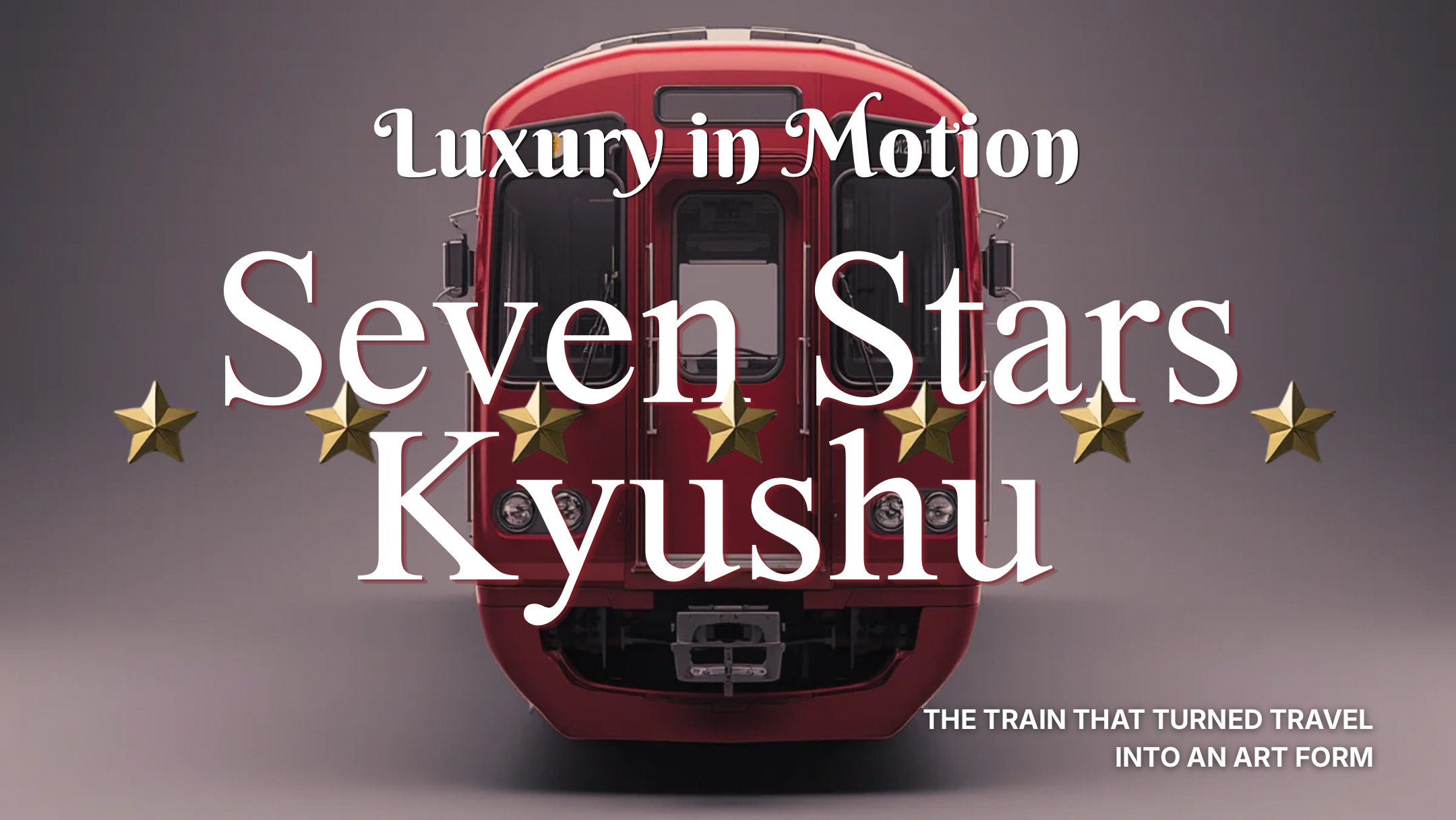
Japan has a unique transportation culture that treats travel itself as part of the experience. Transportation is not viewed solely as a way to move from one city to another. The scenery along the route, the passage of time, and the connection to local communities are often considered just as valuable as the destination itself.
Railways, in particular, have evolved beyond their role as transportation infrastructure. In many parts of Japan, trains serve as storytellers, carrying passengers through landscapes, histories, and cultural traditions that define a region.
One of the most remarkable examples of this philosophy is Seven Stars in Kyushu, a luxury cruise train that travels throughout Japan's southern island of Kyushu.
Unlike high-speed rail services designed around efficiency, Seven Stars in Kyushu was created with a completely different purpose. It was designed as a space where travelers can slowly experience Kyushu's nature, culture, food, and communities while moving through the region.
The project was developed by Kyushu Railway Company (JR Kyushu), the railway operator responsible for connecting communities across the island. While maintaining essential transportation services, the company also faced a larger question: how could it share the appeal of Kyushu with people beyond the region? One answer was to create a train where the journey itself becomes the destination.
The significance of Seven Stars in Kyushu for international audiences goes beyond luxury. Around the world, travel preferences are shifting. More travelers are prioritizing meaningful experiences over packed itineraries. Rather than visiting as many attractions as possible, people increasingly seek opportunities to connect deeply with a place, understand its stories, and experience its atmosphere.
Kyushu is one of Japan's most distinctive cultural regions. Its landscapes, cuisine, craftsmanship, and local character differ significantly from other parts of the country. Seven Stars in Kyushu was created to connect these elements into a single continuous experience, allowing guests to discover the region gradually rather than through isolated sightseeing stops.
As a result, the train represents far more than a luxury tourism product. It serves as a compelling example of an experience-driven mobility service developed in Japan, offering ideas that are increasingly relevant to global travel markets.
In this article, we will explore not only the train itself but also the philosophy behind its creation, the company that developed it, and why this project continues to attract attention from travelers and tourism professionals around the world.
Seven Stars Kyushu Overview
Seven Stars in Kyushu is a Japanese luxury cruise train designed around a simple but ambitious concept: transforming transportation into an experience.
Rather than competing on speed, frequency, or convenience, the train focuses on creating a seamless journey that combines onboard living, regional exploration, and meaningful interaction with local communities. Every element of the trip is designed to feel like part of a single story.
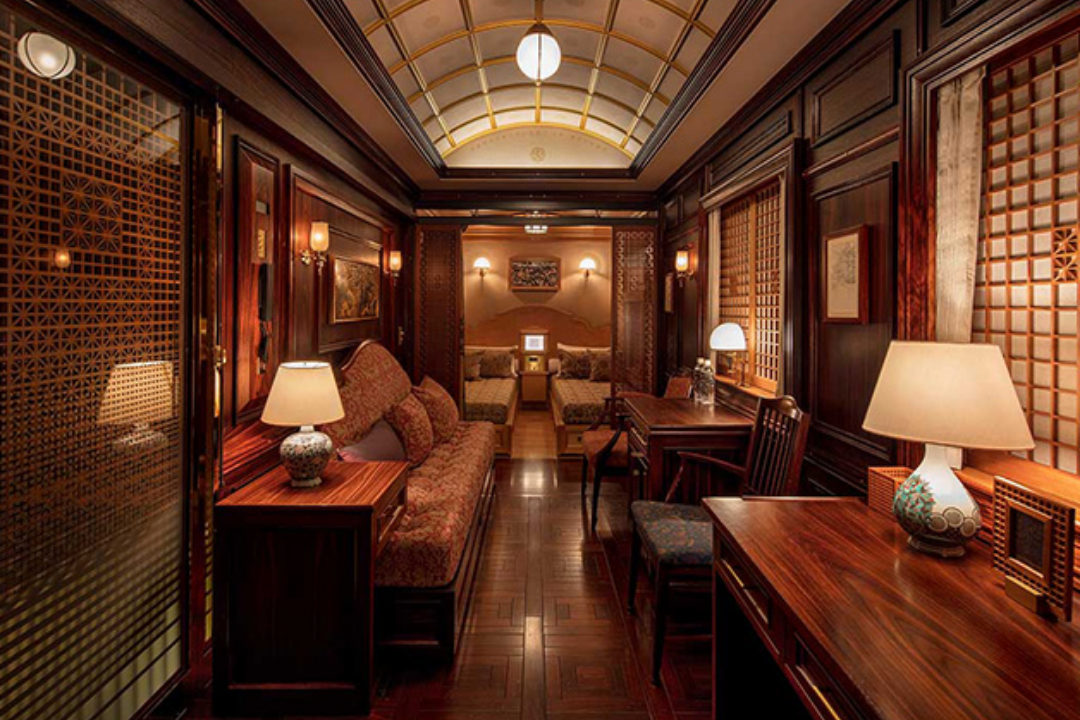
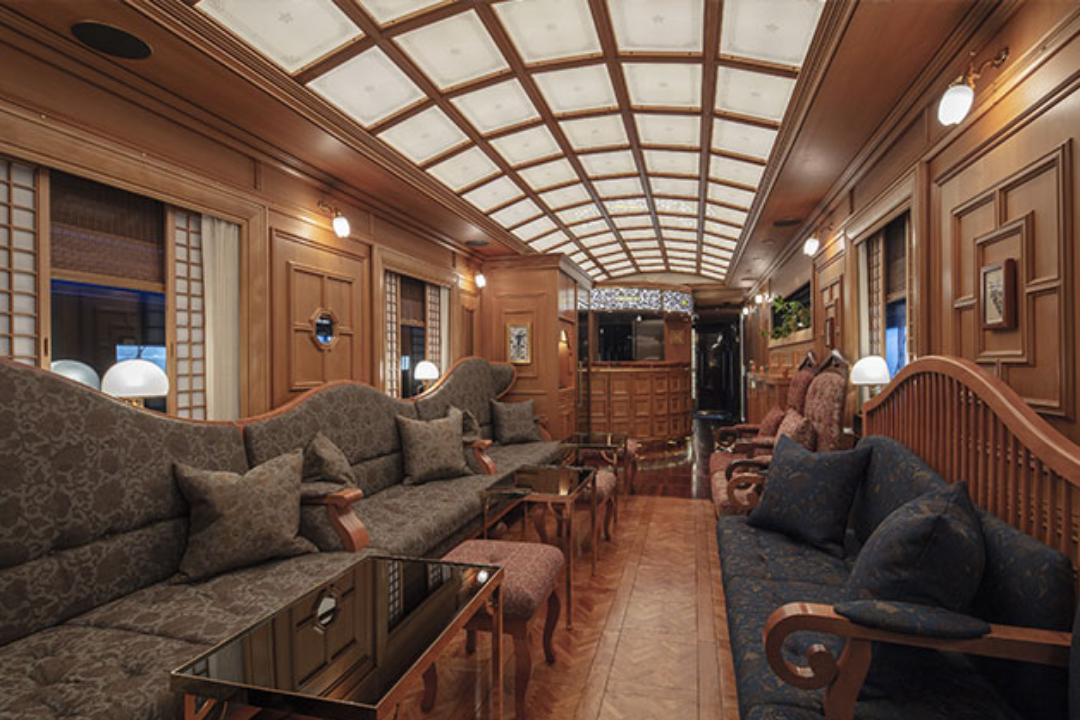
The train operates with a limited number of guests, creating an intimate atmosphere that feels closer to a boutique hotel than a traditional railway service. Suites form the heart of the accommodation experience, while elegant lounges and dining cars provide spaces for relaxation and social interaction.
Cuisine plays a major role throughout the journey. Menus showcase ingredients sourced from across Kyushu, while onboard experiences often reflect local traditions and cultural heritage. Rather than serving as downtime between destinations, travel time itself becomes part of the destination experience.
The price point is premium, but passengers are not paying simply for transportation. They are investing in a carefully curated opportunity to understand Kyushu through its landscapes, food, culture, and people.
Trips operate on a reservation-only basis, with routes and itineraries varying by season. Guests follow a predetermined schedule designed to maximize immersion rather than efficiency. Instead of rushing between attractions, travelers spend time at carefully selected destinations and engage with the region at a slower pace.
How JR Kyushu Turned a Train Into an Experience
Source: QUALITA Homepage
Seven Stars in Kyushu goes far beyond the idea of a railway product. It is an experience-driven travel platform created by a company that views railways not only as transportation networks, but also as a way to communicate the identity of a region.
For JR Kyushu, rail infrastructure represents more than tracks and stations. It provides a framework for introducing visitors to the culture, history, and character of Kyushu. Seven Stars in Kyushu is perhaps the clearest expression of that philosophy.
The train does not promise the fastest route to a destination. Instead, it places the journey itself at the center of the experience.
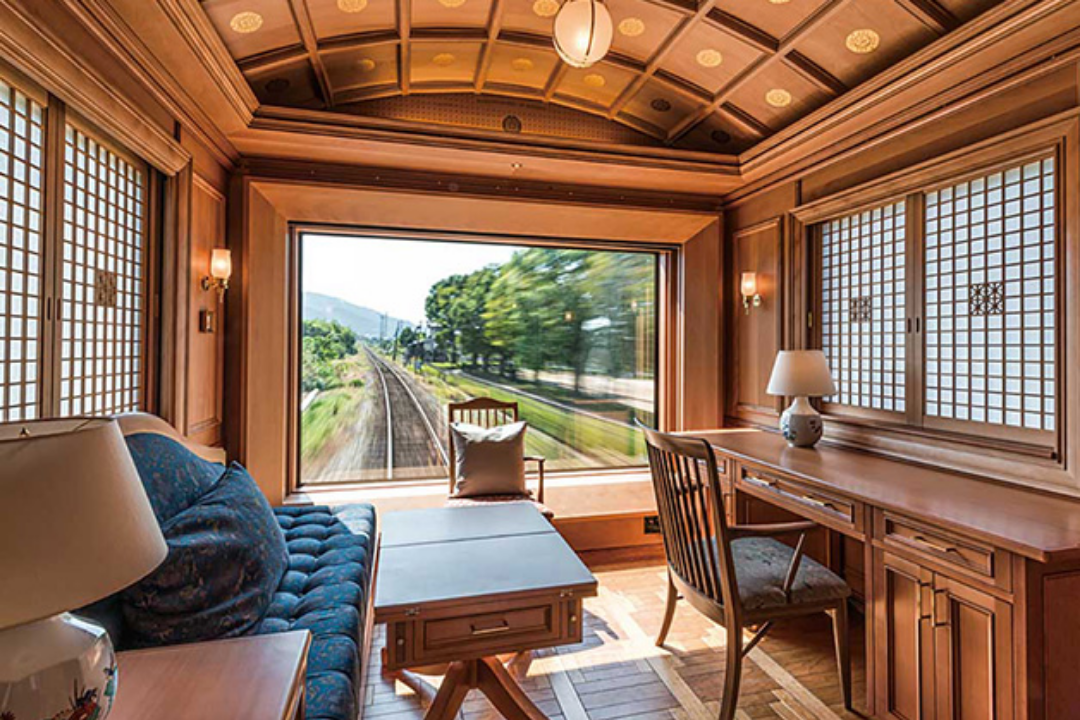
Onboard dining highlights regional culinary traditions. Shared spaces such as lounges and dining cars encourage natural interaction among guests and staff. Even the scenery outside the windows is treated as part of the experience, creating a continuous sense of connection with Kyushu throughout the trip.
The travel format differs significantly from conventional rail tourism. Guests select from carefully designed itineraries and spend several days traveling through the region. Stops along the route include opportunities for sightseeing, cultural experiences, and local engagement.
Transportation, accommodation, dining, and exploration are integrated into a single experience. Rather than planning every detail independently, travelers are invited to follow a thoughtfully curated narrative created by the train's operators.
Although the cost is substantially higher than standard rail travel, the pricing reflects the complete experience rather than transportation alone. Accommodation, meals, service, guided activities, and regional experiences are all included as part of the journey's overall value.
The target audience is also distinct. Seven Stars in Kyushu appeals to travelers who prioritize depth over efficiency. Instead of attempting to visit as many destinations as possible, these guests prefer to spend meaningful time in a single region and develop a stronger understanding of its culture and atmosphere.
For travelers who view tourism as an experience rather than a checklist, Seven Stars in Kyushu offers a compelling alternative.
A Train Designed to Showcase Kyushu, Not Just Luxury
The uniqueness of Seven Stars in Kyushu cannot be explained solely by its premium accommodations or exclusive pricing.
What makes the train stand out is that luxury is not the ultimate goal. Instead, the project focuses on expressing the character of Kyushu through carefully designed experiences.
The emphasis is not on creating flashy displays of opulence. It is on helping guests develop a deeper connection with the region over time.
This philosophy is visible throughout the train's interior design. Traditional craftsmanship, regional materials, and subtle design elements from across Kyushu are incorporated throughout the train. Many details reveal themselves gradually through touch and everyday use rather than through dramatic visual statements.
The message is clear: the train is not the main attraction. Kyushu is.
The dining experience follows the same approach. Meals are designed not simply to feel luxurious, but to tell the story of local food culture. Menus change depending on the route and season, highlighting regional ingredients and producers along the way.
Even though guests dine onboard, the experience continually reinforces their connection to the landscapes and communities outside the train.
Perhaps the most distinctive feature is the structured itinerary itself.
Modern travel often emphasizes freedom and flexibility, encouraging travelers to constantly choose where to go and what to do next. Seven Stars in Kyushu takes the opposite approach. By carefully curating the journey and limiting decision-making, it creates a deeper sense of immersion.
Guests are encouraged to focus on selected places and experiences rather than attempting to see everything.
This approach stands in sharp contrast to conventional tourism built around efficiency and maximum coverage.
In many ways, Seven Stars in Kyushu represents JR Kyushu's effort to apply railway expertise to tourism and hospitality. It uses the train as a platform for curating regional experiences and demonstrates how transportation infrastructure can become a tool for storytelling.
The result is one of the most refined examples of experience-based travel currently operating in Japan.
Why a Regional Railway Company Took on This Challenge
Source: QUALITA Homepage
The origins of Seven Stars in Kyushu can be traced to a challenge faced by many regional transportation providers.
Kyushu is rich in natural beauty, cultural heritage, and local traditions. At the same time, like many regions in Japan, it faces long-term demographic challenges such as population decline and increasing concentration of economic activity in major cities.
Railway operators are directly affected by these trends. Maintaining routes and transporting passengers alone may not be enough to ensure long-term sustainability.
JR Kyushu recognized that its role could extend beyond operating trains. The company believed it could also help communicate the value of the region itself.
Rather than viewing transportation solely as a revenue-generating service, it began exploring how travel could become a platform for showcasing Kyushu's appeal. This thinking ultimately led to a project that combined railways and tourism in a completely new way.
The goal was never to move tourists more efficiently.
Instead, the company wanted visitors to spend more time in Kyushu, develop deeper connections with local communities, and experience the region beyond its most famous attractions.
To achieve that, the train itself had to become a destination.
International visitors were also part of the equation. While many travelers to Japan focus on destinations such as Tokyo and Kyoto, JR Kyushu sought a way to make Kyushu memorable in its own right.
Seven Stars in Kyushu became that answer.
Rather than promoting individual attractions, the train presents the entire region as a connected experience. It links destinations through time, movement, and storytelling, allowing travelers to experience Kyushu as a cohesive whole.
The project also required JR Kyushu to expand beyond the traditional boundaries of a railway company. Success depended not only on train operations but also on food, hospitality, interior design, customer service, and partnerships with local communities.
It was an ambitious step outside the company's conventional business model.
Yet the decision reflected a larger belief: if railways are to remain relevant and sustainable, they must create new forms of value alongside transportation itself.
Seven Stars in Kyushu ultimately became more than a sightseeing train. It emerged as an effort to redefine the relationship between railways and regional development, demonstrating how transportation infrastructure can play an active role in shaping the future of a place.
How Travelers Choose to Spend Their Time on Seven Stars in Kyushu
Looking at how Seven Stars in Kyushu is actually used, it becomes clear that people do not choose this train simply as a way to get from one destination to another. What travelers are paying for is not transportation itself, but the quality and depth of the experience over several days. It may not be the most efficient way to maximize a limited schedule, but it is remarkably effective at creating meaningful and memorable time.
One of the most common use cases is celebrating major life milestones. Anniversaries, retirement trips, and other once in a lifetime occasions are often the reason guests choose the train. Because the itinerary is carefully curated in advance, travelers can step away from the constant planning and decision-making that often accompanies modern travel. Transportation, dining, accommodations, and sightseeing are woven together into a seamless experience, making it easier to disconnect from everyday life and fully immerse themselves in the journey.
The same appeal extends to international travelers. For visitors who want to explore Japan beyond the usual highlights, a multi-day train journey through Kyushu offers an accessible and comfortable way to engage with a single region in depth. Even travelers unfamiliar with the language or local customs can feel at ease because the experience is thoughtfully organized from start to finish. In many ways, it represents a middle ground between independent travel and guided tours.
The train also creates value for the communities along its route. Rather than encouraging quick photo stops, the experience is designed around understanding the stories, traditions, and people behind each destination. This allows local communities to showcase their culture in a deeper and more meaningful way. Instead of being consumed as tourist attractions, these places become part of a broader narrative about the region.
Seven Stars in Kyushu is not at its best when speed or comprehensive sightseeing is the goal. Its value emerges when travelers intentionally slow down. It is a space designed for reflection, connection, and a deeper appreciation of place.
The Work Behind a Train That Feels Like a Masterpiece
Source: QUALITA Homepage
The success of Seven Stars in Kyushu is not simply the result of elegant design or luxurious amenities. At its core is a philosophy that treats railway safety standards and hospitality quality as equally important. While the train offers an extraordinary travel experience, it must still meet the rigorous durability, reliability, and operational standards expected of public transportation. Balancing these two priorities is fundamental to the project.
Every aspect of the train's design is built around the assumption that guests will spend several days onboard. Interior layouts, sound insulation, vibration control, lighting design, and passenger flow have all been carefully considered to create a comfortable living environment rather than merely a mode of transport. Materials are selected not only for visual appeal but also for long-term durability and maintainability, reflecting the practical expertise of a railway operator.
Quality management continues long after the train leaves the workshop. Because the number of departures is limited, extensive preparation takes place before each journey. Staff inspect not only the train itself but also cabin conditions, amenities, dining operations, and service procedures to ensure that every departure meets the expected standard.
The crew plays a particularly important role. Operating Seven Stars in Kyushu requires more than traditional railway expertise. Staff members must combine technical operational knowledge with a hospitality mindset. They are not simply responsible for moving the train safely; they are also responsible for shaping the overall travel experience and ensuring that every guest's journey unfolds smoothly.
What makes the train exceptional is not a single breakthrough technology or dramatic innovation. Instead, it is the result of aligning safety, operational excellence, maintenance, service, and design around a shared vision. The seamless integration of these elements transforms Seven Stars in Kyushu from a train into a carefully crafted travel experience.
A Decision to Go Beyond the Traditional Role of a Railway Company
Seven Stars in Kyushu was not created as a small experimental project or the initiative of a single department. It emerged from a broader strategic question facing JR Kyushu: what role should a railway company play in the future?
Like many regions in Japan, Kyushu faces demographic challenges, including population decline and increasing concentration of people in major urban centers. For railway operators, this means that traditional transportation demand may gradually decrease over time. Simply maintaining infrastructure and transporting passengers would not be enough to ensure long-term sustainability.
JR Kyushu recognized that it needed to rethink the value of railways. Rather than viewing transportation solely as a business in itself, the company began exploring how rail travel could become a gateway to experiencing the region. This shift in thinking ultimately led to the concept behind Seven Stars in Kyushu.
The train was never intended to move tourists as efficiently as possible. Instead, its purpose was to encourage visitors to spend more time in Kyushu, engage more deeply with local communities, and develop a richer understanding of the region. To achieve that goal, the train itself had to become part of the attraction.
There was also an international dimension to the strategy. While many overseas visitors focus on destinations such as Tokyo and Kyoto, JR Kyushu sought ways to make the island memorable in its own right. Creating a train experience unlike any other became one way of positioning Kyushu on the global tourism map.
Launching such a project required the company to expand beyond the traditional boundaries of railway operations. Success depended not only on transportation expertise but also on food, hospitality, design, storytelling, and partnerships with local communities. It represented a significant commitment to creating new forms of value.
In this sense, Seven Stars in Kyushu is more than a sightseeing train. It is an attempt to redefine the relationship between railways and regional development, demonstrating how transportation infrastructure can play a central role in shaping tourism and cultural experiences.
How Seven Stars in Kyushu Has Been Received in Japan
When Seven Stars in Kyushu first launched, it attracted widespread attention across Japan. What is remarkable, however, is that the interest did not fade after the initial excitement. More than a decade later, it continues to be referenced as a significant example of innovation in both tourism and transportation.
Japanese media coverage has often gone beyond describing it as a luxury train. Television programs, newspapers, travel magazines, and industry publications frequently discuss the broader ideas behind the project, including regional revitalization, railway strategy, and the future role of transportation companies.
The train has also established a unique position in the marketplace. Despite its limited capacity and premium pricing, demand has remained exceptionally strong, with bookings often allocated through lottery systems. This sustained interest suggests that its appeal extends beyond exclusivity. Travelers who experience the journey often become enthusiastic advocates, helping to build the train's reputation through word of mouth.
Its influence can also be seen throughout Japan's tourism and railway sectors. Since the debut of Seven Stars in Kyushu, there has been renewed interest in sightseeing trains and experience-driven travel services across the country. While not all of these projects directly imitate Seven Stars, many share a similar belief that transportation can be designed as an experience rather than merely a means of travel.
Perhaps most importantly, the train is not viewed solely as a product for affluent travelers. While access is limited, the ideas it represents have influenced broader discussions about tourism, regional branding, and mobility. Within Japan, Seven Stars in Kyushu is widely regarded as a project that challenged conventional assumptions about what travel can be.
Why Seven Stars in Kyushu Appeals to International Markets
Why Japan's Philosophy of Travel Resonates Globally
The appeal of Seven Stars in Kyushu extends far beyond its luxury positioning. What makes the train particularly compelling is its approach to travel itself.
Luxury trains exist around the world, many of them emphasizing historic carriages, spectacular scenery, or exclusive accommodations. Seven Stars in Kyushu takes a somewhat different approach. Its defining characteristic is the way it curates an understanding of a region through movement, storytelling, and carefully designed experiences.
This aligns closely with the growing popularity of slow travel and experiential tourism. Increasingly, travelers are choosing to spend more time in fewer places, seeking deeper cultural engagement rather than checking destinations off a list. Within this context, a multi-day journey across Kyushu offers a clear and compelling proposition.
The train also brings together qualities that international travelers often associate with Japan: reliability, safety, and exceptional service. Because the itinerary is carefully planned and operational standards are consistently high, guests can focus entirely on the experience rather than logistics.
From a cultural perspective, Seven Stars in Kyushu can also be seen as an expression of Japanese aesthetics. Its design avoids unnecessary excess, embraces subtlety, and creates space for quiet reflection. These qualities offer a distinctive alternative to more overt forms of luxury and often resonate strongly with travelers interested in Japanese culture and design.
Why JR Kyushu Has Not Rushed Into Global Expansion
Source: QUALITA Homepage
At present, there are no examples of Seven Stars in Kyushu being replicated overseas in its original form. This is not because the concept lacks potential. Rather, JR Kyushu recognizes that the experience is deeply connected to the place where it was created.
The landscapes, local communities, cuisine, traditions, and culture of Kyushu are inseparable from the journey itself. The train cannot simply be exported as a standalone product because much of its value comes from its relationship with the region it travels through.
That said, the underlying ideas behind the project have attracted attention from transportation and tourism professionals around the world. The concept of using transportation infrastructure as a platform for regional storytelling, branding, and experience design offers valuable lessons for destinations far beyond Japan.
As a result, Seven Stars in Kyushu continues to serve as a reference point for organizations seeking new ways to connect transportation, tourism, and regional development.
Conclusion
Seven Stars in Kyushu is more than a luxury train. It is a thoughtful answer to a larger question: what should travel mean in the modern era?
Rather than competing on speed or efficiency, it focuses on helping travelers understand a region through time, movement, and immersion. By transforming transportation into an experience in itself, it offers an alternative vision of tourism that feels increasingly relevant in today's travel landscape.
For international businesses and tourism operators, the most valuable lesson is not the train's design or amenities. It is the philosophy behind it. Seven Stars in Kyushu demonstrates how existing transportation infrastructure can be used to tell stories, strengthen regional identity, and create deeper connections between visitors and places.
Any future collaboration inspired by this model is likely to focus less on exporting a train and more on sharing a way of thinking. Integrating travel and experience, using infrastructure as a storytelling platform, and aligning businesses with local communities are ideas that can be adapted in many different contexts.
As a Japanese case study, Seven Stars in Kyushu offers valuable insights into the future of tourism and mobility. In an era when travelers increasingly seek meaning rather than simply movement, the train is carrying more than passengers. It is carrying a vision for what travel itself can become.
FAQ About Seven Stars in Kyushu
1. What Is Seven Stars in Kyushu?
Seven Stars in Kyushu is a luxury cruise train operated by JR Kyushu. Rather than serving simply as transportation, it was created as an immersive journey that allows passengers to experience the culture, landscapes, and character of the Kyushu region at a slower pace. The train, its cuisine, and the destinations along the route are all carefully woven together into a single travel experience.
2. Why Is It Considered an Experiential Travel Service Rather Than Just a Luxury Train?
What sets Seven Stars in Kyushu apart is not simply its luxurious facilities, but its emphasis on connecting travelers with the region itself. Every aspect of the journey, from time spent onboard to scenic views and interactions with local communities, is designed to deepen passengers' understanding of Kyushu rather than simply transport them across it.
3. How Is It Different From a Typical Sightseeing Train?
The biggest difference is that it places greater value on the journey itself than on reaching a destination. Time spent on board, meals, conversations, and the changing scenery are all treated as the heart of the experience, making travel itself the main attraction.
4. Why Are the Itineraries Planned in Advance?
The fixed itinerary allows passengers to let go of the constant need to make decisions and fully immerse themselves in the journey. Instead of rushing between attractions, the experience focuses on carefully selected places and moments, encouraging deeper connections with the local culture and environment.
5. Who Is Seven Stars in Kyushu Designed For?
The train appeals to travelers celebrating milestones or special occasions, those who want to explore a single region in depth, and people who genuinely enjoy the experience of traveling itself. It is especially well suited to travelers who value memorable experiences over checking as many destinations as possible off their itinerary.
6. Why Is the Identity of Kyushu So Central to the Experience?
JR Kyushu views the train as a way to showcase the entire region through travel. The interior incorporates traditional Kyushu craftsmanship and locally sourced materials, while the cuisine highlights the area's diverse culinary traditions. In this sense, the train itself serves as a carefully curated introduction to Kyushu's culture.
7. Why Has Seven Stars in Kyushu Attracted International Attention?
Travel trends around the world have gradually shifted from visiting many destinations in a short period toward spending more meaningful time in one place. By combining transportation, accommodation, and regional experiences into a single journey, Seven Stars in Kyushu aligns closely with the growing popularity of slow travel and experience-focused tourism.
8. Why Did a Railway Company Invest So Heavily in Tourism and Hospitality?
JR Kyushu recognized that simply transporting passengers would not be enough to sustain regional railways in the long term. Against the backdrop of population decline and changing regional economies, the company reimagined the railway as infrastructure that could communicate the value of local communities. Seven Stars in Kyushu is one of the most ambitious results of that vision.
9. Why Is the Train Often Described as a Complete Work of Art?
Everything, from the train's design and operations to its safety standards, hospitality, and partnerships with local communities, is guided by a single, unified philosophy. Rather than simply offering luxurious amenities, every detail has been thoughtfully crafted around the question of how best to help passengers experience the essence of Kyushu.
10. What Is the Greatest Strength of Seven Stars in Kyushu?
Its greatest strength is that it transforms travel from time spent simply getting somewhere into time spent building a meaningful connection with a region. Instead of prioritizing speed and efficiency, the experience encourages passengers to savor the scenery, conversations, cuisine, and atmosphere along the way. That thoughtful approach to experiencing time itself is what makes Seven Stars in Kyushu truly exceptional.
Related Videos
If you're interested in Japan’s luxury railway experiences, the video below introduces Seven Stars in Kyushu, an exclusive sleeper train often described as a moving grand hotel. This video shows how elegant interiors, fine dining, and breathtaking scenery have transformed train travel into an unforgettable journey.