
Sleep is at the center of human life from the very beginning. For newborns and infants, quality sleep influences not only growth and development but also the daily rhythm and well-being of the entire family. Yet for generations, parents have been forced to choose between competing priorities when creating a sleep environment for their baby.
A traditional crib offers safety but often places physical distance between parent and child. Co-sleeping can provide comfort and reassurance, but it also raises concerns about sleep-related risks. For many families, those have long seemed like the only two options.
The Suima Crib was developed in Japan as an alternative to that binary choice. Rather than extending the concept of a conventional crib, it introduces a different approach altogether. Its design is built around a simple idea: parents and babies can sleep separately while still remaining close to one another. In doing so, it seeks to bridge the gap between the emotional benefits of proximity and the practical requirements of modern infant sleep safety.
The origins of the Suima Crib are closely tied to Japan's unique living environment and parenting culture. Compared with many Western countries, Japanese homes tend to offer less living space, while practices such as room sharing, sleeping on futons, and keeping infants nearby during the night remain common. Large nursery-style cribs designed for spacious homes do not always fit naturally into these settings.
At the same time, awareness of infant sleep safety has increased significantly. Parents today are looking for solutions that provide both peace of mind and evidence-based safety considerations. Finding a way to satisfy both needs has become an increasingly important challenge.
This is also why the Suima Crib has relevance beyond Japan. Across the world, conversations around parenting are shifting toward two key priorities: child safety and parental well-being. Modern parents are looking for products that support not only babies but also the physical and mental health of caregivers. Rather than relying on complicated technology or excessive features, the Suima Crib addresses these concerns through thoughtful design and spatial relationships.
What makes the product noteworthy is that it was not created simply as a convenient baby accessory. It emerged from a deeper question: How close should parents and babies be during sleep? What creates genuine reassurance, and what creates genuine safety? The Suima Crib represents one answer shaped by the realities of everyday family life in Japan.
In this article, we will explore not only the Suima Crib itself but also the company behind it, the design philosophy that inspired it, and the reasons it continues to attract attention. Through the lens of infant sleep, it offers an interesting example of how Japanese product design approaches universal parenting challenges.
Suima Crib Overview
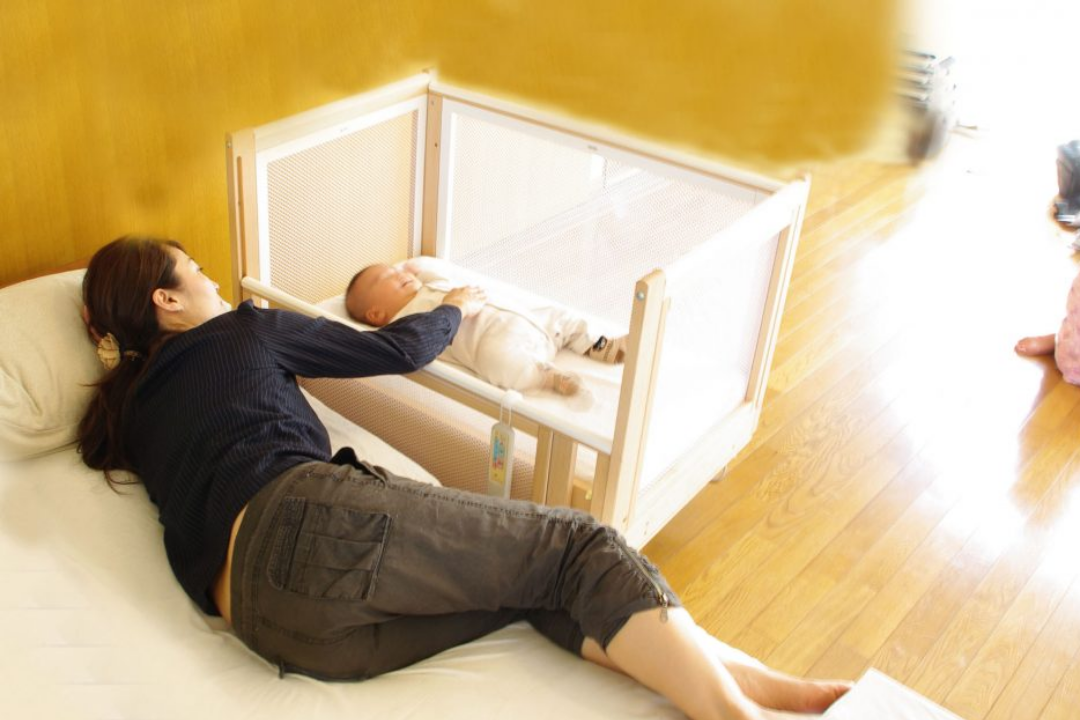
The Suima Crib is a Japanese-designed bedside crib created around the concept of sleeping separately while staying close. It is neither a traditional crib placed across the room nor a co-sleeping arrangement in which parent and baby share the same sleep surface.
Instead, the crib securely attaches alongside an adult bed, creating a dedicated sleep space for the baby while keeping parent and child within arm's reach. The result is a sleeping environment that maintains physical separation without creating emotional distance.
This design offers practical advantages during nighttime care. Parents can respond more easily to feeding, soothing, and monitoring without repeatedly getting out of bed or moving across the room. At the same time, babies remain in their own designated sleep area, helping reduce risks commonly associated with bed-sharing arrangements.
In many ways, the Suima Crib represents a practical compromise between emotional comfort and structural safety.
Its dimensions and overall configuration also reflect the realities of Japanese homes. The crib is designed to fit into compact living spaces and accommodate a variety of sleeping arrangements, including lower bed heights commonly found in Japan. These considerations help distinguish it from many imported crib models developed for larger homes and dedicated nurseries.
Ease of use is another important part of the design philosophy. Parents do not need specialized knowledge or extensive setup procedures to incorporate it into their routine. Its intuitive structure makes it approachable even for first-time caregivers navigating the challenges of infant care.
Behind the product is a Japanese manufacturer focused on solving real-world problems through practical design. Rather than chasing trends or producing generic childcare products, the company has concentrated on one specific challenge: improving sleep for both babies and parents by rethinking the structure of the sleeping environment itself.
The Engineering Philosophy Behind the Suima Crib
The Suima Crib reflects a design philosophy that has guided I-QUARK throughout its history: start with a real-world problem and engineer a practical solution.
For decades, the company has specialized in developing products that solve technical challenges through thoughtful design and structural innovation. The Suima Crib applies that same mindset to one of the most universal parenting challenges: helping babies and parents sleep better.
Its purpose is straightforward. The crib creates a dedicated sleeping space for the baby directly beside the parents' bed. Physically, the two sleep environments remain separate. Emotionally, they remain closely connected.
Parents can monitor their child, provide comfort, and respond to nighttime needs with minimal movement. Babies, meanwhile, benefit from having their own protected sleep space, reducing many of the concerns associated with traditional co-sleeping arrangements.
The setup process is intentionally simple. The crib is positioned next to the bed and adjusted to align with the height of the adult mattress. During the day, it functions as a standard crib. At night, it becomes an integrated part of the family's sleep environment.
This flexibility reflects a design process focused on real daily routines rather than idealized parenting scenarios.
In terms of pricing, the Suima Crib generally falls within the range of premium domestic crib products in Japan. However, the product is positioned less as a short-term baby item and more as an investment in a family's sleep environment. Rather than serving a single narrow purpose, it is designed to support daily life during one of the most demanding stages of parenting.
The target audience extends beyond first-time parents. Working households seeking to reduce nighttime fatigue, families living in smaller urban homes, and parents navigating different sleeping traditions can all benefit from its design. These same characteristics may also appeal to families in other parts of the world where living space is limited and close family sleeping arrangements remain common.
Ultimately, the Suima Crib approaches childcare as a challenge that can be improved through thoughtful design rather than sheer endurance. That perspective reflects the engineering background of the company behind it and sets the foundation for the product's distinctive features.
A Unique Approach to Sleep Design and Engineering
What makes the Suima Crib different is that it refuses to treat the choice between co-sleeping and crib sleeping as an either-or decision.
While many childcare products are built around tradition, intuition, or established habits, the Suima Crib focuses on measurable elements such as movement, height, and distance. Each of these factors has been carefully examined and incorporated into the product's structure.
One of its most distinctive features is its gentle rocking mechanism.
Many parents are familiar with a common challenge: a baby falls asleep while being held, only to wake moments after being placed in a crib. The transition from movement to complete stillness can be disruptive for infants.
The Suima Crib addresses this issue through a natural rocking structure that allows subtle motion similar to what babies experience while being carried. Rather than relying on motors or automated systems, the movement is generated through the product's physical design, including its balance and pivot points. The result is a gentle, controlled motion that avoids overstimulation.
Safety considerations are also built directly into the structure rather than added as secondary features.
The connection system is designed to minimize gaps and uneven surfaces between the crib and the adult bed. This helps reduce the possibility of unintended movement while maintaining a secure sleeping environment. Because the baby remains in a separate sleep space, risks associated with accidental overlaying or entrapment are also minimized.
Material selection follows the same philosophy. The visual design is intentionally understated, allowing the crib to blend naturally into a bedroom rather than dominate it. Beneath that simplicity lies a strong emphasis on durability, maintenance, and long-term reliability.
Even when discussing proprietary features or unique design elements, the focus remains on functionality rather than novelty. The goal is not to create attention-grabbing innovations but to create solutions that clearly explain why they exist and how they improve daily life.
The Suima Crib's uniqueness comes not from a collection of flashy features but from its methodical approach to solving real problems. Each design choice addresses a specific challenge faced by parents, and together those choices create a sleep solution that is difficult to replicate with a conventional crib.
Why Was the Suima Crib Created?
Source: Suima Homepage
At the heart of Suima Crib’s development is a fundamental question about a childcare culture that has long relied on endurance and determination. Parents are expected to get up repeatedly for nighttime feedings, risk waking their baby every time they put them down, and constantly weigh the comfort of co-sleeping against concerns about safety. For years, these challenges have largely been left to individual families to solve on their own, while practical design solutions remained an afterthought.
iQuark Co., Ltd., the company behind Suima Crib, specializes in breaking down complex problems and solving them through thoughtful engineering. When the team looked at the realities of childcare through that lens, they realized that many tasks commonly accepted as unavoidable could actually be made easier through better design. The distance a parent must travel during the night, the height required to lift a baby, and the movements involved in putting them back down were all carefully examined. Reducing these sources of strain became the starting point for the product’s development.
One of the biggest challenges involved the contradiction surrounding co-sleeping. Emotionally, sleeping close to a baby provides reassurance. At the same time, safety concerns and accident risks cannot be ignored. Traditional baby cribs offer safety but often create a sense of distance between parent and child. As long as families are forced to choose between these two options, uncertainty remains. Suima Crib was developed by questioning this assumption and creating a third alternative: sleeping separately while still remaining close.
The journey from concept to product focused not only on theory but also on real-world use. From the prototype stage onward, the crib was tested with actual home environments in mind. Ease of installation and operation, even when parents were tired and only partially awake during nighttime care, were carefully evaluated. Designing for exhausted users may seem like a subtle engineering principle, but it is one of the most important considerations in childcare products.
Suima Crib is not marketed primarily as a convenience product. Its goal is not simply to make parenting easier, but to increase the amount of time families can sleep with peace of mind. By supporting better rest for parents, it also helps create a more stable routine for babies. The entire structure is designed to encourage this positive cycle.
Suima Crib does not romanticize parenting. It begins by acknowledging that childcare is demanding and then asks a practical question: what can thoughtful design do to reduce that burden? The answer can be seen in the product itself. Next, we will look at how Suima Crib fits into real households and the specific situations where it delivers value.
A Baby Crib Designed to Fit Naturally Into Everyday Life
Looking at the households that use Suima Crib makes one thing clear: this is not a product designed for a niche group of parents pursuing a particular parenting philosophy. Its greatest value emerges within the everyday limitations and challenges that many families share.
The most common users are families living in urban environments. With limited living space, many parents hesitate to dedicate a valuable room to a large standalone crib. Because Suima Crib is designed to be placed alongside an adult bed, it eliminates the need for additional nursery space. Families can introduce it without dramatically changing their bedroom layout or disrupting their daily routines.
Its benefits are especially apparent in households where nighttime childcare is physically demanding. When a baby wakes or cries, parents do not need to get out of bed and move to another room. They can check on their child while remaining close and respond more quickly. By reducing the number of steps involved in feeding or soothing a baby, the crib helps shorten nighttime interruptions and preserve sleep quality. This can make a meaningful difference for dual-income households and families carrying significant caregiving responsibilities during the day.
Suima Crib is also approachable for first-time parents. Its operation is straightforward, and the simple act of placing a baby in the crib is intuitive and easy to understand. Families do not need extensive childcare knowledge or experience to use it effectively. The design philosophy of minimizing decisions and complicated procedures translates directly into greater confidence and peace of mind.
The crib has also found a place in multigenerational households and among families returning to their hometowns for childbirth support. For grandparents who are familiar with traditional co-sleeping practices, the feeling of sleeping close to the baby remains intact, while the structure itself provides an added layer of safety. As a result, it can help reduce disagreements between generations regarding childcare approaches.
Suima Crib does not impose a single vision of ideal parenting. Instead, it offers families a practical option that helps reduce strain and supports sustainable routines within their own circumstances. Next, we will take a closer look at the manufacturing processes and quality control systems that support the product, exploring the craftsmanship behind its design and reliability.
Built for Everyday Use: Safety Through Consistency
Source: Suima Homepage
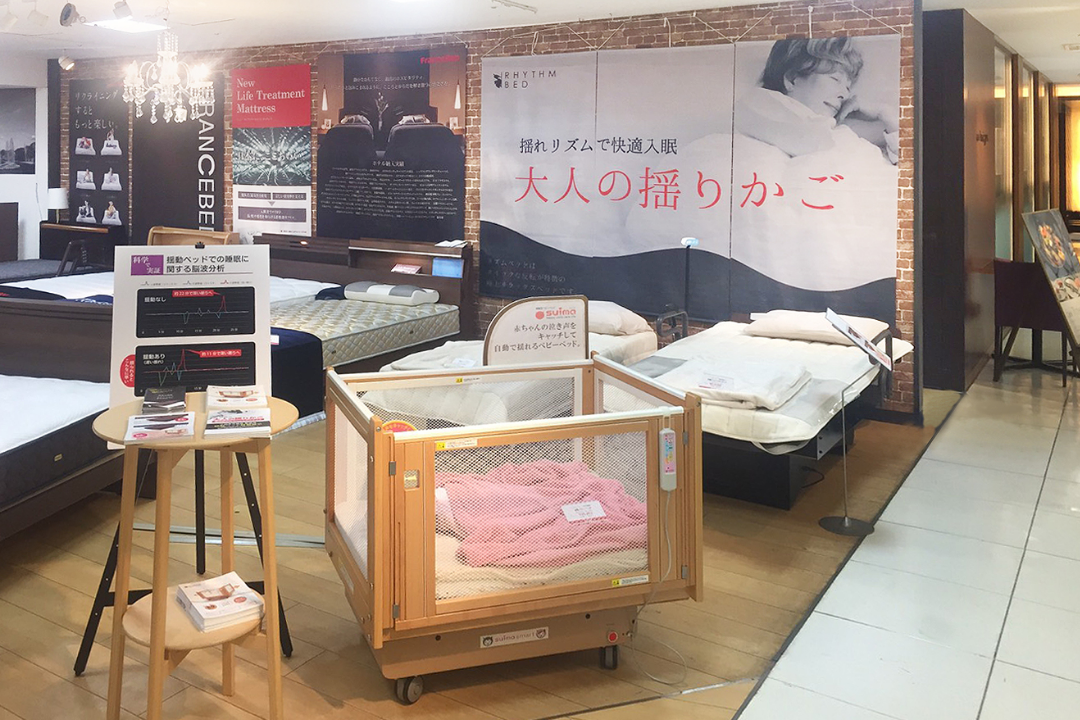
One of the core principles behind Suima Crib is that it should not be a product that only works under ideal circumstances. Parenting rarely happens under ideal conditions. Parents are tired, routines change constantly, and nighttime decisions are often made while half asleep. For that reason, Suima Crib was designed to deliver the same level of comfort and safety in real-world situations, not just in controlled environments.
The company behind the product, I-QUARK Corporation, brings decades of experience in engineering, electronics development, and precision manufacturing. Its expertise lies in refining products through repeated prototyping, testing, and validation. That same process was applied to Suima Crib. Everything from structural dimensions and component tolerances to the movement of its rocking mechanism has been carefully evaluated and tested for long-term household use.
Safety is naturally one of the most important considerations. Any product designed for infants must eliminate the possibility of instability, structural weakness, or unintended movement. The connection system that attaches the crib to an adult bed was developed with more than static installation in mind. It also accounts for the everyday realities of sleep, including shifting body weight, turning over during the night, and repeated daily use. The design minimizes the likelihood of gaps or uneven surfaces forming over time.
Material selection follows the same philosophy. Rather than prioritizing trends or visual novelty, the focus is on durability, cleanability, and long-term performance. A baby product is handled, cleaned, and used every day. As a result, practicality takes precedence over short-term aesthetics.
Quality control also extends beyond manufacturing. User feedback is treated as part of the development process itself. Real-life experiences, unexpected use cases, and observations from families are continuously incorporated into future refinements. This cycle of listening, testing, and improving has gradually strengthened the product over time.
The quality of Suima Crib is not defined by luxury branding or an extensive feature list. Its value lies in something much simpler: parents can use it confidently when exhausted, and it performs consistently night after night. That reliability forms the foundation of the trust it has earned among families.
Prioritizing Sustainability Over Perfection
A defining idea behind Suima Crib is the belief that parenting products should support real life rather than idealized parenting philosophies.
Many baby products are built around guidelines, recommendations, and best practices. While these are important, they sometimes overlook the realities of everyday parenting. Middle-of-the-night feedings, one-handed caregiving, and moments when parents are physically and mentally exhausted are all part of the experience. Products that fail to acknowledge these realities often end up being used differently than intended, or not used at all.
The development team behind Suima Crib approached this challenge differently. Instead of trying to correct parental behavior, they focused on designing an environment where safer choices happen naturally.
Rather than repeatedly warning parents against bed-sharing, the product creates a setup that preserves much of the emotional comfort associated with sleeping nearby while maintaining physical separation. The goal is not restriction. It is to make the safer option the easier option.
This mindset also reflects how the team views parenting itself. Raising a child is not a temporary event that can be solved through short-term effort. It is an ongoing part of daily life. Because of that, Suima Crib was designed more like household infrastructure than a temporary baby accessory. Setup is simple, operation is intuitive, and the product can be used without constantly referring to a manual.
The philosophy mirrors I-QUARK's broader engineering approach. Instead of asking what is technically possible, the company asks what will continue to be useful over time. Rather than adding complexity, it seeks to remove it.
Suima Crib is not intended to bring parents closer to some ideal version of parenting. Its purpose is much more practical. It helps reduce small daily burdens and creates a little more space for rest. Those small improvements, accumulated over time, are where its real value lies.
Translating the Feeling of Sleeping Together Into Modern Safety Standards
To fully understand Suima Crib, it helps to understand the cultural context from which it emerged.
For generations, Japanese families have traditionally slept in close proximity. Whether using futons or other shared sleeping arrangements, keeping babies nearby has long been considered a natural part of family life rather than a special parenting choice. Even as modern homes increasingly adopt Western-style beds, the desire to remain physically close to infants remains strong.
At the same time, living environments have changed dramatically. Urban homes are smaller, bedrooms are more compact, and dedicated nursery spaces are often impractical. Large standalone cribs commonly found overseas can feel difficult to accommodate, both physically and emotionally. As a result, many parents continue to choose bed-sharing.
However, growing awareness of infant sleep safety has introduced a new tension. Parents often find themselves caught between emotional reassurance and safety concerns.
Suima Crib does not dismiss either side of that equation.
Rather than treating co-sleeping traditions as outdated, or insisting that parents simply abandon them, the product attempts to translate the desire for closeness into a form that aligns with modern safety recommendations. It does so through structure, distance, and thoughtful physical design.
The concept is simple: align sleeping surfaces, eliminate gaps, and provide a separate sleep space for the baby. Technically, these are straightforward design decisions. Culturally, however, they carry significant meaning. Parents can maintain a sense of closeness without feeling that they have separated themselves from their child.
This approach reflects a broader understanding of Japanese living habits. It also makes the crib adaptable to households that exist between traditional floor-based sleeping arrangements and modern bed-based lifestyles. Rather than forcing families to choose one approach or the other, the design accommodates both.
In this way, Suima Crib does not reject traditional parenting culture. It updates it.
From Supporting Infancy to Supporting Family Life
The long-term vision behind Suima Crib extends beyond the crib itself.
At its core is a broader question: how can thoughtful design reduce the everyday burdens that families face? Nighttime feeding and soothing may represent only a small part of parenting, but the fatigue generated during those hours affects concentration, emotional well-being, and family life throughout the day.
Improving sleep, therefore, is not simply about improving sleep. It is about improving the overall parenting experience.
Future product development is expected to focus on adapting the concept to a wider range of living environments and sleeping arrangements. The goal is not to introduce more features, but to make the solution accessible to more households while preserving its simplicity.
Importantly, the company has shown little interest in pursuing attention through flashy marketing. Instead, growth is expected to come through families sharing their experiences organically. In the parenting industry, trust tends to have a longer lifespan than trends.
International expansion is also viewed as a realistic opportunity. Urban areas across Asia and Europe face many of the same challenges found in Japan: limited living space, close-knit family dynamics, and parents seeking both proximity and safety during sleep.
The appeal of Suima Crib is rooted in Japanese culture, yet the underlying problem it addresses is universal.
That said, the company does not appear focused on exporting the exact product unchanged. The more important goal is sharing the underlying philosophy: using distance and physical design to create reassurance without sacrificing safety. How that philosophy is adapted to different cultures, homes, and regulations remains an important part of its future potential.
Ultimately, the vision is not about creating more parenting gadgets. It is about creating environments where parenting requires less unnecessary effort.
When Sleep Changes, Parenting Changes
Source: Suima Homepage
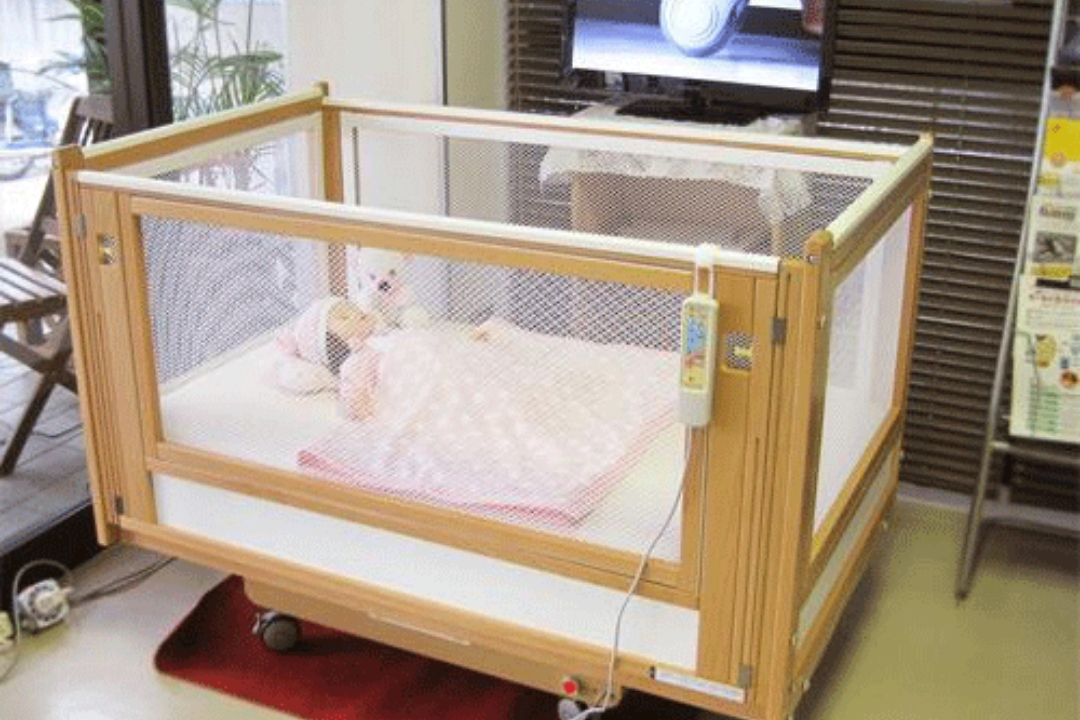
Families who use Suima Crib often talk less about specific features and more about how their nights feel different.
Many parents describe a sense of relief that comes from having their baby close by without sharing the same sleep surface. The ability to respond quickly while maintaining separate sleep spaces reduces anxiety and creates a more relaxed nighttime environment.
Parents frequently report that nighttime disruptions become less physically demanding. Because they can check on their baby, feed, or soothe them with minimal movement, they spend less time fully awake and find it easier to return to sleep afterward. The benefit is often described not as convenience, but as reduced exhaustion.
First-time parents also tend to appreciate the reduction in decision fatigue. Rather than constantly questioning whether they are making the right choice between bed-sharing and a separate crib, the structure itself provides reassurance. Several users have noted that eliminating that nightly uncertainty proved more valuable than they expected.
International users often highlight another advantage: compatibility with smaller homes and family-centered living arrangements. In environments where space is limited, the compact footprint and straightforward design make adoption easier. The concept is also easy to understand regardless of language or cultural background.
Overall, feedback surrounding Suima Crib tends to be understated rather than dramatic. Satisfaction often grows over time, as families gradually realize how much easier their nights have become. That delayed recognition may be one of the clearest indicators of the product's success.
Conclusion
Suima Crib is not a miracle product, nor does it promise to eliminate the challenges of parenting. It does not claim to solve every sleep problem or transform childcare overnight.
Instead, its purpose is more modest and perhaps more meaningful. It aims to reduce the small, recurring sources of strain that accumulate night after night. Fewer trips out of bed. Less lifting. Fewer moments of uncertainty. In return, parents gain a little more sleep, a little less stress, and a little more capacity for the day ahead.
The product's greatest strength is that it does not demand attention. It is designed to blend into daily life so naturally that families eventually stop thinking about it. In that sense, Suima Crib is not a tool that requires effort to use. It is a tool that quietly reduces effort over time.
More broadly, it represents an attempt to reconcile two priorities that are often presented as opposites: traditional parenting habits and modern safety awareness. Rather than forcing parents to choose between closeness and caution, Suima Crib redesigns the space between them.
For businesses, distributors, and product developers outside Japan, the most valuable takeaway may not be the crib itself. It is the design philosophy behind it. Instead of trying to change behavior through rules and warnings, Suima Crib creates conditions in which safer choices happen naturally. That principle has relevance far beyond baby products, extending into fields such as elder care, sleep solutions, and residential design.
As a product born in Japan, Suima Crib adds another option to the parenting landscape. Not an option built around perfection or rigid ideals, but one built around reducing unnecessary strain. By relying on thoughtful design rather than willpower, it points toward a future where parenting products support families not through complexity, but through simplicity.
FAQ About the Suima Crib
1. What Is Suima Crib?
Suima Crib is a baby crib developed in Japan to allow parents and babies to sleep close to one another while maintaining separate sleeping spaces. Designed to attach securely alongside an adult bed, it aims to combine the reassurance of sleeping nearby with the safety of giving infants their own dedicated sleep surface.
2. Why Was Suima Crib Developed?
The idea came from addressing a common dilemma. Bed-sharing can provide parents with peace of mind and make nighttime care easier, but it also raises safety concerns. Traditional baby cribs offer a safer sleep space but often place babies farther away from their parents. Suima Crib was created to bridge that gap by keeping parents close to their baby while maintaining a separate sleeping area.
3. How Is It Different From a Typical Baby Crib?
The biggest difference is that it is designed to function as an extension of the parents' bed. While providing babies with their own sleep space, it allows parents to check on them, soothe them, or respond to nighttime wakings without getting out of bed, making overnight feeding and comforting more convenient.
4. Why Is It Said to Help Babies Sleep More Easily?
Suima Crib incorporates a gentle rocking mechanism inspired by the natural movement babies experience while being held. Rather than relying on powerful motorized motion, the crib uses its balance and pivot design to create subtle, soothing movement that helps babies transition more comfortably from being carried to sleeping independently.
5. Why Is It Well Suited to Japanese Homes?
Many homes in Japan have smaller bedrooms than those typically found in Western countries. Because Suima Crib is compact and designed to sit directly beside an adult bed, it can be introduced without requiring a significant amount of additional space.
6. Why Has Suima Crib Attracted International Attention?
Around the world, there is growing recognition that supporting parents' sleep and reducing the burden of childcare are just as important as infant safety. Rather than relying heavily on technology, Suima Crib improves the well-being of both parents and babies through thoughtful structural design and carefully considered sleeping arrangements.
7. What Safety Features Does Suima Crib Include?
The attachment system is designed to minimize gaps or height differences between the crib and the adult bed. By providing infants with their own dedicated sleeping space, it also helps reduce the physical risks associated with bed-sharing, such as accidental overlay or becoming trapped in soft bedding.
8. What Types of Families Is Suima Crib Best Suited For?
Suima Crib is suitable for first-time parents, dual-income households, and families raising children in compact urban homes. It can also help bridge generational differences in parenting styles, offering a practical solution that respects the desire to sleep close to a baby while aligning with modern safety recommendations.
9. What Makes the Suima Crib Concept Unique?
One of its defining principles is making safe parenting behaviors feel natural rather than requiring constant effort. Instead of relying on reminders or idealized advice, Suima Crib is designed to encourage safe and sustainable caregiving routines simply through the way it fits into everyday family life.
10. What Is the Greatest Strength of Suima Crib?
Its greatest strength is that it does not force parents to choose between emotional reassurance and infant safety. By respecting the natural desire to sleep close to a baby while incorporating modern safety considerations into its design, Suima Crib demonstrates how thoughtful product design can support parenting through practical solutions rather than relying on sacrifice or willpower.