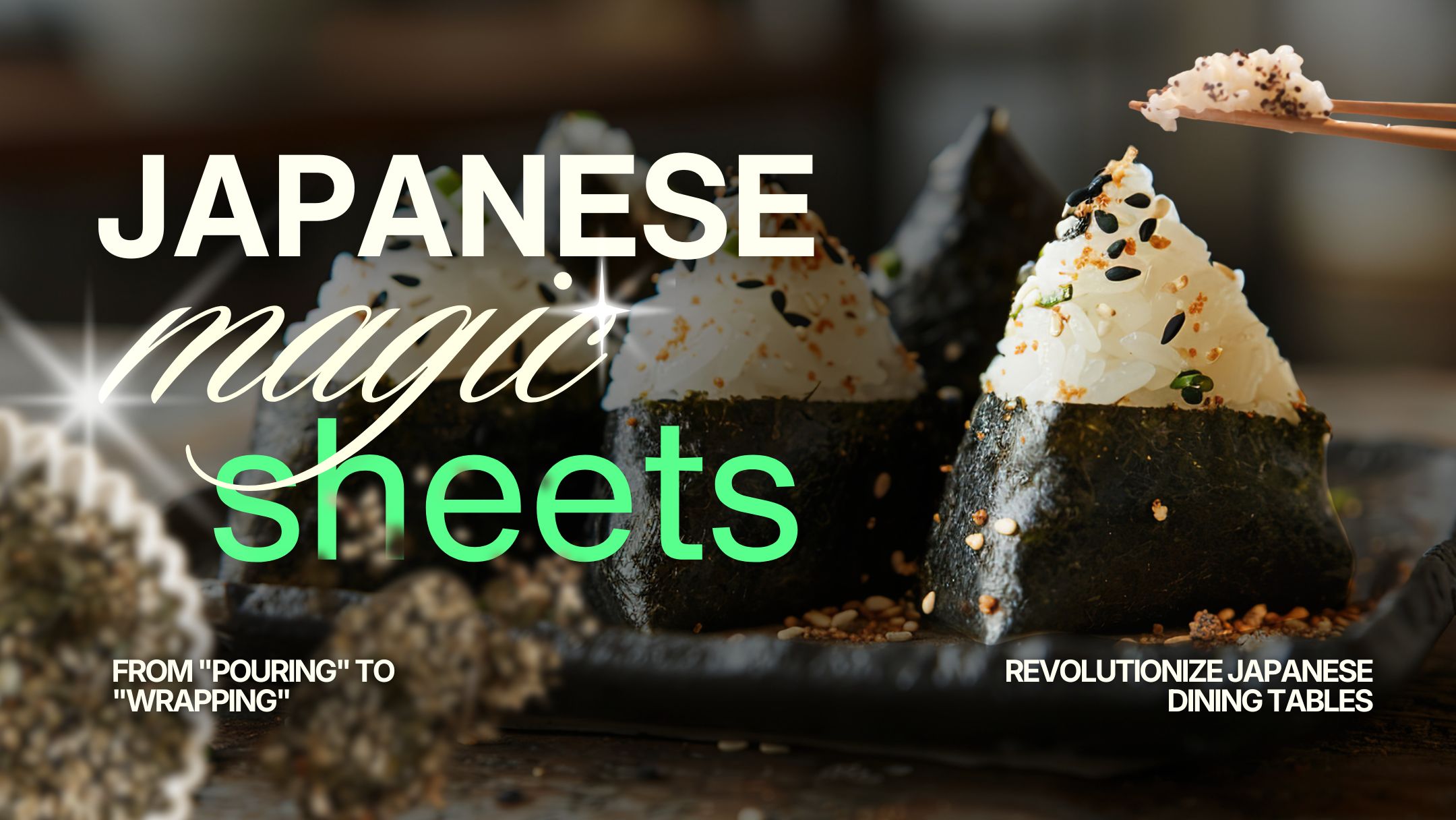
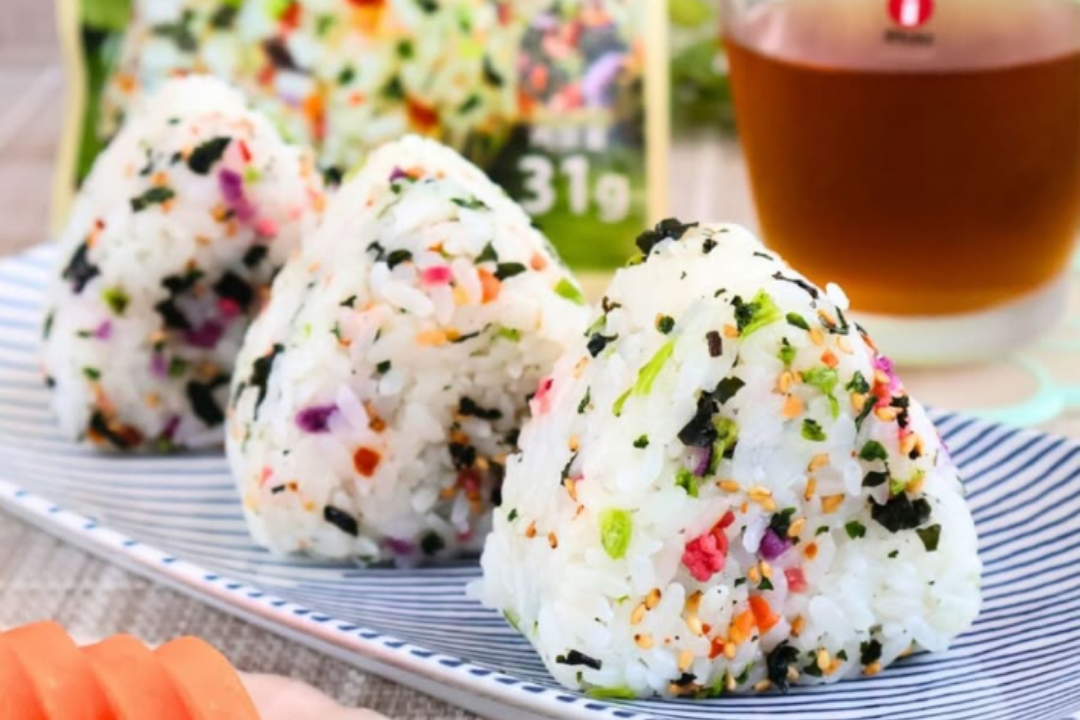
One of the symbols of Japanese food culture is rice. While it remains a staple at the everyday dining table, how it is eaten and enjoyed has evolved. Amid these changes, Japan has developed its own unique food culture known as furikake—seasoned toppings sprinkled over rice.
The product that takes this furikake culture one step further is “Maku Furikake”—wrap-style furikake. Instead of sprinkling it over rice, you wrap it around the rice. While this may seem like a small shift in concept, the difference brings meaningful changes to how it is eaten, carried, and experienced.
The company behind “Maku Furikake” is Tanaka Foods Co., Ltd., a brand that has long supported Japanese dining tables. Through products centered around rice—particularly furikake—the company has remained closely connected to everyday life in Japan.
Maku Furikake is not simply the addition of a new product to its lineup. It represents Tanaka Foods’ answer to the questions of how rice can be eaten, carried, and enjoyed.
In Japan, items such as onigiri and bento boxes are everyday staples. However, from a global perspective, the very idea of a portable, satisfying staple food can feel refreshingly new in many markets. In recent years, interest has also grown worldwide in concepts such as convenience, cleanliness, individual packaging, and overall food portability.
Against this backdrop, Maku Furikake is more than just a convenient product for the domestic Japanese market. It holds clear value for international audiences as well. Japan’s rice-centered food culture is beginning to connect with the world in a new and evolving form.
Maku Furikake Overview
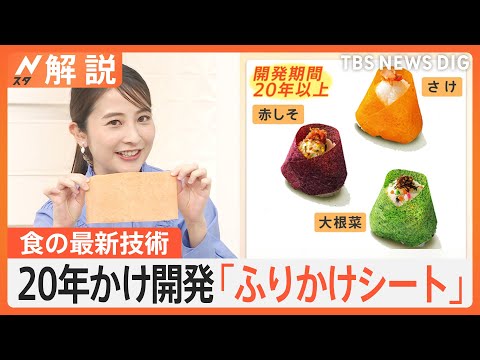
“Maku Furikake” is a Japan-originated food product that reimagines furikake beyond the traditional idea of “something you sprinkle over rice,” transforming it into a sheet designed to wrap around rice instead.
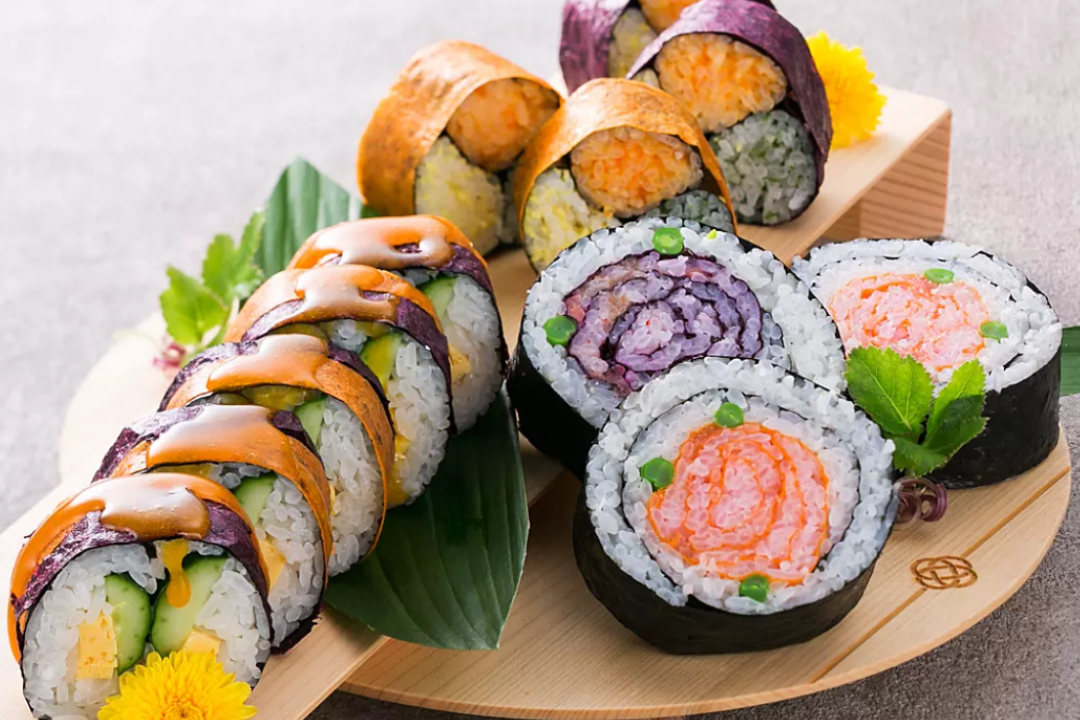
Combining the savory flavors of furikake with the ease of handling nori, this product stands out for letting you wrap rice and eat it as is.
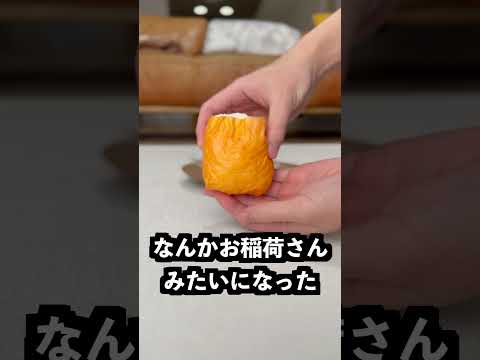
Its greatest appeal lies in delivering both convenience and cleanliness. You can wrap, hold, and eat rice without touching it directly. With no need for cooking tools or special preparation, it provides a consistent eating experience even on the go or during busy moments.
Flavor variations are inspired by the furikake culture long familiar on Japanese dining tables. Designed to be approachable for both children and adults, it is well-suited for everyday use.
Wrap (Maku) Furikake by Tanaka Foods
Source: Tanaka Foods Homepage
What Tanaka Foods set out to achieve with “Maku Furikake” was not simply to change the shape of furikake. The company was addressing a deeper question: how to adapt Japan’s deeply rooted rice-eating tradition to modern lifestyles.
In Japan, a culture of carrying rice has long existed through foods such as onigiri and bento boxes. At the same time, today’s fast-paced lifestyles often leave little room for time-consuming preparation. Small inconveniences—wrapping rice, getting your hands dirty, or spending extra time preparing a meal—can quietly accumulate in daily life.
Maku Furikake was created to resolve these everyday challenges. While preserving the familiar flavor of furikake, it is formed into a sheet, allowing rice to be wrapped and eaten as is. By integrating seasoning and wrapping into a single product, it eliminates additional preparation steps and delivers a consistent eating experience.
There are no special rules for using it. You can wrap warm rice and enjoy it immediately, making it easy to incorporate into busy mornings or meals on the go. When there is no time to make onigiri, or when you need a quick meal, it offers both a satisfying flavor and substance.
The pricing is also designed with daily use in mind. Rather than being a product reserved for special occasions, it is intended to fit naturally into everyday meals and snacks. By keeping the price accessible, it is positioned as a product that can seamlessly fit into household routines.
Because of these qualities, Maku Furikake appeals to a broad audience. It suits busy families and dual-income households, as well as situations where preparing snacks for children requires convenience. It is also well suited for meals outside the home, where cleanliness and portability matter. Even for people unfamiliar with rice-centered food cultures, the act of “wrapping and eating” is intuitive and easy to understand, offering the potential for a new culinary experience.
By combining Tanaka Foods’ longstanding understanding of rice culture with insight into modern life rhythms, Maku Furikake has evolved traditional Japanese rice cuisine into a portable, experience-driven product.
An Idea That Began by Questioning the “Sprinkle” Culture
The uniqueness of Maku Furikake does not lie in radically new flavors, but in reexamining the very assumption of what furikake is. In Japan, furikake has long been used to sprinkle over rice. By deliberately stepping away from that assumption and replacing it with the act of “wrapping,” this product introduces a fundamentally new approach.
The value created by wrapping goes beyond a simple visual change. Integrating rice and furikake into one helps prevent uneven seasoning and maintain a consistent flavor from the first bite to the last. Because it can be eaten without directly touching the rice, it is also easier to maintain cleanliness while commuting or eating on the go.
From a technical standpoint, transforming furikake into a sheet while preserving its flavor and texture requires careful design. It is not enough to simply press it thin. The sheet must withstand the moisture and warmth of rice, resist tearing, and maintain a pleasant mouthfeel. Maku Furikake achieves both convenience and taste by meeting these demanding conditions simultaneously.
This product is also rooted in a deep understanding of Japan’s rice culture. Rice remains the centerpiece, never overshadowed by excessive seasoning. That philosophy reflects Tanaka Foods’ long-established approach to craftsmanship and product development.
Changing Lifestyles and the Evolving Role of Rice Culture
As dual-income households have increased and lifestyles have diversified, the time people can devote to meals has steadily decreased. At the same time, the desire to “eat properly” and “choose foods that feel safe and reliable” has, in many ways, grown stronger. Tanaka Foods focused on this gap.
When convenience is prioritized, flavor and reassurance are often compromised. On the other hand, when careful preparation and quality are emphasized, the time and effort required tend to increase. The challenge was how to present an option that exists between these two extremes.
Maku Furikake was created to reconcile these seemingly opposing elements. It does not add extra preparation steps or require special techniques. Yet it preserves the familiar taste of rice that Japanese consumers have long appreciated. Achieving this balance was the true starting point of its development.
An Extension of the Founding Philosophy: “A Parent’s Loving Care for a Child”
At the heart of Tanaka Foods’ product development is the belief that its foods are “created with the loving care of a parent for their child.” This philosophy is not merely a slogan; it has long served as a guiding principle in product design and decision-making.
When products are viewed through the lens of whether a child can eat them with confidence and whether they are safe to consume daily, practicality becomes more important than flashiness. Maku Furikake strongly reflects this mindset. Rather than relying on unconventional flavors or excessive presentation, it prioritizes fitting naturally into everyday life.
Over its long history, the company has also cultivated a stance against over-chasing trends. By carefully observing changes in daily life and seeking forms that are genuinely needed, Tanaka Foods has built a foundation that ultimately led to ideas like Maku Furikake.
Designed to Be “Just Right” for Everyday Life
Source: Tanaka Foods Homepage
Maku Furikake is not a product designed for a single, specific purpose. Rather, what Tanaka Foods aims for is to allow it to blend naturally into a wide range of everyday situations.
At home, it is envisioned for busy mornings or light meals. Even when there is no time to prepare onigiri, simply wrapping rice turns it into a complete meal, significantly reducing preparation time. It is also easy to use for children’s snacks or when you only want a small portion, as it allows for flexible portion control.
When eating outside the home, cleanliness and ease of handling become key advantages. Because it can be enjoyed without directly touching the rice, it works well in parks, during commutes, at the office, or in other on-the-go settings. Compared to traditional onigiri, it is less likely to fall apart, lowering the psychological barrier to carrying and eating rice in public—an aspect that fits well with modern lifestyles.
These usage scenarios are not centered on special occasions but rather extend into everyday life. The expertise Tanaka Foods has cultivated over many years in developing household food products is directly reflected in the design of Maku Furikake.
The Simpler the Product, the More Complex the Process Behind It
Maku Furikake may appear to be a very simple product at first glance. However, achieving that simplicity requires significant ingenuity in both manufacturing processes and quality control.
When transforming furikake into a sheet form, it is essential to preserve its flavor and aroma while also ensuring durability and ease of handling. The sheet must maintain stable quality even when exposed to the moisture and warmth of rice, and it must feel natural and pleasant when eaten. The product must be carefully engineered to meet all of these requirements at once.
As a company with decades of experience in processed foods, Tanaka Foods maintains a consistent commitment to quality—from ingredient selection to production management. Its dedication to using authentic ingredients and never compromising on seasoning remains unchanged in Maku Furikake.
Because it is a product consumed regularly, safety and a stable supply are essential. Rather than relying on flashy production methods or extreme specifications, the company has established a manufacturing system designed for long-term, reliable use. This steady and disciplined approach supports the trust placed in the company.
A Longstanding Commitment to Rice Culture from Hiroshima
Tanaka Foods has operated for many years with Hiroshima as its base. As a regionally rooted food manufacturer, the company has a history of developing products that stay close to everyday household dining tables.
In Japan, rice is more than just a staple food—it is deeply connected to daily rhythms and family life. Tanaka Foods’ product lineup is designed to integrate into these everyday moments naturally. Maku Furikake is an extension of that same philosophy.
While respecting traditional rice culture, the company adapts its form to suit modern lifestyles. This approach reflects the inherent flexibility of Japanese food culture itself. Rather than preserving old values unchanged, Tanaka Foods updates them into forms that remain in use and are appreciated. This way of thinking is what supports the idea behind Maku Furikake.
Not a Gimmick, But a Product That Has Taken Root
Maku Furikake was not created simply to attract attention. In Japan, it has steadily gained acceptance based on its practicality as a household food product.
Tanaka Foods has supported the furikake market for many years. Backed by that sense of trust, Maku Furikake—while presented in a new form—has not been viewed as an extreme or gimmicky innovation. Instead, it has been naturally accepted as a reasonable additional option, with many consumers feeling that “this kind of choice makes sense.”
In Japan, where bento box culture is well established, practical qualities such as portability and cleanliness have been highly valued. Amid busy daily routines, the ability to continue using it without extra effort has led to sustained support.
The fact that it is developed and sold by a long-established food manufacturer also provides reassurance. Rather than being driven by trends, it has been designed with the question of whether it can endure as a staple in mind. This perspective has contributed to its steady track record in the Japanese market.
Connecting Rice Culture to Global Lifestyles
The potential of Maku Furikake in overseas markets goes far beyond simply being “uniquely Japanese.”
What truly deserves attention is how naturally it aligns with today’s global food challenges.
Around the world, demand is rising for staple foods that can be eaten quickly amid busy lifestyles. At the same time, there is growing interest in convenient meals that offer greater satisfaction and cultural depth, rather than relying solely on bread or snack-based options. Maku Furikake meets both needs at once.
The act of wrapping rice and eating it is intuitive, even for those unfamiliar with Japanese culture. It requires no cooking equipment, keeps hands relatively clean, and comes in easy-to-handle individual packaging. These features make it adaptable to a wide range of situations, including office lunches, outdoor activities, schools, and travel.
In addition, Maku Furikake is not a product that aggressively asserts a strong flavor identity. This becomes a significant advantage in global expansion. Its structure allows room to pair with local ingredients and cuisines, making it highly adaptable for localization. While it originates in Japan, it does not easily clash with other food cultures. From a B2B perspective, this flexibility makes it particularly appealing.
Why Now Is the Time for Global Companies to Pay Attention to Maku Furikake
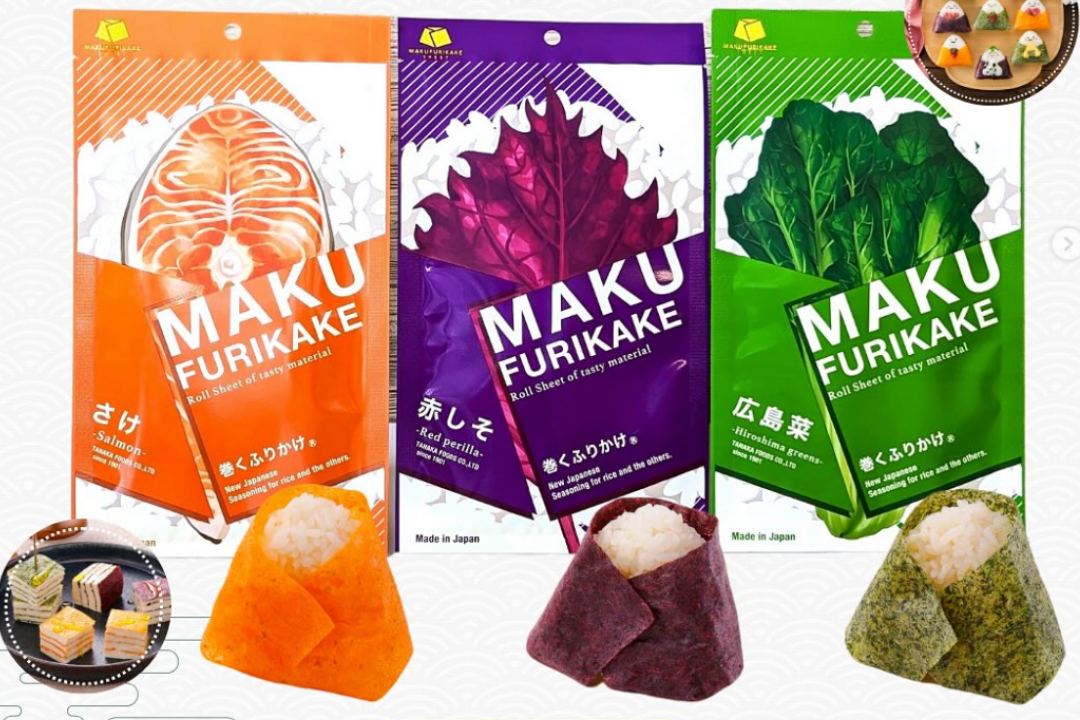
Source: Tanaka Foods Homepage
Maku furikake is not a product that simply exports Japanese rice culture as it is. It is a staple—rice—redesigned to fit modern lifestyles.
Behind this concept lies the philosophy of Tanaka Foods, a company that has supported Japanese dining tables for more than a century. By returning to its founding principle of caring for children with a parent’s devotion, the company has carefully observed societal changes and continually updated its products to suit each era. That steady accumulation of thought and refinement ultimately led to the idea of wrap-style furikake.
For overseas companies, the value this product represents is clear. Preserving tradition and embracing change are not opposing forces. By respecting culture while translating it into forms that remain in use, new markets and experiences can emerge.
Maku furikake is not only a food product but also a lifestyle concept originating in Japan. It quietly yet reliably fulfills what the world increasingly seeks today—convenience, reassurance, and cultural depth—and holds strong potential to attract even greater global attention in the years ahead.
FAQ About Maku Furikake
1. What Is Maku Furikake?
Maku Furikake is a sheet-style seasoning developed by Tanaka Foods Co., Ltd., designed to be wrapped around rice. It redefines the traditional idea of sprinkling furikake by allowing users to season rice as they wrap it, offering an innovative way to enjoy flavored rice.
2. How Is It Different from Regular Furikake?
The key difference is that it combines seasoning with a wrapping function. Unlike conventional furikake, which is sprinkled over rice, Maku Furikake comes in sheet form, allowing rice to be wrapped directly in it. This results in more even flavor distribution and makes it less messy to eat.
3. Why Was the Idea of “Wrapping” Developed?
It emerged in response to changing lifestyles in Japan. With more dual-income households and busier routines, there is a growing need for meals that are both convenient and satisfying. Maku Furikake was created to bridge that gap.
4. In What Situations Is It Most Useful?
It is suitable for a wide range of situations, including busy mornings, children’s snacks, office lunches, and meals on the go. Since it can be eaten simply by wrapping rice, it offers a quick, satisfying option without the need to prepare full rice balls.
5. Why Could It Gain Attention Overseas?
It aligns well with modern food needs such as convenience, cleanliness, and portability. Even in countries without a strong rice culture, the act of wrapping food is intuitive, giving it potential as a new type of portable food.
6. How Is It Connected to Japanese Onigiri Culture?
Maku Furikake can be seen as a modern reinterpretation of Japan’s onigiri culture. While it retains the idea of wrapping rice for portability, it evolves the concept into a more convenient and hygienic format.
7. What Kind of Technical Innovation Is Involved?
The product is engineered to maintain flavor and texture while being processed into a thin sheet. It must withstand the moisture and heat of rice without breaking, while still providing a pleasant mouthfeel. It leverages the long-standing expertise of Tanaka Foods Co., Ltd., built through years of developing furikake products.
8. Is It Also Valued as a Product for Children and Families?
Yes, it reflects Tanaka Foods Co., Ltd.’s philosophy of caring for children through food. It requires no special preparation, is easy for children to eat, and is designed for everyday use at home, making it highly appreciated by families.
9. Why Didn’t It Remain Just a Novelty Item?
Because of its practicality and seamless fit into daily life. Beyond its unique concept, it offers clear benefits, such as convenience during busy times and ease of eating on the go, helping it gain steady support as a household food product.
10. What Is the Main Appeal of Maku Furikake?
Its greatest appeal lies in how it naturally connects Japan’s rice culture with modern lifestyles. While preserving traditional furikake, it evolves the experience into something new, simply wrapping rice to create an easy, convenient way to eat.
Related Videos
If you're interested in Japan’s clever food innovations, the video below introduces a magical sheet that transforms rice into a portable, easy-to-eat meal. This video shows how a simple idea can change the way people enjoy traditional Japanese dishes while adding convenience to everyday life.