In Japan's hospitality industry, relatively few hotel brands have built their identity around family travel. One notable exception is MIMARU, an apartment hotel brand operated by Cosmos Hotel Management. Since its launch, MIMARU has challenged many of the assumptions that have traditionally shaped urban hotel design in Japan.
The problem the company set out to solve was surprisingly simple. For decades, most city hotels in Japan were designed primarily for one or two guests. Rooms were compact, beds were separated, and accommodating families or larger groups often required booking multiple rooms. As a result, international visitors traveling with children frequently found their lodging options limited.
MIMARU took a different approach. Instead of adapting small hotel rooms for families, the brand designed its properties around group stays from the beginning. Guest rooms feature kitchens, dining areas, and shared living spaces, allowing families and friends to spend meaningful time together in the same room. Rather than viewing a hotel as simply a place to sleep, MIMARU reimagined it as a home base for the entire travel experience.
This philosophy has become increasingly relevant as traveler expectations evolve. Many modern travelers are placing greater value on shared experiences than on checking off as many tourist attractions as possible. For families in particular, the quality of time spent together can be just as important as the destinations themselves. The hotel room is no longer just a place to return to at the end of the day. It has become part of the experience.
It was from this perspective that MIMARU developed its Pokémon Rooms.
While themed hotel rooms are hardly new, the Pokémon Room is not simply a guest room decorated with popular characters. Instead, it represents an extension of MIMARU's broader philosophy about family travel. The project offers an interesting example of how one of the world's most recognizable entertainment franchises can be integrated into a hospitality concept that prioritizes shared experiences and family connection.
Pokémon Room (MIMARU) Overview
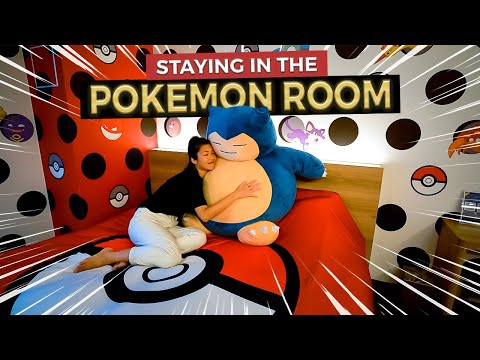
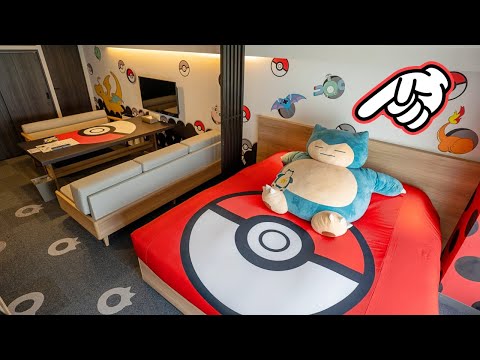
The Pokémon Room is designed as more than a character-themed accommodation. By incorporating the Pokémon universe into a room layout already optimized for families and groups, MIMARU aims to create an environment where staying in the room itself becomes part of the vacation experience.
Throughout the room, guests encounter Pokémon-themed artwork, decorations, and design elements that encourage interaction and conversation. Children naturally engage with the space, but adults are drawn into the experience as well. Importantly, the design avoids becoming visually overwhelming. Pokémon is present throughout the room, yet the atmosphere remains comfortable and functional as a hotel environment.
Like other MIMARU accommodations, the Pokémon Rooms are designed for group stays. Guests have access to kitchens, dining areas, and shared living spaces that encourage spending time together indoors. In this setting, the Pokémon theme serves a specific purpose: transforming downtime in the room into a meaningful part of the trip.
The pricing sits above that of a typical business hotel, but it is generally more accessible than many destination resort or theme park hotels. Guests are not simply paying for character branding. They are paying for a family-oriented accommodation experience where everyone can stay together in a thoughtfully designed environment. That balance has helped the concept appeal to both domestic and international travelers.
The Thinking Behind MIMARU's Pokémon Rooms
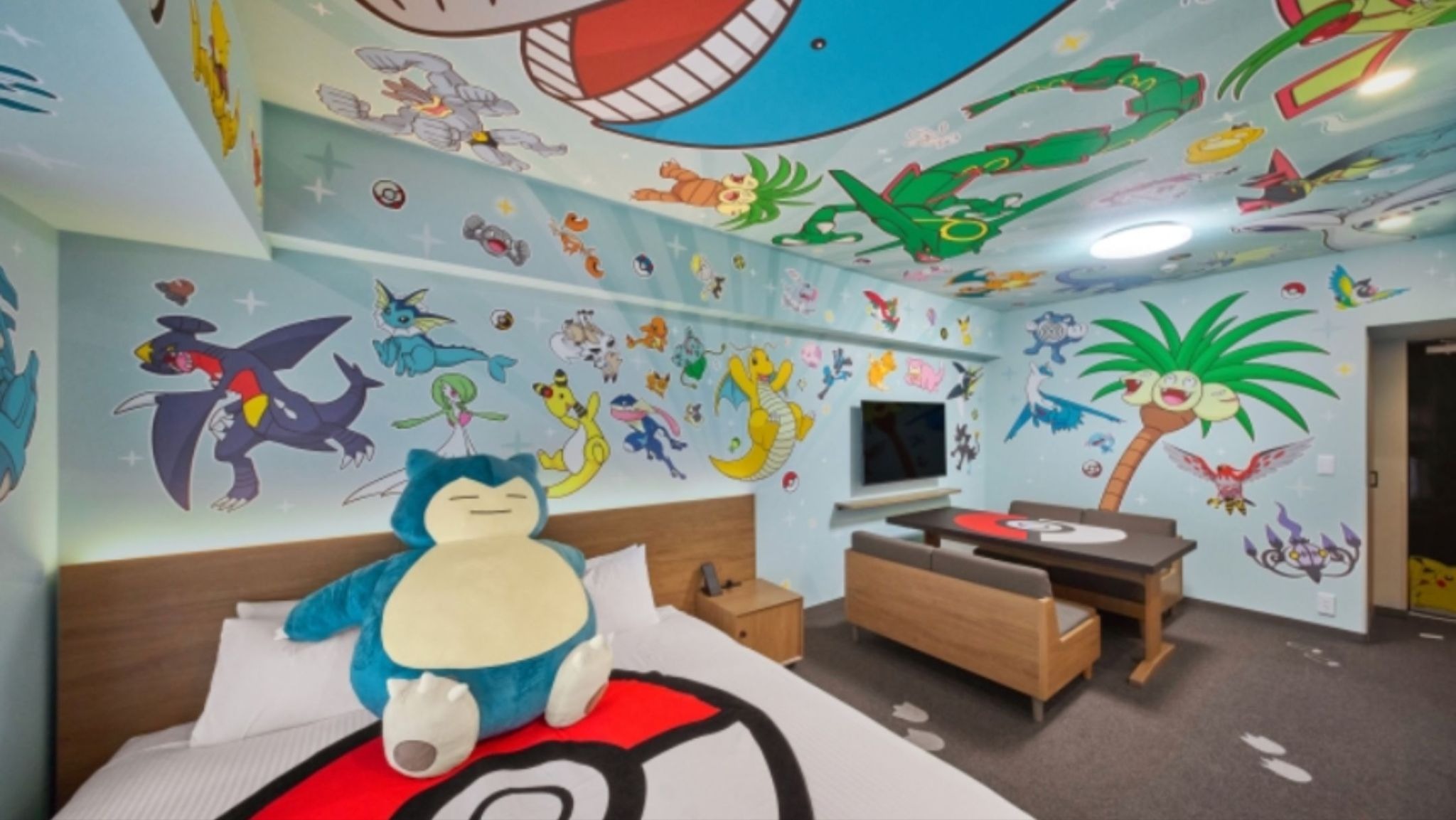
Source: MIMARU Homepage
The Pokémon Room is perhaps the clearest expression of MIMARU's brand philosophy. What makes the concept noteworthy is that it goes beyond a traditional licensing collaboration.
From the beginning, MIMARU has focused on one central idea: creating spaces where families and groups can spend time together. Meals, conversations, relaxation, and entertainment all take place within the same shared environment. Because this principle is already built into the room design, Pokémon becomes more than decoration. It becomes part of the overall experience.
Integrating Brand Philosophy into Every Space
The room's layout reflects this thinking. The themed elements are not positioned simply to be photographed. They are integrated into the space guests actively use throughout their stay. Children move through the room exploring different details, while parents naturally join conversations and interactions sparked by what they discover. Pokémon remains present throughout the stay rather than functioning as a single photo opportunity.
This approach differs significantly from many theme-oriented hotels. MIMARU is not built around the assumption that guests spend the entire day outside before returning only to sleep. Instead, the brand places considerable value on the hours guests spend together after returning from sightseeing. The Pokémon Room serves as one of the most visible examples of this philosophy in practice.
The choice of Pokémon itself is also strategic. Few entertainment properties enjoy the same level of global recognition across generations and cultures. Parents who grew up with Pokémon can share the experience with their children, creating common ground that transcends age. Just as importantly, the franchise carries an inclusive and family-friendly image that aligns naturally with MIMARU's target audience.
As a result, the Pokémon Room feels less like accommodation created exclusively for Pokémon fans and more like a family travel environment enhanced by a familiar and beloved world. The characters are highly visible, but they never overwhelm the stay itself. That balance is one of the key factors that distinguishes MIMARU from many other themed hotel concepts.
Why MIMARU Continues to Invest in and Refresh the Pokémon Room Concept
MIMARU's decision to continue operating and periodically renewing its Pokémon Rooms reflects broader changes taking place in Japan's tourism market.
As international tourism has recovered, one trend has become increasingly clear: independent travelers, particularly families and small groups, have returned faster than many expected. These travelers often prioritize flexibility, comfort, and personalized experiences over standardized tour packages. As a result, the role of accommodation has expanded beyond location and price alone.
Travelers are increasingly evaluating what they can do inside the hotel itself.
More Than a Photo Op: Making Pokémon Part of the Stay
MIMARU anticipated this shift long before it became widely discussed. The continued success of the Pokémon Rooms suggests that the brand's strategy was not merely responding to a temporary trend. While themed rooms are common throughout the hospitality industry, many struggle to generate long-term repeat demand because they rely primarily on novelty.
The Pokémon Room addresses this challenge differently. It is designed to be used rather than simply admired. Furniture placement, room flow, and visual design are all intended to support how families actually spend time together. As a result, returning guests can continue discovering new aspects of the experience rather than feeling they have already seen everything during a previous visit.
The nature of the Pokémon brand also contributes to its longevity. Because the franchise continues evolving across generations, it remains relevant to both parents and children. This cross-generational appeal aligns particularly well with MIMARU's family-focused positioning.
Ultimately, MIMARU is not investing in the Pokémon Room simply to maintain publicity. The company sees experiential accommodation as a long-term competitive advantage. By turning the hotel room into part of the destination itself, MIMARU has created a model that resonates strongly with the modern family travel market.
From a Place to Stay to a Place Where Memories Are Made
The popularity of the Pokémon Room cannot be explained by the strength of the Pokémon brand alone. Its success stems from how effectively it supports the kind of travel experience MIMARU set out to create.
International families make up a significant portion of guests. After long flights and major time-zone changes, many travelers appreciate having a destination that begins the moment they enter their room. Children immediately become engaged with their surroundings, while parents have an opportunity to relax and settle in. The hotel room itself becomes part of the first day's itinerary.
The Strategic Choice: A Global Connection Across Generations
The concept also works particularly well for multi-generational travel. When grandparents, parents, and children share the same accommodation, creating experiences that appeal to everyone can be challenging. Pokémon serves as a rare cultural touchpoint that many generations recognize, making it easier for family members to connect and share moments together.
Domestic travelers often use the rooms for birthdays, celebrations, and special occasions. The experience feels unique without requiring the expense or commitment of a major resort vacation. This positioning has helped generate repeat visits and long-term demand.
Importantly, the Pokémon Rooms also function as an introduction to the broader MIMARU brand. Many guests first discover the company through the themed rooms and later return to stay in standard accommodations. Rather than overshadowing the brand, the collaboration helps strengthen it.
What emerges from these use cases is a simple but powerful observation. The Pokémon Room succeeds because it combines emotional appeal with practical usability. It is a special room that remains genuinely comfortable to live in, which is precisely why guests continue choosing it year after year.
Ensuring a Character-Themed Room Becomes More Than a Temporary Attraction
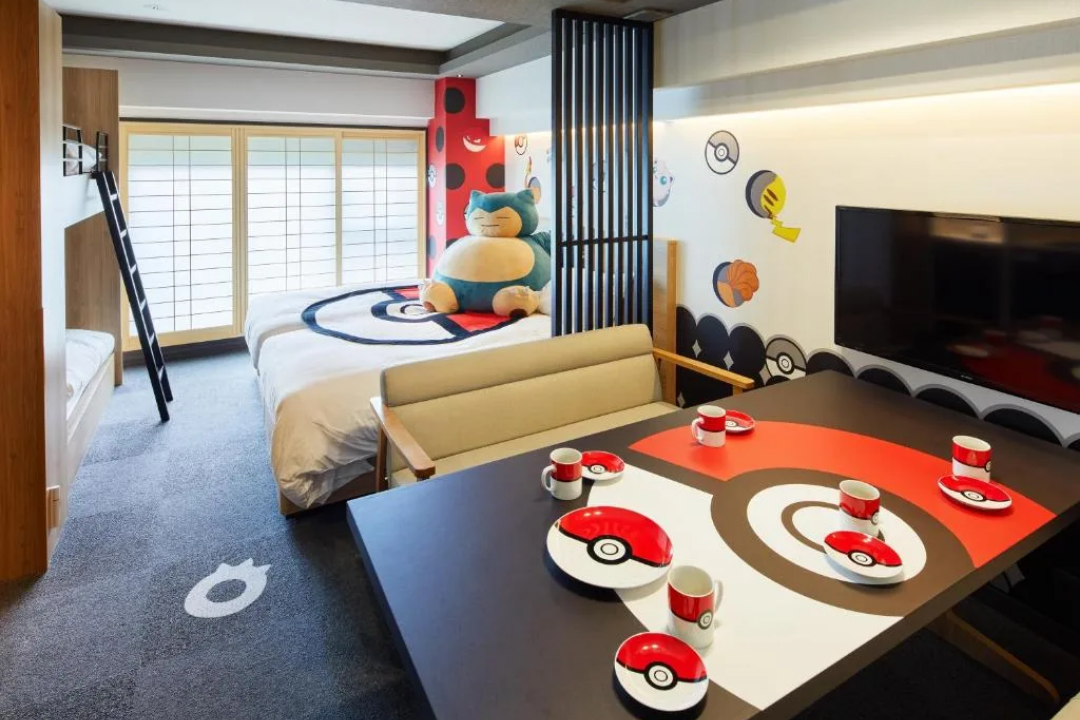
Source: MIMARU Homepage
The success of the Pokémon Room is not driven by the popularity of Pokémon alone. In many ways, the greater challenge lies in maintaining hotel-quality operations while preserving the integrity of a globally recognized intellectual property over the long term. Cosmos Hotel Management, the company behind MIMARU, has approached this challenge with a highly practical and operational mindset.
To begin with, the room's decorative elements and furnishings are selected with durability and ease of maintenance in mind. Unlike temporary event installations, the Pokémon-themed walls, furniture, and interior features must withstand daily cleaning, inspections, and continuous guest use. Materials and surface treatments are chosen to resist fading, peeling, and wear, reflecting quality standards established specifically for long-term operation.
A Living Experience: Design That Prioritizes Family Connection
Safety and flexibility are equally important considerations. Because many guests are families with children, furniture placement and room layouts are designed to minimize risks and support safe movement throughout the space. Even within a highly themed environment, hotel safety standards remain the priority. At the same time, the rooms are designed with future updates and partial renovations in mind, avoiding excessive permanence that could limit adaptability over time.
From an operational standpoint, MIMARU places significant importance on ensuring that Pokémon Rooms can be managed using the same workflows as standard guest rooms. By avoiding the need for specialized cleaning procedures or dedicated staff, the company can maintain high service quality without increasing operational complexity. This scalability is one of the reasons the concept has been successfully deployed across multiple locations rather than remaining a limited one-off attraction.
The company also maintains a careful balance when managing the Pokémon intellectual property. While strict brand guidelines are naturally followed to preserve the integrity of the Pokémon universe, operational flexibility is retained wherever possible. The goal is not simply to showcase a famous franchise, but to maintain a sustainable balance between themed entertainment and practical hospitality. This balance ultimately supports the long-term value of both brands.
Although the visual impact of the Pokémon Room often attracts the most attention, its design is fundamentally guided by a different priority: ensuring that the rooms can operate efficiently within everyday hotel operations. Rather than treating the themed experience as something separate from the hotel's core business, MIMARU manages it as an extension of its standard hospitality offering. This philosophy has allowed the Pokémon Room to evolve into a stable accommodation product rather than a short-lived promotional concept.
Beyond Providing a Place to Sleep: Rethinking the Role of Hotels
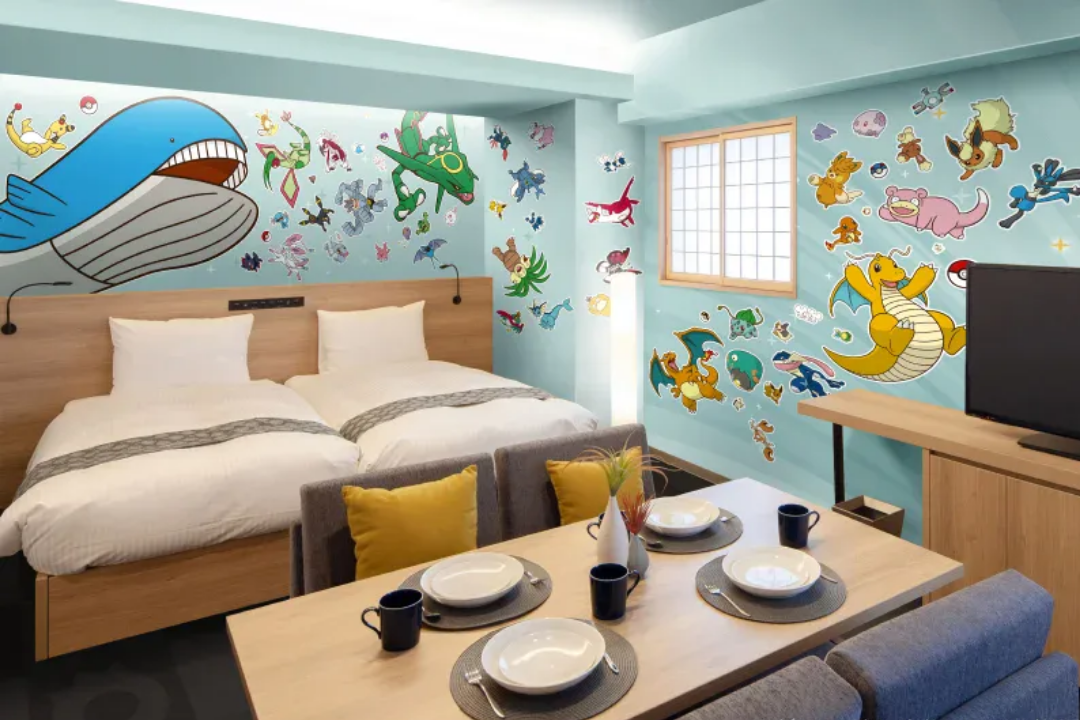
Source: MIMARU Homepage
At the heart of Cosmos Hotel Management's strategy is a highly practical observation about the realities of urban tourism.
For decades, much of Japan's hotel industry optimized around location, price, and occupancy rates. While this approach works well for solo travelers and business guests, it often creates challenges for families and groups. Family members may need to sleep on extra beds, split across multiple rooms, or spend as little time as possible inside the hotel. These compromises became so common that they were often accepted as unavoidable.
MIMARU chose to address the underlying structure creating those inconveniences.
The company recognized that accommodation-related frustrations do more than reduce comfort. They can diminish the overall quality of a trip and even influence whether travelers choose a destination in the first place. For international visitors especially, hotels are where a significant portion of each day is spent. If that environment creates stress, it can affect perceptions of the entire travel experience.
Rather than simply making rooms larger or adding more beds, MIMARU reconsidered a more fundamental question: what purpose should a hotel serve?
Integration Without Overwhelming the Guest
If eating, relaxing, socializing, and spending time together can all take place within the same space, travelers can devote less energy to coordination and logistics and more energy to enjoying their trip. This thinking ultimately led to the apartment hotel model that defines the MIMARU brand.
The Pokémon Room emerged as a natural extension of this philosophy.
The company was not primarily focused on how to utilize a famous character franchise. Instead, the objective was to enrich family experiences. Pokémon became a means of achieving that goal rather than the goal itself. The brand provides a shared topic that encourages interaction across generations and helps extend the sense of adventure even after guests return to their room at the end of the day.
At the same time, MIMARU understands the risks associated with major IP collaborations. Globally recognized characters can attract attention, but poorly managed partnerships can overshadow the hotel's own identity. By consistently positioning itself as a family-oriented hospitality brand first and treating the Pokémon Room as one component of a broader strategy, MIMARU avoids allowing the collaboration to define the brand entirely.
This initiative was never intended simply to generate publicity. Instead, it represents an ongoing experiment in expanding the role of hotels from places where people sleep to places where people share meaningful time together. The Pokémon Room is merely one visible example of that broader ambition.
Updating the Family Travel Model Rather Than Expanding Character Rooms
Looking ahead, MIMARU's long-term vision is not simply to increase the number of Pokémon Rooms.
Instead, the company aims to establish family and group stays as a standard option within urban tourism. The Pokémon Room serves as an accessible entry point into that vision, but it is not the end goal.
One area of focus is the continued evolution of guest experiences. Rather than limiting memorable moments to the guest room itself, MIMARU is exploring ways to better connect hotel stays with surrounding neighborhoods and attractions. Staying together in the same room is considered the foundation. The next challenge is determining how hotels can support and enrich the entire travel experience throughout the day. In doing so, MIMARU is gradually blurring the traditional boundary between accommodation and tourism guidance.
Integration with Inbound Tourism
Another important consideration is the maturation of the inbound travel market. As repeat visitors and longer-stay travelers become more common, expectations regarding what constitutes an authentic Japanese experience continue to evolve. Travelers increasingly seek opportunities to experience daily life rather than simply consuming traditional aesthetics or famous brands. Apartment hotels are particularly well positioned to support this shift, and the Pokémon Room represents one example of how that philosophy can be expressed.
Future IP collaborations are also likely to be approached with increasing caution and strategic discipline. Intellectual properties with broad cross-generational and international appeal, such as Pokémon, are exceptionally valuable, but replicating the same formula with other franchises is not necessarily the answer. The critical principle is ensuring that the IP never becomes more important than the guest experience itself. MIMARU's core value remains its ability to help families spend meaningful time together. Collaborations can expand as long as they reinforce that objective rather than distract from it.
From an operational perspective, the company is also looking beyond major metropolitan areas. Family travel demand exists throughout Japan and may, in some cases, be even more pronounced in regional destinations. Because the MIMARU model can be adapted to different locations and tourism environments, its potential applications extend far beyond the cities where it currently operates.
Ultimately, MIMARU is not seeking to become a niche exception within the hotel industry. Its broader ambition is to make family and group accommodation a normal, accessible choice that requires no special effort or compromise. Within that larger mission, concepts such as the Pokémon Room play an important role in demonstrating what is possible, but they are not the final objective.
Not a Character Room, but a Room Designed for Family Time
Guest feedback surrounding the Pokémon Room reveals an interesting pattern.
Many people assume that character-themed accommodations are primarily valued for their visual impact or social media appeal. In reality, one of the most frequently mentioned aspects of the Pokémon Room is not the décor itself but the quality of time families spend together inside it.
Among international visitors, reviews often describe how children immediately felt comfortable upon entering the room or how spending the first day relaxing indoors after a long journey became one of the most memorable parts of the trip. In these cases, the hotel functions as a place for recovery and adjustment after extensive travel, while the Pokémon theme helps create a welcoming and reassuring atmosphere.
Restrained Aesthetics for Adult Comfort
Adult guests frequently highlight something else entirely: restraint.
Many reviewers appreciate that the room does not feel overwhelming or excessively themed. Guests who might otherwise worry about staying in a highly character-driven environment often describe the Pokémon Room as balanced and comfortable. Rather than turning the entire space into an immersive fantasy environment, the design remains functional as a genuine living space. This balance is one of the concept's most widely praised characteristics.
Domestic travelers often choose the rooms for birthdays, anniversaries, and other special occasions. In these situations, the room provides an experience that feels memorable without becoming excessive. Children enjoy the Pokémon elements, while adults can still relax comfortably. The positive reception suggests that MIMARU's design philosophy is clearly reaching guests.
Social media activity reflects the same trend. While guests certainly share photographs of the rooms, many posts focus on the experiences families had together rather than the decorations alone. The room becomes part of a larger story rather than the sole attraction.
Taken together, these reactions suggest that the Pokémon Room is not viewed as a space created for a single individual. Instead, it is valued as a place where people can share meaningful experiences together. Pokémon serves as the invitation, but the guests themselves remain at the center of the experience. As long as that relationship remains intact, the concept has strong potential for long-term success.
Why the Pokémon Room Is Recognized as an Operating Model Rather Than a Marketing Campaign
When evaluating the Pokémon Room's performance in Japan, one characteristic stands out: it has not been treated merely as a promotional collaboration.
Industry observers have often focused less on the characters themselves and more on how a family-oriented hotel successfully integrated a globally recognized intellectual property into its overall operating strategy.
Coverage frequently appears in hospitality industry publications and business-focused media outlets rather than exclusively in entertainment or lifestyle media. Discussions tend to focus on hotel management, family travel, and guest experience design rather than simply celebrating the introduction of a visually appealing themed room. This reflects a broader understanding that the Pokémon Room functions as an extension of MIMARU's brand strategy rather than a standalone attraction.
The fact that the rooms remain available on an ongoing basis also contributes to this perception. Unlike temporary promotional events, the Pokémon Rooms operate as a long-term accommodation offering. This continuity allows MIMARU to leverage the value of the Pokémon brand without compromising its credibility as a hospitality provider.
Operational performance is equally significant. The rooms help maintain demand throughout both peak and off-peak periods while contributing to overall brand awareness. Rather than existing in isolation, they support bookings across the wider MIMARU portfolio and strengthen recognition of the brand as a whole.
The concept has also helped differentiate MIMARU within Japan's urban hotel market. By focusing specifically on families and groups, the company established a position distinct from the business-travel-oriented model that historically dominated many city hotels. The Pokémon Room has become one of the most visible expressions of that differentiation.
Viewed from this perspective, the Pokémon Room is noteworthy not because it is a successful promotional campaign, but because it represents a successful operating framework. That distinction gives the concept a level of sustainability that many themed accommodations struggle to achieve.
Why the Concept Can Travel Globally Without Relying on Traditional Images of Japan
One reason the MIMARU model, including the Pokémon Room, has strong international potential is that it does not rely heavily on stereotypical representations of Japanese culture.
Rather than emphasizing tatami mats, traditional patterns, or other highly recognizable cultural symbols, the concept focuses on a universal value proposition: allowing families and groups to spend meaningful time together in the same space. Because that objective transcends cultural boundaries, the model encounters relatively little friction when applied to different markets.
This positioning aligns particularly well with urban tourism markets across Asia, North America, and Europe. In many of these regions, family travel and multigenerational travel continue to grow, and travelers increasingly prioritize room size, safety, and opportunities to spend time together indoors. Apartment hotels are especially effective in this context because features such as kitchens and dining spaces accommodate a wide variety of lifestyles, dietary preferences, and travel habits.
Regional Customization
Pokémon itself is also unusually well suited to international expansion. The franchise is not tied to any single country or culture and enjoys recognition across generations around the world. More importantly, Pokémon functions less as a symbol of Japanese culture and more as a shared language between family members. This distinction helps preserve its relevance regardless of geographic location.
The operating model is similarly transferable. The concept does not require specialized performers, complex attractions, or highly customized operational systems. Because it can be managed within the framework of standard hotel operations, replication across international properties becomes more feasible. Although IP management standards remain rigorous, they also help ensure consistency across markets.
In overseas markets, guest motivation is likely to center less on the presence of Pokémon itself and more on the promise of a comfortable family stay. Pokémon serves as the initial attraction, but if the accommodation experience delivers lasting value, repeat visits can occur independently of the themed elements. This creates a sustainable two-layer value proposition that extends beyond short-term novelty.
MIMARU's Pokémon Room may have originated in Japan, but it does not attempt to impose a particular vision of Japan on its guests. That design philosophy may ultimately prove to be one of its greatest strengths as the concept continues to expand internationally.
Conclusion
MIMARU's Pokémon Room is often described as a successful example of character-based hospitality. Yet the true significance of the concept lies elsewhere.
At its core, the project is not a marketing initiative built around a popular intellectual property. It is a hospitality product developed through a clear philosophy about family travel and shared experiences.
Cosmos Hotel Management began by addressing a longstanding structural issue within urban accommodation: families and groups often struggled to stay comfortably together in a single space. The resulting MIMARU brand places shared time at the center of its value proposition, using room design, amenities, and operational planning to support meaningful interactions among guests. The Pokémon Room simply makes that philosophy visible through a globally recognizable lens.
What makes the model particularly compelling is its consistency. The character collaboration enhances the guest experience without overwhelming it. The visual design is memorable, but the operational framework remains practical and sustainable. Novelty and functionality coexist within the same product rather than competing against one another.
For international businesses, the most valuable lesson may be the balance itself. Regardless of cultural differences, families everywhere share a common desire to spend time together comfortably and meaningfully. MIMARU's model does not rely on uniquely Japanese aesthetics to satisfy that need. Instead, it translates a universal human preference into a hospitality experience.
The broader implications extend well beyond the hotel industry. By building products around a clearly defined purpose and then integrating external brands or partners in ways that reinforce that purpose, organizations can create new forms of value without sacrificing their identity. The Pokémon Room demonstrates how that process can work in practice.
MIMARU's Pokémon Room is not simply a showcase of Japanese creativity or a celebration of a famous franchise. It is a sophisticated example of how Japan's hospitality industry is redefining value, designing for shared experiences, and connecting local innovation with global audiences.
FAQ About MIMARU's Pokémon Room
1. What Is MIMARU's Pokémon Room?
MIMARU's Pokémon Room is a themed accommodation experience inspired by the world of Pokémon. Designed for families and groups to enjoy together, the room transforms a hotel stay into a memorable part of the travel experience.
2. Who Is The Pokémon Room Recommended For?
The Pokémon Room is popular with families traveling with young children, groups of Pokémon fans, and international visitors alike. Its spacious, group-friendly layout makes it particularly well suited for families and friends traveling together.
3. Are Pokémon Rooms Available At All MIMARU Hotels?
Pokémon Rooms are available at selected MIMARU properties. Participating hotels and room availability may change over time, so guests are encouraged to check MIMARU's official website for the latest information.
4. How Does The Pokémon Room Differ From A Standard Guest Room?
The room features Pokémon-themed décor and interior design elements while maintaining the spacious, group-oriented layout that MIMARU is known for. It also includes practical amenities such as a kitchen and dining area, combining themed entertainment with everyday functionality.
5. How Much Does It Cost To Stay In A Pokémon Room?
Rates vary depending on the hotel location, room type, and travel dates. The most up-to-date pricing information can be found on MIMARU's official website.
6. Why Did MIMARU Collaborate With Pokémon?
One reason is the strong alignment between MIMARU's concept of creating shared travel memories for families and groups and Pokémon's broad appeal across generations and cultures. Both emphasize experiences that people can enjoy together.
7. Is The Pokémon Room Only For Children?
While it is especially popular with families, the Pokémon Room is also enjoyed by adult travelers and Pokémon fans of all ages. The design balances playful elements with a comfortable atmosphere to appeal to a wide range of guests.
8. How Is MIMARU Different From A Typical Hotel?
MIMARU is an apartment hotel brand designed specifically for group travel. Its spacious rooms include features such as kitchens and dining areas, making it easier for families and groups to stay together and enjoy a more home-like experience.
9. Is MIMARU Popular With International Travelers?
Yes. MIMARU is widely used by international visitors, particularly families and groups. Its spacious accommodations and facilities that support longer stays are among the reasons it is highly valued by travelers from around the world.
10. What Kind Of Travel Experience Does MIMARU Aim To Create?
MIMARU views a hotel as more than just a place to sleep. Its goal is to provide a shared base where families and friends can spend time together and create lasting memories. By offering a comfortable and enjoyable stay, MIMARU aims to enhance the overall travel experience.
Related Videos
If you're interested in family-friendly travel experiences in Japan, the video below explores why a Japanese hotel brand partnered with Pokémon to create memorable stays for children and parents alike. This video shows how themed accommodations and beloved characters are helping redefine family travel through immersive hospitality.