
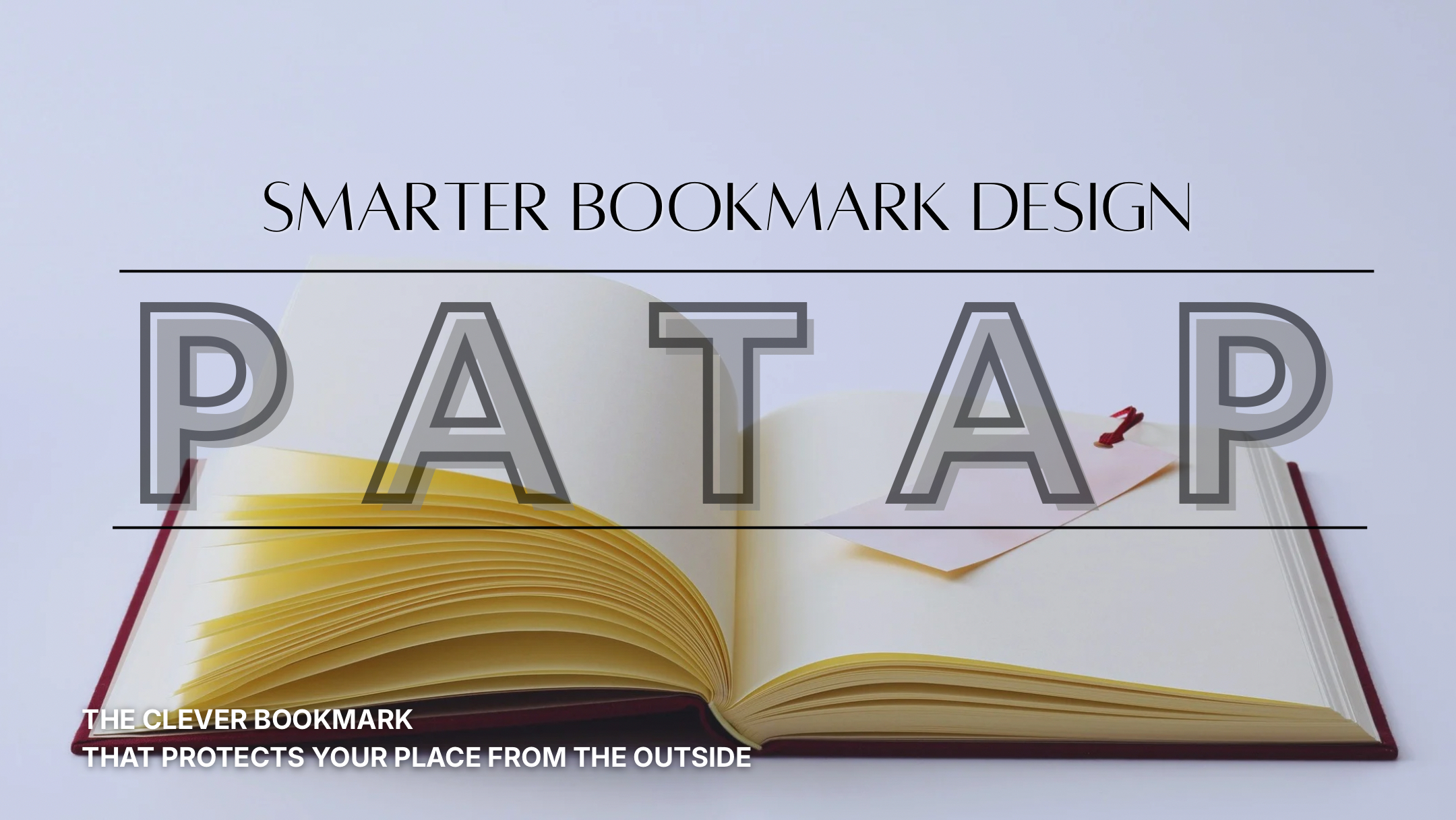
When most people finish reading for the day, they instinctively slip a bookmark between the pages and close the book. It is one of the smallest and least noticeable actions in the entire reading experience.
Yet a Japanese stationery company looked at that exact moment and asked a simple question: what if this part could work better?
The PATAP Silicone Bookmark was created to solve a frustration that many readers have experienced but rarely think about. Traditional bookmarks can fall out, shift during travel, or leave you flipping through pages trying to find where you left off. Instead of accepting those inconveniences as unavoidable, PATAP rethinks the bookmark itself.
Created by Nakabayashi, a Japanese company with more than a century of experience in paper products, bookbinding, and stationery, PATAP reflects a design philosophy that is common among Japan's most respected stationery brands. Rather than creating flashy gadgets or feature-packed products, Nakabayashi focuses on improving everyday habits in subtle ways that users may not even consciously notice.
That philosophy is immediately visible in PATAP.
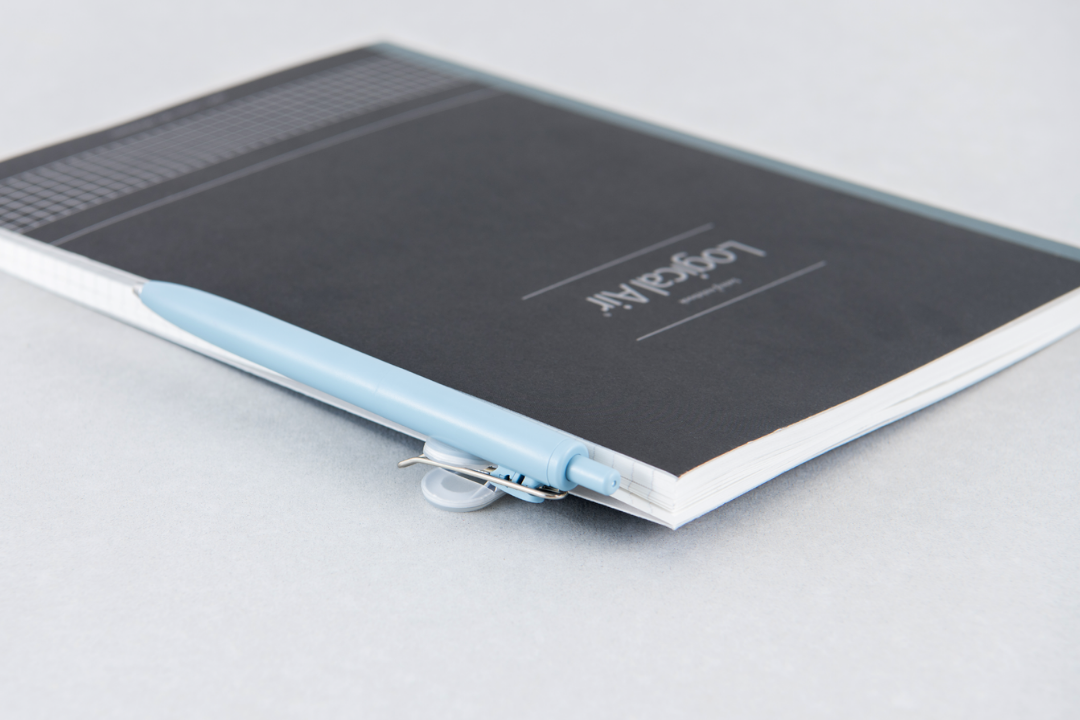
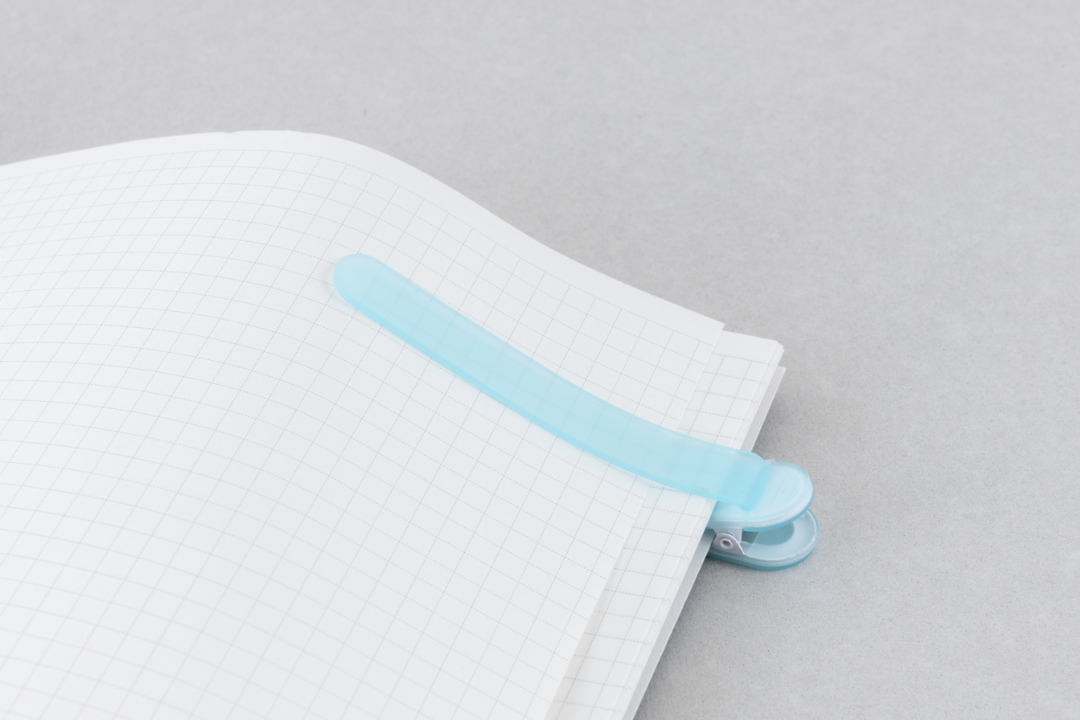
Unlike traditional paper, fabric, or metal bookmarks, PATAP is made from flexible silicone. More importantly, it does not sit between the pages. Instead, it wraps around the outside of a closed book, gently securing your place after you've finished reading.
The result is surprisingly practical. Whether you're carrying a novel in a backpack, commuting with a paperback, or moving between meetings with a business book, there's far less risk of losing your place. You don't have to think about protecting your bookmark because the bookmark is designed to protect your reading progress.
The timing for a product like PATAP is particularly interesting. Around the world, physical books have experienced a resurgence despite the widespread adoption of e-books. For many readers, books are no longer just a source of information. Reading has become a deliberate escape from screens, a way to focus, relax, and slow down.
As more people seek meaningful offline experiences, interest has grown in tools that quietly support those moments rather than interrupt them.
PATAP fits naturally into that trend.
It doesn't demand attention while you're reading. It doesn't add unnecessary features. It simply waits until you close the book, then does its job. For readers who feel overwhelmed by increasingly complex products, that restraint may be exactly what makes PATAP appealing.
In many ways, this small bookmark captures two qualities that have made Japanese stationery famous worldwide: thoughtful problem-solving and a deep understanding of how people interact with paper in everyday life.
PATAP Silicone Bookmark Overview
The PATAP Silicone Bookmark is a stationery product built around one of the quietest moments in reading: the moment you close a book.
Traditional bookmarks are typically inserted between pages. While effective in theory, they can easily slip out during transport, shift inside a bag, or fall out entirely without the reader noticing. PATAP challenges this long-standing assumption by rethinking how a bookmark should work. Instead of marking a page from within the book, it secures the book from the outside after it has been closed.
Made from flexible silicone, PATAP gently adapts to books of different thicknesses without damaging pages. Because it wraps around the closed book, it helps keep your place secure even while traveling. It remains virtually invisible during reading and only becomes functional once the book is closed. That understated approach is at the heart of the product's appeal.
In Japan, PATAP is priced as an everyday stationery item rather than a premium specialty product, making it an easy purchase for personal use or gifting. For international readers, it offers an accessible introduction to the thoughtful, problem-solving philosophy that has made Japanese stationery famous around the world.
A Product Rooted in an Understanding of Paper
PATAP emerged from Nakabayashi's decades of experience studying how people interact with paper. Through its work in albums, filing systems, and bookbinding products, the company has spent years observing how readers handle books and where small frustrations tend to arise. That accumulated knowledge is reflected in this deceptively simple bookmark.
The problem PATAP set out to solve was not the bookmark itself, but the moments when bookmarks fail. Traditional bookmarks can shift during transport, fall out inside a bag, or become difficult to locate once a book is closed. These inconveniences are familiar to many readers, yet they have largely been accepted as unavoidable.
PATAP approaches the issue by rethinking the structure entirely.
Its most distinctive feature is that it is designed not as a tool for reading, but as a tool for closing a book. While you are reading, PATAP stays out of the way. Once you finish and close the book, it gently wraps around the outside, securely holding your place. This shift in perspective reflects Nakabayashi's belief that good stationery should support the reading experience rather than interrupt it.
Material selection plays an equally important role. Silicone was chosen for its flexibility and ability to conform naturally to books of varying thicknesses. It is gentle on paper, unlikely to leave marks even after extended use, and avoids the pressure points often associated with metal bookmarks. The choice reflects a design philosophy centered on protecting books rather than simply marking pages.
Why Good Stationery Stays Out of the Way
The silicone bookmark is also remarkably intuitive. After finishing a reading session, users simply slide PATAP over the closed book. No instructions or learning curve are required. This aligns with Nakabayashi's long-standing principle that the best stationery products should explain themselves through their design.
Because of its affordable price point, PATAP appeals to a broad audience. It is suitable for avid readers, students, professionals, and gift buyers alike. Rather than targeting a niche market, it is designed for anyone who regularly reads physical books.
For international users, PATAP also serves as an example of what makes Japanese stationery distinctive. Its value is not immediately obvious through specifications or marketing claims. Instead, it becomes clear through use. This quiet practicality is likely to resonate with readers who appreciate analog experiences and prefer thoughtful design over unnecessary complexity.
Ultimately, PATAP reflects Nakabayashi's commitment to noticing and solving small everyday inconveniences. It may not revolutionize reading, but it succeeds in making the experience a little smoother and a little more enjoyable. In many ways, it is a compact expression of the philosophy that has defined the company for generations.
A Reverse Approach to Bookmark Design

Source: Nakabayashi Homepage
What makes the PATAP Silicone Bookmark unique is not its material or appearance, but the fact that it questions one of the most basic assumptions about bookmarks: that they belong between pages.
For generations, bookmarks have functioned by being inserted into a book. While this method works, it is not always ideal once the book is closed and carried around. Bookmarks can slip, pages can shift, and readers can lose their place. These frustrations are so common that most people simply accept them as part of the reading experience.
PATAP begins by challenging that assumption.
Rather than creating a bookmark that sits inside the book, Nakabayashi designed one that works after the book is closed. Since closing a book is the final action in every reading session, the company built the product around that moment. PATAP remains unobtrusive while reading and only becomes active once the book is shut.
This seemingly simple change creates a fundamentally different user experience.
Attaching Wellness to the Intuitive Act of Closing a Book
Its innovation also lies in how little it asks users to change their habits. Although PATAP introduces a new concept, it does not require readers to learn a new workflow. Attaching it is a natural extension of closing a book. There is no need to consciously "use" the product. This reflects Nakabayashi's long-standing philosophy that the best tools become part of a person's routine almost invisibly.
The choice of silicone further supports this idea. Flexible and elastic, it adapts to books of varying thicknesses while applying minimal pressure. It helps protect pages, avoids dog-eared corners, and reduces wear over time. This focus on preservation reflects Nakabayashi's experience developing products designed to store and protect paper for the long term.
PATAP is also notable for its visual restraint. Many reading accessories rely on decorative elements or strong visual identities, but PATAP deliberately stays in the background. Even when attached, it allows the book itself to remain the focal point. This understated aesthetic is consistent with a broader tradition found in Japanese stationery design, where usefulness often takes precedence over attention-grabbing features.
Its value becomes clearer over time. At first glance, PATAP may seem like an unusual bookmark. But after repeated use, readers begin to appreciate how reliably it keeps their place during transport. Eventually, it becomes one of those products that is difficult to imagine living without.
Unlike products designed to impress immediately, PATAP delivers its value gradually through repeated everyday use.
Technically speaking, the product is also refreshingly simple. It contains no moving parts, requires no maintenance, and has very little that can break. This simplicity supports long-term use and aligns with Nakabayashi's belief that stationery should become a lasting part of daily life rather than a disposable accessory.
PATAP's uniqueness is not rooted in technological breakthroughs or feature-heavy innovation. Instead, it comes from carefully examining the reading process and focusing on a small moment that most people overlook. By optimizing materials, structure, and presence around that moment, Nakabayashi has created a bookmark that communicates its value quietly but effectively to readers in Japan and around the world.
Rethinking the End of the Reading Experience
The story behind PATAP begins with Nakabayashi's long-standing interest in the relationship between people and paper.
For more than a century, the company has developed products designed to preserve, organize, and protect physical information. Throughout that history, one principle has remained consistent: design should consider not only the primary activity, but also the actions that occur before and after it.
When Nakabayashi examined the act of reading, it viewed the experience as more than simply turning pages. Reading involves picking up a book, opening it, reading, closing it, storing it, and eventually returning to it. The company asked where small frustrations might exist within that entire journey.
Traditional bookmarks focus on helping readers find their place while reading. Yet many of the most common inconveniences occur after the reading session ends. Bookmarks shift during transport, fall out inside bags, or fail to preserve a reader's place accurately. These problems are widely experienced but rarely addressed.
Nakabayashi chose to focus on these overlooked moments.
Why the Best Bookmark Sits Outside the Pages
Why should a bookmark only function while a book is open? Why has the act of closing a book never been treated as part of the design challenge?
Those questions ultimately led to the concept behind PATAP: a bookmark that becomes useful when the book is closed.
Throughout development, the company remained committed to preserving the reading experience itself. Any new solution had to avoid distracting readers or interrupting their engagement with the book. As a result, PATAP stays out of sight while reading and only performs its role afterward.
Rather than adding new features, the goal was to remove unnecessary awareness and friction.
This philosophy mirrors Nakabayashi's approach to albums and bookbinding products. The content should remain the focus, while the tool quietly supports it in the background.
The choice of silicone reflects the same mindset. Its flexibility, gentle contact with paper, and secure fit make it well suited to protecting books over time. Functionality and longevity were prioritized over novelty.
PATAP was not born from a major technological breakthrough or a passing trend. Instead, it emerged from a careful examination of an everyday action that had become almost invisible through familiarity.
Nakabayashi did not create PATAP to transform reading. It created it to remove one small source of friction from the experience. In doing so, the company demonstrated a characteristic strength of Japanese stationery design: creating products whose value is discovered through use rather than explained through marketing.
PATAP serves as both a practical bookmark and a quiet expression of why Nakabayashi continues to develop stationery today.
Where PATAP Fits In To Daily Life
The PATAP Silicone Bookmark is not designed for a specific type of reader or a niche use case. Its core philosophy is simple: support the reading experience without getting in the way. Because of this, PATAP naturally finds its place in a wide range of environments, from personal reading and education to professional settings and international markets.
For individual readers, the benefits are immediately practical. Whether commuting to work, traveling, or simply carrying a book throughout the day, many readers have experienced the frustration of a bookmark slipping out of place inside a bag. PATAP solves this problem by securing the book from the outside when closed, helping keep pages exactly where they should be. It does not change how you read, but it quietly removes the uncertainty of finding your place again later.
From Personal Reading to Education and Business
Its usefulness extends beyond traditional reading. In households where multiple books are being read at once, or when using cookbooks, manuals, and reference guides, keeping pages securely in place becomes especially important. Instead of folding corners or placing objects on top of open pages, PATAP provides a simple way to protect books while maintaining easy access to important sections. This makes it appealing not only to avid readers but also to anyone who uses books as practical tools.
Educational environments are another natural fit. Students frequently carry textbooks, workbooks, and reference materials between classes. Traditional bookmarks can shift or fall out during transport, interrupting the flow of study. Because PATAP secures a closed book from the outside, pages stay in place even inside crowded backpacks. For students moving between multiple subjects and materials, the ability to quickly return to a specific page can help maintain focus and efficiency.
In professional settings, PATAP serves a similarly understated role. Business professionals often work with reports, manuals, research materials, and printed documents. While sticky notes and annotations have their place, there are surprisingly few tools designed simply to preserve reading progress without marking the material itself. PATAP allows users to keep documents intact while maintaining easy access to important sections, making it useful for shared resources, company documents, and professional reference books.
Its appeal as a gift should not be overlooked either. Because PATAP is affordable, practical, and suitable for people of all ages, it makes an accessible present for readers, students, colleagues, and friends. Unlike many stationery products that depend heavily on personal taste, PATAP's understated design and flexible functionality allow it to fit naturally into a wide variety of lifestyles. In Japan, it is often chosen as a thoughtful gift for occasions such as graduations, new jobs, and other life milestones.
For international audiences, PATAP's versatility becomes even more significant. Reading habits, educational systems, and workplace cultures may differ around the world, but the act of closing a book and carrying it remains universal. Because PATAP does not depend on specific cultural conventions or reading traditions, it requires very little explanation. Its intuitive design makes its purpose clear almost immediately, allowing it to cross language and cultural barriers with ease.
PATAP also resonates with readers who value analog experiences. As more people seek opportunities to disconnect from screens and focus on physical books, tools that support distraction-free reading have gained renewed relevance. Unlike apps, timers, or digital devices, PATAP remains invisible during the reading process. It only becomes useful when the book is closed, helping preserve the quiet and immersive nature of reading itself.
Ultimately, PATAP's appeal is not limited to a single audience or industry. Whether used by students, professionals, casual readers, or international book lovers, its value comes from supporting existing habits rather than demanding new ones. It asks nothing of the user except to continue reading, and that simplicity is one of the reasons it has been embraced in such a wide variety of settings.
Quality Built Into Every Invisible Detail
The manufacturing and quality control behind the PATAP Silicone Bookmark reflect the same philosophy that defines the product itself: reliability without unnecessary attention. Produced by Nakabayashi Co., Ltd., a company with decades of experience creating albums, bookbinding products, filing systems, and paper-related accessories, PATAP benefits from a deep understanding of how people interact with books and printed materials over time.
From the beginning, PATAP was never intended to be a disposable accessory. It was designed as a long-lasting stationery tool that readers could use repeatedly for years. Because of this, durability and long-term performance were prioritized over short-term cost reductions during development.
The choice of silicone material is a good example. Silicone was selected not simply because it is flexible, but because it offers excellent durability and resistance to wear. It maintains its performance through repeated use, temperature changes, and constant attachment and removal. These characteristics make it well suited for a product intended to accompany readers over the long term.
Nakabayashi's approach to quality control is also shaped by its long history of working with paper products. Since PATAP attaches to the outside of a book, it inevitably comes into contact with delicate areas such as covers, page edges, and bindings. Ensuring that it does not apply excessive pressure, leave lasting marks, or damage paper fibers requires careful testing under real-world conditions. The standards developed through decades of album and bookbinding production have been applied directly to PATAP's design and manufacturing process.
Its simple structure further contributes to consistent quality. Unlike products with moving parts or complicated mechanisms, PATAP relies on a straightforward design that minimizes variation between units. This helps ensure that every product performs the same way, regardless of when or where it is purchased. For stationery, consistency is essential. Even small annoyances can discourage long-term use, and PATAP's design avoids many of those potential issues from the outset.
Safety has also been carefully considered. PATAP may be used by children, students, professionals, and families, making versatility important. Its soft silicone construction contains no sharp edges or fragile components, allowing it to be used comfortably in classrooms, homes, libraries, and workplaces. This broad accessibility reflects Nakabayashi's belief that stationery should not be limited to specific user groups.
Another important aspect of quality control is designing for a wide range of real-world situations. Books vary dramatically in size, thickness, and format, from compact paperbacks to large hardcover editions. PATAP was developed with this diversity in mind, aiming to perform reliably across many different reading environments rather than optimizing for a single type of book.
At the heart of Nakabayashi's manufacturing philosophy is a focus on long-term satisfaction rather than first impressions. PATAP may not be the kind of product that immediately attracts attention through flashy features, but its value emerges through continued use. Reliability, comfort, and the absence of frustration become the product's strongest qualities over time.
That long-term perspective has helped Nakabayashi build trust as a stationery manufacturer for more than a century, and PATAP serves as a compact but meaningful example of that commitment.
A Century-Long Commitment to Preserving Memories and Information
To understand PATAP fully, it helps to understand the philosophy that has guided Nakabayashi since its founding in 1923. Throughout its history, the company has focused on supporting the ways people preserve memories, organize information, and maintain records. Whether through photo albums, bookbinding services, filing products, or stationery, Nakabayashi has consistently worked behind the scenes to help people keep what matters.
When the company was founded, systems for preserving personal photographs, documents, and records were far less developed than they are today. Important memories and information were often scattered, difficult to organize, or vulnerable to being lost over time. Nakabayashi's earliest mission was to address this challenge by making preservation more accessible to everyday people.
Although technology has transformed dramatically over the last century, the company's core belief has remained unchanged: the value of recording, organizing, and retrieving information does not disappear simply because the medium changes. Whether information exists on paper or in digital form, people still need tools that help them interact with it effectively.
PATAP may seem unrelated to albums or filing systems at first glance, but it shares the same underlying purpose. Remembering where you stopped reading is a form of record-keeping. It is personal, subtle, and often temporary, but it is still a way of preserving information. PATAP supports this process by helping readers maintain that connection between sessions without requiring effort or attention.
One of the most consistent themes throughout Nakabayashi's history is the belief that tools should support people rather than compete for attention. Albums exist to showcase photographs, not themselves. Bookbinding exists to protect written content. PATAP follows the same principle by allowing the book to remain the focal point while the bookmark quietly performs its role in the background.
This philosophy also explains Nakabayashi's reluctance to add unnecessary features. Many products become more complicated in the pursuit of innovation, but complexity often creates barriers to use. Since its founding, the company has emphasized products that are intuitive, accessible, and immediately understandable. PATAP's simple design reflects that commitment.
Durability and long-term usefulness are equally important. Nakabayashi has traditionally created products intended to remain part of people's lives for years rather than months. Albums preserve memories across generations. Bound documents remain valuable references over time. PATAP was developed with the same mindset, designed not as a temporary accessory but as a tool that accompanies readers over countless reading sessions.
For international audiences, this approach represents a distinctive aspect of Japanese product design. In many markets, products are frequently replaced and evaluated primarily on features or price. Nakabayashi's products, by contrast, often gain value through continued use. PATAP is not designed to impress during the first minute of ownership. Instead, it becomes increasingly appreciated the longer it is used.
More than a century after its founding, the company's original commitment remains visible in products like PATAP. Quietly supporting memory, organization, and everyday habits continues to define Nakabayashi's approach, making PATAP one of the clearest modern expressions of that enduring philosophy.
Nakabayashi's Place in Japanese Stationery Culture
Nakabayashi's significance within Japan is not tied to a single craft tradition or regional specialty. Instead, its importance comes from its role in supporting everyday life through stationery. For more than a century, the company has helped make notebooks, albums, files, and organizational tools readily available to schools, offices, and homes across the country.
In Japan, stationery is more than a collection of disposable supplies. It is woven into education, professional life, and daily routines. Products such as notebooks, files, and albums are expected to work reliably without drawing attention to themselves. Nakabayashi has built its reputation by supporting these ordinary but essential experiences.
The company's roots in Osaka are also relevant. Osaka has long been associated with practical commerce and manufacturing, fostering a culture that values usefulness over appearance and results over spectacle. That emphasis on practicality can be seen throughout Nakabayashi's product lineup, including PATAP. The question behind the product is not whether it looks innovative, but whether people will continue using it years later.
This approach aligns closely with a broader characteristic of Japanese stationery culture: continuous refinement. Rather than reinventing familiar tools from scratch, many Japanese manufacturers focus on identifying small frustrations and eliminating them one by one. PATAP does not replace the traditional bookmark. Instead, it rethinks how a bookmark can function, offering a different solution to an old problem.
Its understated appearance also reflects a quality frequently associated with Japanese stationery. The design is simple, the instructions are minimal, and the functionality feels natural. Yet beneath that simplicity is careful observation of how people actually read and carry books. This balance between subtlety and practicality is one of the reasons Japanese stationery enjoys a strong reputation internationally.
PATAP is therefore more than a bookmark. It represents a particular way of thinking about design, one that prioritizes daily usefulness, longevity, and thoughtful improvement. In that sense, it serves as a small but meaningful example of the values that have shaped Japanese stationery culture for generations.
Supporting Everyday Habits Into the Future
Source: Nakabayashi Homepage
When considering Nakabayashi's future direction, the most important question is not how the company can create entirely new markets, but how it can continue supporting the habits people already value.
Throughout its history, Nakabayashi has remained focused on helping people record, organize, and preserve information. That focus has allowed the company to adapt to changing technologies without losing sight of its purpose. PATAP reflects this philosophy perfectly.
Future developments are likely to center on expanding how the product can be used rather than dramatically increasing its complexity. Reading habits continue to evolve, and readers interact with many types of paper media, from novels and textbooks to planners, notebooks, and journals. Providing solutions that accommodate these different formats while preserving PATAP's simplicity would be a natural evolution.
Internationally, PATAP is particularly well positioned because it requires almost no cultural explanation. Reading is universal. Carrying books is universal. Losing your place in a book is universal. By addressing these shared experiences, PATAP can connect with readers around the world without relying on specifically Japanese customs or habits.
As interest in analog experiences continues to grow, many readers are intentionally creating spaces free from digital distractions. PATAP fits naturally into this movement. It does not interrupt concentration or compete for attention. It simply supports the reading process and then disappears into the background.
Rather than pursuing growth through novelty alone, Nakabayashi's strength lies in steadily building trust. Products like PATAP communicate the company's values clearly: create useful tools, refine them carefully, and support people's everyday lives over the long term.
In many ways, PATAP represents the future Nakabayashi continues to pursue. It is small, quiet, and easy to overlook, yet it becomes difficult to live without once incorporated into daily life. That ability to improve ordinary experiences without demanding attention remains one of the company's greatest strengths.
Building a Reputation Through Consistent Use
PATAP did not become known through aggressive marketing campaigns or short-lived trends. Instead, its reputation in Japan has grown steadily through the experiences of people who use it regularly.
Readers and stationery enthusiasts have often praised the product for its fresh perspective on an old problem. Rather than replacing the bookmark entirely, PATAP reimagines how a bookmark can function. Users who were dissatisfied with traditional solutions frequently view it as a practical improvement rather than a novelty.
The product has also appeared in stationery-focused media coverage and events, where its thoughtful design has been highlighted. Reviews often focus less on aesthetics and more on functionality, emphasizing how naturally PATAP fits into everyday reading habits.
Its availability across bookstores, stationery shops, lifestyle stores, and online retailers further reflects its practical identity. PATAP is typically found wherever books and paper products are valued, reinforcing its role as an everyday reading companion rather than a specialty gadget.
Gift purchases have also contributed to its success. Because it is affordable, useful, and broadly applicable, PATAP is often selected as a thoughtful present for readers, students, and professionals. Its understated nature makes it easy to give and easy to appreciate.
Perhaps most importantly, PATAP has remained available over time. In the stationery industry, longevity is often a stronger indicator of success than short-term popularity. Products that continue to earn shelf space year after year do so because users find lasting value in them.
That quiet but steady record of success provides a strong foundation for future growth both within Japan and abroad.
Why PATAP Has Global Potential
PATAP is particularly well suited for international markets because its benefits are easy to understand regardless of language or cultural background.
Readers around the world share many of the same habits and frustrations. They carry books, pause reading, and return later. PATAP addresses these universal experiences without requiring instructions, making it unusually accessible for a product originating in a specific cultural context.
Markets in North America and Europe may be especially promising. Despite the growth of e-books, physical reading remains an important activity, and many readers increasingly view books as a way to disconnect from digital distractions. Tools that support focused reading without interrupting it are gaining renewed relevance.
PATAP's minimalist appearance also aligns well with global design preferences. It complements books rather than competing with them, allowing readers to maintain the aesthetic and tactile qualities that make physical books appealing in the first place.
Its accessible price point is another advantage. Unlike luxury stationery, PATAP is affordable enough for everyday use while still offering a distinctive experience. This makes it attractive both as a personal purchase and as a thoughtful gift.
Equally important is the story behind the product. Readers and stationery enthusiasts often appreciate learning why a product exists and what philosophy shaped its development. PATAP provides a clear example of Japanese design principles focused on refinement, restraint, and practical improvement.
Because of these qualities, PATAP has the potential to succeed not through aggressive promotion, but through gradual discovery. Readers who value books, thoughtful design, and practical solutions are likely to understand its appeal quickly once they experience it firsthand.
International Sales Today and Opportunities for Tomorrow
Source: Nakabayashi Homepage
At present, publicly documented examples of large-scale international distribution for PATAP remain limited. However, this should not be interpreted as a weakness. Rather, it reflects the product's origins as a solution developed for everyday readers within Japan before being positioned for broader international audiences.
In many cases, successful Japanese stationery products do not enter foreign markets through massive launches. Instead, they begin with smaller placements in bookstores, design shops, museum stores, and specialty retailers. Positive user experiences then generate repeat demand and wider distribution over time.
PATAP is particularly well suited to this kind of organic growth. Because its function is intuitive, it does not require extensive localization or explanation. Retailers can present it as both a useful reading tool and an example of thoughtful Japanese design.
The rise of cross-border e-commerce also creates new opportunities. Many international consumers actively seek Japanese stationery products online, often motivated by curiosity about design philosophy as much as functionality. PATAP's story, centered on preserving reading progress and protecting books, provides meaningful context for these audiences.
Future international success is therefore likely to come not from dramatic expansion but from steady adoption. Readers discover it, incorporate it into their routines, recommend it to others, and gradually establish demand.
In this sense, PATAP still has significant room to grow. The product itself is already mature, but the stories that can be told about it in different markets are only beginning to emerge.
Conclusion
At first glance, the PATAP Silicone Bookmark may appear to be a small and simple stationery item. Yet a closer look reveals something much more meaningful: a product that reflects decades of thoughtful design, a deep respect for books, and a distinctly Japanese approach to solving everyday problems.
For more than a century, Nakabayashi has created products that help people preserve memories, organize information, and maintain records. PATAP carries that legacy forward in a surprisingly subtle way. Rather than helping people read, it helps them pause reading. By improving the experience of closing a book and returning to it later, PATAP addresses a small but universal challenge that many readers never consciously considered.
Its appeal extends well beyond Japan. Reading is a global activity, and the frustrations associated with carrying books and keeping one's place are shared across cultures. Because PATAP is intuitive, unobtrusive, and easy to integrate into daily life, it has the potential to resonate with readers around the world.
In an era filled with notifications, screens, and increasingly complex technology, PATAP offers something refreshingly simple. It requires no batteries, no updates, and no learning curve. It quietly performs its task and then disappears into the background.
That understated quality is precisely what makes it memorable. Small, practical, and thoughtfully designed, PATAP embodies a philosophy that has guided Nakabayashi for generations: improve everyday life not through dramatic change, but through careful refinement.
For readers seeking a better way to protect their place, and for anyone interested in experiencing the quiet strengths of Japanese stationery culture, PATAP offers a compelling example of how even the smallest tools can make a meaningful difference.
FAQ About PATAP Silicone Bookmark
1. What Is the PATAP Silicone Bookmark?
The PATAP Silicone Bookmark is a reading accessory developed by Nakabayashi Co., Ltd.. Unlike a traditional bookmark that slips between the pages, PATAP wraps around the outside of a closed book to keep it securely shut while holding your place. This design helps prevent the marked page from shifting during storage or transport.
2. How Is It Different From a Traditional Bookmark?
The biggest difference is that PATAP secures the entire closed book instead of being placed between its pages. Traditional bookmarks can slip out or shift while a book is being carried, but PATAP gently holds the book closed, making it easier to return to exactly where you left off.
3. Why Does It Use Silicone?
Silicone was chosen because it is gentle on books and their pages. Its flexible material naturally adapts to books of different thicknesses without applying excessive pressure, helping reduce the risk of bending page corners or damaging the edges of the paper.
4. Why Does It Focus on the Moment You Close the Book?
Many of the small inconveniences associated with reading occur after finishing a reading session rather than while actively reading. Problems such as bookmarks slipping out, falling away, or losing your place inspired the development of PATAP, which improves the experience by rethinking what happens when you close and carry your book.
5. Who Is It Designed For?
PATAP is ideal for commuters and students who regularly carry books, as well as anyone using textbooks, study materials, professional references, or business documents. It is also a popular choice as a thoughtful gift for people who enjoy reading.
6. Why Could It Appeal to International Users?
Reading is a universal activity, regardless of language or culture. Because PATAP simply helps people close and carry books more securely, its purpose is easy to understand anywhere in the world. Although it was developed in Japan, its practical design has broad international appeal.
7. What Makes PATAP Unique?
Its greatest strength is that it supports reading without getting in the way of it. While you're reading, you hardly notice it at all. It quietly performs its job only after the book is closed, complementing the reading experience rather than competing with the book itself.
8. Why Did Nakabayashi Develop This Product?
Nakabayashi has spent decades creating products such as photo albums, bookbinding materials, and stationery, building expertise around the relationship between people and paper. PATAP continues that tradition by addressing a small but common inconvenience that many readers experience but often overlook.
9. Does It Reflect the Characteristics of Japanese Stationery Design?
Yes. Rather than emphasizing flashy features or eye-catching designs, PATAP reflects the Japanese approach of carefully solving everyday inconveniences. It is not intended to revolutionize reading but to quietly reduce small frustrations and remain useful over many years of regular use.
10. What Is the Greatest Strength of the PATAP Silicone Bookmark?
Its greatest strength is its commitment to supporting the reading experience rather than drawing attention to itself. It does not rely on dramatic features or elaborate designs, yet its usefulness becomes more apparent the longer you use it. Instead of trying to transform reading, PATAP simply removes the small inconveniences that interrupt it; and that understated practicality is what makes it so appealing.