For generations, strength has largely been framed as a masculine trait. Muscles were associated with athletes, laborers, and physical performance, rarely viewed as something to be appreciated as a form of self-expression or cultural identity. Today, that perception is changing around the world.
Muscularity is increasingly being recognized not only for what it can do, but for what it represents. It can reflect discipline, personal values, self-management, and even identity. In many parts of the world, the body is no longer seen as merely functional. It has become a canvas for expression and a reflection of individual lifestyle choices.
One of the most intriguing examples of this shift can be found in Japan through a unique concept known as Muscle Girls (Kinniku Joshi Muscle Girls).
Neither a gym nor a competitive sports venue, Muscle Girls offers something entirely different. It creates a space where highly trained women share their passion for fitness and strength through conversation, interaction, and hospitality. Visitors do not simply observe muscular bodies. They engage with the people behind them, learning about the dedication, routines, and mindset required to build and maintain that level of physical conditioning.
What makes the concept particularly interesting is its cultural context.
Japan has experienced significant growth in fitness participation over the past decade. Yet despite this trend, traditional expectations surrounding femininity remain deeply rooted. Muscular women are often admired for their dedication while simultaneously being viewed as outside conventional beauty standards. Against this backdrop, a business built around proudly showcasing female strength is both distinctly Japanese and surprisingly progressive.
Introducing Muscle Girls to an international audience matters because the conversation around body image is evolving globally. Movements promoting body positivity, self-expression, and alternative beauty standards have gained momentum across many countries. However, few businesses offer an opportunity to experience these ideas in a tangible, real-world setting.
Rather than presenting a philosophical argument, Muscle Girls allows visitors to encounter changing attitudes toward strength, gender, and self-expression firsthand. The experience itself becomes the message.
Just as importantly, Muscle Girls is not built on shock value.
The muscular physiques on display are not exaggerated performances or novelty attractions. They are the result of years of training, discipline, and personal commitment. The concept succeeds because it maintains a careful balance between showcasing physical achievement and respecting the individuals behind it.
In this article, we'll explore not only the Muscle Girls experience itself, but also the cultural and social factors that made it possible. By examining the intersection of fitness, work, entertainment, and identity, we can better understand why this uniquely Japanese concept has attracted attention both at home and abroad.
Muscle Girls Overview
Muscle Girls is an interactive entertainment venue where female staff members with highly developed physiques welcome guests and engage in conversation. Unlike a traditional bar, restaurant, or performance venue, the focus is not simply on appearance. Instead, the experience centers on the lifestyle, discipline, and personal journey that have shaped each individual's body.
Visitors are not positioned as passive spectators. They are invited into a shared social space where conversation plays a central role. Discussions often extend beyond fitness itself, touching on topics such as motivation, goal-setting, nutrition, and personal growth.
The experience avoids flashy performances and exaggerated presentations. Rather than treating muscles as a spectacle, Muscle Girls emphasizes the process behind them. Guests gain insight into the daily habits, training routines, and commitment required to maintain such physiques.
In this sense, muscularity becomes more than a visual characteristic. It becomes evidence of consistency, discipline, and long-term effort.
The organization behind Muscle Girls has also sought to position fitness as more than a passing trend. Instead of limiting muscularity to competitive sports or personal hobbies, the concept connects it to hospitality, employment, and entertainment. In doing so, it presents an alternative perspective on both work and self-expression.
The Muscle Girls Experience
Source: Shueisha Online Homepage
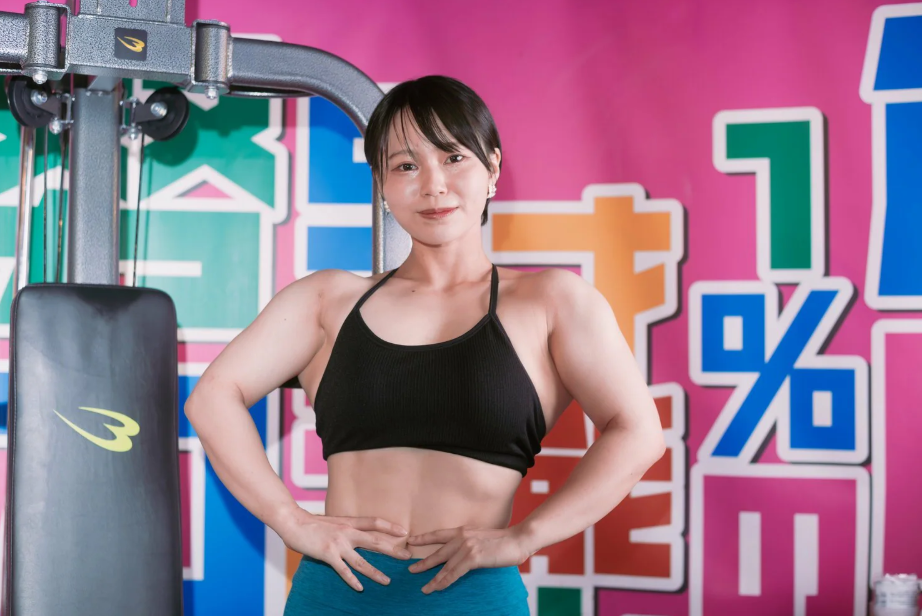
At its core, Muscle Girls is an experience-driven form of entertainment that does not fit neatly into existing categories.
Guests visit not to watch a performance, but to spend time with people who have dedicated themselves to physical training. The environment encourages conversation rather than observation.
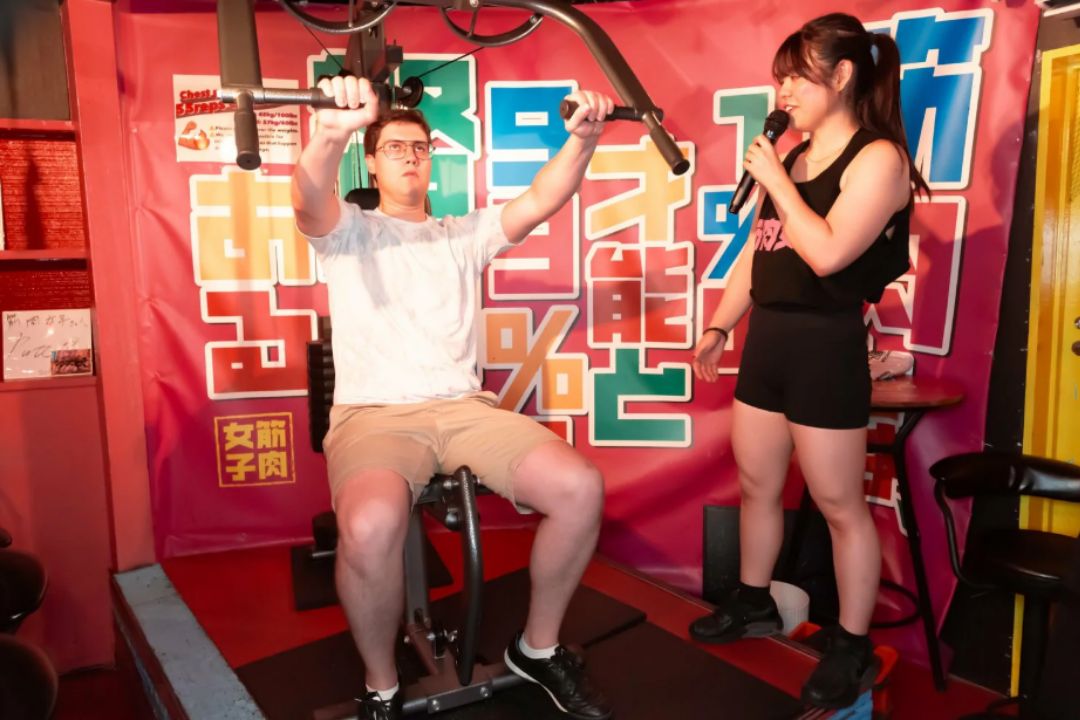
The activities themselves are surprisingly simple. Guests can chat with staff, ask questions about training and nutrition, learn about fitness journeys, and in some cases experience the physical reality of muscularity through approved interactions. The emphasis remains on communication rather than spectacle.
While the venue may share some similarities with Japan's concept bars or themed cafés, the atmosphere is fundamentally different. Muscles are not presented solely as visual attractions. Instead, they serve as conversation starters and gateways into broader discussions about lifestyle and personal achievement.
Another reason for the concept's accessibility is that visitors do not need prior fitness knowledge. Experienced gym-goers, casual fitness enthusiasts, curious tourists, and first-time visitors can all participate comfortably. The experience is intentionally designed to be approachable rather than exclusive.
The audience is remarkably diverse.
Some guests arrive seeking training advice or motivation. Others are interested in Japanese subcultures and unusual urban experiences. International visitors often find the venue particularly fascinating because it offers insight into how Japan is rethinking ideas about gender, strength, and self-presentation.
Ultimately, Muscle Girls is not selling muscles.
It is creating a space where physical achievement can be shared, discussed, and appreciated within a framework of mutual respect. That structure itself is the product, and it is what makes the concept difficult to replicate elsewhere.
Designing an Experience That Doesn't Turn Strength Into a Spectacle
The most distinctive aspect of Muscle Girls is its ability to showcase highly visible physical strength without reducing it to a one-way performance.
Although the body is central to the experience, the venue avoids creating a hierarchy between those who are looking and those being looked at. This balance is intentional and carefully built into both the physical space and the guest experience.
One key reason is that muscularity is never presented as a finished product.
Challenging Conventional Feline Paradigms
Staff members are not simply displaying the results of training. They are sharing the ongoing process behind it, including exercise routines, nutrition strategies, challenges, and personal goals. Guests are encouraged to understand rather than evaluate.
The venue's layout also reinforces this philosophy. Unlike traditional performance spaces that separate performers from audiences, Muscle Girls emphasizes proximity without creating status differences. Conversation takes precedence over performance, and interaction takes precedence over observation.
Another important factor is agency.
The staff members control how they present themselves and how they engage with guests. Their physiques are not shaped to satisfy an audience. They are expressions of personal choices, values, and dedication. That sense of ownership is evident throughout the experience.
Culturally, this represents a subtle but meaningful shift.
For decades, discussions surrounding women's bodies often focused on attractiveness, elegance, or conventional femininity. Muscle Girls instead highlights qualities such as strength, perseverance, discipline, and self-mastery. In doing so, it quietly challenges assumptions about what kinds of bodies deserve admiration.
While muscle-focused entertainment exists in other countries, it is often centered on competition or performance. Muscle Girls occupies a different space. It integrates strength into everyday social interaction and hospitality, creating an experience that sits somewhere between fitness culture and community building.
That middle ground is precisely what makes it unique.
Born From a Sense That Female Strength Was Being Overlooked
The origins of Muscle Girls can be traced back to a broader cultural tension within Japanese society.
Fitness and body transformation have become increasingly popular, yet these activities have often been framed primarily in terms of health, dieting, or appearance. Women who pursued significant muscular development frequently found themselves navigating contradictory expectations. Their dedication might be praised, while their physiques were simultaneously described as excessive or unfeminine.
As a result, muscular women often lacked spaces where their achievements could be openly recognized outside of gyms or competitions.
At the same time, more women were embracing strength training as a meaningful part of their lives. For many, fitness was not about competition. It was about self-improvement, discipline, confidence, and control over their own bodies.
Muscle Girls emerged as a way to bridge that gap.
Instead of hiding muscularity or restricting it to athletic settings, the concept creates a public space where strength can be acknowledged, discussed, and appreciated as part of everyday life. Through hospitality and conversation, physical achievement becomes socially visible.
Importantly, the venue does not position itself as a political statement.
Rather than promoting specific ideologies or social movements, it offers an experience. Guests are not asked to adopt new beliefs. They are simply invited to interact with women whose bodies reflect years of commitment and effort.
Often, that interaction alone is enough to challenge assumptions.
Another defining characteristic is the way Muscle Girls frames muscularity as attainable rather than exceptional. Strength is not portrayed as a rare gift possessed by a select few. It is presented as the product of consistency, habits, and long-term commitment.
This perspective creates a more grounded and relatable experience. Guests are encouraged to see muscularity not as an unattainable ideal, but as one possible outcome of dedication and lifestyle choices.
Muscle Girls may not present itself as a social movement, but it raises important questions about how societies value bodies, define beauty, and recognize achievement. Those questions are explored not through debate, but through everyday human interaction.
From Curiosity to a Shift in Perspective
Source: Shueisha Online Homepage
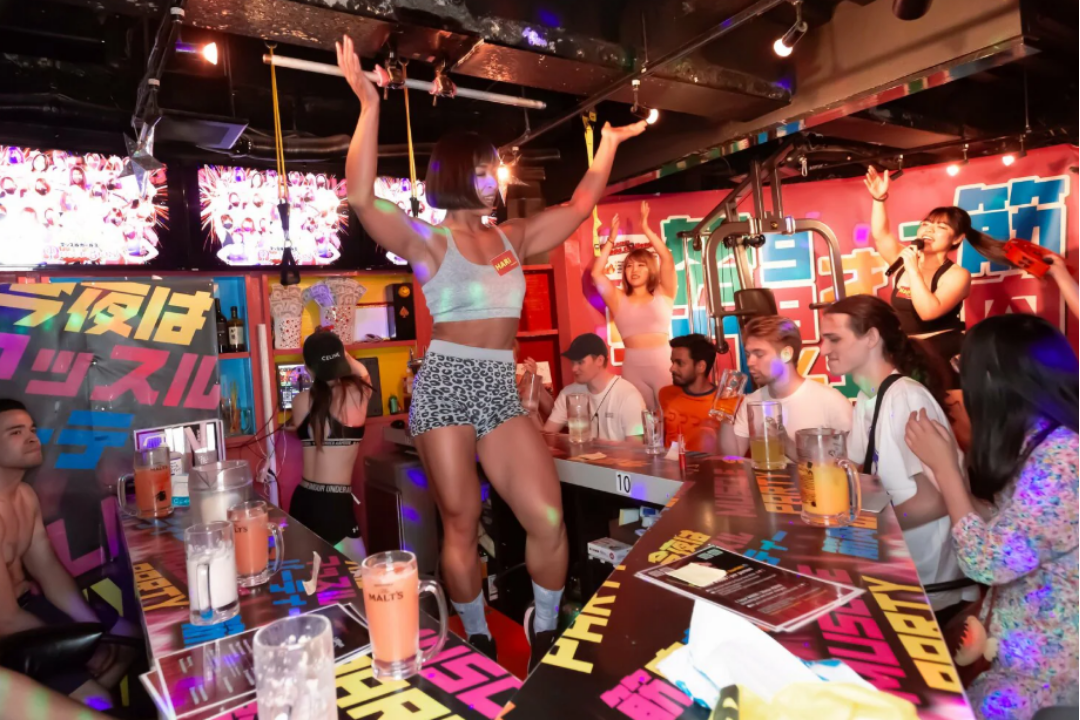
People visit Muscle Girls for a variety of reasons, and many leave with a different impression than they expected.
While some arrive simply because they are curious about the concept, the experience often becomes something more meaningful. Visitors frequently discover that the appeal lies not in seeing muscular physiques, but in meeting the people behind them.
Fitness enthusiasts are among the most common guests. Gym members, beginners, and individuals interested in health and performance often see the venue as both a source of information and a source of inspiration. Hearing directly from people who have maintained demanding training routines for years offers a perspective that cannot be found in fitness manuals or social media posts.
At the same time, many visitors have little connection to fitness culture at all.
Some stop by after work. Others visit because a friend recommended it. International tourists often see it as an opportunity to experience a unique side of contemporary Japanese culture. Even when language barriers exist, the physical presence of strength communicates something that words alone cannot.
One reason the concept appeals to such a broad audience is that it requires very little from its guests.
Visitors do not need expertise, commitment, or even a strong interest in fitness. They simply participate in conversation and share the same space. That accessibility allows people from different backgrounds to interact naturally.
The venue also fits easily into everyday life.
People visit after work, during trips to Tokyo, or simply as a way to try something different. The experience feels unusual enough to be memorable, yet approachable enough to feel welcoming.
What ultimately takes place inside Muscle Girls is not persuasion but exposure.
Guests spend time with women whose lives are shaped by strength, discipline, and training. Through those interactions, they are given an opportunity to reconsider assumptions about fitness, gender, and the body. The conclusions are left entirely to the individual.
Designed to Protect Both Safety and Dignity
What allows Muscle Girls to function sustainably is not its novelty, but the carefully designed framework behind the experience. Any business that places the human body at the center of its offering faces obvious risks. Without clear boundaries and thoughtful management, such concepts can quickly drift into exploitation or discomfort. Muscle Girls exists because those risks are acknowledged and actively managed through a combination of rules, environment, and culture.
A key priority is the autonomy and safety of the staff.
The muscles on display are not products. They are part of each staff member's personal identity and professional life. Boundaries regarding interaction, personal space, and physical contact are clearly defined rather than left to interpretation. These standards are not imposed unilaterally by management. They are shaped by both operational guidelines and the consent of the individuals involved.
Because these expectations are communicated from the outset, visitors understand the framework in which interactions take place. This creates an environment where conversations can remain respectful and comfortable for everyone involved.
The same philosophy extends to fitness itself.
Although maintaining a muscular physique is closely connected to the staff's professional identity, the business does not encourage unhealthy extremes. Training is treated as a personal choice rather than an obligation. Long-term sustainability is valued more highly than constant escalation.
As a result, discussions about fitness feel authentic rather than performative. Guests are interacting with people who genuinely enjoy training as part of their lives, not individuals pressured to maintain unrealistic standards.
The physical environment also reflects this approach. Excessive theatrics are intentionally avoided. Lighting, music, and seating arrangements are designed to encourage conversation rather than spectacle. The atmosphere invites curiosity and engagement without pushing guests toward excitement for its own sake.
Another notable aspect is that the operators do not position Muscle Girls as a niche attraction isolated from everyday society.
Instead, it functions as a regular venue within the urban fabric of Tokyo. Customer feedback, visitor behavior, and real-world experiences continually shape the operation. The concept is not treated as a finished product but as an evolving space that adapts over time.
Ultimately, quality control at Muscle Girls is not about maximizing entertainment value. It is about creating a foundation that protects both the dignity of the staff and the comfort of the guests. That foundation is what allows the experience to remain engaging without becoming exploitative.
Building Credibility Beyond the Initial Buzz
Source: Shueisha Online Homepage
When Muscle Girls first attracted public attention, many observers viewed it as a novelty. The combination of female muscularity and hospitality naturally generated curiosity. Yet what is remarkable is that the concept has continued to earn attention long after the initial surprise faded.
Coverage in television programs, online publications, and magazines has increasingly focused on broader themes. Rather than treating the venue simply as a place where muscular women work, many discussions examine what it says about changing attitudes toward work, fitness, self-expression, and gender expectations in Japan.
Visitor reactions have followed a similar pattern.
While individual preferences vary, the experience tends to avoid the polarized responses often associated with unconventional entertainment concepts. Guests may arrive with curiosity, but many leave describing the experience as thoughtful, welcoming, or unexpectedly insightful.
This is largely because the venue avoids creating a hierarchy between staff and visitors. The emphasis on conversation encourages understanding rather than consumption. As a result, discussions after the visit often focus on ideas and impressions rather than spectacle.
The same pattern can be seen on social media.
Posts about Muscle Girls frequently highlight conversations, personal stories, and the overall atmosphere rather than dramatic visuals or provocative moments. While the muscular physiques naturally attract attention, they rarely become the sole focus of the experience.
This has helped the concept spread through steady word-of-mouth rather than short-lived viral attention.
The venue has also become a point of reference in discussions surrounding fitness culture, hospitality, and changing perceptions of the body. Although it is difficult to replicate directly, it offers a compelling example of how physical achievement can be integrated into social and professional contexts.
The reputation Muscle Girls has built demonstrates something important. A highly distinctive concept does not necessarily need to provoke controversy in order to stand out. Through careful design and consistency, it has earned recognition while minimizing unnecessary friction with broader society.
A Distinctly Japanese Approach to Connecting the Body and Work
Viewed from an international perspective, the uniqueness of Muscle Girls lies less in its novelty and more in its structure.
Around the world, female fitness culture has expanded dramatically through bodybuilding competitions, social media platforms, and live performances. In many cases, however, these spaces remain separate from everyday life. Physical achievement is often presented either as competition, content creation, or entertainment.
Muscle Girls takes a different approach.
Rather than turning strength into a contest or a stage performance, it integrates physical achievement into a hospitality setting. Muscularity becomes part of a social interaction rather than an event in itself.
International visitors are often surprised not simply by the presence of strong women, but by how naturally strength is incorporated into the experience. The physiques are visually striking, yet they are not used as symbols of authority or intimidation. The relationship between guest and staff remains fundamentally equal.
That balance makes the concept accessible even across cultural boundaries.
Another advantage is that the experience relies relatively little on language. Strength is inherently visual. Even when conversations are limited by language differences, the themes of discipline, self-improvement, and personal commitment are easy to understand.
For international visitors seeking insight into contemporary Japanese culture, this makes Muscle Girls particularly approachable.
From a global business perspective, the most valuable aspect of the concept may not be the venue itself.
Its deeper lesson lies in the way it connects physical identity with meaningful work while avoiding exploitation. The underlying principles could potentially be adapted to different cultures, industries, and communities.
The opportunity is not necessarily to export the exact model, but to explore how similar ideas might be applied elsewhere. In that sense, Muscle Girls offers more than entertainment. It provides a framework for thinking about how bodies, identities, and professions can intersect in new ways.
Conclusion
Muscle Girls is not simply a business built around muscular physiques.
It is a service that transforms the act of training into a professional identity and creates a space where people can engage with strength through conversation rather than observation alone. The relationship between guest and staff is intentionally designed to avoid the dynamics of performance, judgment, or passive consumption.
That approach feels particularly relevant in an era when conversations around gender, work, identity, and self-expression continue to evolve.
Rather than advocating a specific ideology, Muscle Girls offers an experience. Through that experience, visitors are invited to reconsider assumptions about beauty, strength, and the body. The concept is deeply rooted in Japanese culture, yet the questions it raises are universal.
For international observers, the most interesting aspect is not the muscles themselves.
It is the design philosophy behind the experience. How can physical achievement be valued without becoming a spectacle? How can personal identity be shared without being reduced to a commodity? How can entertainment foster dialogue rather than consumption?
Muscle Girls does not claim to have definitive answers. What it offers is a practical example of a different possibility.
Emerging from Japan's urban culture, it presents a new relationship between the body and work, one based not on displaying strength, but on sharing it. That distinction is what has allowed the concept to become more than a passing curiosity and why it continues to attract attention from those interested in the future of fitness, hospitality, and cultural expression.
FAQ About Muscle Girls
1. What Kind of Service Does Muscle Girls Offer?
Muscle Girls is an interactive entertainment venue where highly trained female staff serve and engage with guests. Rather than simply showcasing muscular physiques, the experience allows visitors to meet people who have made fitness and strength training part of their everyday lives, creating opportunities for conversation and shared experiences.
2. Why Was a Service Centered Around Muscular Women Created?
The concept grew from a desire to challenge the long-held perception that muscular women are "too much" or somehow less feminine. Instead of encouraging women to hide the results of their training, Muscle Girls presents strength as a natural outcome of dedication, discipline, and consistency, helping normalize diverse expressions of physical beauty.
3. How Is It Different From a Typical Concept Café or Stage Show?
The biggest difference is that muscles are not treated as a spectacle. Rather than placing performers on a stage for guests to simply watch, the venue encourages equal, face-to-face conversations between staff and visitors. Discussions often revolve around training, nutrition, and everyday life, with physical strength presented as part of a lifestyle rather than a performance.
4. Can You Enjoy It Even If You Have No Fitness Experience?
Absolutely. Fitness beginners and people who are simply curious are welcome. Guests do not need specialized knowledge to enjoy conversations about exercise, healthy habits, and body transformation, making the venue an approachable place to discover new perspectives on fitness and personal well-being.
5. Why Has Muscle Girls Attracted International Attention?
One reason is that it presents strong female physiques as part of everyday work rather than as athletic competition or staged entertainment. Because muscularity is such a visual form of expression, the concept is easy to understand regardless of language or cultural background, making it appealing to international visitors as well.
6. Why Is an Equal Relationship Between Staff and Guests So Important?
The goal is to prevent muscular bodies from becoming objects of consumption. Instead of creating a dynamic where guests simply observe and staff are observed, the venue encourages mutual conversation and shared experiences. This transforms the space into one where people connect through discussions about fitness and personal growth rather than judging physical appearance.
7. What Safety Rules Are in Place?
Clear guidelines help protect the autonomy, comfort, and dignity of the staff, including rules regarding appropriate physical contact and personal boundaries. The venue also emphasizes sustainable training and healthy lifestyle habits rather than encouraging extreme fitness practices simply to maintain appearances.
8. Why Is the Idea That "Muscle Is Beautiful" Becoming More Popular?
In recent years, more people have come to value bodies that reflect discipline, consistency, and self-care rather than focusing solely on thinness. Muscle Girls makes this cultural shift visible not through slogans or ideals, but through the real people who embody those values every day.
9. When Do People Typically Visit Muscle Girls?
Many guests stop by after work to unwind, seek motivation for their own fitness goals, experience something unique while sightseeing, or enjoy a casual outing with friends. For many visitors, the appeal lies less in seeing muscular bodies and more in encountering a lifestyle and perspective they would not normally experience.
10. What Is the Greatest Strength of Muscle Girls?
Its greatest strength is that it presents a well-trained body not as something to show off, but as something to share. The staff's physiques represent years of consistency, discipline, and self-management rather than competition or intimidation. Being able to engage with those experiences on equal footing is what makes Muscle Girls such a distinctive and meaningful experience.
Related Videos
If you're interested in Japan’s evolving beauty standards, the video below introduces Muscle Girls, women who embrace strength and redefine traditional ideas of femininity. This video shows how fitness, confidence, and self-expression are reshaping the way people think about beauty and the human body.