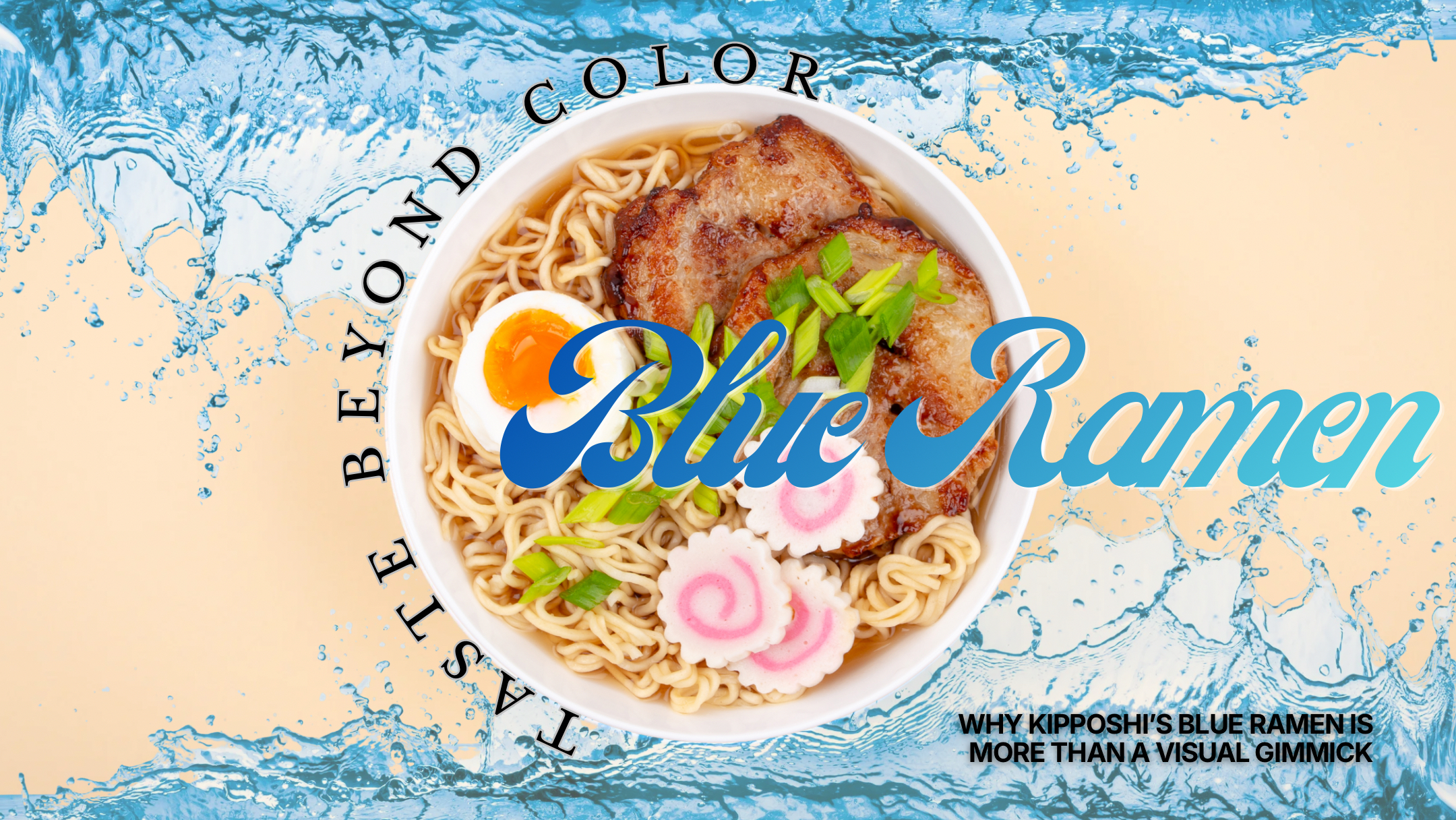
Ramen has long been a dish where the flavor is imagined at a single glance. A clear amber broth promises a refined, delicate taste, while a cloudy white soup signals richness. The colors of the soup function as a preview of flavor, allowing the customer to subconsciously prepare themselves for what they are about to eat. However, there is one creation that quietly and decisively betrays that assumption. This is the Blue Ramen served at Kipposhi in Tokyo.
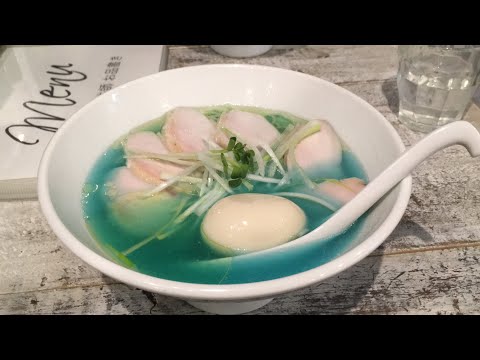
What spreads across the bowl is a vibrant blue soup. Visually, it is a color one would never associate with ramen. However, the moment you bring the spoon to your lips, that sense of dissonance transforms into a different kind of surprise. The flavor is far more refined than expected. Built on a clear chicken-based broth, the soup is well-balanced and complete, with no excess or deficiency. What is happening here is not merely a visual gimmick. It is a deliberate attempt to separate the relationship between taste and appearance and reconnect them in a new way.
This blue ramen could only have been born from Japan’s highly evolved ramen culture. Without a high level of culinary precision, this visual experiment would have failed. Because ramen has evolved through years of technique and experience, there is now room to introduce a new variable, color. Kipposhi’s ramen stands on this foundation.
Why introduce this ramen to an international audience now? The answer lies not in its novelty, but in its design as an experience. In today’s food landscape, flavors have become increasingly standardized, and a certain level of quality can be found almost anywhere. As a result, what matters more is whether an experience is memorable. The Blue Ramen goes beyond the superficial value of being ‘Instagrammable’. It compels people to wonder why it looks like this, and how it manages to work as a dish.
This article reframes blue ramen not as a gimmick, but as an expansion of the ramen experience. We will unpack the structure of the dish, the reasons for its acceptance, and why this philosophy resonates globally, redefining the relationship between sight and taste.
Kipposhi Blue Ramen Overview
Kipposhi’s Blue Ramen is a groundbreaking culinary creation from Tokyo that decisively challenges the traditional relationship between sight and taste by introducing a vibrant blue soup into Japan's highly evolved ramen culture. While the striking color completely upends standard visual expectations, the actual dish delivers an exceptionally refined, well-balanced, clear chicken-based broth that instantly resolves any sensory dissonance into a sophisticated culinary experience.
Far from being a superficial, "Instagrammable" gimmick, this ramen leverages decades of precise Japanese culinary technique to deliberately separate appearance from flavor and reconnect them in an entirely new way. In an era of standardized food quality, Kipposhi’s creation shifts the focus toward memorable experience design—compelling international audiences to look beyond novelty and engage deeply with how a dish can disrupt expectations while remaining an authentic, complete, and deeply satisfying meal.
What Is The Blue Ramen?
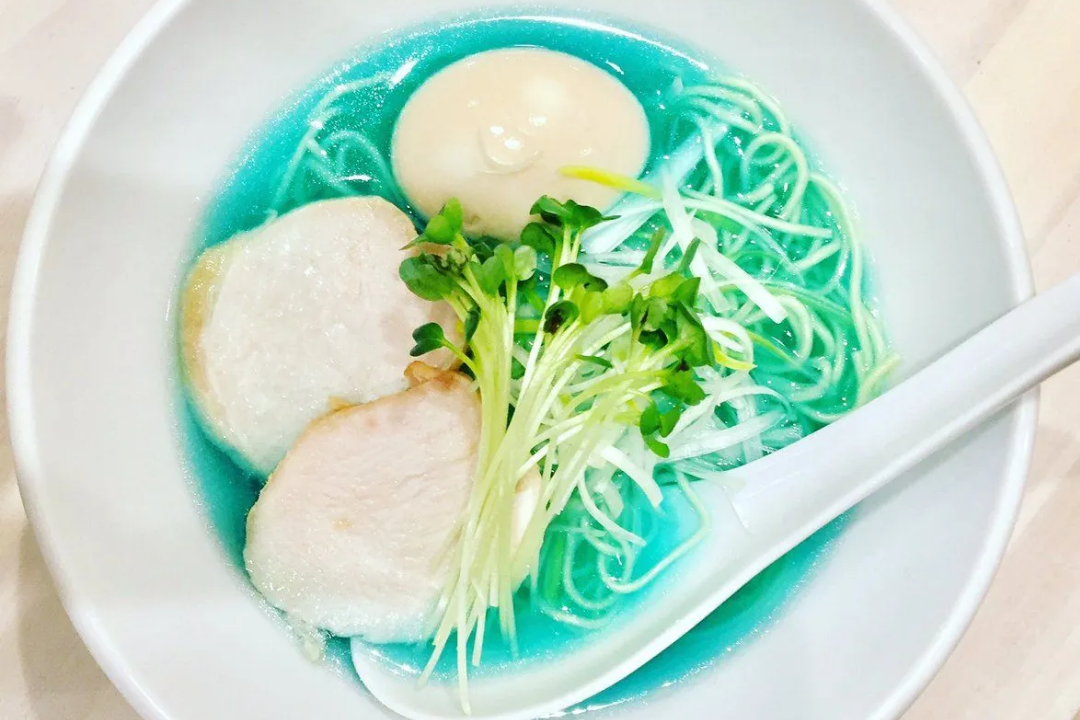
Source: Ramen Worker Homepage
Designing a Separation Between Sight and Taste
At first glance, KIPPOSHI’s blue ramen may seem like a purely eccentric idea. In reality, however, the dish does not treat color as the main attraction. Instead, blue is used to reset the relationship between color and flavor.
In most cuisines, color acts as a predictive tool. Clear soups suggest light flavors, cloudy ones suggest richness, red suggests spice or depth. Ramen is no exception. Kipposhi intentionally breaks the tightly linked assumptions formed between visuals and taste.
The base of the soup is a classic clear chicken broth with a refined umami profile. Without seeing the color, most people would simply describe it as a traditional, light ramen. However, the addition of the striking blue color disrupts the customer’s expectations and removes their ability to predict the taste. This, in turn, forces focus on the flavor itself.
Crucially, the blue is designed not to interfere with the palate. If the color were too aggressive, the flavor would be overshadowed. Instead, the ramen achieves the perfect balance of visual impact and a grounded taste. The first bite surprises, while subsequent bites bring understanding and acceptance. This emotional transition is what elevates the dish into a complete experience.
The noodles and toppings are equally as deliberate to ensure they remain in perfect harmony with the soup. By avoiding over-embellishment or aggressive flavors, the shop maintains a clear structural focus on the blue broth. As a result, while the appearance feels extraordinary, the act of eating remains comfortingly familiar.
This blue ramen isn't an attempt to dismantle the definition of ramen. Instead, it serves as a quiet, visual testament to how much we have historically relied on sight to dictate taste. By changing the color, it changes how we perceive taste. They make the experience itself, the message.
The Prerequisites For ‘Blue’ To Succeed
What makes Kipposhi’s Blue Rames unique is not the visual impact, but the fact that the color actually functions within the meal. Traditionally, blue is considered an appetite-suppressing color. Naturally blue foods are rare, and the color is often associated with danger or artificiality. Blue has been avoided in the culinary world for this exact reason.
Despite this, the ramen works because its flavor design is fundamentally sound. The soup remains grounded in a classic chicken-based structure, with carefully balanced aroma, saltiness, and finish. Even with the unusual color, the bowl is not overwhelmed. In fact, the disrupted expectations make the flavor feel even more distinct.
The color itself is also handled very carefully. Rather than using an opaque or heavy blue, the soup maintains transpacency that preserves its identity as a clear broth. A fully opaque liquid might trigger a sense of unease or even aversion. Instead, Kipposhi strikes a delicate balance that feels 'unusual yet approachable’. This calibration would be impossible without a deep understanding of the senses.
Furthermore, blue is not an endpoint. Kipposhi also offers ramen in red, white and purple, demonstrating that the true purpose lies in reshaping how color influences taste perception. Blue is simply the most iconic example.
This depth explains why the concept is so difficult to replicate. Copying the appearance without matching the flavor design would only result in discomfort. Changing color affects the entire structure of the dish, and without that fundamental understanding, the result risks failure.
Ultimately, Blue Ramen is not a tool to stand out, but functions to rediscover taste. This thought process is the most unique aspect of Kipposhi.
Challenging The ‘Predictability’ Of Ramen
Blue ramen was not born from a random idea. It reflects a deeper discomfort with how predictable ramen has become. In Japan, ramen has become a well-established category where flavor profiles and evaluation standards are universally understood. Whether it’s rich or light, pork-based or chicken-based, soy sauce or salt, people can often guess the flavor just by looking at it.
While this predictability reassures consumers, it can limit creative expression. When expectations are fixed at the visual stage, any deviation often leads to discomfort or rejection. This is the very psychological structure that Kipposhi chose to confront.
By subverting visual expectations, blue ramen resets the evaluation process. The customers approach the first bite without preconceived notions, shifting their focus purely to taste. To make this experience successful, the culinary execution must be even more flawless than its appearance. This is why, despite its experimental nature, the foundation of the dish remains deliberately traditional.
There is also an effort to separate ramen from “information consumption.” In the modern era, food is often judged through photos and reviews before it is tasted.To reverse this dynamic, the visual impact has been intentionally amplified. Blue ramen is designed to be experienced rather than simply consumed as information.
At the same time, the goal is not simply to create new flavors. It is to explore how flexible ramen as a cultural form can be by adding new possibilities without destroying traditions. This is why the most difficult color, blue, was chosen.
Blue Ramen is not a challenge to the ramen world. It is a tribute to its possibilities. By ensuring the foundation is flawless, Kipposhi explores how far the boundaries can be expanded. This ramen stands as a definitive, tangible answer to that very question.
Why Curiosity Was Only The Beginning
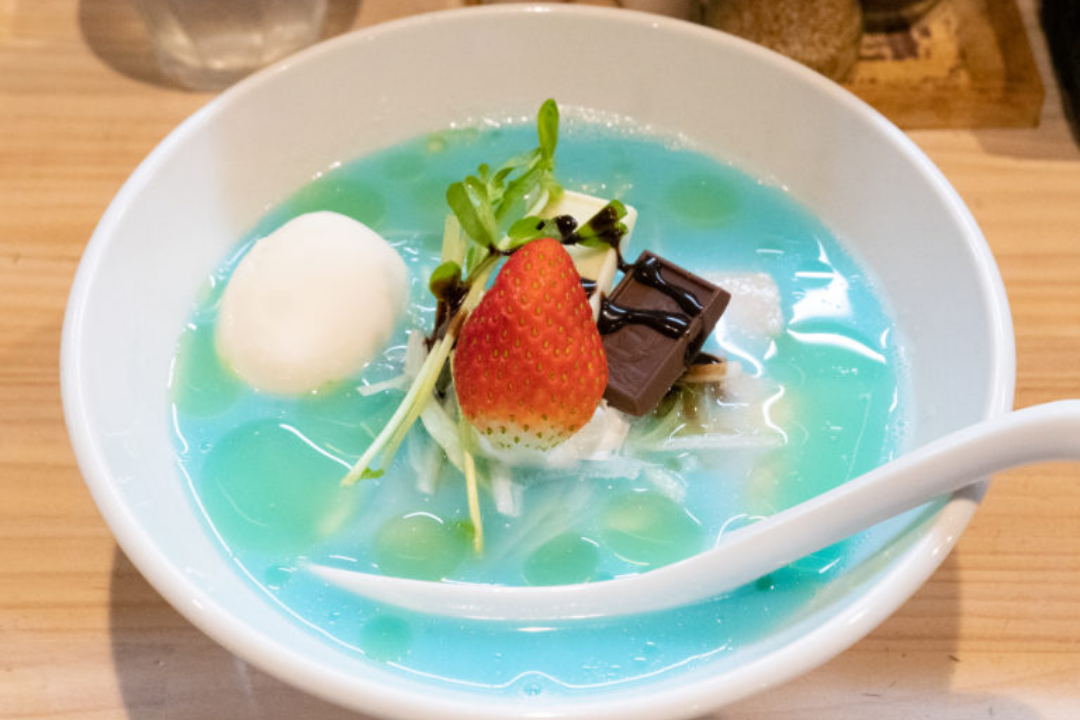
Source: Ramen Worker Homepage
Due to its striking visual impact, Kipposhi’s Blue Ramen is often dismissed as a hype-driven novelty. In reality, however, its appeal extends far beyond a single audience. While curiosity may serve as the initial draw, the dish’s true distinction lies in its ability to earn critical praise and inspire repeat visits.
Most notably, it has gained the respect of ramen enthusiasts. Although their attention is initially captured by the color, their evaluation of flavor remains rigorous and impartial. Among these customers, the bowl is recognized for its technical precision: the clarity of the chicken broth, the definition of the structure, and its clean, refined finish. That the flavor delivers fully, without being undermined by its unconventional appearance, is what sets it apart from mere gimmicks.
At the same time, the ramen resonates strongly with more casual customers. Though drawn in through social media or word of mouth, many leave with an impression that goes beyond its visual novelty. The unexpected gap between anticipation and reality provokes a memorable experience. Many think that is was better than they imagined, or that it felt like a ‘proper’ ramen. This element of surprise makes the experience easy to share.
For international visitors, Blue Ramen is also highly intuitive. Even without a shared language, its visual impact communicates instantly, and the experience can be captured and conveyed through a single photograph. Crucially, because the flavor remains authentic, it serves as a genuine entry point into Japanese ramen culture. Capturing attention visually and securing approval through taste makes it especially effective in a global tourism context.
Equally important is the presence of repeat customers. Blue Ramen is not simply a one-time experience. Once the initial surprise has worn off, attention shifts more fully to the flavor itself, allowing for a deeper appreciation. This layered experience is a key reason it has endured beyond a passing trend.
As a result, Kipposhi’s Blue Ramen occupies a unique position: it is an experiential dish that still functions as part of everyday dining. Balancing novelty with sustainability, it achieves a rare equilibrium that has supported the shop’s continued success.
The True Achievement: Moving Beyond the ‘Novelty’ Label
The greatest achievement of Kipposhi’s Blue Ramen cannot be measured solely through awards or numerical success. Rather, its true value lies in the fact that it was not consumed and dismissed as a novelty. In the food industry, particularly in the highly competitive world of ramen, concept-driven dishes that rely on buzz tend to be short-lived. While attracting attention is relatively easy, sustaining it is an entirely different challenge
Despite possessing all the qualities that make it highly shareable on social media and in the press, Blue Ramen has continued to be served as the shop’s signature dish. This longevity is rooted in the careful balance between appearance and flavor. It surprises with its color, yet satisfies with its taste. Because this sequence holds true, the experience does not end as a ‘one-time visit’, but instead contributes to the overall reputation of the shop.
Another key factor is that the restaurant does not rely solely on Blue Ramen. By offering other ramen centered around different colors and ingredients, the shop positions itself as a space for experimentation. Within this broader context, Blue Ramen functions as a symbolic centerpiece. It is not a one-off success, but part of a larger philosophy, this approach has enabled its continued relevance.
As a result, Kipposhi is no longer defined simply as a novelty. Instead, it has established itself as a place that explores the possibilities of ramen. This recognition reflects a solid and meaningful position within the domestic market.
A Visual Experience That Transcends Language
The global potential of Blue Ramen extends far beyond its novelty as a uniquely Japanese creation. Its true strength lies in the fact that the experience is conveyed visually. Color is a form of information that transcends language, allowing it to be understood intuitively without cultural context. Even for those unfamiliar with ramen, the simple fact of a ‘blue soup’ is enough to spark curiosity.
Equally important is that its flavor profile is not overly localized. The clear, chicken-based broth aligns easily with soup traditions found around the world. Rather than relying on heavy oils or strong fermented aromas, it is built on a balanced foundation of umami and saltiness, making it broadly approachable across cultures. It surprises through appearance, yet reassures through taste. This translates seamlessly to international audiences.
Another factor working in its favor is the growing demand for experiential dining. Globally, more consumers are seeking not just good food, but experiences worth talking about. Blue Ramen creates an immediate point of interest through a single photograph, while also offering depth through the technique and philosophy behind it. This double-layered appeal allows it to sustain both short-term buzz and long-term appreciation.
Even if it is not replicated in exactly the same form, the underlying concept of redefining the taste experience through color, is highly transferable. It does not have to be blue. What matters is the willingness to rethink the relationship between sight and taste. That mindset can be adapted across countries and cultures alike.
Why Global Businesses Should Pay Attention to Blue Ramen
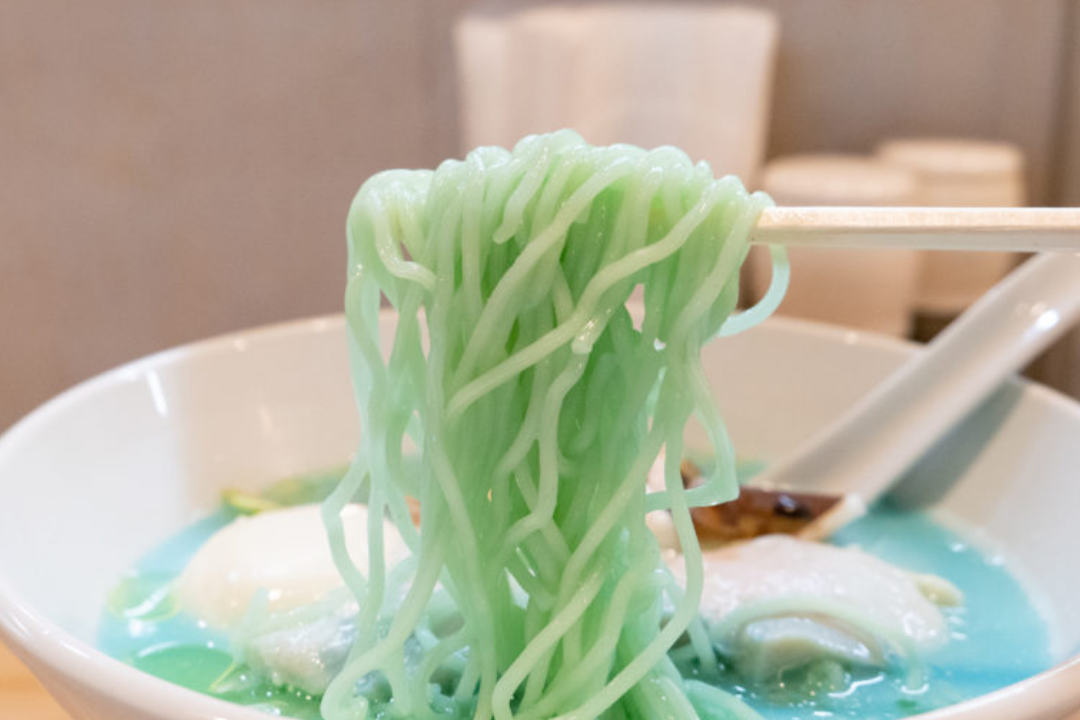
Source: Ramen Worker Homepage
Kipposhi’s Blue Ramen is far more than an eccentric menu item. It is a product that proves there are still ‘new points of entry’, even in a highly saturated industry like ramen. Leading with a color that shocks, yet ultimately leaving the final judgment to taste. This deliberate reordering of the experience is the essence of Blue Ramen.
What makes this approach significant is that it is not the result of a spontaneous or gimmicky idea, but one grounded in a clear philosophy. It begins by dismantling preconceptions, encouraging diners to re-engage with taste itself. To achieve this, it embraces the most visually dissonant color, while maintaining the utmost discipline in flavor. This seemingly paradoxical yet coherent structure introduces a new perspective on dining experiences, both in Japan and abroad.
For global businesses, Blue Ramen should not be seen as something to imitate superficially, but as a case study in how to design meaningful experiences. It is not simply a matter of changing color or creating something visually shocking. The real question is: what remains after the initial attention fades? Kipposhi has provided a definitive answer through a single bowl of ramen.
In today’s food industry, differentiation is becoming increasingly difficult. Improvements in taste alone are no longer enough to stand out, while price competition often leads to diminishing returns. In this context, rethinking the experience itself is emerging as a critical strategy. Blue Ramen presents this possibility in a highly tangible form.
This initiative, born in Japan, extends beyond ramen and raises broader questions about food culture as a whole. It asks how we should design the relationship between appearance and taste, information and experience, and surprise and satisfaction. For the global food business, the Blue Ramen remains a profound source of inspiration.
FAQ About Kipposhi’s Blue Ramen
1. What Is Kipposhi's Blue Ramen?
Kipposhi’s Blue Ramen is a creative ramen dish distinguished by its vivid blue broth. While its appearance is undeniably striking, the ramen is built on a carefully crafted clear chicken-based soup with rich umami flavor. Its unique appeal lies in the contrast between what diners expect from its appearance and what they actually experience when tasting it.
2. Why Is The Soup Blue?
The blue color is intended to reset preconceived notions about flavor. Most people can roughly predict how a ramen will taste simply by looking at the broth. Kipposhi deliberately challenges this assumption, encouraging diners to focus on the flavor itself rather than visual cues. The color is not used merely for surprise, but as a way to reshape the tasting experience.
3. Is It Just A Novelty Ramen?
No. One of the key differences between Kipposhi's Blue Ramen and many trend-driven menu items is its strong reputation for flavor. The broth is a refined chicken-based clear soup with a carefully balanced combination of saltiness and umami. Many diners remark that it is a genuinely well-crafted bowl of ramen that exceeds expectations beyond its unusual appearance.
4. Why Choose Blue, A Color Often Associated With Reduced Appetite?
The choice is intentional. By using a color that feels unexpected in food, Kipposhi challenges diners' assumptions and creates a sense of uncertainty about the flavor. This encourages people to focus less on visual expectations and more on the actual taste experience once they take their first bite.
5. Why Did It Become Popular On Social Media Worldwide?
Its visual impact is instantly recognizable in a single photograph. The vivid blue broth transcends language and cultural barriers, naturally prompting curiosity and questions. However, what has sustained its popularity is that the experience continues beyond the photo; many visitors discover that the ramen is genuinely enjoyable, leading to word-of-mouth recommendations and repeat visits.
6. Is It Popular With International Visitors?
Yes. Kipposhi's Blue Ramen has attracted significant attention from international visitors and overseas media. Its striking appearance serves as an effective introduction, while its approachable chicken-based flavor profile provides familiarity and comfort. The result is a balance of surprise and accessibility that appeals to a broad audience.
7. Why Has Blue Ramen Maintained Its Popularity Over Time?
Because it remains memorable as a ramen dish, not just as a visual spectacle. Many first-time visitors are drawn in by its appearance, but on subsequent visits they focus more on the flavor itself. Its ability to deliver a satisfying dining experience even after the initial surprise has faded is a key reason for its lasting appeal.
8. Does Kipposhi Offer Other Colored Ramen?
Yes. KIPPOSHI has also created ramen inspired by colors such as white, red, and purple. However, the goal is not simply to make colorful ramen. The concept explores how color influences perception and expectations of flavor, reflecting a broader philosophy of designing ramen as an experience rather than just a meal.
9. Why Is It Difficult For Other Restaurants To Replicate?
Simply recreating the color is not enough. The blue broth works because it is supported by careful adjustments to the soup recipe, aroma, clarity, and ingredient selection. The dish requires a delicate balance between visual presentation and flavor, making it far more complex than a straightforward imitation.
10. What Is The Greatest Appeal Of Kipposhi's Blue Ramen?
Its greatest appeal is that it reimagines ramen as an experience rather than simply a dish. The initial surprise of seeing the blue broth, the unexpected flavor of the first bite, and the growing sense of appreciation as diners continue eating are all part of a carefully designed journey. This combination of visual impact, flavor, and emotional engagement is what makes Kipposhi’s Blue Ramen truly memorable.
Related Videos
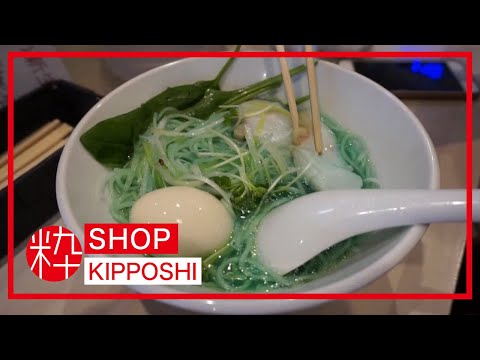
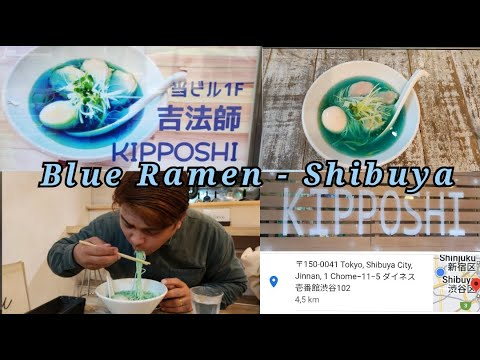
If you're interested in Japan’s bold food innovations, the video below introduces Kipposhi’s Blue Ramen, a dish famous for its striking blue soup and surprising flavor. This video shows how an unconventional idea challenged expectations and redefined what a ramen experience can be.