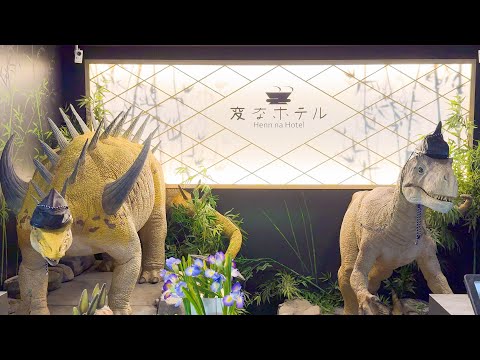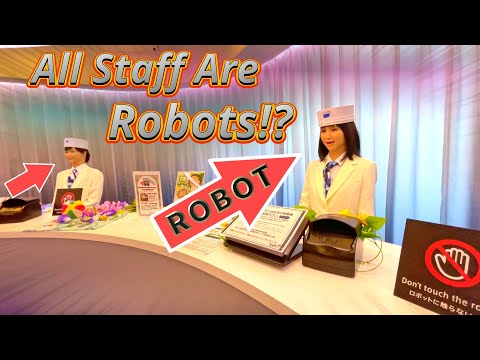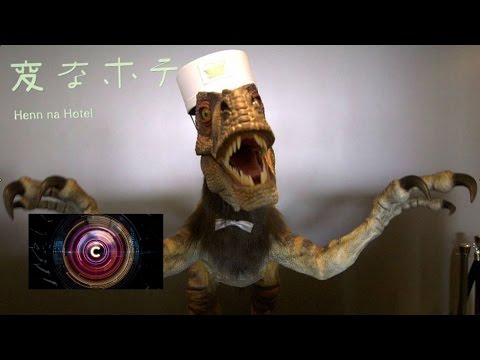
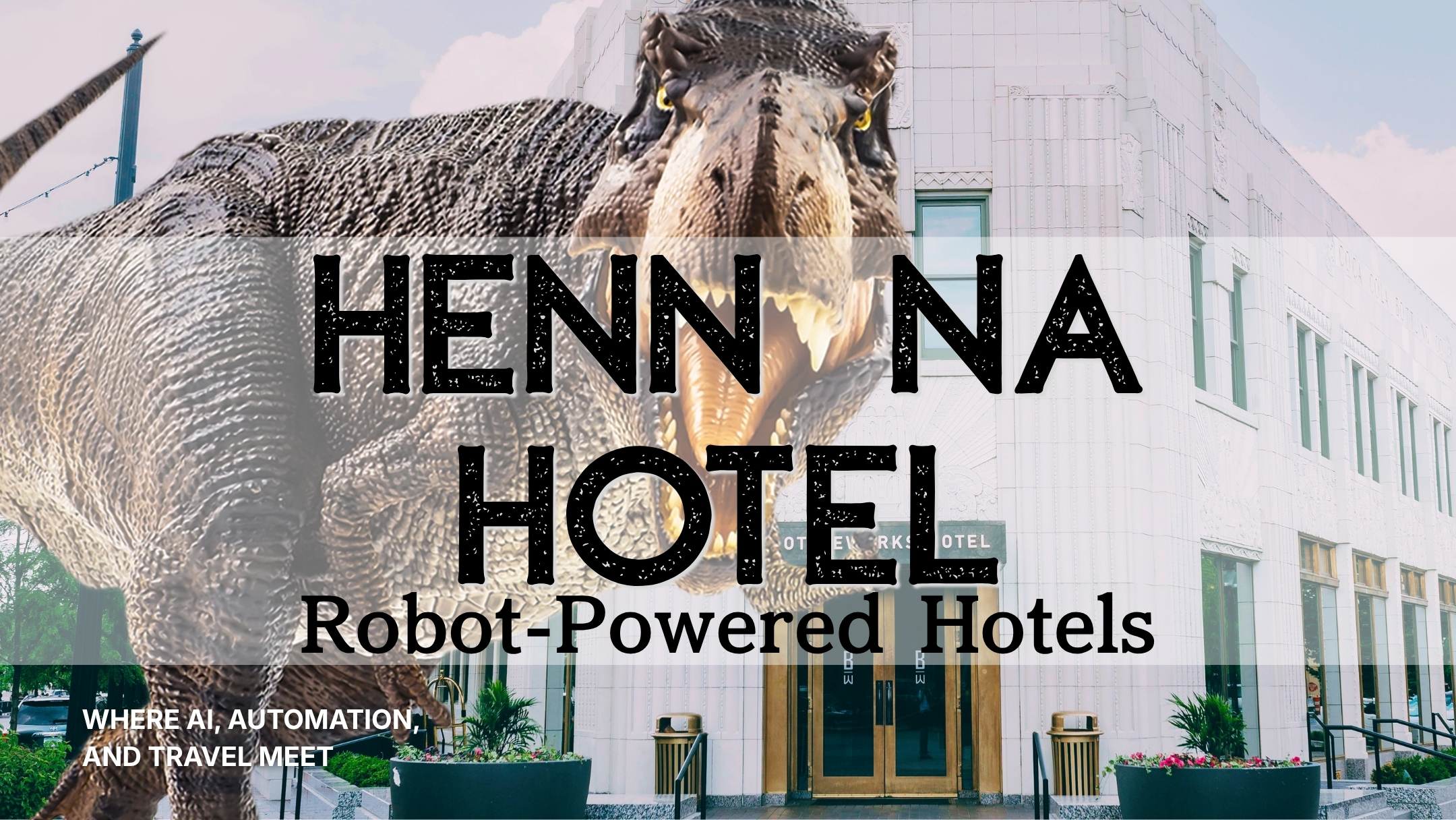
Henn na Hotel is a unique Japanese hotel brand that actively incorporates advanced technologies such as robots and artificial intelligence into its operations. At the front desk, dinosaur-themed and humanoid robots assist with check-in, offering a lodging experience that differs significantly from conventional hotels. Thanks to this innovative concept, Henn na Hotel gained international attention and was recognized by Guinness World Records as the world’s first hotel staffed by robots.
The H.I.S. Group, a major Japanese travel company, operates the hotel brand. Its first property opened in 2015 within Huis Ten Bosch, a theme park in Nagasaki Prefecture. Since then, Henn na Hotel has expanded to major destinations across Japan, including Tokyo, Osaka, and Kyoto, growing into an accommodation option that serves both leisure travelers and business guests.
The value Henn na Hotel offers extends beyond traditional lodging services. Experiences such as robot-assisted check-in and automated in-hotel services create an atmosphere that feels reminiscent of the hotel of the future. These initiatives have been recognized as a new form of hospitality that combines Japan’s technological innovation with its renowned service culture.
Today, the global hospitality industry is rapidly advancing toward digitalization and automation, driven by labor shortages and growing demand for contactless services. Henn na Hotel is widely regarded as an early example of this transformation. By leveraging technology to enhance the guest experience, it serves as a Japanese model for the future possibilities of technology-enabled hospitality.
Henn Na Hotel Overview
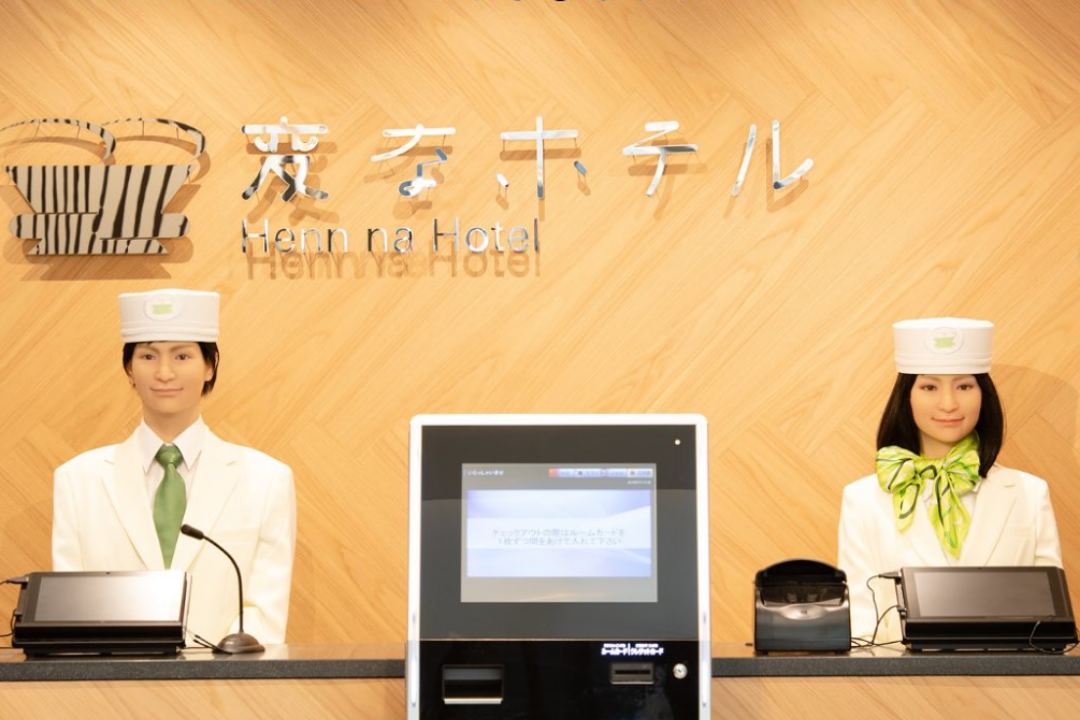
Henn na Hotel is a hotel brand that utilizes advanced technologies such as robots and artificial intelligence to create a distinctive lodging experience. During check-in, dinosaur-themed and humanoid robots handle front desk duties, offering a guest experience that differs from conventional hotels. The hotels also incorporate self-service check-in kiosks and facial recognition systems, allowing guests to complete procedures efficiently and smoothly.
Using Henn na Hotel is similar to staying at any other hotel. Guests can reserve rooms through the official website or major travel booking platforms and complete check-in upon arrival using the front desk terminals. Robot-assisted customer service and automated facilities add an entertainment element to the stay, making the hotel experience part of the attraction. Henn na Hotel accommodates both leisure travelers and business guests.
Room rates vary by location and season, but pricing is often comparable to standard business hotels in Japan. Properties in major cities such as Tokyo, Osaka, and Kyoto are designed to meet the needs of tourists and business travelers alike.
The appeal of Henn na Hotel extends beyond the novelty of robot technology. The brand is notable for experimenting with technology-driven operational models in response to labor shortages facing the hospitality industry. By combining Japan’s renowned service culture with cutting-edge technology, Henn na Hotel has attracted attention both domestically and internationally as an example of a new approach to hospitality.
Henn na Hotel by H.I.S.

Source: Hennnahotel Homepage
Henn na Hotel is a hotel brand operated by the H.I.S. Group, a Japanese travel company known for its focus on innovation within the tourism industry. The brand is distinguished by its use of advanced technologies such as robots and artificial intelligence to enhance the guest experience. The first Henn na Hotel opened in 2015 at Huis Ten Bosch in Nagasaki Prefecture and attracted widespread attention with its concept of a robot-staffed hotel. Today, the brand has expanded to locations across Japan, including Tokyo, Osaka, and Kyoto, serving both leisure and business travelers.
One of Henn na Hotel's defining features is its use of robots and automated systems for selected hotel operations and guest services. At the front desk, dinosaur-themed and humanoid robots assist with check-in, while guests can complete registration through self-service check-in terminals. Many properties also incorporate technologies such as facial recognition room access and automated luggage storage systems, allowing guests to use hotel services efficiently and conveniently.
The hotel serves the same purposes as a conventional accommodation facility, including sightseeing trips, family vacations, and business travel. However, its robot-assisted services make the hotel itself part of the travel experience. Many visitors choose to stay specifically to experience the unique concept, giving Henn na Hotel a distinctive position that blends hospitality and entertainment.
Room rates vary depending on location and season, but they are often comparable to those of standard business hotels in major Japanese cities. Despite incorporating advanced technologies, the brand maintains pricing that remains accessible to a broad range of travelers.
Henn na Hotel is positioned as an initiative that not only presents a new form of accommodation through technology, but also demonstrates the potential for greater efficiency and service innovation in the tourism industry.
The Idea of a “Hotel of the Future”
One of Henn na Hotel’s most distinctive features is its active use of technologies such as robots and artificial intelligence in its hospitality services. The most recognizable example is the dinosaur-themed and humanoid robots that handle check-in procedures at the front desk. Guests can complete the process through self-service check-in terminals, creating an experience that feels different from a conventional hotel from the moment they arrive. This concept earned Henn na Hotel recognition from Guinness World Records as a robot-staffed hotel.
Redefining the Roles of Humans and Robots
However, the hotel's uniqueness goes beyond the presence of robots. Automated technologies are used throughout the property, including facial recognition systems that allow guests to access their rooms. By digitizing parts of hotel operations such as check-in procedures, luggage storage, and room management, Henn na Hotel serves as an experimental model for more efficient hotel operations. This approach has attracted attention as a new operational model that uses technology to address challenges such as labor shortages in the hospitality industry.
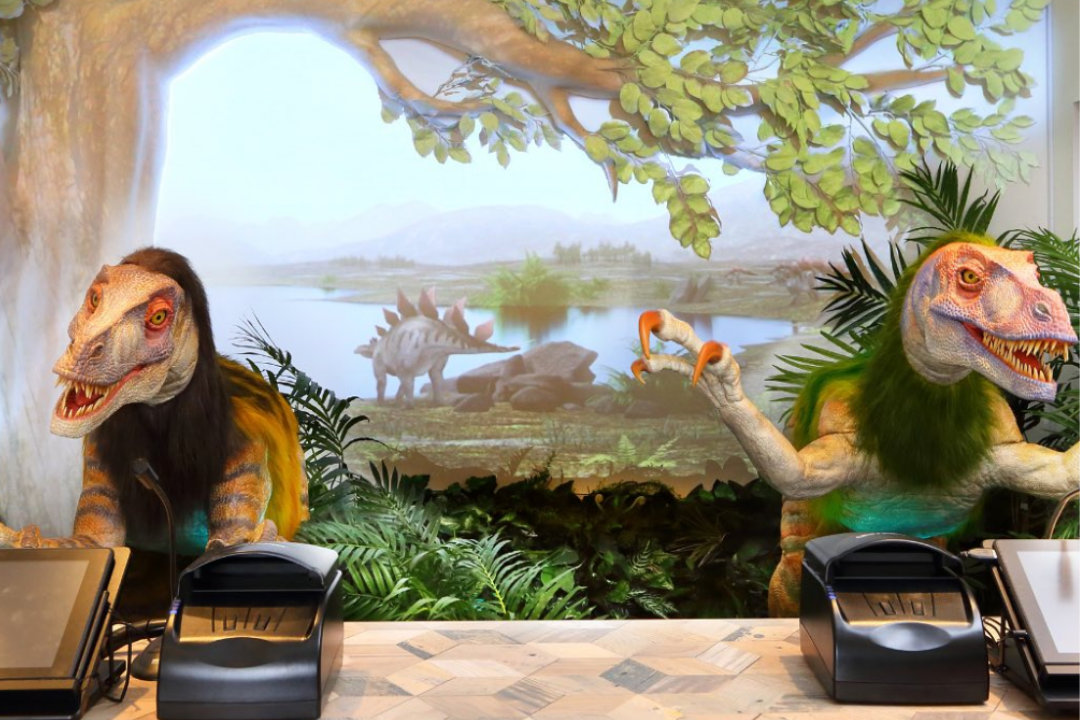
Another aspect that sets Henn na Hotel apart is that the stay itself has become a tourist attraction. The front desk, staffed by dinosaur robots, creates a unique and memorable experience from the moment guests arrive, offering something beyond a typical hotel stay. Many guests also share photos of the robots and hotel facilities on social media, making the stay itself a form of entertainment.
Henn na Hotel is not simply a hotel that has introduced new technologies. It is also an initiative born from the question of how hotel operations and services can be reimagined. By combining robots and human staff, it serves as an experimental hotel exploring the possibilities of future hospitality experiences, giving it a distinctive presence in the industry.
An Experiment in Technology-Driven Hotel Operations
Source: Hennnahotel Homepage
The development of Henn na Hotel was driven by challenges facing the tourism industry, including labor shortages and rising operational costs. Traditionally, the hospitality sector has relied heavily on human staff for tasks such as front desk operations and various in-hotel services. At the same time, Japan's aging population and declining birthrate have contributed to a growing labor shortage, increasing the need for more efficient operational models across service industries. In response, Henn na Hotel was conceived as an experimental project to explore new ways of operating hotels through technologies such as robots and artificial intelligence.
The initiative was led by the H.I.S. Group, a Japanese travel company with business interests beyond travel services, including hotels, theme parks, and other tourism-related ventures. The company has long been interested in developing new approaches to enhance the tourism experience. In 2015, the first Henn na Hotel opened inside Huis Ten Bosch, a theme park in Nagasaki Prefecture, attracting widespread attention as a hotel where robots performed front desk duties.
From the beginning, the project was intended to be more than a publicity-driven attraction. It was positioned as a testing ground for evaluating the potential of technology-enabled hotel operations. The introduction of automated check-in procedures, robot-assisted customer service, and facial recognition systems was designed not only to create a unique guest experience but also to explore possible models for the future of hospitality management.
Henn na Hotel was not created to completely replace traditional hotels. Rather, it began as an experimental effort to expand the possibilities of hospitality services through technology. Today, with properties across Japan, the brand continues to propose new approaches to hotel operations by combining innovative guest experiences with the practical application of emerging technologies.
As An Experimental Model for Addressing Labor Shortages and Digital Transformation in the Hospitality Industry
Henn na Hotel is notable not only as a unique accommodation brand, but also as an experimental example of a new operational model for the hospitality industry. Labor shortages and operational efficiency have long been major challenges for hotels, leading to growing interest in automating tasks such as front desk services and check-in procedures. Henn na Hotel addresses these challenges by combining robot-assisted customer service, self-service check-in terminals, and facial recognition systems to streamline the guest experience.
Cutting-Edge Technology at the Front Desk
These technologies are being applied in both resort destinations and urban hotels. For example, the first Henn na Hotel, which opened within Huis Ten Bosch in Nagasaki, was designed to make the hotel stay itself part of the entertainment experience for theme park visitors. In contrast, properties in major cities such as Tokyo and Osaka provide efficient check-in environments for business and leisure travelers while serving as real-world demonstrations of hotel operations that can function with limited staffing.
One key benefit for businesses and tourism-related organizations is the opportunity to evaluate the potential of technology-driven hotel operations in a real-world setting. Introducing robot-assisted customer service and automated systems is not simply a way to reduce labor requirements; it can also create added value for guests. For example, the dinosaur robots at the front desk have become a distinctive attraction, allowing the hotel itself to function as a tourism experience.
In this way, Henn na Hotel is often viewed as an example of digital transformation (DX) in the hospitality industry, exploring how operational efficiency can be balanced with enhanced guest experiences. As a practical case study that combines robotics and hospitality services, it has attracted interest from companies in tourism, hotel management, and service innovation.
Service Quality Management Through Collaboration Between Technology and Human Staff
As a hospitality provider, Henn na Hotel places service quality management at the center of its operations through the design of its facilities, systems, and service framework. One of its most distinctive features is how responsibilities are shared among robots, automated systems, and human staff. While robots and self-service terminals handle front desk check-in procedures and certain guest services, hotel staff handle tasks such as facility management, issue resolution, and room cleaning, helping ensure stable day-to-day operations.
Addressing Industry Labor Shortages Through Automation
The hotel's systems combine technologies such as self-service check-in terminals and facial recognition room access to streamline guest procedures while maintaining consistent service quality. This allows guests to check in more efficiently, with reduced waiting times. The operation and performance of robots and automated systems are also reviewed on an ongoing basis, with adjustments and improvements made as part of the hotel's operational development.
In terms of safety and hygiene, Henn na Hotel operates in accordance with the same regulations and standards that apply to other accommodation facilities in Japan, including health, fire safety, and operational requirements. Room cleaning, facility inspections, and property management follow established hospitality practices, providing an environment where guests can stay with confidence.
The defining characteristic of Henn na Hotel is not simply its use of robotic technology, but how that technology is integrated into hotel operations. By combining the efficiency of automation with human support, the hotel seeks to balance service quality with an innovative guest experience.
A New Approach to Hotel Operations for the Future of Tourism
The development of Henn na Hotel was driven by a desire to address long-term challenges facing the tourism industry. For many years, hotel operations have relied heavily on human labor, with front desk services and various in-hotel functions supported by staff. However, Japan's aging population and declining birthrate have raised concerns about labor shortages, making it increasingly difficult for service industries to secure sufficient personnel. As a result, interest has grown in exploring new approaches to hotel management through technology.
In response to these challenges, the H.I.S. Group launched Henn na Hotel as a project designed to combine technology with tourism experiences. One of its objectives was to evaluate more efficient operational models by automating selected hotel functions through technologies such as robots and artificial intelligence. At the same time, the project embraced the idea of creating an experience-driven hotel where the stay itself becomes part of the attraction.
Henn na Hotel is also positioned as an effort to expand the value of tourism experiences rather than simply serving as a technology experiment. Features such as dinosaur-themed robots handling front desk duties create a sense of novelty from the moment guests arrive, transforming the hotel itself into a tourist attraction and an integral part of the travel experience.
The Henn na Hotel project has been developed from two perspectives: addressing operational challenges within the hospitality industry and creating new forms of tourism experiences. By combining technology with hospitality services, it continues to explore new possibilities for what a hotel can offer.
From a Hotel DX Test Case to a Next-Generation Hotel Brand
Henn na Hotel began as a hotel concept that incorporated robots and artificial intelligence into its operations. It has since continued to evolve as a brand, exploring new approaches to hotel management based on the experience gained from these initiatives. One future direction is further developing robotics and automation systems to improve operational efficiency while enhancing the guest experience. By expanding the digitalization of functions such as check-in procedures and room management, the brand is working to create a more seamless and convenient experience for guests.
In terms of brand recognition, Henn na Hotel is expected to strengthen its position as a hotel brand that offers a technology-driven lodging experience while building on its distinctive concept as a hotel where robots play an active role. The fact that the stay itself becomes part of the travel experience also makes the brand well suited to social media and media coverage, further enhancing its value as a tourism attraction.
In terms of distribution, Henn na Hotel is available to both domestic and international travelers through established hotel booking platforms and travel agency networks. For overseas visitors, it is often introduced as a uniquely Japanese accommodation experience and also serves as a tourism attraction in its own right. As tourism demand recovers and the inbound travel market continues to grow, the brand is expected to gain greater recognition among international travelers.
Beyond its role as a place to stay, Henn na Hotel continues to attract attention as a brand that shows new possibilities for hospitality by combining technology and service.
The Experience of Staying at a Hotel Where Robots Welcome Guests
One of the most common impressions guests share about Henn na Hotel is that the experience feels special from the moment they arrive. Seeing dinosaur-themed and humanoid robots handle check-in at the front desk is rare in conventional hotels, making a strong impression on first-time visitors. For international travelers in particular, the experience is often viewed as a reflection of Japan's technological innovation and distinctive service culture.
On travel review platforms, guests frequently describe the experience as both smooth and memorable. Comments such as "The check-in process was efficient and fun" and "It was my first time staying at a hotel where robots handled guest services" are commonly seen. While the hotel provides the same core accommodation functions as a traditional hotel, many guests appreciate the added entertainment value. Families traveling with children also often mention that taking photos with the robots and exploring the hotel's technology were memorable parts of their trip.
Experiences at Henn na Hotel are also widely shared on social media through photos and videos. Posts featuring the dinosaur robots at the front desk or the self-check-in process are frequently shared on platforms such as Instagram and YouTube, helping to spread awareness of the hotel as part of the travel experience itself. Among international users, it is often introduced as a uniquely Japanese hotel experience.
Henn na Hotel is known not only as a place to stay, but also as an experience-driven hotel that leaves a lasting impression on its guests. Its robot-assisted services and automated systems are valued not only for their convenience, but also for making the stay itself more enjoyable and memorable.
A Robot Hotel That Gained Attention Through Guinness Recognition and Nationwide Expansion
Henn na Hotel has attracted significant attention in Japan as a hotel that incorporates robotic technology into its operations. When the first property opened in 2015 within Huis Ten Bosch in Nagasaki Prefecture, it gained international recognition as a hotel where robots performed hotel duties. That same year, Guinness World Records recognized it, reflecting its pioneering use of robots in key hotel operations.
Following its initial launch, Henn na Hotel expanded beyond tourist destinations into major urban areas. The brand opened properties in cities such as Tokyo, Osaka, Kyoto, and Fukuoka, allowing it to serve both leisure and business travelers. As a result, it has become known not only as a themed hotel experience but also as a practical accommodation option.
Entertainment and Convenience Combined
Henn na Hotel has also been featured extensively on television, in newspapers, and in online media. Its concept of robot-assisted customer service and automated hotel operations is often highlighted as an example of the combination of Japanese technology and hospitality services. In particular, images of dinosaur-themed robots working at the front desk have attracted attention from international media outlets and social media users, helping to position the hotel as a uniquely Japanese tourism attraction.
On social media, guests frequently share photos and videos of the hotel's robots and technology-driven facilities. These posts are often shared organically, increasing public awareness of the brand. Through these developments, Henn na Hotel has established itself as one of Japan's most recognizable examples of technology-enabled hospitality.
A Hotel Model That Combines Technology and Experience-Based Tourism
Source: Hennnahotel Homepage
Henn na Hotel is a hotel model with the potential to attract interest not only in Japan but also in international markets. Across the global hospitality industry, hotels are increasingly adopting digitalization and automation, including self-service check-in procedures and contactless guest services. Henn na Hotel is often viewed as an early example of this trend and has attracted attention as a reference case for hotel digital transformation (DX).
Markets particularly well suited to this concept include major cities across Asia, North America, and Europe, where demand for technology-enabled accommodation is growing. In these regions, guests are generally familiar with self-service check-in and automated services, making them more receptive to technology-driven hospitality. Features such as robot-assisted customer service and facial recognition room access may be valued for supporting both operational efficiency and a distinctive guest experience.
The appeal of Henn na Hotel extends beyond efficiency alone. Elements such as dinosaur-themed robots at the front desk help transform the hotel itself into a tourism attraction, a characteristic that may also resonate with international travelers. Because the stay itself becomes a memorable experience, the concept is well suited to social media sharing and tourism promotion.
Labor shortages are also a challenge facing the hospitality industry in many countries, not only Japan. As a practical example of hotel operations that incorporate robotics and automation, Henn na Hotel may offer useful insights for international hospitality businesses and tourism organizations. By combining technology with experience-based tourism, the brand represents one possible direction for the future of the hotel industry.
Conclusion
Henn na Hotel is a unique Japanese hotel brand that incorporates technologies such as robots and artificial intelligence into the guest experience. Its distinctive concept of robots handling front desk duties has attracted widespread attention in Japan and abroad. By turning the hotel stay itself into part of the travel experience, the brand offers a different appeal from conventional hotels.
Today, labor shortages and the need for greater operational efficiency are major challenges across the global hospitality industry, driving increased interest in hotel digitalization and automation. Henn na Hotel provides a practical example of how technologies such as robot-assisted customer service and self-service check-in can be integrated into hotel operations. One of its defining characteristics is its ability to improve operational efficiency while also making the stay itself an engaging experience.
For international businesses, Henn na Hotel offers a useful case study in hotel digital transformation and experience-driven tourism. By incorporating robotics and automation into hospitality services, it demonstrates how efficiency and entertainment value can be combined within a single accommodation model. The concept also has potential applications across a range of settings, including tourism facilities, theme parks, and urban hotels.
As an experimental hotel brand that brings together Japan's tourism industry and technological innovation, Henn na Hotel continues to demonstrate new possibilities for the future of hospitality.
FAQ About Henn na Hotel
1. What Is Henn na Hotel?
Henn na Hotel is a Japanese hotel brand that actively incorporates advanced technologies such as robots and artificial intelligence into its operations. Dinosaur-themed robots and humanoid robots assist guests with check-in, creating a lodging experience that differs from a conventional hotel stay. In addition to providing accommodation, the hotel offers guests the opportunity to experience what a future hotel might look like.
2. How Is It Different From A Typical Hotel?
The main difference is its use of robots and automated systems as part of the guest experience. Technologies such as self-service check-in and facial recognition room access help streamline hotel procedures. At the same time, hotel staff continue to handle areas such as facility management and certain guest services, creating an operational model that combines technology with human support.
3. Why Was A Hotel Staffed By Robots Created?
The concept was developed to explore new ways of addressing challenges such as labor shortages and operational efficiency in the hospitality industry. By utilizing robots and AI, the hotel aims to reduce the workload associated with hotel operations while also transforming the stay itself into an enjoyable experience. It was created as an experimental project to explore the future of hospitality.
4. Is The Hotel Operated Entirely By Robots?
No. Robots primarily handle routine tasks such as check-in procedures. Hotel staff remain responsible for room cleaning, facility management, and guest support when needed. The hotel operates through a combination of human and robotic roles rather than relying entirely on automation.
5. Why Did Henn na Hotel Gain International Attention?
It gained international attention not only because Guinness World Records recognized it as the world's first hotel staffed by robots, but also because its concept of robot-assisted customer service was easy to understand and generated widespread interest in Japan and abroad. The hotel itself became a tourist attraction, often being featured as a symbol of Japanese technology and service culture.
6. How Has Henn na Hotel Influenced the Hospitality Industry?
Henn na Hotel is often cited as a practical example of hotel digital transformation (DX). By implementing technologies such as self-service check-in and facial recognition systems in real hotel operations, it has shown how technology can improve efficiency while enhancing the guest experience.
7. Why Is The Hotel Experience Itself Considered A Tourist Attraction?
Guests begin experiencing something unusual from the moment they arrive. Features such as dinosaur robots at the front desk and technology-focused facilities create experiences that are rarely found in traditional hotels. As a result, staying at the hotel can become part of the travel experience itself rather than simply a place to sleep.
8. What Makes Henn na Hotel Appealing To International Visitors?
It offers visitors the opportunity to experience both Japanese robotics technology and hospitality culture in one place. While hotel automation exists in many countries, Henn na Hotel integrates robot interactions directly into the guest experience, making it a uniquely Japanese attraction for international travelers.
9. What Does Henn na Hotel Suggest About the Future of Hospitality?
It reflects the idea of using technology to improve operational efficiency while allowing staff to focus on services that require a human touch. Rather than fully automating every aspect of hotel operations, Henn na Hotel assigns different roles to people and robots based on their respective strengths to create a more comfortable guest experience. It is often viewed as an example of one possible direction for the future of hotel management.
10. What Is The Greatest Appeal Of Henn na Hotel?
Its greatest appeal is how it turns advanced technology into part of the travel experience rather than using it solely for efficiency. Robot-assisted services and digital technologies become memorable elements of a guest's trip, allowing visitors to experience both innovative hospitality and Japanese creativity firsthand.
Related Videos
If you're interested in how technology is reshaping hospitality, the video below explores Henn na Hotel, Japan's pioneering robot-staffed hotel. This video highlights how automation, robotics, and innovative service design are changing the traditional hotel experience and offering a glimpse into the future of hospitality.