Stamping a document is a routine task that has long been part of daily life in Japan, whether in offices, schools, or homes. While many countries do not rely on personal seals to the same extent, the act of using stamps remains common worldwide. Approval stamps, teacher stamps, office stamps, shipping stamps, and craft stamps are used across countless industries and households.
Yet behind this simple action lies a series of small frustrations. Removing a cap, finding a place to set it down, preventing it from rolling away, keeping ink from touching surfaces, and aligning the stamp correctly all add tiny interruptions to an otherwise straightforward task.
The Hankoco Slide was created to address those seemingly minor inconveniences.
Developed by Kutsuwa Co., Ltd., a Japanese stationery manufacturer with roots dating back more than a century, the product reflects a design philosophy that has long defined Japanese stationery: improving the quality of everyday actions rather than reinventing them entirely.
Instead of requiring users to remove a cap before stamping, the Hankoco Slide reveals the stamp surface with a simple sliding motion. Nothing about the basic act of stamping changes. What changes is the number of steps required to get there.
For international audiences, the appeal of the Hankoco Slide extends beyond Japan's seal culture. Its real value lies in a universal question: how can everyday tools become easier to use without forcing people to learn new habits?
The answer, in this case, is surprisingly simple.
Hankoco Slide Overview
The Hankoco Slide is a compact stamp designed to simplify the stamping process while making alignment easier and reducing the hassle of handling a separate cap.
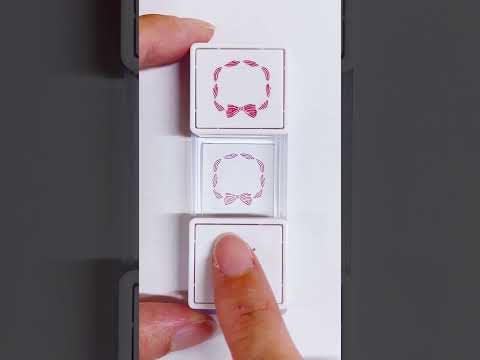
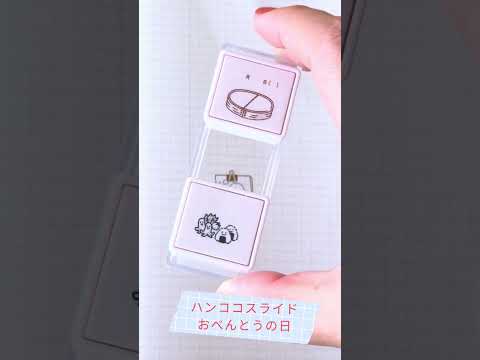
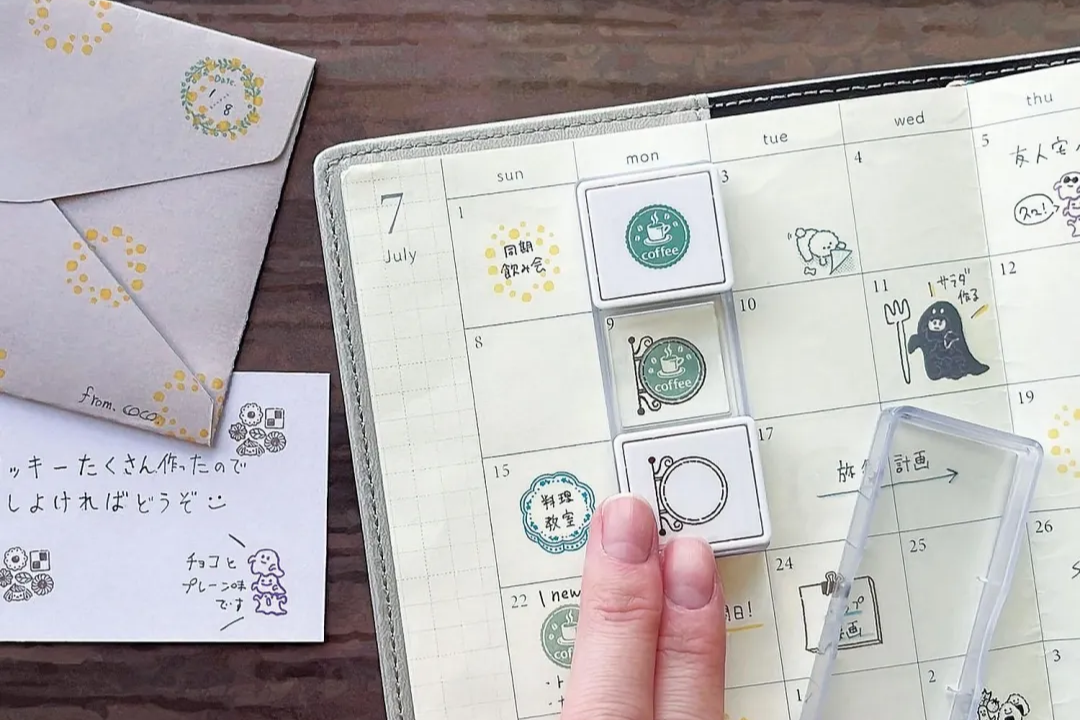
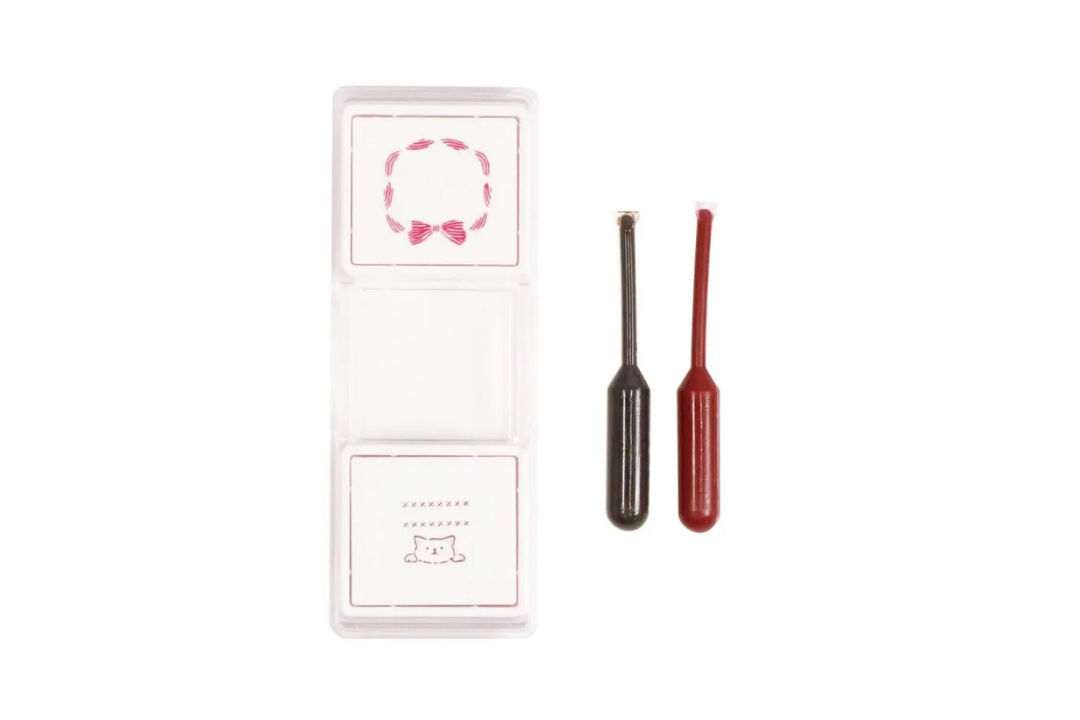
The stamp is housed inside a windowed case. By sliding the mechanism forward, the stamp surface becomes exposed and ready to use. Because users can see through the window while positioning the stamp, it becomes significantly easier to align impressions accurately.
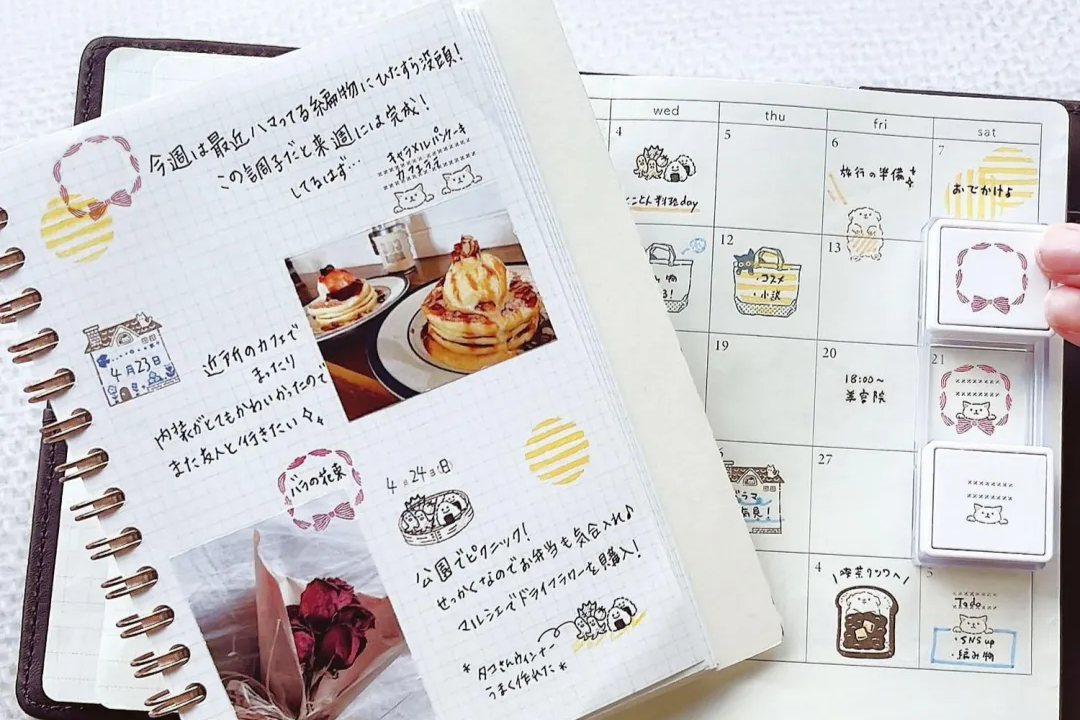
The product comes with oil based pigment ink and is designed for repeated use through ink refills. Multiple designs and decorative patterns are also available, combining practicality with a touch of personality.
Rethinking the Entire Stamping Experience
The Hankoco Slide was not designed to create a new stamping culture. Instead, it was designed to reconsider every step surrounding an existing one.
Traditional stamps require users to remove a cap before use and replace it afterward. While each action takes only a few seconds, those seconds add up when processing large volumes of documents. The cap itself introduces additional issues. It can be misplaced, dropped, forgotten, or simply become another object cluttering a workspace.
The Hankoco Slide eliminates those interruptions by integrating protection directly into the structure of the product.
The stamp remains enclosed within a transparent windowed housing until needed. A simple slide exposes the stamp surface, allowing the user to stamp immediately. Once finished, sliding the mechanism back automatically protects the stamp.
No separate cap. No extra parts. No additional steps.
This simplicity reflects a long standing principle in Japanese stationery design: products should be intuitive enough that instructions become almost unnecessary.
A Japanese Approach to Improvement Through Subtraction
Many products become more sophisticated by adding features.
The Hankoco Slide became better by removing one.
Its uniqueness does not come from introducing advanced technology or transforming how stamps work. The stamp surface, ink, and basic function remain familiar. What changed is everything surrounding the action.
Kutsuwa carefully examined the complete sequence of using a stamp:
- Remove the cap
- Put the cap down
- Find the cap again
- Replace the cap
Then asked a simple question:
Do any of those steps actually need to exist?
The resulting slide mechanism eliminates them entirely.
This philosophy is deeply connected to a broader Japanese design mindset. Instead of asking what can be added, designers often ask where a task is being interrupted. By identifying points of friction and removing them, the entire experience becomes smoother.
The windowed housing further reinforces this approach. Not only does it remove the inconvenience of a cap, but it also reduces anxiety about placement by allowing users to see where they are stamping.
The goal is not merely efficiency. It is confidence.
Understanding the Product's Development
Source: Kutsuwa Homepage
The origins of the Hankoco Slide can be traced to Kutsuwa's long history of observing how people actually use stationery.
Throughout schools, offices, and homes, the company noticed the same repeated pattern. People were constantly removing caps, setting them aside, searching for them, and replacing them. Individually these actions seemed insignificant. Collectively they interrupted workflow and concentration.
Rather than redesigning the stamp itself, Kutsuwa focused on the moments surrounding its use.
The challenge became finding a way to protect the stamp surface without requiring a separate component. This led to the development of the integrated sliding structure.
Another challenge involved stamp positioning. A misplaced stamp can be difficult or impossible to correct, particularly on official documents. To reduce alignment errors, the company incorporated a viewing window that helps users see exactly where the stamp will be placed.
Importantly, the solution remained intentionally simple. Kutsuwa avoided complex mechanisms or technology heavy features. The objective was to create something intuitive, durable, and easy to maintain.
The result is a product that looks familiar but feels noticeably more refined during everyday use.
Where the Hankoco Slide Fits Into Everyday Life
One of the product's strengths is its versatility.
Unlike tools designed for highly specific industries, the Hankoco Slide can be used almost anywhere people rely on stamps.
Offices
Administrative departments, accounting teams, and small businesses often process large numbers of documents requiring stamps or approvals.
Because the Hankoco Slide eliminates cap management and streamlines workflow, users can move through repetitive tasks with fewer interruptions.
Schools
Teachers frequently use stamps for grading, attendance, feedback, and administrative paperwork.
The enclosed structure helps prevent accidental messes, while the viewing window supports accurate placement on forms and documents.
Homes
Even in countries where personal seals are uncommon, stamps are often used for organizing paperwork, labeling, crafting, or educational activities.
For occasional users, the capless design removes one of the most common frustrations: discovering that the cap is missing when the stamp is needed.
Shared Workspaces
The product's intuitive operation makes it particularly suitable for shared environments where multiple people use the same tools.
Little or no training is required. Users can understand how it works almost immediately.
Built for Long Term Everyday Use
Source: Kutsuwa Homepage
Kutsuwa's manufacturing philosophy focuses on products that remain useful over time rather than creating a strong first impression alone.
This philosophy is visible throughout the Hankoco Slide.
The slide mechanism minimizes the number of moving components, reducing opportunities for failure. By eliminating a separate cap, the product also removes one of the most commonly lost parts associated with traditional stamps.
Material selection prioritizes durability and daily usability over decorative complexity. The stamp is designed to withstand repeated handling, storage, and transportation without becoming difficult to maintain.
Quality control also extends beyond manufacturing specifications. Because stamping accuracy matters, smooth operation, proper protection of the stamp surface, and reliable visibility through the viewing window all contribute to the user experience.
The goal is not simply to manufacture a stamp.
The goal is to create a tool that remains dependable throughout years of use.
The Design Philosophy Behind Kutsuwa
Source: Kutsuwa Homepage
To understand the Hankoco Slide fully, it helps to understand Kutsuwa itself.
For more than a century, the company has operated at the intersection of learning, work, and everyday life. Its products are designed not merely to perform functions but to support focus, continuity, and ease of use.
A recurring theme throughout Kutsuwa's product development is reducing the need for conscious effort.
Rather than requiring users to learn new behaviors, the company seeks to create tools that naturally guide people toward effective use.
This philosophy can be seen in the Hankoco Slide.
Users do not need instructions to understand that sliding exposes the stamp. They do not need reminders to replace a cap because there is no cap to replace. The design quietly encourages the correct action through its structure.
It is an approach rooted in observation rather than innovation for innovation's sake.
A Reflection of Japanese Stationery Culture
The Hankoco Slide also reflects broader characteristics of Japanese stationery culture.
In Japan, stationery is often designed not simply to make tasks faster but to prevent interruptions. Writing, organizing, marking, and stamping are viewed as continuous actions that should flow naturally from one step to the next.
Small disruptions matter.
A cap that must be removed. A tool that requires adjustment. A mechanism that demands extra attention.
Each interruption breaks concentration.
As a result, many Japanese stationery products focus on preserving flow rather than maximizing specifications.
The Hankoco Slide embodies this principle perfectly.
Its purpose is not to transform stamping. Its purpose is to make stamping feel effortless.
That distinction is subtle but important.
International Potential Beyond Japanese Seal Culture
At first glance, a product designed around Japanese stamping practices might appear limited to Japan.
In reality, the opposite may be true.
Across North America, Europe, and many other regions, stamps continue to be used in offices, schools, warehouses, libraries, craft communities, and home offices.
The specific cultural role may differ, but the practical challenges remain familiar.
People still need to:
- Store stamps
- Protect stamp surfaces
- Align impressions accurately
- Avoid losing components
The Hankoco Slide addresses each of these concerns without requiring any knowledge of Japanese seal traditions.
Its functionality is immediately understandable.
The minimalist design also aligns well with international trends toward practical, clutter free products. Rather than emphasizing technology or complexity, it focuses on usability.
This makes it relevant not only as a stationery item but also as an example of thoughtful product design.
Why This Product Fits Modern Global Trends
The timing of a product often matters as much as the product itself.
Around the world, consumers are increasingly seeking tools that reduce friction rather than add features.
Many people feel overwhelmed by products packed with functions, notifications, and complexity. As a result, simple products that solve specific problems elegantly are gaining renewed appreciation.
The Hankoco Slide fits naturally within this movement.
Its value comes from eliminating small frustrations rather than introducing dramatic innovation.
It is also inherently sustainable in its design philosophy. The product is intended for repeated long term use, with refillable ink and a durable structure that discourages frequent replacement.
At the same time, it appeals to growing interest in analog experiences. Even in highly digital environments, many people continue to enjoy physical tools, paper planners, craft projects, and handwritten workflows.
The Hankoco Slide offers an analog experience without the traditional inconveniences often associated with analog tools.
Conclusion
The Hankoco Slide is not a revolutionary product in the conventional sense.
It does not replace stamps, digitize paperwork, or introduce cutting edge technology. Instead, it takes a familiar tool and quietly removes the small frustrations that people have accepted for decades.
That restraint is precisely what makes it interesting.
Through a simple sliding mechanism and a thoughtfully designed viewing window, Kutsuwa has transformed the experience surrounding stamping without changing the act itself. The result is a product that feels intuitive, efficient, and surprisingly natural to use.
For international audiences, the story of the Hankoco Slide is ultimately not about Japanese seals. It is about a design philosophy that values reducing friction, preserving focus, and improving everyday actions through careful observation.
Rather than demanding new habits, it works with existing ones.
Rather than making a loud statement, it makes a subtle difference.
And in an era increasingly defined by complexity, that kind of quiet improvement may be more valuable than ever.
FAQ About the Hankoco Slide
1. What Is the Hanko Slide?
The Hanko Slide is a sliding stamp developed by Kutsuwa Co., Ltd.. Unlike traditional stamps that require you to remove a cap before use, the Hanko Slide reveals the stamp simply by sliding the body forward. This capless design eliminates small everyday frustrations, such as misplacing the cap or finding a place to set it down, making stamping quicker and more convenient.
2. How Is It Different From a Traditional Stamp?
Its capless design and improved positioning are its biggest advantages. Conventional stamps require users to remove and replace a cap before and after each use, while the Hanko Slide is ready with a simple sliding motion. It also features a viewing window that allows users to see exactly where the stamp will be placed, making it easier to stamp designated spaces on documents accurately.
3. Where Can the Hanko Slide Be Used?
The Hanko Slide is suitable for a wide range of situations, including approving documents in the office, signing school communication notebooks and paperwork, or confirming package deliveries at home. Because it operates much like a traditional stamp, it requires no special learning curve, making it convenient for both frequent and occasional users.
4. Why Was It Designed Without a Cap?
The design rethinks the entire sequence of removing, setting down, searching for, and replacing a stamp cap. While each of these actions is small, repeating them every day interrupts workflow and adds unnecessary friction. The Hanko Slide removes these extra steps so users can focus on the task of stamping itself.
5. What Kind of Company Developed the Hanko Slide?
The Hanko Slide was created by Kutsuwa Co., Ltd., a Japanese stationery manufacturer founded in 1910. The company produces educational supplies, everyday stationery, and office products, with a strong emphasis on creating practical tools that fit naturally into people's daily lives. That philosophy of intuitive usability is clearly reflected in the Hanko Slide.
6. Why Is It Easier to Position the Stamp Accurately?
The Hanko Slide incorporates a transparent viewing window that lets users see exactly where the stamp will land before pressing it down. Instead of relying solely on estimation, this visual guide helps reduce stamping errors and makes it easier to align impressions precisely on forms and documents.
7. Why Could the Hanko Slide Appeal to International Users?
Although personal seal culture is closely associated with Japan, stamps themselves are widely used in offices and schools around the world. Features such as eliminating the cap and making stamp placement easier are practical improvements that anyone can appreciate, regardless of cultural background, giving the Hanko Slide international appeal.
8. Does the Hanko Slide Reflect the Characteristics of Japanese Stationery?
Yes. Rather than introducing dramatic new features, it embodies the Japanese stationery philosophy of carefully eliminating small everyday inconveniences. The Hanko Slide does not change the act of stamping itself; it simply removes the unnecessary steps surrounding it, making the experience feel naturally smoother.
9. Does the Hanko Slide Offer Environmental Benefits?
Yes. The Hanko Slide is designed for long-term, repeated use. Its simple construction is built for durability, and it can be refilled with oil-based pigment ink instead of being discarded after use. This reusable design reflects the growing emphasis on sustainability in modern stationery.
10. What is the Greatest Strength of the Hanko Slide?
Its greatest strength is that it makes everyday tasks feel easier without requiring users to change the way they work. By quietly eliminating small frustrations, such as removing a cap or worrying about stamp alignment, it improves the stamping experience in subtle but meaningful ways. That philosophy of making life more convenient without drawing attention to itself is a hallmark of Japanese stationery design and the Hanko Slide's greatest appeal.
Related Videos
If you're interested in Japan’s everyday innovations, the video below introduces Hankoco Slide, a clever stamp accessory designed to make stamping documents smoother and more hygienic. This video shows how a simple improvement to an everyday action can save time and make office tasks more comfortable.