What if dinner felt like boarding a train to the future?
That is the question behind FUTURE TRAIN, one of Japan’s most ambitious experiential dining projects. Opened in September 2025 in Kyoto’s Umekoji district, the venue is far more than a restaurant. Built on a former elevated railway line, it transforms retired express train cars into an immersive destination where food, art, architecture, and storytelling become one seamless experience.
At the heart of the project is a simple concept: “Take Me To The FUTURE.” Instead of focusing solely on food, FUTURE TRAIN invites every guest to imagine their own journey. Retro-futuristic interiors, immersive digital art, and cuisine inspired by Kyoto’s culinary heritage combine to create an experience that feels both nostalgic and forward-looking.
As consumers around the world increasingly value memorable experiences over traditional products and services, FUTURE TRAIN represents something much larger than a themed restaurant. It demonstrates how hospitality can become cultural storytelling, how unused infrastructure can become creative assets, and how cities can redefine tourism through experience design.
This article explores the vision behind FUTURE TRAIN, the company that created it, the urban challenges it addresses, the design principles that make it unique, and why its business model could inspire tourism and entertainment projects worldwide.
FUTURE TRAIN KYOTO DINER & CAFE Overview
Located in central Kyoto, FUTURE TRAIN KYOTO DINER & CAFE offers an entirely new approach to dining by transforming a disused elevated railway into an immersive hospitality destination.
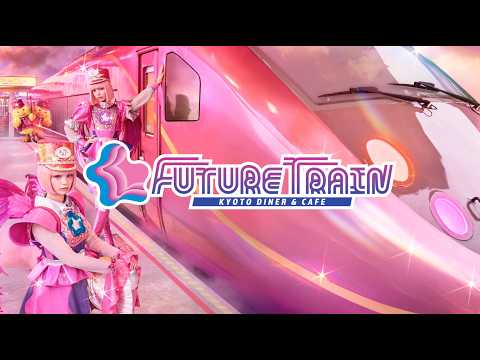
The venue consists of three connected train cars stretching approximately 90 meters. These cars once operated as JR West’s Thunderbird Limited Express, using the iconic 681 Series trains that connected Kyoto with Japan’s Hokuriku region. Rather than preserving them as museum pieces, the project gives them a new life as an interactive dining experience.
Each train car serves a different purpose, allowing visitors to progress through the venue as if embarking on a journey.
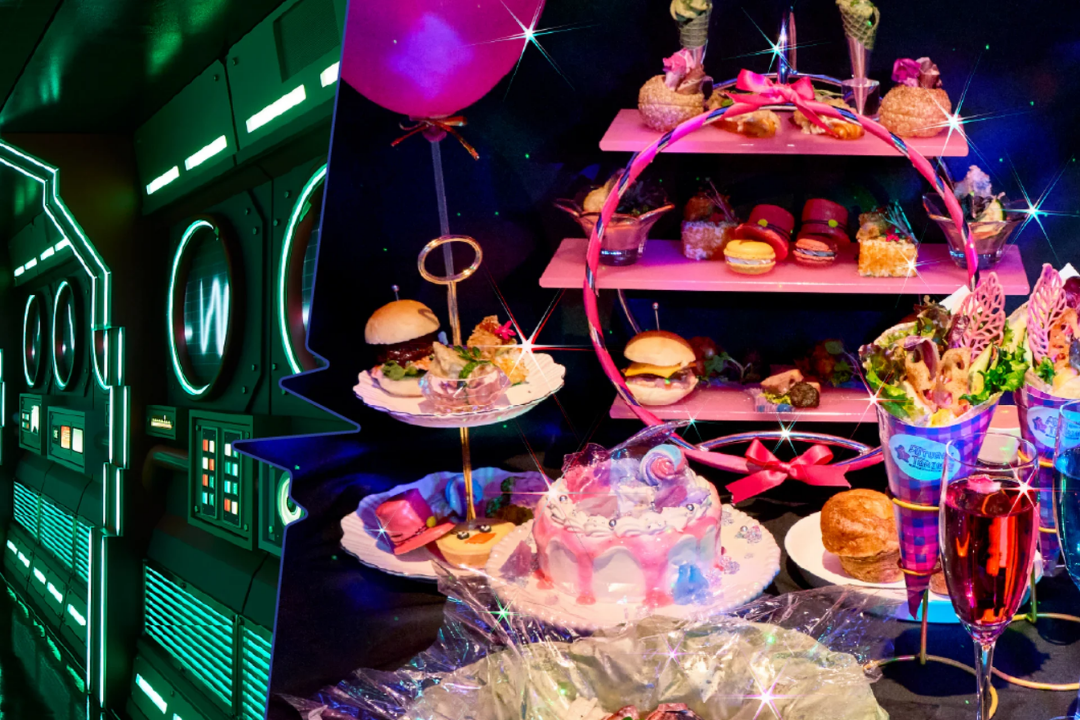
The first car functions as an immersive art space created in collaboration with creative teams including IMAGICA EEX. Visitors encounter installations featuring projection mapping, lighting, sound design, and multimedia storytelling that establish the futuristic atmosphere before dining even begins.
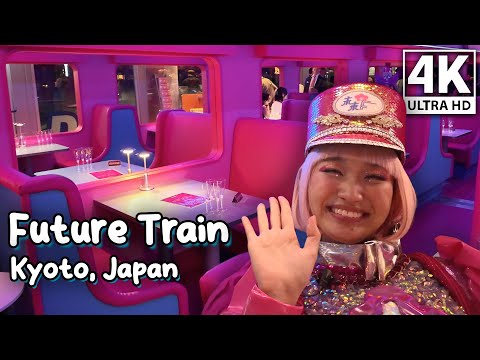
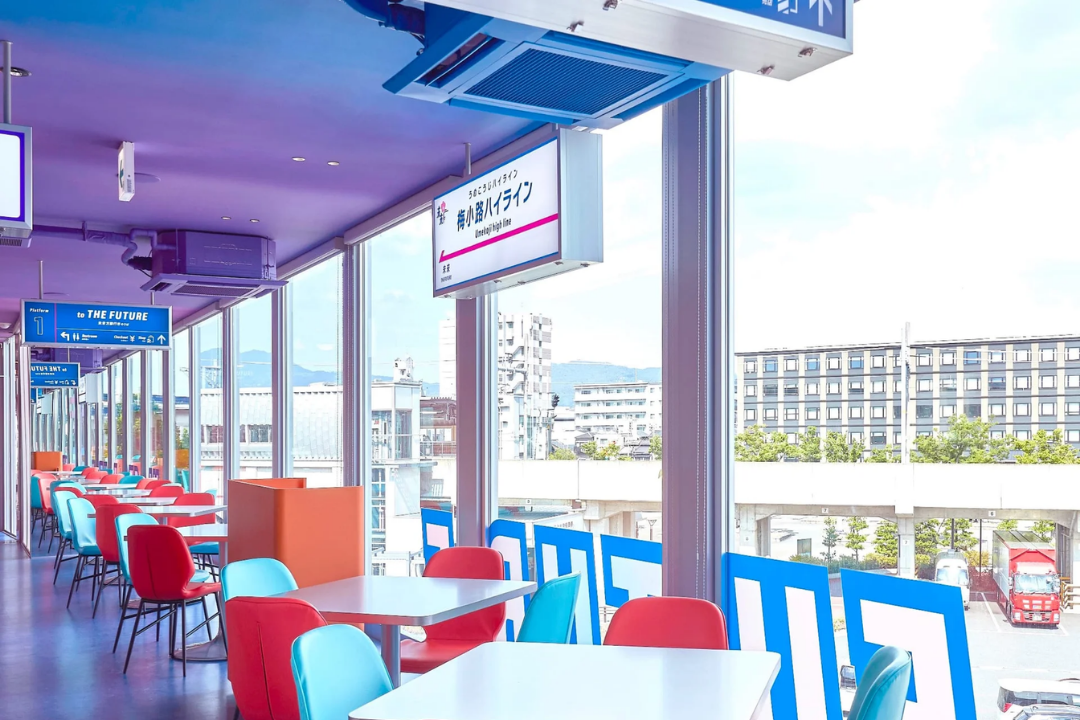
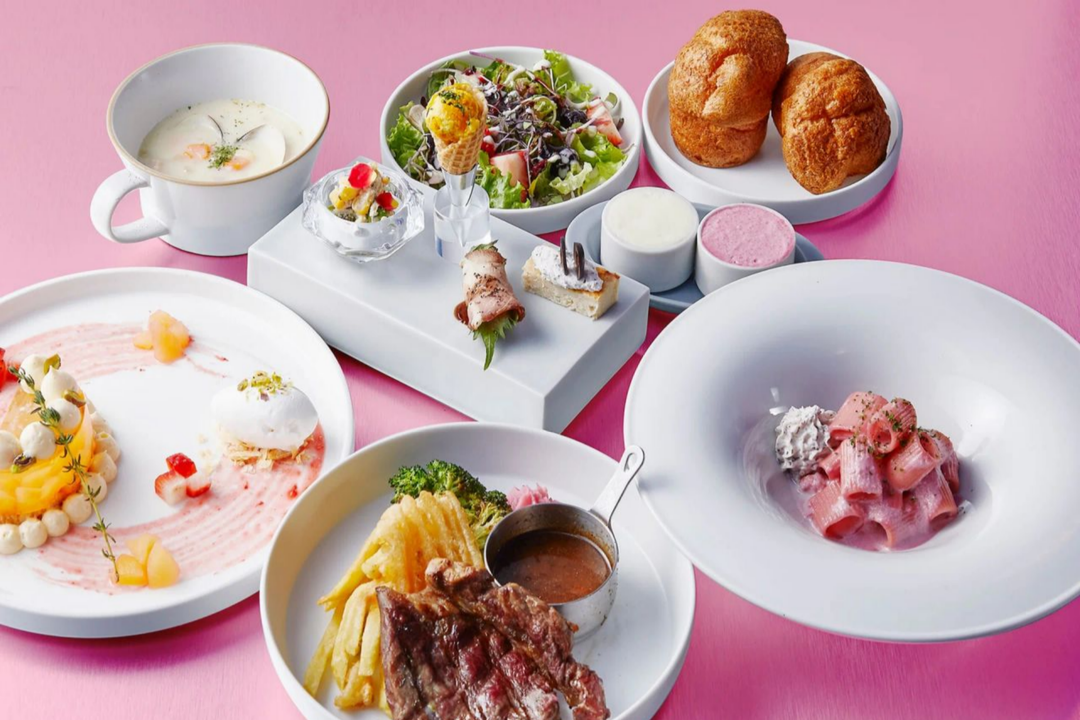
The second car is the main dining area. Designed with a retro-futuristic aesthetic, it combines the nostalgic character of classic Japanese rail travel with contemporary interpretations of Kyoto cuisine.
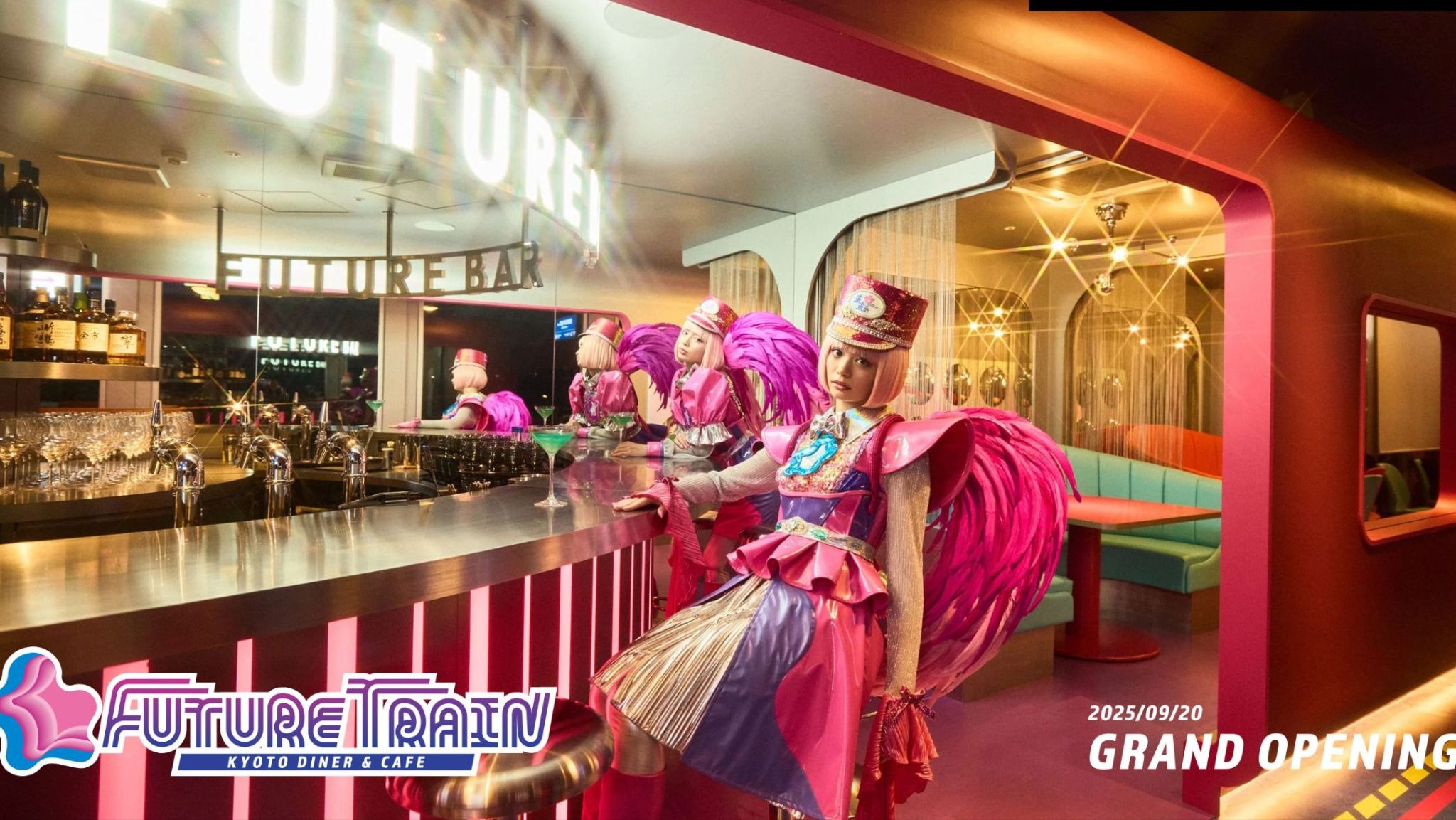
The third car shifts the mood into a more relaxed social setting, featuring a bar counter, booth seating, and platform-style lounge areas where guests can continue their experience over drinks and conversation.
Even the food service reinforces the narrative. Meals are delivered using traditional railway-style service carts, while the menu itself is designed around the idea of a train journey, making dining an integral part of the storytelling rather than simply a meal.
The Challenge Facing Modern Urban Tourism
Source: FUTURE TRAIN Homepage
The idea behind FUTURE TRAIN emerged from significant changes in urban tourism.
Cities such as Kyoto continue to welcome record numbers of international visitors, yet tourism is facing a new challenge. The issue is no longer attracting travelers. It is encouraging them to stay longer, explore more neighborhoods, and engage in experiences beyond the city’s most famous landmarks.
Historic temples, shrines, and cultural sites remain Kyoto’s primary attractions. However, many visitors concentrate their activities during the daytime before leaving central areas in the evening. As a result, opportunities for local businesses outside traditional tourist routes remain limited.
At the same time, social media has changed how destinations compete for attention.
The Immersive Diner
Excellent food alone is no longer enough to generate lasting interest. Increasingly, people choose restaurants because the entire environment is worth experiencing and sharing. The venue itself becomes the destination.
Meanwhile, cities around the world contain significant underused infrastructure.
The abandoned elevated railway in Kyoto’s Umekoji district was one such asset. While rail infrastructure once played a central role in urban development, retired tracks and train cars often have limited use after operations end.
DD Group saw an opportunity to apply its expertise in experiential hospitality to this overlooked urban resource. Rather than simply opening another restaurant, the company transformed former transportation infrastructure into an immersive cultural destination. In doing so, it created a business model that extends beyond hospitality into urban regeneration.
FUTURE TRAIN addresses two important challenges simultaneously. It creates new reasons for visitors to spend time in Kyoto while giving new purpose to infrastructure that had reached the end of its original life. Food becomes the medium, but the real product is a reimagined urban experience.
Turning Railway Heritage into a Storytelling Platform
Since its founding, DD Group has built its reputation through concept-driven hospitality.
Instead of expanding a single restaurant format across hundreds of locations, the company develops unique venues with their own identities, narratives, and immersive environments. Every brand is designed to deliver a different emotional experience.
FUTURE TRAIN represents the next evolution of that philosophy.
How Kyoto’s Most Ambitious Diner Sells the Future
The project began when the company recognized the potential of two overlooked assets in Kyoto’s Umekoji district: a disused elevated railway and retired Thunderbird express train cars.
Rather than treating the trains as historical artifacts or scrap materials, DD Group redefined them as spaces filled with memories of travel. The trains themselves became storytelling devices.
This decision introduced challenges rarely encountered in conventional restaurant development.
Most hospitality projects begin with flexible architectural spaces that can be customized around operational needs. FUTURE TRAIN required the opposite approach.
Blending Kyoto’s Heritage with Tomorrow’s Tech
Designers had to work within the existing dimensions of railway cars, carefully adapting seating layouts, ceiling heights, guest circulation, structural limitations, and safety requirements while preserving the identity of the original trains.
Despite these constraints, DD Group recognized a powerful opportunity.
When a physical space already carries emotional meaning, visitors arrive for more than just a meal. By transforming a symbol of movement into a symbol of imagination, the company could bring its concept of “a journey to the future” to life in a way that no conventional restaurant could replicate.
FUTURE TRAIN is therefore much more than an adaptive reuse project.
It is a case study in how hospitality businesses can redesign urban assets into destinations where architecture, storytelling, and experience become the primary attraction.
Designing Value Within Constraints
Source: FUTURE TRAIN Homepage
The defining strength of FUTURE TRAIN lies in its ability to transform physical limitations into memorable experiences.
Unlike a conventional commercial building that can be designed from scratch, the project had to work within the fixed dimensions and structure of retired railway cars. Every dining area, artwork, service point, and circulation path had to be integrated into an existing train rather than an empty architectural shell.
The venue spans approximately 90 meters across three connected train cars, each serving a distinct role in the guest journey. Visitors begin with an immersive art experience before moving into the main dining car and finally arriving at a relaxed bar and lounge space. Rather than simply being seated for a meal, guests experience a sequence that mirrors the rhythm of travel through boarding, movement, and arrival.
This required much more than creative interior design. Visitor flow, seating arrangements, restaurant operations, building code compliance, safety requirements, and structural renovation all had to work together within the constraints of the original railway cars.
A Masterclass in Japanese Retro-Futuristic Design
The novel system is where DD Group’s expertise becomes evident. The company is not simply experienced in restaurant operations. Its competitive advantage lies in combining hospitality management with concept development, spatial design, and multi-brand operations.
The uniqueness of FUTURE TRAIN extends beyond the train itself. Train-themed restaurants exist around the world, but very few reuse authentic railway cars on an elevated rail line while integrating contemporary art, immersive storytelling, and local cuisine into a single destination. Just as importantly, the project is deeply rooted in Kyoto’s identity as one of the world’s leading cultural tourism cities.
Viewed from this perspective, FUTURE TRAIN is better understood as an experiential environment than a restaurant. Instead of treating physical constraints as obstacles, the project transforms them into the foundation of its narrative.
Creating a Destination Beyond Dining
Source: FUTURE TRAIN Homepage
One of the first visible impacts of FUTURE TRAIN has been its ability to reposition Kyoto’s Umekoji district as a destination for experiences rather than simply another place to eat.
Its location on a former elevated railway, combined with authentic train cars, gives visitors a compelling reason to visit regardless of the menu. This helps diversify tourist movement instead of reinforcing the concentration around Kyoto’s most famous attractions.
Early visitor numbers suggest strong public interest. According to official announcements, more than 5,000 people visited the dining areas during the pre-opening period before the grand opening on September 20, 2025. The full opening also introduced the immersive art space known as FUTURE BIRD along with outdoor terrace seating, completing the overall visitor experience.
From a business perspective, the project’s significance extends well beyond restaurant revenue.
FUTURE TRAIN combines admission fees with food, beverages, and immersive experiences to create multiple revenue streams. Official operating policies, including cashless payment systems, admission charges, and structured opening hours, position the venue more like an entertainment destination than a conventional restaurant.
The project has also begun generating partnerships across tourism and transportation sectors. Initiatives with JR West’s tourism platform, tabiwa by WESTER, demonstrate how FUTURE TRAIN can be packaged alongside rail travel, accommodation, and regional sightseeing to create broader tourism products.
This collaborative approach creates value for multiple stakeholders.
Unused railway infrastructure becomes an attraction that encourages visitors to spend more time in the area. Railway operators and nearby businesses benefit from improved visitor flow around Kyoto Station. Local government, transportation companies, and hospitality operators gain a shared platform for regional revitalization rather than operating independently.
In practice, the most important outcome is not simply the opening of another restaurant. It is the creation of a new framework where transportation, tourism, hospitality, and urban redevelopment can be planned as one integrated visitor experience.
Building a Safe and Sustainable Hospitality Model
Transforming retired railway infrastructure into a commercial venue requires operational standards that go far beyond those of a typical restaurant.
To make FUTURE TRAIN possible, DD Group needed expertise not only in hospitality but also in architecture, engineering, public safety, and collaboration with railway operators and government agencies.
Addressing Japan’s Urban Challenges
The first priority was physical safety.
Train cars were originally designed for passenger transportation rather than extended dining experiences. Significant modifications were necessary, including redesigned seating layouts, commercial kitchen installation, upgraded electrical and plumbing systems, structural reinforcement, emergency evacuation planning, and compliance with modern building regulations.
Operational quality represented another critical challenge.
DD Group already operates numerous restaurant concepts across Japan, giving the company established systems for food procurement, hygiene management, staff training, and operational consistency. However, FUTURE TRAIN demands a higher level of service because hospitality is only one component of the overall experience.
Every interaction must reinforce the illusion of a journey, ensuring that storytelling remains consistent from arrival through departure.
The venue’s fully cashless payment system and admission-based entry also support efficient visitor management. Guest flow, event scheduling, and peak-hour operations can be managed more effectively than in a traditional restaurant environment.
Kyoto’s position as an international tourism destination further raises operational expectations. Multilingual support, digital payment infrastructure, and internationally recognized hygiene standards are essential for serving overseas visitors. DD Group’s experience across multiple hospitality businesses provides a strong foundation for meeting these requirements.
Ultimately, FUTURE TRAIN succeeds not simply because it is visually striking, but because its operational systems, safety standards, and experience design work together to create a sustainable business model.
Concept-Driven Hospitality as Urban Design
Source: FUTURE TRAIN Homepage
DD Group has built its business around concepts rather than standardized restaurant formats.
Over nearly three decades, the company has developed restaurants, entertainment venues, and hotels where atmosphere and storytelling are as important as the products themselves. Its diverse portfolio reflects a belief that every hospitality concept should deliver a distinct emotional experience.
This philosophy treats dining as more than a functional service.
Instead of competing only on food quality or pricing, DD Group integrates architecture, lighting, music, guest flow, and storytelling to create experiences that remain memorable long after the meal has ended.
Without this design philosophy, a project such as FUTURE TRAIN would not have been possible.
Equally important is the fact that the company does not view FUTURE TRAIN as a one-time attraction.
The project serves as a prototype for converting underused urban assets into experiential destinations. The real intellectual property is not the train itself, but the ability to transform physical constraints into compelling narratives.
Because DD Group also operates hotels and real estate businesses, it can think beyond individual restaurants to the broader visitor journey.
In tourism cities, accommodation, transportation, dining, and entertainment work together to shape visitor spending and satisfaction. FUTURE TRAIN represents one component of a larger vision for designing integrated urban experiences.
The company’s long-term ambition is becoming increasingly clear. Rather than remaining solely a restaurant operator, DD Group is positioning itself as a producer of urban experiences.
Conclusion
Japan faces a combination of demographic decline and an aging population.
Across many cities, infrastructure built during periods of rapid economic growth is reaching the end of its original purpose. Elevated railways, train cars, and other transportation assets often remain underused after retirement.
Kyoto reflects this broader national challenge.
Although the city welcomes millions of domestic and international visitors each year, tourism activity remains concentrated around a limited number of historic attractions. Many surrounding districts
FAQ About FUTURE TRAIN KYOTO DINER & CAFE
1. What Is FUTURE TRAIN Kyoto Diner & Cafe?
FUTURE TRAIN Kyoto Diner & Cafe is an immersive dining destination located in Kyoto’s Umekoji district. Built inside retired express train cars, it combines food, art, and experiential design to create a one-of-a-kind hospitality experience. Rather than functioning as a traditional restaurant, it invites guests to feel as though they are embarking on a journey into the future through storytelling, architecture, and cuisine.
2. How Is FUTURE TRAIN Different From a Traditional Restaurant?
The biggest difference is that the entire environment is designed as an experience rather than simply a place to eat. Authentic railway cars and a former elevated rail line have been transformed into immersive spaces, with each train car offering its own atmosphere and purpose. Visiting FUTURE TRAIN is intended to be just as memorable as the meal itself.
3. Why Were Retired Train Cars Turned Into a Restaurant?
The project gives new life to infrastructure that has reached the end of its original purpose. Retired train cars carry decades of history and memories, having transported countless passengers across Japan. Instead of preserving them as static exhibits, FUTURE TRAIN transforms them into spaces where guests can enjoy food, art, and culture while connecting the past with the future.
4. What Does “Take Me To The FUTURE” Mean?
“Take Me To The FUTURE” is the central concept behind FUTURE TRAIN. It builds on the idea that trains symbolize movement and discovery, encouraging visitors to embark on a journey filled with imagination, creativity, and new experiences. The project transforms a vehicle once designed for transportation into a destination that inspires curiosity.
5. What Can Visitors Experience at FUTURE TRAIN?
Each train car offers a different experience. Guests can explore immersive art installations, enjoy dining in a retro-futuristic setting, and relax in a stylish bar and lounge area. The venue is designed as a journey, allowing visitors to move through multiple spaces instead of remaining in a single dining room.
6. How Does FUTURE TRAIN Benefit the Local Community?
FUTURE TRAIN demonstrates how underused urban infrastructure can become a valuable tourism asset. By repurposing retired railway cars and a former elevated rail line, the project preserves local history while creating a compelling new reason for visitors to explore the Umekoji district. This contributes to a more diverse and sustainable tourism economy for Kyoto.
7. Is FUTURE TRAIN a Sustainable Project?
Yes. Sustainability is one of the project’s defining characteristics. Rather than demolishing existing infrastructure and building something entirely new, FUTURE TRAIN adapts retired train cars and railway structures for a new purpose. This approach reduces waste while extending the life of culturally significant assets through adaptive reuse.
8. Why Is FUTURE TRAIN Relevant to an International Audience?
Many cities around the world have retired railway stations, industrial buildings, and transportation infrastructure waiting to be repurposed. FUTURE TRAIN provides an inspiring example of how these assets can become vibrant destinations that combine hospitality, culture, and tourism. Its approach offers valuable insights for urban planners, developers, and hospitality professionals worldwide.
9. What Does FUTURE TRAIN Say About the Future of Hospitality?
FUTURE TRAIN reflects a broader shift in hospitality toward experience-driven destinations. While excellent food remains important, memorable experiences increasingly come from the combination of cuisine, architecture, storytelling, and immersive design. The project demonstrates how restaurants can evolve into places that guests remember for the entire journey, not just the meal.
10. What Makes FUTURE TRAIN Truly Unique?
FUTURE TRAIN transforms a space once dedicated to transporting people into one that inspires imagination. By blending authentic railway heritage, contemporary art, immersive storytelling, and Kyoto’s culinary culture, it creates an experience that goes beyond dining. It offers a compelling example of how history can be reimagined to create meaningful experiences for future generations.
Related Videos
If you're interested in how Japan is redefining experiences through food, art, and innovation, the video below showcases immersive concepts that blend creativity, technology, and hospitality. This video explores how experience design is shaping the future of entertainment and customer engagement in Japan.