Juice Revolution on the Street: How ‘Feed.ME’ Vending Machines are Redefining Freshly Squeezed Juice
Eating is one of the most essential yet personal aspects of health management. Even with the same nutrients, every individual has different needs depending on lifestyle, physical condition, and personal goals. Despite this, traditional nutrition management has long relied on the idea of an ‘average’ ideal. While we have metrics for calories and balanced nutrition, sticking to them in the chaos of daily life is an entirely different story.
Feed.Me is a service looking to solve this by shifting the focus from ‘managing’ diet to ‘designing’ it. Based in Japan, Feed.Me is a personalized nutrition support platform that optimizes meals based on an individual’s health and goals. What sets it apart is that it does not just tell you what to eat; it builds a system to support daily eating habits without the friction.
The service emerged in Japan at a time when health consciousness was rising, but so was frustration with ‘unsustainable’ wellness routines. We all know that restrictive dieting and strict nutrient tracking are ‘correct’, but they often impose a heavy mental load that leads to burnout. Feed.Me aims to absorb that burden through technology and design, rather than leaving it all to individual willpower.
Introducing Feed.Me to a global audience is particularly timely. While interest in personalized nutrition and ‘food tech’ is surging worldwide, many services remain heavy on theory and light on practical application. Feed.Me serves as a valuable case study because it has successfully implemented the complex challenge of individual optimization into a real-world service tailored to the nuances of the Japanese food culture and daily life.
In this article, we will take a deep dive into the philosophy and background of the company behind Feed.Me, the mechanics of the service itself, and why it is so relevant today. This is not about restricting what you eat; it is about integrating health seamlessly into your life.
Feed.Me Overview
Feed.Me is a personalized nutritional support service designed to optimize how we eat based on individual physical health, lifestyle rhythms, and personal goals. Unlike traditional methods that impose strict calorie counts and nutrient targets, this service is built around the starting point of ‘what is sustainable for the individual’. Rather than dictating what and how much someone must eat, it serves as a framework for gradually refining daily choices.
The core philosophy of Feed.Me is to ensure that nutritional management never feels like a special task. Typically, managing eating habits requires the mental labor of tracking, calculating, and restricting, which can become draining. Feed.Me aims to shoulder the burden through smart systems and design that allows users to understand the right nutritional direction for their specific condition without needing to become complex nutrition experts.
This service begins with the user’s goals. Whether that is weight management, improving physical condition, or boosting daily performance. Acknowledging that these needs vary, Feed.Me suggests a realistic way of eating that can actually be maintained. The emphasis is placed on stacking resilient, healthy choices rather than attempting to achieve the perfect nutritional balance every single day.
The pricing reflects this long-term approach. It is not designed around selling quick, short-term fixes. Instead, it is positioned as an affordable expense in a regular living cost. Because they focus on adjusting the user’s existing diet rather than forcing the user to purchase supplements or specific food, the psychological barrier to getting started is remarkably low.
Feed.Me: Personalized Nutritional Support by ME Group Japan
Feed.Me is a personal nutritional support service that applies ME Group Japan’s long-standing philosophy of ‘services integrated into daily life’ to the world of food. Far from a typical nutritional coaching or restrictive dieting program, it is designed to help users refine their eating habits naturally within the flow of
The goal of this service is not the strict management of every calorie. Instead, it aims to visualize a nutritional direction based on the individual’s physical condition, lifestyle rhythm, and personal goals, thereby reducing the mental burden of decision-making. Rather than listing what you can’t eat, Feed.Me highlights which choices are most realistic for you right now. This supportive stance is what sets Feed.Me apart from conventional health management services.
The user experience is simple. Users input their current status and objectives to receive tailored dietary guidelines and insights. Because the service doesn't require meticulous logging of every single meal, it supports daily decision-making without forcing a major lifestyle change. The bottom line is sustainability; it is designed to work even amid a busy schedule.
The pricing is set to be an affordable part of your daily budget, not a high -priced ‘quick-fic’ program. By building on your existing diet rather than forcing you to buy specific supplements or health foods, it removes the usual financial and mental hurdles, making it easier to stay consistent.
Feed.Me is not just for wellness enthusiasts. It is also for people who have just started thinking about their health, those who want to eat better but don't know where to start, and anyone who has struggled to stay on track in the past. By designing for realistic consistency rather than perfection, the service has found its own unique lane.
With Feed.Me, ME Group Japan, is not just offering a way to control what you eat. Instead, they are building a lifestyle infrastructure that allows the everyday act of eating to align naturally with your life's rhythm.
Designed for Consistency: Why Not Having All The Answers Keeps People Eating
Source: ME GROUP Homepage
What makes Feed.Me unique is that it does not put the ‘correct answers’ to the forefront. Many meal management services clearly specify which nutrients to consume and which foods to avoid, requiring users to meet those targets. In contrast, Feed.Me emphasizes organizing options rather than presenting a single correct choice. Rather than dictating what to eat, it suggests directions that are achievable to the user at that moment. This level of support helps integrate health management into daily life.
On the technical side, the way the data is handled is also notable. While it accounts for individual health and goals, it avoids tying users to tracking numbers. Prioritizing a steady flow of healthy habits over strict calorie or nutrient tracking is a deliberate choice. This is based on the belief that real change happens through habits, not spreadsheets.
From a user experience perspective, Feed.Me deliberately minimizes the feeling of ‘managing meals’. While systems that prompt logging or reflection can be effective in the short term, they tend to cause fatigue over the long term. Feed.Me avoids that mental tax, aiming for a state where your choices naturally improve without you even noticing. The design functions as an assistant providing support, rather than a strict supervisor.
There are also important cultural considerations here. In Japan, eating habits are a flexible mix of dining out, convenience store meals, and home cooking. Expecting someone to manage everything through home-cooked meals is not realistic. Feed.Me embraces this reality by choosing a design that does not demand perfection. The approach is rooted in real-life, not ideals.
Additionally, the service does not lock you into buying specific products or subscriptions. Since it does not force you to stick to certain ingredients or menus, it easily adapts to your life, even as your lifestyle or budget changes. Instead of making your life fit the service, the service works around you. This is what really sets it apart from other meal management solutions.
Feed.Me reframes meals from being a ‘task to be managed’ to a ‘lifestyle to be designed.’ Next, we will explore why ME Group Japan chose to enter this space, looking at the background and challenges that led to the service’s creation.
Solving the "I know what’s healthy, but I can’t stick to it" Dilemma
The inspiration behind Feed.Me comes from the strong awareness of the problem that, despite the abundance of information on health and diet, many people’s daily habits remain unchanged. We all know the importance of a balanced diet and the risks of overindulging, and the link to lifestyle-related diseases, yet very few of us actually manage to eat ‘perfectly’ every day.
What ME Group Japan confronted was not a lack of information but a failure of execution. Simply providing the correct information does not change people’s behaviour. In fact, the more information people have, the harder it becomes to make a choice, leading them to give up and revert to their old routines. This cycle is why most dietary improvements end up being temporary.
The company has previously developed numerous services, such as ID photo booths and coin laundries. People do not perceive these as doing a special task; they simply use them when needed as a natural part of their day. The company applied this same logic; health and diet must follow the same structure in order to be sustainable.
Feed.Me is not conceived as a management tool, but as a system to reduce the mental load of decision-making. Rather than asking users to find the ‘correct answer’ for every meal, it provides a general direction so that healthy choices happen naturally. This is the clear distinction between Feed.Me and other conventional dietary management services.
This approach is not aimed at short-term results. Changes in physical condition or body composition take time, and strict restrictions inevitably provoke rebound effects. Therefore, a design that allows for some flexibility while remaining sustainable was necessary. Feed.Me is designed with this reality in mind.
What ME Group Japan aims to achieve with Feed.Me is to transform healthy eating from something that requires effort into a natural part of the environment. Next, we will examine the contexts in which this service is actually used, including user scenarios and implementation settings.
A Service Design When The Moment of Squeezing an Orange Becomes the Value
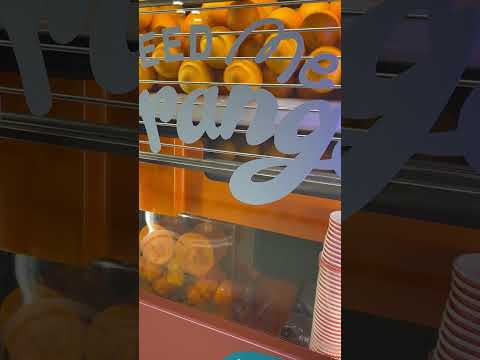
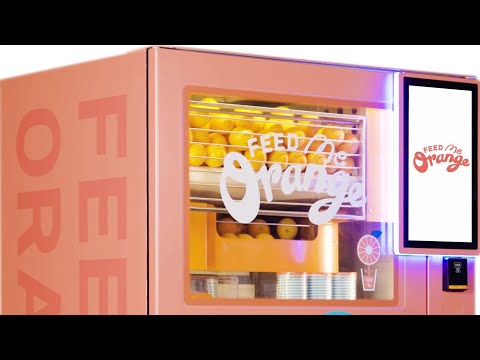
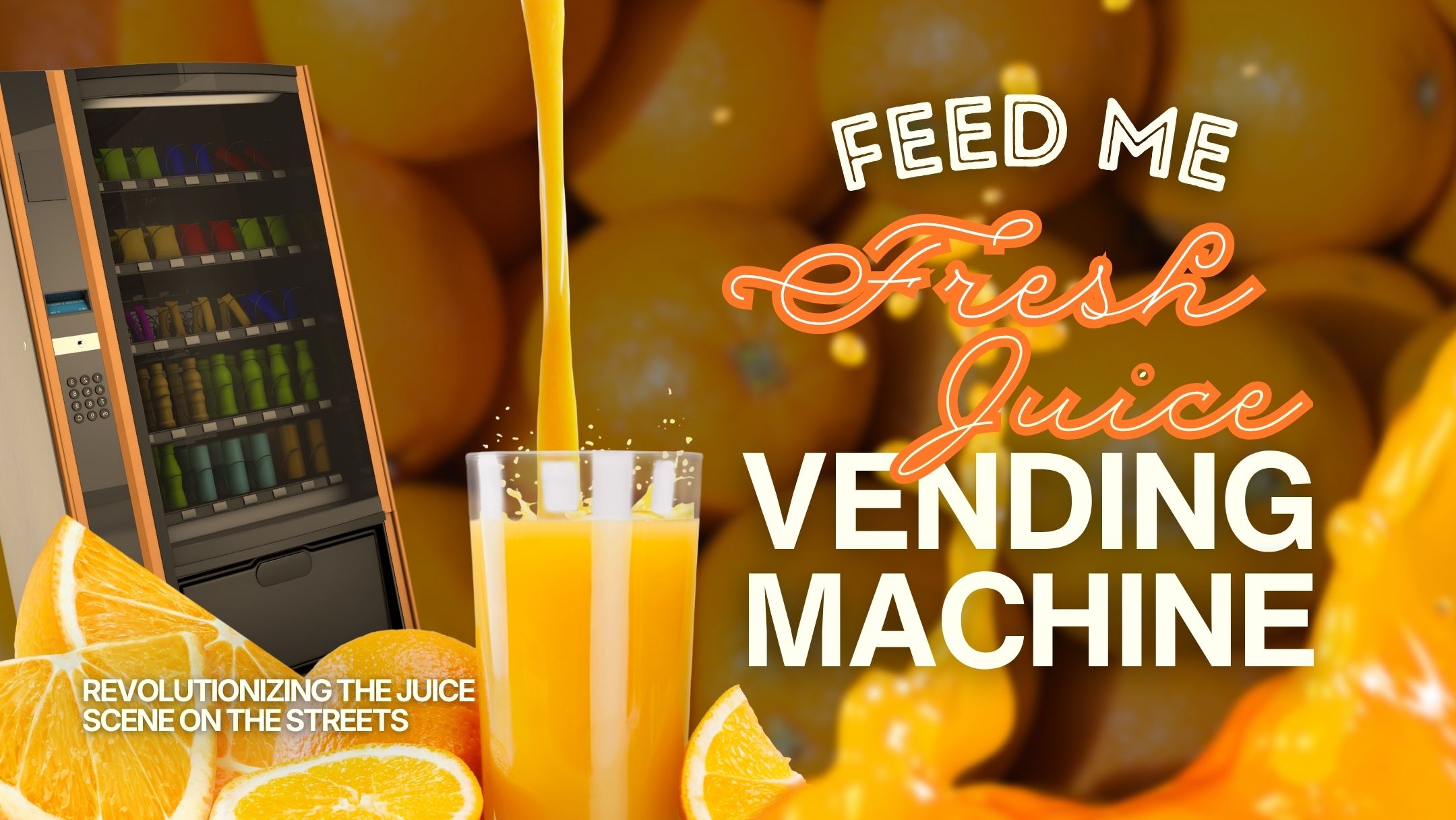
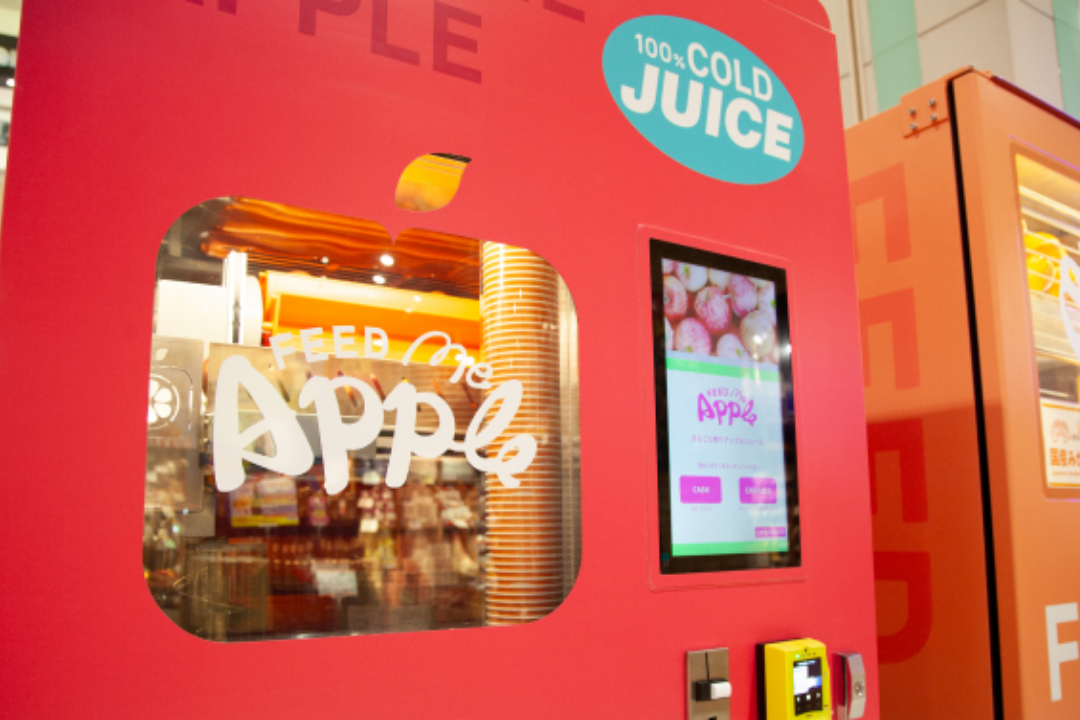
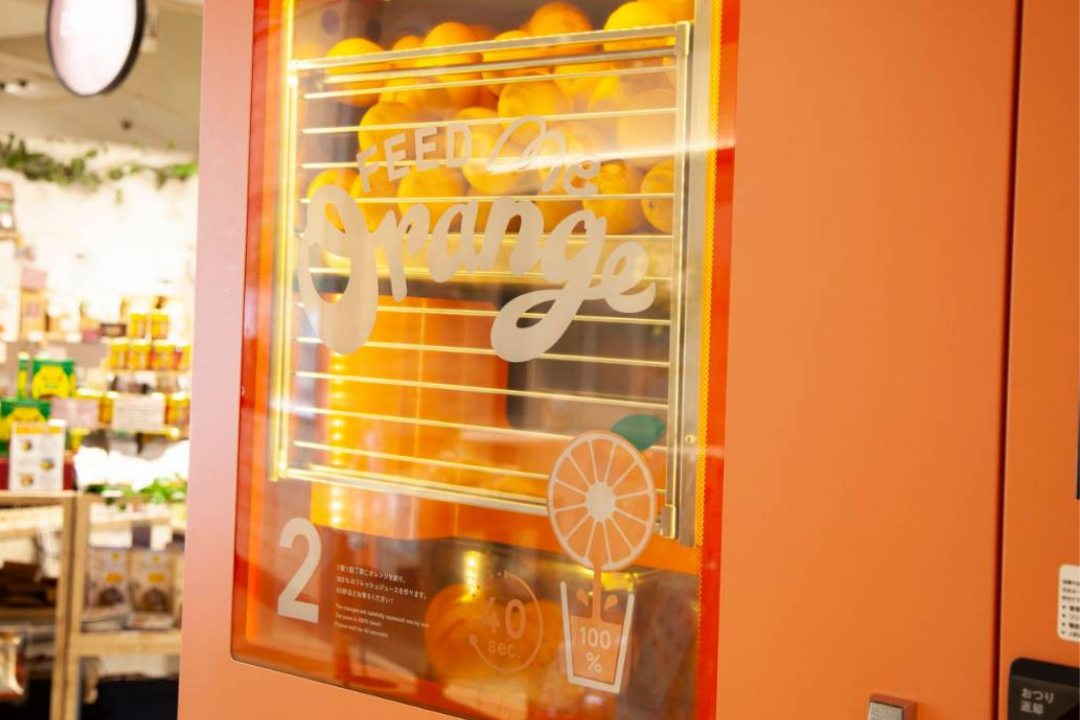
When people first encounter Feed.Me, the initial impression is rarely ‘I can manage my nutrition.’ What stands out is the live experience of seeing the ingredients, watching the machine come to life, and knowing that a drink is being crafted specifically for you. It’s that same spark of excitement you get when encountering a fresh-squeezed orange juice vending machine for the first time. The value isn't just in the final product; it’s in what is happening right before your eyes.
The strength of this service is that it can be understood without reading any explanation. The reasoning about health benefits or nutritional balance comes later. First, the experience intuitively communicates: This is real. This is fresh. This is for me. This sequence distinguishes Feed.Me from a typical meal management service.
ME Group Japan has, for many years, implemented automated experiences in our cities. From ID photo booths to laundries and drink machines, the common trait has always been ease of operation and visible results. Feed.Me fits into this same context, transforming the abstract value of health into a concrete, visible event happening in front of the user.
The reason fresh-squeezed orange juice machines took off globally was not because of a new nutritional theory. It was the sight of the fruit being crushed and the juice flowing into the cup; that process created instant trust and satisfaction. Feed.Me does the same. Before it ever tries to explain why it is good for you, it shows you that it is made right.
Through this experience design, Feed.Me eliminates the need for the usual sales pitch often seen in health services. Users are convinced through the experience itself before judging whether it is good. What is present is not management but understanding and trust.
Why Location is Everything for Feed.Me
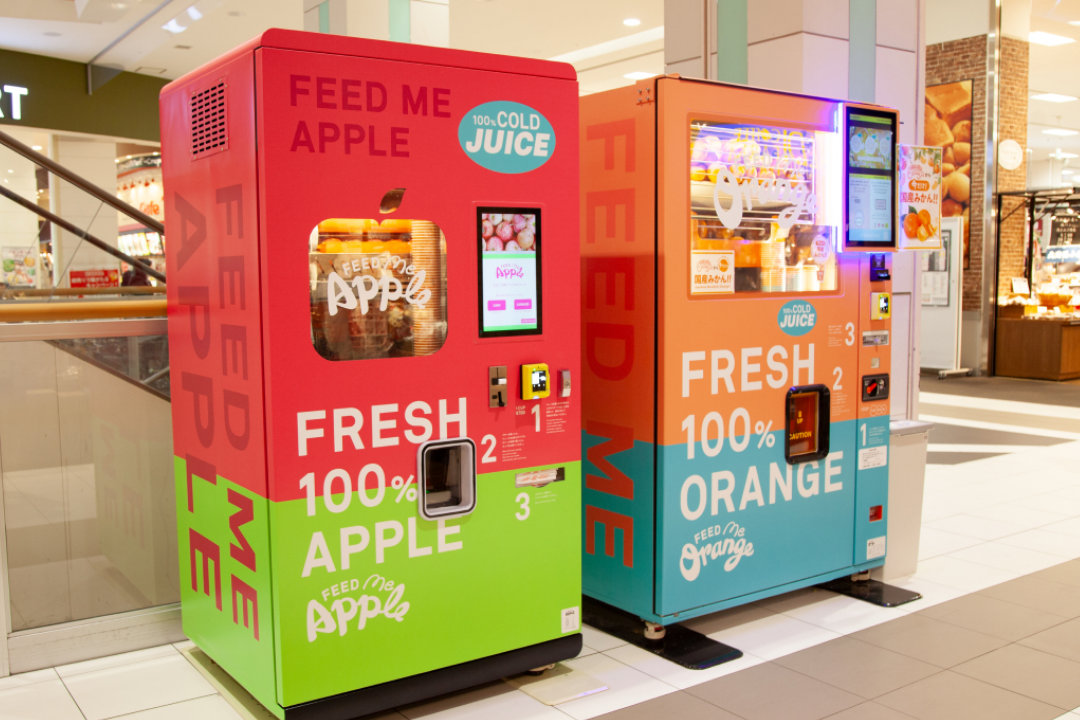
The value of Feed.Me is not contained in a home or an app. Instead, the service comes to life at ‘transit points’, such as train stations, shopping centers, and office lobbies. During busy commutes or moments when there is no time to think deeply about meals, suddenly, a ‘freshly made’ option appears. That element of surprise is exactly what draws people in.
Usually, the moment we decide to start being healthy, it feels like a chore. Showing the machine in motion, ingredients being used, and a serving being made right in front of them makes decision-making intuitive. Feed.Me is designed based on this psychology; you simply see it and want it.
This structure mirrors the global appeal of freshly squeezed orange vending machines. When people see the fruit spinning, being squeezed, and poured into the cup, they do not question the quality or the nutrients. Feed.Me uses this same transparency. By keeping the ‘making’ process at the forefront, it eliminates the skepticism people often have toward pre-packaged health foods. The transparency is the trust.
Placing the machine in the city is not just about high foot traffic. It is a deliberate move to bring health and dietary choices down from being special events into everyday decisions. Going to the gym, creating an app, or making a plan all require prior effort. Feed.Me allows the experience to occur naturally as part of commuting or shopping. This placement is deliberately chosen to integrate health into everyday life.
As a result, users feel less like they are making a healthy choice and more like they have simply picked something slightly better. This lightness encourages repeated use. Without emphasizing management or restriction, it subtly improves the quality of choices. This experience-driven design is at the core of Feed.Me.
Next, we will take a closer look at who is actually using this experiential food service and the specific contexts where it resonates most.
A Service for Time-Pressed People, Not Just Health-Conscious
Source: ME GROUP Homepage
The people actually embracing Feed.Me are not just those with a high focus on wellness. Instead, the core users are those who are constantly rushed to make decisions in their daily lives, such as during commutes, lunch breaks, or gaps between tasks. They do not have the luxury of time or mental energy to obsess over a meal, yet they hesitate to settle for junk food. This is where Feed.Me fits perfectly.
For the office worker, Feed.Me offers the satisfaction of having made a proper choice in a matter of seconds. There is not enough time to go to a restaurant, but they also do not want to settle for a convenience store meal. Feed.Me occupies this middle ground. Seeing a serving made right in front of them allows the service to skip explanations about quality or freshness, which fits perfectly into a busy schedule.
The service is also resonating with those who have only recently started thinking about their health. While terms like nutritional coaching or dietary management can feel intimidating, grabbing a freshly made drink feels effortless. Feed.Me sets the barrier to entry extremely low. The fact that you do not have to work hard at it is exactly what leads to the next choice.
The service does not demand long-term commitment from users. There is no pressure to use it every day, and no system forcing you to stay. Even so, a natural relationship of ‘I will grab one when I see it’ begins to form. By repeatedly encountering the machines in the city, trust is built up gradually. This relaxed, low-pressure relationship is what sustains the service presence in the lives of the users.
Feed.Me does not attempt to drastically change people’s behavior. It simply places a single option and makes the choice easy. Through this design, health and nutrition are pulled back from being special themes and returned to being a simple extension of daily life.
Operational Philosophy of Design Built on Transparency
Feed.Me provides more than just food; it offers the experience of seeing something fresh created right in front of you. Because of this, the production and quality control systems are built on a foundation far stricter than standard food services. Before taste or nutrition, the top priority is ensuring that users feel safe watching the process and confident in their choice.
The first key point is a design that does not hide the process. Ingredients are added, machines operate, and the product is completed in a flow that can be visually understood. This is not just a performance; it is a form of quality assurance. By only using processes that can be shown openly, the service creates a sense of reliability without needing to say a word.
On the operational side, strict hygiene standards are the baseline. Ingredient management, internal cleaning, and regular maintenance happen constantly behind the scenes. The key is that none of this becomes a burden for the user. You do not need to understand complex safety warnings; you can simply focus on the experience. The backend operations are handled thoroughly to protect that peace of mind.
Because the service is designed for public spaces, it must also withstand environmental changes. They must remain consistent despite temperature swings, heavy foot traffic, or irregular usage. The stability and repeatability of the machine are prioritized to ensure the quality never wavers. This is proof that the system was designed to be a piece of daily infrastructure rather than a temporary novelty.
The quality control for Feed.Me does not just aim to avoid mistakes. Instead, it focuses on being beyond doubt. When a user can choose without hesitation and experience the service without worry. That trust is born from the structure and operations themselves, even before explanations of taste or nutrition.
This rigorous backend design is exactly what allows Feed.Me to succeed as an experiential service. Next, we will look at the corporate vision behind this system and why the company decided to commit so fully to this experience-first approach.
The Vision and Problem-Solving Roots of ME Group Japan
The driving force behind Feed.Me is not the optimistic belief that people will choose something simply because it is good for them. It is the opposite. The realistic understanding that people are busy, exhausted by decisions, and rarely act on correctness alone. This is the reality ME Group Japan has faced for years.
The company has a long history of deploying services that people use without needing an explanation, like the ID photo booth, coin laundries, and self-service kiosks. Users do not need to understand the underlying philosophy or technology. They simply use the service when necessary and feel satisfied with the result. ME Group Japan has accumulated the belief that this kind of relationship is the key to a service embedding itself into daily life.
Feed.Me is a natural extension of this lineage. Usually, themes like health and nutrition are heavy with explanations, warnings, and instructions. However, ME Group Japan did not take that heavy-handed approach. Instead, the priority was placed entirely on whether the experience feels right. When a drink is made in front of you and handed over fresh, the process speaks for itself. No manual is required.
There is a specific challenge being addressed here. Most health services tend to target only the highly motivated. As a result, they fail to reach the people who might actually need them most. Feed.Me aims to break that cycle. By placing the service where anyone can encounter it. Only then does health stop being a special or abstract theme.
Furthermore, committing fully to a visible experience means there is no room for shortcuts. If the quality is not there, you cannot show the process openly. The design of Feed.Me demands strict quality and operational standards behind the scenes. Choosing this transparent format is a testament to the commitment of the company.
ME Group Japan is not trying to be a company that lectures people on health. Instead, it is a company that adds one better option to the landscape of daily life. The goal is to be understood through experience, not through persuasion or explanation. This philosophy runs consistently through the entire service.
Next, we will examine how this experience-driven service has been received in Japan, looking at the recognition, performance, and perception by society and users.
Why it is Embraced as an Experience Rather Than a Health Service
In Japan, Feed.Me was recognized from the start not as a nutrition management tool, but as an experiential food service that suddenly appears in the middle of the city. When people talk about it on social media or in the news, the focus is rarely on ingredients or data. Instead, the conversation centers on the experience of seeing it made right there, drinking it fresh, and the simple surprise of the process
This reaction is no accident. Most users do not compare detailed information before choosing Feed.Me. They stop, watch the machine move, feel that it looks like a good choice, and then decide. This leads to a sense of satisfaction that the quality is better and more natural than expected.
Even in pilot implementations, the service is valued more for its low barrier to use than for immediate health effects. It does not require membership registration or long-term contracts and works perfectly even for one-time use. This ease encourages repeated usage and frequent encounters. Rather than boasting about nutritional data, Feed.Me has quietly built its track record as a service that simply works by being there.
For companies and facility managers, the fact that it requires no explanation is a massive benefit. Even when introduced as part of a corporate wellness initiative, there is no need to force people to use it. It can sit there as just one of many daily options. Because the experience itself explains the service, the setup remains simple. This ease of integration is a major reason why it is so highly valued across Japan.
An Experiential Food Service That Transcends Language
Feed.Me has a service structure that is highly compatible with overseas expansion. The reason is that its core value lies in experience, not explanation. Regardless of differences in language or culture, the act of seeing something made in front of you and receiving it fresh is understood intuitively. It follows the same logic that allowed fresh-squeezed orange juice machines to be embraced worldwide.
In urban areas in particular, there is a rising demand for food options that provide satisfaction in a short amount of time. People want something less formal than a restaurant but more authentic than processed snacks. This middle-ground need is universal across borders. Feed.Me secures this position through its unique experience.
Another advantage for international expansion is that the service does not overly emphasize health. Perceptions of health and nutritional standards vary by country and culture, but the value of ‘fresh and made-to-order’ is easy to share. Feed.Me can be introduced not as a service that lectures on health, but as an experience where quality is immediately accessible.
For international operators, the value is not just in the final product, but in the design philosophy itself. The significance of placing it in the city, showing the process, and making the decision easy are concepts that apply far beyond food and healthcare. They can be adapted to any service closely tied to daily life.
Why Feed.Me Is a Global Standard Standard
Source: ME GROUP Homepage
Feed.Me did not treat health and nutrition as things to be managed. Instead, it reframed them as experiences to be encountered in the city. The sequence of seeing it made and receiving it fresh creates a level of satisfaction that requires no persuasion.
What this service demonstrates is a refusal to force change on people to achieve a shift in behavior. Instead, it changes the options available and makes the decision-making process lighter. As a result, better choices happen naturally. Feed.Me is the real-world implementation of that state.
Through Feed.Me, ME Group Japan presents a model that integrates into everyday life, rather than a model that educates about health. There are no flashy claims, but by being placed in the city, used, and chosen repeatedly, the service communicates its value.
As an experience-driven food-tech solution from Japan, Feed.Me offers an answer to challenges shared by cities across the globe. It is an experience that communicates its value before a single word is spoken. That strength is what will support its potential for future growth.
FAQ About Feed.Me
1. What Kind of Service Is Feed.Me?
"Feed.Me" is an experiential food service developed by ME Group Japan Co., Ltd. It adopts a system that uses ingredients right in front of the user to provide freshly made drinks on the spot, drawing attention as an "automated vending service where users can experience freshness."
2. How Is It Different From a Regular Juice Vending Machine?
The biggest difference is that instead of "selling a finished product," it "shows the production process as an experience." At Feed.Me, users can visually confirm how ingredients are put in, how the machine operates, and how the drink is completed. Consequently, the design allows users to intuitively sense a feeling of freshness and the satisfaction that it is "being made right now."
3. Why Is It Important to "Make It in Front of the Eye"?
Because it leads to a sense of reassurance and satisfaction for the user. Health and dietary services tend to become more difficult for users to engage with the more explanations they require. On the other hand, Feed.Me emphasizes a "usable at a glance" experience, naturally building trust in quality by visualizing the process.
4. Why Is It Installed in Train Stations and Commercial Facilities?
To integrate it into the "daily flow of busy people." Feed.Me aims to become an option naturally chosen during commutes or shopping trips, rather than turning health management into a special act. Because it can be used in a short time and experienced without explanation, the service is highly compatible with the inside of station premises and office surroundings.
5. Is This a Service Designed for Highly Health-Conscious People?
No, Feed.Me does not exclusively target only those who are "working hard at health." Rather, it is designed for people who "want to care about their health, but find it difficult to manage minutely every day." It emphasizes making it easy to choose a "slightly better option" without requiring difficult nutritional calculations or records.
6. Why Does Feed.Me Minimize the "Feeling of Management"?
Because the underlying belief is that strict management is difficult to sustain over the long term. While many dietary management services tend to place a burden on users through tracking and restrictions, Feed.Me prioritizes "sustainability without strain." Its defining feature is maintaining a distance that "slightly refines choices" rather than forcing management.
7. What Aspects of Quality Control Are Most Emphasized?
Great importance is placed on the requirement that "the process must be fit to be shown." At Feed.Me, raw material management, machine cleaning, and hygiene management are thoroughly executed to create an environment where users can experience "freshly made" products with peace of mind. Furthermore, since it is premised on being installed throughout the city, stable operations capable of withstanding temperature variations and high utilization frequencies are emphasized.
8. Why Is There a Possibility for It to Draw Attention in International Markets?
Because Feed.Me's drink preparation is an "experience that communicates faster than words." The sight of ingredients being used and completed right in front of one's eyes is understood intuitively across languages and cultures. In urban areas, demand is rising for "food choices that can satisfy in a short time," making Feed.Me's experience highly compatible with international markets.
9. Why Did ME Group Japan Start This Service?
Because there was an awareness of the issue that "even when people know something is good for their health, they cannot sustain it." Up until now, the company has implemented "services used without explanation" throughout cities, such as photo booths and coin-operated laundries. Feed.Me is an attempt to utilize that experience to provide health and diet in a "form that naturally dissolves into daily life."
10. What Is Feed.Me's Biggest Appeal?
It is "transforming health from 'working hard' into a 'natural choice.'" Through the experience of receiving a freshly made product right in front of them, users can feel they have made a "slightly better choice" without any explanation or persuasion. Feed.Me's greatest appeal lies in the fact that it establishes itself as an experience naturally chosen in the city, rather than forcing health management onto people.
Related Videos
If you're interested in Japan’s innovative vending machine culture, the video below introduces Feed.ME, a vending machine that serves freshly squeezed juice on the spot. This video shows how smart technology and fresh ingredients come together to create a convenient and healthy drink experience in urban spaces.