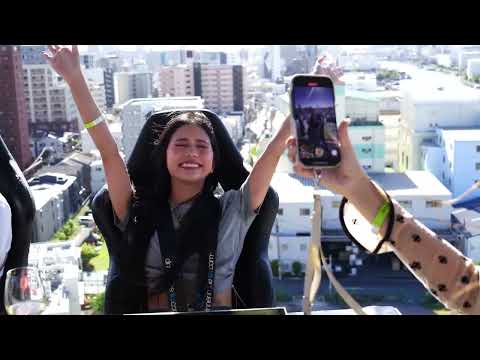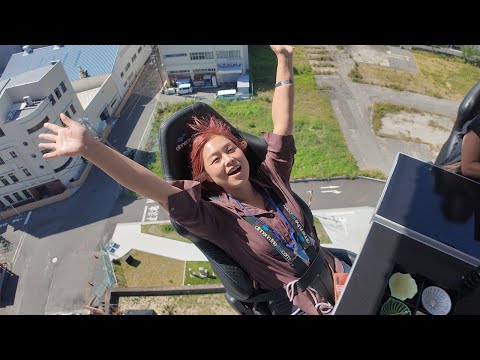
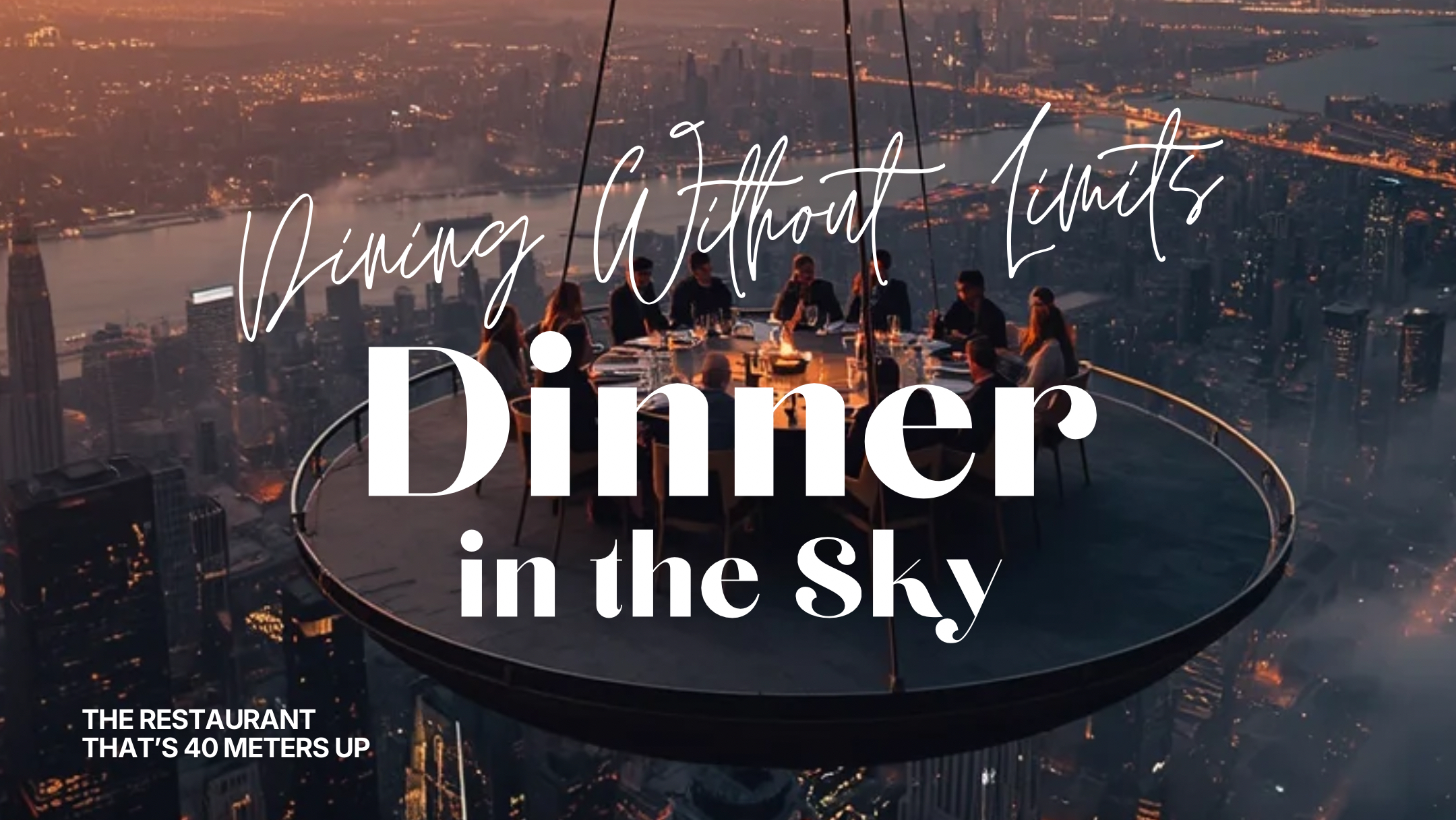
“Dinner in the Sky” is a one-of-a-kind dining experience where guests enjoy a meal at a table suspended dozens of meters above the ground by a crane. The chairs, the table, and even the service flow are all designed to exist “in the air.” By reimagining the everyday act of eating through elements such as perspective, altitude, and a sense of tension, the service transforms a routine meal into a fully immersive experience.
Originally from Belgium, the concept is now gaining attention in Japan as well. This is due not only to the global shift from goods-based to experience-based consumption, but also to its meeting the specific expectations of the Japanese market: prioritizing safety while delivering surprise and memorable moments.
Without compromising the quality of the food—indeed, while elevating it—it introduces the sky as an extreme stage. In that sense, it can be seen as a highly refined answer to the food service industry’s ongoing challenge of differentiation.
This article explores why Dinner in the Sky has succeeded globally and why it holds value in Japan, examining its experience design, safety philosophy, and operational structure. It also looks, from an international user’s perspective, at why the concept can extend beyond tourism into corporate events and brand experiences.
Dinner in the Sky Overview
“Dinner in the Sky” is an extraordinary, globally acclaimed experiential dining service that elevates a routine meal into an unforgettable, immersive event by suspending guests, chefs, and a fully equipped table 40 meters in the air via a crane. Originally developed in Belgium and now attracting significant attention in Japan, the concept aligns directly with the modern shift toward experience-based consumption by seamlessly blending absolute safety with thrilling visual surprise.
Far from being a mere novelty, the service maintains an uncompromising commitment to high-end culinary quality while using the sky as an extreme stage for differentiation. Ultimately, it serves as a powerful tool not only for luxury tourism but also for high-impact corporate events and brand experiences that foster deep emotional connections and lasting memories.
What is Dinner in the Sky?
Source: Dinner in the Sky Homepage
Dinner in the Sky is an aerial restaurant that redefines dining through “height” and “tension.”
The defining feature of Dinner in the Sky is that it doesn’t treat food as the only source of value, but instead reimagines dining as a complete, all-encompassing experience. While traditional restaurants create a sense of occasion through interior design, lighting, and music, this service moves the entire stage into the sky, instantly shifting visual perception, physical sensation, and psychological state.
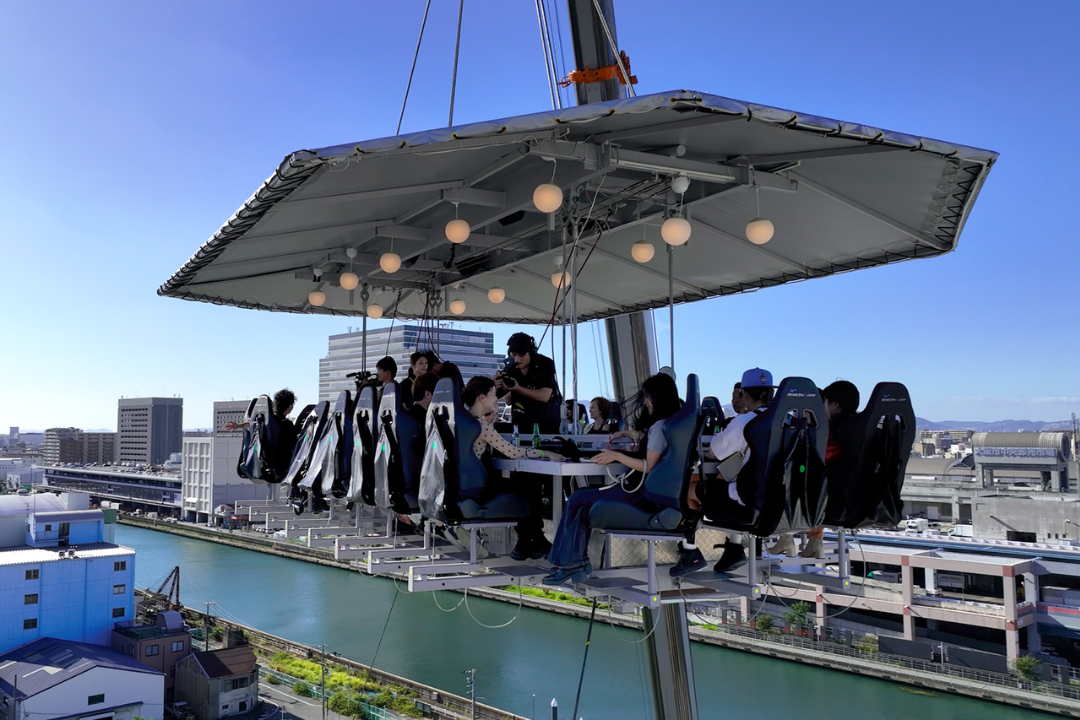
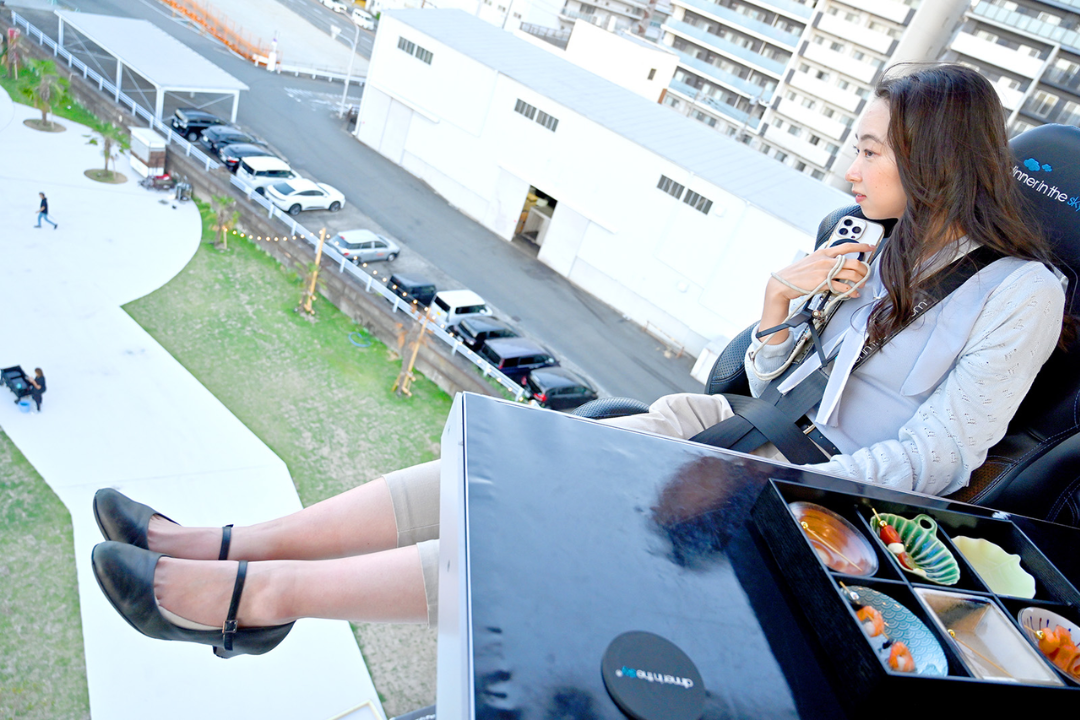
The experience begins on the ground. Guests are secured into specially designed seats arranged around a table, fastened with seatbelts, and then slowly lifted by a crane. This ascent is itself part of the experience, drawing participants in even before the meal begins.
Once in the air, a preparation and finishing area is set up at the center of the table, where chefs and staff also remain suspended. While most of the dishes are prepared in advance, the experience is designed to preserve a sense of live performance right up to the moment each dish is served. Rather than simply eating with a view, guests are immersed in a seamless flow of cooking, serving, and conversation.
The pricing isn’t simply based on the idea that it costs more because it’s up in the air. While it does fall into a higher price range than everyday dining, the cost reflects the overall experience rather than just the food. It is positioned alongside fine dining and special events, and is intended for occasions such as anniversaries, corporate gatherings, and tourism experiences.
Its user base is broad, spanning individuals seeking a memorable personal experience, corporate invitation events, and brand promotions. Because it creates strong, lasting memories through the act of dining, it is especially well-suited to situations where people want to share meaning or value through experience.
At first glance, the idea of dining in the air may seem extreme. In reality, however, it is a system that maximizes the social and memorable aspects of eating through spatial design. Height is not the goal—it is simply a means of making the experience possible.
Why it Looks Dangerous and Why it Works Worldwide
The first question many people have when they see Dinner in the Sky is: “Is it really safe?” Dining dozens of meters above the ground is far removed from everyday life. Yet the reason this concept has expanded globally and continues to operate successfully lies in a clear design philosophy that does not rely on thrill for its appeal.
Crucially, danger is not used as part of the experience. While height is a defining element, it is not there to provoke fear. The seats are designed to support and enclose the body, secured with multiple safety mechanisms. Guests cannot stand freely, and their posture remains naturally stable. As a result, despite its dramatic appearance, the actual experience feels far calmer than one might expect.
Operationally, there is also a strict commitment to not pushing limits. Factors such as weather, wind speed, and visibility are carefully monitored, and if even minimal risk is detected, sessions are canceled or postponed. This willingness to prioritize safety over the experience itself reinforces trust and supports the brand’s credibility.
Importantly, the uniqueness of the experience does not depend on height alone. The expansive views, reduced noise, and sensation of wind—elements unavailable on the ground—combine to create an environment that actually makes it easier to focus on the meal. Somewhat unexpectedly, because the sensory input is not overwhelming, guests can more easily focus on both the conversation and the food itself. This creates a notable gap between first impressions and the reality of the experience.
Another distinctive aspect is that staff and guests share the same conditions in the air. This shared environment fosters a sense of unity, softening the atmosphere. Rather than a traditional service hierarchy, it becomes a shared experience, which not only reduces tension but also enhances memorability.
Ultimately, Dinner in the Sky is not “exciting because it is dangerous,” but rather an extraordinary experience made possible by a foundation of safety. By carefully balancing extreme conditions with controlled emotional impact, it achieves a unique and compelling appeal.
Why Meals Have Become Harder to Remember
The creation of Dinner in the Sky reflects a quiet challenge facing the global food industry: as food quality improves, it becomes harder to create memorable differentiation. Across the world, restaurant standards have risen, and a certain level of quality is now expected. As a result, it is increasingly difficult to leave a lasting impression through taste alone.
This is not unique to Japan—it is a global phenomenon. Even at Michelin-starred or high-end restaurants, people may remember that a meal was delicious, but struggle to explain what made it truly special. Dining is consumed, but less easily retained as memory. Dinner in the Sky was conceived as one response to this issue.
Its focus shifts to elements beyond the food itself. What triggers memory? Emotional excitement, shifts in physical sensation, and non-ordinary environments. When these factors come together, an experience becomes a lasting memory. The extreme setting of the sky functions as a mechanism that reliably activates this transformation.
At the same time, the role of food is never diminished. If height or scenery were the main attraction, the meal would become secondary. Instead, Dinner in the Sky places dining at the center, with the experience built around it. Height serves as a tool for surprise—a backdrop that enhances the value of the meal.
The event industry context is also relevant. Corporate events and brand experiences aim to leave strong impressions, but stage effects and visuals alone often result in passive engagement. Dinner in the Sky differs in that participants are physically present in the experience and actively engaged through the act of dining.
Seen in this light, Dinner in the Sky wasn’t created simply to introduce a new type of restaurant, but to make dining feel special and memorable again. At its core is a shift from competing on taste to designing experiences.
From Personal Milestones to Corporate Events
Source: Dinner in the Sky Homepage
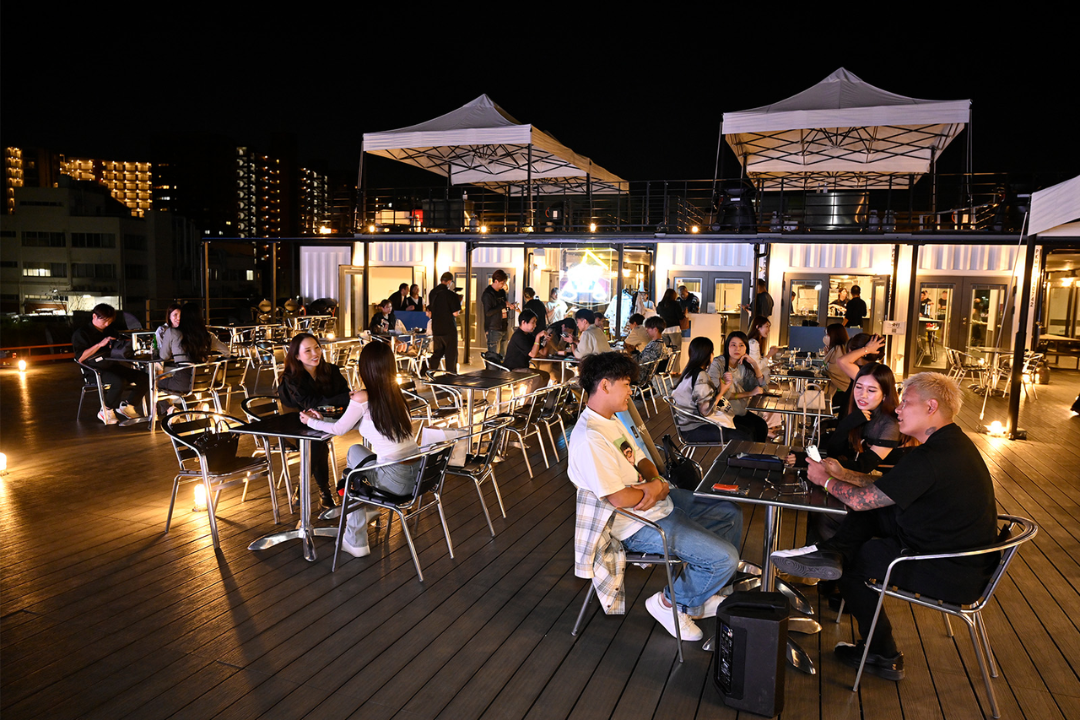
Dinner in the Sky is not limited to a single use case. Its strength lies in its versatility across a wide range of contexts. While dining in the air is inherently unique, it is most often selected within specific scenarios where it serves a clear purpose.
For individuals, it is commonly chosen for special occasions such as birthdays, anniversaries, and proposals. As a “once-in-a-lifetime” experience, it creates lasting memories, where the time shared becomes a story in itself.
As a tourism offering, it is equally significant. By incorporating the surrounding landscape directly into the experience, it works in both urban and natural settings—whether among skyscrapers, along coastlines, or within historic districts. Each setting becomes part of the meal, enhancing its value as a location-specific experience.
In corporate and brand settings, it’s used when making a strong impression matters. The aerial environment naturally draws attention and creates a shared experience, making brand messages more memorable.
It is also used for internal events and team building. Sharing an unusual environment helps break down barriers between participants, temporarily removing hierarchy and encouraging communication.
Ultimately, Dinner in the Sky is chosen less by a specific type of person and more for the kind of experience it offers. That flexibility is what allows it to adapt across industries and purposes.
Why it Works Across Cultures
One of the most remarkable aspects of Dinner in the Sky is its ability to be accepted across countries with vastly different cultures and food traditions, while maintaining essentially the same core structure. Although the menu and scenery vary by location, the core idea—dining in the air—is universally understood.
A key reason is its simplicity. The experience follows an intuitive sequence: rise into the air, sit around a table, and eat. This requires little explanation and is easy to grasp regardless of language or cultural background, making it especially effective in international settings.
Its flexibility in adapting to local food culture is another strength. It is not tied to a specific cuisine, allowing menus to reflect local ingredients and chefs. Whether French, Asian, or Mediterranean, the core experience remains unchanged.
Safety is also a universally shared priority. Operations are adapted to meet local regulations and standards, rather than imposing a fixed global model. This flexibility has been essential in building trust across different markets.
Another factor driving its global expansion is how inherently media-friendly the experience is. Dining in the air creates a visually striking scene that translates powerfully in both photos and video. It spreads easily across social media and news outlets, allowing awareness to grow without heavy advertising spend. This makes it a strong advantage for an event-based business.
As a result, Dinner in the Sky is not a niche concept limited to certain regions, but a format that can be deployed globally wherever conditions allow. Its structure is inherently independent of culture.
Where Experiential Consumption Meets Structural Challenges
Dinner in the Sky’s continued relevance cannot be explained by the trend of experiential consumption alone. It also addresses deeper structural challenges faced by tourism, dining, and event industries: not just how to attract people, but why a place is worth visiting in the first place.
Scenic views and well-known restaurants alone are no longer enough to attract visitors. Dinner in the Sky responds to this by offering a clearly defined, “only-here” experience—one that communicates its value instantly, without the need for explanation.
Its high experiential density is another advantage. With minimal waiting or transition time, it delivers a strong impression within a relatively short duration—an approach that aligns well with modern, time-conscious consumers.
From a sustainability perspective, it also occupies an interesting position. It does not require permanent large-scale construction and can be installed and removed temporarily, reducing long-term environmental impact while preserving the surrounding landscape. This kind of flexible operating model is especially well-regarded in regions and cities where environmental awareness is high.
Its compatibility with brand strategy is equally important. Rather than explaining value, it allows participants to experience it directly, creating lasting impressions that differ from traditional advertising or exhibitions.
Through this combination of factors, Dinner in the Sky has evolved from a novelty into a format that responds to contemporary needs—one that continues to be chosen across cultures and markets.
Why Dinner in the Sky is the Ultimate Experiential Marketing Play
Source: Dinner in the Sky Homepage
While often defined by its striking visual concept, the true value of Dinner in the Sky lies beyond novelty. It offers a refined answer to how a fundamentally ordinary act—eating—can be redefined through environmental design.
It enhances the dining experience without compromising food quality, while maintaining strict safety standards. This balance has been proven across multiple markets, allowing it to function not just as a curiosity, but as a practical tool for tourism, corporate events, and brand experiences.
From an international business perspective, its significance lies not in the “aerial restaurant” format itself, but in its experience-centered design philosophy. It integrates food, scenery, time, safety, and memory into a cohesive experience that leaves a lasting impression in a short time—a model applicable across many industries.
Its balance between local adaptability and global consistency is another key strength. By incorporating local landscapes and food culture while maintaining a consistent core experience, it provides a flexible and scalable model for international expansion.
As experiential consumption matures, success increasingly depends on clearly answering why an experience matters. Dinner in the Sky addresses this through space, emotion, and memory.
The floating table is not the destination—it is a device. A way to shift perception and rediscover the value of dining. That perspective is what has sustained its global appeal, and why it continues to deserve attention today.
FAQ About Dinner in the Sky
1. What Is Dinner in the Sky?
Dinner in the Sky is an aerial dining experience operated by Dinner in the Sky JAPAN. Guests are seated at a table suspended by a crane and enjoy their meal dozens of meters above the ground. It transforms a meal into a memorable experience and has been introduced in countries around the world.
2. Why Dine In The Sky?
The purpose is not simply to enjoy the height, but to create a lasting dining memory. The expansive views, fresh air, and sense of anticipation engage the senses, turning an ordinary meal into something extraordinary. Dinner in the Sky is unique in that it is designed around the entire experience, not just the food itself.
3. Is It Really Safe?
Yes. Safety is the highest priority. Guests are securely seated using specially designed seats and multiple safety systems, while operating teams closely monitor weather conditions, including wind speed. If there is any concern regarding safety, sessions may be postponed or cancelled, reflecting a strict commitment to risk management.
4. Can I Enjoy It Even If I Do Not Like Thrill Rides?
Yes. Unlike roller coasters or other thrill attractions, there are no sudden accelerations or drops. The platform is lifted gradually by a crane and remains stable while in the air. Many guests comment that the experience feels much calmer than they expected. Rather than creating fear, the concept focuses on delivering a comfortable and extraordinary experience.
5. Why Is It Popular For Corporate Events?
Because it creates a strong and lasting impression. The unique setting naturally captures participants’ attention, making brands, products, and events more memorable. As a result, it is often used for product launches, VIP hospitality, team-building activities, and other occasions where shared experiences are particularly valuable.
6. Why Has It Been Successful Around The World?
The concept is simple and easily understood across cultures. Sharing a meal at a table suspended high above the ground is an experience that transcends language and nationality. In addition, menus can be adapted to local tastes and culinary traditions, allowing the concept to be successfully localized in different markets.
7. Is There More To It Than Just The View?
Absolutely. One of its unique qualities is the way it enhances interaction among guests. Being suspended in the air naturally reduces distractions such as smartphones and surrounding noise, encouraging people to engage more fully with one another. As a result, guests often remember not only the food and scenery, but also the people with whom they shared the experience.
8. Why Does It Resonate With People Today?
Consumer preferences are increasingly shifting from material possessions to memorable experiences. As dining standards continue to rise globally, people place greater value not only on what they eat, but also on how the experience makes them feel. Dinner in the Sky aligns perfectly with this growing demand for meaningful, memorable moments.
9. What Are Its Environmental Advantages?
Its environmental advantage is that it does not require large-scale permanent construction. The installation can be set up and removed for limited periods, reducing its impact on the surrounding landscape. This flexibility allows operators to showcase urban environments and tourist destinations while using the location itself as part of the experience.
10. What Is The Greatest Appeal Of Dinner In The Sky?
Its greatest appeal is its ability to transform a meal into a lasting memory. Beyond the height or the view, it brings together food, conversation, emotion, and atmosphere to create an immersive experience unlike anything found in everyday life. More than an aerial restaurant, Dinner in the Sky is a reimagined dining experience that engages the senses and leaves a lasting impression.
Related Videos
If you're interested in extraordinary dining experiences, the video below introduces Dinner in the Sky, where guests enjoy a meal suspended 40 meters above the ground. This video shows how breathtaking views and gourmet cuisine combine to create an unforgettable experience unlike any traditional restaurant.