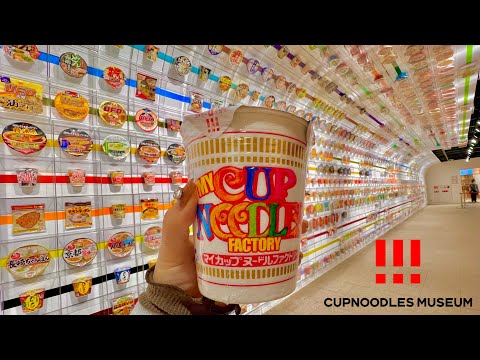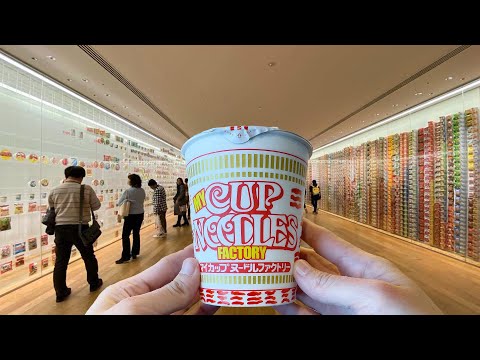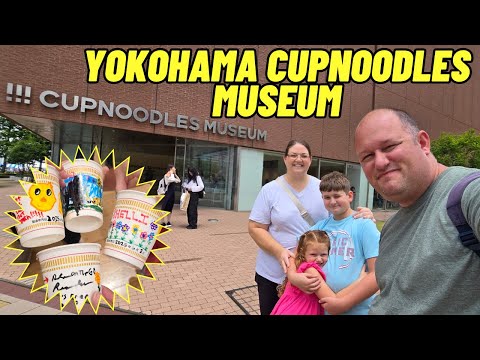
The Cup Noodles Museum is an interactive museum that explores both Japan’s instant noodle culture and the inventive mindset behind it. Rather than simply displaying exhibits, it encourages visitors to think, create, and experiment for themselves, making the process of innovation a central part of the experience.
Built around the invention of instant ramen and Cup Noodles, the museum tells the story of how these products emerged from postwar Japan’s social challenges, persistent trial and error, and a willingness to question conventional thinking. It presents Japanese food culture and manufacturing philosophy in a way that can be understood and appreciated by people of all ages and nationalities, setting it apart from a typical corporate museum.
Visitors gain more than historical knowledge. Through hands-on activities such as designing a personalized Cup Noodles package and experiencing the noodle-making process, they gain insight into how ideas are transformed into products and why perseverance and experimentation are essential to innovation.
In recent years, interest in experiential museums and edutainment has grown alongside a broader shift from product-based consumption to experience-driven consumption. As creativity and innovation become increasingly important, the Cup Noodles Museum stands out as a successful Japanese experiential attraction that offers valuable insights to audiences around the world.
Cup Noodles Museum Overview
The Cup Noodles Museum is an interactive museum that uses the invention of instant ramen and Cup Noodles in Japan as a gateway to teaching creative thinking and the process of innovation. Rather than functioning as a traditional corporate museum, it is designed to help visitors experience the ideas, experimentation, challenges, and perseverance behind successful inventions. Through exhibitions, hands-on activities, and educational programs, visitors gain insight into how a simple idea can evolve into a globally recognized product.
Inside the museum, visitors can explore the history of instant noodles, from their invention in Japan to their global expansion, through videos, immersive exhibits, and timeline-based displays. The museum also offers a range of participatory programs, including the opportunity to create a personalized Cup Noodles product and workshops where participants can experience the noodle-making process from flour to finished noodles.
These activities are designed not only for entertainment but also to help visitors understand how ideas are transformed into real products. By highlighting the process of innovation and product development, the museum incorporates a strong educational element into the visitor experience. As a result, while it is popular with children and families, it also offers valuable insights for adults, professionals, and anyone interested in creativity, innovation, and problem-solving.
The museum serves a wide range of purposes, attracting families for leisure activities, students on educational field trips, and both domestic and international tourists. It is also used as a destination for corporate training programs and visits by educators seeking insights into creativity and innovation. Admission fees are relatively affordable, while hands-on activities require separate fees. Even so, the museum remains an accessible destination that effectively combines education and interactive experiences.
An Experiential Museum Focused on the Thinking Behind Innovation, Not Just Success
Source: Nissin Homepage
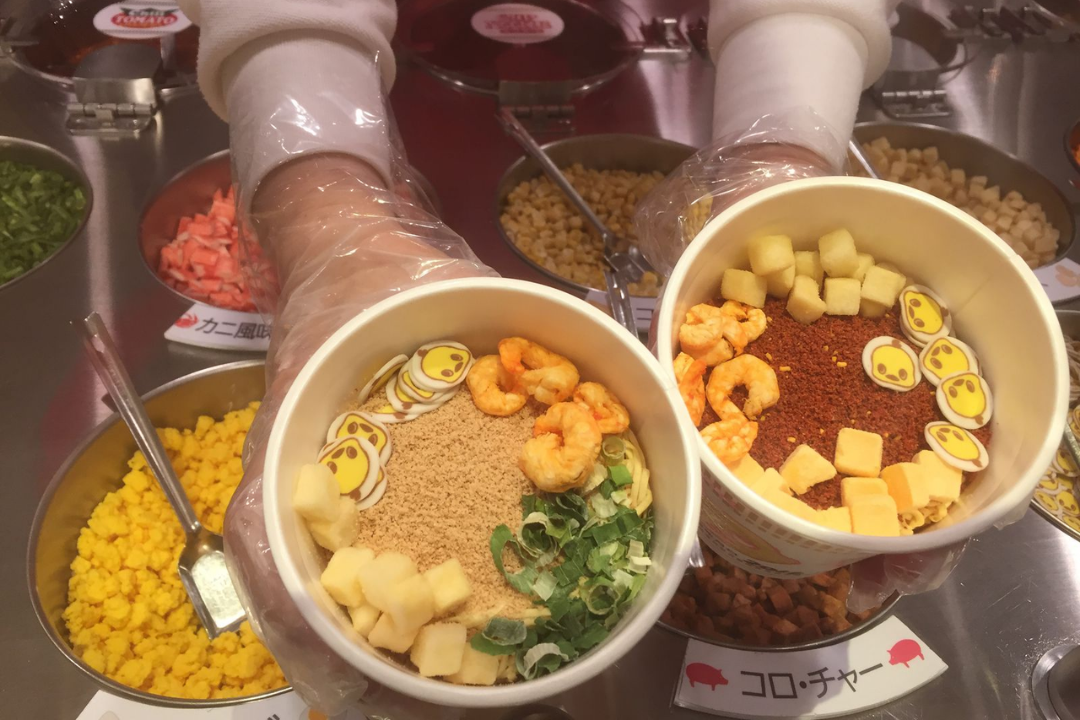
The Cup Noodles Museum's most distinctive feature is that it places the spotlight not on finished products, but on the thinking, experimentation, and problem-solving that led to their creation. While many corporate museums focus on product success stories and brand history, this museum deliberately highlights failures, detours, and the challenges of overcoming conventional thinking.
From a technological perspective, the museum explains how instant noodles, a groundbreaking food innovation, were developed through creative ideas and practical ingenuity. Rather than relying on technical jargon or complex explanations, it combines videos, immersive exhibits, and hands-on experiences to help visitors intuitively understand the innovation process itself. This ability to make complex ideas accessible through engaging exhibits is a hallmark of Japanese museum design.
How a Noodle Museum Teaches Innovation
Culturally, the museum conveys a clear message: innovation is not reserved for a select few with exceptional talent. Throughout the facility, visitors are encouraged to see that persistence, questioning assumptions, and learning from failure are what drive the creation of new value. Rather than simply telling visitors this message, the museum allows them to experience it firsthand.
From an experiential standpoint, visitors are not passive observers but active participants. By thinking, making choices, and creating something themselves, they gain a firsthand appreciation of both the challenges and rewards of innovation. This emphasis on adopting the mindset of a creator is what gives the Cup Noodles Museum a unique value rarely found in other museums.
An Experiential Service Used for Tourism, Education, and Corporate Training
The Cup Noodles Museum is more than a tourist attraction; it is an experiential service with practical applications across multiple fields. In tourism, it attracts visitors from Japan and around the world as a place where people can experience Japan’s culture of innovation firsthand. For international visitors in particular, it offers an accessible introduction to Japanese creativity and manufacturing philosophy. Because the experience combines exhibitions with hands-on activities, its value can be understood regardless of language.
Thinking Outside the Cup
In education, the museum is widely used for field trips, social studies programs, and inquiry-based learning, from elementary schools to universities. Rather than simply delivering information, it encourages participants to think about why innovations happen and how new ideas are created. This makes it particularly well suited to creativity-focused education and the development of critical thinking skills, offering learning opportunities that are difficult to achieve through traditional classroom instruction alone.
The museum is also used by companies and organizations for training programs and study visits. In environments where innovation and new business development are increasingly important, the ability to challenge assumptions, experiment, and learn from failure is highly valued. By providing a hands-on introduction to these principles, the Cup Noodles Museum has gained recognition as a useful resource for developing innovative thinking in business settings. Across these different fields, its core value remains the same: helping people rethink how they approach challenges through experience-based learning.
Operations, Safety, and Quality Management Behind the Visitor Experience
At the Cup Noodles Museum, quality management is not focused on manufacturing products but on consistently delivering a high-quality visitor experience. Every aspect of the museum, from exhibitions and hands-on programs to visitor flow and facility operations, is managed according to established standards to ensure a seamless and engaging experience.
For the museum’s interactive programs, safety and hygiene are top priorities. Activities such as noodle-making workshops and the creation of personalized Cup Noodles involve food handling, and therefore benefit from the food safety expertise developed by the Nissin Foods Group over many years. Strict standards are applied to ingredient management, equipment sanitation, and workshop hygiene to ensure visitors can participate with confidence.
From an operational perspective, significant emphasis is placed on staff training and standardized procedures to maintain a consistent experience for all visitors. Guidance methods and program explanations are carefully structured so that people of different ages, backgrounds, and nationalities can enjoy and understand the museum in the same way.
The facility is also operated in compliance with relevant safety, building, and fire-prevention regulations, ensuring reliability as a destination that welcomes large numbers of tourists, students, and educational groups. These ongoing efforts in operations, safety, and quality management are what enable the Cup Noodles Museum to function not simply as a one-time attraction, but as a destination that continues to deliver meaningful experiences to visitors.
A Regional Hub Connecting the Birthplace of Innovation with Japanese Food Culture
Source: Nissin Homepage
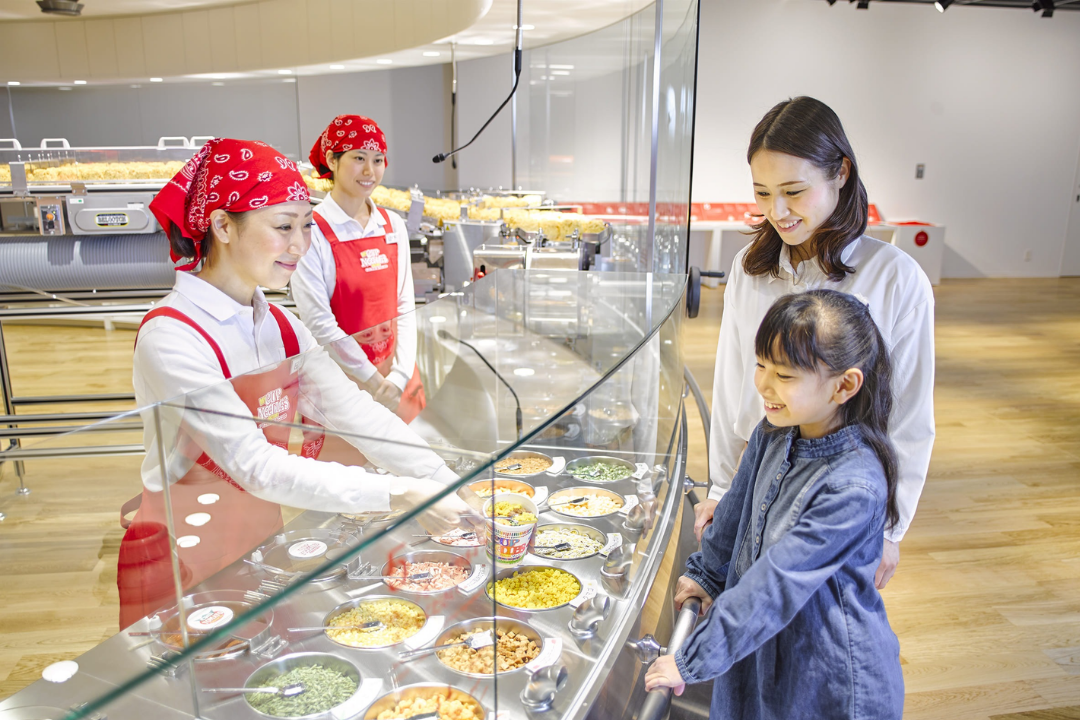
The Cup Noodles Museum is more than a standalone attraction; it serves as a hub closely connected to its local communities and to Japan’s food culture. Its two locations, Yokohama and Ikeda in Osaka, are both deeply tied to Japanese history and culinary heritage, allowing the museum to reflect the stories of the regions in which it operates.
Ikeda, Osaka, is known as the birthplace of instant noodles. At the Cup Noodles Museum Osaka Ikeda, visitors can learn about the circumstances in which Momofuku Ando developed instant noodles, as well as the postwar food environment and everyday household culture that shaped the invention. The museum highlights how instant noodles emerged not simply as a convenient product, but as a cultural innovation rooted in Japanese society and daily life.
Yokohama, on the other hand, has long been a gateway for international exchange and the development of food culture in Japan. Through exhibits and experiences that explore noodle cultures from around the world, the Yokohama Museum demonstrates how a Japanese invention evolved into a global phenomenon. This ability to connect local history with an international perspective is one of the museum’s defining characteristics.
Instant noodles themselves symbolize Japan’s tradition of solving everyday challenges through ingenuity and practical thinking. The museum reflects this spirit throughout its exhibits, showing how creative problem-solving can lead to innovations that improve daily life. By grounding its visitor experience in both regional history and Japanese cultural values, the Cup Noodles Museum presents a compelling example of a Japanese experiential attraction with global relevance.
A Creative Experience Enjoyed Across Generations and Cultures
One of the most common themes in visitor feedback about the Cup Noodles Museum is that the experience is far more educational and thought-provoking than expected. Many visitors arrive expecting a typical corporate museum or tourist attraction, only to leave with a deeper appreciation for innovation, creativity, and problem-solving. Because the museum encourages visitors to create and think for themselves, it offers a level of engagement that goes beyond passive sightseeing.
International visitors frequently praise the museum for being enjoyable even without a strong understanding of Japanese. Many describe the exhibits and activities as intuitive and easy to follow, making the experience accessible across language barriers. The opportunity to design a personalized Cup Noodles product is particularly popular, as it allows visitors from diverse backgrounds to participate actively. For many travelers, it becomes one of the most memorable highlights of their visit to Japan.
The Hands-On Joy of Experience-Driven Learning
On social media, visitors frequently share photos and videos of their custom-made Cup Noodles creations, making the experience's “one-of-a-kind” appeal easy to showcase. Instagram highlights the visual creativity of the finished products, YouTube focuses on the hands-on process, and X often features comments about how even adults become surprisingly invested in the activity. What makes these posts particularly meaningful is that they are driven by genuine visitor experiences rather than traditional advertising.
The museum also receives positive feedback from educators and professionals in creative fields, many of whom view it as a valuable place to learn about creative thinking and innovation. Some even see potential applications for corporate training and team development. One of the museum’s greatest strengths is its ability to engage visitors in the process of creation itself, regardless of age, background, or nationality, which contributes significantly to its consistently high visitor satisfaction.
The Social Context Behind the Museum and the Challenge of Preserving Innovation
The Cup Noodles Museum was created from the belief that preserving instant noodles as a product alone was not enough. Instant noodles were invented in Japan in response to the social challenge of post-war food shortages and later became a global phenomenon. Over time, however, they came to be viewed primarily as a convenient food product, while the thinking, experimentation, and perseverance behind the invention received far less attention.
This reflects a broader challenge across many industries. While successful products and business achievements are often celebrated, there are relatively few opportunities to learn how those innovations came about or what failures and trial and error were involved along the way. As a result, innovation is often perceived as something driven by exceptional talent rather than a process that can be learned and practiced.
In response, the Nissin Foods Group envisioned the Cup Noodles Museum as a place where the ideas and philosophy of inventor Momofuku Ando could be passed on to future generations. Rather than focusing solely on the outcome of success, the museum emphasizes the importance of persistence, creative thinking, and learning from failure through hands-on experiences.
At the same time, modern society increasingly values creativity and problem-solving skills, creating greater demand for educational experiences that encourage active participation rather than passive learning. The Cup Noodles Museum was developed to meet this need, rather than exhibiting innovation as a past success story, but as a way of thinking that can inspire future generations.
An Experiential Museum Recognized by the Tourism, Education, and Media Sectors
The Cup Noodles Museum has established itself as one of Japan’s leading experiential museums. Its two locations in Yokohama and Ikeda, Osaka, have attracted large numbers of visitors since opening and continue to appeal to a wide audience, including families, students, and tourists. The Yokohama location, in particular, has become a well-known destination that successfully combines sightseeing with educational experiences.
The museum has also received extensive media coverage across television programs, newspapers, lifestyle publications, and education-focused media. It is frequently featured as a place where visitors can learn through hands-on experiences and gain insight into innovation and creativity. As a result, it is widely recognized not simply as a corporate museum, but as a facility with meaningful educational and social value.
Its interactive experiences have also generated significant engagement on social media. Activities such as creating a personalized Cup Noodles product are highly visual and easy to share, leading to a large volume of user-generated photos and videos on platforms such as Instagram, X, and YouTube. The appeal of creating something unique encourages organic sharing and helps expand awareness without relying heavily on traditional advertising.
The museum also has a strong track record as a destination for educational trips and field studies, welcoming students from elementary schools to universities. The Ikeda location is closely connected to the history of instant noodle innovation, while the Yokohama location offers a broader perspective on global food culture. Together, they have established the Cup Noodles Museum as a successful model for experiential and educational museums in Japan.
Potential to Expand Globally as an Experiential Innovation Education Platform
Source: Nissin Homepage
The Cup Noodles Museum is more than a tourist attraction for domestic visitors. It is an experiential service with strong potential for international appeal. In addition to the global recognition of instant noodles as a product, the museum focuses on themes such as inventive thinking and creativity, which are easy to understand and appreciate across cultures.
Its concept is particularly well suited to urban markets in Asia, North America, and Europe. In many of these regions, instant noodles are already a familiar part of everyday life, meaning visitors often arrive with an existing awareness of the product and its cultural significance. At the same time, growing interest in STEAM education and creativity-based learning makes the museum's experience-driven approach especially relevant as an educational model.
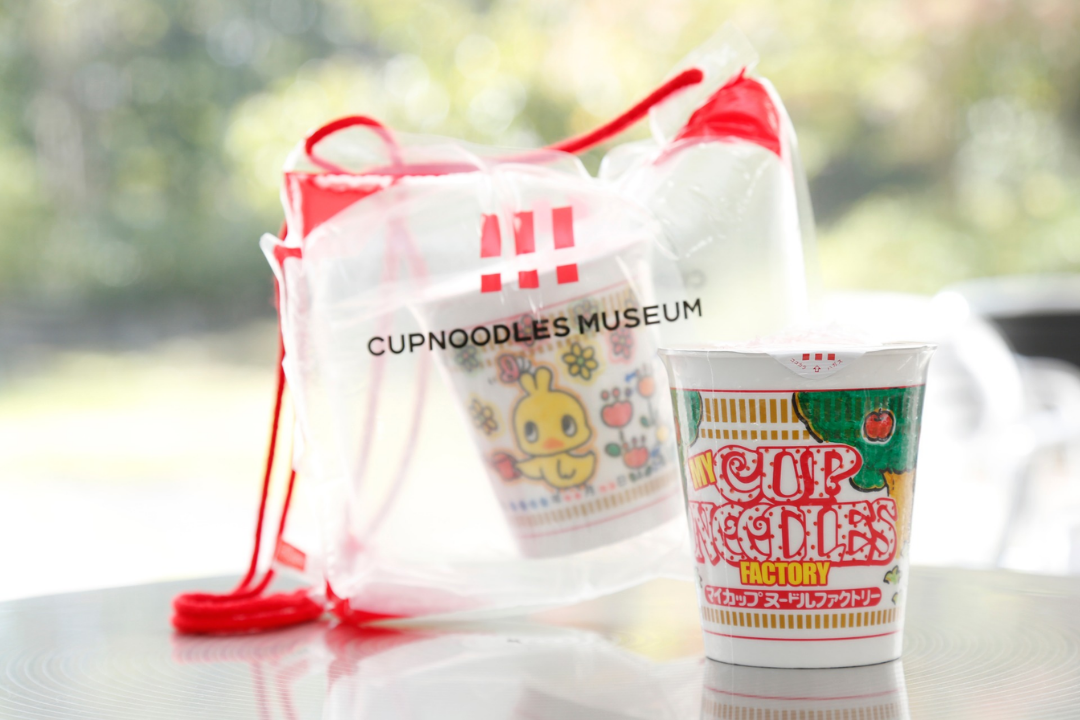
The museum also benefits from strong cultural accessibility. Many of its exhibits and activities are designed to be visual and interactive, allowing visitors to engage with the experience without relying heavily on language. Creating a personalized Cup Noodles product combines participation, creativity, and a take-home souvenir, making it a universally appealing experience that resonates across different cultural backgrounds.
In addition, the museum's core messages, such as learning from failure and challenging conventional thinking, align closely with global conversations around innovation and entrepreneurship. Its approach to experiential learning offers valuable inspiration not only for museums, but also for educational institutions, corporate training programs, and cultural organizations.
For these reasons, the Cup Noodles Museum has significant potential to succeed beyond Japan as a distinctive experiential service that combines creativity, education, and innovation in an engaging and accessible format.
Conclusion
The Cup Noodles Museum is a highly refined experiential attraction that uses the invention of instant noodles as a gateway to exploring creativity, innovation, and the thinking behind great ideas. Its significance extends far beyond that of a tourist destination or corporate museum, as it connects directly to global interests in education, innovation, and talent development.
As consumer preferences continue to shift from products to experiences, businesses and educational institutions are placing greater emphasis not only on what is created, but also on how ideas are developed and brought to life. In this context, the Cup Noodles Museum stands out as a leading example of how Japan’s culture of innovation can be combined with immersive, experience-driven learning.
For international organizations, the museum serves not only as a destination for visits and study tours, but also as a model for communicating value through experience. Its willingness to share the realities of experimentation, challenges, and failure alongside success aligns closely with the principles of innovation-focused business cultures and educational programs.
The museum also offers a unique way to communicate Japanese food culture and manufacturing philosophy through experiences that are intuitive and accessible regardless of language. Rather than preserving invention as a historical achievement, the Cup Noodles Museum reimagines it as a source of inspiration for the future. This ability to transform innovation into a meaningful and engaging experience is what gives the museum lasting relevance across generations, industries, and borders.
FAQ About Cup Noodles Museum
1. What Is the Cup Noodles Museum?
The Cup Noodles Museum is an interactive museum where visitors can learn about the history of instant noodles and Cup Noodles while exploring the process of invention and creativity. Rather than simply viewing exhibits, visitors can participate in hands-on activities such as creating their own custom Cup Noodles, gaining insight into how ideas are transformed into products and why innovation requires perseverance.
2. How Is It Different From a Typical Corporate Museum?
The key difference is that the museum focuses not only on finished products but also on the thinking and creativity behind them. The Cup Noodles Museum highlights not only success stories but also the trial-and-error process and lessons learned from failure. It promotes the idea that innovation is not limited to a select few but is something anyone can pursue.
3. Why Can Visitors Create Their Own Cup Noodles?
The goal is to teach the joy of invention through experience rather than theory. By designing their own package and choosing ingredients to create a unique Cup Noodles product, visitors can experience the creative process firsthand. This allows them to learn how ideas are developed, choices are made, and concepts are brought to life.
4. Why Was the Cup Noodles Museum Established?
The museum was created not only to preserve the history of instant noodles but also to pass on the spirit of innovation that inspired their invention. It was designed as a place where future generations can learn through experience about Momofuku Ando's philosophy of questioning conventional thinking and creating new value through innovation.
5. Is It Primarily a Museum for Children?
No. While children can enjoy the interactive exhibits, the museum also offers valuable lessons for adults and business professionals. Its focus on creativity, product development, and problem-solving makes it appealing not only for family outings but also for educational programs and corporate training activities.
6. Why Has It Attracted International Attention?
The museum offers an experience centered on the universal value of creativity, which transcends language and cultural differences. Instant noodles are enjoyed around the world, and the opportunity to create a personalized product can be appreciated by visitors from any background. As a result, the museum is recognized not only for showcasing Japanese food culture but also for promoting the spirit of innovation and manufacturing.
7. Are There Distinctively Japanese Elements in the Cup Noodles Museum?
Yes. The museum reflects a distinctly Japanese approach to solving everyday problems through ingenuity and continuous improvement. Instant noodles themselves were invented to address food-related challenges. Throughout the museum, visitors can see how small ideas can be refined over time and developed into products that create significant value.
8. Why Is It Valued as an Educational Facility?
The museum encourages visitors to think for themselves rather than simply memorize answers. By highlighting the invention process, experimentation, and discoveries that emerge from failure, it teaches the importance of persistence and creative problem-solving. This focus on learning through exploration has earned it recognition as an educational destination.
9. Why Has the Cup Noodles Museum Remained Popular Over Time?
Its lasting appeal comes from offering experiences that actively involve visitors rather than simply presenting historical information. Every custom Cup Noodles creation is unique, and each visit can provide new insights and experiences. This interactive approach keeps visitors engaged and encourages repeat visits.
10. What Is the Greatest Appeal of the Cup Noodles Museum?
The museum's greatest appeal is that it presents invention not as a success story from the past, but as a skill and mindset that can inspire future innovation. Visitors do more than learn about the history of Cup Noodles. They also have the opportunity to think creatively, experiment with ideas, and bring those ideas to life. The experience leaves visitors with a deeper appreciation for creativity, problem-solving, and the willingness to take on new challenges.
Related Videos
If you're interested in the history of instant noodles and Japanese food innovation, the video below explores the Cup Noodles Museum and the inspiring story behind one of the world's most influential food inventions. This video shows how the museum encourages creativity, perseverance, and innovation through interactive exhibits.