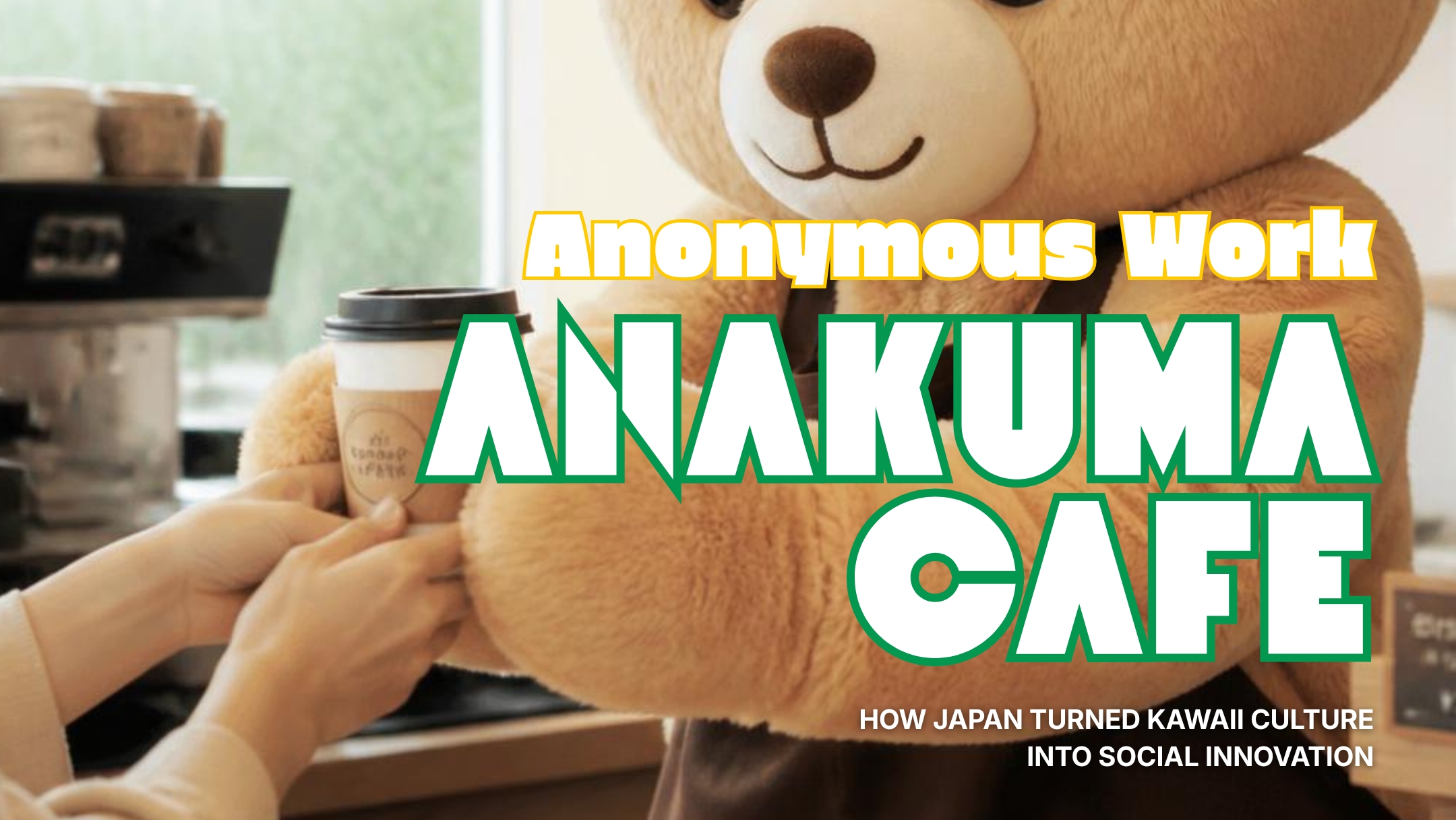
Japan is home to many forms of work that may seem unusual from an international perspective. Among them, ANAKUMA CAFE stands out as a particularly unique example.
ANAKUMA CAFE is a café where staff serve customers while dressed in bear costumes. At first glance, it may appear to be just another concept café built around Japan’s well-known culture of cuteness and entertainment. In reality, however, ANAKUMA CAFE is a deeply thought-provoking project shaped by uniquely Japanese labor challenges and cultural values.
ANAKUMA CAFE's origins in Japan are no coincidence. Japanese society has long carried unspoken expectations in the workplace, where factors such as appearance, age, gender, and interpersonal communication skills can influence how people are evaluated, regardless of their actual abilities. At the same time, Japan is one of the few countries where anime, character culture, and costumed mascots are deeply embedded in everyday life. ANAKUMA CAFE exists at the intersection of these two realities.
The essence of this café is not to provide a cute or whimsical space. Rather, it is to create an environment where customer service work can be performed without revealing one’s face, age, or gender. In doing so, ANAKUMA CAFE enables people to be recognized through the role they perform rather than through personal characteristics. By presenting this idea within an entertaining and approachable setting, the café offers a unique social model that challenges conventional assumptions about identity, work, and inclusion.
From a global perspective, the diversification of work has become a major theme. As remote work, gig work, and AI-driven task automation continue to expand, fundamental questions remain unresolved across countries: What does it mean to work as a human being? How much of one's personal identity should be exposed in the workplace? ANAKUMA CAFE offers a tangible response to these questions through the lens of Japanese culture.
This is precisely why ANAKUMA CAFE deserves attention from international audiences today. It is not simply a uniquely Japanese curiosity. Rather, it is a service that embodies universal themes such as work, self-expression, anonymity, and inclusion. As such, it represents a concept that merits deeper examination beyond its novelty.
ANAKUMA CAFE Overview
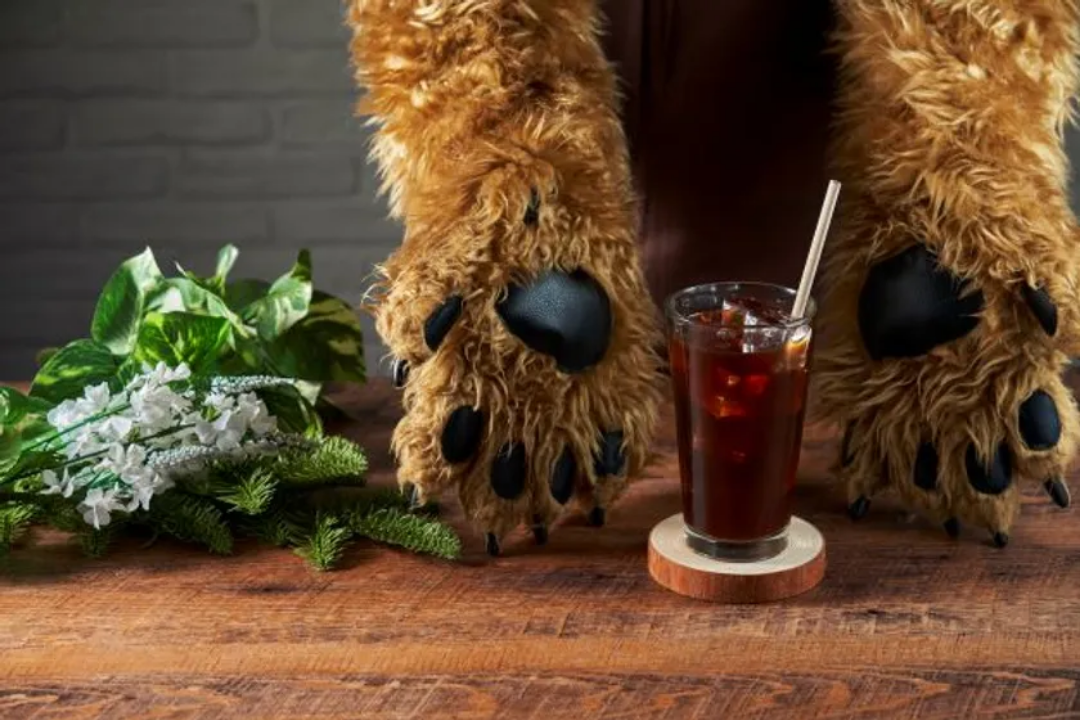
ANAKUMA CAFE is a concept café operating in Japan. Its defining feature is that staff members serve customers while wearing bear costumes, allowing them to work without revealing their faces or personal information. Visitors interact not with individual employees, but with the character known as "ANAKUMA," creating an experience that remains entirely within the café's fictional world.
While the food and beverages offered are similar to those found in a typical café, every aspect of the customer experience, from ordering and receiving items to communicating with staff, takes place through the character. As a result, the visit itself becomes a memorable part of the experience. In a country where character culture is deeply embedded in everyday life, ANAKUMA CAFE has generated not only initial curiosity but also repeat visits and ongoing social media engagement.
Pricing is generally comparable to that of standard urban cafés, positioning the venue not as a premium luxury experience but as an accessible form of everyday escapism. This balance between novelty and accessibility is one of the reasons the concept has gained acceptance within Japan.
The Anonymous Barista ANAKUMA CAFE
Source: Anakuma Homepage
ANAKUMA CAFE is a café brand planned and operated by OXSV Co., Ltd. The company’s core business model centers on “SNS × Real-World Business,” using social media as a gateway to drive engagement with physical retail experiences. ANAKUMA CAFE is one of the projects that embodies this philosophy.
The café’s defining feature is that all staff members wear bear costumes and do not reveal their faces or personal identities. Customers interact not with individual employees, but with the character known as “ANAKUMA,” creating an experience built around a consistent fictional world. As a result, the café offers more than food and beverages; it functions as an immersive, experience-driven service centered on character interaction and atmosphere.
Inclusion in a Bear Suit
From an operational perspective, ANAKUMA CAFE differs from conventional cafés. Its visual design is created with social media sharing in mind, while the space itself is designed to be photographed and filmed. The use of character-based, anonymous customer service helps generate both customer engagement and brand awareness. Rather than relying heavily on advertising, the café is structured so that the customer experience itself becomes shareable content, making it a notable example of OXSV’s business strategy.
The brand is also designed with franchise expansion in mind. Because operations do not depend on the skills, appearance, or personality of specific staff members, the customer experience can be standardized and replicated across multiple locations. By placing the character at the center of the experience, the brand minimizes individual differences while maintaining consistency.
For OXSV, ANAKUMA CAFE is more than a one-time novelty. It serves as a proof-of-concept for a physical retail business model adapted to the social media era, where customer acquisition and brand awareness originate in digital spaces while the experience itself takes place in the real world. This structure is central to understanding the café’s significance and broader potential.
Why the “Bear × Anonymous Customer Service” Model?
ANAKUMA CAFE’s greatest uniqueness does not lie in the use of characters for customer service itself. Businesses where staff serve customers while wearing costumes have existed in Japan before. What fundamentally distinguishes ANAKUMA CAFE is that it positions the character not as a performance or visual gimmick, but as the core of its labor structure.
In a typical restaurant or café, service quality depends heavily on individual factors such as a staff member’s facial expressions, age, tone of voice, and interpersonal skills. At ANAKUMA CAFE, however, these personal differences are intentionally removed. Customers always interact with the same character, “ANAKUMA,” while the staff member’s gender, age, appearance, and even emotional fluctuations are absorbed behind the character.
Rethinking Human Interaction
This anonymity enhances not only the customer experience but also the experience of those working there. In Japan, qualities such as friendliness and likability often become unspoken standards by which service workers are evaluated. As a result, customer-facing jobs can present a significant barrier for people who feel uncomfortable being in the public eye or who experience stress in interpersonal communication.
ANAKUMA CAFE overturns this assumption. Staff do not need to show their faces, project their voices, or be judged as individuals. Instead, the job is accomplished by following a defined set of actions and maintaining the character’s world. In other words, success is measured not by personal expression but by fulfilling a role. This structure lowers barriers to employment while quietly expanding the range of available working styles.
This anonymity also contributes to a more consistent brand experience. Because the café does not rely on specific popular staff members, the customer experience is less likely to vary by location or time of day. No matter which store customers visit or when they visit, the distinctive “ANAKUMA CAFE experience” remains consistent. This is an especially important design principle for a brand built with franchise expansion in mind.
While the concept may not appear technologically groundbreaking, it is remarkably sophisticated from a cultural and structural perspective. It is a model made possible by Japan’s widespread acceptance of character culture, while also offering a gentle response to long-standing issues surrounding work and evaluation in Japanese society through the medium of entertainment. This intersection is what gives ANAKUMA CAFE its unique identity.
Why Was ANAKUMA CAFE Created?
Source: Anakuma Homepage
The idea behind ANAKUMA CAFE emerged from two long-standing challenges within Japan’s brick-and-mortar business sector. One is an operational model that relies too heavily on individual employees, and the other is a hiring structure that can unintentionally limit who gets opportunities to work.
The food and beverage industry has faced chronic labor shortages for years. At the same time, hiring decisions often place implicit emphasis on factors such as appearance, age, and communication skills. As a result, some people with the ability and willingness to work are excluded from customer-facing roles because they are perceived as “unsuited” for service jobs. This has been a persistent but often overlooked issue in Japanese society.
The Business of Anonymity
As OXSV developed businesses that connect social media engagement with physical retail experiences, the company recognized that putting people at the center of a brand can itself become an operational risk. When specific employees become popular, customer experiences become tied to individuals rather than the brand. If those employees leave, brand value can be affected. Recruitment and training costs continue to accumulate, while scalability becomes more difficult. These challenges tend to become more apparent as a business grows.
Rather than removing people altogether, OXSV focused on the idea of keeping people from becoming the primary focus. By placing a character between employees and customers, evaluations and expectations can be standardized without denying the importance of the people behind the service. ANAKUMA CAFE was designed as a real-world testing ground for this concept.
Strategic Insights from ANAKUMA CAFE
ANAKUMA CAFE is more than a novelty café. It functions as a business model that addresses multiple challenges in physical retail simultaneously, particularly in operations, recruitment, and marketing.
From an operational perspective, the model helps standardize customer service quality. In traditional cafés and restaurants, customer experiences can vary significantly depending on individual staff members' skills, personalities, and experience levels. At ANAKUMA CAFE, however, character behavior is carefully defined, making the customer experience more consistent regardless of who is inside the costume. This structure becomes increasingly valuable as the business expands and helps reduce operational complexity in franchise settings.
Why Japan’s Social Pressures Created the Bear Café
From a recruitment standpoint, the concept creates opportunities for people who may be uncomfortable with conventional customer-facing roles. Because employees are not required to reveal their faces or rely heavily on interpersonal presentation skills, the café offers a more accessible working environment for a wider range of individuals. As a result, the model expands the potential hiring pool and presents one possible response to the labor shortages facing the hospitality industry.
From a marketing perspective, ANAKUMA CAFE is designed so that the experience itself becomes advertising. Photos and videos taken by visitors are naturally shared on social media, generating awareness and attracting new customers. Rather than relying primarily on paid advertising, the business encourages organic visibility through highly shareable experiences. The café's visual design and character-driven concept are intentionally built with social media engagement in mind.
By combining these elements, ANAKUMA CAFE demonstrates potential beyond the food and beverage sector. It offers a model that can be adapted to experiential retail and character-driven physical businesses. Applications may include customer attraction initiatives within commercial facilities, limited-time pop-up events, and interactive tourism experiences, highlighting the concept's potential across multiple industries.
Production System and Quality Control
At ANAKUMA CAFE, quality control extends far beyond managing coffee beans or food ingredients. The most important objective is maintaining a consistent character-driven experience. In other words, the café’s quality is defined not only by its products or pricing, but by the consistency of its atmosphere and customer interactions.
The foundation of this approach begins with the character design itself. The bear costume is not simply a costume but a piece of professional equipment designed for mobility, safety, and extended wear. Factors such as visibility, ventilation, and weight distribution are carefully considered to ensure that staff can work comfortably and sustainably. This reflects a focus on creating a practical work environment rather than prioritizing performance alone.
Another key element is the standardization of customer interactions. Because facial expressions are hidden, body language, timing, and movement play a critical role in shaping the guest experience. Rather than leaving these elements to individual interpretation, ANAKUMA CAFE relies on defined guidelines and training to ensure that visitors receive a consistent impression regardless of location or staff member.
The food and beverage operation is also intentionally streamlined. Menus and workflows are designed to be as simple as possible, helping maintain service speed, safety, and quality within the unique environment of character-based service. By minimizing complex preparation processes and specialized techniques, the business prioritizes consistency across the overall experience.
This operational philosophy is closely tied to the brand’s franchise potential. The model is designed so that a consistent customer experience can be delivered without relying on highly skilled individuals or personal intuition. To achieve this, character management, operational procedures, and spatial design are treated as an integrated system.
Ultimately, ANAKUMA CAFE places greater emphasis on supporting people through systems than on relying solely on individual talent. This is not simply an efficiency measure; it is a deliberate strategy to protect the customer experience while reducing the burden on employees. That philosophy is a key reason the project has been able to function as a sustainable business model.
Founder’s Vision and the Challenges Behind ANAKUMA CAFE
Source: Anakuma Homepage
At the heart of ANAKUMA CAFE is a simple but profound question: How much of ourselves do we need to reveal in order to work? While this question emerged from the hospitality industry, it also speaks to broader challenges in today's workplace.
In Japan, work has traditionally been closely tied to personal identity. In customer-facing roles, qualities such as friendliness, appearance, tone of voice, and social skills often become key evaluation criteria. As a result, only those considered naturally suited to these expectations tend to thrive, while many others face significant psychological barriers to participation.
Working Without a Face
As OXSV developed the concept for ANAKUMA CAFE, it confronted this assumption directly. When a business relies heavily on people to represent the brand, employees inevitably face the pressure of being constantly seen, judged, and compared. While this can strengthen customer engagement, it can also place a considerable emotional burden on the individuals involved.
Rather than removing people from the equation, the company chose a different approach: protecting individuals. By stepping inside the ANAKUMA persona, employees can temporarily separate themselves from personal attributes and emotions. What is evaluated is not the individual, but the role they perform. Mistakes, fatigue, and personal insecurities remain behind the character, creating a workplace designed to enhance psychological safety.
The Business Logic of Anonymity
Importantly, this philosophy is not merely theoretical. ANAKUMA CAFE was built as a commercially viable and scalable business that can generate revenue while preserving employee anonymity. Rather than existing in conflict, the project's values and business model reinforce one another. This balance between purpose and practicality is one of OXSV's defining characteristics.
The concept is also embedded within the system itself rather than centered on a single founder's personality. As a result, the idea can endure beyond any individual, allowing the brand's principles to remain consistent as it grows.
Ultimately, ANAKUMA CAFE is not promoting the idea that work should simply become easier. Instead, it proposes that there can be alternative ways of working. By presenting that possibility through a tangible customer experience rather than through theory or social commentary, the project demonstrates its broader social and cultural significance.
Connection to Japanese Culture and Society
ANAKUMA CAFE is not a project that directly preserves a traditional industry or regional craft. However, its concept is closely connected to cultural characteristics that have long existed in Japanese society.
Japan has a unique culture of embracing characters and mascots in everyday life. From municipal mascots and commercial characters to theme park costumes, there is a widely understood social convention that people recognize someone is inside the costume, yet choose not to focus on it. This ability to separate a role from the individual behind it reflects a distinctly Japanese cultural sensibility.
ANAKUMA CAFE applies this cultural framework to a modern work environment. Visitors do not question who is inside the bear costume, allowing anonymity to be maintained while preserving the experience. This unspoken understanding, a form of consideration that respects personal boundaries, enables the concept to function naturally.
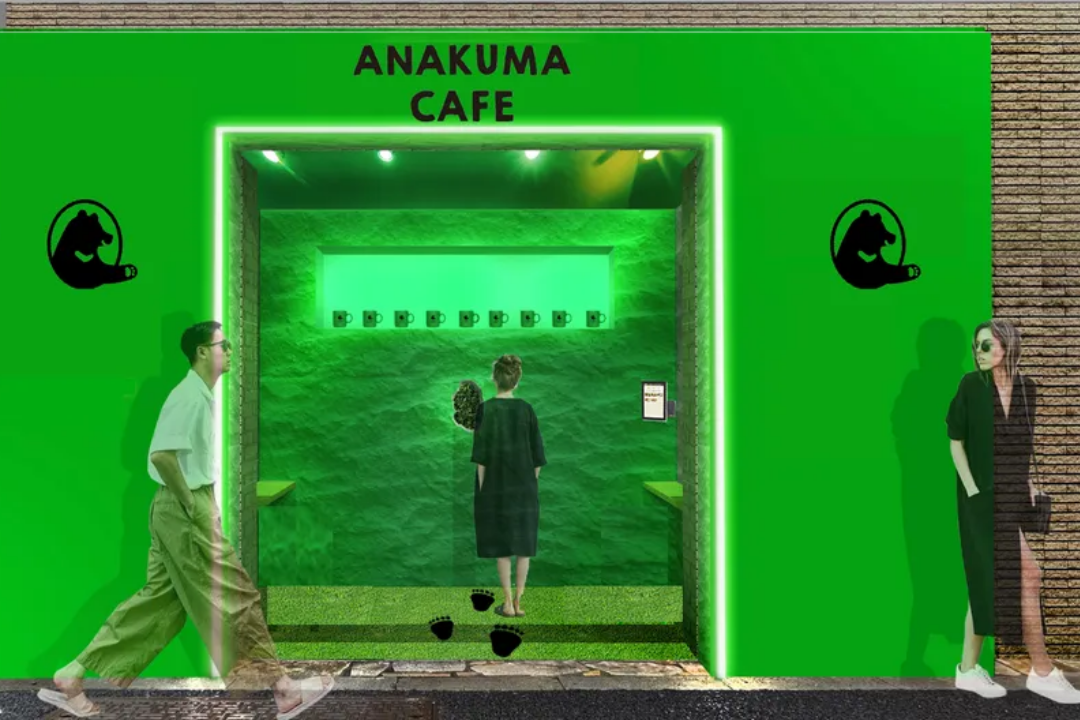
Its presence in areas associated with youth culture and pop culture, such as Harajuku and other urban districts, is also significant. Within Japan’s urban culture, where people readily embrace unusual experiences as part of everyday life, ANAKUMA CAFE feels both novel and familiar. Rather than making bold statements, it integrates naturally into its surroundings, a quality that can be seen as distinctly Japanese.
ANAKUMA CAFE is not a service that explicitly promotes tradition. However, it is built upon values deeply rooted in Japanese society, including respect for personal boundaries, consideration for others, and an appreciation for roles and shared social conventions. In that sense, it can be viewed as a contemporary project that extends and reinterprets elements of Japanese culture.
Future Outlook and Direction
What makes ANAKUMA CAFE notable is that it is more than a single café concept. For OXSV, it serves as a testing ground for a new operational model in which characters act as the interface between staff and customers.
One likely direction is franchise expansion. Because the concept does not rely heavily on highly skilled staff or individual personalities, a consistent experience can be delivered across different locations as long as the operational procedures and brand world are maintained. This provides a scalable alternative to traditional café models that often depend on individual employees.
The concept is also well suited to pop-up stores and limited-time events. In shopping centers, tourist destinations, and event venues, the ANAKUMA CAFE experience can quickly communicate its value through its distinctive character-driven format, reducing the need for extensive explanation and making it accessible to first-time visitors.
Redefining the Frontline Employee Experience
Beyond food and beverage operations, ANAKUMA itself has potential as an intellectual property (IP) brand. Merchandise, collaborations, and digital content could create additional touchpoints with consumers while extending the brand beyond the café environment. Maintaining ANAKUMA's role as a symbol of anonymity and role-based work will be essential to preserving the concept's identity.
Rather than pursuing attention through novelty alone, OXSV appears focused on demonstrating that this alternative approach to customer service and store operations can function as a sustainable business model. By steadily building successful examples, the company has the opportunity to encourage new ways of thinking about work, service, and human interaction.
As a result, ANAKUMA CAFE's future is defined less by rapid expansion and more by the reproducibility and long-term sustainability of its model. That focus reflects the project's core philosophy and what ultimately distinguishes it from a typical concept café.
User Experience and Reviews
One notable aspect of visitor reactions to ANAKUMA CAFE is that they often go beyond simple comments such as “cute” or “funny” and focus on the experience itself. On social media, visitors frequently mention not only the enjoyment of taking photos with the bear characters, but also how surprisingly comfortable the atmosphere feels, with comments such as “it was unexpectedly relaxing” and “I felt comfortable ordering without being nervous.”
A common theme among first-time visitors is the unique sense of psychological distance during customer interactions. In a typical café, people may feel some pressure when speaking with staff, but at ANAKUMA CAFE, that tension is often reduced because customers interact with a character rather than an individual. Conversations can remain minimal, and there is less concern about eye contact or facial expressions. Many visitors describe the experience as “easy,” “comfortable,” or “less stressful.”
Reactions from international visitors and tourists are also noteworthy. For those familiar with Japan’s character culture, ANAKUMA CAFE is often seen as a uniquely Japanese experience. At the same time, many are surprised that it is not a temporary attraction but a fully functioning café. The fact that character-based customer service operates as an everyday business rather than a one-off event is often perceived as both unusual and memorable.
When photos and videos are shared online, the focus is typically on the café’s atmosphere and the bears’ behavior rather than on individual staff members. This reflects ANAKUMA CAFE’s intentionally designed experience, where personal identities remain in the background and the character takes center stage.
Looking across reviews as a whole, the most telling feedback extends beyond simple enjoyment. Visitors frequently use words such as “comfortable,” “reassuring,” and “stress-free,” suggesting that the value of ANAKUMA CAFE goes beyond visual entertainment and creates a uniquely approachable customer experience.
Track Record in Japan
ANAKUMA CAFE has attracted attention not only for its unique concept but also for demonstrating its ability to operate as a sustainable physical business. Its track record in Japan reflects both strong public interest and practical business viability.
In terms of media exposure, ANAKUMA CAFE has been featured in news articles, press releases, and various media outlets. Rather than being presented simply as an unusual café, it is often highlighted as an innovative approach to anonymous work, customer service, and character-driven store operations. This coverage suggests that the project is recognized not only for its novelty but also for the broader social themes it addresses.
Its presence on social media is another indicator of its domestic success. Visitors continue to share photos and experiences organically, without relying solely on short-term campaigns or viral moments. Much of this user-generated content focuses on the bear characters and the café environment, helping maintain a consistent and recognizable brand image.
ANAKUMA CAFE was also designed with franchise expansion in mind. This reflects confidence in the concept as a repeatable business model rather than a one-off experiment. The brand has been developed with scalability in mind, creating a foundation for expansion across multiple locations while maintaining a consistent customer experience.
What makes these achievements particularly noteworthy is that they are not driven solely by attention-grabbing marketing. By combining Japan's character culture with practical solutions in operations, recruitment, and customer engagement, ANAKUMA CAFE has proven that the model can function in real-world business settings.
Ultimately, ANAKUMA CAFE's domestic track record represents more than a successful concept. It demonstrates that a character-based, anonymity-focused retail model can operate as a viable and sustainable business, moving beyond experimentation into practical implementation.
What matters is that these achievements are not the result of short-lived buzz. By leveraging Japan’s character culture while maintaining a viable model across operations, recruitment, and marketing, ANAKUMA CAFE has earned sustained recognition.
Its track record shows that this approach is not just an interesting concept, but a sustainable business model.
Global Expansion Potential and Appeal
The key question for ANAKUMA CAFE’s global expansion is whether being distinctly Japanese is a limitation or a strength. While the concept appears rooted in Japan’s character culture, its underlying structure addresses universal themes that can resonate across cultures.
One of its most notable features is its anonymous service model. Emotional labor remains a challenge in the service industry worldwide, where workers are often expected to be constantly friendly, approachable, and expressive. ANAKUMA CAFE offers an alternative by using a character as an intermediary, reducing some of the pressures traditionally placed on frontline staff.
Character-based service also helps lower language barriers. Because much of the experience is conveyed through gestures, visual storytelling, and character interaction rather than extensive conversation, it can function effectively in tourist destinations and multicultural environments. This creates a more accessible experience for both customers and staff.
While few countries have integrated character culture into everyday life as deeply as Japan, the idea of combining character-driven interactions with immersive experiences is widely understood around the world. Global IP brands such as Disney have long demonstrated the appeal of engaging with characters as distinct personalities. ANAKUMA CAFE's uniqueness lies in applying this concept not to large-scale entertainment franchises, but to an everyday café setting.
Its franchise-oriented design also strengthens its potential for international expansion. Because the model does not rely heavily on individual staff skills or deep cultural knowledge, the core concept can be adapted to different markets while allowing room for local customization. Character designs, behaviors, and customer interactions can be adjusted to reflect regional preferences, enabling each location to develop its own version of ANAKUMA while maintaining the brand's core identity.
The appeal of ANAKUMA CAFE abroad is not simply the export of Japan's "kawaii" culture. Rather, it offers an experiential response to modern workplace challenges such as anonymity, role-based work, and psychological safety. In markets where these themes resonate, ANAKUMA CAFE has the potential to be valued not just as a novelty, but as a meaningful and innovative business model.
Why International Companies Should Pay Attention to ANAKUMA CAFE Now
ANAKUMA CAFE is far more than a café where staff serve customers in bear costumes. At its core, the project rethinks the relationship between people and work through the use of character-based interactions. By creating an environment where customer service can function without revealing personal identity, age, gender, or appearance, it offers a practical response to longstanding challenges surrounding workplace evaluation, visibility, and social expectations.
What makes the model noteworthy is not its philosophy alone, but the fact that it operates as a viable business. Standardized operations, broader hiring opportunities, and a marketing structure where the customer experience naturally generates visibility all work together to support a sustainable and scalable business model. As a result, ANAKUMA CAFE has evolved beyond a novelty concept into a functioning example of an alternative approach to retail and service operations.
For international companies, the key is not to view this as a uniquely Japanese curiosity. Themes such as anonymity, psychological safety, and role-based work are increasingly relevant across industries and cultures. ANAKUMA CAFE presents these ideas in an accessible and engaging format, transforming complex workplace issues into a tangible customer and employee experience.
Companies exploring new retail concepts, alternative workforce models, or experience-driven business strategies can find valuable insights in ANAKUMA CAFE. Potential collaborations or partnerships offer more than short-term publicity; they provide an opportunity to learn from a model that has already demonstrated its ability to operate successfully in the real world.
ANAKUMA CAFE was created and refined in Japan, but the questions it addresses are global. As conversations around the future of work continue to evolve, the project presents a compelling example of how businesses can rethink human interaction, customer experience, and workplace design. Its potential for international relevance is already emerging.
Conclusion
ANAKUMA CAFE demonstrates how a simple café concept can evolve into a broader discussion about work, identity, and human interaction. By placing a character between employees and customers, it creates a service model that challenges conventional assumptions about customer service while offering a more flexible and psychologically comfortable working environment.
What makes the project particularly noteworthy is its ability to balance social ideas with commercial viability. Rather than presenting anonymity and inclusivity as abstract concepts, ANAKUMA CAFE translates them into a functioning business model that can be experienced firsthand. Through standardized operations, character-driven branding, and a customer experience designed for both engagement and accessibility, the café offers a practical example of how retail businesses can be reimagined.
For international businesses, the value of ANAKUMA CAFE extends beyond its distinctly Japanese aesthetic. The project addresses universal challenges related to workforce participation, employee well-being, and experience-driven retail. As companies around the world search for new ways to attract customers, support employees, and differentiate physical spaces, ANAKUMA CAFE provides a compelling case study of how cultural creativity can be transformed into a scalable business model.
Born in Japan but built around globally relevant themes, ANAKUMA CAFE highlights the potential of combining entertainment, workplace innovation, and brand experience into a single concept. Its success suggests that the future of customer-facing businesses may not be defined solely by products or services, but by how thoughtfully they redesign the relationship between people, work, and experience.
FAQ About ANAKUMA CAFE
1. What Is ANAKUMA CAFE?
ANAKUMA CAFE is a concept café from Japan where customers are served by a bear character called ANAKUMA. Rather than interacting directly with visible staff members, visitors receive their orders through the character. More than just a cute attraction, the café has gained attention as a new service model that focuses not on who is providing the service, but on the experience being delivered.
2. How Is It Different From a Traditional Character Café?
Traditional character cafés are typically designed around the world and themes of an existing character franchise. At ANAKUMA CAFE, however, the character itself plays an active role in customer service. The experience goes beyond themed decorations and includes interactions with ANAKUMA throughout the ordering and pickup process, creating a more immersive experience.
3. Why Do Staff Members Remain Hidden?
The system is designed to let customers focus on their interaction with the character rather than the individual providing the service. It also creates a working environment that is less influenced by factors such as appearance, age, or gender. By embracing anonymity, ANAKUMA CAFE proposes a new way for people to connect and interact through a character-driven experience.
4. Why Was ANAKUMA CAFE Created in Japan?
Japan has a long-standing culture in which mascots, anime characters, and other fictional figures are deeply integrated into everyday life. Characters are often treated as unique personalities rather than simple decorations. This cultural background makes it natural for a concept like ANAKUMA, a character serving customers as a café attendant, to resonate with Japanese audiences.
5. What Does ANAKUMA CAFE Mean for People Working There?
It expands the ways people can participate in customer service roles. In traditional service jobs, first impressions based on facial expressions, appearance, or speaking style can play a significant role. By allowing staff to interact with customers through a character, ANAKUMA CAFE demonstrates that people who may not feel comfortable being in the spotlight can still engage in customer service in a way that suits them.
6. Why Has ANAKUMA CAFE Gained Attention in the Social Media Era?
The experience itself is highly shareable. Beyond its unusual appearance, the surprise and enjoyment of interacting with a bear character naturally lend themselves to photos and videos. Rather than relying on traditional advertising, the café benefits from visitors sharing their experiences online, helping awareness spread organically.
7. What Makes ANAKUMA CAFE Appealing to International Visitors?
In addition to offering a taste of Japan's famous kawaii, or cute, culture, ANAKUMA CAFE provides a unique form of character-based interaction. The experience can be enjoyed regardless of language or cultural background because much of its appeal comes from visual storytelling, character movements, and atmosphere. This makes it an accessible and memorable attraction for visitors to Japan.
8. Can the ANAKUMA CAFE Model Be Applied to Other Industries?
Yes. The concept of interacting through a character has potential applications beyond the food and beverage industry. By preserving the warmth of human service while reducing some of the psychological pressures placed on employees, similar systems could be adapted for a variety of customer-facing roles and service environments.
9. What New Type of Store Experience Does ANAKUMA CAFE Represent?
ANAKUMA CAFE demonstrates how a business can create value not only through its products but also through experiences that cannot be replicated elsewhere. In an era when many products can be purchased online, giving people a reason to visit a physical location has become increasingly important. ANAKUMA CAFE achieves this by making the interaction with the character itself a key reason for visiting.
10. What Is the Greatest Appeal of ANAKUMA CAFE?
Its greatest appeal lies in how it combines an entertaining and charming atmosphere with new ideas about work and human interaction. ANAKUMA CAFE shows that it is possible to create meaningful customer experiences without relying on visible identities or personal recognition. By using entertainment to explore changing attitudes toward service and communication, it offers a glimpse into how customer experiences may evolve in the future.
Related Videos
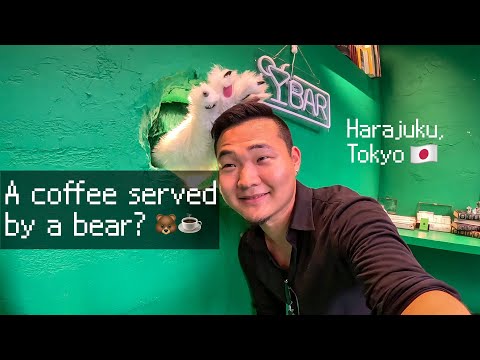
If you're interested in Japan's unique kawaii culture and themed entertainment, the video below explores ANAKUMA CAFE, where adorable characters and immersive customer experiences have become a new style of workplace. This video highlights how Japan transforms pop culture into creative business opportunities.