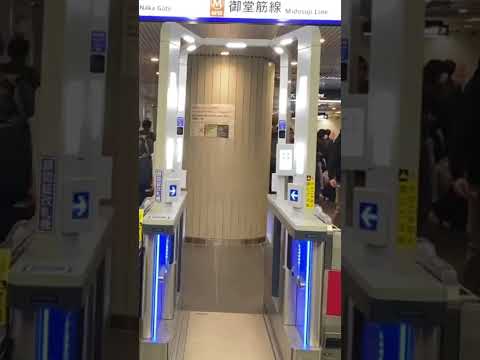
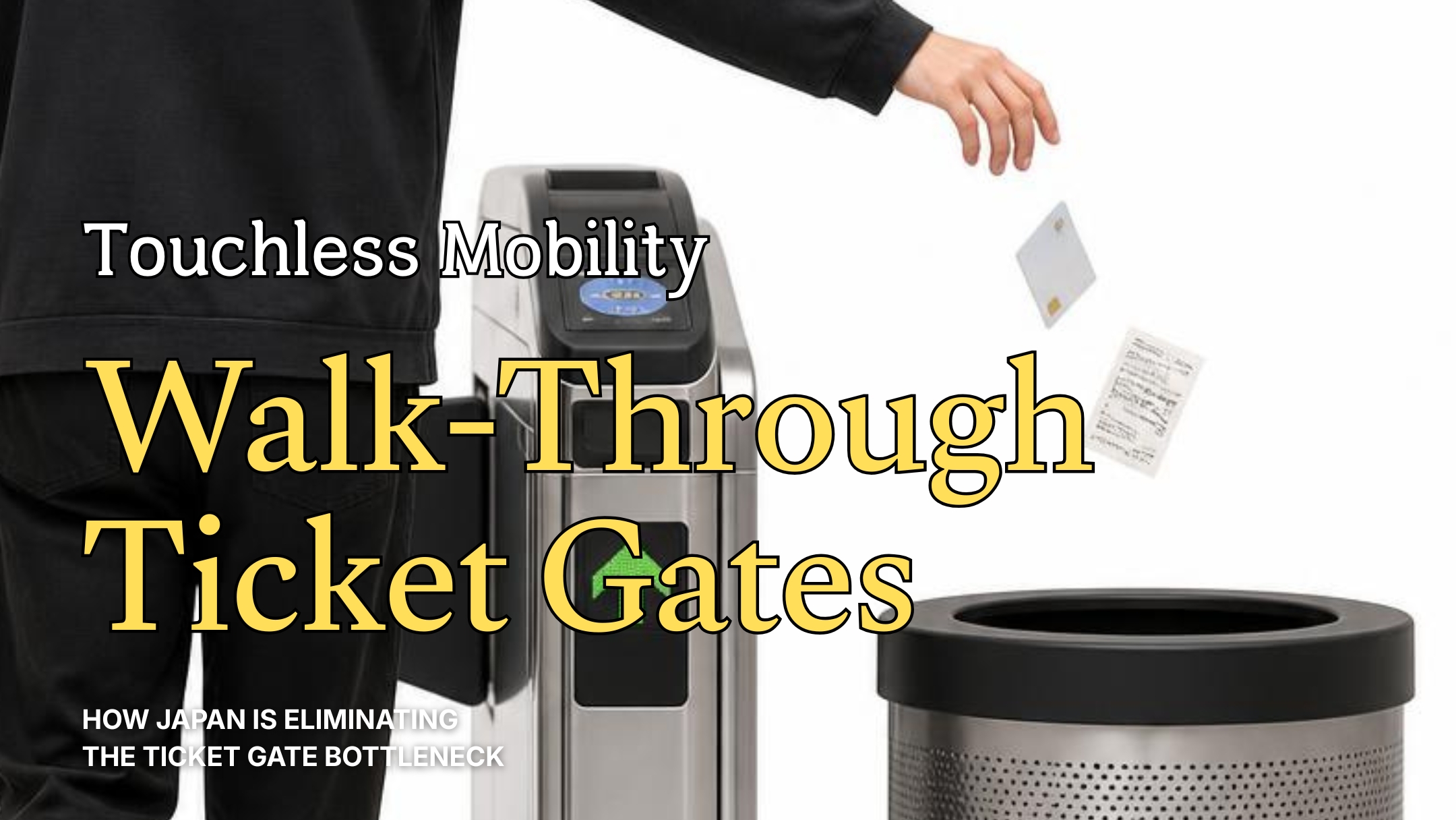
When people think of train stations in Japan, they usually picture passengers tapping an IC card like Suica or PASMO, scanning a QR code, or inserting a paper ticket before passing through the ticket gates. That touch-based system has become one of the fastest and most efficient in the world. However, Japan is already working on the next evolution: the walk-through ticket gate.
A walk-through ticket gate is a new type of fare gate that allows passengers to pass through without stopping or touching the machine. Instead of tapping a card or holding up a smartphone, users simply continue walking while the system automatically verifies their identity and processes their fare payment in the background.
The technology was developed in response to the unique demands of Japan's railway network. Home to some of the busiest train stations on Earth, Japan handles millions of passengers every day. Even a brief delay at a ticket gate can create bottlenecks during rush hour, making passenger flow a long-standing challenge for railway operators.
At the same time, global trends toward contactless services and digital transformation have changed what people expect from public infrastructure. As smartphone payments, biometric authentication, and AI become more common, travelers increasingly expect services to work automatically without requiring extra steps. Walk-through ticket gates are part of this broader movement toward seamless mobility.
The concept also has relevance far beyond Japan. Cities around the world continue to struggle with overcrowded public transportation and growing passenger numbers. A system that allows people to move naturally without stopping at entry points could become an important solution for improving urban transportation efficiency worldwide.
What Is a Walk-Through Ticket Gate?
A walk-through ticket gate is a fare collection system that automatically verifies a passenger's identity and processes payment while they simply walk through the station entrance. Unlike conventional gates, there is no need to stop, tap a card, scan a phone, or perform any manual action. The entire process happens as part of a person's normal walking motion.
Several advanced technologies work together to make this possible. One of the most important is facial recognition. Passengers register their facial information in advance, allowing cameras installed at the gate to identify them instantly as they approach. Once verified, the system automatically authorizes entry without requiring an IC card or smartphone.
Another approach relies on smartphones rather than facial recognition. Using technologies such as Bluetooth and location awareness, the system detects a registered device as the passenger approaches the gate. Because the phone can remain inside a pocket or bag, users do not need to take it out or interact with it during their journey.
Biometric Authentication and Facial Recognition Technology
The technology also uses AI-powered tracking and multiple sensors to distinguish individual passengers, even when several people walk through the gates at the same time. This allows the system to accurately identify each traveler while preventing misidentification in crowded station environments.
Traditional ticket gates are built around the assumption that passengers will stop briefly to act. Walk-through ticket gates reverse that philosophy by designing the entire experience around continuous movement. Rather than simply improving an existing process, they can fundamentally change how people move through train stations.
By combining biometric authentication, wireless communication, AI analysis, and advanced sensor technology, walk-through ticket gates represent one of the most significant innovations in modern public transportation infrastructure.
Eliminating the Need to "Use" the Ticket Gate
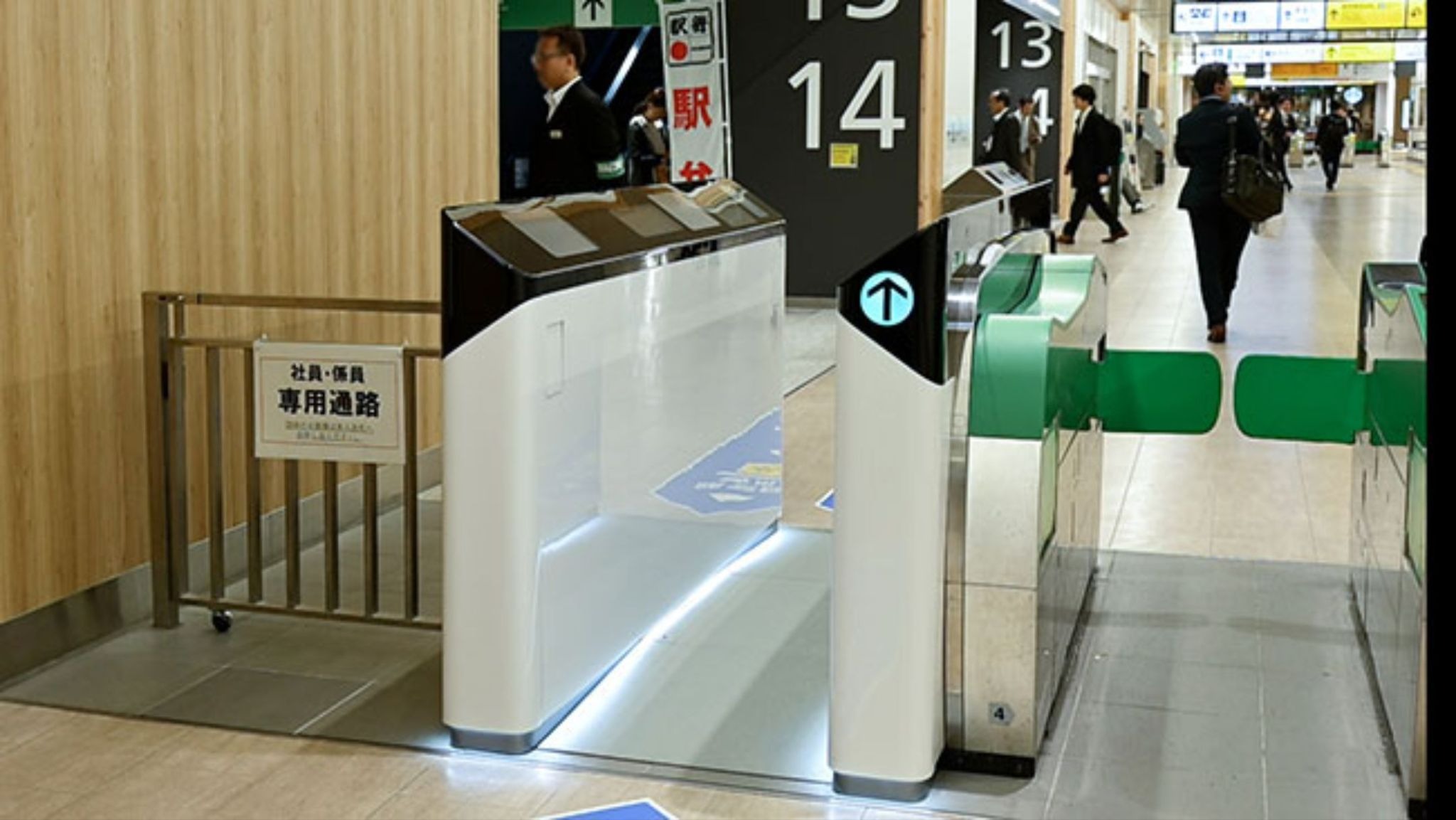
Source: NEC Homepage
Perhaps the most remarkable aspect of walk-through ticket gates is that they remove an action that commuters have taken for decades. Even though Japan's current IC card gates are already incredibly fast, passengers still need to retrieve a card or smartphone and tap it on the reader. That seemingly minor action becomes a source of congestion when thousands of people perform it simultaneously during rush hour.
Walk-through ticket gates eliminate this final step. Authentication and fare payment occur automatically as people continue walking naturally, allowing passengers to pass through without consciously interacting with the gate. In many ways, the goal is not simply to create a faster gate but to make the gate itself almost invisible.
Making this possible requires sophisticated technology. Facial recognition and smartphone authentication are only part of the system. Multiple cameras, sensors, and AI-powered tracking algorithms continuously monitor movement around the gates. Even when several passengers cross paths, the system must accurately determine who entered, when they entered, and which payment account to charge.
The Walk-Through Concept
The system's fully contactless nature is another important advantage. Since the COVID-19 pandemic, reducing unnecessary physical contact has become a priority in many public spaces. Because passengers never need to touch equipment, walk-through ticket gates naturally support modern hygiene expectations while also making travel more convenient.
The technology could also provide valuable operational data. By analyzing passenger movement in real time, railway operators may better understand congestion patterns, optimize station layouts, and improve crowd management. Rather than functioning solely as a ticket gate, the system could become part of a smarter transportation network that continuously adapts to passenger demand.
For these reasons, walk-through ticket gates represent much more than a convenient new entrance system. They reflect a broader design philosophy focused on keeping people moving while allowing technology to operate quietly in the background.
From Pilot Programs to Real-World Deployment
Walk-through ticket gates are currently being tested at select railway stations and other facilities in Japan. Because the system relies on advanced biometric authentication, AI, and real-time data processing, railway operators are taking a gradual approach rather than rolling it out nationwide all at once. Pilot programs allow developers to evaluate performance, accuracy, and passenger experience before wider adoption.
Many of these trials use facial recognition as the primary authentication method. Passengers register their facial profile and payment information in advance, allowing cameras and sensors at the ticket gate to recognize them automatically as they approach. Identity verification and fare payment are completed simultaneously, enabling travelers to continue walking without any additional action.
Other pilot projects are exploring smartphone-based authentication. Instead of relying on facial recognition, these systems detect a registered smartphone using technologies such as Bluetooth and proximity sensing. Travelers can keep their phone inside a pocket or bag while the system automatically identifies them and processes the fare.
Another important focus is ensuring accurate recognition when many people pass through the gates at the same time. Since busy train stations often see hundreds of passengers moving simultaneously, AI-powered tracking systems and multiple sensors must distinguish each individual without confusing one traveler for another. Current testing aims to maintain high accuracy even during peak commuting hours.
The technology is also being evaluated outside railway stations. Airports, office buildings, and large event venues are experimenting with similar walk-through entry systems because they need to verify identities while keeping large crowds moving efficiently. In these environments, reducing queues without compromising security is a significant advantage.
Although walk-through ticket gates have not yet become standard across Japan's railway network, continued improvements in both technology and operations could pave the way for wider deployment. Today's pilot programs represent an important transition from traditional ticket gates that require passengers to stop to a future where people simply keep walking.
An Innovation Born From One of the World's Busiest Railway Networks
Source: NEC Homepage
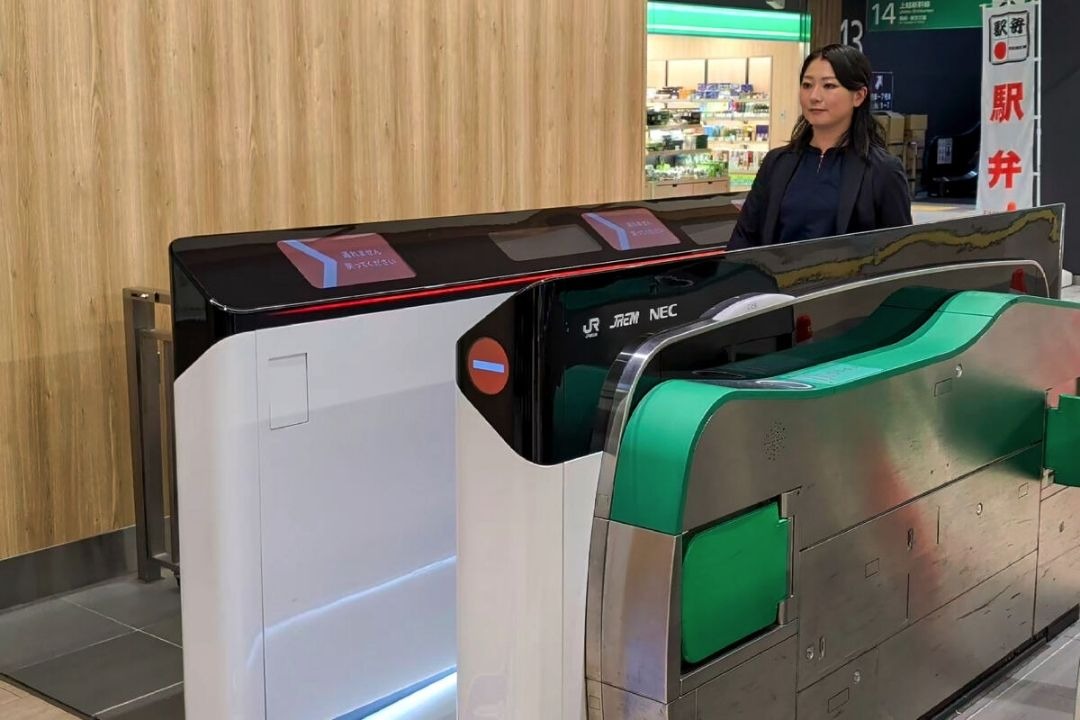
Walk-through ticket gates did not emerge by chance. They were developed to address the unique demands of Japan's railway infrastructure, one of the busiest and most efficient transportation systems in the world. In metropolitan areas such as Tokyo, millions of passengers pass through stations every day, meaning even small delays at ticket gates can affect the flow of thousands of commuters.
Japan's ticket gate technology has continuously evolved over the decades. The transition from magnetic paper tickets to IC cards dramatically increased processing speed and became a model for railway systems worldwide. Walk-through ticket gates build upon that success by pursuing the next logical step: eliminating the need to stop altogether.
Japan's reputation for punctual rail service also plays a role. Train schedules are managed with remarkable precision, often measured in seconds rather than minutes. Keeping passengers moving smoothly through stations helps maintain overall operational efficiency, making ticket gate performance an important part of the broader railway system.
Another key advantage is Japan's ability to integrate multiple technologies into a single infrastructure solution. Railway operators collaborate with electronics manufacturers and IT companies to combine facial recognition, AI, sensors, communication systems, and digital payment platforms into one seamless experience. This level of cross-industry collaboration has become one of Japan's strengths in infrastructure development.
Passenger behavior also contributes to successful implementation. Japanese commuters generally follow station rules, queue in an orderly manner, and move predictably through transportation hubs. These habits create an environment where walk-through systems can operate more effectively while minimizing confusion during adoption.
For these reasons, walk-through ticket gates represent more than a technological breakthrough. They are the product of Japan's railway expertise, engineering capabilities, operational precision, and commuter culture, all working together to create a new generation of transportation infrastructure.
The Global Shift Toward Contactless Entry Systems
While Japan is pioneering walk-through ticket gates for railways, the underlying concept is already spreading across many other industries worldwide. Airports, stadiums, office buildings, and entertainment venues increasingly require systems that can process large numbers of people without creating long lines or unnecessary delays.
Airports are among the most advanced adopters. Many international airports now use facial recognition for immigration checkpoints and boarding gates, allowing travelers to verify their identity without repeatedly presenting passports or boarding passes. Similar to Japan's walk-through ticket gates, passengers can keep moving while the system authenticates them automatically.
Sports stadiums and arenas in North America and Europe are also introducing contactless entry systems. Visitors may use QR codes, mobile tickets, or facial recognition to enter venues more quickly, reducing wait times before concerts and sporting events. Since thousands of people often arrive within a short period, maintaining continuous pedestrian flow is especially valuable.
Office buildings and commercial facilities are adopting similar technologies. Facial recognition can replace access cards and simplify security procedures, allowing employees and visitors to enter buildings with minimal interruption. Across these industries, the common goal is to create a smoother experience by removing unnecessary stopping points.
Railway systems, however, present a much greater technical challenge. Unlike controlled environments such as office buildings or airports, train stations must process enormous numbers of passengers every day with extremely high accuracy. This is one reason why relatively few countries have introduced true walk-through ticket gates for public transportation. Japan's efforts to deploy this technology in one of the world's busiest railway networks place it at the forefront of this field.
As contactless infrastructure continues to expand globally, the principles behind walk-through ticket gates are likely to influence many different sectors. The idea of allowing people to move naturally while technology works invisibly in the background has broad applications well beyond public transportation.
Why Cities Around the World Are Interested in "Continuous Movement"
Source: NEC Homepage
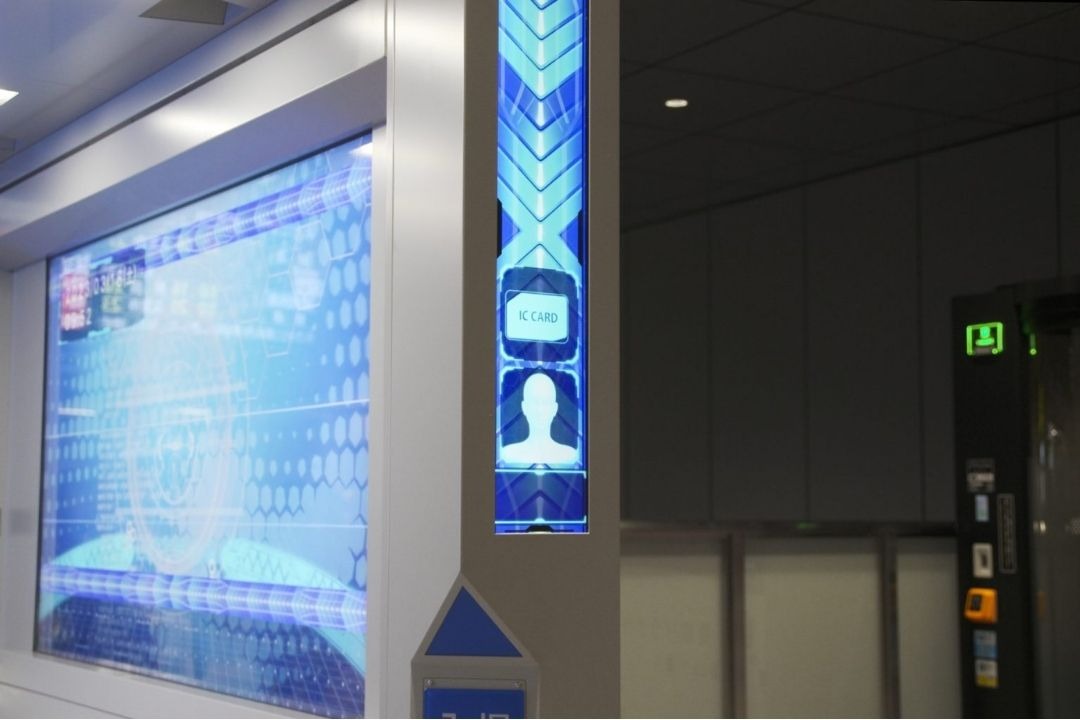
The growing international interest in walk-through ticket gates reflects challenges that many major cities now share. Urban populations continue to rise, public transportation networks carry more passengers each year, and maintaining efficient pedestrian flow has become an increasingly important issue for city planners.
Traditional transportation systems assume that travelers will stop briefly to verify tickets or identities before continuing their journey. As passenger numbers increase, however, these small interruptions accumulate into significant bottlenecks. Even a few seconds of delay at each gate can contribute to heavy congestion during peak travel periods. Walk-through ticket gates approach the problem differently by removing the need to stop in the first place.
The demand for contactless services has also accelerated worldwide. Since the COVID-19 pandemic, reducing unnecessary physical contact in public spaces has become an important design consideration. Because passengers never need to touch equipment, walk-through systems offer both convenience and improved hygiene.
Transforming Stopping Points to Flowing Corridors
Advances in digital technology are also changing user expectations. Consumers have grown accustomed to smartphone payments, automatic authentication, and services that operate quietly in the background. Increasingly, the best technology is the technology users barely notice. Walk-through ticket gates fit this trend by delivering a transportation experience that requires virtually no conscious interaction.
From an urban planning perspective, the technology offers additional possibilities. Real-time analysis of pedestrian movement can help cities optimize crowd management, improve station layouts, and support broader smart city initiatives. Instead of serving solely as fare collection equipment, walk-through ticket gates could become valuable components of intelligent urban infrastructure.
For all of these reasons, walk-through ticket gates address several major global trends at once, including congestion reduction, contactless services, digital transformation, and smart city development. That is why this Japanese innovation is attracting attention far beyond the country's railway industry.
Conclusion
Walk-through ticket gates represent the next evolution of Japan's world-renowned railway system. By eliminating the need to tap an IC card or present a smartphone, they transform the simple act of entering a train station into a seamless experience powered by facial recognition, wireless communication, AI, and advanced sensor technology.
The concept was born from Japan's need to move millions of passengers efficiently through some of the world's busiest railway stations. While reducing congestion was the original motivation, the technology also reflects broader trends toward contactless services, automation, and digital infrastructure. Rather than asking passengers to adapt to technology, walk-through ticket gates are designed to let technology adapt to natural human movement.
Although the system is still in the testing phase, similar contactless entry technologies are already used in airports, stadiums, offices, and other high-traffic environments worldwide. As cities continue searching for ways to improve mobility and reduce congestion, walk-through ticket gates could become an important model for the future of public transportation.
More than simply making train stations more convenient, walk-through ticket gates represent a new way of thinking about urban mobility. Developed in Japan but relevant worldwide, they demonstrate how thoughtful infrastructure design can make everyday travel faster, smoother, and almost effortless.
FAQ About Walk-Through Ticket Gates
1. What Is A Walk-Through Ticket Gate?
A walk-through ticket gate is a next-generation railway gate that allows passengers to pass through without tapping an IC card or smartphone. Instead, it verifies identity and collects fares automatically as users walk through. By combining facial recognition, wireless communication, and AI technologies, the system aims to keep passenger traffic moving smoothly while reducing congestion at busy stations.
2. How Do Walk-Through Ticket Gates Work?
The system automatically identifies passengers using a combination of technologies, including facial recognition, smartphone connectivity, Bluetooth, and various sensors. It compares the traveler with pre-registered information to verify identity and process payment, allowing passengers to walk through naturally without stopping or touching any equipment.
3. How Are Walk-Through Ticket Gates Different From Traditional IC Card Gates?
Traditional ticket gates require passengers to take out an IC card or smartphone and tap it on a reader. Walk-through ticket gates eliminate this step by completing authentication and payment automatically while passengers continue walking. This creates a smoother flow of people, especially during peak commuting hours.
4. Why Were Walk-Through Ticket Gates Developed?
Japan's major cities have some of the busiest railway networks in the world, making rush hour congestion and bottlenecks at ticket gates long-standing challenges. At the same time, demand for contactless services and digital transformation has grown. Walk-through ticket gates are a new type of transportation infrastructure that allows people to move seamlessly without stopping for authentication.
5. Are Walk-Through Ticket Gates Already In Use?
At present, the technology is primarily being tested through pilot programs at selected railway stations and facilities. These trials evaluate facial recognition accuracy, smartphone integration, performance in crowded environments, and overall operational safety while developers continue refining the system for wider deployment.
6. What Are The Benefits Of Walk-Through Ticket Gates?
Because passengers can move through the gates without stopping, the system could reduce station congestion and shorten travel times. It also offers a more hygienic experience since users do not need to touch ticket gate equipment. Overall, the technology could make public transportation more convenient while providing a faster and more seamless passenger experience.
7. Are Similar Walk-Through Systems Used Outside Japan?
Yes. Contactless entry systems using facial recognition are already being introduced at airports, stadiums, office buildings, and other high-traffic venues worldwide. However, fully walk-through systems for everyday railway ticket gates remain relatively rare, making Japan's efforts one of the world's most advanced examples of this technology.
8. Why Is Japan Leading The Development Of Walk-Through Ticket Gates?
Japan operates one of the world's busiest and most punctual railway networks, making efficient passenger processing a top priority. The country's strong collaboration between railway operators, technology companies, and electronics manufacturers, along with expertise in AI, facial recognition, and sensor technology, has created an ideal environment for developing this next-generation transit system.
9. Where Else Could Walk-Through Ticket Gate Technology Be Used?
The technology has potential applications far beyond railway stations. Airports, stadiums, event venues, shopping centers, office buildings, and other busy facilities could use similar systems for identity verification and access control without interrupting the flow of people. It could also play an important role in the development of smart cities and next-generation urban infrastructure.
10. How Could Walk-Through Ticket Gates Develop In The Future?
As pilot programs continue to validate the technology's safety, reliability, and performance, walk-through ticket gates could eventually be introduced at more railway stations across Japan. Growing demand for faster, contactless, and digitally connected transportation may also encourage adoption in other countries, positioning this Japanese innovation as a technology that could reshape urban mobility worldwide.