

Online grave visiting represents a new generation of memorial services in Japan. Unlike traditional grave maintenance services, it combines on-site care with digital communication, allowing families to share the experience regardless of distance. One of the best-known examples is BUCORIS, the company behind the online grave visiting platform Grave.
Through its online grave visiting service, Grave, BUCORIS enables people to honor deceased loved ones remotely. The platform is designed for those who live far away or cannot visit cemeteries because of age, health conditions, work commitments, or overseas residence, providing a new way to participate in memorial traditions from anywhere.
BUCORIS is a representative example because it combines Japan's long-established memorial customs with digital technology to solve a growing social challenge: the increasing distance between families and their ancestral graves. As aging, urban migration, and overseas relocation make regular cemetery visits more difficult, Grave provides an alternative that allows traditions to continue.
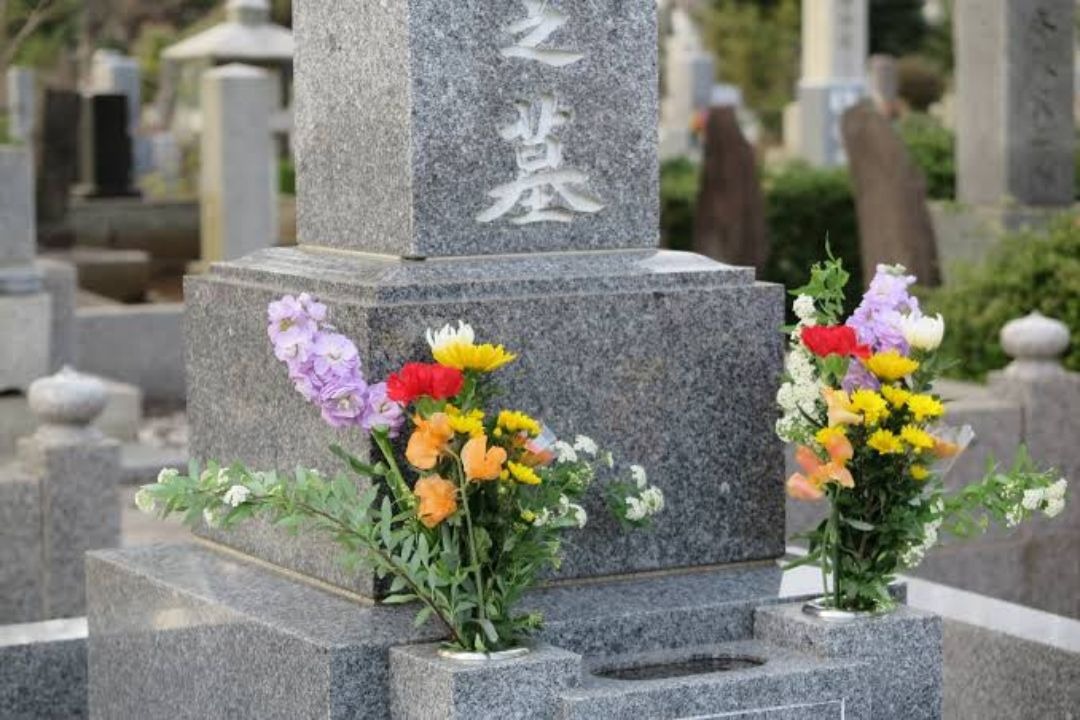
Local staff visit the cemetery, clean the gravestone, arrange flowers, and share the experience through photos or video so families can continue honoring loved ones remotely. Rather than functioning solely as a grave maintenance service, it enables family members living far apart to participate in remembrance together.
Its ability to preserve Japan's grave visiting culture while adapting it to modern lifestyles makes BUCORIS one of the leading examples of how digital technology can support traditional memorial practices.
Japan's Modern Way to Pay Respects From Afar

Source: Visit the Grave Online Homepage
An online grave visiting service allows people to visit a family grave remotely using the internet. Through a smartphone, tablet, or computer, users can view the cemetery while local staff visit on their behalf. Depending on the service, customers receive a live video stream or photographs and videos documenting the visit, including grave cleaning, flower offerings, incense, and other requested memorial activities.
Available services vary by provider, but many include:
- Live-streamed cemetery visits
- Cleaning and maintenance of the gravestone
- Fresh flower offerings
- Incense offerings
- Arrangements for Buddhist memorial chanting
- Photo or video reports after the visit
These services allow people living far away, elderly individuals, those with health limitations, busy professionals, or Japanese residents overseas to continue honoring their loved ones without traveling.
Pricing depends on the level of service requested. Plans that include gravestone cleaning and flower offerings generally range from several thousand to several tens of thousands of yen. Some providers offer simple online viewing, while others provide comprehensive support for memorial ceremonies and ongoing grave care.
Why Online Grave Visiting Was Created
The emergence of online grave visiting reflects broader changes in Japanese society and family life.
For generations, Japanese families have maintained ancestral graves and visited them regularly as an important way to honor previous generations. However, rapid urbanization and the rise of smaller nuclear families mean that many people now live far from their hometowns and family cemeteries.
When ancestral graves remain in rural areas while younger generations move to major cities, visiting them can require significant travel time and expense. Elderly family members may also struggle with long-distance travel, creating situations where people want to visit but can no longer do so. Similar challenges affect Japanese citizens living overseas as well as foreign nationals with family graves in Japan.
Online grave visiting was developed to address these changing social realities. Rather than replacing traditional customs, it uses digital technology to help preserve them in ways that fit modern lifestyles.
A Blend of Japanese Tradition and Digital Technology
The defining feature of online grave visiting is how it combines centuries-old Japanese memorial traditions with modern digital tools.
Traditionally, visiting a family grave required traveling to the cemetery in person. Online services remove barriers created by distance and time while preserving the emotional purpose of the visit. Families can still take time to remember loved ones, even if they cannot be physically present.
Most providers offer much more than video streaming. Local staff carefully clean the gravestone, arrange flowers, light incense, and complete other requested tasks before sharing the experience through photos, videos, or live broadcasts. Families can see the condition of the grave and join together remotely to offer prayers and remembrance.
Japan has long placed great importance on maintaining family graves as a way of honoring previous generations. Rather than replacing this tradition, online grave visiting helps preserve it by adapting it to modern lifestyles. It shows Japanese culture continues to evolve while maintaining respect for longstanding customs.
Industry Applications and Use Cases for Online Grave Visiting
Online grave visiting has expanded beyond individual consumers and is now being adopted by temples, cemeteries, funeral companies, and end-of-life planning services. Increasingly, it is viewed not simply as a grave maintenance service but as a way to help families stay connected across distances.
Temples and Cemeteries
Many temples and cemetery operators now offer online grave visiting to support members and customers who live far away. Staff visit the gravesite, clean the gravestone, arrange flowers, and share the experience through photographs or live video so families can participate remotely.
The service is particularly valuable for elderly customers who may no longer be able to travel regularly. Rather than allowing traditional memorial practices to fade, temples are using digital tools to help preserve these customs for future generations.
Funeral Companies and End-of-Life Planning Services
Funeral providers and companies specializing in end-of-life planning increasingly incorporate online grave visiting into broader memorial packages. These services may combine memorial consultations, gravestone maintenance, ceremony arrangements, and remote participation into one convenient solution.
For families spread across different regions or countries, online streaming allows multiple relatives to join the same memorial experience simultaneously, providing a sense of togetherness despite physical separation.
Japanese Residents Overseas and Long-Distance Families
Many Japanese citizens now live abroad for work, education, or permanent relocation. Returning to Japan frequently to visit family graves is often difficult due to travel costs and scheduling.
Even within Japan, many people have moved from rural hometowns to large metropolitan areas, leaving ancestral graves hundreds of kilometers away.
Online grave visiting addresses these challenges by allowing families to share memorial moments regardless of location. Because the service can be accessed from anywhere, it has become an increasingly practical way to maintain family traditions in today's highly mobile society.
Service Quality and Operational Standards Behind Online Grave Visiting

Source: Visit the Grave Online Homepage
Although online grave visiting relies on digital technology, the service's success ultimately depends on trust and respectful care. Providers focus not only on delivering high-quality video but also on ensuring every visit is carried out with professionalism and sensitivity.
In many cases, trained staff travel to the cemetery to clean the gravestone, tidy the surrounding area, place flowers, and offer incense. Their role goes beyond simple maintenance. They perform these acts on behalf of families who cannot be present, treating each visit with care and respect.
Keeping Family Memorial Traditions Alive From Afar
Reliable internet connections, clear video quality, and thoughtful camera work are also important. Whether delivered through a live stream or recorded footage, the goal is to help families feel connected to the memorial experience despite the physical distance.
Privacy is another major priority. Information about gravesites and deceased family members is highly personal, so reputable providers invest in secure data management and careful handling of customer information.
Ultimately, online grave visiting balances two essential elements. It offers the convenience of digital technology while preserving the sincerity and emotional significance that have always been central to Japanese memorial traditions.
User Experiences: A New Way to Stay Connected Across Distance Through Online Grave Visiting
The greatest appeal of online grave visiting is not simply that it eliminates the need to travel. More importantly, it allows people to feel connected to their loved ones even when they are far away. Users often share comments such as, "I live too far away to visit regularly, so seeing my family's grave again gave me peace of mind," and "I'm no longer able to travel easily because of my age, but I was grateful to have the opportunity to offer my prayers online."
The service is especially appreciated by Japanese people living overseas and families separated by long distances. Instead of arranging an expensive trip back to Japan, they can check on the family grave and participate in a memorial from wherever they are. Some providers even offer live video, allowing users to experience the visit in real time and creating a stronger sense of actually being at the cemetery.
Online grave visiting also enables relatives living in different cities or countries to gather virtually and remember the deceased together. In this way, it serves not only as a memorial service but also as a way to strengthen family connections across generations and borders.
Interest in digital end-of-life planning services and online memorial ceremonies has also grown in recent years. As a result, online grave visiting is increasingly recognized as a modern evolution of Japan's traditional memorial customs. For international audiences, it also offers an opportunity to experience a Japanese cultural value that places great importance on maintaining connections with family and ancestors.
Why Japan's Online Grave Visiting Services Could Expand Overseas
Around the world, interest is growing in digital services that improve everyday life and help address the challenges of aging societies. At the same time, families increasingly live across different cities and countries, creating demand for services that help maintain meaningful connections despite physical distance.
Online grave visiting combines Japanese memorial traditions with modern technology, making it a concept with strong international potential. Markets that may be particularly well suited include:
- Regions with large Japanese or Japanese descendant communities
- Countries with many expatriates and internationally dispersed families
- Aging societies where demand for remote support services is increasing
- Markets interested in services that blend cultural traditions with digital innovation
Remembering loved ones and honoring ancestors are values shared across many cultures. However, changing work patterns, migration, and international lifestyles make it increasingly difficult for people to visit family graves regularly.
Online grave visiting offers a practical solution by allowing families to participate in memorial activities regardless of where they live.
As global interest in Japanese culture continues to grow, these services also have value beyond their technological function. They introduce an aspect of Japanese culture centered on respecting family, honoring ancestors, and preserving traditions. By partnering with overseas funeral providers, cemetery management companies, and end-of-life planning businesses, the concept could be adapted to local customs while maintaining its core purpose.
Future Outlook
Online grave visiting is expected to continue evolving in both Japan and overseas.
Within Japan, greater collaboration with temples, cemeteries, funeral companies, and end-of-life planning providers could expand the service beyond grave visits to include memorial ceremonies, cemetery maintenance, and broader family support.
Internationally, the concept has potential among overseas Japanese communities and people interested in Japanese culture. As families become increasingly global, services that help maintain meaningful connections across borders are likely to become more valuable.
Emerging technologies such as augmented reality (AR), virtual reality (VR), and artificial intelligence (AI) may also create even more immersive memorial experiences in the future.
Rather than simply serving as a substitute for in-person visits, online grave visiting could become a digital platform that helps preserve Japan's memorial traditions for future generations.
Adoption and Growth in Japan
Online grave visiting is still a relatively new service in Japan, but awareness continues to grow.
As the country's population ages and lifestyles become more geographically dispersed, interest in remote grave maintenance and online memorial services has steadily increased. These services are particularly valuable for families living far away, elderly individuals, and Japanese residents overseas who may otherwise struggle to visit family graves.
The concept has also become part of Japan's growing end-of-life planning industry and has received media attention as an example of how digital technology can modernize traditional practices. Temples and cemetery operators are increasingly exploring online services to maintain stronger relationships with families while adapting to changing demographics.
By preserving traditional customs while embracing new technology, online grave visiting is gradually becoming an accepted part of Japan's evolving memorial culture.
The Future of Grave Visiting: Staying Connected Across Distance
Source: Visit the Grave Online Homepage
Online grave visiting brings together one of Japan's oldest cultural traditions with modern digital technology. For generations, visiting family graves required traveling to the cemetery in person. Today, however, aging populations, urban migration, and international relocation have made it increasingly difficult for families to gather in one place to honor their ancestors.
By removing the barrier of distance, online grave visiting allows people to continue remembering loved ones wherever they are. More than simply offering convenience, it preserves a core Japanese value: maintaining meaningful connections with family and previous generations.
For international businesses, the concept also represents an emerging opportunity. As demand grows for services that support aging societies, remote care, and culturally meaningful digital experiences, online grave visiting demonstrates how traditional values and modern technology can work together.
Looking ahead, partnerships with funeral service providers, cemetery operators, and end-of-life planning companies worldwide could introduce this uniquely Japanese approach to remembrance to new audiences, creating meaningful connections that transcend distance and borders.
Conclusion
Japan's online grave visit services demonstrate how traditional cultural practices can evolve to meet the needs of modern society. By combining digital technology with the country's long-standing tradition of honoring ancestors, these services allow families to stay connected with loved ones despite distance, age, or other travel limitations.
As global mobility increases and remote services become more widely accepted, online grave visits offer valuable insights into how technology can preserve cultural traditions rather than replace them. For businesses in the funeral, cemetery management, senior care, and digital services industries, Japan's approach offers an innovative model that could inspire similar solutions worldwide while respecting each country's unique customs and beliefs.
FAQ About Online Grave Visits in Japan
1. What Is An Online Grave Visit Service?
An online grave visit is a memorial service that allows people to pay their respects to deceased family members remotely through the internet. Depending on the service, users can view photos, videos, or live streams of the cemetery while local staff cleans the gravestone, places fresh flowers, and offers incense on their behalf. It provides a meaningful way to stay connected to family graves, even when visiting in person isn't possible.
2. What Services Are Included In An Online Grave Visit?
The exact offerings vary by provider, but common services include gravestone cleaning, maintenance of the surrounding area, flower offerings, incense placement, and photo or video reports after the visit. Some providers also arrange Buddhist memorial ceremonies and offer live streaming, allowing customers to choose a service package that best fits their needs.
3. Who Typically Uses Online Grave Visit Services?
Online grave visits are commonly used by people who live far from their family cemetery or cannot travel because of age, illness, work commitments, or living overseas. They are also popular among families whose members live in different locations and cannot easily gather for a traditional cemetery visit.
4. Can Families Participate Together?
Yes. Services that include live streaming allow family members in different cities or countries to participate at the same time and pay their respects together. This creates a shared memorial experience without requiring anyone to travel and offers a new way for geographically separated families to stay connected.
5. Can I Use An Online Grave Visit Service From Outside Japan?
In many cases, yes. As long as you have an internet connection, you can access these services from overseas. They are especially valuable for Japanese expatriates, international students, long-term travelers, and anyone with family graves in Japan who cannot return regularly.
6. How Is Personal Information Protected?
Most providers place a strong emphasis on privacy and securely manage sensitive information such as cemetery locations and customer details. Many also carefully control how photos, videos, and live streams are shared to ensure users can participate with confidence.
7. Why Is Japan's Online Grave Visit Service Attracting International Attention?
As more families live apart and populations continue to age worldwide, interest in remote memorial services is growing. Japan's online grave visit model is attracting attention because it combines centuries-old traditions of honoring ancestors with modern digital technology, creating a thoughtful solution for today's lifestyles.
8. Does An Online Grave Visit Replace Visiting A Cemetery In Person?
Not necessarily. Online grave visits are generally intended to complement traditional cemetery visits rather than replace them. They provide an alternative when traveling is difficult while still allowing families to spend meaningful time remembering loved ones between in-person visits.
9. What Are The Benefits For Organizations That Offer Online Grave Visits?
For temples, cemeteries, funeral companies, and memorial service providers, online grave visits make it possible to serve customers who live far away or overseas. Adding digital memorial services also helps organizations strengthen long-term relationships with families by providing greater accessibility and convenience.
10. How Could Online Grave Visits Evolve In The Future?
As digital technology continues to advance, online grave visits may expand beyond live streaming to include immersive experiences using augmented reality (AR) and virtual reality (VR). By preserving Japan's memorial traditions while embracing new technology, these services could evolve into increasingly diverse and meaningful ways of honoring loved ones.