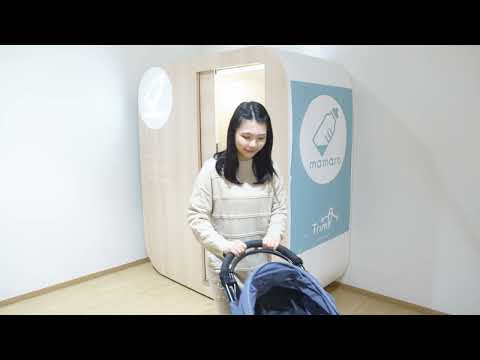

For parents of babies, going out can feel like a logistics challenge. Every few hours, a baby needs to be fed or changed, and finding a clean, private, available place to do that isn't always easy. Many shopping centers, stations, and public buildings have no nursing room at all. Where one does exist, it is often hard to find, already in use, or shared with other families, leaving little privacy.
A Japanese startup set out to change this. Trim Inc., based in Yokohama, developed mamaro, a fully private baby care room about the size of a single tatami mat. It can be placed in almost any indoor space without construction work, and parents can use it for breastfeeding, pumping, diaper changes, and feeding baby food. Smart features let parents check availability from an app and give facility operators real data on how the room is used. Since sales began in 2017, mamaro has grown to more than 1,000 units across Japan.
This article explains how mamaro works, the personal story behind its creation, how it is used in malls, stations, and public facilities, and how it has been received in Japan. It also explores why this compact, space-saving solution deserves attention from overseas property developers, transportation operators, local governments, and anyone working to make public spaces more welcoming to families.
mamaro Overview
Source: mamaro Homepage
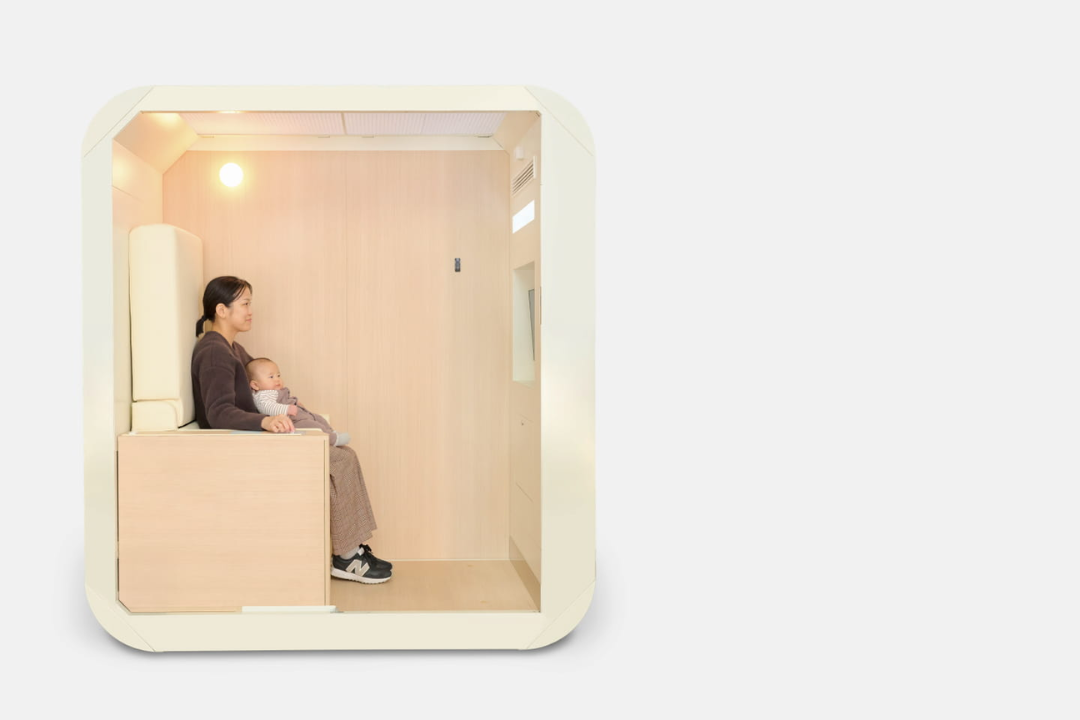
mamaro is a fully private baby care room, sometimes called a nursing pod, developed and sold by Trim Inc. It is a self-contained, lockable room that fits in a space about one tatami mat, roughly 1.6 square meters. Inside, parents can nurse, pump breast milk, change diapers, feed baby food, and even weigh their baby, all in complete privacy. Because the room locks from the inside, any parent can use it, regardless of gender.
Unlike a traditional nursing room, mamaro requires no construction work. It is delivered as a finished unit, set up in about 30 minutes to two hours, and can be moved later on its built-in casters. Facilities can buy it outright or choose rental, lease, or short-term plans, and the whole process from first meeting to operation can take as little as one month.
The flagship mamaro measures 1,805 mm wide, 912 mm deep, and 2,006 mm tall, with an interior floor area of about 1.28 square meters and an interior height of about 190 cm. The lineup has grown to include mamaro solana, an air-conditioned model for outdoor installation, and mamaro sofa, a three-way sofa that also works as a changing table and baby scale. Trim is a member of the Japan Council of Shopping Centers and the Japanese Association of Zoos and Aquariums.
How to Use mamaro: A Private Space for Nursing, Diaper Changes, and Baby Food
Using mamaro is designed to be simple and stress-free, even for a parent juggling a baby, a stroller, and shopping bags. The room supports all types of baby care, so parents don't need to find separate spaces for feeding and changing.
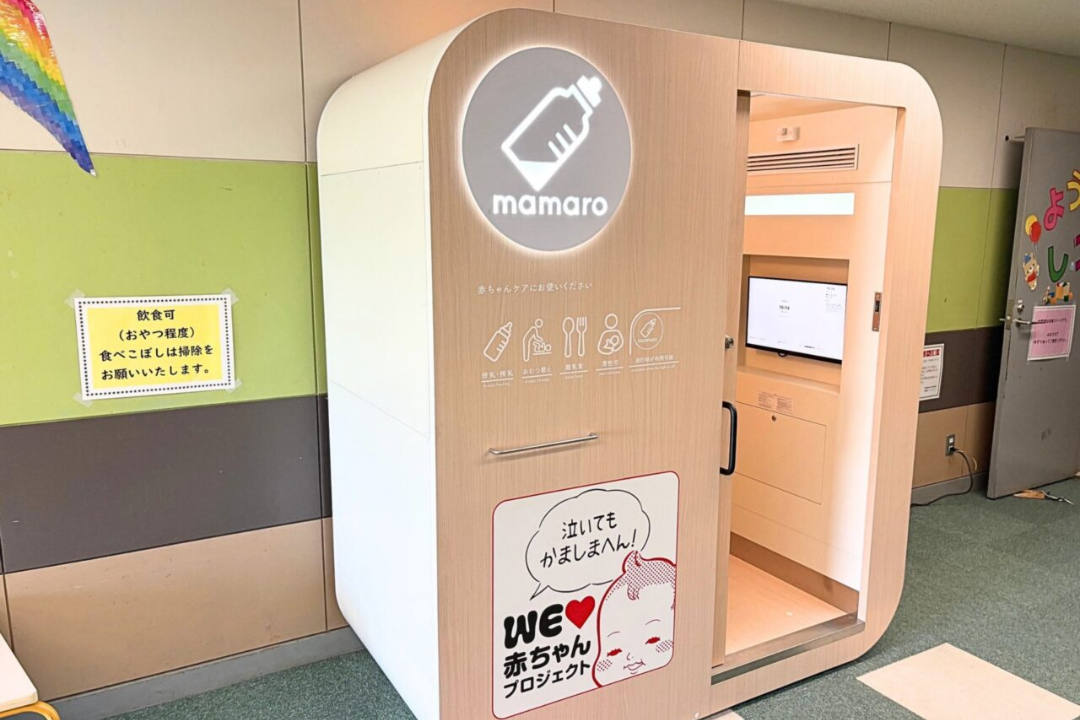
- Check availability. A large milk-bottle sign on the outside shows at a glance whether the room is free, even from a distance. Parents can also check real-time availability in the Mamaro GO smartphone app before they arrive.
- Secure the stroller. A metal bar on the outside lets parents lock their stroller to prevent theft, so they only need to bring in what they need.
- Enter and lock the door. The sliding door closes slowly with a damper to prevent pinched fingers, and the inside lock gives complete privacy.
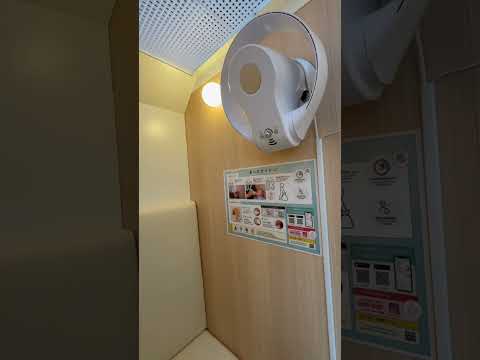
- Care for your baby. The built-in mamaro sofa is comfortable for nursing or feeding baby food. Fold down the backrest to create a flat changing table, which you can also use to weigh the baby. A power outlet next to the sofa supports electric breast pumps, and a wall hook holds a diaper bag.
- Relax and leave. A built-in fan keeps the air fresh, and an in-room monitor may show helpful information from the facility. When finished, unlock the door and the sign outside shows the room is free again.
Because mamaro is a single private room, it avoids the awkwardness of shared nursing rooms and lets fathers and other caregivers care for babies comfortably too.
What Makes mamaro Unique: Design and Technology
Source: mamaro Homepage
At first glance, mamaro looks like a simple, friendly booth. Behind that look is a carefully engineered product that combines compact architecture, safety features, and smart software. Together, these make it easy for facilities to install and manage, and comfortable and reassuring for families to use.
A Compact Design That Makes the Most of One Tatami Mat
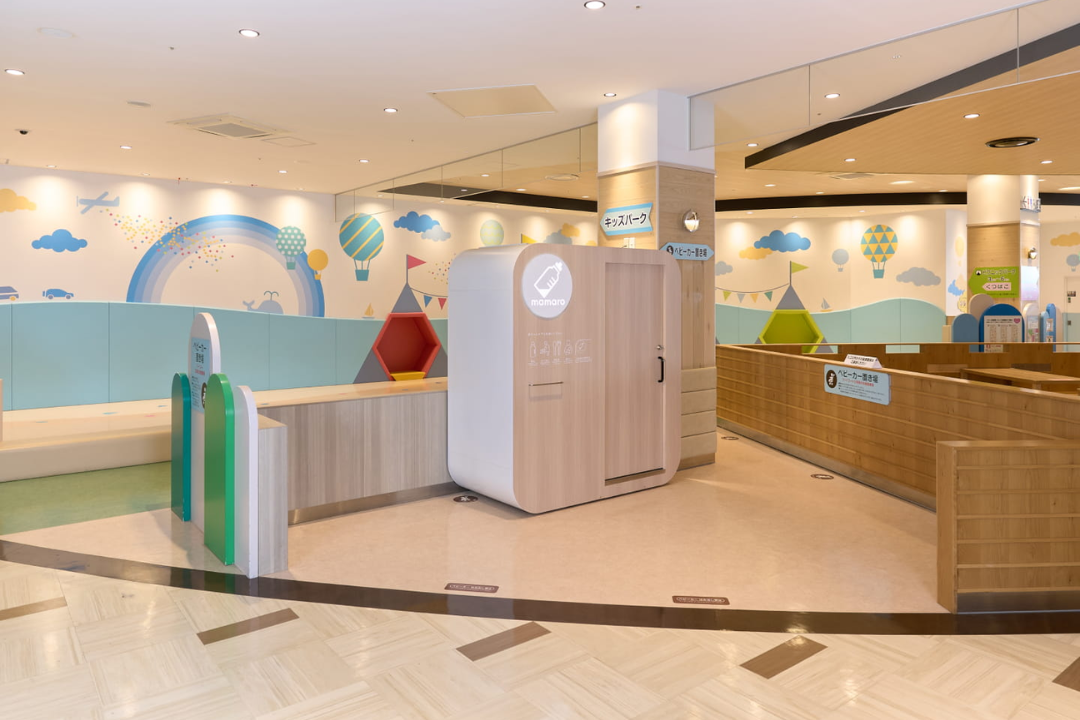
Space is valuable in any commercial or public building, especially in Japan's dense cities. mamaro fits into a footprint of about one tatami mat, so facilities can add a baby care room without sacrificing storefront space or rebuilding a restroom area. It can go in a corridor, a corner of a lobby, or an unused alcove.
The unit arrives as a finished product, so it requires no on-site construction. Casters on the base allow it to be moved with a single tool, letting operators adjust their layout as needs change, such as moving it closer to a busy area or relocating it during renovations.
The current model was redesigned with NOSIGNER, a Japanese design firm known for social design. After studying how the earlier model worked for parents with small children, the team addressed issues such as the narrow entrance and interior, creating a warmer, more spacious enclosure while keeping the compact footprint.
Equipment and Patented Technology That Protect Privacy and Safety
mamaro's design has been patented, and many of its details focus on safety. The inside lock gives users full privacy, while staff can open the door from the outside with a key in an emergency. The sliding door uses a damper to close slowly, reducing the risk of pinched fingers and protecting people walking by.
The ceiling is more than 70% open so it doesn't block fire sprinklers, and louvers prevent anyone from peeking in. Inside, the lighting uses soft silicone material, and the wall hook for bags retracts when not in use, so there is nothing to bump into. A built-in fan circulates air to release heat and humidity, which matters in summer and when a parent is holding a warm baby.
mamaro also includes a safety alert system. If the room has been in use for more than 30 minutes, it automatically sends an alert email to the facility manager. This helps prevent misuse and lets staff quickly check whether a parent has felt unwell while nursing.
Smart Facility Management With an App and Usage Data
mamaro is also an Internet of Things device. Through the mamaro GO smartphone app, parents can see in real time whether a mamaro is available, which reduces waiting and wasted trips. The same app helps families find regular nursing rooms and diaper-changing stations across Japan.
For facility operators, a dedicated system called mamaro manager shows the number of users and average usage time. Many facilities build nursing rooms without knowing whether anyone uses them, and mamaro solves this. Operators can even compare different locations to find the best placement.
The mamaro view monitor inside the room can show videos, still images, and surveys. Facilities and tenants can use it to share information with families, promote shops and events, or gather feedback, turning the baby care room into a direct communication channel with an important customer group.
The Story Behind mamaro and Trim's Vision
mamaro was not born in a design studio or a large corporation. It grew out of one person's grief, a career change, and a hard look at the numbers behind Japan's nursing room shortage. That personal motivation still shapes how Trim approaches its business today.
Why mamaro Was Created: The Spark and the Social Problem
Trim's founder, Yusuke Hasegawa, was born in Kanagawa Prefecture in 1983. He spent about 10 years working in creative roles at a major advertising agency. When he was 28, his mother passed away from cancer. Hasegawa has said that in that moment he strongly felt he could no longer show her the gratitude he owed her. He decided that by helping mothers who were struggling with child-rearing, he could repay that debt in another way.
In 2013, he moved to a healthcare venture company, where he led new businesses as its chief information officer. There, he led Baby Map, an app that helped parents find facilities with nursing rooms. The app grew steadily, but Hasegawa noticed a basic problem. At the time, Japan had over 900,000 births a year but only about 18,000 nursing rooms. No matter how much information the app provided, it couldn't help parents if there weren't enough rooms to begin with.
Realizing that "first, we need to build nursing rooms," Hasegawa founded Trim in November 2015, taking over the app business he had been running. Traditional nursing rooms were expensive to build and often did not meet parents' real needs, so the team decided to create a product that facilities could install easily. After going through the Open Network Lab startup accelerator program in 2016, Trim began manufacturing mamaro in July 2017.
The Founder's Goal: A Society Where Raising Children Is Easier for Everyone
The early years were not easy. When Trim first approached facilities, very few were investing in nursing rooms. Hasegawa recalls that some facilities even told him they would rather build a smoking area than a nursing room. Despite this, the company steadily increased the number of mamaro units and helped create a new market for private baby care rooms in Japan.
Trim's mission is simple: to provide a better child-rearing environment. The company admits that the question of what a good child-rearing environment is has no end, and it commits to keep asking it. Since its founding, Trim has also held the idea of "Pay It Forward," passing on the kindness one has received to others. Hasegawa's long-term goal is to install 20,000 mamaro units in Japan and to bring better child-rearing environments to families around the world.
Manufacturing and Quality at mamaro
A baby care room must be safe, clean, and reliable every single day, often in busy public spaces with thousands of visitors. Trim approaches mamaro as public infrastructure rather than simple furniture, and its focus on quality runs from the design stage through delivery and long-term operation.
Quality in Materials, Design, and Production
mamaro is delivered to each site as a finished unit. Trim's experienced delivery partners first carry out a site survey to confirm truck parking and the route into the building, then transport and install the room safely. Because no assembly or construction is required on site, quality can be controlled before the unit leaves the factory, and installation itself usually takes only 30 minutes to two hours.
The design has been refined over several generations. Working with NOSIGNER, Trim analyzed how the earlier model performed for families with young children and redesigned the enclosure to improve the width of the entrance, the interior space, and the overall feeling of warmth. The resulting design has been patented.
Hygiene has also been a priority. In 2020, Trim began offering mamaro units treated with Delfino, an antibacterial coating applied to surfaces people often touch, such as floors, walls, ceilings, and door handles. This gave families extra reassurance as people began going out again after the COVID-19 pandemic.
Product Development Focused on User Safety and Comfort
Every detail inside mamaro is designed with babies and parents in mind. Soft silicone lighting, a retractable bag hook, and a slow-closing sliding door reduce the risk of injury. The more than 70% open ceiling keeps mamaro compatible with fire sprinklers, an important point for installation in public buildings.
Comfort matters just as much. The built-in fan prevents the small room from becoming stuffy, the power outlet supports electric breast pumps, and the mamaro sofa allows nursing, changing, and weighing in one place. The 30-minute alert system and the emergency outside key ensure that staff can respond if something goes wrong.
Trim also uses data from its installed base to keep improving the product. As of March 2024, the company reported user satisfaction of over 93%. Combined with usage figures from mamaro manager, this feedback helps both Trim and facility operators understand what families need.
Installation Examples and How Different Facilities Use mamaro
Source: mamaro Homepage
mamaro's flexibility means it can be found in a surprisingly wide range of places in Japan. From giant shopping complexes to sacred shrines and small-town city halls, each facility uses it to solve its own challenges in welcoming families with babies.
Shopping Centers and Malls
Shopping centers were among the first and most enthusiastic adopters of mamaro. In 2020, Mitsui Fudosan, one of Japan's largest real estate developers, announced a partnership with Trim to accelerate the installation of mamaro in its commercial facilities as part of its SDGs initiatives. At that time, 21 units had already been installed across nine Mitsui facilities, including Mitsui Outlet Park Kisarazu in Chiba and LAZONA Kawasaki Plaza in Kanagawa.
For large malls, mamaro helps reduce the distance parents must walk to find a nursing room and eases crowding at existing rooms on busy weekends. Electronics retailer Bic Camera has also installed mamaro, with four units across three stores as of October 2026, including two at its Yurakucho store in central Tokyo.
Stations, Airports, and Tourist Facilities
Travel hubs are natural locations for mamaro, since families on the move often have limited time and few options. In 2026, mamaro was installed at Odawara Station on the Tokaido Shinkansen line, operated by JR Central. Hachijojima Airport, which serves a remote island in Tokyo, introduced mamaro to make the airport more welcoming for families with children.
Tourist sites have embraced it too. Samukawa Shrine in Kanagawa, which welcomes worshippers from across Japan, installed mamaro, and Kotohiragu Shrine in Kagawa received a unit donated as an offering by an individual supporter. Roadside rest areas such as Michi-no-Eki Kinanse Iwami in Tottori, the soccer club Shimizu S-Pulse, Toho Studios, and hotels like Hotel Kyocera in Kagoshima have also added mamaro. For these facilities, a small investment can make a big difference in family satisfaction and perception.
Supporting Child-Rearing Through Local Governments and Public Facilities
Local governments in Japan are increasingly using mamaro as part of their child-rearing support policies. City halls and health centers, where parents often visit with babies for check-ups and paperwork, are especially common locations. Yachiyo City's health center in Chiba installed mamaro so families could drop by more easily. In late 2025, small towns such as Gonohe in Aomori and Kamiichi in Toyama installed multiple units.
Companies also donate mamaro to local communities. In December 2024, Dai-ichi Life Insurance donated a mamaro to Toyohashi City in Aichi Prefecture, where it was placed near the city hall's child-rearing support and childcare divisions. Universities are joining as well: Osaka University installed a mamaro in 2024 so that students and researchers raising children could study and work with their babies on campus. In 2026, a mamaro was even installed at the U.S. Air Force's Yokota Air Base in Tokyo.
mamaro's Track Record and Reputation in Japan
In less than a decade, mamaro has gone from a startup's first product to a familiar sight in public spaces across Japan. Its growth reflects both strong parental demand and a shift in how facilities approach family-friendly design.
Number of Units and Expanding Locations
mamaro's growth has accelerated steadily since sales began in 2017. In its early years, Trim had installed around 80 units. By 2022, the total had passed 400 units, and as of March 2024, 626 units were in 45 of Japan's 47 prefectures.
The pace has continued to rise. mamaro reached 800 units in March 2025, with about 1.3 million total uses. By December 2025, it had surpassed 900 units and 1.6 million uses, and in July 2026 it reached 1,000 installed units, with cumulative uses of about 2 million.
Locations have also diversified. While shopping centers remain a core market, mamaro is now found in railway stations, airports, public offices, health centers, parks, shrines and temples, amusement facilities, sports venues, hot springs, universities, and corporate offices.
What Users and Facilities Say About mamaro
Parents have responded positively to mamaro. As of March 2024, Trim reported that more than 93% of users were satisfied. Its fully private, lockable design, real-time smartphone availability, and gender-neutral use address common frustrations parents have with traditional nursing rooms.
Facility operators highlight practical benefits. At Hotel Kyocera in Kagoshima, staff previously had to improvise a space each time a guest at the restaurant or banquet hall needed to nurse or change a baby. After installing mamaro, the hotel reported higher customer satisfaction, less employee stress, and even positive comments from others in the hotel industry.
For many facilities, the data provided by mamaro manager is another key advantage. Trim's founder notes that few companies measure the return on investment of nursing rooms. With mamaro, operators can see how often the room is used and for how long, and Trim even suggests that facilities with large but underused nursing rooms lease that space to a tenant and use mamaro instead, turning a cost into revenue.
mamaro's Global Expansion and Future Potential
The challenges mamaro solves are not unique to Japan. Parents worldwide struggle to find clean, private places to feed and change their babies when they are out. As more countries focus on supporting working parents, encouraging breastfeeding, and building inclusive public spaces, mamaro has a strong case for international growth.
Expected Demand in Overseas Public and Commercial Facilities
In many countries, nursing rooms are still rare or improvised, and parents often end up feeding babies in restrooms, cars, or crowded corners. Public health organizations encourage breastfeeding, but that is difficult without suitable spaces. In some regions, new laws and workplace policies are also pushing employers and public buildings to provide private lactation spaces.
mamaro's strengths match these needs well. It requires no construction, fits into small spaces, can be moved when layouts change, and is lockable and gender-neutral. For malls, airports, train stations, stadiums, universities, hospitals, and offices abroad, it offers a fast way to add a high-quality baby care room. Its data features also appeal to operators who want to measure the value of family amenities, and the in-room monitor gives brands a unique way to reach parents.
Overseas Results So Far and Challenges to Expansion
Trim has said overseas expansion is a major part of its future. According to Hasegawa, the company has already received inquiries from businesses in Asia, Europe, and the Middle East, and it has been considering which country to start with. In Japan, mamaro has also been installed at the U.S. Air Force's Yokota Air Base, giving international families a firsthand experience of the product. As of this writing, however, Trim has not announced a full-scale overseas launch.
Hasegawa has emphasized that expanding abroad will require more than exporting the same product. He describes the importance of localization, adapting the product to each country's religion, culture, and lifestyle, while keeping a global perspective. Other practical challenges are likely to include local building and fire safety regulations, shipping a large finished unit, and adapting the apps, management system, and support network for each market.
Looking Ahead: Bringing Family-Friendly Public Spaces to the World
In Japan, Trim aims to install 20,000 mamaro units, a goal that would make private baby care rooms as common as other basic public amenities. Abroad, the company hopes to deliver what it calls localized baby care rooms that meet the needs of parents in each country.
For overseas property developers, transportation operators, governments, and companies working on diversity, equity, and inclusion, mamaro offers a proven model from Japan. It shows that supporting families in public spaces does not have to mean expensive renovation. Sometimes, all it takes is the space of one tatami mat.
Conclusion
mamaro shows how a small, well-designed space can make a big difference in daily life. By fitting a fully private baby care room into the footprint of a single tatami mat, Trim Inc. has made it possible for shopping centers, stations, shrines, city halls, and many other facilities to welcome families with babies without major construction.
Born from its founder's wish to repay his late mother's kindness, mamaro has grown to more than 1,000 units and about 2 million uses across Japan. Its combination of privacy, safety features, gender-neutral access, and smart data tools sets it apart from traditional nursing rooms and creates value for parents and facility operators alike.
As countries worldwide look for ways to support parents and create more inclusive public spaces, mamaro offers a proven, practical model from Japan. For property developers, transportation operators, governments, and businesses abroad, it is a solution well worth exploring.
FAQ About mamaro
1. What is mamaro?
mamaro is a fully private, lockable baby care room developed by Trim Inc. in Japan. Parents can use it for breastfeeding, pumping, diaper changes, feeding baby food, and weighing their baby.
2. How Big is mamaro?
The flagship model fits in a space of about one tatami mat. It measures 1,805 mm wide, 912 mm deep, and 2,006 mm tall, with an interior floor area of about 1.28 square meters.
3. Who Can Use mamaro?
Anyone caring for a baby can use mamaro, regardless of gender. Because it is a private room that locks from the inside, fathers and other caregivers can use it as comfortably as mothers.
4. How Can I Find a mamaro and Check if it is Available?
The mamaro GO smartphone app shows mamaro locations and their real-time availability. A large milk-bottle sign on the outside of each unit also shows whether it is in use.
5. Does Installing mamaro Require Construction?
No. mamaro is delivered as a finished unit and usually takes 30 minutes to two hours to set up. It has casters on the bottom so that you can move it later with a single tool.
6. What Safety Features Does mamaro Have?
mamaro has an inside lock with an emergency outside key, a slow-closing sliding door, soft silicone lighting, a retractable bag hook, and a ceiling designed not to block fire sprinklers. If someone uses it for more than 30 minutes, the system sends an alert email to the facility manager.
7. What Can Facilities Learn From mamaro's Data?
Through the mamaro manager system, facilities can see the number of users and average usage time. This helps them understand demand, compare locations, and measure the value of their baby care services.
8. How Many mamaro Units are Installed in Japan?
mamaro reached 1,000 units installed in July 2026, with about 2 million cumulative uses. Units can be found in shopping centers, stations, airports, public offices, shrines, parks, universities, and more.
9. How Much Does mamaro Cost?
Trim offers purchase, rental, lease, and short-term plans, along with various options. Pricing depends on the plan and installation conditions so facilities can request a quote and information materials directly from Trim.
10. Is mamaro Available Outside Japan?
Trim has named overseas expansion as a major future goal and has received inquiries from companies in Asia, Europe, and the Middle East. Organizations interested in introducing mamaro abroad should contact Trim directly through its official website.
Related Videos
If you're interested in how Japan is making public spaces more family-friendly, the video below introduces mamaro, a private baby care pod designed to provide a comfortable space for breastfeeding, feeding, and other childcare needs. This innovative solution shows how thoughtful design and technology can help parents care for their babies while traveling, shopping, or spending time outside the home.