
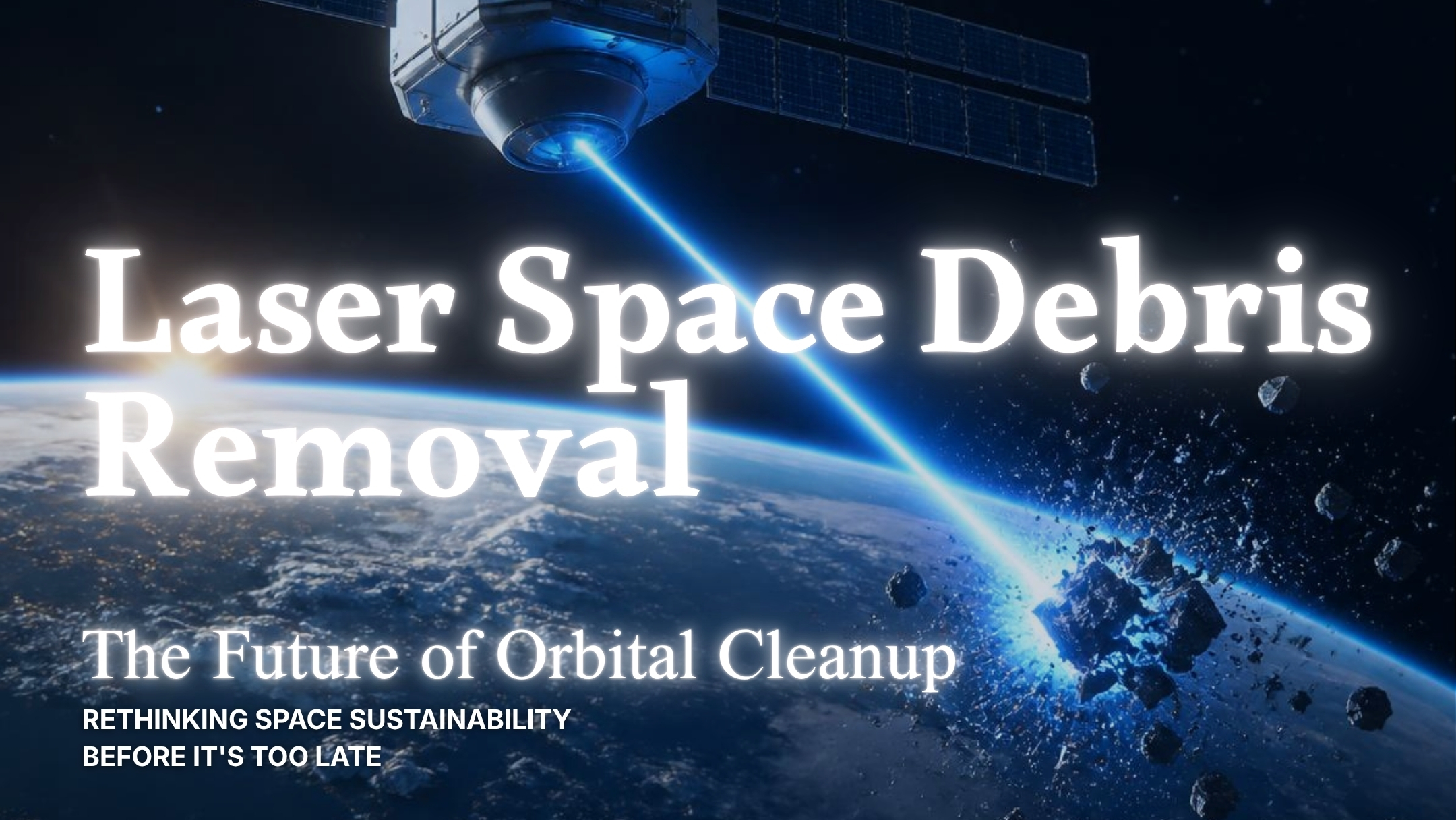
As humanity launches more satellites than ever before, a new challenge is emerging above our heads: space debris.
Japanese space startup Astroscale has built its business around tackling this growing problem. While many aerospace companies focus on launching and operating satellites, Astroscale concentrates on what happens afterward. Specifically, how do we deal with defunct satellites, fragmented spacecraft, and other debris that remain in orbit long after their missions have ended?
The rapid commercialization of space has dramatically increased the number of satellites in low Earth orbit. Companies, governments, and research organizations are deploying thousands of new spacecraft to support communications, Earth observation, navigation, and scientific research. However, systems for removing obsolete satellites and orbital debris have not kept pace with this growth.
As a result, collision risks continue to rise. Orbital environments are becoming increasingly congested, and experts warn that unchecked debris could threaten future access to valuable orbital regions. Contrary to popular perception, the parts of space most useful for satellites are limited and heavily utilized. Maintaining these orbital corridors has become an international challenge.
What makes Astroscale particularly interesting is its perspective on the problem. The company does not view space debris merely as a technical obstacle. Instead, it sees it as an environmental responsibility that comes with using space.
Just as cities require waste management systems and roads require maintenance, Astroscale believes that space will eventually require a dedicated industry focused on sustainability and long-term stewardship. This philosophy serves as the foundation for all of the company's technology development efforts.
Among the concepts the company has been exploring in recent years is an unconventional approach: using lasers to alter the orbits of space debris and gradually guide it toward atmospheric reentry.
Unlike traditional debris-removal methods that physically capture objects, laser-based systems would influence debris without direct contact. The concept has attracted attention because it could provide a scalable way to manage debris that is difficult or impractical to capture.
Why is Astroscale interested in this approach? The answer lies in the company's broader view of how space should be managed in the decades ahead.
Astroscale Laser-Based Space Debris Removal Overview
Laser-based debris removal is a technology concept designed to alter the orbit of space debris through targeted laser irradiation.
The basic idea is relatively straightforward. A laser would deliver a brief burst of energy to the surface of a debris object. This energy would vaporize a tiny amount of material, creating a small reaction force. Over time, that force could gradually reduce the object's orbit, eventually causing it to reenter Earth's atmosphere and burn up naturally.
Rather than being a consumer product, this technology is envisioned as part of future space infrastructure. Potential users would include:
- Government agencies
- National space organizations
- Satellite operators
- Commercial space companies
One of its most attractive features is that it does not require physical capture. This means it could potentially interact with debris that is particularly difficult to remove through conventional methods, including:
- Small debris fragments
- Irregularly shaped objects
- Fast-spinning debris
At present, no commercial pricing has been announced. The concept remains in the research and evaluation stage, and it is more likely to become part of future orbital management services than a standalone product.
Its primary appeal lies in expanding the range of debris-removal options available to the industry and making long-term orbital sustainability more achievable.
How Astroscale's Laser Debris Removal Concept Works
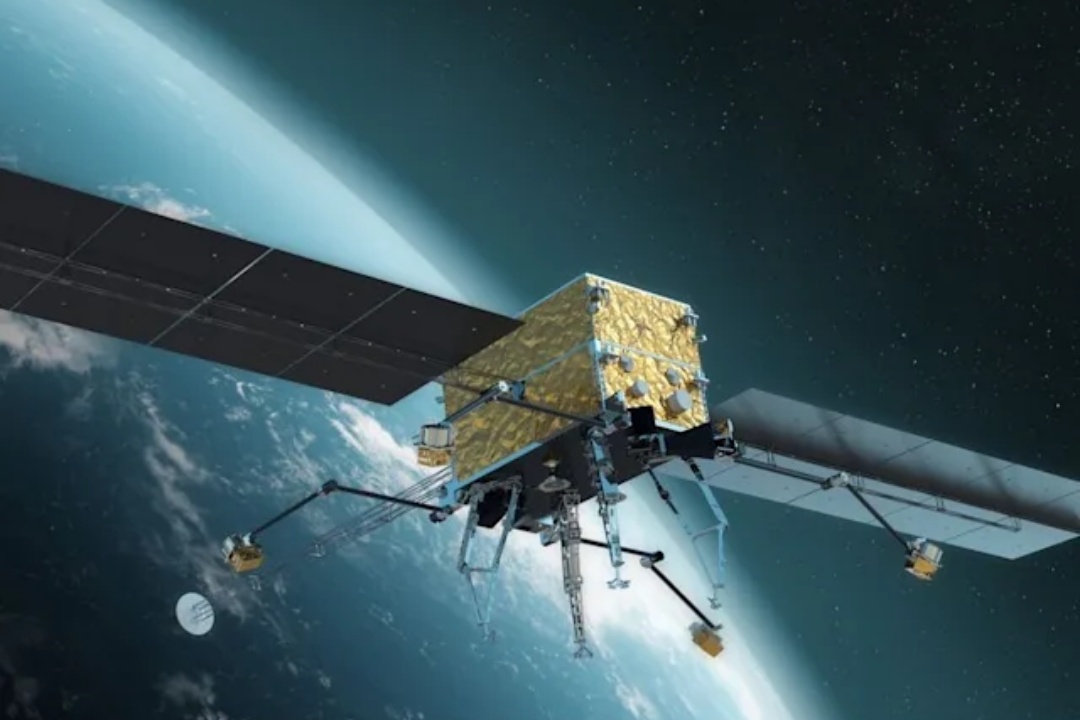
Source: Astroscale Homepage
Astroscale’s proposed laser-based space debris removal technology is designed as a non-contact method for managing debris in orbit. Rather than physically capturing and retrieving debris, the concept involves directing laser energy at debris objects to create tiny physical changes on their surfaces. The resulting reaction force can gradually alter the object’s orbit over time.
The primary goal of this approach is to move debris that poses a significant collision risk into safer orbital paths. Although the thrust generated by laser irradiation is extremely small, even minimal forces can have a meaningful long-term effect in the near-frictionless environment of space. By slowly changing an object’s trajectory, the debris could eventually be guided toward atmospheric re-entry, where it would burn up naturally.
Zapping the Void: Astroscale’s Laser Plan for Space Junk
One of the most promising applications for this technology is addressing debris that is difficult to remove through conventional methods. Small fragments, irregularly shaped objects, and rapidly spinning debris can be challenging to capture mechanically and often present elevated collision risks. Because laser-based intervention can be performed from a distance, it may offer an additional tool for dealing with debris that is otherwise impractical to retrieve.
At present, no commercial pricing has been announced for the technology. The concept remains in the research and evaluation stage and is not intended to be sold as a standalone commercial product. In the future, it could be incorporated into services provided to government agencies, space organizations, and satellite operators as part of broader orbital environment management missions. As a result, costs would likely be evaluated on a mission or service basis rather than through the price of a specific piece of equipment.
The most likely users of such a system would be organizations that depend on space infrastructure. These include communications satellite operators, Earth observation companies, navigation system providers, and government agencies responsible for maintaining the orbital environment. As large satellite constellations continue to expand in low Earth orbit, preserving orbital stability is becoming increasingly important for long-term operational success, making laser-based debris mitigation a potentially valuable complementary solution.
Importantly, Astroscale does not view laser irradiation as a standalone answer to the space debris problem. The company has consistently emphasized that debris management will require a combination of approaches, including active debris removal, debris-prevention measures during satellite design, and improved operational standards. Within that broader framework, laser-based intervention is being explored as a practical option for dealing with large numbers of small and difficult-to-capture debris objects.
Laser Technology as a Practical Option Rather Than a Powerful Tool
The uniqueness of laser-based debris removal does not lie in dramatic power levels or immediate results. Instead, Astroscale’s interest in the concept stems from its potential to become a practical and operationally viable option within a broader debris management strategy. Space debris is too diverse and widespread to be solved by a single breakthrough technology. Effective management will require multiple complementary methods, and laser irradiation could fill a very specific role within that ecosystem.
Its first major advantage is the ability to intervene without physical contact. Traditional debris-removal concepts generally require approaching, capturing, and controlling an object. However, small debris fragments that tumble rapidly or have irregular shapes can make direct contact risky, potentially creating even more debris. By operating at a distance, laser irradiation reduces the need for physical interaction and lowers the chance that removal efforts themselves could generate additional hazards. This non-contact nature is particularly valuable when dealing with large numbers of debris objects.
Orbital Stewardship: Astroscale’s Vision for a Sustainable Space Economy
A second distinguishing feature is its reliance on long-term orbital effects rather than immediate action. The force generated by laser irradiation is minimal and cannot rapidly change an object’s trajectory. However, even slight adjustments can accumulate over time in space, eventually producing measurable orbital decay. Astroscale’s focus is therefore not on achieving instant results but on gradually reducing risk levels within heavily populated orbital regions. This reflects a philosophy of managing the space environment over time rather than attempting to clean it up all at once.
Another important aspect is that the technology is not intended to replace existing debris-removal methods. Astroscale views laser irradiation as complementary to physical capture systems and debris-prevention measures. Different debris types and orbital conditions may require different solutions, and the company advocates a portfolio-based approach that selects the most appropriate tool for each situation. This broader perspective is one of the concept’s defining characteristics.
International acceptance is also a central consideration. The use of lasers in space can easily raise concerns or lead to misunderstandings. For that reason, factors such as energy management, clearly defined objectives, and transparent operating procedures are essential. Astroscale has emphasized that any future implementation must be explainable and accountable within the international community. This focus on transparency distinguishes the concept from purely technical proposals.
Ultimately, the value of laser-based debris removal lies not only in whether the technology can work, but also in whether it can be deployed in a manner that is accepted by governments, industry stakeholders, and the broader international community. The concept has been developed with both technical feasibility and social acceptance in mind.
The Recognition That Capturing Debris Alone Cannot Protect Space
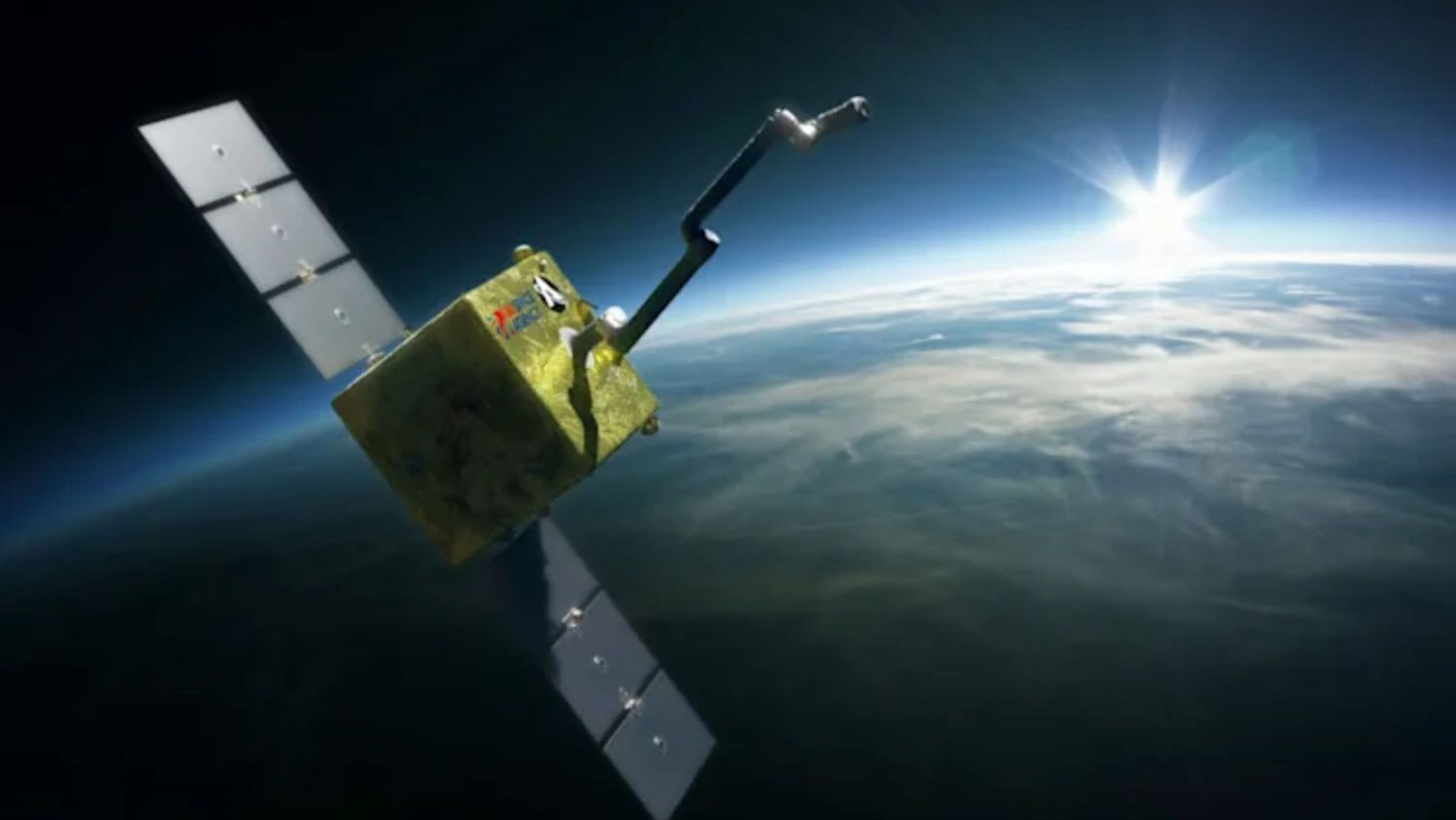
Source: Astroscale Homepage
Astroscale’s interest in laser-based debris removal emerged from its long-standing view that space debris is a structural and long-term challenge rather than a temporary problem. Since its founding, the company has focused heavily on active debris removal through physical capture techniques, pursuing technologies designed to rendezvous with and remove defunct satellites. However, as those efforts advanced, it became increasingly clear that focusing only on debris that could be captured would not be enough to address the broader issue.
Most debris currently orbiting Earth consists of small, irregularly shaped fragments traveling at extremely high speeds. While each individual object may have relatively little mass, the energy generated during a collision can be substantial, posing a serious threat to operational satellites and critical space infrastructure. As satellite launches continue to increase, the volume of debris is expected to grow as well. Relying solely on capture-and-retrieval methods presents significant challenges in terms of both technical scalability and economic feasibility.
Why Debris Removal is the Next Multi-Billion Dollar Industry
There is also a growing sense of urgency surrounding the problem. If collisions continue to generate additional debris, cascading collision events could eventually make certain orbital regions difficult or even impossible to use for extended periods. From this perspective, the objective is not necessarily to remove every piece of debris but to stabilize the orbital environment before debris density reaches dangerous levels. Achieving that goal requires methods capable of influencing objects that cannot easily be captured.
The concept of laser irradiation emerged from this line of thinking. By affecting debris without physical contact and gradually altering its orbit over time, the technology offers a potential means of influencing objects that would otherwise remain beyond the reach of conventional removal systems. Astroscale does not present the approach as a universal solution. Instead, it is viewed as a way to address gaps that existing methods cannot fully cover.
This perspective is rooted in a broader philosophy that has guided the company from the beginning. Astroscale believes that the space debris problem should not simply be left for future generations to solve. As more organizations make use of space, the cost of postponing cleanup efforts continues to rise. For that reason, the company argues that even technically difficult and highly scrutinized solutions deserve consideration and development today.
In that sense, laser-based debris removal is not a departure from Astroscale’s earlier work. Rather, it builds upon existing approaches such as active capture, debris-prevention measures, and improved operational standards. The technology is being explored as an additional option for addressing the challenges that remain even after those measures are applied.
Supporting Stable Space Operations Rather Than Simply Removing Debris
Astroscale does not envision laser-based debris removal as a standalone project. Instead, the company sees it becoming gradually integrated into the existing operational framework of the space industry. From this perspective, success is measured not by how many debris objects are removed but by how effectively operational risks are reduced.
Satellite operators represent one of the most practical potential user groups. Communications, Earth observation, and navigation services all rely on large numbers of satellites operating continuously in low Earth orbit. As collision warnings and avoidance maneuvers become a routine part of satellite operations, even small reductions in debris-related risk can provide meaningful benefits. Laser-based intervention could potentially lower the orbits of high-risk debris objects before they become immediate threats, reducing the need for frequent avoidance maneuvers and helping operators conserve fuel while simplifying mission management.
Shifting the Orbit of Defunct Satellites
Government agencies and space organizations are also likely candidates for future use. Space debris is not a problem that can be managed by a single owner or organization. Maintaining a safe orbital environment requires consideration of space as a shared resource. Because laser-based intervention focuses on reducing environmental risk rather than physically retrieving specific objects, it aligns well with the idea of orbital stewardship as a form of public infrastructure management.
The concept would also depend heavily on cooperation with organizations responsible for space situational awareness. Effective use of laser irradiation requires accurate information about the location, size, and risk profile of debris objects. When combined with advanced tracking and monitoring systems, the technology could become part of a broader operational model that identifies which objects should be targeted and when intervention would be most beneficial. In this sense, it functions not merely as a debris-removal technology but as a component of overall orbital management.
Even companies that never directly use the technology could benefit from its implementation. A more stable orbital environment could reduce insurance costs, lower long-term business risks, and improve the sustainability of satellite operations. For operators of large satellite constellations in particular, the safety of the orbital environment as a whole can be just as important as the protection of individual spacecraft.
For these reasons, laser-based debris removal is best understood not as a service dedicated solely to removing debris, but as a technology intended to support the conditions necessary for safe and sustainable space operations.
The Precision Required by a Technology Designed Not to Make Contact
At first glance, laser-based debris removal may appear to be a relatively low-risk technology because it does not physically interact with debris. In reality, the opposite is often true. The absence of physical contact means that every aspect of the process—including energy levels, targeting conditions, and predictions of debris behavior—must be carefully modeled, controlled, and explained in advance. This is one reason why Astroscale places such a strong emphasis on manufacturing quality, system reliability, and operational oversight.
Space systems operate under conditions that differ fundamentally from those of terrestrial products. Once deployed, they cannot be repaired easily, and they are expected to function reliably for extended periods. In the case of laser-based debris mitigation, reliability depends not only on the laser itself but also on the surrounding software, sensors, communications systems, and control architecture. Astroscale’s approach focuses on validating the performance of the entire system rather than optimizing individual components in isolation.
A Japanese Startup’s Quest for Clean Orbits
At the core of this approach are repeatability and explainability. Engineers must predict how laser energy affects space debris and verify that similar conditions produce consistent results. Extensive simulations, ground testing, and comparisons with real-world data are essential before the technology can be used operationally.
Safety is equally important. Any future system would require clearly defined operating limits for targets, irradiation time, and energy levels to ensure transparency and build trust among governments and industry.
Rather than rushing toward deployment, Astroscale supports a phased validation process through demonstrations, data collection, and continuous refinement. The company's goal is not simply to build a more powerful laser, but to prove that the technology can be safely, reliably, and responsibly managed in the shared space environment.
Taking Responsibility for the Consequences of Using Space
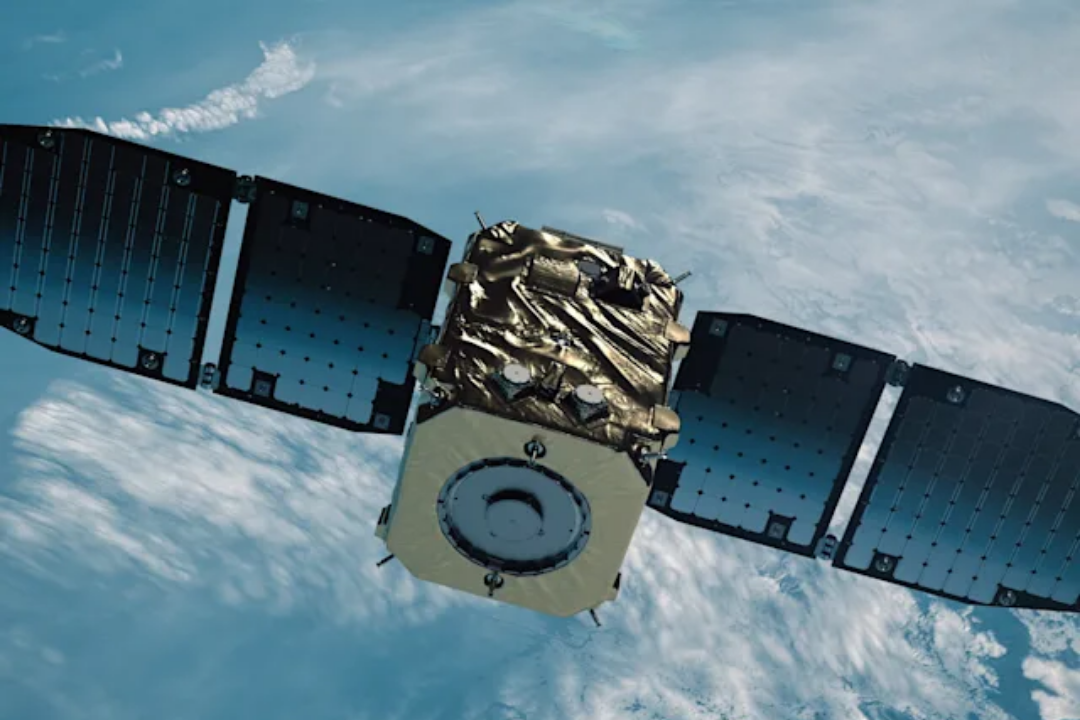
Source: Astroscale Homepage
Astroscale’s research into laser-based space debris removal did not emerge as a sudden technological initiative. It stems from a concern that has been shared consistently since the company’s founding: if space development itself creates future risks, who should take responsibility for managing those risks?
Satellites support many of the systems modern society depends on, including communications, navigation, and Earth observation. However, every satellite eventually reaches the end of its operational life and can remain in orbit as an uncontrolled object. Despite recognizing this reality, the space industry has historically focused on launching and operating satellites, while giving far less attention to cleaning up what is left behind. This imbalance has long been a central concern for Astroscale’s founders and leadership team.
Their motivation is rooted less in technological curiosity and more in a sense of responsibility. As participants in the space economy, they believe the debris problem cannot simply be left for someone else to solve. Waiting for regulations or international agreements alone will not reduce the debris already orbiting Earth. For that reason, the company has argued that practical solutions must be developed into viable industries and presented as realistic options for society.
This perspective also explains why Astroscale has explored laser-based approaches despite the caution such technologies require. Rather than concluding that certain debris objects are impossible to capture, the company asks how those objects can be moved into a more manageable state. The concept of influencing an orbit without physical contact emerged from this line of thinking. It reflects a preference for practicality over spectacle.
The company’s founders and engineers are also fully aware that laser technology can easily be misunderstood. The idea of using lasers in space is often associated with military applications or offensive capabilities. As a result, Astroscale believes it is essential to clearly communicate the technology’s purpose, power limitations, operational procedures, and safety measures. The principle that “technology that cannot be adequately explained will not be trusted” is reflected throughout the company’s projects.
Ultimately, what Astroscale demonstrates is not merely technical capability but a willingness to confront difficult challenges. Rather than passing the debris problem to future generations, the company seeks to address it now. That commitment includes investing in difficult, time-consuming fields where outcomes may not always be obvious or immediate. This philosophy is what underpins its pursuit of laser-based space debris removal.
An Extension of Japan’s Commitment to Precision and Responsibility
Astroscale’s business philosophy did not emerge in Japan by coincidence. The environment in which the company operates aligns closely with a project like laser-based debris removal, which requires caution, patience, and a long-term perspective. This connection is rooted in Japan’s manufacturing culture and its broader approach to maintaining public infrastructure.
Japanese manufacturing has traditionally prioritized precision, consistency, and long-term reliability over highly visible performance competition. Industries where even minor deviations can affect overall quality have developed rigorous standards for process control and quality assurance. The qualities Astroscale emphasizes in laser-based debris removal—repeatability, explainability, and controllability—closely reflect these values.
Cleaning the Final Frontier: Japan’s Ambitious Vision for Space Sustainability
Japanese society also has a deeply ingrained belief that things should be properly cleaned up after use. Maintaining clean public spaces and conducting regular maintenance on infrastructure are widely accepted social norms. Astroscale’s view of space debris as an environmental issue, and its effort to establish cleanup as a sustainable industry, can be seen as an extension of this mindset.
Japan’s research culture is also relevant. Universities, research institutions, and aerospace organizations often emphasize a gradual process of fundamental research, testing, and phased implementation. This approach aligns well with technologies like laser-based debris removal, where international trust and safety verification are just as important as technical feasibility. In such cases, building confidence step by step can be more valuable than rushing toward deployment.
Furthermore, Japan has long approached space primarily as a user rather than a military space power. With limited resources, the country has focused on maximizing practical benefits such as communications, navigation, and observation. As a result, space is often viewed not only as a competitive arena but also as a shared resource. Astroscale’s emphasis on international cooperation reflects this perspective.
Laser-based debris removal is both a cutting-edge technology and an area that demands conservative decision-making. Japan’s dedication to precision and social responsibility provides an important foundation for such efforts.
From Debris Removal to Space Environment Management
Astroscale’s interest in laser-based debris removal is part of a much broader long-term vision. The company’s objective is not simply to remove individual debris objects but to establish systems that enable the sustainable management of space as an environment that can continue to support human activity.
How Lasers Could Save Our Satellites
One future direction is the clearer positioning of laser technology within a broader set of debris mitigation tools. Alongside active capture systems and debris-prevention designs, laser-based intervention could become one option within a structured framework that determines which solution is most appropriate under specific conditions. This would help move debris management away from case-by-case judgments toward data-driven decision-making.
International engagement will also play a critical role. Space debris does not recognize national borders, and no single company or country can solve the issue independently. Technologies such as laser intervention, which can easily be misunderstood, require transparent communication regarding objectives, power levels, and operational guidelines. Astroscale has indicated that it intends to contribute not only to technological development but also to the rules and agreements needed to support responsible implementation.
From a business perspective, the company may eventually evolve beyond the concept of a standalone debris-removal service. Future offerings could include orbital risk assessment, mitigation planning, and operational execution as part of a comprehensive space environment management platform. Within this framework, laser technology would serve as one component among many. The emphasis would shift from evaluating individual technologies to measuring how effectively the overall system stabilizes the orbital environment.
As the space economy expands, collaboration with new entrants and emerging space nations will become increasingly important. Astroscale’s long-term vision assumes that all participants in space activities share some degree of responsibility. Laser-based debris removal could become one practical mechanism for distributing that responsibility more fairly.
The company’s goal is therefore not merely to perfect a technology. It is to demonstrate how sustainable space governance can be implemented in practice and to contribute examples that help shape future standards.
Not User Reviews, but Industry Perception
Laser-based space debris removal is not a consumer product, so traditional user reviews do not exist. Instead, feedback comes from industry professionals, researchers, and policymakers. What stands out is that both optimism and caution currently coexist.
Within the space industry, many stakeholders recognize the logic behind a non-contact approach. Small debris remains one of the most difficult challenges facing satellite operators. As a result, the technology is often appreciated not as a perfect solution but as a practical option for reducing risk. Those closest to day-to-day satellite operations frequently value manageability over theoretical perfection.
At the same time, concerns remain. The strong associations many people have with laser technology, along with the possibility of misunderstandings escalating into geopolitical tensions, are recurring themes in expert discussions. Researchers often argue that the key question is not whether the technology works, but how it is explained and governed. These concerns are generally viewed as prerequisites for implementation rather than outright criticism.
Among international experts in space policy and security, Astroscale’s approach itself has attracted attention. Rather than developing the concept behind closed doors, the company has openly discussed it while encouraging international dialogue and consensus-building. This integration of technology development and governance is increasingly important as commercial space activity expands.
Media coverage and public discussion frequently frame the issue in broader environmental terms. Many observers see the emergence of space debris cleanup as evidence that humanity has reached a stage where even space requires environmental stewardship. In this context, laser-based removal often serves as a symbolic example that helps make the issue more tangible.
Overall, the technology is not yet regarded as a finalized solution. However, it is increasingly viewed as a realistic option worthy of serious consideration. This suggests not only technological progress but also a growing consensus around the underlying problem.
Building Momentum Beyond the Concept Stage
Although laser-based debris removal remains under research and evaluation, Astroscale’s achievements in Japan demonstrate that the concept is far more than a theoretical exercise. The company is one of the few Japanese organizations that has successfully transformed space debris from an abstract concern into a visible social issue accompanied by concrete action.
One notable achievement has been its demonstration missions, which have helped show why debris removal is necessary. Using spacecraft designed to simulate retired satellites, Astroscale has tested close-proximity operations, relative motion control, and capture procedures. While these demonstrations involve different removal methods than laser intervention, they have shown the global space community that active debris removal is a legitimate engineering challenge rather than a hypothetical concept.
The company has also received extensive media coverage. Beyond aerospace publications, its activities have been featured in mainstream news outlets and business media. This reflects growing public recognition that environmental management may eventually become as important in space as it is on Earth.
Relationships with government agencies and research institutions represent another important aspect of Astroscale’s domestic track record. Because space debris cannot be addressed by private companies alone, cooperation with policymakers and international organizations is essential. By sharing technical expertise and operational data, the company has contributed to discussions surrounding regulations and standards.
Its ability to attract talent is also significant. Specialists in aerospace engineering, physics, systems engineering, and public policy from around the world have joined the company to work on long-term challenges. Maintaining sustained research and development efforts in a field with uncertain short-term returns highlights the strength of its organizational foundation.
These accomplishments provide the groundwork for future discussions about laser-based debris removal as a practical option rather than a distant concept.
Expanding Value Through Shared Responsibility, Not Technology Exports
The reason laser-based debris removal attracts international attention is not simply because it is advanced technology. More fundamentally, it addresses a reality in which space is no longer dominated by a handful of nations. The rapid growth of satellites in low Earth orbit involves not only established space powers such as the United States, Europe, and China but also emerging countries and private companies. As a result, debris management has become a collective responsibility.
In this context, a non-contact approach offers certain advantages. Because it does not require physically capturing another party’s asset, it may be easier to accept internationally. Physical capture methods can raise complicated questions regarding ownership and liability. By contrast, reducing risk through subtle orbital adjustments can be framed more as environmental management than direct intervention.
This perspective is particularly relevant for operators of large satellite constellations. Orbital stability directly affects the economics of their businesses. Rising collision-avoidance costs can impact profitability and operational efficiency. Laser-based intervention is therefore attractive not because it protects individual satellites, but because it may reduce risk across the broader orbital environment.
The concept also aligns with growing discussions about space sustainability, particularly in Europe. Increasingly, debris mitigation is viewed not merely as a cost but as a responsibility to future generations. Within that framework, laser-based intervention can be presented as a management tool rather than a purely technical innovation.
Successful international deployment will depend not only on technology but also on governance. Data-sharing mechanisms, operational standards, and decision-making processes must all be coordinated internationally. Because laser-based debris removal demands high levels of transparency and accountability, the ability to manage those requirements may become a competitive advantage in itself.
Its true value lies not in showcasing Japanese engineering but in offering a practical answer to a broader question: how should all participants in the space economy share responsibility for maintaining a sustainable orbital environment?
The Absence of Sales Is Part of the Story
Source: Astroscale Homepage
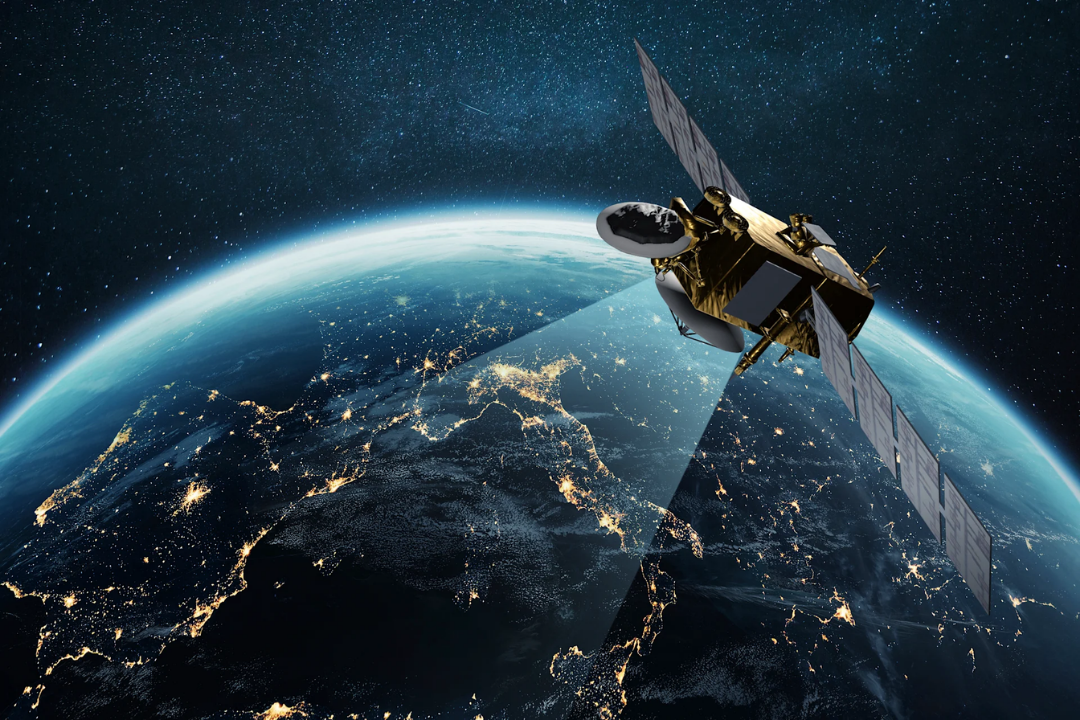
At present, there are no confirmed examples of laser-based space debris removal being exported or commercially sold overseas. This does not indicate failure or delay. Rather, it accurately reflects the technology’s current stage of development.
First, laser-based intervention is not a standalone product that can simply be sold and delivered. Effective implementation requires orbital assessment, target identification, operational planning, laser execution, and post-intervention verification. The value lies in the entire operational process rather than a single piece of hardware.
Second, international agreement is essential. Even if technically feasible, using lasers in space raises questions related to international law and security. Astroscale has consistently emphasized that such technologies should be developed in coordination with governments, agencies, and experts rather than deployed unilaterally.
Nevertheless, international interest continues to grow. Laser-based approaches are increasingly discussed at conferences and professional forums as one possible category of non-contact debris mitigation. In these discussions, attention often focuses less on the technology itself and more on the principles governing its use.
Astroscale’s existing relationships with international agencies and commercial partners, developed through other debris-removal initiatives, provide a foundation for future collaboration. The absence of export sales therefore reflects a deliberate strategy of cautious development rather than a lack of market demand.
As international standards evolve, laser-based debris removal could eventually become one component within larger service offerings and orbital management missions. Until then, research, testing, and dialogue remain valuable achievements in their own right.
Conclusion
Laser-based space debris removal is neither a finished product nor an immediate solution. Yet Astroscale’s work continues to attract international attention because it challenges a fundamental assumption about space development. The company argues that using space and managing space should not be treated as separate responsibilities.
Historically, the space industry has focused on technologies that enable progress, such as launch systems and communications infrastructure. Far less attention has been given to managing the debris and risks that accumulate as a consequence of those activities. Astroscale seeks to address this imbalance. Laser intervention is only one possible tool, but its willingness to engage with debris that cannot easily be captured represents an important step toward closing existing gaps in orbital management.
For space agencies and commercial operators, the significance of this work extends beyond technology. It encourages a broader discussion about responsibility: how much accountability should come with the privilege of using space? The careful and transparent nature of the laser concept reflects a preference for sustainability and consensus-building rather than rapid deployment.
The vision also extends beyond any single country or company. A safer orbital environment lowers barriers to entry and supports broader participation in communications, navigation, observation, and other space-based services. In this sense, the initiative contributes to a shift in perspective, from viewing space primarily as a competitive arena to recognizing it as a shared infrastructure.
Whether laser-based debris removal ultimately becomes operational will depend not only on engineering progress but also on international rules, public trust, and governance frameworks. What Astroscale is demonstrating today is the urgency of beginning those conversations before the challenge becomes even more difficult to manage.
The question at the heart of the effort is simple: if humanity intends to continue using space, how should responsibility for maintaining it be shared? Laser-based debris removal offers one possible answer, and that is why the discussion matters today.
FAQ About Laser-Based Space Debris Removal
1. What Is Space Debris?
Space debris refers to human-made objects left in Earth’s orbit, including defunct satellites, rocket components, and fragments created by collisions. Because these objects travel at extremely high speeds, even small pieces can cause significant damage to operational satellites and spacecraft.
2. What Kind Of Company Is Astroscale?
Astroscale is a Japan-founded space company focused on removing and preventing space debris. In addition to developing debris-removal technologies, the company works on international collaboration and policy initiatives aimed at supporting the sustainable use of space.
3. How Does Laser-Based Space Debris Removal Work?
The concept involves directing a laser at a piece of space debris, causing a small amount of material on its surface to vaporize. This creates a reaction force that gradually changes the object's orbit. By slowly lowering its orbital altitude, the debris can eventually re-enter Earth's atmosphere, where it is expected to burn up naturally.
4. Why Is The Laser Approach Attracting Attention?
One of the key advantages is that it does not require physically capturing the target. This could make it possible to address small, fast-spinning debris and other objects that are difficult to retrieve using conventional methods. Its non-contact nature is a major distinguishing feature.
5. Can Lasers Solve The Space Debris Problem On Their Own?
No. Laser-based methods alone are unlikely to solve the space debris challenge. Astroscale emphasizes the importance of combining multiple approaches, including active debris removal, debris-prevention measures, and the development of operational guidelines and regulations.
6. Is This Technology Already In Commercial Use?
The technology remains in the research and evaluation stage and is not currently available as a commercial service. In the future, it could become part of a broader space infrastructure service offered to governments, space agencies, and satellite operators.
7. Has Pricing For Laser-Based Space Debris Removal Been Announced?
No pricing has been publicly disclosed. Since this is not a consumer product and would likely be provided as part of debris-management services or mission-based contracts, it is not expected to be sold with a standalone retail price.
8. Who Is Expected To Use This Technology?
Potential users include government agencies, space agencies, satellite operators, communications satellite companies, and Earth observation organizations. The technology is intended to help space users maintain a safer orbital environment.
9. Could Laser-Based Debris Removal Be Misinterpreted As A Military Technology?
The term "laser" can sometimes raise concerns about military applications. However, Astroscale emphasizes the importance of clearly defining target objects, power levels, and operating procedures, while ensuring transparency and compliance with international norms. Developing international standards and maintaining trust are considered key aspects of the technology's future deployment.
10. What Is Astroscale's Long-Term Vision?
Astroscale's goal extends beyond simply removing space debris. The company aims to create a system of space environment management, where orbital environments are actively monitored and maintained over the long term. Its broader vision is to build the infrastructure needed to support safe and sustainable space activities for future generations.