Building a Society Where People Can “Be Present” From Anywhere: A Japanese Robotics Startup Reimagining Social Participation
Among Japan’s startup ecosystem, some companies have created value not by chasing the latest technological breakthrough, but by addressing social problems that have long been overlooked. One of the most compelling examples is OryLab Inc.
Since its founding, OryLab has focused on a single question: How can technology help redesign a society where physical limitations often prevent people from fully participating?
Around the world, millions of people face barriers to leaving their homes due to illness, disability, chronic health conditions, or long-term medical treatment. Yet many aspects of modern life, from employment to education to community involvement, are still built around the assumption that participation requires physical presence.
OryLab challenges that assumption.
Rather than asking how people can be helped to travel to a location, the company asks a different question: Can someone meaningfully "be there" without physically being there?
Its answer comes in the form of telepresence robotics. More specifically, through a remotely operated avatar robot designed to help people maintain a role in society even when mobility is limited.
The relevance of this idea has grown far beyond Japan. Several global trends have brought renewed attention to OryLab's work, including the rise of remote work, aging populations, evolving approaches to disability inclusion, and a broader push toward creating societies that are accessible and inclusive by design.
What began as a Japanese social innovation is increasingly becoming part of a much larger international conversation about how participation, work, and human connection should be defined in the twenty-first century.
At the center of that conversation is OryLab’s flagship avatar robot: OriHime-D.
OriHime-D Overview
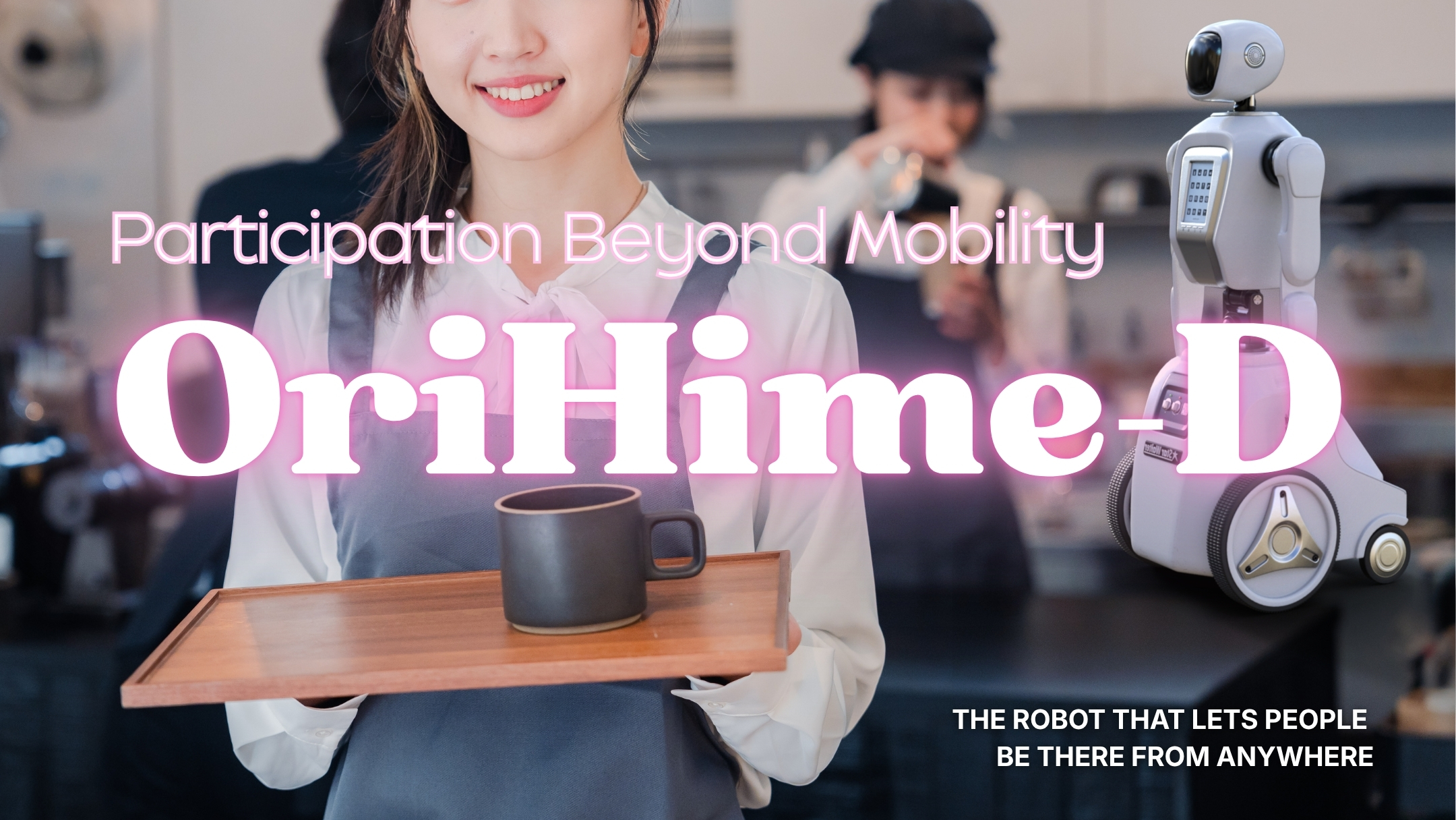
OriHime-D is an avatar robot that allows a remote operator to maintain a physical presence in another location, communicate with people, and perform simple workplace tasks.
Equipped with a camera, microphone, and speaker, the robot is controlled via the internet by a user who may be at home, in a hospital, or anywhere else. Movements such as head turns, arm gestures, and gaze direction are reflected through the robot, creating a stronger sense of presence than traditional video conferencing or voice calls.
Unlike consumer electronics, OriHime-D is primarily designed for organizations, institutions, and research projects. In many cases, it is introduced as part of a broader workplace or social inclusion initiative rather than being purchased as a standalone device.
Its value does not lie in having the most advanced features. Instead, it offers a practical way to challenge a long-standing social assumption: that being unable to travel automatically means being unable to participate.
Why OryLab Chose to Build OriHime-D
Source: OryLab Homepage
Although OriHime-D is a telepresence robot, its purpose goes beyond enabling remote communication. OryLab developed it as a way for people to continue participating in society and meaningful work regardless of where they are.
To achieve this, the robot focuses on essential functions. Operators can control it from home or a hospital using its cameras, voice, and simple gestures. Rather than maximizing technical complexity, OryLab prioritizes natural and comfortable interactions.
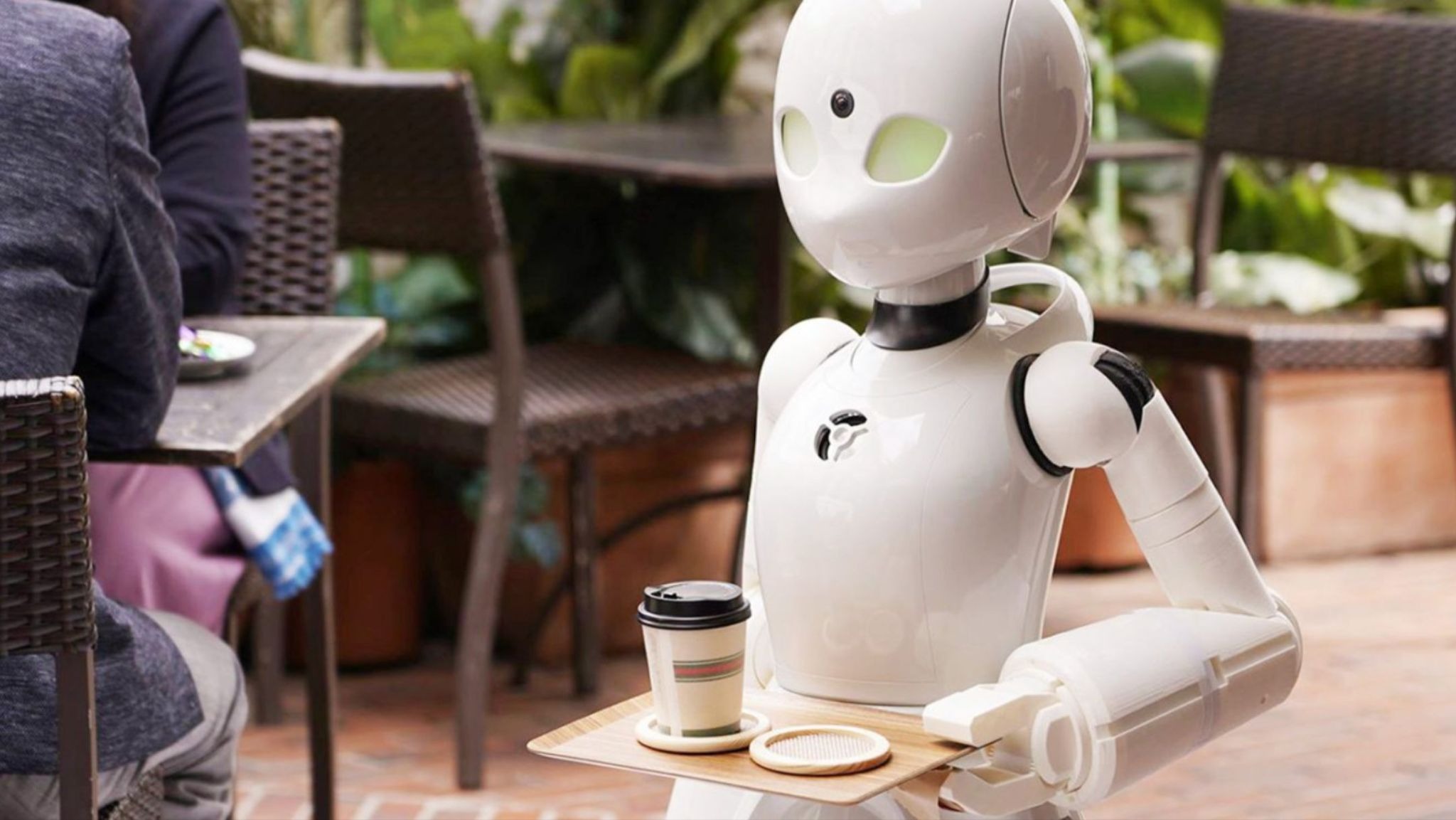
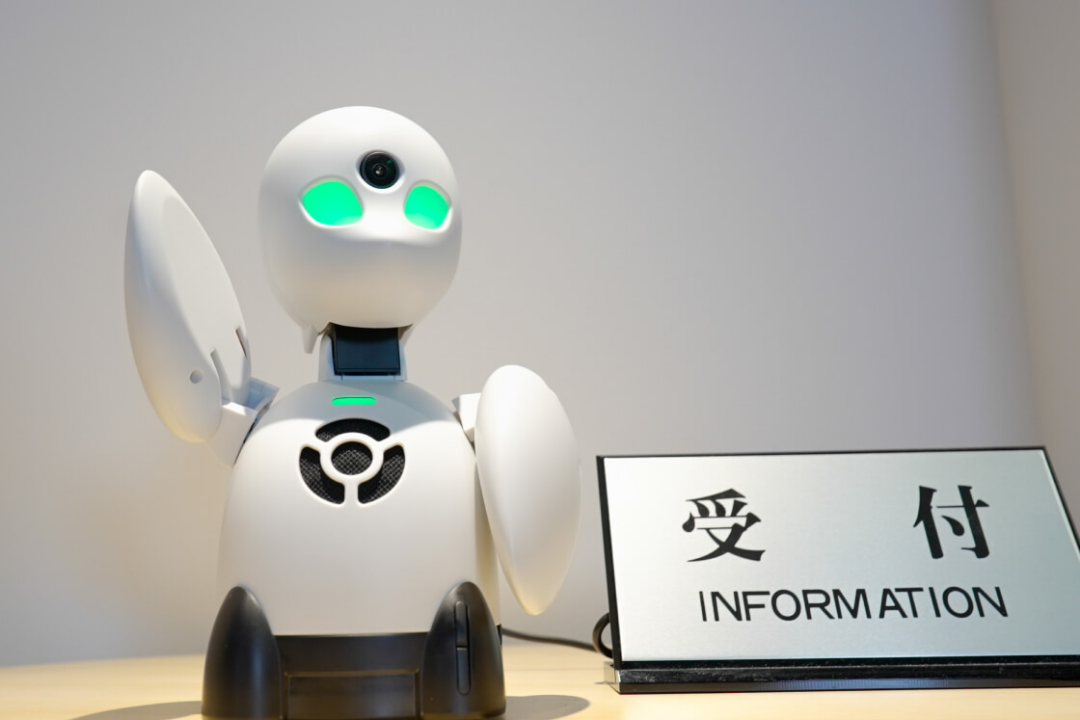
OriHime-D is widely used in customer-facing roles at cafés, reception desks, public facilities, and events. Operators interact with visitors, answer questions, and contribute as active members of a team instead of simply communicating through a machine.
For many operators, the greatest value is not the technology itself, but the opportunity to work, contribute, and remain connected to society.
Creating Tech That Thrives in "Messy" Human Environments
This philosophy is also reflected in the way OriHime-D is introduced into workplaces. Rather than being treated as a mass-market product, the robot is typically implemented through projects that include workplace design, role definition, and operational planning. OryLab recognizes that meaningful social participation cannot be achieved simply by placing a robot in a room. The surrounding environment must also be designed to support genuine engagement and collaboration.
Many operators are individuals who face difficulties commuting or spending long periods outside their homes because of physical conditions. At the same time, companies, public organizations, and other institutions play an equally important role in making these opportunities possible. Within broader discussions surrounding disability employment, workplace diversity, and the future of work, OriHime-D functions as a platform for exploring new forms of participation and employment.
Notably, OryLab has never positioned OriHime-D as cutting-edge technology for its own sake. The company intentionally limits the robot's capabilities and avoids overstating the user's presence. That restraint has become one of the key reasons the system has been accepted in real workplaces. OriHime-D was designed not to impress people with technology, but to help people work.
Designing for Acceptance, Not Just Capability
What makes OriHime-D distinctive is not the number of features it offers, but the way every aspect of its design has been shaped around social acceptance. While many telepresence robots compete through technical specifications such as image quality, mobility, or increasingly sophisticated interactions, OryLab deliberately chose a different path.
One of the first things people notice is the robot's appearance. Although OriHime-D has a human-like form, it does not attempt to closely imitate a real person. Its facial expressions are minimal, and its movements are slow, deliberate, and restrained. The objective is not to create a perfect substitute for a human being, but rather to communicate a simple and reassuring message: there is a real person behind this machine.
This understated approach helps interactions feel approachable rather than unsettling, even for people encountering the robot for the first time. Instead of drawing attention to technological sophistication, the design encourages people to focus on the individual operating it.
The same philosophy extends to the operating experience. OriHime-D does not require advanced technical expertise, and its controls are designed to minimize physical and mental strain. This allows people with varying levels of mobility and stamina to use the system comfortably for extended periods. The design reflects OryLab's belief that technology should adapt to human needs, rather than forcing people to adapt themselves to technology.
Beyond Artificial Intelligence
Another important aspect of the robot is how it is positioned conceptually. OriHime-D is not treated as a replacement worker. It is treated as an avatar through which a person can act and interact. The operator's personality remains at the center of every exchange. Their timing, communication style, sense of humor, and decision-making shape each interaction, while the robot simply serves as the medium through which those qualities are expressed.
In other words, the robot is never intended to be the main actor. The person controlling it remains the focus.
OryLab has also been careful not to frame OriHime-D exclusively as an assistive device for people with disabilities. In many deployments, workplace environments and workflows are designed so that the robot does not become the center of attention. This helps ensure that operators are viewed as colleagues and contributors rather than recipients of support.
The result is a robot that succeeds not because it demonstrates impressive technical capabilities, but because it integrates naturally into everyday environments. In many ways, that understated quality may be OriHime-D's most innovative feature.
Technology Designed to Address the Structure of Isolation
OriHime-D was not created to capitalize on a market trend or emerging business opportunity. Its origins lie in a deeper concern about how social isolation can limit a person's opportunities, identity, and sense of belonging.
At the core of OryLab's mission is the observation that people who cannot attend school, commute to work, or leave their homes often become disconnected from society regardless of their abilities, intelligence, or motivation. Physical limitations may lead others to assume that a person is incapable, even when their ability to think, communicate, make decisions, and contribute remains fully intact. It is within this gap between capability and opportunity that loneliness, exclusion, and a loss of self-worth often emerge.
Rather than focusing solely on support services, OryLab chose to challenge the assumptions underlying the problem itself. Traditionally, the response has been to find ways to help someone reach a particular place. OryLab instead asked a different question: what if meaningful participation did not require physically being there in the first place?
How Avatar Robots Keep Humans in the Loop
OriHime-D is the practical expression of that idea.
From the earliest stages of development, the company focused less on achieving technical perfection and more on ensuring long-term usability. Questions such as whether people could operate the system comfortably, whether prolonged use would become exhausting, and whether others would feel comfortable interacting with it guided repeated iterations of the product.
The company has also intentionally avoided positioning OriHime-D as a specialized medical or welfare device. Doing so would create clear distinctions between those who qualify to use it and those who do not. Instead, OryLab presents the robot as a tool that expands opportunities for participation. This philosophy explains why employment, customer interaction, and social engagement have been integrated into the design from the very beginning.
OriHime-D does not eliminate loneliness directly. What it offers instead is an alternative to the social structures that often create loneliness in the first place. OryLab's vision is simple but ambitious: if someone wishes to participate in society, physical circumstances alone should not automatically exclude them. Through OriHime-D, the company continues to explore how that vision can become reality.
When Employment Becomes a Form of Inclusion
Source: OryLab Homepage
Unlike many experimental robotics projects, OriHime-D has moved beyond laboratories and demonstration events into real workplaces where operators take on genuine responsibilities and contribute as active members of a team.
Looking across its deployments, a clear pattern emerges. Organizations do not adopt the robot simply because remote operation is possible. They adopt it because human interaction itself creates value.
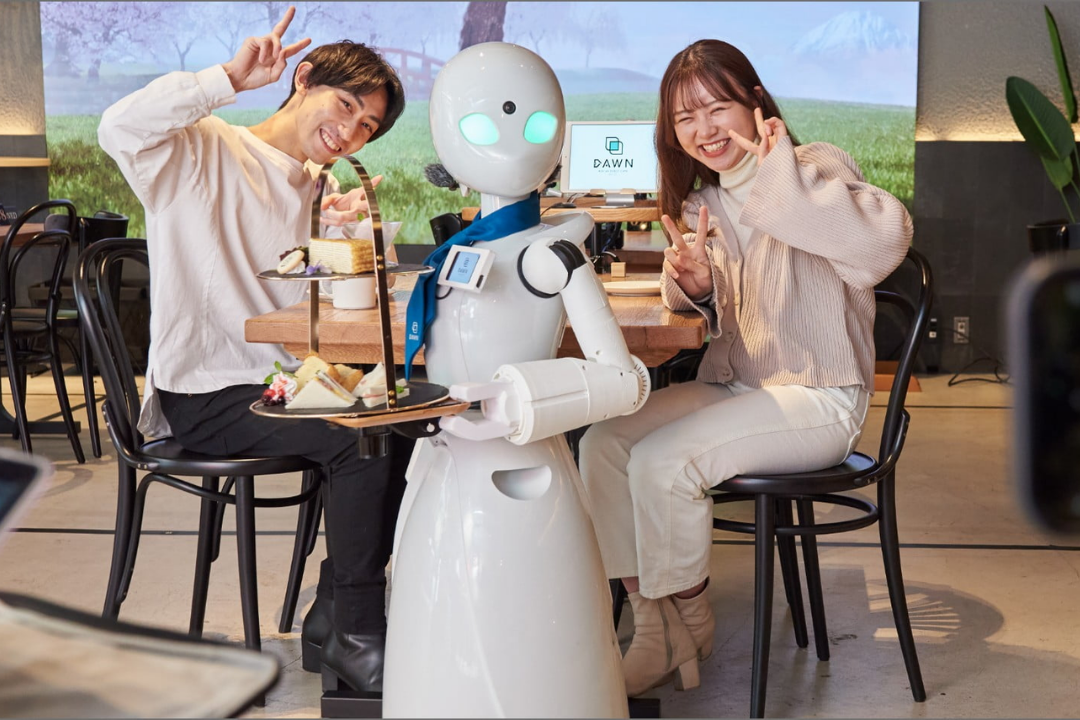
This is particularly evident in cafés and hospitality environments. Customer service involves far more than following a script. Employees must interpret social cues, adjust their communication style, engage in casual conversation, and respond to unexpected situations. These are forms of value that cannot easily be automated. OriHime-D enables remote operators to participate in those interactions from home or from hospital rooms while working alongside on-site staff. The robot replaces the need to travel, but it does not replace the person performing the work.
The same principle applies in public facilities and event venues. Guiding visitors often requires answering spontaneous questions and adapting to changing circumstances in real time. Static displays and automated announcements cannot always provide that flexibility. A remotely operated avatar can.
How OriHime-D Turns Diversity Policy into Reality
Corporate reception areas provide another compelling example. In these settings, the visibility of remote participation can itself carry meaning. Watching someone perform their role through OriHime-D transforms ideas such as workplace inclusion and flexible employment from abstract policies into something tangible and visible. For organizations committed to diversity and inclusion, this sends a powerful message both internally and externally.
Importantly, OriHime-D has not gained traction primarily as a solution to labor shortages. Its strongest applications tend to appear in environments where preserving human interaction matters more than maximizing efficiency. As a result, successful deployments usually depend on thoughtful role design and workflow planning rather than simply introducing new hardware.
Across all of these examples, one theme remains consistent. The people operating OriHime-D are not positioned as individuals receiving assistance. They are recognized as contributors whose work helps sustain and strengthen the organizations they serve.
When that relationship is established, the robot becomes far more than a communication tool. It becomes a practical mechanism for social participation and inclusion.
Designed to Be a Robot That Can Be Used Continuously, Not One That “Never Breaks”
When manufacturing and managing the quality of OriHime-D, Ory Laboratory does not prioritize the kind of extreme durability required for industrial robots or the adoption of cutting-edge components. Instead, its central concern is whether the robot can be used comfortably and sustainably in everyday environments. This approach is closely tied to the fact that OriHime-D was designed not as a research device, but as a tool that enables people to work.
Safety and comfort come first when selecting materials and designing the robot’s structure. Because OriHime-D is intended to operate in close proximity to people, it features rounded shapes with few sharp edges and avoids excessive weight. Even in the event of accidental contact or a fall, the robot is designed to minimize potential harm to operators, visitors, and those nearby.
Why Avatar Robots are Redefining Corporate Reception
OriHime-D is designed for reliability in real-world environments such as cafés, public facilities, and event venues. Instead of adding unnecessary features, Ory Laboratory prioritizes stable communication and consistent performance under varying conditions.
The company also treats quality as an ongoing process. Feedback from operators and partner organizations is continuously used to improve both the robot and its operational practices, making OriHime-D an evolving platform rather than a static product.
Its communication system is designed to be reliable while remaining easy for on-site staff to manage, helping reduce barriers to adoption.
Ultimately, OriHime-D’s value lies not in technical specifications alone, but in its focus on long-term usability and preserving human agency. These principles allow it to function as a practical tool for everyday social interaction rather than simply an experimental technology.
Refusing to Treat Loneliness as a Matter of Talent or Personal Effort
Source: OryLab Homepage
Any discussion of Ory Laboratory’s philosophy must begin with the perspective of its founder, Kentaro Yoshifuji. OriHime-D was not created by starting with technological possibilities and working backward. Instead, it emerged from personal experiences and a sense of discomfort with existing social structures.
One question has consistently guided Yoshifuji’s work: what if loneliness is not primarily an individual problem, but a structural problem within society? When illness, disability, or environmental circumstances make it difficult to leave home, attend school, or maintain employment, people can quickly lose their connections to society. The resulting isolation is often treated as a matter of personal weakness, lack of effort, or character. In many cases, however, the real issue is that opportunities for participation have been removed from the outset.
This understanding strongly shapes Ory Laboratory’s product design philosophy. OriHime-D is not intended as a device that compensates for what someone cannot do. Instead, it is designed to create opportunities for participation. A key objective is ensuring that operators are not permanently positioned as recipients of assistance. Through work, conversation, and the fulfillment of meaningful roles, society itself can rebuild connections with individuals. The robot serves as a bridge that enables those relationships to exist.
Why Hospitality Still Needs Human Operators
Yoshifuji believes technology alone cannot solve problems such as loneliness or social isolation. Rather than replacing human relationships, OriHime-D is designed to help people reconnect with environments where meaningful interactions can naturally take place.
This philosophy goes beyond supporting a specific group. Ory Laboratory aims to create opportunities for anyone who may experience illness, disability, or other circumstances that limit social participation. The goal is to ensure that these challenges do not permanently disconnect people from society.
Although inspired by the founder’s personal experiences, OriHime-D was created with a broader purpose. Its guiding principle is simple: no one should have to face loneliness alone. That belief continues to shape both the technology and Ory Laboratory’s long-term vision.
Expanding Opportunities in a Society That Has Traditionally Valued Physical Presence
The development of OriHime-D in Japan is deeply connected to the country’s unique social structures, working culture, and community relationships. For many years, Japanese society has generally viewed gathering in the same physical location and interacting face-to-face as the standard form of social participation. Schools, workplaces, and community activities have largely been designed around physical attendance. As a result, people who become unable to travel often experience a rapid loss of roles, relationships, and opportunities for participation.
At the same time, Japanese communities have long placed value on having a role within society. Regardless of age or status, contributing to a shared environment has traditionally been linked to personal dignity and a sense of belonging. OriHime-D aligns closely with this cultural perspective. Even when someone cannot physically be present, fulfilling a meaningful role allows them to be recognized as an active participant. The technology reinforces this idea by making such participation possible.
Service Beyond the Script
Many real-world deployments of OriHime-D have taken place in community-oriented cafés, public facilities, and local events. In these environments, human interaction and atmosphere often matter as much as efficiency or productivity. People working through OriHime-D are frequently welcomed not merely as information providers or reception systems, but as individuals who help shape the character and atmosphere of the space. This fits naturally with Japan’s emphasis on hospitality and interpersonal communication.
Japanese society also places significant importance on avoiding inconvenience to others. As a result, being in a position where one receives support or accommodation can sometimes create psychological discomfort. OriHime-D is designed so that operators are not defined by the assistance they receive. Instead, they participate as people entrusted with responsibilities and meaningful work. This makes it easier not only for operators themselves but also for communities and organizations to build genuine relationships around their participation.
The reason this initiative has been well received in Japan goes beyond the country’s general interest in robotics. OriHime-D has been embraced because it offers a practical way to expand opportunities for social participation within a culture that places great importance on where and how people contribute to society.
From a “Special Solution” to a Standard Social Option
Ory Laboratory’s vision for the future of OriHime-D is not centered on rapid mass production or aggressive market expansion. Instead, the goal is to establish avatar robots as a normal and widely available means of social participation rather than an exceptional welfare solution. To achieve this, the company has adopted a gradual, field-driven approach based on continuous real-world validation.
Creating Active Roles for Every Ability
One major area of focus is the expansion of job design itself. OriHime-D is not a universal-purpose robot and cannot be applied to every type of work. Identifying which tasks are suitable for avatar robots and where human presence creates unique value requires careful examination on a case-by-case basis. Future applications are being explored not only in customer service and information guidance but also in areas such as education, training, and community management, where communication and judgment play central roles.
Another important objective is changing attitudes among host organizations and coworkers. For OriHime-D to become fully integrated into society, acceptance from colleagues, managers, and organizations is just as important as the capabilities of the operators themselves. Ory Laboratory therefore treats robot deployment as only one part of the process. Equal attention is given to role allocation, workplace integration, and evaluation systems. In practice, this approach resembles building new work models together rather than simply selling technology.
The Avatar Labor Revolution
The company takes a similarly cautious approach to international expansion. The value of OriHime-D lies not merely in remote operation technology but in the broader idea of creating conditions under which people can meaningfully exist and participate. Because cultures and attitudes toward work vary significantly around the world, the same implementation model may not be appropriate everywhere. Ory Laboratory places greater importance on translating the underlying philosophy into local contexts than on replicating Japanese examples unchanged.
Technological development also remains focused on practicality rather than spectacle. Reducing operational burden, improving communication reliability, and simplifying on-site troubleshooting are prioritized over flashy new capabilities. These improvements are essential if avatar robots are to become a lasting part of everyday life rather than a temporary novelty.
Ultimately, Ory Laboratory hopes to move beyond the idea of avatar robots as technology intended only for people with specific needs. The long-term vision is to create a social tool that anyone can choose when circumstances require it. Whether someone is dealing with illness, disability, childcare responsibilities, caregiving duties, or mobility limitations, OriHime-D is intended to offer an additional option for remaining connected to work and society. Through steady and deliberate development, the robot continues moving toward that goal.
Design for Human Sustainability
User experiences with OriHime-D differ somewhat from conventional product reviews. Rather than focusing primarily on performance, technical specifications, or ease of use, discussions often center on whether participation could be sustained over time and whether meaningful relationships were maintained. Looking at feedback from both operators and host organizations reveals a distinct pattern in how the robot is evaluated.
Beyond the Labor Shortage
One of the most common comments from operators is that it restores a sense of connection to society. Being able to clock in at a scheduled time, hold a role, and interact with others while remaining at home or in a hospital room can have a significant impact on daily routines and self-perception. Even when the work itself is not highly specialized, many operators emphasize the value of feeling that they are needed and that their presence matters.
Another frequently mentioned point is that operating OriHime-D is less physically and mentally demanding than expected. Users are not required to maintain intense concentration for extended periods and can participate at a manageable pace. In some respects, the robot’s design benefits from not pursuing extreme realism or total immersion. By avoiding those demands, it helps reduce strain on the operator and supports long-term use.
The Human Value of Avatars
Host organizations and coworkers often begin by seeing OriHime-D operators as “people working through a robot.” Over time, however, they naturally come to view them simply as colleagues. Likewise, visitors quickly shift their focus from the robot to the person behind it as conversations develop.
Many personal accounts highlight not dramatic success stories, but the value of everyday interactions such as greeting customers, answering questions, and having casual conversations. These ordinary moments are often considered OriHime-D’s greatest achievement.
Challenges remain, including network reliability, workplace understanding, and workflow design. However, these issues are generally seen as implementation challenges rather than flaws in the technology itself.
Ultimately, OriHime-D’s success lies in becoming almost invisible. As the robot fades into the background and human connection takes center stage, it fulfills its purpose of enabling meaningful social participation.
Recognition Built as a Case Study in Social Implementation, Not Just as an Unusual Robot
Source: OryLab Homepage
Within Japan, OriHime-D has attracted attention not only as a robotics innovation but also as a practical example that challenges conventional ideas about social participation and employment. The way it is discussed in the media reflects this distinction. Coverage often focuses less on the product itself and more on how it is used and what changes it creates.
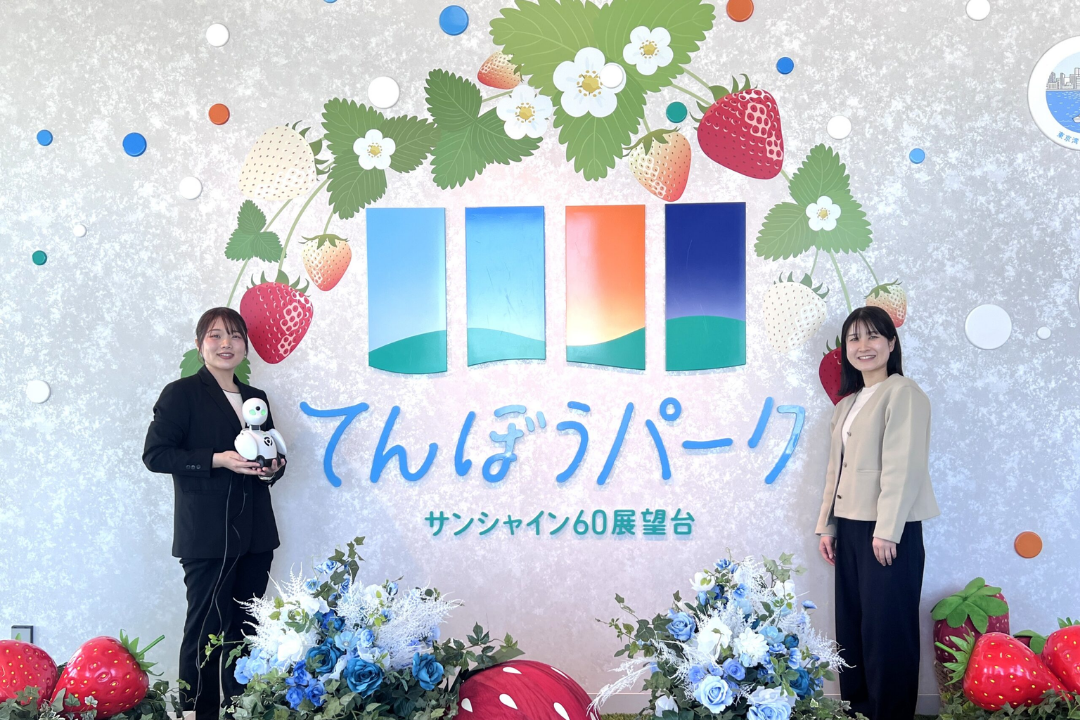
Newspapers, television programs, and online publications have frequently featured the actual workplaces where OriHime-D operates. Reports from cafés, public facilities, and event venues highlight people performing meaningful work through the robot. As a result, public attention shifts away from the technical novelty of remote operation and toward the broader reality of individuals with limited mobility participating in society through meaningful roles. In a society where discussions of disability employment and workplace diversity have often remained abstract, these visible examples provide something concrete and relatable.
It is also significant that OriHime-D has been discussed not only in welfare and healthcare circles but also within business and technology communities. Rather than being categorized solely as an assistive device, it is often linked to broader questions about labor, organizational structures, and social design. This has generated interest from companies, local governments, educational institutions, and other groups that might not typically engage with robotics initiatives.
The Ambitious Mission of Ory Laboratory
One point that appears repeatedly in evaluations is that the project has moved beyond the experimental stage. OriHime-D is not confined to laboratory demonstrations or short-term pilot programs. It has been operated over extended periods, allowing relationships between people to develop and continue. This achievement reflects Ory Laboratory’s long-standing emphasis on operational design and collaboration with real-world workplaces rather than focusing exclusively on technical perfection.
At the same time, its domestic track record is not composed solely of success stories. Discussions have also included deployments that failed to gain traction or situations in which expected roles did not function as intended. The willingness to share these challenges and shortcomings contributes to the technology’s credibility by presenting it as an ongoing process of social implementation rather than a finished solution.
Ultimately, OriHime-D’s achievements in Japan cannot be measured solely through metrics such as units sold or revenue generated. Their significance lies in the accumulation of practical examples showing where meaningful participation has been achieved and under what circumstances the model works. These experiences form the foundation for exploring future applications in new contexts.
Beyond Assistive Technology: Reimagining Social Participation Without Dependence on Mobility
The reason OriHime-D has the potential to attract international attention extends far beyond Japan’s welfare systems or employment practices. Its core value lies in rethinking social participation itself. Rather than assuming that participation depends on a person’s ability to travel, the system explores alternative ways for people to remain involved in society. This perspective connects with challenges faced by countries around the world.
Globally, many people find full-time commuting or regular travel difficult because of physical disabilities, chronic illnesses, mental health conditions, caregiving responsibilities, or childcare obligations. While remote work has expanded opportunities for some, not every job can be transformed into desk-based work. Roles involving customer service, education, information guidance, and community engagement still depend heavily on human interaction in physical spaces. OriHime-D can be viewed as a technology designed to bridge that gap.
A Tool for Social Participation
One of its strengths in international markets is that it is neither a medical device nor a welfare device. It does not diagnose, treat, or rehabilitate. Instead, it functions as a medium through which people can perform meaningful roles. Because of this, it is less likely to encounter direct conflicts with healthcare or insurance systems, an advantage in countries where such systems vary widely.
The robot may also appeal to organizations seeking to strengthen diversity and inclusion initiatives. Many companies speak about creating environments where people with diverse backgrounds and circumstances can contribute. OriHime-D offers a tangible way to demonstrate that commitment in practice, making an abstract principle visible in everyday operations.
However, international adoption also presents clear challenges. Cultural attitudes toward robots, expectations surrounding workplace interactions, and legal frameworks governing employment differ significantly across countries. The ease with which Japanese workplaces have accepted people working through robots may not be replicated elsewhere. For this reason, OriHime-D should not be viewed as a finished product ready for export but as a concept and approach that must be adapted to local circumstances.
Its global potential cannot be measured simply by future sales figures. The more important question is how societies can integrate forms of participation that are not limited by mobility or physical circumstances. The fact that OriHime-D opens up that discussion is itself a significant part of its international value.
What Its Limited Commercial Availability Reveals About the Product
OriHime-D has not yet been widely exported or sold overseas. This reflects Ory Laboratory’s development strategy rather than a lack of international interest.
Unlike a typical consumer product, OriHime-D depends on local employment systems, workplace culture, and social structures. Expanding too quickly could separate the technology from the social framework that makes it effective.
Interest from researchers, accessibility experts, and social entrepreneurs continues to grow. Many are less interested in purchasing the robot itself than in adapting its underlying concepts to their own countries.
Ory Laboratory is also careful to avoid positioning OriHime-D as simply a “robot for people with disabilities.” Instead, the company emphasizes its broader mission of enabling employment and social participation.
Rather than resisting global expansion, Ory Laboratory is refining the model in Japan first. This approach will help ensure that future international deployment can be adapted effectively to local needs while preserving the project's original vision.
Ensuring That Inability to Travel Does Not Mean Exclusion From Society
OriHime-D is not a product created to showcase the latest achievements in robotics. It is not defined by speed, precision, or a long list of advanced features. Yet despite this, the avatar robot has attracted attention both inside and outside Japan because it applies technology in a highly focused and purposeful way.
At the heart of Ory Laboratory’s work is a specific social challenge: the loss of opportunities for participation caused by physical limitations or environmental circumstances. When people cannot leave home or commute to work, they often lose access to employment, social interaction, and meaningful roles. OriHime-D was designed to interrupt this chain of exclusion by assigning only the task of physical movement to the robot while leaving human intention, judgment, and responsibility firmly in the hands of the operator.
What makes the concept particularly significant is that it is not confined to the language of assistance or charity. Operators are not positioned as recipients of help. They participate as workers, contributors, and individuals with responsibilities. Likewise, host organizations do not engage with them merely as people requiring accommodation. Instead, they become colleagues sharing common goals and tasks. Once that relationship takes shape, the robot begins to function as more than a device. It becomes part of the social environment itself.
The Evolution of a Platform
From an international perspective, the value of OriHime-D does not stem from Japan’s well-known interest in robotics. Its significance lies in questioning systems of work and participation that have traditionally assumed physical mobility. Aging populations, chronic illness, childcare responsibilities, caregiving duties, geographic isolation, and even conflict-related restrictions all create situations in which people cannot physically be present. Although the causes differ, the resulting exclusion is a challenge faced across the world.
This is also why Ory Laboratory has not rushed toward global expansion. The company does not see OriHime-D as a product that can simply be exported and sold. What truly matters is the design philosophy behind it: how societies can create conditions that allow people to remain present and engaged even when they cannot physically travel. That philosophy has the potential to be adapted across different cultures and systems.
OriHime-D is unlikely to revolutionize work in a dramatic or highly visible way. Its contribution is quieter than that. It offers a means of bringing people who might otherwise be excluded back into the social sphere. By demonstrating that mobility limitations do not have to result in the loss of roles, relationships, or participation, this Japanese innovation presents a practical vision of a more inclusive society.
Conclusion
OriHime-D is not simply a robot that allows people to communicate remotely. It represents a different way of thinking about participation itself. Rather than asking people with illness or disabilities to adapt to environments that were never designed for them, OryLab asks how society can be redesigned so that physical location is no longer the defining requirement for contributing, working, and connecting with others.
This philosophy reflects a broader shift taking place in Japan. As the country responds to an aging population, changing work styles, and growing awareness of accessibility and inclusion, technologies like OriHime-D demonstrate that innovation is not always about replacing people or automating tasks. Sometimes its greatest value lies in removing barriers that have quietly excluded people for generations.
Whether in cafés, public facilities, workplaces, or community spaces, OriHime-D shows that presence is about more than occupying the same room. It is about being able to interact, contribute, and be recognized as part of society.
As more countries rethink what inclusive communities should look like, OryLab's work offers an important reminder that the future of robotics may be defined less by mechanical capability and more by its ability to create opportunities for people to participate on their own terms.
FAQ About OriHime-D
1. What Kind Of Robot Is OriHime-D?
OriHime-D is a remotely operated avatar robot developed by Ory Laboratory. Controlled over the internet by a user in another location, it can communicate with people, provide customer service, and offer guidance, creating the feeling that the operator is physically present.
2. Where Is OriHime-D Used?
OriHime-D has been used in settings where human interaction is important, including cafés, corporate reception areas, public facilities, and event venues. It has also been introduced as a way for people who have difficulty leaving their homes or hospital rooms to participate in work remotely.
3. Is OriHime-D A Medical Or Caregiving Device?
OriHime-D is not a medical or caregiving device. It is an avatar robot designed to support remote communication and social participation. Rather than providing medical treatment, diagnosis, or care services, its purpose is to help people engage in work and social activities from a distance.
4. Can Anyone Purchase OriHime-D?
At present, OriHime-D is not sold as a consumer product like a typical household appliance. It is primarily deployed through projects involving businesses, organizations, and research institutions.
5. How Much Does OriHime-D Cost?
Ory Laboratory does not publicly disclose a standard retail price. Because deployment varies depending on the intended use and implementation requirements, pricing is generally provided on a case-by-case basis through direct consultation.
6. Is OriHime-D Used Internationally?
Interest in OriHime-D is growing internationally, although large-scale commercial deployment remains limited. Potential applications in international markets are being explored based on the experience and operational results achieved in Japan.
7. Why Is It Called An "Avatar Robot"?
OriHime-D is designed to be more than a remote-control device. Through the operator's movements, gaze, and conversations, it aims to convey the person's presence as naturally as possible. For this reason, it is often referred to as an avatar robot or "robotic alter ego."
8. Who Is OriHime-D Designed For?
It is intended to support people whose mobility is limited due to illness, disability, long-term medical treatment, childcare responsibilities, caregiving duties, or other circumstances that make travel difficult.
9. What Makes OriHime-D Unique?
One of OriHime-D's key features is that it is not designed to perfectly replicate a human being. Instead, it focuses on enabling natural communication and creating a presence that feels comfortable and accepted in real-world settings. Rather than adding increasingly complex functions, the design prioritizes ease of use over extended periods and emphasizes the features needed for meaningful human interaction.
10. What Is Ory Laboratory's Vision For OriHime-D?
Ory Laboratory aims to create a society where people do not lose opportunities for work or social participation simply because they cannot travel. Through avatar robots like OriHime-D, the company seeks to build a new form of social infrastructure that enables everyone to contribute, work, and remain connected with others regardless of physical limitations.
Related Videos
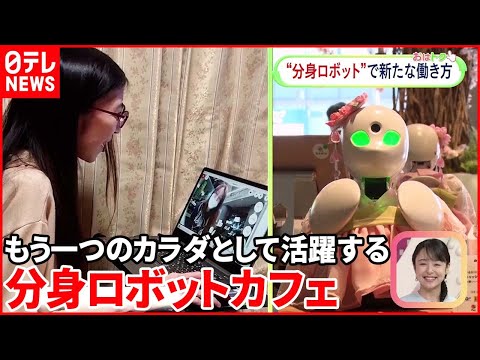
If you're interested in how robotics can expand social participation, the video below introduces a Japanese startup developing technology that allows people to be present and interact from almost anywhere. This video shows how remote-controlled robots can help overcome physical and geographical barriers while creating new ways to work, connect, and participate in society.