One day, the stuffed animal that had been by my side since childhood suddenly tore. The stitching on its arm came undone, and stuffing slowly began to peek out. No matter how much love you give, time always leaves its mark. Still, throwing it away was unthinkable — this little one is family.
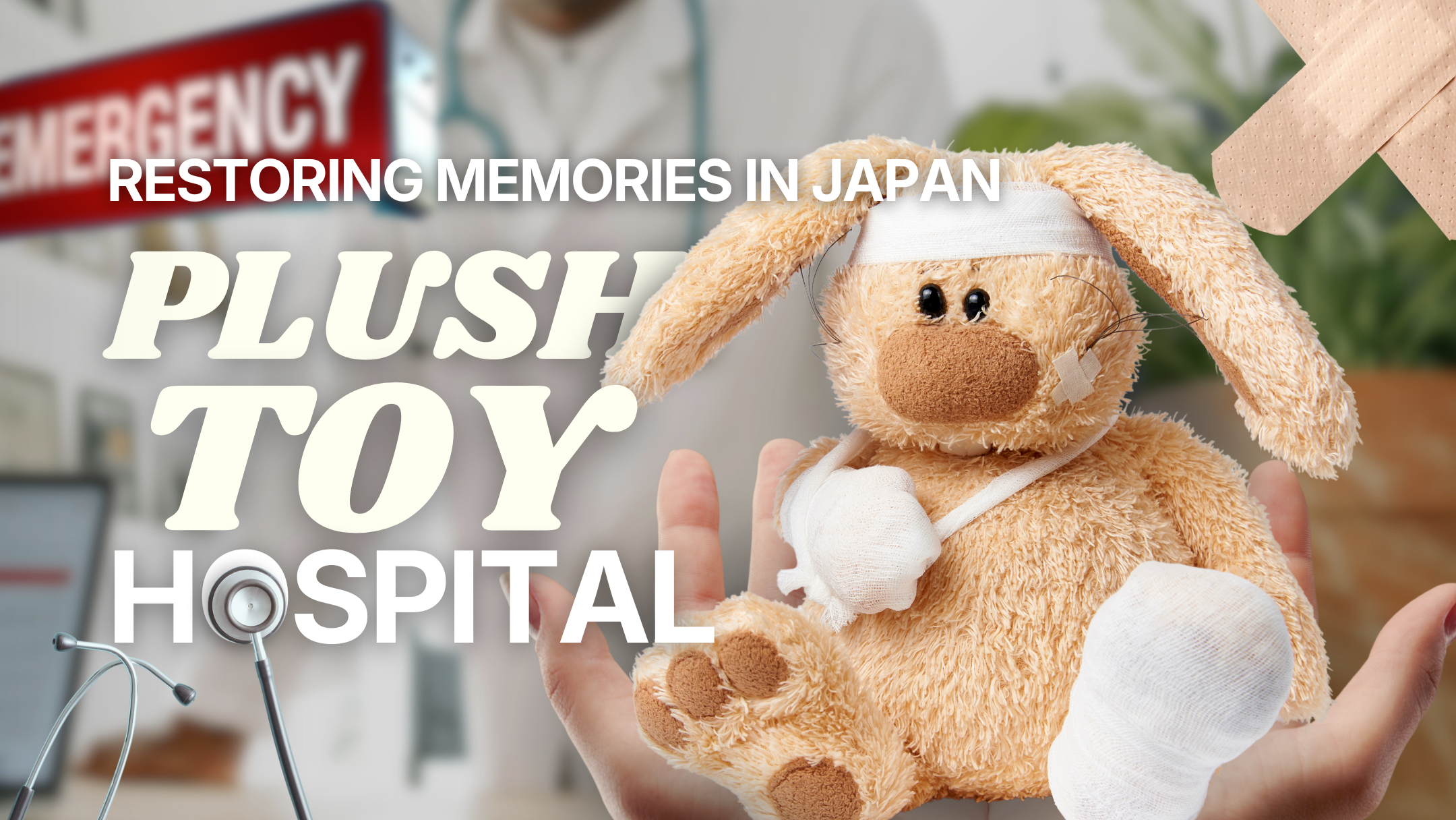
In Suginami, Tokyo, there is a place that understands this feeling. The “Plush Toy Hospital,” officially known as Natsumi Clinic Plush Toy Health Insurance, welcomes stuffed animals as “patients.” They are carefully examined and treated, sometimes even offered “hot spring therapy” or “café stays,” before being returned home. Modeled after a real hospital, the clinic values the emotional bond between people and their plush companions above all else.
Stuffed animals arrive carrying years, sometimes decades, of memories. One owner asked for their childhood teddy bear to be treated so they could carry it down the aisle at their wedding instead of a bouquet. These toys hold comfort, love, and irreplaceable moments.
Natsumi Clinic’s work reflects a broader shift from disposable culture to cherishing belongings for the long term. Their approach is not simply about repair, but about honoring memories and helping people carry them into the future. The idea has even drawn attention overseas, resonating with Japan’s unique culture of personification and emotional connection to objects.
In this article, we explore the philosophy and services behind this one-of-a-kind plush toy hospital — a gentle, heartfelt story that reminds us of the value of caring for the things we love.
Plush Toy Health Insurance Natsumi Clinic Overview
The unique service Plush Toy Health Insurance Natsumi Clinic specializes in the treatment and care of stuffed animals. Rather than simple “repairs,” it introduces medical-style processes such as “consultations” and “surgeries,” earning nationwide attention as a dedicated “plush toy hospital.” At the heart of the service is the philosophy of treating stuffed animals as “irreplaceable beings.” Treatments range widely, from stitching tears and restoring parts to offering services that focus on emotional care, such as “hot spring therapy” and “café stays during hospitalization.”
Patients are admitted by mail, allowing requests to be received from anywhere in Japan. On the official website, owners can fill out a medical chart and complete reservations, with detailed information on procedures and fees provided to ensure peace of mind when entrusting a beloved stuffed animal. The treatment process is also shared regularly through the clinic’s official Instagram and YouTube channels, allowing clients to follow their stuffed animal’s recovery in real-time. This careful and heartfelt approach continues to attract a devoted following.
The Concept of “Medical Sewing,” a Fusion of Medicine and Stitching
Mori no Natsumi Medical Sewing Co., Ltd. was founded in 2020 as a company creating new value by combining medicine and sewing. Its corporate philosophy is rooted in the belief that “saving stuffed animals means saving people’s hearts.” Drawing on her experience as a healthcare professional and her sewing skills, Representative Natsumi Hakozaki established a new form of care service. The term “Medical Sewing” in the company’s name symbolizes precisely this idea of “emotional healing through stitching.”
The company’s work goes beyond simple physical repairs. Behind every damaged stuffed animal are the memories and emotions of its owner, and by embracing all of these with care and attention, the company has gained many repeat clients and fans across Japan. In today’s age of social media, recommendations and personal stories are helping spread awareness of the clinic as a place that heals both stuffed animals and hearts.
At Natsumi Clinic, repairing a stuffed animal is treated almost like a medical procedure. This idea is the foundation of the clinic and the key feature of Mori no Natsumi Medical Sewing Co., Ltd., which runs it. The term “Medical Sewing” may not be familiar, but at Natsumi Clinic, it has a precise meaning. It combines sewing skills with medical-style methods, meticulous steps, and ethical considerations to create an entirely new kind of care.
Founder’s Vision
At the heart of this idea is the founder's unique career, Natsumi Hakozaki. She initially worked in the medical field, caring for both the physical and mental well-being of people. From that experience, she began to think that stuffed animals could also go through processes like “diagnosis,” “surgery,” and “recovery.” Just like in medicine, she believes that carefully considering “what is best for each patient” creates a value far greater than simple repairs.
For example, during a stuffed animal’s check-up, it is not only important to see “where it is damaged,” but also “how it has been loved” and “what kind of history it shares with its owner.” This way of thinking is very similar to medicine, where understanding a patient’s life background is key to diagnosis.
In sewing as well, it is not just about simple stitching. Great care is taken to “respect the original form as much as possible” and to “preserve the character of the toy.” This delicate approach is similar to plastic or reconstructive surgery, requiring careful judgment and skill.
All of the staff at Natsumi Clinic see themselves as professionals, what could be called “medical sewists,” and they approach every step with sincerity, from explaining treatment plans to offering post-discharge care advice. In their hands, sewing is not simply about fixing something broken, but about restoring it to a state where it can be loved again. Viewed this way, the everyday word “sewing” takes on a new meaning, carrying a sense of responsibility as if one were entrusted with life itself.
In addition, medical sewing also involves “ethics.” At Natsumi Clinic, there is a policy of never performing unnecessary procedures, in order to fully respect both the client's wishes and the stuffed animal’s own “personality.” The goal is not to make it look brand-new, but rather to “restore it to a state where it can continue to be together while preserving its unique character.” For example, the clinic may choose to leave worn spots on the face or a slightly uneven balance, seeing them as part of the history the stuffed animal has lived through. This approach is also similar to the patient-centered philosophy in medical practice.
In this way, the concept of “medical sewing” elevates stitching from a simple technical skill to a philosophy of care. It symbolizes Natsumi Clinic’s unique perspective of treating stuffed animals as if they were alive. It represents a pioneering effort to present a new kind of relationship between people and objects in today’s world.
From Checkup to Recovery: The Plush Toy Treatment Journey

Source: Natsumi Clinic Instagram
At the stuffed animal specialty hospital, Natsumi Clinic, the process is carefully structured just like a real hospital, with stages such as “initial consultation,” “examination,” “surgery,” “hospitalization,” and “discharge.” This approach provides clients with a sense of reassurance and trust that extends beyond a simple repair service. Let’s take a closer look at the steps through which stuffed animals regain their vitality at this clinic.
First, the stuffed animal’s “initial consultation” takes place through the mail. Stuffed animals from all over the country arrive at the clinic carefully packed in cardboard boxes, accompanied by a “medical chart.” This chart is created online in advance and includes details such as the stuffed animal’s name, age (equivalent in years), symptoms, and the owner’s thoughts. Much like a medical questionnaire for humans, it records information such as “where it hurts,” “how the damage occurred,” and “to what extent the owner wishes it to be restored.” Based on this, the most suitable treatment plan for the stuffed animal is determined.
Detailed Process of Stuffed Animal “Examination and Treatment”
Next comes the examination. Specialized staff carefully check the stuffed animal’s entire body, not only looking for external damage but also inspecting the condition of the stuffing, ensuring there are no foreign objects inside, and assessing the quality of the stitching. What’s noteworthy here is that this is not just a routine check, but rather an “examination through dialogue.” By listening to the owner’s memories and stories, the staff determines “what treatment would be best for this child.” In some cases, they even use photos or videos to simulate the stuffed animal’s appearance before and after treatment, allowing the family to discuss and decide on the course of care together.
Surgery involves not only “surgical procedures” such as stitching and part replacement, but also “internal care” like adjusting or cleaning the stuffing. Among the most popular services are the “full-body maintenance course” and “stuffing replacement or addition,” which comprehensively restore the stuffed animal’s condition. This treatment requires knowledge and experience that could be described as “stuffed animal anatomy,” involving the determination of how to stitch in a way that preserves the original shape and how much stuffing is needed to maintain its unique character. Adjustments are made down to the millimeter—truly delicate “stuffed animal medicine.”
Where Plush Toys Receive Care Like Real Patients
During hospitalization, a “hospital admission certificate” is issued, and treatment progress is regularly shared through social media and dedicated web pages. This provides great reassurance to owners, serving as a thoughtful system that eases the worry of “I wonder if my little one is doing okay.” The clinic even has a special “hospital room,” where photos are taken to show the stuffed animals resting comfortably. Blankets and small props are added to the shots, conveying the warmth and care with which they are being looked after.
And then comes “discharge.” Once treatment is complete, the stuffed animal is sent home with a discharge certificate, sometimes dressed with a new bandage or ribbon. A “welcome home” message card or even a handwritten note from the staff may also be included, making the reunion between the stuffed animal and its owner a truly heartwarming moment.
In this way, Natsumi Clinic’s “examination and treatment” process applies a medical framework to sewing while also encompassing emotional and psychological care, making it a highly refined human-centered service. A stuffed animal is never seen as just an “object,” but as a bundle of memories and emotions—and that philosophy runs through every step of the process.
Unique Services such as “Hot Spring Therapy” and the “Hospital Café”

Source: Natsumi Clinic Instagram
One of the most outstanding appeals of Natsumi Clinic: Stuffed Animal Health Insurance is its unique range of services that extend beyond treatment to provide “emotional care.” Among the most notable options are “Hot Spring Therapy” and the “Hospital Café.” These are not just for show, but rather Natsumi Clinic’s original approach to healing—designed to “warmly, gently, and compassionately watch over each stuffed animal’s recovery.”
Hot Spring Therapy: A Soothing Experience for Plush Recovery
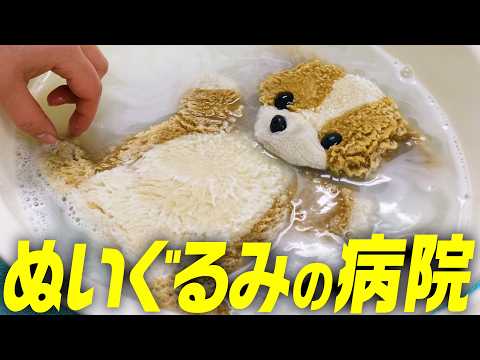
The first feature worth highlighting is “Hot Spring Therapy.” This service offers a “bath exclusively for stuffed animals,” where staff carefully bathe them to remove dust and dirt and soothe the fatigue accumulated over the years. The water temperature, bathing time, and condition of the stuffing are each adjusted, creating a personalized “bathing plan” for each. Gentle cleansers and water specially designed for stuffed animals are used, with meticulous care taken to prevent color fading or loss of shape.
Scenes from Hot Spring Therapy are often shared on Instagram and other social media platforms, showing stuffed animals soaking in the baths as if they were relaxing on a getaway trip. Many owners express their delight and surprise with comments like, “My little one is in an open-air bath!” This shows just how popular the service has become.
Hospital Café: A Cozy Stay During Recovery
Meanwhile, the “Hospital Café” is a space offered as a time of relaxation during treatment or just before discharge, where stuffed animals are surrounded by tea, coffee, and sweets. Of course, they don’t actually eat or drink, but they are seated at a table with a cup in front of them, and photos are taken to capture the cozy scene. These images are then shared with the owner as a kind of “photo diary.” The café space is situated within the clinic, featuring soft lighting and warm décor that create a Scandinavian-style boutique ambiance.
This “café stay” can be viewed as a kind of “pre-farewell period” preceding discharge. For owners, it fulfills the wish to “give my stuffed animal just a little more healing” or “let them enjoy a brief vacation-like moment.” Seeing their stuffed animals sitting sweetly on the café chairs, some owners are even moved to tears, saying, “Now I finally feel at peace sending them home.”
Moreover, these services also have the secondary effect of “healing the owner’s heart by caring for the stuffed animal.” Watching their beloved companion being treated with such care allows owners to feel that “their own memories are being cherished.” It becomes an experience that affirms the past while giving them the courage to move forward into the future.
The services at Natsumi Clinic possess a uniqueness not found at any other repair shop, leaving the entire experience etched in the owner’s heart as a kind of “story.” Rather than simply providing a repair, the clinic offers an “experience.” It is this very philosophy that makes Natsumi Clinic a truly one-of-a-kind “specialty hospital for stuffed animals.”
A Social Media-Connected “Visible Hospitalization Experience” for Stuffed Animals

Source: Natsumi Clinic Instagram
One of the reasons Natsumi Clinic: Stuffed Animal Health Insurance continues to capture so many hearts is its “visualized hospitalization experience.” The entire process, showing how the stuffed animals are examined, treated, and regain their vitality, is shared through social media almost like a documentary. This approach creates an unparalleled sense of “transparency” and “emotional connection” that cannot be found elsewhere.
Sharing “Hospital Life” Through Social Media
Natsumi Clinic utilizes multiple social media platforms, including Instagram, YouTube, and X (formerly Twitter), to document and share the “hospital life” of stuffed animals through photos and videos. For example, posts may show a stuffed animal lying on a bed during its first consultation, wearing a mask during surgery, or relaxing during hot spring therapy, all accompanied by warm comments from the staff. Each of these moments is carefully recorded with love, while respecting the unique personality of every stuffed animal.
This “visualization of stuffed animals” holds great significance for owners. Typically, when leaving an item with a repair service, there is always some anxiety about whether it will be returned in a genuinely adequate condition. That concern is even greater when the item is a stuffed animal, which represents cherished memories and emotions. At Natsumi Clinic, however, each stuffed animal is treated as if it were a person, and its daily condition is carefully reported. This allows owners to feel a real-time sense of reassurance, knowing, “My little one is safe right now.”
Building a Community Through Shared Stories
What is particularly noteworthy is that these posts are not simply publicity but function as “shared stories.” Many followers cheer on the stuffed animals throughout their entire stay, from admission to discharge, as if watching over a member of their own family. The comments are filled with words of empathy and encouragement, such as “Wishing for a speedy recovery” and “My little one is also being cared for there right now!” Through each stuffed animal, a kind of community is created, connecting many people.
On social media, posts titled “Stuffed Animal Discharge Report” are especially popular. These include before-and-after photos, details of the treatments performed, and explanations of what was prioritized during the restoration. More than just a record of results, these posts visualize the story of “how this little one has been loved until now, and how it will continue to live on from here.” Many users respond with heartfelt comments, moved by the narratives behind each stuffed animal.
In addition, this kind of visualization has significantly lowered the psychological barrier to sending stuffed animals in for treatment. Many owners begin to think, “If other little ones are being hospitalized, maybe I can entrust mine as well,” which has led to a large number of new requests coming directly from social media. For the clinic, this creates value far beyond simple marketing, functioning as a system that builds a chain of trust.
Redefining Value Through Shared Experiences
Today, people seek reassurance in “being able to see.” Knowing in a visible way what is being done to a stuffed animal, who is caring for it, and how it is being treated greatly enhances the overall trustworthiness of the service. Above all, sharing the “story of rebirth” of each stuffed animal with many others through social media provides an opportunity to revalue the very culture of cherishing objects.
Conclusion
Natsumi Clinic: Stuffed Animal Health Insurance is not merely a place to “repair” worn-out stuffed animals. It is a gentle medical space that gives these “companions of the heart,” filled with memories and emotions, the chance to be embraced once more.
The treatments based on the concept of “medical sewing” are a unique initiative worldwide, combining medical ethics with sewing techniques. At the heart of this approach is a deep respect for the individuality and history of each stuffed animal, with careful decisions made every day to preserve its unique character. The treatment process itself follows a medical model that includes examination, surgery, hospitalization, and discharge, designed to minimize the impact on the owner's feelings as much as possible.
What is particularly striking are services such as “Hot Spring Therapy” and the “Hospital Café,” which may seem unrelated to treatment but, in fact, bring deep healing to both the stuffed animals and their owners. Underlying these services is a distinctly Japanese perspective of showing love, engaging in dialogue, and offering care even to “things.” It is not merely about restoring function, but about providing care that helps owners “remember their sense of affection once again.”
Through the modern medium of social media, these stories are now shared far beyond the owners themselves. Followers are often moved by the discharge reports of stuffed animals they have never met, quietly offering their feelings with the thought, “This little one was someone’s treasure too.” In this way, the memories of strangers become connected to the kindness and actions of others. This chain of empathy can be seen as one form of the “social healing” created by Natsumi Clinic.
In fact, the letters received at Natsumi Clinic are filled with words of gratitude, often written through tears of joy. “It feels like a dream to be able to hold this little one again.” “After my daughter passed away, this stuffed animal was my only memory of her, and now I can keep it by my side once more.” Each of these voices speaks to the profound role the clinic fulfills. Restored stuffed animals, often adorned with a new ribbon, return to daily life once again. And every time their owners see them, they are reminded: “You don’t have to throw away what is truly precious.”
The unique concept of a specialty hospital for stuffed animals teaches us that instead of “throwing things away when they break,” there is another choice: “to repair them and love them once more.” This space, filled with kindness, gently embraces not only the stuffed animals but also our own hearts.
A culture that treasures the memories carried by objects. A sense of responsibility and respect toward the things we love. And this place, which embodies all of that in the form of “medicine,” may well be considered a true “hospital of hope” in today’s society.
FAQ About Natsumi Clinic Plush Toy Health Insurance
1. What Is Plush Toy Health Insurance?
Plush Toy Health Insurance is a service designed to help maintain and repair cherished plush toys. Through repairs, cleaning, and ongoing care, the service helps owners preserve sentimental items and continue using them for years to come. The concept treats plush toys not simply as objects, but as meaningful companions with emotional value.
2. What Types Of Treatment Does Natsumi Clinic Provide?
Services include repairing damage, replacing stuffing, cleaning, and restoring damaged parts based on the condition of the stuffed animal. In addition to appearance, careful attention is also given to preserving texture and feel.
3. Can Any Type Of Stuffed Animal Be Accepted?
A wide variety of stuffed animals can generally be serviced, although some materials or conditions may make repair difficult. Consultations are available in advance to determine whether restoration is possible.
4. Is It Safe To Entrust A Sentimental Stuffed Animal?
Yes. The service places strong emphasis on respecting the emotional value attached to each item, treating the process as “caring for memories” rather than simple repair work. Clients are encouraged to share the background and story behind the item, helping create a reassuring experience.
5. How Long Do Repairs Usually Take?
The timeframe depends on the extent of the repairs and the condition of the stuffed animal, but it may take anywhere from several weeks to several months. Since repairs are performed carefully by hand, the process is intentionally thorough and time-intensive.
6. What Is The Typical Cost?
Pricing varies depending on the repair details and condition of the stuffed animal, so estimates are provided individually. Services range from minor touch-ups to large-scale restorations, so it is recommended to consult in advance.
7. Why Is It Called “Health Insurance”?
The concept reflects the idea of maintaining and caring for stuffed animals over time through regular maintenance, much like preventive care. Rather than treating repairs as one-time fixes, the service is designed to support long-term preservation.
8. Who Is This Service Best Suited For?
It is ideal for people who want to restore stuffed animals they have treasured for years or preserve emotionally meaningful items with care. It is especially suitable for gifts, childhood companions, or keepsakes with strong sentimental value.
9. Are There Any Drawbacks Or Points To Consider?
Because repairs are done carefully by hand, they may require significant time and cost. In addition, it may not always be possible to restore the item perfectly to its original condition, so discussing expectations in advance is important.
10. What Is The Greatest Appeal Of This Service?
Its greatest appeal lies in preserving memories rather than simply repairing an object. By respecting the emotional connection and shared history between the owner and the stuffed animal, the service helps ensure those memories can continue.
Related Videos
If you're interested in Japan’s unique approach to care and craftsmanship, the video below introduces Natsumi, the world’s only hospital dedicated to repairing plush toys. This video shows how skilled artisans restore damaged toys while preserving the emotional value and memories attached to them.