
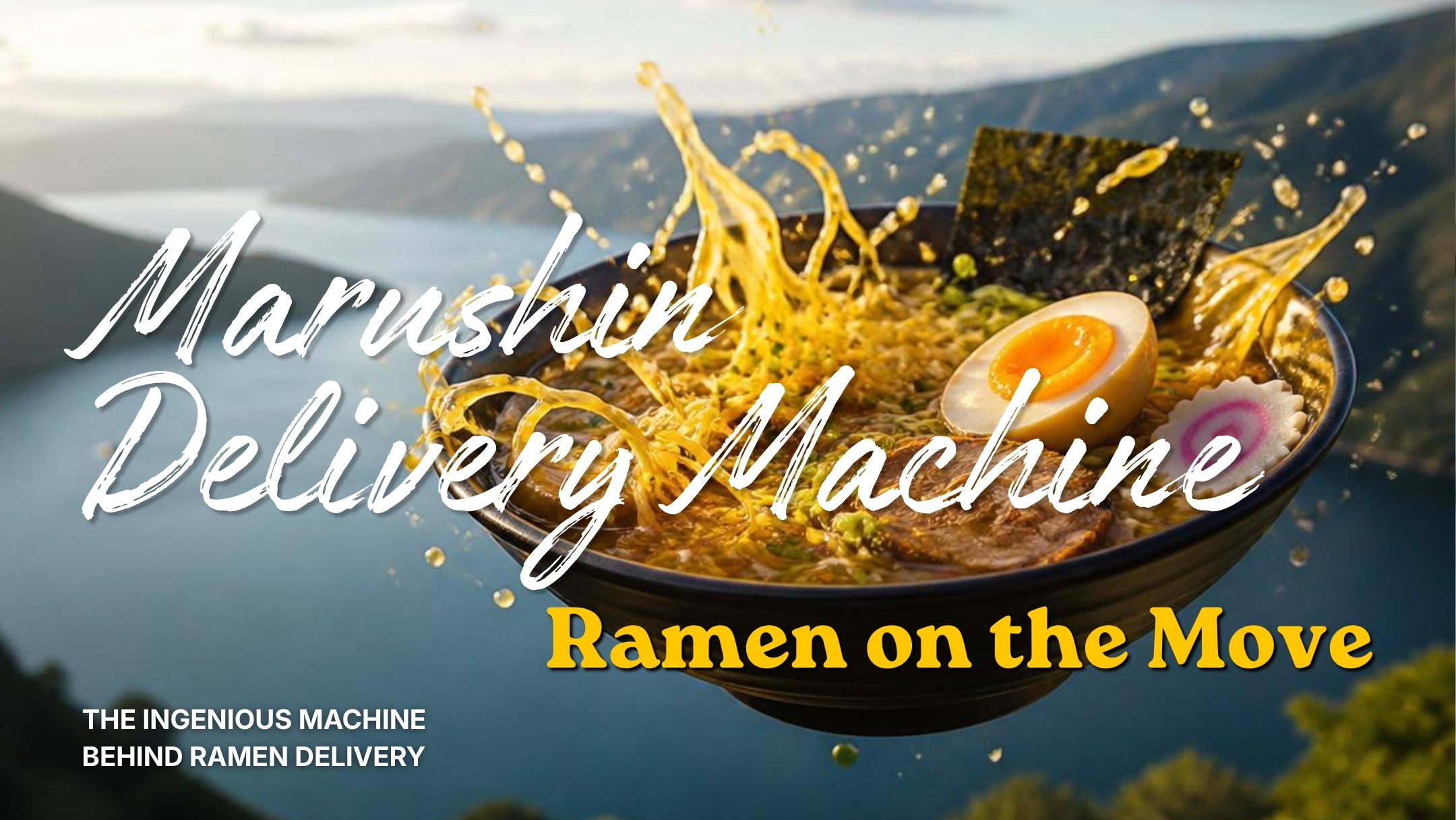
Walk through almost any Japanese city, and you may occasionally spot a curious sight. Attached to the back of a scooter is a metal rack stacked high with bowls of ramen, rice bowls, or lacquered food containers. The vehicle climbs hills, navigates sharp corners, stops at traffic lights, and accelerates again. Yet somehow, not a single drop spills.
For many visitors to Japan, it seems almost impossible.
This unusual device is called a demae-ki, or food delivery machine, and it has quietly supported Japan's restaurant industry for decades. Among the companies most closely associated with this technology is Marushin, a manufacturer whose delivery machines have become a familiar part of Japanese food culture.
While modern food delivery services increasingly rely on insulated backpacks, apps, and gig-economy couriers, Marushin's delivery machines remain unmatched when it comes to transporting traditional Japanese dishes such as ramen, udon, soba, and rice bowls. These foods are notoriously difficult to move without damaging their appearance or spilling their contents.
The story of the Marushin delivery machine is not simply about transportation equipment. It is a story about how engineering, food culture, and urban design came together to solve a uniquely Japanese problem.
Marushin Delivery Machine Overview
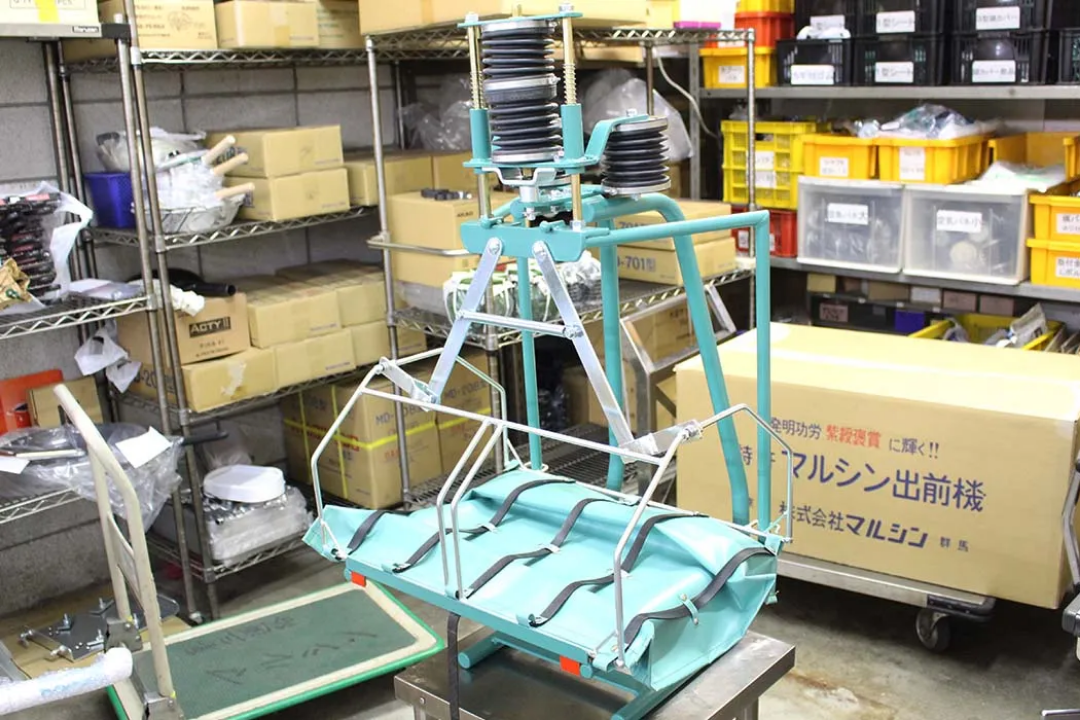
The Marushin Delivery Machine is a motorcycle-mounted food transport system used primarily by restaurants across Japan. Its defining feature is a unique balancing mechanism that keeps food level even when the motorcycle encounters bumps, slopes, sharp turns, or sudden stops.
The system consists of multiple stacked trays that remain remarkably stable during transit, allowing restaurants to deliver dishes that would normally be difficult to transport, including ramen, udon, soba, rice bowls, and other meals containing broth or sauces. In a country where preserving the presentation and quality of food is considered essential, this capability has made the device an indispensable tool for generations of restaurant owners.
Although its appearance is relatively simple, the engineering behind the machine reflects decades of real-world experience. The design takes into account Japan's narrow streets, steep hills, frequent stop-and-go traffic, and dense urban environments. Durability and practicality take priority over flashy innovation, making it a specialized piece of professional equipment rather than a mass-market consumer product.
The Engineering Philosophy Behind Spill-Free Delivery
Source: Nakagawa Masashichi Shoten Stories
The first question many people ask when they see a Marushin delivery machine is surprisingly straightforward:
How does food stay upright on a moving motorcycle?
Considering the realities of everyday riding, the answer is far from obvious. Motorcycles lean into corners, travel over uneven roads, brake suddenly, and climb steep hills. Under such conditions, transporting bowls of soup without spilling would seem nearly impossible.
The secret lies in a clever mechanical design that uses gravity itself as the stabilizing force.
Mechanics Without Electronics: The Logic of Passive Stabilization
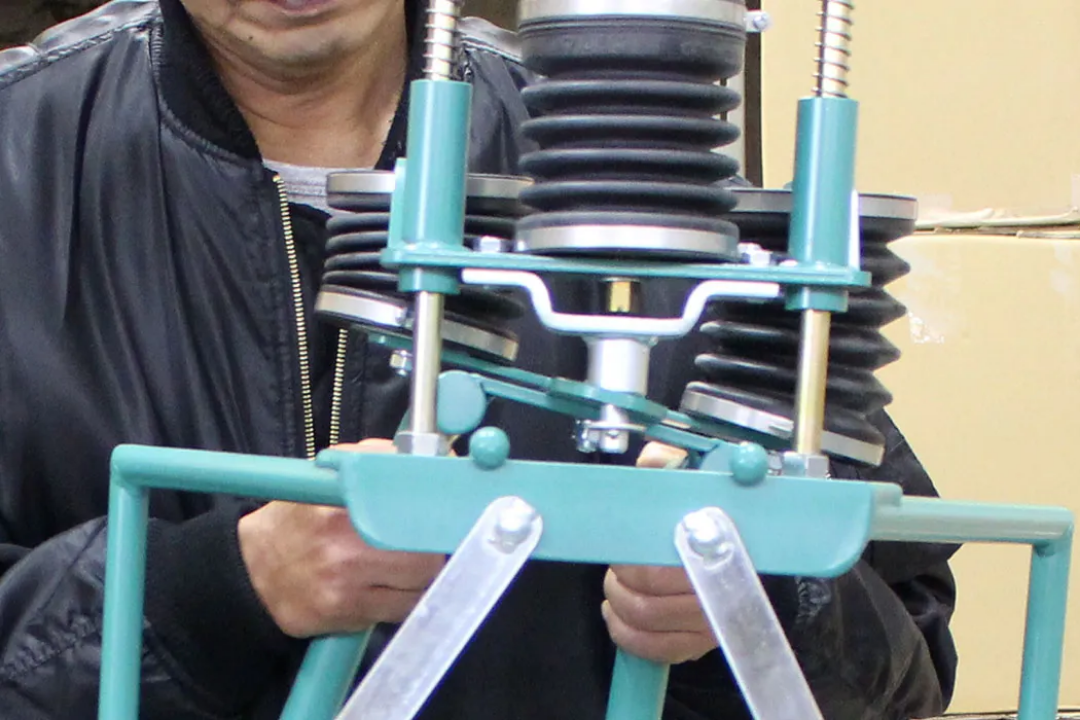
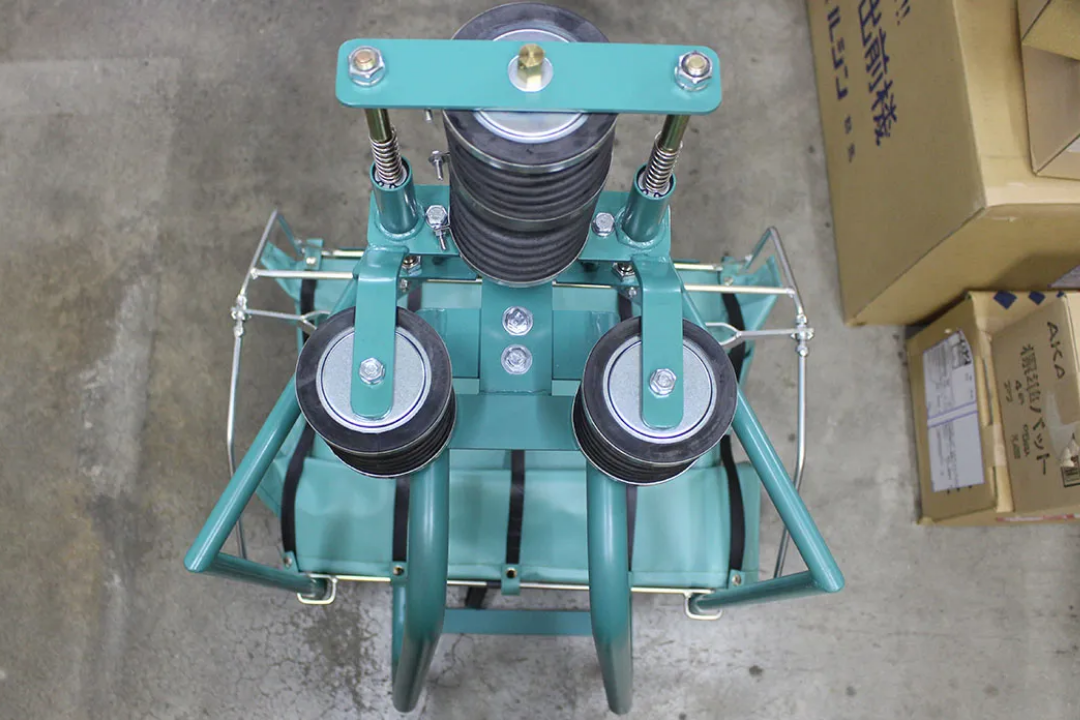
At the heart of the delivery machine is a suspended platform that continuously seeks a level position. Even when the motorcycle tilts, the cargo section naturally adjusts to maintain its horizontal orientation. Unlike modern stabilization systems, this mechanism relies neither on electronics nor sensors. Instead, it works through carefully calculated weight distribution, pivot points, and balance.
Rather than resisting movement, the system adapts to it
This philosophy runs throughout the entire design. The goal is not to eliminate vibration or motion. Instead, the machine allows movement while ensuring that the food remains stable.
The multi-tier tray structure also plays a critical role. Each shelf is positioned to maintain an optimal center of gravity across the entire unit. Weight distribution between upper and lower trays, pivot placement, and range of motion have all been refined through years of practical use.
If any of these elements were poorly designed, vibrations would be amplified rather than absorbed, making the system unstable. The final product represents a blend of engineering principles and decades of feedback from restaurant workers who rely on it every day.
Another important aspect of the design is simplicity.
Restaurant staff do not have time for complicated adjustments during busy lunch or dinner rushes. The machine is designed so that users can load food and begin delivery without specialized training. Stability is built directly into the structure rather than relying on operator skill.
The Marushin Delivery Machine is not packed with cutting-edge technology. Yet by focusing exclusively on the functions that matter most in daily operations, it has become a remarkably refined tool. Its singular purpose is to transport food without disturbing it, and more than fifty years of continuous use suggests that it accomplishes that goal exceptionally well.
Why This Technology Evolved in Japan
Few countries have developed a delivery culture as unique as Japan's. In most parts of the world, restaurant food is either eaten on-site or taken away by the customer. Japan, however, embraced a third option much earlier than many other countries: enjoying restaurant-quality meals at home, at the office, or even at a worksite. The Marushin delivery machine exists because of this long-standing cultural expectation.
Several factors helped shape Japan's delivery culture. One of the most important was the popularity of foods such as ramen, udon, soba, rice bowls, and other dishes containing broth or liquid components. These meals are notoriously difficult to transport and would normally be considered best suited for in-store dining. Yet Japanese customers expected them to arrive hot and in near-perfect condition. Meeting that expectation pushed delivery technology to evolve in ways rarely seen elsewhere.
Defying Physics: How Ramen Stays Upright on Two Wheels
Japan's urban environment also played a major role. Many cities feature narrow streets, steep slopes, and countless tight corners where motorcycles are often more practical than cars. Because motorcycle delivery became the norm, restaurant owners needed a way to protect delicate dishes from constant movement, vibration, and changes in angle. The delivery machine emerged as a practical solution to these challenges.
Equally important is Japan's concept of hospitality, or omotenashi. Delivery has traditionally been viewed as more than a convenience service. Customers expect a meal to arrive looking as though it has just left the kitchen. Preventing spills is only the starting point. Preserving presentation, balance, and overall quality is considered part of the dining experience itself. This cultural expectation pushed manufacturers to pursue an unusually high level of refinement.
The result was the development of a highly specialized piece of equipment that could only have emerged from the intersection of Japanese food culture, urban design, and consumer expectations. The Marushin delivery machine represents one of the most mature expressions of that evolution, quietly continuing to serve restaurants across Japan today.
Why Restaurants Keep Using It: The Underrated Value of Durability
Source: Nakagawa Masashichi Shoten Stories
The reason the Marushin delivery machine has remained in service for decades is not that it looks modern or attracts attention. Its greatest strength is durability. Restaurant delivery is far from a controlled environment. Riders work in rain and wind, navigate uneven roads, stop and start repeatedly, and carry meals that often include liquids. Under these demanding conditions, reliability becomes far more important than appearance.
The machine is built with this reality in mind. Its construction prioritizes strength over lightweight design, using robust metal components capable of withstanding years of daily use. While reducing weight is often a goal in modern product design, Marushin takes a different approach. If a slightly heavier structure improves stability and reduces the risk of failure, that tradeoff is considered worthwhile. For short-distance restaurant delivery, dependability matters more than shaving off a few kilograms.
Consumer Expectations as a Catalyst for Innovation
Another reason for its longevity is repairability. The machine's straightforward mechanical design allows worn parts to be replaced without replacing the entire unit. For restaurant owners, equipment is an investment tied directly to daily operations and revenue. A tool that can be repaired and returned to service offers far greater value than one that must be discarded when a component fails.
The design also reflects a deep understanding of the people who use it. Ease of loading, secure placement of dishes, and predictable handling during delivery are all critical factors. These qualities rarely appear in marketing materials, yet they make a significant difference to riders who use the equipment every day. The fact that the overall design has changed relatively little over the years is not a sign of stagnation. Instead, it suggests that the machine already fulfills its intended role exceptionally well.
As new delivery technologies continue to emerge, the Marushin delivery machine remains relevant because it focuses on fundamentals. It is durable, repairable, and easy to use. Those qualities may not be flashy, but they are precisely what have earned the trust of generations of restaurant operators and delivery riders throughout Japan.
Why Similar Systems Never Became Common in the West
When people outside Japan first encounter the Marushin delivery machine, they often ask the same question: why would a restaurant need such a specialized device? The question itself reveals how closely this technology is tied to Japan's unique food culture and urban environment. Comparable systems are rarely seen in North America or Europe because the conditions that led to their development simply did not exist to the same degree.
One major factor is the type of food typically delivered. In many Western countries, delivery and takeaway menus are dominated by items such as pizza, burgers, sandwiches, and other foods that can tolerate movement without significantly affecting quality. Japanese delivery culture, by contrast, includes ramen, udon, soba, rice bowls, and other dishes containing broth or delicate presentations. Delivering these meals in a condition close to what customers would receive in a restaurant requires more than careful packaging.
The Cultural Roots of Japan’s Obsession with Perfect Delivery
The preferred delivery vehicle also differs. In many Western cities, deliveries are commonly made by car, allowing food to be secured within an enclosed cargo space. Japanese cities present different challenges. Narrow roads, limited parking, and dense urban layouts make motorcycles a more practical option. Once motorcycles became the primary delivery vehicle, the need for a stabilization system became much more apparent.
Consumer expectations further widened the gap. In many markets, customers accept that a delivered meal may arrive slightly shifted or less visually appealing than it was when prepared. In Japan, there has traditionally been a stronger expectation that the meal should arrive looking as close as possible to its original presentation. The dining experience includes not only taste but also appearance and balance. Delivery machines evolved to help restaurants meet that expectation.
For these reasons, the Marushin delivery machine is not simply a transportation tool. It is a product shaped by a specific combination of cuisine, city design, and cultural values. Its absence elsewhere is not a sign that similar technology could not be built. Rather, most markets never faced the same set of demands that made such a solution necessary in the first place.
The Value of the Marushin Delivery Machine in the Age of Food Delivery Apps
Today, ordering food often means opening an app and waiting for a courier carrying an insulated delivery bag. This model has transformed the restaurant industry around the world, prioritizing convenience, speed, and scalability. Yet despite these changes, the Marushin delivery machine has not disappeared. Its continued presence highlights a different philosophy of food delivery.
A Tool with a Singular Purpose: The Legacy of the Marushin Machine
Modern delivery platforms generally assume that food will be adapted for transport. Containers are designed to prevent leaks, packaging is optimized for portability, and a certain degree of movement or presentation loss is considered acceptable. Traditional Japanese delivery services were built around a different goal: bringing restaurant food to customers in a condition as close as possible to the original dining experience.
This difference becomes particularly noticeable with dishes such as ramen, soba, and rice bowls. The arrangement of ingredients, the balance between broth and toppings, and the overall presentation all contribute to the quality of the meal. The Marushin delivery machine is designed not only to make food easier to transport, but to protect the integrity of the food itself.
The system is also well suited to neighborhood restaurants that maintain close relationships with local customers. Rather than serving as part of a large delivery platform, it supports direct connections between restaurants and their communities. In this sense, the machine is more than a piece of equipment. It helps preserve a style of local food service that has existed in Japan for generations.
Although it is not a cutting-edge technology, the Marushin delivery machine continues to perform its task remarkably well. In an era defined by rapid change, it serves as a reminder that successful delivery is not only about speed and efficiency. It is also about deciding what aspects of the dining experience are worth preserving.
A Quiet but Essential Part of Japanese Food Culture
Source: Nakagawa Masashichi Shoten Stories
At first glance, the Marushin delivery machine may seem like an ordinary piece of equipment that blends into everyday life in Japan. In reality, it reflects a unique combination of food culture, urban geography, and consumer expectations. Delivering soup-based meals without spilling them, preserving presentation, and maintaining quality throughout the journey is a far more complex challenge than it appears.
What makes the machine remarkable is that it solves this problem without relying on sophisticated electronics or advanced digital systems. Instead, it uses carefully balanced mechanical design and the natural principles of gravity and motion. Its durability and repairability reflect a practical approach to manufacturing that prioritizes long-term reliability over short-term trends.
As food delivery apps continue to reshape the industry, it would be easy to view traditional delivery machines as relics of the past. Yet the Marushin delivery machine represents a different way of thinking about delivery. Rather than simply moving food from one location to another, it focuses on preserving the experience the restaurant originally intended to create.
The machine may never be the star of the story, but it has quietly supported Japan's delivery culture for decades. By helping restaurants bring meals to customers with care and consistency, it continues to play an important role in connecting people with the food they love.
Conclusion
The Marushin delivery machine is a reminder that meaningful innovation is not always digital, connected, or highly visible. Sometimes, the most enduring technologies are those that solve a single problem so well that they quietly become part of everyday life.
For decades, this self-leveling delivery system has helped Japanese restaurants transport ramen, soba, rice bowls, and other delicate meals through crowded streets without compromising their presentation. Its continued use reflects more than clever engineering. It embodies a broader philosophy that values craftsmanship, reliability, and respect for the dining experience from the moment a dish leaves the kitchen until it reaches the customer.
In an era dominated by delivery apps, GPS tracking, and algorithm-driven logistics, the Marushin delivery machine highlights another side of innovation. While modern platforms have transformed how food is ordered, this humble mechanical device continues to preserve how certain foods are meant to be enjoyed. Rather than adapting the meal to fit the delivery system, it adapts the delivery system to protect the meal.
Ultimately, the Marushin delivery machine is more than a piece of restaurant equipment. It is a quiet expression of Japanese problem-solving, where practical engineering and cultural expectations come together to create solutions that endure. Sometimes, the most remarkable technology is the kind people barely notice; until they realize not a single drop has spilled.
FAQ About Marushin Delivery Machines
1. What Are Marushin Delivery Machines?
Marushin Delivery Machines are motorcycle-mounted food delivery systems used by restaurants throughout Japan. Designed to help keep food level during transport, they allow dishes such as ramen, rice bowls, and soups to be delivered with minimal spilling, even on uneven roads or steep inclines.
2. Why Do Marushin Delivery Machines Help Prevent Spills?
They use a unique self-leveling mechanism that helps keep the cargo platform as level as possible while the motorcycle is in motion. Rather than relying on electronic controls, the system uses gravity and carefully balanced pivot points to reduce the effects of bumps, vibrations, and changes in road angle.
3. What Types Of Food Are Marushin Delivery Machines Best Suited For?
They are particularly well suited for transporting dishes that contain broth or liquid, such as ramen, udon, soba, and rice bowls. One of their key advantages is the ability to keep food as stable as possible during delivery, helping preserve its appearance and overall condition until it reaches the customer.
4. Why Have Marushin Delivery Machines Remained In Use For So Long?
Their durability and practicality are key reasons for their longevity. Built for everyday use, they can often be maintained through repairs and replacement parts rather than complete replacement. Their simple, reliable design has earned the trust of restaurants for decades.
5. Why Did This Type Of Delivery System Develop In Japan?
In Japan, a strong demae (food delivery) culture developed around delivering hot meals, such as ramen and rice bowls, directly to homes and workplaces. As motorcycles became a common way to navigate the country's narrow streets and hilly urban areas, specialized delivery machines evolved to help keep food stable and maintain its quality during transport.
6. Why Haven't Similar Systems Become Common Internationally?
In many countries, food delivery has traditionally focused on items such as pizza, sandwiches, and burgers, which are easier to transport. Car-based delivery is also more common. In contrast, Japan's culture of delivering soups, noodles, and other liquid-based dishes by motorcycle created demand for specialized equipment that could keep food level during transit.
7. Are Marushin Delivery Machines Still Used Today?
Yes. They continue to be used by many local restaurants, particularly those specializing in noodle dishes and rice bowls. Because they help maintain food quality and presentation during transport, they remain a practical solution even in today's food delivery market.
8. What Is The Most Distinctive Feature Of Marushin Delivery Machines?
Their most distinctive feature is their self-leveling structure, which helps keep food stable while the motorcycle is moving. By using gravity and balanced weight distribution, the system minimizes the impact of road vibrations, turns, and inclines.
9. Do Marushin Delivery Machines Use Advanced Technology?
No, Marushin Delivery Machines do not rely on electronic controls or advanced digital technology. Instead, they use a simple mechanical design based on the principles of physics, combining durability with long-term reliability. The focus is on practicality, allowing them to withstand the demands of daily use and remain in service for many years.
10. What Value Do Marushin Delivery Machines Bring To Japanese Food Culture?
Their value lies in helping restaurants deliver meals in a condition that closely resembles how they are served in the restaurant. By helping preserve not only the taste of the food but also its presentation and overall quality during transport, Marushin Delivery Machines have played an important role in supporting Japan's unique food delivery culture.