
A taxi drives through the city at night. From inside its windows, what spills out is not the sound of an engine—but people’s singing voices. Behind the wheel sits a seasoned driver, yet what he offers his passengers isn’t just a confirmation of their destination. Handing them a remote control, he asks, “Which song would you like to sing?” This is the “karaoke taxi,” a unique service that has been quietly gaining attention in recent years.
Japan is a country proud of its world-famous karaoke culture. Since its birth in the 1970s, karaoke has become a beloved pastime—something to enjoy alone or to bond with friends. However, due to the COVID-19 pandemic and increasingly diverse lifestyles, fewer people are visiting traditional “karaoke boxes,” and the industry as a whole has declined. Amid these changes, a new concept has emerged: a “mobile karaoke space”—a service that transforms the inside of a taxi into a stage.
The birth of the karaoke taxi is more than just a publicity stunt. Japan’s taxi industry is facing challenges such as an aging workforce and a driver shortage, as well as an unstable structure that is heavily affected by fluctuations in tourism demand.
At the same time, in regional cities, the increase in inbound tourism has created demand for new forms of value that combine transportation with experiential entertainment. In response, taxi companies began turning the concept of “mobility x entertainment” into reality—thus, the karaoke taxi was born.
Passengers can use the onboard karaoke equipment to sing their favorite songs while traveling. The time spent en route to their destination transforms from “a boring ride” into “a special experience.” Moreover, karaoke is a universal cultural activity that transcends language barriers. In addition to Japanese songs, the system offers English, Chinese, and Korean tracks, providing international travelers with a truly memorable experience during their visit to Japan.
This initiative has also become a hot topic in Niigata, a lively city facing the Sea of Japan. In recent years, more foreign visitors have come to enjoy its sake breweries, hot springs, and gourmet cuisine. The karaoke taxi has gained attention not merely as a means of transportation but as part of Niigata’s signature hospitality, helping to promote the region as well.
What kind of experience does the karaoke taxi truly offer? And how is it impacting tourism and local industries? This article explores its system, background, passenger reactions, and prospects in detail.
Karaoke Taxi Overview
As its name suggests, the “Karaoke Taxi” is a service that lets passengers enjoy karaoke inside a taxi. In addition to standard transportation, the vehicle is equipped with karaoke equipment, microphones, and speakers, allowing riders to spend their travel time in a “karaoke room on wheels.”
Songs can be selected using a remote control or tablet, with a vast repertoire ranging from the latest hits to nostalgic classics. The system also supports multiple languages, making it easy for international visitors to join in the fun.
The karaoke taxi can be enjoyed in a variety of situations—from sightseeing tours for travelers, to a relaxing break for businesspeople after work trips, or even as a small party among friends. The pricing system is simple: a standard taxi fare plus an additional karaoke usage fee. Thanks to its accessibility and affordability, the service has been growing in popularity through word of mouth.
In Niigata City, the karaoke taxi is operated by an independent, community-based taxi driver who has been in the business for many years. Facing challenges such as population decline and changing customer needs, the driver took on the idea of “turning transportation itself into entertainment.” By collaborating with local events and tourist destinations, the service aims to offer passengers not just a ride, but a truly special experience.
The company has also demonstrated a strong commitment to promoting local tourism and has been proactive in expanding services for international visitors. The karaoke taxi is a symbolic example of this effort—by integrating Japan’s unique karaoke culture into the travel experience, it distinguishes itself from similar services elsewhere. As a result, it is now gaining attention as a new revenue model within the taxi industry.
How the Karaoke Taxi Works and What Makes It Special
Source: Niigata 2km News Homepage
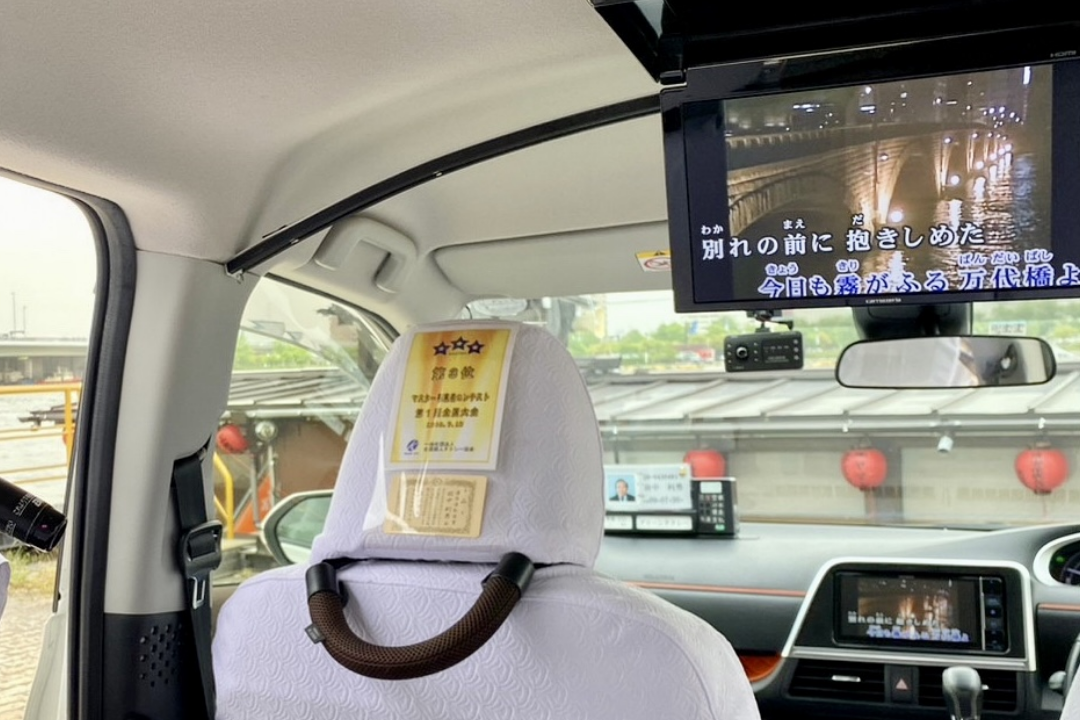
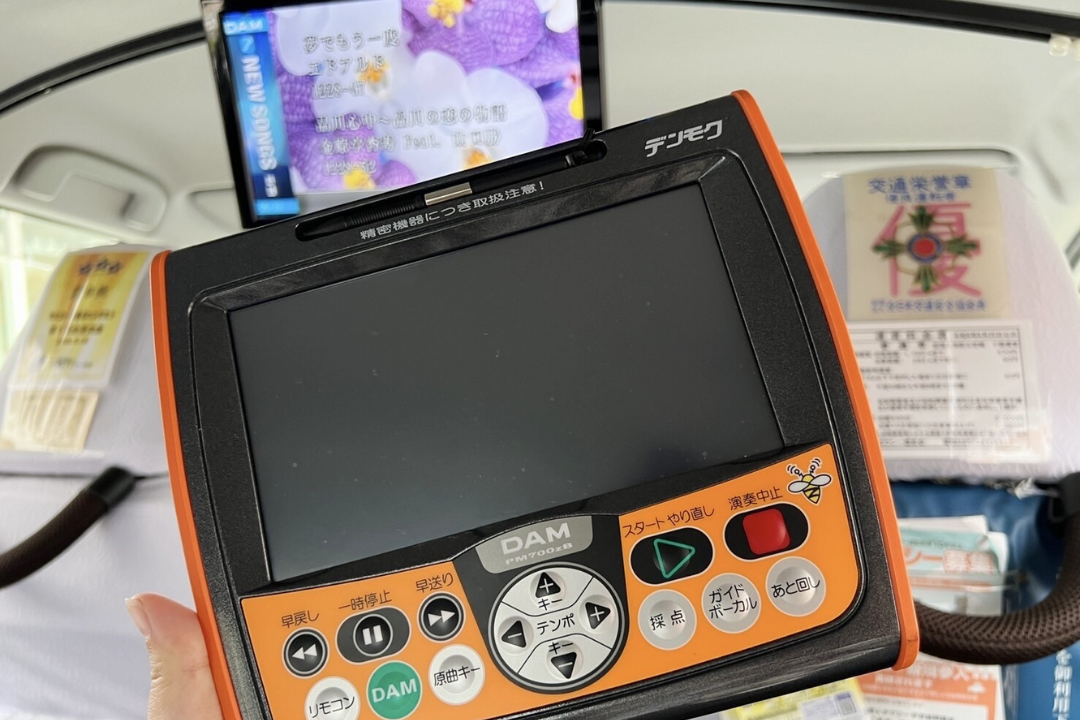
When you step into the taxi, you’ll find a small monitor, a remote control, and a microphone in the back seat. After telling the driver your destination, what you pick up isn’t a navigation app—but a tablet for choosing songs. This is the defining feature of the “Karaoke Taxi,” a system that transforms travel time itself into entertainment.
A Taxi Ride Turned into a Private Karaoke Experience
In a regular taxi, passengers usually spend the ride gazing out the window or scrolling through their smartphones until they reach their destination. In a karaoke taxi, however, that time becomes “singing time.” The song lineup includes everything from the latest hits and nostalgic Showa-era tunes to Western pop and music from across Asia, allowing riders to choose songs that match their mood. The speakers installed inside the car deliver immersive sound, creating a cozy yet lively “mobile karaoke box” that makes the whole ride feel connected and fun.
The system itself is simple. It uses compact, customized versions of the same equipment found in regular karaoke rooms. The microphone includes an echo feature that enhances the singer’s voice with a pleasant resonance.
For safety, the volume is carefully controlled to avoid interference with driving. While the car isn’t fully soundproof, it’s designed to prevent sound from leaking outside, ensuring minimal disturbance to the surroundings even when driving through the city.
The process is straightforward. When passengers get in, they simply tell the driver they’d like to use karaoke, and the system is activated. The pricing is straightforward—just add a few hundred to a few thousand yen to the regular taxi fare for karaoke use. No special arrangements are needed, making it a straightforward and spontaneous experience that has become especially popular among tourists and younger riders.
Creating Memorable Moments on Every Ride
The most significant appeal of this service lies in its ability to “turn boring travel time into fun.” For example, a ride from the airport to downtown or a short drive between sightseeing spots can instantly become a memorable experience through singing.
When riding with friends, the car transforms into a mini live stage, while solo passengers can enjoy it as a “practice room” for singing. By transforming travel from a routine necessity into entertainment, the karaoke taxi creates a new kind of value that traditional taxis have never offered.
Why Karaoke Taxis Are Going Viral on Social Media
Another major draw is how well the karaoke taxi service pairs with social media. Passengers often record themselves singing in the taxi and share it with the hashtag “#KaraokeTaxi,” making the unique experience go viral.
In fact, many tourists have said, “The most memorable part of my trip to Japan was singing in a taxi.” Because the service itself is so attention-grabbing, word-of-mouth posts naturally attract new riders, creating a positive cycle of engagement and curiosity.
How Niigata Changes Tourism with Karaoke Taxi
Source: Niigata 2km News Homepage
Niigata City, located along the Sea of Japan, is known for its rich rice-growing culture, delicious sake, fresh seafood, and the unique traditions of a snowy region. In recent years, the number of international visitors has noticeably increased, and alongside traditional attractions, there has been a growing demand for “experience-based services.” One such service that has drawn attention is the “Karaoke Taxi,” launched by a local taxi company in Niigata.
A Karaoke Room on Wheels Captivating Tourists
For tourists, taxi rides usually fill the gaps between destinations—whether from a hotel to a sightseeing spot or from a train station to a restaurant. However, that time is often just transit and rarely becomes a lasting memory.
The karaoke taxi transforms this “in-between time” into a memorable part of the journey itself. Singing while traveling through sightseeing spots feels almost like filming a mini music video with Niigata's cityscape as your backdrop.
For international visitors, this service offers a unique opportunity to experience Japanese culture firsthand. Japan’s karaoke culture is famous worldwide, but the chance to enjoy it in its country of origin is still limited.
Even those who might hesitate to enter a karaoke box alone can easily try it in the cozy, private space of a taxi. The song list includes tracks in multiple languages—such as English, Chinese, and Korean—making it accessible and enjoyable for people from all over the world.
Moreover, the karaoke taxi has had a positive impact on Niigata’s urban development. Local governments and tourism organizations have begun promoting it as a “mobile attraction,” alongside traditional programs such as sake brewery tours and culinary experiences.
Turning Every Ride into a Sightseeing Experience
By incorporating the karaoke taxi into the region’s tourism offerings, they have enhanced the overall appeal of staying in Niigata. For travelers, getting from one destination to another is no longer just a transfer—it becomes part of the sightseeing experience itself, significantly increasing their satisfaction with the trip.
Reviews often include comments like “It was even more fun than I imagined” and “Singing while touring the city was an unforgettable experience.” For younger, social media–savvy travelers, recording themselves singing inside the taxi is entertainment in itself—and great content to share from their trip. This kind of user-generated content also serves as a new form of tourism promotion for Niigata, ultimately helping raise the city’s overall visibility and appeal.
At first glance, the introduction of karaoke taxis may seem like a small-scale experiment. However, as a “value-added service” that enhances the quality of tourism, it has proven highly effective—and it may soon spread to other regional cities. For travelers, it offers a unique experience of “singing while getting around,” while for local communities, it serves as a new and powerful tool for promoting tourism.
Turning Travel Time into Team-Building Time
When people hear “karaoke taxi,” they often picture tourists or groups of young people. However, in recent years, its user base has expanded into the business world. By transforming from a simple mode of transportation into a “space for interaction,” the karaoke taxi is offering additional value to business professionals.
For professionals who travel frequently for work, taxis are an essential means of transportation between airports, stations, and city centers. The karaoke taxi offers an unexpected way to refresh both mind and body after long commutes or back-to-back meetings.
Many riders say that just singing one song helps them reset and approach their following business discussion or meeting with a more positive attitude. Scientifically, singing is known to relieve stress and stimulate brain activity, making this “singing time” during travel a valuable form of rest for working individuals.
Where Business Travel Meets Entertainment
Another unique use of the karaoke taxi is for business teams. For instance, choosing a karaoke taxi for transportation during company trips or business travels allows colleagues to see a different, more relaxed side of one another—something that rarely happens in the office. The shared experience of singing together fosters a sense of unity and encourages communication that’s hard to achieve in a formal work environment, ultimately strengthening team cohesion.
For international business visitors, the karaoke taxi also serves as a uniquely Japanese form of hospitality. Using it as part of a client's welcome or business entertainment offers guests the chance to experience Japan’s karaoke culture while on the move, making for a memorable and engaging conversation starter. Especially for those with limited time in the country, the ability to combine travel and entertainment into a single experience is a significant draw for efficiency-minded business travelers.
In fact, one company reported great success after using a karaoke taxi to transport international guests from the airport to their hotel. The guests said, “It was refreshing to experience Japanese culture during the ride—it even helped spark conversation,” which in turn helped build smoother business relationships afterward.
This example shows that the karaoke taxi isn’t just for leisure or tourism—it’s also expanding its potential as a “service that enhances the quality of travel” in business settings. In today’s world, where work styles and communication are evolving, taking a moment to “sing” between tasks is surprisingly practical—and deeply human.
The Cultural Value Embedded in a Moving Space

Source: Niigata 2km News Homepage
Karaoke is one of Japan’s most celebrated forms of popular culture. Since its emergence in the 1970s, it has evolved from home-use machines and karaoke boxes to a global phenomenon spanning Asia, Europe, and beyond.
The fact that the word “karaoke” itself is universally recognized speaks to its immense cultural influence. The karaoke taxi has gained attention as a unique concept that integrates this distinctly Japanese cultural experience into a “mobile space.”
Karaoke as a Symbol of Japanese Culture
Usually, people enjoy karaoke by setting aside time to visit a dedicated venue. However, the karaoke taxi fits naturally into the “travel time” of everyday life and tourism. This reflects a distinctly Japanese mindset of “finding joy in the in-between moments.”
In today’s fast-paced society, the ability to transform simple travel into a space for leisure and communication embodies the kind of flexibility born from Japan’s unique sense of everyday living.
Where Music, Mobility, and Culture Meet
Karaoke is also a cultural form of entertainment that transcends language and generations. Even without fully understanding the lyrics, people can connect through shared melodies and rhythms.
Singing together in the intimate space of a taxi can quickly bring passengers closer—and sometimes even spark spontaneous interactions with strangers. Within this experience lies a universal truth: the power of music to bring people together.
Furthermore, the karaoke taxi serves as a unique gateway to experiencing “Japaneseness.” For international visitors, engaging with Japan’s modern culture is just as meaningful as visiting temples or watching traditional performances.
Singing offers a way to understand everyday Japanese culture through direct participation, making it valuable for cultural exchange as well. In fact, many foreign tourists have praised it as “an experience you can only have in Japan,” and for them, it becomes a memorable cultural encounter—something far more lasting than a souvenir.
In this way, the karaoke taxi is more than just a service—it serves as a new medium for expressing and sharing Japan’s karaoke culture in a modern context. It embodies the nation’s love of singing, the creative idea of turning travel into entertainment, and the spirit of open cultural exchange—all within the space of a single taxi.
How Karaoke Taxis Are Reshaping Japan’s Taxi Industry
Japan’s taxi industry is currently undergoing a significant transformation. With population decline, an aging society leading to fewer passengers, and intensified competition from ride-hailing apps, the challenges are mounting. In regional cities, driver shortages have become a serious issue, prompting the industry as a whole to seek new paths forward. Amid these circumstances, the “karaoke taxi” has attracted attention as an innovative way to enhance transportation.
Traditionally, a taxi’s primary role has been to “safely transport passengers to their destination.” However, this model makes it difficult to increase customer satisfaction and often leads to price-based competition. The karaoke taxi breaks away from this structure by adding a new layer of entertainment to transportation, creating a clear point of differentiation.
Passengers perceive their travel time as an enjoyable experience and are more willing to pay a small additional fee, as they feel it offers value. This model not only improves profitability but also strengthens the relationship between drivers and passengers.
Driving Tourism and Community Growth Through Karaoke Taxis
The impact on local communities has also been significant. In Niigata’s case, the karaoke taxi gained widespread attention as a new service for tourists, with coverage from local media and social networks rapidly boosting its recognition.
As a result, Niigata has come to be remembered as “a city that offers unique experiences,” encouraging repeat visits and word-of-mouth tourism. For regional cities often seen as having limited tourism resources, the karaoke taxi serves as a powerful differentiator.
From a regional revitalization perspective, the karaoke taxi also holds great significance. By collaborating with local music events and festivals, it can serve as a “mobile PR tool.” For example, featuring local artists' songs or recommending tracks related to nearby attractions can more effectively promote regional culture.
In this way, taxi companies can evolve from simple transportation providers into “cultural ambassadors” that help energize their communities.
On the other hand, there are also challenges. Installation and maintenance costs for the in-car equipment, along with low utilization during off-peak hours, raise concerns about profitability. Ensuring safety while driving and managing sound levels are also essential operational requirements.
Overcoming these challenges while maintaining and improving service quality will be crucial for the karaoke taxi’s sustainable growth in the future.
Even so, the karaoke taxi represents a “new possibility for public transportation.” The idea of transforming travel from a simple means of getting around into an enjoyable cultural experience offers valuable insights for the future of mobility services as a whole.
By bridging tourism, business, and local communities, the karaoke taxi presents a fresh vision of what public transportation can be.
Conclusion
From a tourism perspective, it offers great appeal as a place where foreign visitors can easily experience a sense of “Japan.” In addition to traditional attractions such as temples, shrines, and natural scenery, the opportunity to enjoy karaoke—a modern aspect of Japanese culture—while on the move leaves a lasting impression on travelers. Combined with its potential for viral exposure on social media, it could also serve as a powerful tool for regional tourism promotion.
From a business perspective, it offers a new way to use travel time—such as unwinding after a business trip or strengthening team communication. In today’s diverse work styles, where refreshment and mental breaks are increasingly valued, singing together can bring greater relaxation and a sense of unity than expected. As an idea for making travel time both efficient and enjoyable, it has strong potential for future growth.
From a cultural perspective, this initiative is gaining international attention as an effort to integrate karaoke—one of Japan’s cultural icons—into a new context. By using taxis as a stage for this experience, karaoke becomes more familiar and accessible, allowing anyone to participate. Through its universal power, music connects people.
FAQ About Karaoke Taxi
1. What Kind of Service Is a Karaoke Taxi?
The Karaoke Taxi is a mobile entertainment service that lets passengers enjoy karaoke in a taxi. The vehicle is equipped with karaoke machines, microphones, and speakers, turning travel time into a “moving karaoke room” on the way to your destination.
2. Why Are Karaoke Taxis Attracting Attention?
The Karaoke Taxi transforms travel time from “boring time” into a fun experience. The unique combination of Japan’s karaoke culture and transportation services has become a hot topic, especially among tourists and social media users.
3. What Kinds of Songs Can Passengers Sing?
A wide range of songs is available, from the latest hits and classic Japanese songs to Western music and Asian pop. Many songs also support multiple languages, including English, Chinese, and Korean, making the experience accessible for international visitors to Japan.
4. Is It Difficult to Use the Service?
Not at all. It is very simple. Passengers only need to say they would like to use karaoke when they get in the taxi, and the driver will start the system. Songs can be selected using a remote control or tablet, similar to a regular karaoke box.
5. How Does the Pricing Work?
In most cases, a karaoke usage fee is added to the regular taxi fare. Special reservations are often unnecessary, making the service relatively affordable and easy to enjoy casually.
6. Why Is It Popular Among Tourists?
Tourists can experience Japanese karaoke culture while traveling between destinations. The journey itself becomes a memorable part of the trip and is often seen as a “Japan-only experience.” In particular, the service has gained attention in Niigata as part of local hospitality and tourism experiences.
7. Is It Suitable for Business Use?
Yes. It is used for relaxation during business trips, employee trips, and entertaining clients. Singing together helps create a relaxed atmosphere, making it useful for team building and improving communication.
8. Are There Any Safety Concerns?
Safety considerations are taken seriously. The volume is adjusted so it does not interfere with driving, and the equipment inside the vehicle is installed with safety in mind. Drivers can also focus on driving while providing the service.
9. How Is the Karaoke Taxi Connected to Japanese Culture?
Karaoke is one of Japan’s most famous forms of popular entertainment and is known worldwide as an activity anyone can enjoy. Karaoke taxis build on this culture by bringing karaoke into a mobile setting, creating a uniquely Japanese entertainment experience.
10. What Is the Greatest Appeal of a Karaoke Taxi?
Its greatest appeal is the ability to turn transportation itself into a memorable experience. Rather than being just a means of travel, it combines sightseeing, social interaction, and entertainment, offering a special kind of value that ordinary taxis cannot provide.