Japan is known for building one of the world’s most efficient transportation systems. From the Shinkansen to extensive urban rail networks, the country has spent decades refining how people move quickly and reliably between cities.
Yet despite these advances, overnight buses have traditionally occupied a very different place in Japan’s transportation landscape. They have long been viewed as a practical, budget-friendly way to cover long distances; an option chosen primarily to save money rather than maximize comfort.
That assumption is exactly what Kanto Bus, a long-established Japanese transportation company, decided to challenge.
Rather than treating overnight travel as an unavoidable inconvenience, the company began asking a different question: What if the problem wasn't the passenger, but the design of the journey itself?
For years, travelers accepted sleepless nights, stiff muscles, and next-day fatigue as an inevitable part of overnight bus travel. Kanto Bus approached these complaints not as personal preferences or limitations, but as design challenges. That shift in thinking ultimately led to the creation of Dream Sleeper, a fully private overnight bus unlike anything else currently operating in Japan.
The reason Dream Sleeper has begun attracting attention beyond Japan is simple. Around the world, people are rethinking what makes travel valuable. As remote work becomes more common and work-life balance receives greater emphasis, arriving quickly is no longer the only goal. Increasingly, travelers are asking how well they can maintain their health, energy, and productivity during the journey itself.
In that context, Dream Sleeper is not simply a luxury bus.
Instead, it represents a distinctly Japanese approach to transportation: treating travel time and recovery time as the same thing. Rather than sacrificing a night's sleep to arrive somewhere else, the service attempts to transform travel into part of the recovery process itself.
This article explores not only the Dream Sleeper service, but also the philosophy behind it, the company that developed it, and why its ideas may have relevance far beyond Japan.
Dream Sleeper Overview
Dream Sleeper is one of the most unusual long-distance bus services in Japan. Unlike conventional overnight coaches, which prioritize passenger capacity and operational efficiency, Dream Sleeper was designed around a single question:
How much genuine rest can a traveler get while moving between cities?
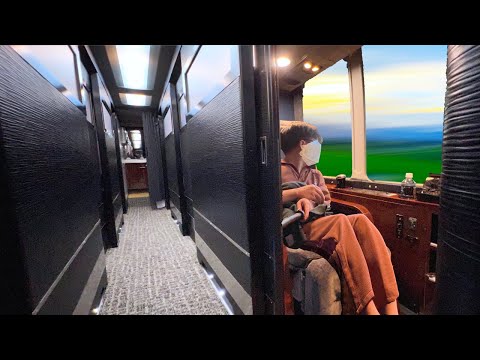
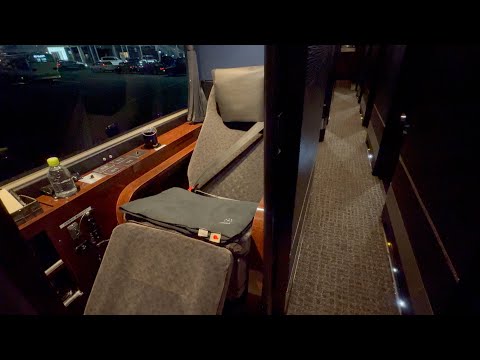
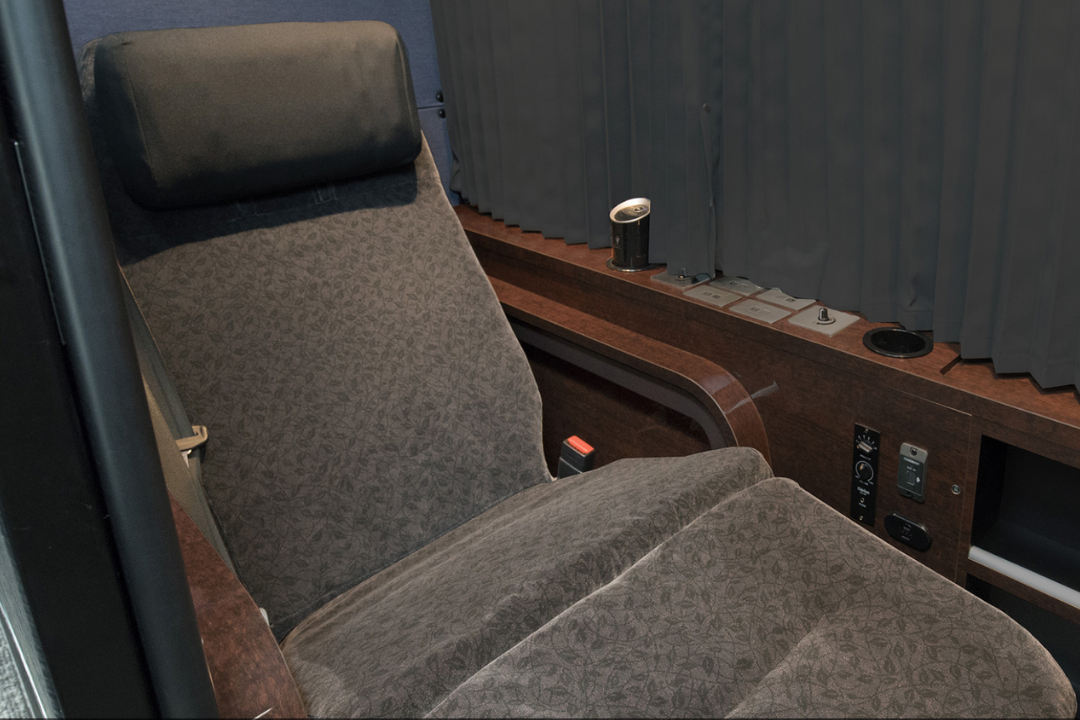
To answer that question, Kanto Bus introduced a feature rarely seen in highway transportation: fully private cabins for every passenger.
Instead of spending the night sitting in a reclining seat alongside dozens of other travelers, passengers are given their own enclosed space designed specifically for relaxation and sleep.
The travel process itself remains familiar. Travelers board in the evening, sleep while the vehicle travels overnight, and arrive at their destination the following morning. The difference lies in the quality of the experience during those hours.
Inside each cabin, passengers are separated from surrounding activity and visual distractions. Lighting and climate controls can be adjusted individually, creating an environment that feels closer to a compact sleeping room than a conventional bus seat.
As a result, Dream Sleeper occupies an interesting position in Japan's transportation market. While ticket prices are significantly higher than those of standard overnight buses, the service is often compared not with other buses but with the combined cost of transportation and accommodation. Many travelers view it as an alternative to booking a hotel the night before an early meeting or sightseeing schedule.
Rather than paying separately for transportation and lodging, passengers pay for a single, integrated experience: traveling while resting.
How Kanto Bus Reimagined the Overnight Bus
Dream Sleeper was created with a clear objective: making meaningful rest possible during overnight travel.
Traditional overnight buses assume passengers will spend the night seated. Even when equipped with premium seating, the basic premise remains unchanged.
A New Approach to Overnight Travel from Japan
Dream Sleeper starts from a different premise entirely.
Rather than asking passengers to endure the journey, it attempts to incorporate recovery directly into the travel experience.
The service's primary function is simple but ambitious: enabling travelers to sleep while moving between cities.
Every passenger is assigned an individual cabin that minimizes visual distractions and reduces interaction with surrounding passengers. Adjustable lighting and climate controls allow travelers to create a personal environment suited to their preferences. The goal is not entertainment or luxury, but rest.
Using the service requires no special preparation. Passengers board in the evening and spend the night inside their private space. The major difference is that the cabin is designed to support a more natural resting posture than conventional overnight bus seating.
As a result, many travelers choose Dream Sleeper not because they want a more luxurious trip, but because they want to arrive in better condition.
Who Uses Dream Sleeper?
The service appeals to a surprisingly broad range of travelers.
Typical users include:
- Business travelers preparing for important meetings the following morning
- Tourists who want to maximize their limited vacation time
- Travelers who struggle with fatigue during long-distance transportation
- People who prioritize physical well-being during travel
What these groups share is a common priority: arriving ready for what comes next.
For them, transportation is not simply about reaching a destination. It is about preserving time, energy, and physical condition along the way.
Why the Combination of Private Cabins and Road Travel Matters

Source: Kanto Bus Homepage
Dream Sleeper's innovation is not simply that it offers a more comfortable overnight bus.
Its significance lies in questioning the assumptions behind overnight bus travel itself.
For decades, operators improved comfort incrementally through better seats, deeper recline angles, and upgraded amenities. Dream Sleeper instead asked a more fundamental question:
Why do people struggle to sleep on overnight buses in the first place?
The answer led to a radical redesign.
Privacy as a Sleep Solution
One of the service's most important innovations is the use of fully enclosed private cabins.
These cabins address several common causes of poor sleep simultaneously:
- Constant awareness of nearby passengers
- Visual distractions
- Anxiety about personal space
- Difficulty relaxing in a shared environment
Rather than adding more amenities to an open cabin layout, Dream Sleeper changes the environment itself. The result is less about luxury and more about psychological comfort.
The Advantages of Ground Transportation
Dream Sleeper is sometimes compared to business-class flights or sleeper trains, but its road-based nature creates a different advantage.
Because the vehicle travels directly between city centers, passengers can often avoid the additional transfers associated with airports or major rail hubs. This reduces friction before and after the journey, making the overall travel experience more efficient.
The combination of direct city-to-city access and a sleep-oriented environment is what makes the concept particularly distinctive.
Built on Japan's Transportation Culture
Another factor often overlooked by international audiences is Japan's emphasis on reliability.
A sleep-focused transportation service depends on predictable operations. Stable driving, punctual schedules, and consistent service standards are all critical to creating an environment where passengers feel comfortable enough to sleep.
In many ways, Dream Sleeper's success relies not only on its private cabins but also on the operational culture that supports them.
A Design Philosophy of Restraint
Perhaps the most Japanese aspect of Dream Sleeper is what it chooses not to include.
The interiors avoid excessive decoration or entertainment-focused features. Instead of overwhelming passengers with technology or visual stimulation, the design emphasizes calmness and simplicity.
This reflects a broader philosophy found in many Japanese products: comfort achieved by removing unnecessary distractions rather than adding more features.
The result is an experience that feels intentionally quiet.
Dream Sleeper's uniqueness therefore extends far beyond its private rooms. Technology, operations, design, and passenger experience have all been reorganized around a single objective: helping people genuinely rest while traveling.
Why Kanto Bus Decided to Build Dream Sleeper
The origins of Dream Sleeper can be traced to a long-standing frustration within the overnight bus industry.
While overnight buses have remained popular because they save both time and money, they have never fully escaped complaints about poor sleep and next-day fatigue. Travelers consistently reported arriving tired despite having spent an entire night in transit.
For many operators, these complaints were simply accepted as unavoidable.
Kanto Bus Takes a Different View
Rather than treating sleeplessness as a personal issue or an unavoidable consequence of overnight travel, the company questioned whether the problem was built into the system itself.
If passengers consistently struggled to rest, perhaps the issue wasn't individual comfort preferences. Perhaps the vehicle had been designed around efficiency rather than human recovery.
At the same time, broader social changes were reshaping travel expectations. Business travelers and tourists alike were becoming more conscious of how they felt after arriving, not just how quickly they arrived.
In an increasingly time-sensitive world, physical condition upon arrival can significantly affect productivity, performance, and overall travel satisfaction.
Dream Sleeper Emerges: A Shift in Perspective
The goal was never to replace overnight buses. Instead, it was to redefine their purpose.
Rather than reducing travel time, the service attempts to improve the value of travel time itself.
Creating that change required more than incremental improvements. It required rethinking the assumptions that had guided overnight bus design for decades. The fully private cabin was not the starting point; it was the conclusion reached after asking a different set of questions.
At its core, Dream Sleeper reflects a broader belief: transportation providers may have a responsibility that extends beyond safely delivering passengers to their destination. They may also play a role in supporting travelers' health, energy, and daily lives.
That idea ultimately became one of the most distinctive transportation experiments to emerge from Japan in recent years.
Where Dream Sleeper Makes the Biggest Difference
Dream Sleeper was not designed for a single industry or a niche group of travelers. However, when you look at how people actually use the service, a clear pattern emerges: it tends to be chosen when a traveler’s condition after arrival matters just as much as reaching the destination itself.
For these travelers, overnight travel is not simply dead time between two locations. It is part of their preparation for the next day.
Business Travel
One of the most obvious use cases is long-distance business travel.
Professionals with early-morning meetings, site visits, or presentations often face an uncomfortable choice: travel the day before and pay for a hotel, or leave early in the morning and risk arriving stressed or tired.
Dream Sleeper offers a third option.
By combining overnight transportation with a space designed for rest, travelers can arrive in the morning ready to begin their day immediately. The ability to reduce fatigue and maintain focus after arrival is particularly valuable in business settings where performance matters.
Tourism and Leisure Travel
The same principle applies to leisure travelers.
When vacation time is limited, every hour counts. Arriving at a destination exhausted can mean losing an entire morning recovering from the journey itself.
By turning travel time into rest time, Dream Sleeper allows travelers to begin sightseeing, attending events, or exploring a destination soon after arrival. Rather than spending the first part of the day recovering from the trip, they can spend it experiencing the destination.
Travelers Who Prioritize Comfort and Recovery
The service also appeals to people who find long periods of sitting physically demanding.
For travelers who experience back pain, fatigue, or difficulty sleeping while seated, having access to a more relaxed resting environment can make a significant difference. This is not limited to a particular age group. Anyone who values physical well-being during travel may find the concept appealing.
Ultimately, Dream Sleeper succeeds because it addresses a challenge that exists across industries and travel styles: ensuring that transportation does not become an obstacle to what comes next.
Its value lies less in saving time and more in helping travelers arrive in better condition.
Quality Beyond the Cabin: The Thinking Behind the Service
Dream Sleeper is often discussed for its private cabins, but its service is built on something less visible: decades of experience in safety management and operational quality.
For overnight transportation, comfort alone is not enough. When passengers are expected to sleep, even small concerns, whether related to safety, cleanliness, or reliability, can affect the entire experience.
Balancing Privacy and Safety
One of the biggest design challenges was creating a genuinely private space while still meeting the safety requirements expected of public transportation.
Although each passenger occupies an enclosed cabin, the design still allows staff to monitor the vehicle and respond appropriately in emergencies. Privacy is balanced with operational oversight, ensuring that passengers can relax without compromising safety.
Materials, Maintenance, and Cleanliness
The emphasis on quality extends beyond the cabin layout itself.
Because passengers spend many hours in direct contact with the interior environment, materials must be durable, easy to maintain, and hygienic. Overnight buses also have a rapid turnover of users, making thorough cleaning and inspection essential after every trip.
For Dream Sleeper, maintaining consistent quality means ensuring that every journey begins with a vehicle that has been properly checked, cleaned, and prepared.
Operational Quality Matters Too
Quality control is not limited to the vehicle.
Driver scheduling, rest periods, route planning, and operational procedures all contribute to the passenger experience. Smooth driving and predictable operations directly affect sleep quality. Minimizing sudden movements and unnecessary disruptions improves both safety and comfort.
In this sense, Dream Sleeper's quality comes not from a single breakthrough technology, but from the combination of thoughtful design and disciplined operations.
Much of what makes the service successful is invisible to passengers, and that is precisely the point.
A Broader Question: Is Safe Transportation Enough?
The philosophy behind Dream Sleeper did not emerge from a single visionary founder. Instead, it reflects a broader mindset developed over decades as a public transportation provider.
For Kanto Bus, moving people safely from point A to point B has always been essential. But over time, another question emerged:
Is arriving safely the only responsibility a transportation company has?
Operating local bus services gives a company a unique perspective on daily life. Commuters, students, elderly passengers, and families all rely on transportation as part of their routines. Travel is not separate from life; it is woven into it.
After observing those realities for decades, Kanto Bus developed a deeper understanding of how transportation affects people's daily well-being.
That perspective eventually extended to overnight travel.
For years, complaints about poor sleep and post-trip fatigue were accepted as unavoidable aspects of overnight buses. The industry largely viewed them as inconveniences rather than structural problems.
Kanto Bus questioned that assumption.
If a passenger arrives exhausted, their work, health, or travel experience may suffer. From that perspective, transportation quality should perhaps be measured not only by whether passengers arrive safely, but also by the condition in which they arrive.
That idea became one of the driving forces behind Dream Sleeper.
Of course, such an approach is not always the most economically efficient. Reducing passenger capacity and investing in specialized vehicle designs increases costs.
Yet the project reflects an effort to redefine what transportation can provide.
Rather than simply transporting people, Dream Sleeper attempts to support the quality of the day that follows.
A Product of Tokyo's Transportation Culture
Source: Kanto Bus Homepage
Dream Sleeper did not appear out of nowhere.
Its origins are closely tied to Kanto Bus's long history of serving Tokyo, one of the world's largest and most complex urban environments.
For decades, the company has operated within the rhythms of everyday life, such as: commuters heading to work, students traveling to school, and residents moving through the city. Through that experience, transportation came to be viewed not as an isolated activity, but as part of a broader daily routine.
This perspective shaped the way the company approached overnight travel.
Japan's overnight bus culture itself emerged from similar circumstances. Although Japan is smaller geographically than many countries, significant distances still separate major cities. Overnight travel became a practical way to maximize time, allowing travelers to move while they slept.
However, that efficiency often came at the cost of comfort.
Kanto Bus approached the issue from a different angle. Rather than treating overnight travel as a special category, it viewed it as another form of everyday mobility. If transportation is part of life, then travel should not significantly diminish quality of life, even during the night.
The service is also rooted in values commonly associated with Japanese transportation culture:
- Punctuality
- Reliability
- Consistency
- Passenger confidence
These qualities may not be as visually striking as a private cabin, but they are essential for a service built around sleep.
Dream Sleeper therefore represents an intersection between two influences: Japan's long-standing overnight travel culture and Kanto Bus's experience supporting everyday urban life.
It is both an innovation and a natural extension of decades of transportation experience.
Building a Future Beyond the Conventional Overnight Bus
Kanto Bus does not view Dream Sleeper as a novelty vehicle designed to generate publicity.
Instead, the project represents an attempt to expand how people think about overnight transportation.
For decades, overnight buses have largely competed on price and convenience. Dream Sleeper introduces a different metric: the quality of the travel experience itself.
Importantly, the company's long-term vision is not necessarily large-scale expansion.
Fully private cabins come with significant operational and design challenges, making rapid deployment difficult. Rather than focusing solely on growth, the company appears more interested in identifying where this type of experience delivers the greatest value and refining the model over time.
The lessons learned from Dream Sleeper may also extend beyond the vehicle itself.
Insights about sleep-friendly design, passenger psychology, and recovery-oriented travel could influence future developments in long-distance transportation more broadly. In that sense, Dream Sleeper functions both as a finished service and as an ongoing experiment.
What About International Expansion?
At present, there are no widely known examples of Dream Sleeper vehicles being exported overseas or operated internationally in their current form.
This appears to be less a technological limitation and more a strategic choice.
The concept depends on many factors, including:
- Local transportation regulations
- Road infrastructure
- Operational standards
- Cultural expectations
- Passenger behavior
What works in Japan may require significant adaptation elsewhere.
For that reason, the most transferable aspect of Dream Sleeper may not be the vehicle itself, but the underlying philosophy: designing transportation and rest as a single experience.
Rather than exporting a finished product, future opportunities may lie in collaboration, adaptation, and shared design concepts tailored to local markets.
When Sleep Becomes the Measure of Success
One of the most interesting aspects of Dream Sleeper is how people evaluate it.
Passengers rarely focus on luxury, technology, or novelty.
Instead, most reviews come down to a remarkably simple question:
"Did I actually sleep?"
Many users describe it as the first overnight bus journey on which they managed to get meaningful rest.
Travelers who previously expected only fragmented sleep often report being surprised by how refreshed they felt upon arrival. Common comments include:
- "I was able to start my day immediately."
- "It felt like actual sleep, not a nap."
- "I arrived with energy rather than exhaustion."
These reactions highlight the service's core value proposition. The goal is not to create a memorable luxury experience but to make overnight travel function the way many people always wished it would.
International visitors often mention another factor: trust.
Japan's reputation for punctuality, cleanliness, and reliable service helps reduce the anxiety associated with sleeping while traveling in an unfamiliar country. For many foreign travelers, that confidence is an important part of the experience.
On social media, travelers frequently share photos of the cabins or the morning views after arrival. While the service lacks flashy entertainment features, the novelty comes from something simpler—the realization that overnight travel can feel restful.
Perhaps the strongest reviews are those that describe Dream Sleeper not as an extraordinary experience, but as an experience that feels surprisingly normal.
It fulfills what many travelers believe should have been possible all along.
Recognition Built Over Time in Japan
Dream Sleeper attracted significant attention when it was first introduced, but its reputation has extended far beyond a temporary novelty. In Japan, it has continued to be featured by both media outlets and passengers as a service that delivers an experience fundamentally different from conventional overnight buses.
Television programs, newspapers, and online publications frequently highlight not only its status as a “fully private overnight bus” but also its ability to allow passengers to genuinely sleep while traveling. Discussions often go beyond the novelty factor, exploring why the service was created and what challenges it aims to address. This broader narrative suggests that Dream Sleeper is viewed as a service that challenges conventional assumptions about transportation itself.
Its track record also reflects growing recognition. Despite its relatively high price point, repeat customers continue to use the service, indicating that travelers see lasting value in the experience. Many passengers who were previously hesitant about overnight buses choose Dream Sleeper again after their first trip. Such behavior cannot be explained by curiosity alone.
Within Japan, the service has quietly gained support among people who place importance on the quality of travel. Whether traveling for business or leisure, these users share a common priority: arriving in good condition. Dream Sleeper is increasingly recognized as a practical way to achieve that goal.
The growing domestic reputation of Dream Sleeper demonstrates that it is not a solution designed only for a niche audience. For travelers who have experienced frustration or resignation toward traditional overnight buses, it has become a realistic alternative. Over time, this has translated into a solid and credible record of success within Japan.
Why It Has Potential Appeal in Overseas Markets
Source: Kanto Bus Homepage
The value offered by Dream Sleeper is not limited to Japan. In many ways, its underlying philosophy becomes even more relevant when viewed from a global perspective. Fatigue and sleep deprivation during long-distance travel are universal challenges, regardless of country or culture. In many regions, people simply accept that travel is exhausting. By questioning that assumption, Dream Sleeper presents a fresh alternative.
The concept may be particularly well-suited to regions where intercity travel distances are relatively long and overnight travel demand already exists. Major European city corridors, large metropolitan regions in Southeast Asia, and areas with limited rail infrastructure often rely on buses as a practical transportation option. At the same time, the physical burden of remaining seated for extended periods is a common complaint across markets.
The fully private cabin design also helps overcome cultural barriers. Many travelers around the world are uncomfortable spending the night in close proximity to strangers. A private room is easy to understand regardless of language or cultural background and naturally creates a greater sense of security. In this respect, it shares some similarities with the international appeal of Japan’s capsule hotel concept.
The service is also relevant from a sustainability perspective. As many countries reconsider short-haul flights and encourage lower-emission forms of transportation, a travel option that combines movement and rest can offer both time efficiency and environmental benefits. The idea of treating transportation and accommodation as a single experience provides a new perspective on sustainable mobility.
Ultimately, the reason Dream Sleeper could be valued internationally lies not only in the vehicle itself but in the philosophy behind it. Rather than reducing travel time, it seeks to improve the quality of travel time. Rather than sacrificing the night, it transforms the night into a period of recovery. This way of thinking extends beyond the Japanese context and has the potential to resonate in many markets worldwide.
International Export and Commercial Expansion
At present, there are no confirmed cases of Dream Sleeper vehicles being exported overseas or operated internationally as the same service model found in Japan. This appears to be less a matter of technical or market limitations and more a deliberate decision. A fully private overnight bus depends on numerous conditions, including road infrastructure, operating regulations, staffing systems, and passenger behavior. The operational standards and safety practices developed in Japan may not translate directly to other countries.
What Kanto Bus emphasizes is not simply exporting the physical product but sharing the underlying philosophy and design principles. The concept of integrating transportation and rest can be applied across borders, but its implementation will inevitably differ from market to market. For this reason, the company has focused on building experience within Japan before pursuing rapid international expansion, carefully identifying which elements are universal and which are uniquely Japanese.
The most realistic international opportunities may therefore lie not in exporting finished vehicles, but in collaborative development and concept sharing. By working with regions that face challenges related to long-distance or overnight travel, the core ideas behind Dream Sleeper could be adapted to local needs and circumstances. This flexibility remains one of the service’s defining characteristics.
Conclusion
Dream Sleeper is neither simply an unusual overnight bus nor merely a premium transportation option. At its core, it represents a clear answer to a fundamental question: how should travel time be used? By challenging the assumption that travel must be exhausting and that nighttime hours must be sacrificed, it demonstrates that meaningful rest can be incorporated into the journey itself.
While this concept was refined within Japan’s transportation environment and lifestyle patterns, it offers valuable insights for any market facing challenges related to long-distance travel and sleep quality. Whether or not the exact vehicle is adopted elsewhere, the broader idea of designing transportation and rest as a unified experience has significant potential to inspire future mobility services.
For international businesses, the most compelling aspect of Dream Sleeper is its redefinition of travel. Rather than competing solely on speed or price, it considers the traveler’s condition after arrival as part of the value proposition. Adopting this perspective could open new possibilities for transportation providers and long-distance mobility services.
Potential partnerships and collaborations are not limited to vehicle deployment. They may involve sharing expertise in operations, spatial design, and passenger experience, then adapting those principles to local markets. That process itself could create value for all parties involved. As a Japanese innovation, Dream Sleeper offers a concrete example of how the future of travel might be reimagined.
FAQ About the Dream Sleeper
1. What Is the Dream Sleeper?
Dream Sleeper is a premium overnight bus service operated by Kanto Bus that features fully private cabins for every passenger. Unlike conventional overnight buses, which simply transport passengers while they remain seated, Dream Sleeper is designed with the goal of allowing travelers to rest and recover while they travel.
2. Why Does Dream Sleeper Use Fully Private Cabins?
The concept is based on the idea that poor sleep on overnight buses is often caused by the travel environment itself rather than individual differences. By physically reducing visual distractions, surrounding noise, and the presence of nearby passengers, the fully private cabin creates a space where travelers can genuinely rest during the journey.
3. How Is It Different From a Typical Overnight Bus?
The biggest difference is its focus on how passengers feel after they arrive. Traditional overnight buses have largely developed as an affordable way to travel between cities, whereas Dream Sleeper is designed to help passengers begin the next day feeling refreshed and well-rested.
4. Why Is the Fare Higher Than a Standard Overnight Bus?
Dream Sleeper is positioned not simply as transportation, but as a service that combines travel and accommodation into a single experience. Rather than competing directly with other buses, it is intended to be compared with options such as high-speed rail, domestic flights, or staying in a hotel the night before. Its pricing reflects the value of being able to rest while traveling.
5. Who Is the Dream Sleeper Best Suited For?
It is ideal for business travelers who want to go straight to work after arriving, tourists looking to make the most of limited vacation time, and anyone who wants to minimize travel fatigue. In general, it appeals to people who value how they feel and what they can do after reaching their destination.
6. Why Is the Idea of "Travel Time as Rest Time" Gaining Attention?
Around the world, people are placing greater importance not just on arriving quickly, but on arriving in good physical condition. Sleep quality and fatigue management are increasingly recognized as factors that influence productivity, safety, and overall well-being, making the quality of travel time more important than ever.
7. How Is It Different From Business Class Flights or Sleeper Trains?
Dream Sleeper's defining feature is that it provides a private sleeping environment while traveling by road. Unlike flights or sleeper trains, it allows passengers to travel directly between city centers without transfers through airports or major railway hubs, while still offering a comfortable place to rest throughout the journey.
8. What Safety Measures Are Included?
Although each passenger has a fully private cabin, the vehicle is designed so that crew members can still monitor the cabin and respond quickly in an emergency. In addition to the vehicle's design, operational quality is maintained through driver scheduling, maintenance procedures, cleaning routines, and regular inspections, ensuring passengers can sleep with confidence.
9. Why Has Dream Sleeper Attracted Attention Overseas?
Fatigue and lack of sleep during long-distance travel are universal challenges. In regions where overnight travel is common, there is growing interest in improving the quality of travel time rather than simply reducing its duration. Dream Sleeper's approach offers a compelling example of how transportation can become a more restorative experience.
10. What Is the Greatest Strength of Dream Sleeper?
Its greatest strength is that it transforms travel from something passengers simply endure into a time that helps restore both body and mind. Instead of sacrificing a night's rest to reach another city, travelers can sleep during the journey and arrive ready to start the next day in better condition. That shift in thinking is what makes Dream Sleeper truly distinctive.
Related Videos
If you're interested in Japan’s luxury travel innovations, the video below introduces Dream Sleeper, an overnight bus designed with private rooms for maximum comfort and privacy. This video shows how Japan is transforming long-distance travel by offering passengers a relaxing experience that feels more like a hotel room on wheels.