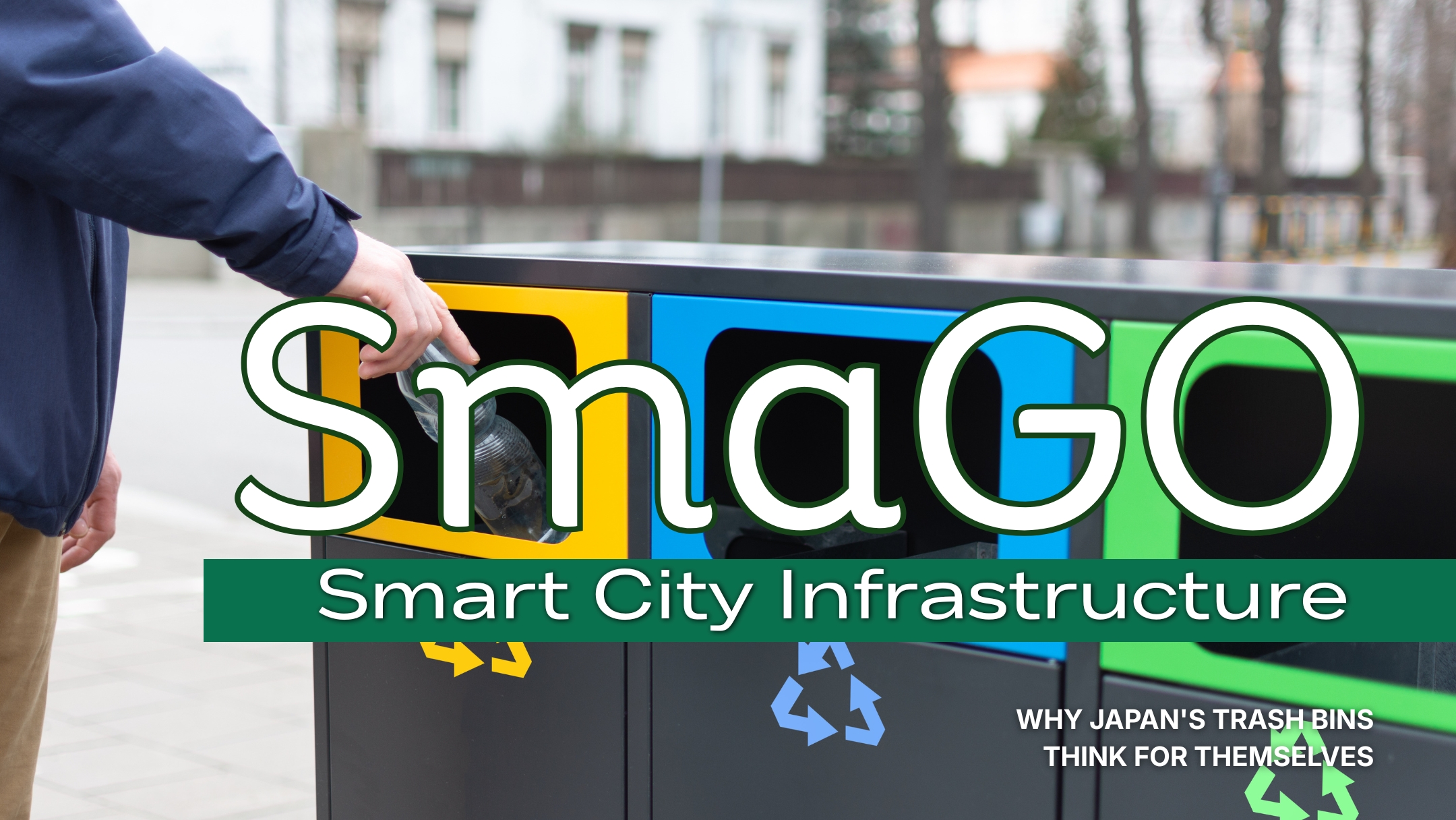
In many cities worldwide, finding a public trash bin can be surprisingly difficult. Concerns over security, vandalism, and maintenance costs have led many municipalities to remove public waste bins altogether. As a result, both residents and visitors often end up carrying their trash for long periods or disposing of it improperly.
Japan presents an interesting contrast. Although the country does not have public trash bins on every street corner, its cities are consistently recognized as some of the cleanest in the world. International visitors are often amazed by the spotless train stations, parks, shopping districts, and tourist attractions. While public manners and cultural habits certainly play an important role, technology has also become an increasingly important part of keeping Japanese cities clean.
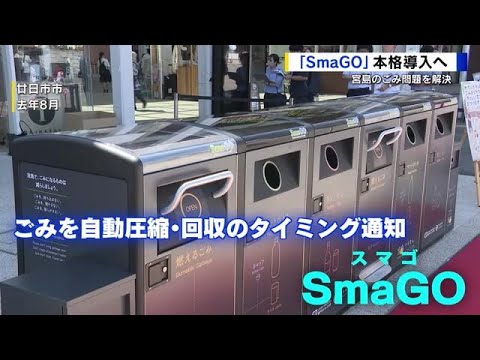
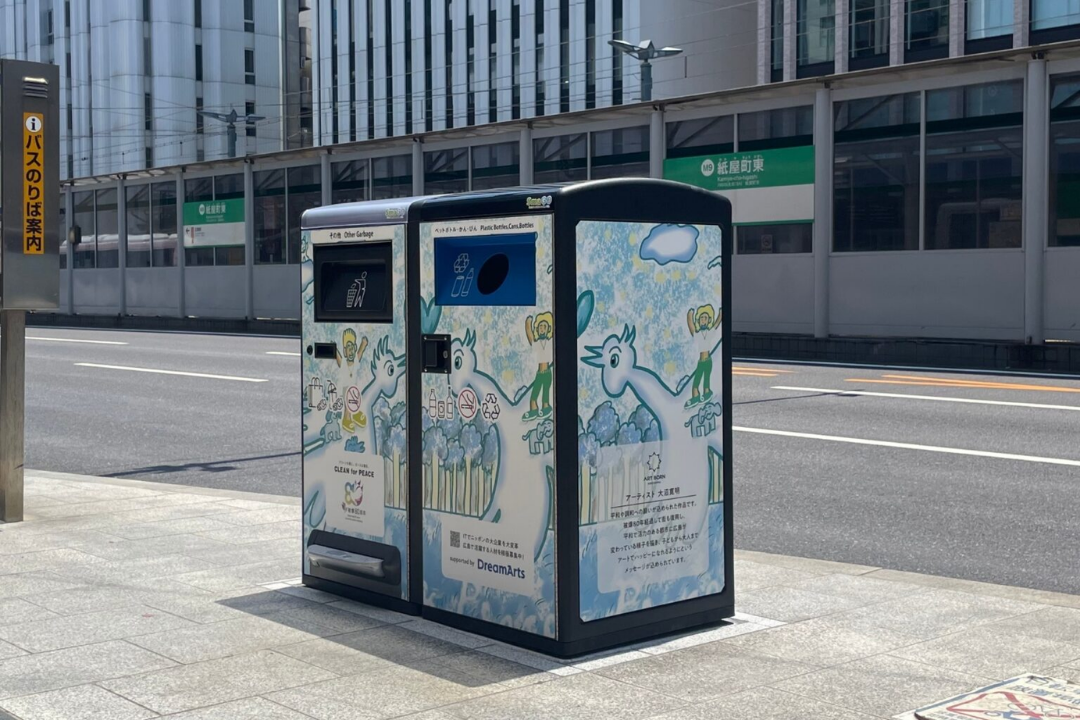
One example is SmaGO, an IoT-powered smart trash bin developed in Japan. Instead of functioning as a simple waste container, SmaGO automatically compresses the trash inside while built-in sensors continuously monitor how full the bin is. Facility managers can check this information remotely, allowing cleaning crews to collect waste only when necessary rather than relying on fixed collection schedules.
Today, SmaGO is being installed in train stations, shopping centers, parks, tourist destinations, and other public spaces throughout Japan. More than a trash bin, it serves as smart urban infrastructure that helps cities operate more efficiently while keeping public spaces cleaner.
In this article, we'll explore how SmaGO works, why this technology was developed in Japan, and why it could become an important solution for cities worldwide facing growing waste management challenges.
SmaGO Overview
SmaGO is an IoT-enabled smart trash bin that combines automatic waste compaction with real-time remote monitoring. Designed for public spaces such as city centers, transportation hubs, tourist attractions, and commercial facilities, it helps operators manage waste more efficiently while reducing the environmental and operational costs associated with traditional trash collection.
Its most distinctive feature is an internal compaction system that automatically compresses trash after it is deposited. By reducing the volume of waste inside the bin, SmaGO can hold approximately five to six times more trash than a conventional public bin before requiring collection. This significantly reduces overflow while lowering the frequency of waste pickups.
Built-in sensors continuously measure the amount of trash inside the unit and send that information to a cloud-based management platform. Facility operators can monitor multiple bins remotely in real time, enabling them to dispatch collection crews only when bins are approaching capacity instead of following inefficient fixed schedules.
Another major advantage is its energy system. SmaGO is powered by integrated solar panels, allowing it to operate outdoors without requiring access to an external electrical supply. Combined with its wireless communication capabilities, this enables municipalities and facility managers to install the units in parks, pedestrian areas, event venues, and other locations where conventional powered infrastructure may not be practical.
SmaGO has already been deployed throughout Japan in train stations, commercial complexes, public parks, and popular tourist destinations. In areas that receive large numbers of international visitors, it has become an important tool for maintaining the clean streets that Japan is known for. As cities around the world invest in smart city technologies and more sustainable public infrastructure, SmaGO is attracting growing interest as a Japanese solution with global potential.
SmaGO: The Smart Trash Bin Developed by Forcetec
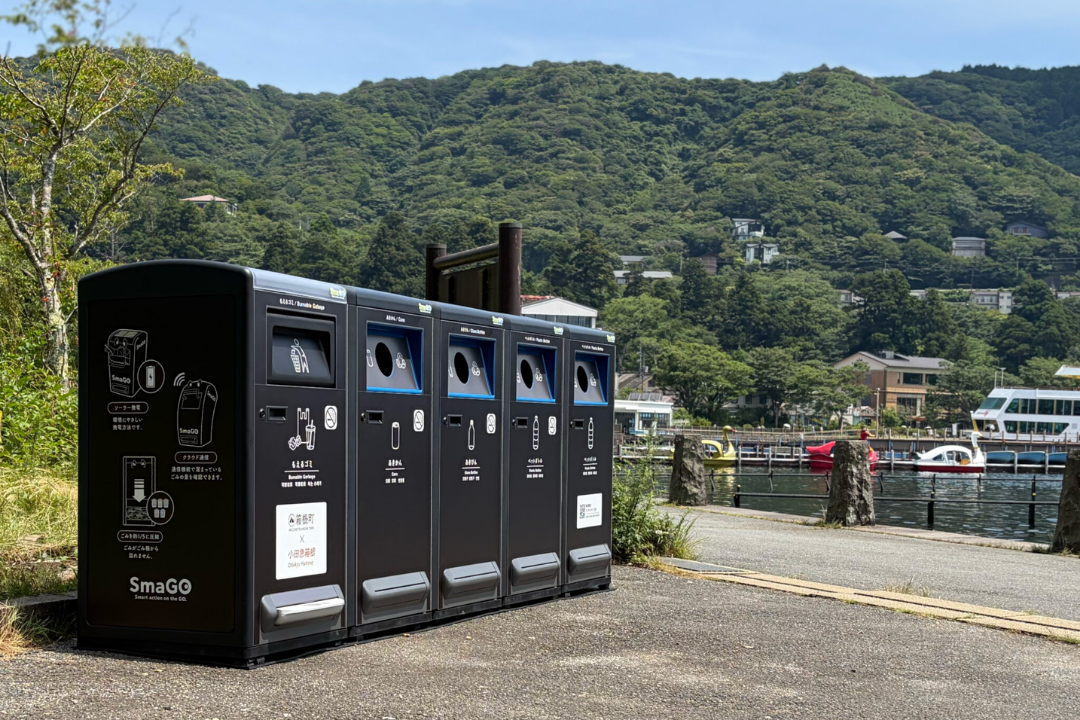
Source: SmaGO Homepage
Forcetec Co., Ltd., a Japanese company focused on applying technology to improve urban infrastructure, developed SmaGO. The goal was to rethink one of the most overlooked elements of city management by turning an ordinary public trash bin into a connected device that improves cleanliness, reduces operational costs, and supports smarter city management.
The system combines two core technologies. First, an automatic compaction mechanism compresses waste after it is deposited, dramatically increasing how much trash each bin can hold. Second, integrated IoT sensors monitor fill levels and transmit the data to a cloud-based management system, allowing operators to monitor the status of every connected bin remotely.
For the public, using SmaGO is no different from using any other trash bin. Users simply dispose of their waste as they normally would. Behind the scenes, however, facility managers receive real-time information about each unit, making it possible to optimize collection schedules, improve cleaning efficiency, and reduce unnecessary trips.
Rather than being sold directly to consumers, SmaGO is offered as a business solution for municipalities, transportation operators, commercial property managers, and other organizations responsible for maintaining public spaces. Pricing varies depending on deployment size and service agreements, but the system is designed to reduce long-term waste collection costs while improving the cleanliness and sustainability of urban environments.
More Than a Trash Bin: How SmaGO Works
The biggest difference between SmaGO and a conventional public trash bin is that it functions as part of a city's digital infrastructure rather than simply serving as a container for waste.
Traditional public bins fill quickly in busy locations. Once full, they can overflow before cleaning crews arrive, creating unpleasant streetscapes and additional sanitation challenges. SmaGO addresses this problem by automatically compressing the trash inside the unit, allowing each bin to hold more than five times the volume of a standard public trash can.
At the same time, built-in IoT sensors continuously monitor the amount of waste inside each unit. This information is transmitted to a cloud-based management platform, where operators can check the status of multiple bins from a computer or smartphone. Instead of emptying every bin on a fixed schedule, staff can prioritize only those that require collection. This reduces unnecessary labor, improves operational efficiency, and helps address labor shortages affecting municipal cleaning services.
The system also uses integrated solar panels, allowing SmaGO to operate independently without an external power source. This flexibility makes it suitable for parks, tourist attractions, event venues, and other outdoor locations where installing electrical infrastructure would be difficult or expensive.
By combining waste compaction, IoT connectivity, cloud-based management, and renewable energy, SmaGO goes far beyond the role of a traditional trash bin. It represents a new generation of smart city infrastructure designed to make public spaces cleaner, more efficient, and more sustainable.
Turning a Simple Trash Bin Into Smart Urban Infrastructure
The idea behind SmaGO emerged from a growing challenge faced by cities worldwide: managing increasing amounts of public waste with limited resources.
Busy train stations, tourist attractions, shopping districts, and event venues can generate large volumes of trash in just a few hours. When bins overflow before collection crews arrive, the result is littered public spaces, sanitation concerns, and a poor experience for residents and visitors alike. Yet with traditional public trash bins, maintenance staff have no way of knowing how full a bin is without physically checking it.
At the same time, many cities are dealing with labor shortages and rising maintenance costs. Sending cleaning crews to inspect hundreds of bins on fixed schedules is both expensive and inefficient. Municipalities need a way to collect waste based on actual demand rather than routine.
Solving Sanitation Challenges in Highly Trafficked Areas
SmaGO was created to solve the sanitation problem. By combining automatic waste compaction with IoT sensors that report fill levels remotely, the system lets operators collect trash only when necessary. This not only improves operational efficiency but also helps keep streets cleaner without increasing staffing requirements.
Rather than treating public trash bins as passive pieces of street furniture, SmaGO reimagines them as connected urban infrastructure. It demonstrates how relatively simple technologies can solve everyday problems while contributing to smarter, cleaner, and more sustainable cities. As urban populations continue to grow, solutions like SmaGO show how digital technology can quietly improve quality of life in ways most people don't notice until they see the results.
Where SmaGO Is Being Used Across Japan, From Tourist Destinations to Shopping Centers
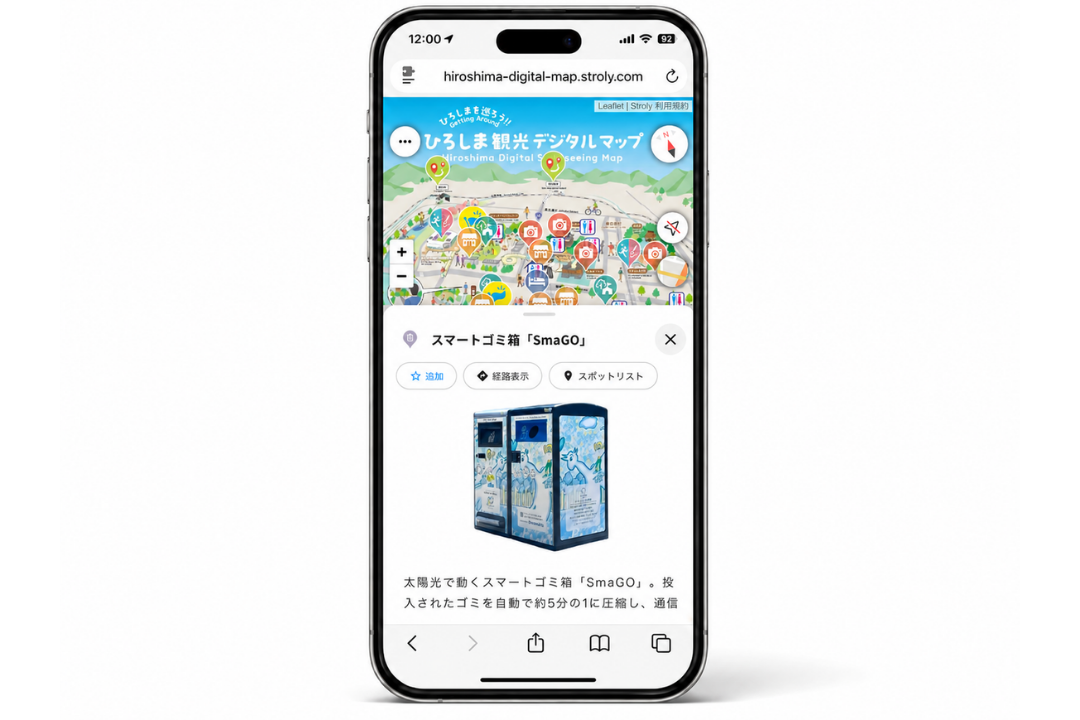
Source: SmaGO Homepage
SmaGO has been introduced in a wide variety of public spaces throughout Japan as a smarter way to manage waste. It is especially valuable in places where large numbers of people gather, and trash accumulates quickly, making traditional public bins difficult to manage efficiently.
Railway stations and transportation hubs are among the most common installation sites. Because thousands of commuters pass through these locations every day, public trash bins can fill up rapidly. With SmaGO, facility managers can monitor fill levels remotely and schedule collections only when necessary, improving cleaning efficiency while preventing overflowing bins.
Tourist attractions, parks, and other public recreational spaces have also adopted SmaGO. During peak travel seasons or large events, waste volume can increase dramatically. Thanks to its built-in compression technology, each unit can hold significantly more trash than a conventional public bin, reducing the risk of overflowing waste that can damage a destination's appearance.
Shopping malls, entertainment complexes, and event venues also benefit from the system. Because visitor numbers fluctuate by day and season, planning waste collection can be challenging. SmaGO's IoT monitoring platform provides real-time data on each bin, allowing operators to optimize collection routes and improve operational efficiency.
Today, SmaGO can be found at train stations, tourist destinations, parks, shopping centers, and event venues across Japan. As cities continue searching for smarter ways to maintain clean public spaces, this technology is expected to become an increasingly common part of urban infrastructure.
Built for Outdoor Use With Durability and Safety in Mind
SmaGO is specifically designed for long-term outdoor operation in locations such as station plazas, parks, and tourist areas. Because these installations are exposed to changing weather conditions year-round, durability and reliability are central to the product's design.
The enclosure is built to withstand rain, wind, and temperature fluctuations, allowing it to operate consistently as part of public infrastructure. Inside the unit are several advanced components, including the trash compression mechanism, IoT sensors, and communication equipment. Each system is engineered to operate safely while remaining virtually invisible to everyday users, who simply dispose of their waste as they would in any ordinary trash bin.
Operators can also monitor the system remotely, allowing them to detect equipment issues early and respond before they become major problems. This proactive maintenance helps ensure reliable performance in busy public spaces.
Integrated solar panels supply power, eliminating the need for an external electrical connection. This allows SmaGO to be installed in a wider range of locations while reducing environmental impact. Combined with cloud-based monitoring that tracks fill levels and operational status, the system provides cities with a highly efficient approach to public waste management.
These design choices make SmaGO a durable, safe, and dependable piece of urban infrastructure built specifically for outdoor environments.
Using Technology to Solve Urban Challenges
SmaGO was developed in response to growing environmental and operational challenges facing modern cities. As tourism increases and public events become larger, the amount of waste generated in urban areas continues to rise. At the same time, many municipalities face labor shortages and rising sanitation costs, making traditional waste collection methods harder to sustain.
ForceTech Co., Ltd. approached this challenge with a simple question: could technology fundamentally improve how cities manage public waste? Rather than viewing trash bins as passive containers, the company reimagined them as connected infrastructure that could collect data and optimize city operations.
By integrating IoT technology into public waste bins, SmaGO enables municipalities to make collection decisions based on real-time information instead of fixed schedules. This shift represents more than just an upgrade to existing equipment. It reflects a broader move toward smarter, data-driven urban management.
Keeping cities clean also directly affects residents' quality of life and visitors' impressions. Clean public spaces contribute to a city's reputation, support tourism, and improve the overall urban experience. Creating more efficient and sustainable waste management systems is therefore becoming an important priority for cities around the world.
SmaGO was created with this long-term vision in mind. By applying technology to solve everyday urban problems, it shows how relatively ordinary public infrastructure can play an important role in building cleaner, more sustainable cities.
Moving Toward Smart City Infrastructure
SmaGO continues to expand across Japan, with installations at railway stations, parks, tourist attractions, and commercial facilities. As more municipalities and property owners seek efficient ways to manage public waste, smart trash bins are increasingly being viewed as essential components of modern urban infrastructure.
One of the company's key development priorities is making better use of operational data. By collecting and analyzing information about fill levels and usage patterns, cities can further optimize collection routes, reduce unnecessary trips, and improve waste management across entire districts. This data-driven approach aligns closely with broader smart city initiatives worldwide.
Rethinking Waste Management in Modern Cities
Increasing public awareness is another important objective. Although SmaGO blends naturally into the urban landscape, it represents a new generation of connected public infrastructure. As installations continue to expand through partnerships with local governments and private organizations, more people will encounter the technology in everyday life.
The company is also looking beyond Japan. Cities worldwide face similar challenges related to waste management, labor shortages, and sustainability. As smart city initiatives continue to grow across Europe, Asia, and other regions, SmaGO could become a globally relevant urban infrastructure solution built on Japanese technology and operational expertise.
Experiencing a Smarter Trash Bin: How People Are Responding
One of the most interesting aspects of SmaGO is that it transforms one of the most overlooked parts of urban life into something surprisingly innovative. From the outside, it looks like a standard public trash bin, but inside it combines automatic waste compression, IoT sensors, cloud connectivity, and solar power.
For everyday users, nothing changes. They simply throw away their trash as usual. Behind the scenes, however, the system is continuously helping cities manage waste more efficiently, something that many people find fascinating once they learn how it works.
Clean Energy Solutions for Parks and Tourist Venues
Visitors who have encountered SmaGO at train stations, parks, or tourist destinations often comment on how rarely they see overflowing trash bins. Others mention that learning about the technology helped them better understand why Japanese cities remain so clean despite having relatively few public trash bins compared with many other countries.
Social media posts also frequently highlight the technology. People have shared photos of solar-powered smart trash bins or expressed surprise that public bins can now be monitored remotely through IoT systems. For many international travelers, SmaGO offers another example of Japan's attention to detail in public infrastructure.
Facility operators and municipalities also appreciate the benefits. More efficient collection schedules reduce operating costs while helping keep public spaces cleaner. By improving both the user experience and the efficiency of city maintenance, SmaGO is gradually establishing itself as an important part of Japan's urban landscape.
Proven Success Across Japan
SmaGO has steadily expanded across Japan, with installations in cities, tourist destinations, transportation hubs, and commercial facilities. As municipalities seek better solutions to rising tourism and growing waste management demands, the smart trash bin has attracted considerable attention.
The project has also received significant media coverage. In March 2026, The Asahi Shimbun featured SmaGO's deployment in Tokyo's Omotesando district as an innovative approach to urban waste management. The technology has also been highlighted on Japanese radio programs including J-WAVE's BLUE IN GREEN and TBS Radio's Morimoto Takero Stand By!, where it was introduced as part of discussions on environmental initiatives and smart city development.
Other major newspapers, including Sankei Shimbun, Tokyo Shimbun, and Chunichi Shimbun, have also covered the project, further increasing public awareness.
The results have been measurable. In Tokyo's Omotesando area, locations that previously required trash bag replacements three to four times per day reportedly reduced collections to approximately once daily after SmaGO was introduced, significantly improving operational efficiency.
Another distinctive feature is its advertising model. The exterior of each unit can display commercial advertisements, helping offset installation and operating costs. This creates a financially sustainable model that makes adoption more attractive for municipalities and private facility operators.
Through these initiatives, SmaGO continues to expand into busy public spaces throughout Japan while helping cities maintain cleaner streets with greater operational efficiency.
Could SmaGO Help Solve Urban Waste Challenges Around the World?
Source: SmaGO Homepage
Although SmaGO was developed in Japan, its potential extends well beyond the country's borders. Cities worldwide face growing challenges related to population growth, tourism, environmental sustainability, and rising sanitation costs. At the same time, governments are investing heavily in smart city technologies that use connected infrastructure to improve urban services.
SmaGO's combination of automatic waste compression and IoT-based remote monitoring directly addresses many of these issues. By reducing collection frequency and letting operators monitor bins remotely, the system lowers labor requirements while improving cleanliness. These advantages could be especially valuable in major tourist destinations, transportation hubs, and cities that host large public events.
Its solar-powered operation also makes international deployment more practical. Because the units do not require external power connections, they can be installed in a wide range of outdoor environments while supporting sustainability goals through renewable energy.
As smart city initiatives continue to expand across Europe, Asia, and other regions, technologies like SmaGO may become increasingly attractive to municipalities looking for practical, data-driven ways to improve public infrastructure.
Conclusion
At first glance, SmaGO may appear to be simply a smarter public trash bin. In reality, it represents a new approach to urban infrastructure that combines data, automation, and renewable energy to improve how cities manage public waste.
As tourism grows and urban populations continue to increase, municipalities everywhere face the shared challenge of keeping public spaces clean while controlling labor and operational costs. SmaGO addresses these issues by combining automatic waste compression with IoT-based monitoring, making waste collection more efficient and responsive.
Its self-powered design, outdoor durability, and scalable management platform also make it well-suited for the next generation of smart cities. As governments continue investing in digital infrastructure, intelligent waste management solutions are likely to play an increasingly important role.
For municipalities and businesses outside Japan, SmaGO demonstrates how technology developed for one country's unique urban environment can offer practical solutions to global challenges. At the same time, international expansion creates new opportunities for Japanese innovation to contribute to smarter, cleaner cities worldwide.
Public trash bins are rarely something people think about. Yet they quietly play an essential role in creating clean, comfortable, and sustainable urban environments. SmaGO shows how reimagining even the most ordinary piece of public infrastructure can make cities more efficient, more resilient, and better prepared for the future.
FAQ About SmaGO
1. What Makes SmaGO Different From Ordinary Waste Bins?
SmaGO is a smart waste bin that automatically compacts waste internally and uses IoT sensors to monitor accumulation levels remotely. By optimizing waste collection timing, it improves the efficiency of cleaning operations and helps maintain city aesthetics. A major feature is its data management capabilities, which traditional waste bins lack.
2. What Kind of Locations Are Suitable for Installing SmaGO?
It is suitable for installation in public spaces utilized by many people, such as stations, parks, tourist destinations, commercial facilities, and event venues. It can operate efficiently even in areas where waste volumes fluctuate. The benefits are most noticeable in high-traffic locations.
3. How Does IoT Technology Help With Waste Collection?
By tracking waste accumulation levels in real time, only nearly full bins can be prioritized for collection. This reduces unnecessary rounds, lowering working hours and operating costs. As a result, efficient waste management can be achieved even with limited staff.
4. Can SmaGO Be Used in Locations Without a Power Source?
Powered by solar panels, it is designed for easy installation in outdoor locations where securing an external power source is difficult. This makes it easy to introduce in parks, plazas, and other areas regardless of the power infrastructure.
5. Can Entities Other Than Local Governments Install SmaGO?
In addition to local governments, it is being introduced by various operators that manage public spaces, such as commercial facilities, railway operators, tourist facilities, and event management companies. Because it can be used across a wide range of industries, it can meet diverse operational needs.
6. What Are the Benefits of Introducing Smart Waste Bins?
Beyond improving waste collection efficiency, other benefits include preventing overflow, maintaining city aesthetics, addressing labor shortages, and reducing operating costs. For users, it is also expected to help maintain comfortable, clean public spaces.
7. Does SmaGO Also Benefit the Environment?
By optimizing waste-collection routes, unnecessary trips can be reduced. Furthermore, because it uses solar power, it is expected to contribute to energy savings and reduced CO2 emissions. It is drawing attention as equipment that supports sustainable urban development.
8. What Is the Relationship Between SmaGO and Smart Cities?
The system visualizes waste management through data and operates it efficiently, aligning closely with the concept of smart cities, which optimize entire cities using digital technology, making it a focal point as a form of urban infrastructure. In the future, integration with other urban infrastructure is also anticipated.
9. Is There Potential for SmaGO to Be Used Globally?
Because efficient waste management and environmental measures are shared challenges worldwide, international adoption is expected, particularly in tourist cities and areas where smart city development is progressing; one of its strengths is its ability to leverage operational expertise developed in Japan.
10. Why Is SmaGO Expected to Attract Attention in the Future?
Against the backdrop of growing urban populations, expanding tourism demand, and labor shortages, the need for efficient waste management is rising. SmaGO is expected to remain in the spotlight as a solution that leverages IoT technology to balance urban environment maintenance with operational efficiency. As smart city initiatives progress both domestically and internationally, its areas of application are expected to expand further.
Related Videos
If you're interested in how Japan is using technology to keep urban spaces cleaner and more efficient, the video below explores SmaGO, a smart trash bin designed to improve waste collection and management. This video highlights how connected technology can help cities rethink everyday public infrastructure.