Organizing paperwork is a daily task in offices, schools, and homes worldwide. While staplers have long been the standard tool for fastening documents, they also come with several drawbacks, including the risk of accidental injuries, the need to replace metal staples, and additional waste when documents are discarded or recycled.
To solve these everyday challenges, Japan developed a uniquely innovative stationery product called Harinacs. Instead of using metal staples, Harinacs binds sheets of paper by making a small cut and interlocking the paper itself. The result is a safer, more environmentally friendly alternative that combines Japanese creativity with precision engineering. Today, Harinacs is used not only in offices and classrooms but also in homes, hospitals, and other environments where safety and convenience are important.
As sustainability and workplace safety become increasingly important worldwide, Japanese stationery has gained a reputation for solving everyday problems through thoughtful design. Harinacs is an excellent example of this philosophy, offering a practical solution that appeals to both environmentally conscious consumers and organizations looking for safer office supplies.
In this article, we'll explore what makes Harinacs unique, why it was developed, how it is used across different industries, and why this innovative Japanese stationery product has strong potential in international markets.
Harinacs Overview
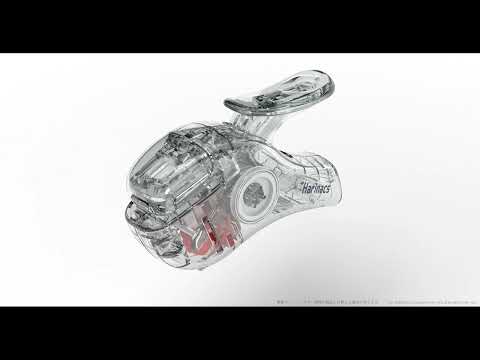
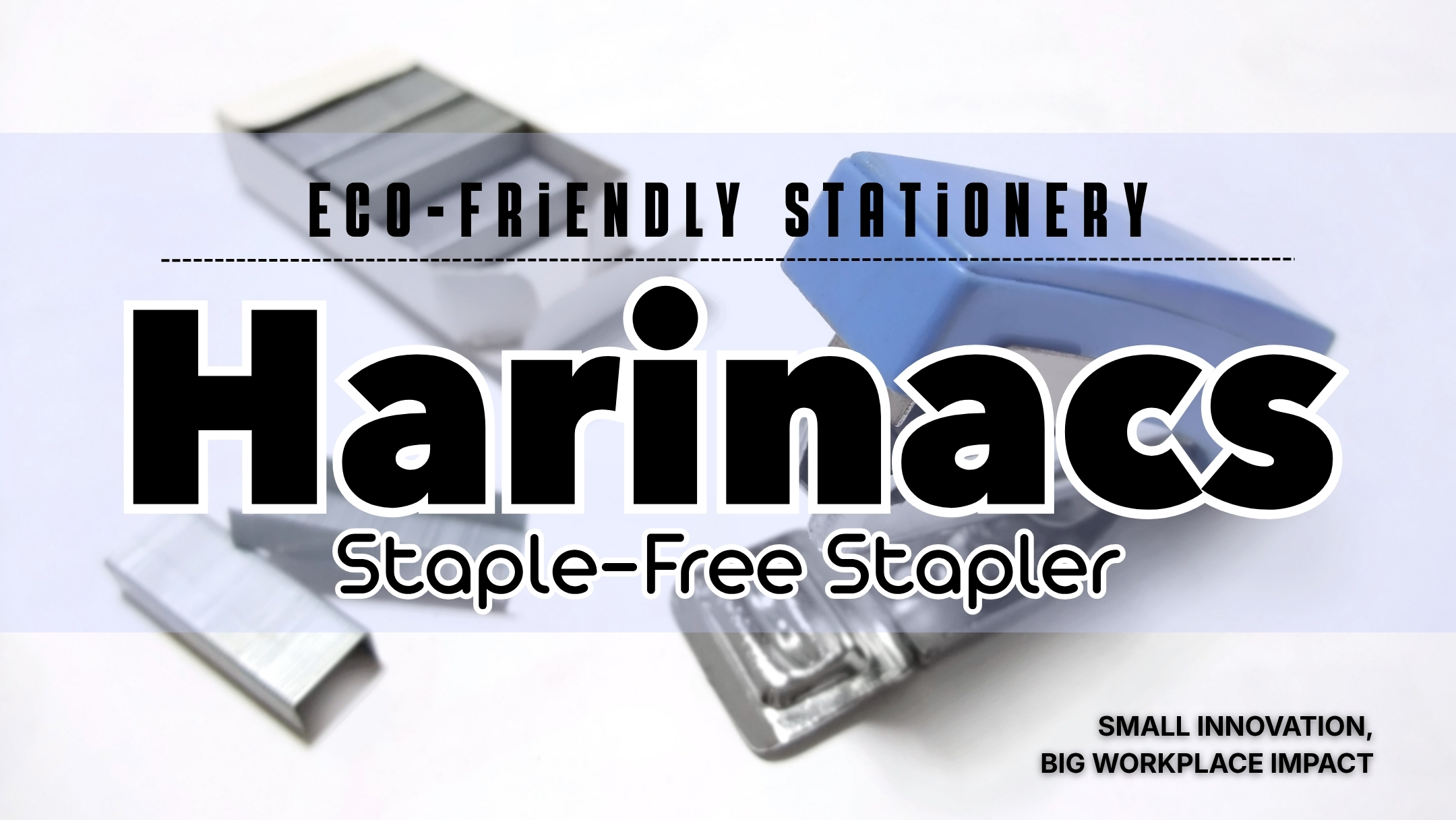
Harinacs is a Japanese staple-free stapler developed by Kokuyo that binds sheets of paper without using traditional metal staples. Instead, the device cuts and folds a small section of the paper itself, creating an interlocking bond that keeps documents together. This simple but clever mechanism eliminates the need for metal staples, making Harinacs particularly useful in environments where document safety, waste reduction, and easy disposal are important. Its compact design also makes it a practical alternative to conventional staplers in offices, schools, households, and other everyday settings.
The product reflects a broader Japanese approach to stationery design: taking a familiar everyday task and improving it through thoughtful engineering. By removing metal staples, Harinacs can make documents easier to separate and recycle while reducing the risk of staple-related injuries or accidental contact with sharp metal.
As businesses and consumers around the world place greater emphasis on sustainability and workplace safety, staple-free stationery such as Harinacs demonstrates how small innovations can address practical problems while creating a more convenient and environmentally conscious user experience.
Understanding Japan’s Harinacs Staple-Free Stapler
Source: Kokuyo Harinacs Homepage
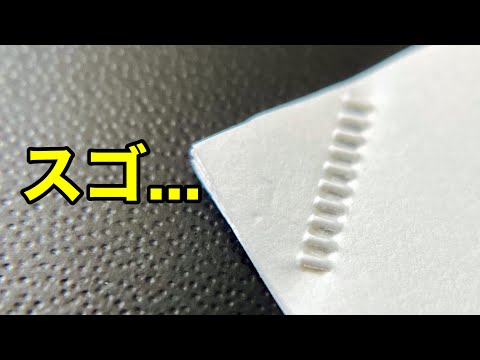
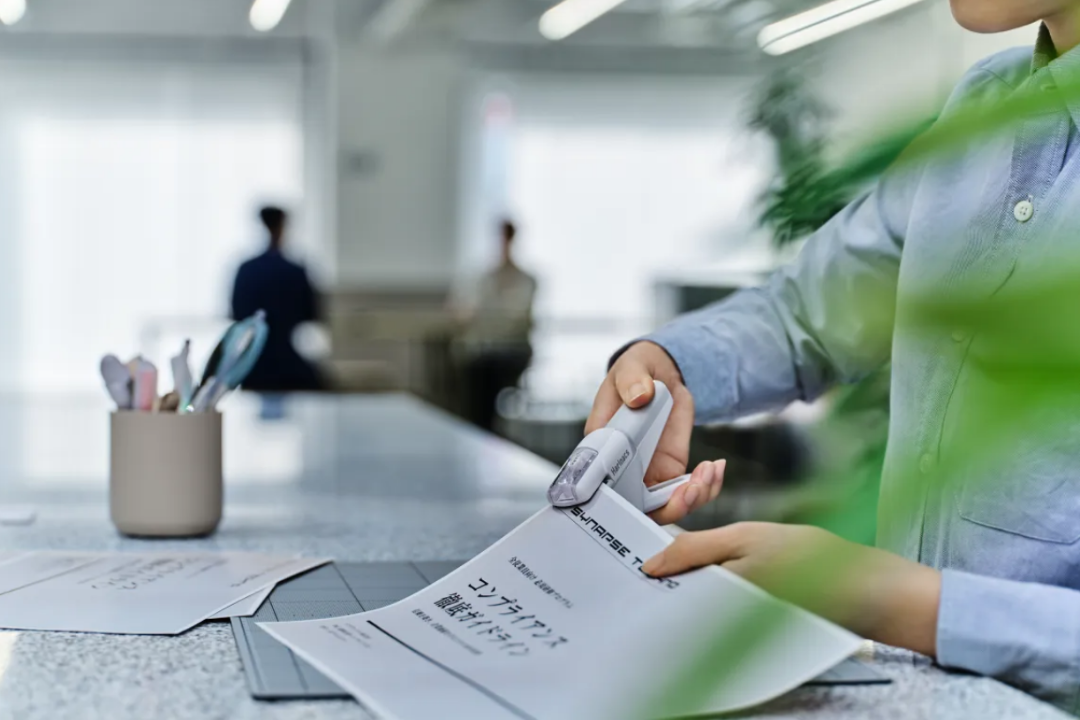
Harinacs is an innovative staple-free stapler developed by KOKUYO, one of Japan's best-known stationery manufacturers. Unlike conventional staplers, it requires no metal staples. Instead, it creates a small incision in the paper and folds it into a specially designed locking shape that securely binds the sheets together.
This unique mechanism eliminates many of the frustrations associated with traditional staplers. Users no longer need to worry about accidental puncture injuries, replacing empty staple cartridges, or removing metal staples before recycling documents. Everyday paperwork becomes safer, simpler, and more environmentally friendly.
Where Japanese Design Meets Everyday Convenience
Using Harinacs feels almost identical to using a regular stapler. Simply insert the paper and press the handle. Most models can bind up to about five sheets of standard copy paper, and certain paper types, such as thicker sheets or envelopes, can also be fastened within the product's recommended specifications. Because of its simplicity, Harinacs is widely used for school assignments, office documents, household paperwork, and many other everyday tasks. In classrooms especially, teachers appreciate that children can organize papers independently without the risks associated with sharp metal staples.
Priced at roughly ¥800 to ¥1,500 depending on the model, Harinacs is widely available through stationery stores and online retailers in Japan. Despite its affordable price, it offers excellent durability, safety, and long-term value since there are no staples to purchase or replace. These qualities also make it an attractive option for schools, offices, and households overseas looking for practical ways to reduce operating costs.
Harinacs is particularly well suited for users who prioritize safety and sustainability. Children, elderly users, healthcare professionals, educators, and office workers all benefit from a fastening solution that removes the hazards of metal staples while maintaining the convenience of traditional document organization. Its combination of usability, environmental friendliness, and Japanese engineering is one reason it has attracted growing interest outside Japan.
Japan's Innovative Staple-Free Paper Binding Technology
What truly sets Harinacs apart is its ability to fasten paper without using any metal staples. Traditional staplers rely entirely on metal fasteners, but Harinacs uses a precisely engineered mechanism that cuts a tiny tab into the paper and folds it into an interlocking shape, securely holding multiple sheets together.
This design eliminates the risk of accidental finger injuries caused by staples, making it especially suitable for schools, childcare facilities, senior care environments, and medical settings where safety is a top priority. With no metal staples, paperwork can also be discarded or recycled more easily, reducing waste and simplifying disposal. The absence of consumable staples further lowers long-term operating costs, making Harinacs an attractive solution for offices and educational institutions that process large volumes of documents.
How Japanese Innovation Reimagined the Stapler
Behind this seemingly simple concept lies impressive engineering. The shape of the paper cut, the folding angle, and the pressure required to create the lock were all carefully calculated to ensure that documents remain securely fastened while requiring very little force to operate. As a result, users enjoy a smooth, comfortable action that reduces hand fatigue even during extended use. The satisfying operation enhances everyday productivity while giving users confidence that their documents are securely bound.
The fastening mechanism itself is an original KOKUYO design protected by multiple patents. Manufacturing is carried out under strict quality control in Japan, where each product undergoes durability and safety testing before reaching the market. This combination of precision engineering, user-centered design, and reliable manufacturing reflects the attention to detail for which Japanese products are known worldwide, making Harinacs an appealing example of Japanese innovation for international consumers.
The Story Behind Harinacs
The development of Harinacs began with KOKUYO's determination to solve several long-standing problems associated with conventional staplers. Although staplers are indispensable tools in offices, schools, and homes, they also introduce risks such as accidental injuries from metal staples, the inconvenience of separating staples during recycling, and the recurring cost of purchasing replacement staples. KOKUYO believed that these everyday inconveniences could be eliminated through better design.
Engineers at the company set out to answer a challenging question: Could paper be securely fastened without using metal staples at all? Finding a solution proved far more difficult than it initially appeared. The team experimented with countless prototypes, carefully studying the properties of paper, the ideal depth of each cut, and the precise folding angles required to create a secure lock. Through years of testing and refinement, they developed a mechanism that firmly binds paper while requiring only light pressure from the user. The process reflects the meticulous craftsmanship and persistence that characterize Japanese manufacturing.
Environmental sustainability also became a central design objective. By eliminating metal staples, Harinacs reduces metal use while simplifying recycling and waste disposal. Long before sustainable office products became a major global trend, KOKUYO was already developing practical solutions that minimized environmental impact without sacrificing functionality. Today, this environmentally conscious approach aligns closely with the growing international demand for sustainable products.
Ultimately, Harinacs represents far more than a technical innovation. It embodies KOKUYO's commitment to improving everyday life by carefully examining small inconveniences and designing practical solutions around them. Transforming the simple act of fastening paper into a safer, more sustainable experience makes Harinacs a distinctive example of Japanese product design and one of the reasons it continues to attract users worldwide.
Harinacs Balances Safety and Efficiency
Harinacs has found applications across a wide range of industries, including schools, offices, and healthcare facilities. In educational settings, one of its biggest advantages is that students can organize worksheets and reports without worrying about injuries caused by metal staples. Teachers also benefit because students can assemble their materials independently, creating a safer and more efficient classroom environment. Since schools often need to organize large volumes of handouts in a short time, Harinacs' smooth operation and reliable binding mechanism reduce hand fatigue while improving productivity.
How Harinacs Supports Safer and More Sustainable Offices
In offices, Harinacs is commonly used for everyday document management and report preparation. Traditional staplers require replacement staples and carry the risk of accidental puncture injuries, but Harinacs eliminates both concerns. Its lightweight, compact design fits neatly on any desk without taking up valuable workspace, making it well suited for modern office environments. Departments that process large amounts of paperwork, including administrative teams and educational organizations, appreciate its ability to improve workflow while maintaining workplace safety.
Healthcare facilities also benefit from Harinacs. Hospitals and clinics handle sensitive patient records every day, where both safety and hygiene are essential. Because Harinacs uses no metal staples, healthcare professionals can organize documents without the risk of accidental needle-like injuries. It also removes the need to dispose of used staples, making document management simpler and more efficient. These practical advantages have made it a trusted stationery solution in medical environments.
By solving common challenges shared by schools, offices, and healthcare institutions, Harinacs demonstrates its versatility well beyond ordinary office supplies. Its success across these settings suggests strong potential for overseas adoption, where organizations increasingly seek products that improve both workplace safety and operational efficiency.
Precision Japanese Manufacturing Behind Harinacs
Source: Kokuyo Harinacs Homepage
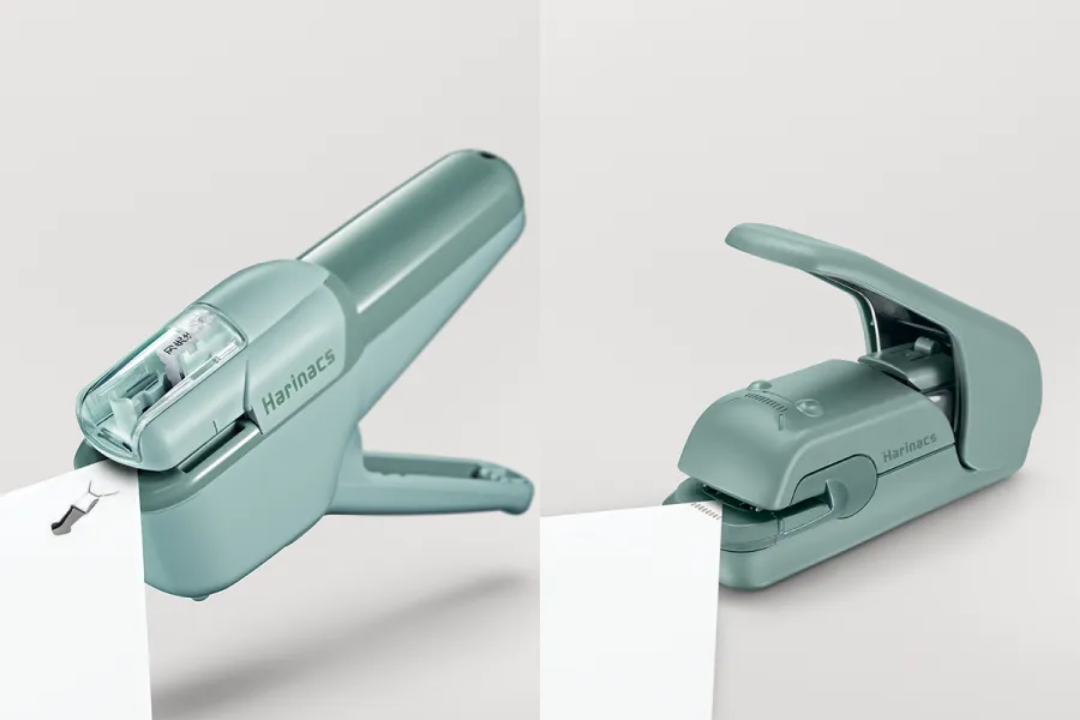
Harinacs is manufactured entirely in Japan under strict quality control standards. Every material and component is selected for safety and durability, ensuring reliable performance even after years of regular use. Its staple-free binding mechanism is especially precise, as even tiny variations can affect how securely the paper is fastened. Producing such a mechanism requires advanced manufacturing techniques combined with meticulous inspection throughout the production process.
Skilled technicians work alongside precision machinery to ensure each product meets exact specifications. This combination of craftsmanship and modern manufacturing reflects Japan's long-standing reputation for attention to detail and product reliability.
Harinacs also undergoes extensive durability and safety testing before it reaches consumers. Engineers verify that it can withstand everyday use, consistently bind different paper types and thicknesses, and remain safe even during accidental misuse. These comprehensive inspections allow users to rely on Harinacs in virtually any environment. The staple-free design itself further enhances safety, making it particularly suitable for children, older adults, and professional workplaces where minimizing risk is a priority.
Rather than simply manufacturing stationery, Kokuyo focuses on delivering confidence and peace of mind to users. The consistent performance of Harinacs reflects the precision engineering and manufacturing philosophy Japanese products are known for worldwide. This attention to quality makes Harinacs more than just a stationery item. It is a product built on trust and long-term reliability.
The Japanese Philosophy of Safer, Smarter Stationery
The development of Harinacs reflects Kokuyo's long-standing commitment to solving everyday problems through thoughtful design. For decades, the company recognized that traditional staplers, while useful, presented unnecessary risks such as accidental injuries, disposable metal waste, and ongoing replacement costs. These seemingly small inconveniences inspired Kokuyo's engineers to rethink one of the most common office tools from the ground up.
Their goal was not simply to eliminate staples, but to create a product that remained just as convenient to use. Extensive research and testing focused on making the binding process effortless while ensuring compatibility with various paper thicknesses. Every aspect of the user experience, from the amount of force required to operate the device to the reliability of each bind, was carefully refined. This philosophy of combining safety with ease of use remains central to Harinacs today.
Environmental sustainability also played an important role in its development. By removing the need for metal staples, Harinacs reduces metal consumption and eliminates staple waste during disposal. While sustainability has become a major global priority in recent years, this environmentally conscious approach was already built into Harinacs from the beginning.
The result is a product that embodies the values often associated with Japanese manufacturing: solving practical problems through careful engineering, thoughtful design, and continuous refinement. Harinacs continues to reflect Kokuyo's vision of creating stationery that makes everyday work safer, easier, and more enjoyable for everyone.
The Global Potential of Staple-Free Stationery
Kokuyo continues to expand Harinacs beyond Japan as international demand grows for products that prioritize both safety and sustainability. Schools, offices, and households worldwide are becoming increasingly interested in safer alternatives to conventional staplers, particularly in regions such as North America and Asia, where workplace safety and environmentally friendly products are receiving growing attention.
The company is also increasing global awareness through online sales channels and partnerships with international stationery retailers. Future product development is expected to include expanded model variations and improved designs that meet the needs of an even wider range of users.
By introducing Harinacs' combination of safety, convenience, and environmental responsibility to international markets, Kokuyo aims to establish the product as a globally recognized example of Japanese innovation. As awareness grows, Harinacs has the potential to improve document management in classrooms, workplaces, and homes worldwide.
A Proven Track Record in Japan
Harinacs has earned a strong reputation throughout Japan after years of widespread use in schools, offices, and homes. In educational settings, teachers and parents appreciate that children can organize assignments safely without the risk of staple injuries. Many schools have incorporated Harinacs into daily classroom activities as part of their commitment to creating safer learning environments.
Businesses also rely on Harinacs for everyday paperwork and document preparation. Its ability to simplify office tasks while eliminating staple-related accidents has made it a practical choice for companies looking to improve workplace efficiency.
The product has received positive coverage in stationery magazines and educational publications, where reviewers frequently highlight its safety and ease of use. Online customer reviews often praise features such as its child-friendly design and the convenience of never having to refill staples. Strong and consistent sales through stationery stores and online retailers have further established Harinacs as one of Japan's most trusted innovative office products.
On social media, Harinacs is often introduced as an example of Japan's precision engineering and practical product design. This strong domestic reputation adds credibility as the product continues to expand into overseas markets.
Why This Japanese Safety Innovation Appeals to Global Markets
Source: Kokuyo Harinacs Homepage
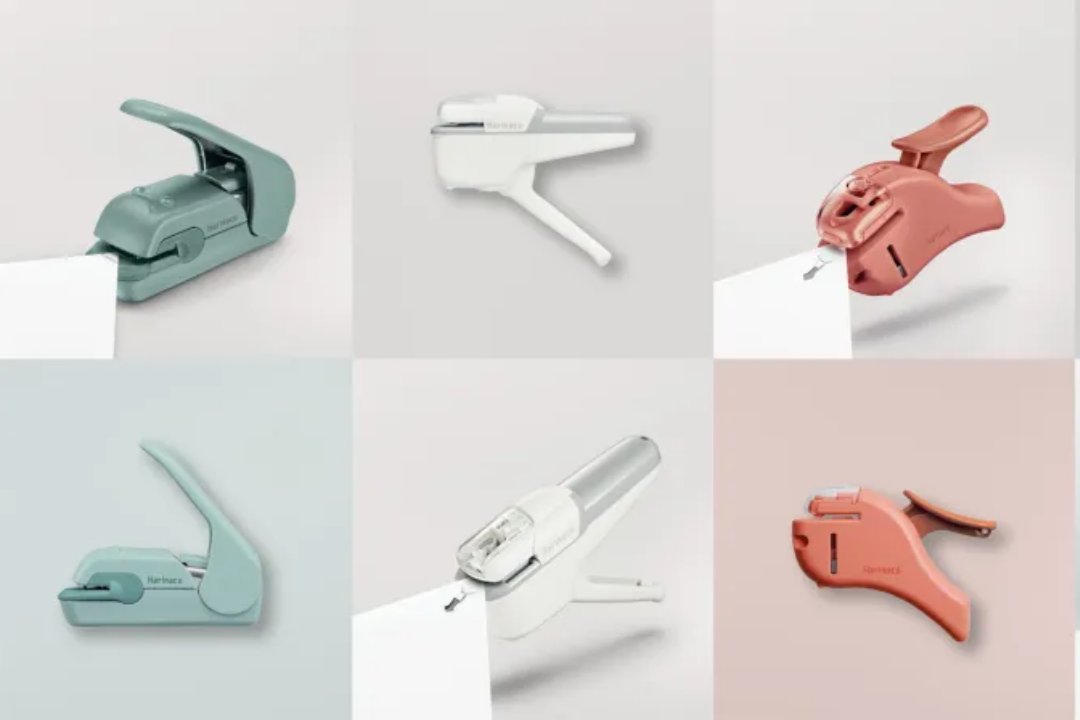
Harinacs offers several qualities that make it highly attractive internationally. Its combination of safety, ease of use, and environmental responsibility addresses universal needs shared by schools, offices, and households regardless of country or culture. Markets in North America, Europe, and Asia are increasingly seeking products that protect children, older adults, healthcare workers, and anyone looking for safer workplace solutions.
Japan's reputation for precision manufacturing also strengthens Harinacs' appeal. Its patented staple-free binding technology remains relatively uncommon outside Japan, giving it strong differentiation as an innovative stationery product. Beyond educational institutions and businesses, expanding e-commerce makes it easier for households worldwide to discover and purchase unique Japanese products.
Interest from international buyers and educators continues to grow through trade shows and online retail channels. As awareness increases, Harinacs represents more than an office supply. It shows how Japanese craftsmanship can transform even the most familiar everyday tools into smarter, safer, and more sustainable products.
Conclusion
Harinacs is an innovative Japanese stationery product that combines safety, convenience, and environmental responsibility in one simple device. By eliminating the risks associated with traditional staplers, including accidental injuries, staple refills, and metal waste, it has become a trusted solution across schools, offices, healthcare facilities, and homes throughout Japan. Its long history of reliable performance provides strong evidence of its quality and practical value.
As global demand for safer, more sustainable products continues to grow, Harinacs is well positioned to meet those expectations. Its unique staple-free technology, dependable Japanese manufacturing, and thoughtful design offer meaningful advantages for educational institutions, businesses, and households worldwide. Beyond its practical benefits, it also showcases the careful craftsmanship and user-centered innovation that Japanese products are known for.
For international distributors, retailers, and organizations, Harinacs presents an opportunity to introduce a product that improves both safety and efficiency while offering something genuinely different from conventional office supplies. By bringing this Japanese innovation to global markets, businesses can provide customers with a smarter, safer, and more environmentally friendly way to organize documents every day.
FAQ About Harinacs
1. What Is Harinacs?
Harinacs is a staple-free stapler developed by Kokuyo Co., Ltd. Instead of using metal staples, it secures sheets of paper by creating and folding small interlocking cuts in the paper itself. Its combination of safety and convenience has made it a popular choice in schools, offices, and many other environments.
2. How Does Harinacs Bind Paper Without Staples?
Harinacs works by making a specially designed cut in the paper and folding that section to lock the sheets together. Because it uses no metal staples, you don't need to refill staples or remove them when recycling or disposing of documents.
3. How Many Sheets Can Harinacs Staple?
The maximum number of sheets depends on the model, but standard versions can typically bind up to five sheets of paper. It is designed primarily for everyday documents, handouts, and reports, not large stacks of paperwork.
4. Can Paper Be Reused After It Has Been Bound With Harinacs?
Yes. Bound papers can be separated if needed. However, because the paper contains small cuts from the binding process, repeatedly fastening the same spot is not recommended. Harinacs is best suited for documents intended for distribution, filing, or long-term storage rather than frequently updated paperwork.
5. Where Is Harinacs Commonly Used?
Harinacs is used in schools, offices, hospitals, public institutions, and homes. Since it eliminates the risk of injuries caused by metal staples, it is especially popular in environments where safety is a top priority.
6. Does Harinacs Require Staple Refills or Replacement Parts?
No. Because Harinacs operates without metal staples, there are no staples to refill or replace. Once purchased, it is ready for continuous use, making it a cost-effective option with very low ongoing maintenance.
7. Is Harinacs Environmentally Friendly?
Yes. By eliminating metal staples, Harinacs reduces the resources needed to manufacture and dispose of staples. It also makes paper recycling easier because documents don't need staples removed before disposal.
8. Why Is Harinacs Gaining Attention Overseas?
As interest in safer and more environmentally friendly products continues to grow worldwide, Harinacs stands out for its unique staple-free design. Its precision engineering, high manufacturing standards, and Japanese craftsmanship also contribute to its growing international appeal.
9. Where Can You Buy Harinacs?
Harinacs is available at stationery stores, home improvement retailers, and online shops. Several models are offered, so it is worth comparing their sheet capacity and size to find the one that best suits your needs.
10. Why Has Harinacs Remained Popular for So Long?
Harinacs has earned long-term support because it successfully combines safety, ease of use, and environmental responsibility in a simple everyday tool. Its intuitive operation, dependable performance, and reputation for Japanese quality continue to make it a trusted choice for users worldwide.
Related Videos
If you're interested in how Japanese stationery is being redesigned for safer and more sustainable everyday use, the video below explores Harinacs, a staple-free stapler that binds paper without metal staples. This simple innovation offers practical benefits for schools, offices, and other workplaces.