Anyone who has walked through Tokyo in midsummer has likely been struck by its clinging humidity and the heat radiating from the asphalt. Unlike the dry heat often experienced in Western countries, Japan’s summers are defined by a thick, muggy “steaminess.” With high temperatures and humidity hitting at the same time, even staying out of direct sunlight doesn’t stop the sweat, draining one’s energy quickly.
Observations by the Japan Meteorological Agency show that the number of midsummer days (with highs of 30°C or above) and extremely hot days (35°C or above) has been increasing, turning the challenge of staying comfortable into a societal issue. In recent years, heat waves have become more frequent, and temperatures no longer drop easily in the mornings and evenings. Sleepless nights and the strain of moving outdoors are felt most acutely by people working in the city.
To cope with this climate, Japan has long cultivated the custom of using parasols. They block direct sunlight, protect against UV rays, and help lower the perceived temperature. While parasols were originally part of women’s etiquette, their use has recently spread to men, and it is no longer unusual to see businessmen carrying them on their commutes. Local governments and ministries are also encouraging the use of parasols as a concrete measure to reduce the WBGT heat index.
However, parasols alone have their limits. They provide shade but cannot shield you from the surrounding air's heat. When the wind dies down, the stifling discomfort feels like standing in a steam bath. Neck fans and handheld fans have emerged as solutions, but when used together with a parasol, both hands become occupied, making it inconvenient to use a smartphone or carry bags. This created a new challenge.
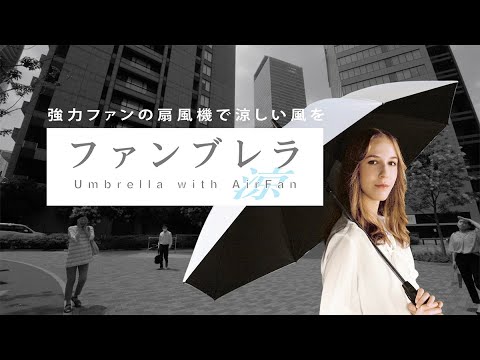
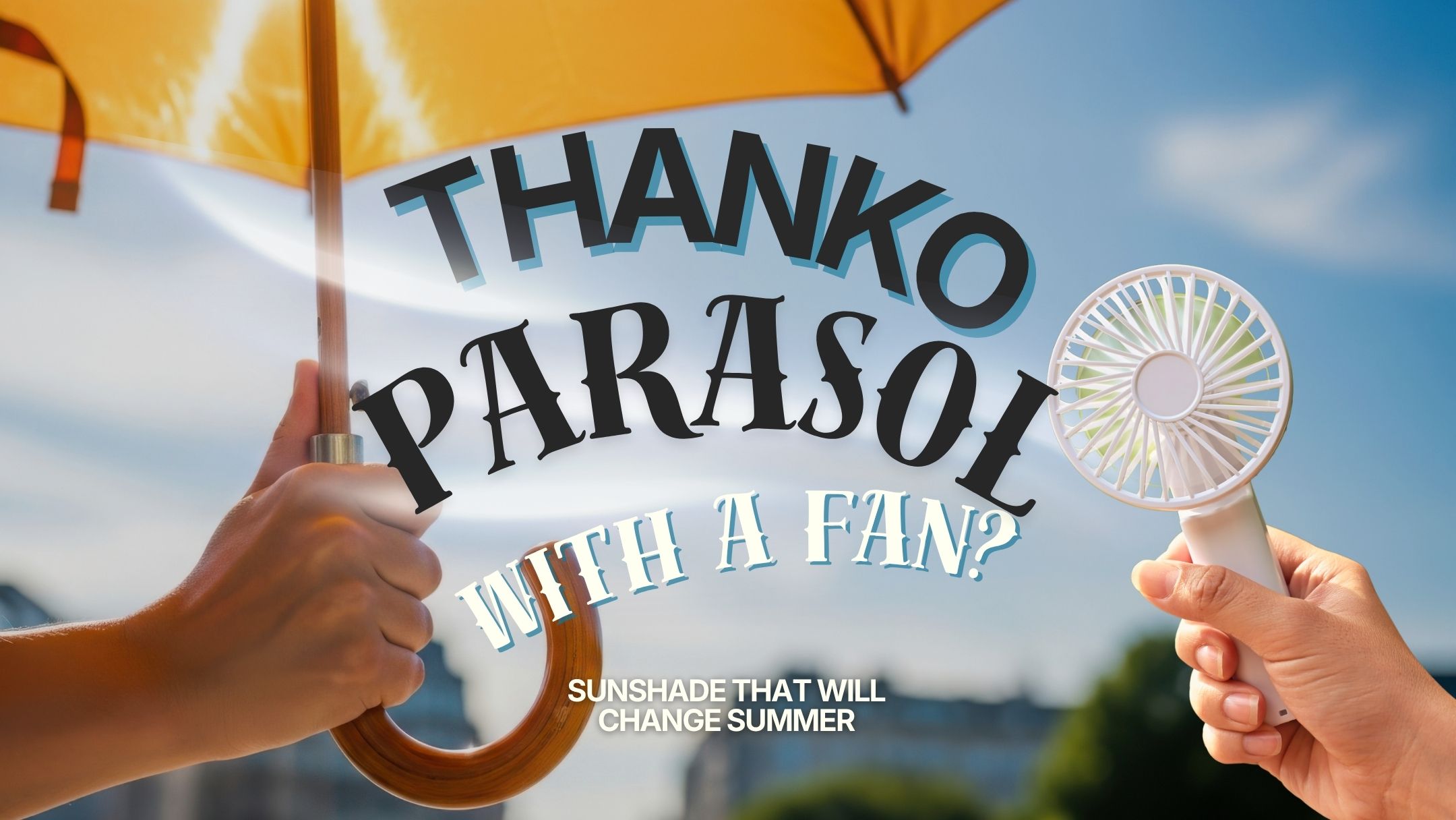
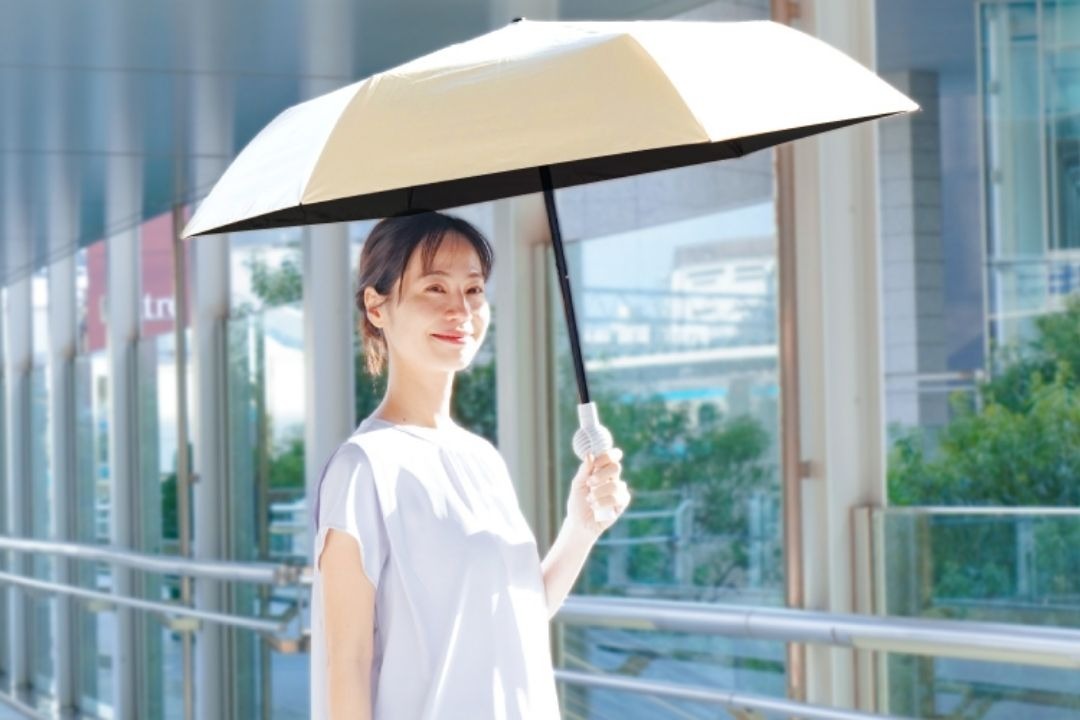
Thanko’s “parasol with a fan” is the product that solves this challenge. At first glance, it looks like an ordinary folding parasol. Yet it has a small fan built into the center of the shaft, creating shade while sending a refreshing breeze. With only one hand holding the parasol, users can enjoy the dual benefits of sun protection and airflow. Its simple design blends seamlessly into the city.
Behind this idea lies a growing social issue. According to the Fire and Disaster Management Agency, from May to September 2024, a total of 97,578 people across Japan were taken to emergency care for heatstroke—the highest number since records began. Statistics from the Tokyo Fire Department show that emergency transports between June and September 2024 also hit a record high. More recently, in just one week (August 18–24, 2025), 8,402 people nationwide were hospitalized, showing that the risks of extreme heat remain significant. Even making small improvements to one’s thermal environment can be seen as a practical step toward protecting health and peace of mind.
Although parasol culture is not common in Western countries, heat waves have also become a serious social issue in Europe and North America. The Japanese idea of combining a parasol and a fan could work well in cities around the world. As a form of “portable cooling” suited for the era of climate change, it is beginning to draw attention.
THANKO Fanbrella POLE Overview
The “Fanbrella POLE” from Thanko is a unique folding parasol with an integrated fan mechanism. Its standout feature is a design that sends air from the shaft. Air is drawn in through the handle and delivered to the face and neck via ventilation holes, providing both shade and airflow to help reduce perceived temperature.
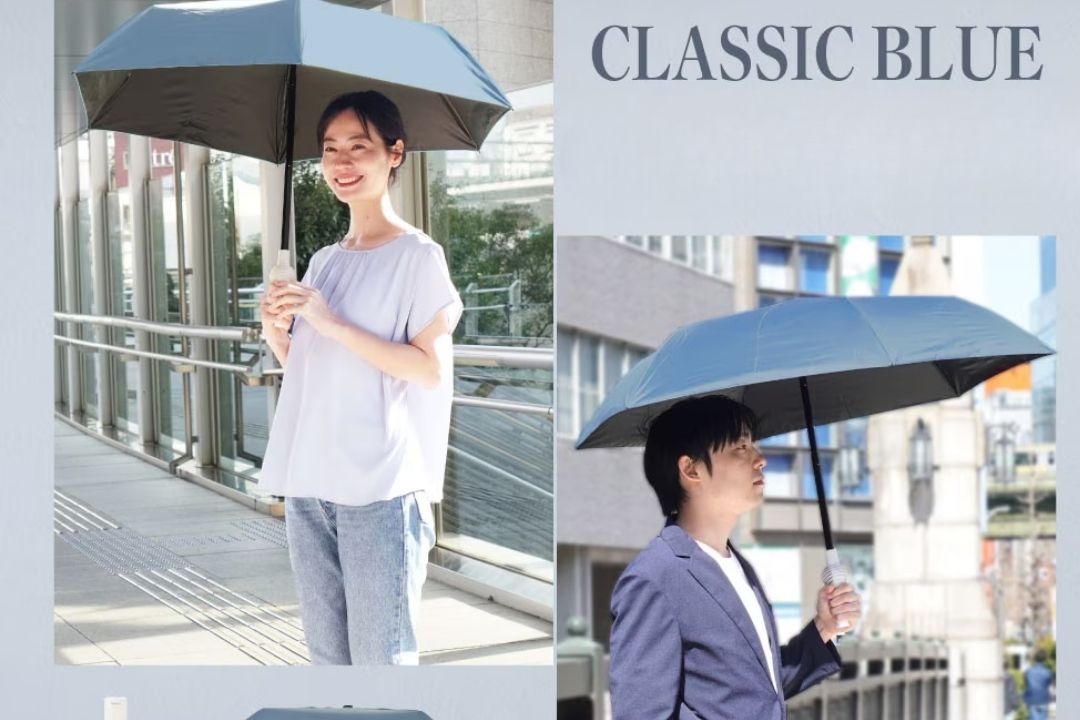
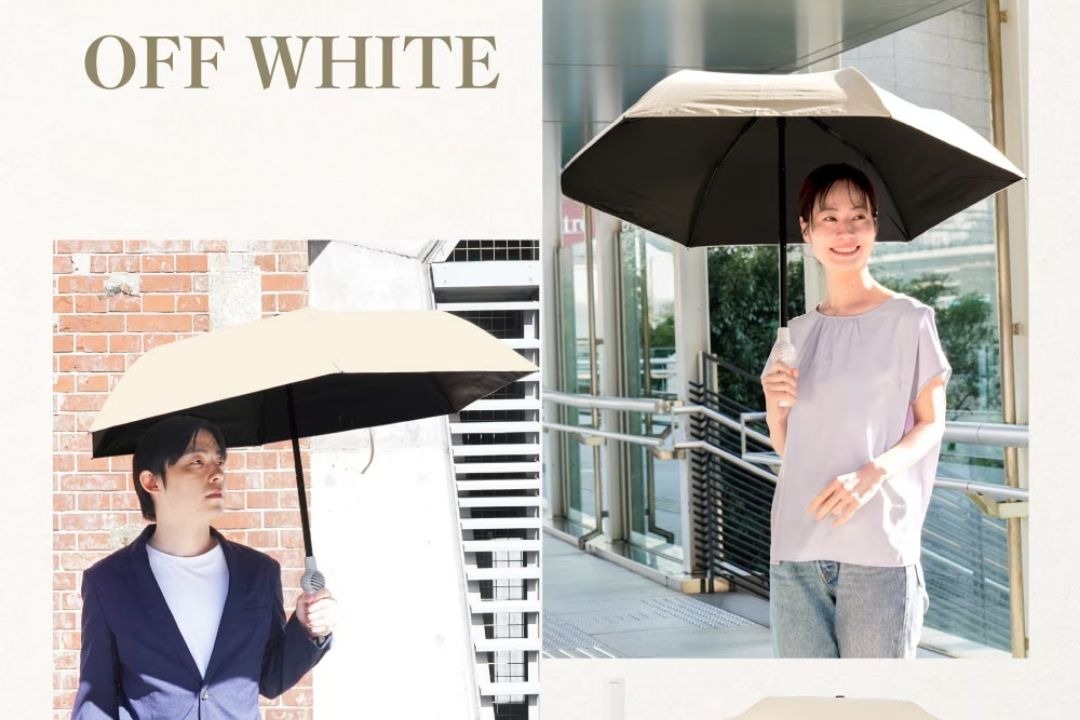
The specifications are practical. When stored, it measures about 38.2 cm in length, and about 68.2 cm when in use, with a canopy diameter of approximately 101 cm—large enough for solid coverage. The fabric offers 100% light blocking, 98% UV protection, and UPF 50+. It weighs around 340 g. The parasol is USB rechargeable, providing about 3.5 hours of continuous use after roughly 4.5 hours of charging. It is designed for both sunny and rainy weather. Available in Off-White and Classic Blue (model numbers: Off-White TKFA25SGY, Classic Blue TKFA25SBL). Demand has been strong enough that the official store listed this season’s stock as sold out.
Making Summer Outings a Little More Fun
Source: THANKO Homepage
When extreme heat persists day after day, outdoor activities become an endurance exercise. Sightseeing, commuting, picking up children, watching sports, summer festivals, and outdoor concerts all become draining under intense sunlight. In particularly hot years, emergency transports rise sharply, affecting not only older people but also many people in their working years.
How the Fanbrella POLE Makes Summer Outings Comfortable
The “parasol with fan” changes the summer experience. An ordinary parasol creates shade, but it cannot solve the problem of trapped hot air. The Fanbrella POLE directs airflow from the shaft toward the face and neck, efficiently releasing heat around the head and helping perspiration evaporate. Even while walking, it generates light air circulation that clears away the stifling layer of heat. In many situations, users will feel that even a gentle breeze is far better than none at all.
Consider a few specific examples. In the crowds at Kyoto’s Gion Festival or Asakusa’s Hozuki Market, body heat raises the perceived temperature, but having air blow around the face makes it easier to breathe.
The same is true for long waits at outdoor music festivals, fireworks displays, or stadium entrances. It is also useful when traveling abroad. For tourists walking the cobblestone streets of Rome’s old city or the grand boulevards of Paris, the combination of direct sunlight and trapped heat creates a kind of stress similar to that of Japan’s summers. With one hand free, taking photos and using map apps becomes easier.
Summer Outings Made Easier
THANKO Fanbrella POLEs are also effective during commutes. In Japan’s summers, even a ten-minute walk to the station can leave you drenched in sweat. Air directed at the face and neck helps prevent heat buildup inside a suit, reducing sweat stains and makeup smudging. For parents pushing strollers, staff running outdoor events, or disaster-prevention workers who often have both hands occupied, the advantage of staying cool with just one hand is especially valuable.
There are also health benefits. The airflow helps evaporate sweat from the skin’s surface, keeping body temperature from rising too quickly. While hydration, salt intake, and adequate rest remain essential, having “portable airflow” offers reassurance. This combination of shade and breeze is especially helpful when walking with older adults or small children.
Looks Ordinary, But Hides a “Cool” Secret Inside
The appeal of the Fanbrella POLE lies in its natural look that doesn’t feel like a gadget. On the outside, it appears to be a simple, understated folding parasol. With two color options, it matches easily with both business and casual outfits. Even up close, unless one notices the ventilation holes in the shaft, it looks like an ordinary umbrella. This subtle, unobtrusive quality reflects a distinctly Japanese approach to product design.
Its basic performance as a parasol is excellent. It offers 100% light blocking, 98% UV protection, and a UPF rating of 50+. The black inner fabric reduces glare and bright reflections. With a diameter of about 101 cm, it provides generous coverage down to the shoulders, and since it is suitable for both sun and rain, it’s reliable even in sudden showers. Details such as wind-resistant ribs and a non-slip handle show attention to usability.
Portable, Stylish, and Refreshing: The Fanbrella POLE Advantage
Portability is another key point. When folded, it measures about 38.2 cm. At around 340 g, it is slightly heavier than a typical folding parasol but lighter than carrying a parasol and a handheld fan separately. It's all-in-one minimalism appeals to travelers and commuters who prefer to keep their bags light.
The design concept is clear: ordinary in appearance, surprising in use. The power button is located at the bottom of the handle and activates with a long press. Air is drawn in through the handle and blown out from the vents. Since the fan blades are not exposed, there is less risk of hair or clothing getting caught, making it relatively safe even near children (though precautions, such as avoiding inserting fingers or objects, remain necessary). The airflow is directed toward the face and neck, helping prevent makeup or sunscreen from being disturbed.
Even globally, this “subtle high-tech” is easy to adopt. Its understated colors blend naturally into European cityscapes; it does not disperse widely in public spaces, and its folding design makes it highly portable. Even in countries without a strong parasol culture, the dual function of shade plus personal airflow has universal appeal.
USB-Rechargeable Quiet Fan
Source: THANKO Homepage
Its gadget quality is also noteworthy. USB charging takes about 4.5 hours and offers roughly 3.5 hours of continuous use. The idea is simple: charge it at your desk before heading out, then use it throughout the day. With a mobile battery, recharging on the go is easy. Since USB is a global standard, it is reliable even when traveling abroad.
Engineered for Safety and Ease: How Fanbrella POLE Works
One benefit of airflow from the shaft is that it reaches the face and neck with minimal loss. Compared to attaching a small fan at the top of the umbrella, this design is more efficient. Because air outlets are divided into several vents, the airflow spreads gently across a broader area rather than hitting a single spot directly. The operating noise is minimal, so you don’t need to worry about disturbing others in crowds or lines.
Durability and safety were also considered. The charging port has a waterproof cap, making it usable on rainy days. The battery is stored in the handle, keeping the center of gravity low and reducing sway. The fan blades are hidden and out of easy reach.
Maintenance is simple. After use, let the parasol air-dry in the shade and gently brush off dust from the air intake with a soft brush. Avoid leaving it in a hot car and charge it using the provided cable or a compatible power source. When storing, fasten it with the included strap and avoid blocking the vents so it is ready for next time.
From Personal Comfort to Social and Environmental Impact
Let’s broaden the perspective. Heat is not just a matter of personal discomfort. According to the Fire and Disaster Management Agency, from May to September 2024, there were 97,578 emergency transports nationwide due to heatstroke, the highest since statistics began. The Tokyo Fire Department also reported a record number of cases during the same period. In the summer of 2025, thousands of people continue to be hospitalized each week. While older people make up a large share, many working-age adults and children are also affected.
In response, the Ministry of the Environment and local governments have actively promoted the use of parasols. Studies show that parasols reduce WBGT and decrease perspiration, and campaigns encouraging men to use them have gained traction. In Saitama Prefecture and other regions, verification tests combining Cool Biz with parasol use have demonstrated a reduction of around 20% in perspiration, helping to break long-held stereotypes.
Combining a parasol with personal cooling can also reduce social costs. In midsummer, cooling demand spikes, straining the electricity supply. While it’s difficult to uniformly reduce large-scale air-conditioning loads, easing localized heat stress during outdoor movement is a practical approach. Personal cooling may also help reduce strain on medical services and indirectly help lower electricity peaks.
There is also a cultural angle. In Japan, traditional strategies for blocking the sun—such as paper umbrellas and bamboo blinds—have existed for centuries. Now, that heritage is being combined with modern technology in the form of compact electric mechanisms. The modest design, which blends naturally into public spaces, embodies a Japanese sensibility that the world may find increasingly valuable. The principle of “shade plus airflow” is universal, whether in Europe’s stone-built cities or North America’s suburban landscapes.
Of course, there are limits. The airflow is personal and does not replace organizational measures such as misting stations or revised work schedules for outdoor labor. Still, as a portable first step at the individual level, a parasol with a built-in fan holds real significance.
The Future Shaped by a Single Umbrella
Source: THANKO Homepage
Finally, imagine a scene. Kyoto in midsummer, at noon. A traveler walks along the stone-paved streets, feeling the sticky air cling to their shoulders. Even with a parasol, the moment the wind stops, sweat begins to pour. Then they press the button at the base of the handle. A thin stream of air rises from the shaft, brushing across the cheek and slipping past the collar. Vision clears slightly, and footsteps feel lighter. Small changes like these add up: improving the experience of a trip, easing a daily commute, and brightening the mood of summer.
The Fanbrella POLE stands at the intersection of tradition and technology. It maximizes the parasol’s long-standing role of blocking sunlight while adding the element of “wind” through a compact mechanism. There are no exposed propellers and no flashy styling, yet it delivers genuine cooling. It embodies the essence of Japanese subtlety.
Small Changes, Big Comfort: Japanese Design for Hot Days
We live in an era when heatstroke-related emergency transports continue to reach record highs. Climate change is reshaping the very nature of summer, and preparing for the heat is becoming basic knowledge. A single umbrella cannot save the world, but one umbrella can change a person’s behavior, influence those around them, and gradually shift the atmosphere of a city. People may walk differently, feel freer to go out, and see heat protection not as something embarrassing, but as something smart.
One day, parasols may be a natural sight on street corners in Europe and America. Under the harsh sun of an arcade, in a square radiating midday heat, or while waiting at a long crosswalk, adding a small breeze could lift people’s moods and soften the feel of the city. A Japanese innovation may cross borders, adapting to different climates as it spreads. At the starting point of that future is this simple “parasol with a fan.”
Above all, this product is fun. Heat protection often feels like a heavy topic, but this item brings a small smile each time it is used. It is convenient, slightly quirky, and surprisingly thoughtful in its design. To make scorching summers a little easier, start with a single umbrella.
From Tokyo to Global Necessity
As record-breaking heatwaves become a worldwide reality, Japan’s innovation, the Fanbrella Pole, addresses a problem that is no longer limited to one country. It is designed to help people get through daily commutes and hours of sightseeing without feeling overwhelmed by the heat.
Its potential becomes even clearer in places where people gather under the sun. Think of long lines at theme parks, summer streets in Italy filled with travelers, or outdoor festivals like Coachella. In these situations, shade and airflow are hard to find, and the heat quickly becomes exhausting. The Fanbrella Pole offers a simple, portable solution, making it an ideal item for the modern summer.
Conclusion
The “parasol with a fan” is more than a clever gadget—it represents a shift in how individuals can protect themselves in an era of rising temperatures. By blending traditional Japanese sunshade culture with compact modern technology, it offers a practical and enjoyable way to stay cool in increasingly harsh summers.
As heat waves intensify around the world, personal cooling tools will become essential parts of daily life. A product like the Fanbrella POLE shows how small, user-friendly innovations can influence behavior, reduce heat stress, and even reshape urban environments. Whether used for commuting, travel, outdoor events, or simply walking around town, it transforms summer from something to endure into something that can be enjoyed.
This umbrella is a reminder that thoughtful design, humble in appearance yet powerful in use, can play a meaningful role in adapting to the climate challenges ahead.
FAQ About Fanbrella POLE
1. What Is Fanbrella POLE?
Fanbrella POLE is a parasol with a built-in fan developed by THANKO. It combines a sunshade with a compact fan as a heat countermeasure, featuring a design that directs airflow from the shaft toward the face and neck. Its key feature is that it provides both shade and airflow at the same time.
2. How Is Fanbrella POLE Different From a Regular Parasol?
While a standard parasol primarily blocks sunlight, Fanbrella POLE stands out with a built-in fan. Directing airflow to the face and neck helps prevent heat buildup in humid conditions and enhances overall comfort.
3. Does Fanbrella POLE Actually Feel Cool?
Yes. It is designed to reduce heat and humidity around the face and neck. The fan promotes sweat evaporation, making it easier to stay comfortable during commuting, sightseeing, or waiting at events.
4. Which Is More Convenient, a Fanbrella POLE or a Handheld Fan?
Fanbrella POLE offers the advantage of providing shade while delivering airflow. Unlike a handheld fan, it does not occupy one hand, making it easier to use a smartphone or carry items, and more convenient while on the move.
5. Can the Fanbrella POLE Be Used on Rainy Days?
Yes. It is designed for use in both sun and rain. The charging port includes a waterproof cap, but use during heavy rain or prolonged exposure to strong rainfall is not recommended.
6. Is the Weight of the Fanbrella POLE Noticeable?
It weighs approximately 340g, making it slightly heavier than a typical folding parasol. However, since there is no need to carry a separate handheld fan, it helps keep the overall luggage more compact.
7. How Long Does the Battery of the Fanbrella POLE Last?
After about 4.5 hours of charging, it can be used continuously for around 3.5 hours. It is USB rechargeable, making it easy to charge on the go with a mobile battery.
FAQ 8. In What Situations Is Fanbrella POLE Useful?
It is useful in situations where you spend long periods outdoors, such as commuting, traveling, attending outdoor festivals, sports events, and fireworks displays. It is especially helpful in crowded areas or waiting lines, where airflow around the face can reduce discomfort.
9. Could Fanbrella POLE Gain Attention Overseas?
Yes. In recent years, heatwaves have become a growing issue in Europe and North America, increasing interest in solutions that combine sun protection with personal cooling. As a product that merges Japan’s parasol culture with compact appliance technology, it has the potential to attract attention internationally.
10. What Is the Biggest Advantage of Fanbrella POLE?
Its main advantage is the ability to carry both shade and airflow with one hand. Beyond simple heat protection, it reduces the stress of moving around in midsummer and offers a new way to stay comfortable outdoors.
Related Videos
If you're interested in Japan’s creative solutions to summer heat, the video below introduces a parasol with a built-in fan by THANKO, designed to keep users cool outdoors. This video shows how combining shade and airflow creates a more comfortable experience in hot weather.