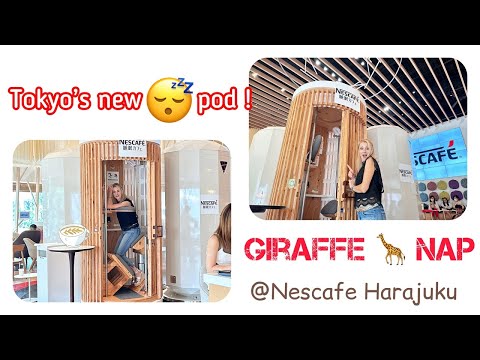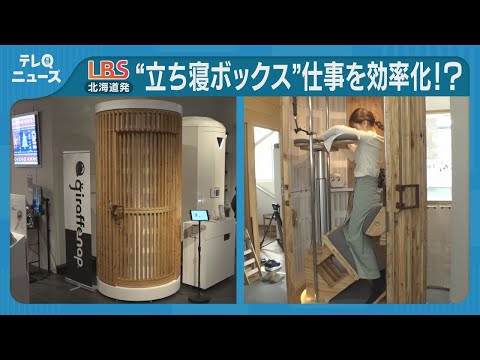
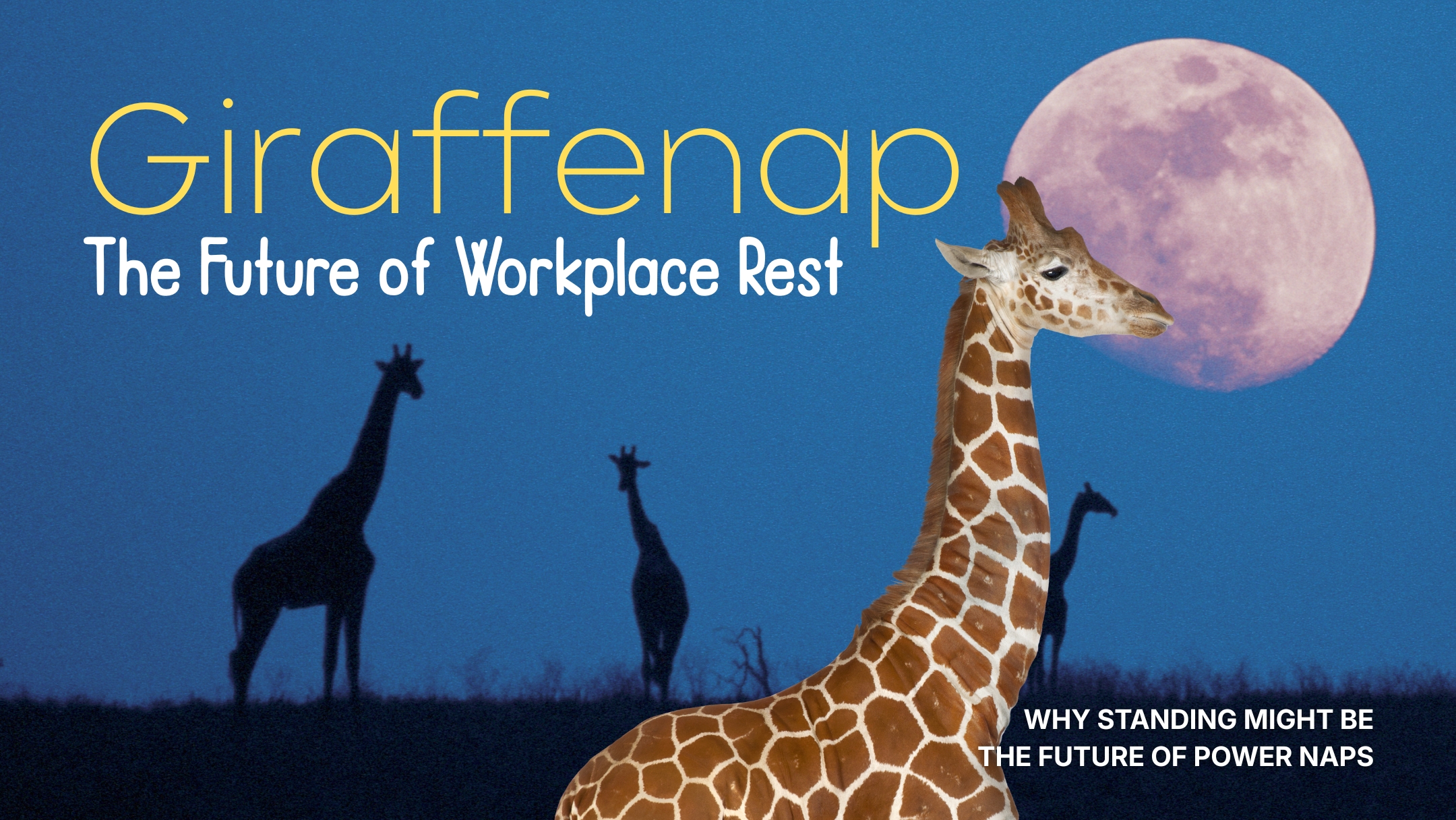
Giraffenap is a standing nap pod designed to help people recharge efficiently without lying down. Installed in office buildings, commercial facilities, train stations, and other high-traffic locations, it provides a dedicated space for short breaks during the workday or while traveling.
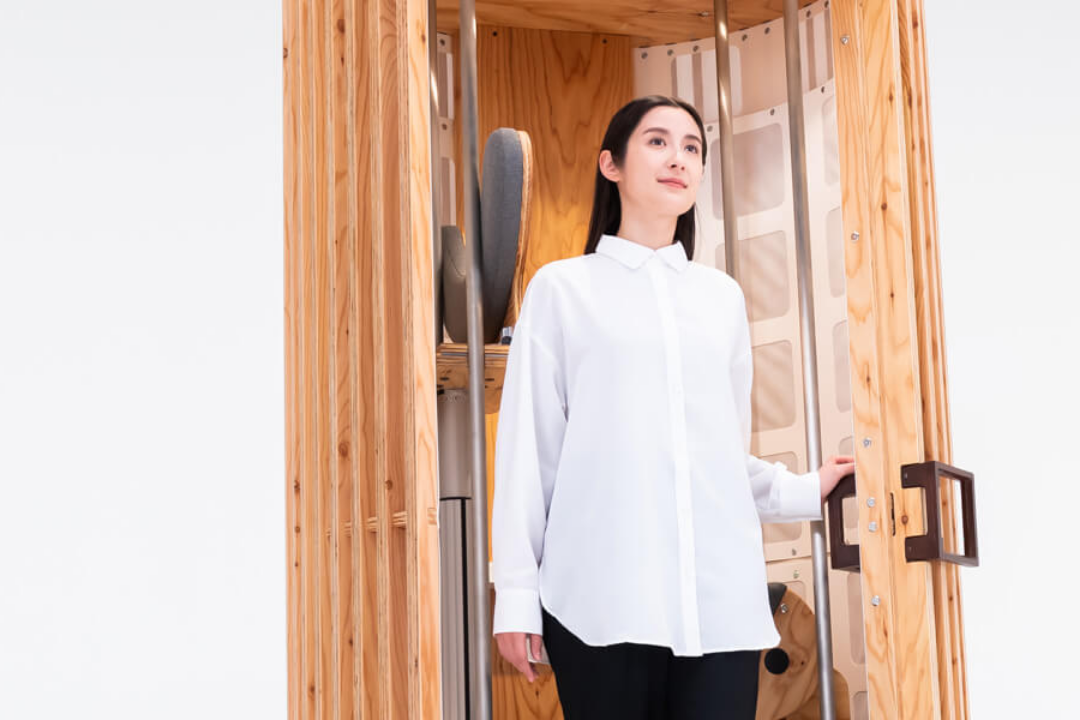
Unlike traditional nap rooms that require users to lie flat, Giraffenap is built around the concept of resting in an upright position. Inside the pod, multiple support points stabilize the head, back, pelvis, and knees, allowing users to relax comfortably without the risk of falling. Because the body never fully reclines, it is designed to make both falling asleep and waking up easier, making it well suited for naps lasting anywhere from a few minutes to around half an hour.
Pricing varies depending on where the pod is installed and how the service is operated, although it is generally offered on a time-based fee model. While individuals can use the service, businesses are also an important target market. For companies, Giraffenap can serve as an employee wellness amenity that helps maintain focus, reduce fatigue, and improve workplace productivity.
Rather than being just another sleep product, Giraffenap represents an attempt to build short recovery opportunities directly into urban environments. In Japan, where chronic sleep deprivation has become a widely recognized social issue, it offers a different way of thinking about workplace rest and recovery.
Giraffenap Overview
The most distinctive feature of Giraffenap is that it challenges the long-held assumption that taking a nap requires lying flat. Traditional nap rooms and capsule-style sleeping spaces are designed around a horizontal sleeping position. While comfortable, lying down can sometimes lead people into deeper sleep, making it harder to wake up feeling refreshed.
Giraffenap approaches the problem differently. By supporting the body in a nearly upright position, it encourages lighter sleep that allows users to recover quickly while making it easier to return to work afterward.
The interior contains several independently positioned support panels that stabilize the head, chest, hips, and knees. Instead of relying on muscle strength to remain upright, users are comfortably supported at multiple points across the body. This approach distributes body weight more evenly and reflects ergonomic principles commonly seen in medical and long-term care equipment designed for posture support.
The upright design also makes much better use of limited floor space. Conventional nap rooms require enough room for people to lie down, but Giraffenap uses vertical space instead, making installation practical even in compact offices, busy train stations, or other space-constrained urban locations.
The concept also addresses an important cultural consideration. In Japan, many employees still feel uncomfortable openly taking naps during the workday, despite growing awareness of the importance of rest. The enclosed standing pod provides privacy while allowing users to step away briefly without drawing attention. This aligns well with broader workplace reforms that increasingly recognize rest as part of maintaining healthy and productive work habits.
Giraffenap is therefore much more than an eye-catching design. Its value comes from combining controlled rest, efficient use of space, ergonomic engineering, and workplace practicality into a single solution.
Potential Applications Across Offices, Transportation Hubs, and Commercial Spaces
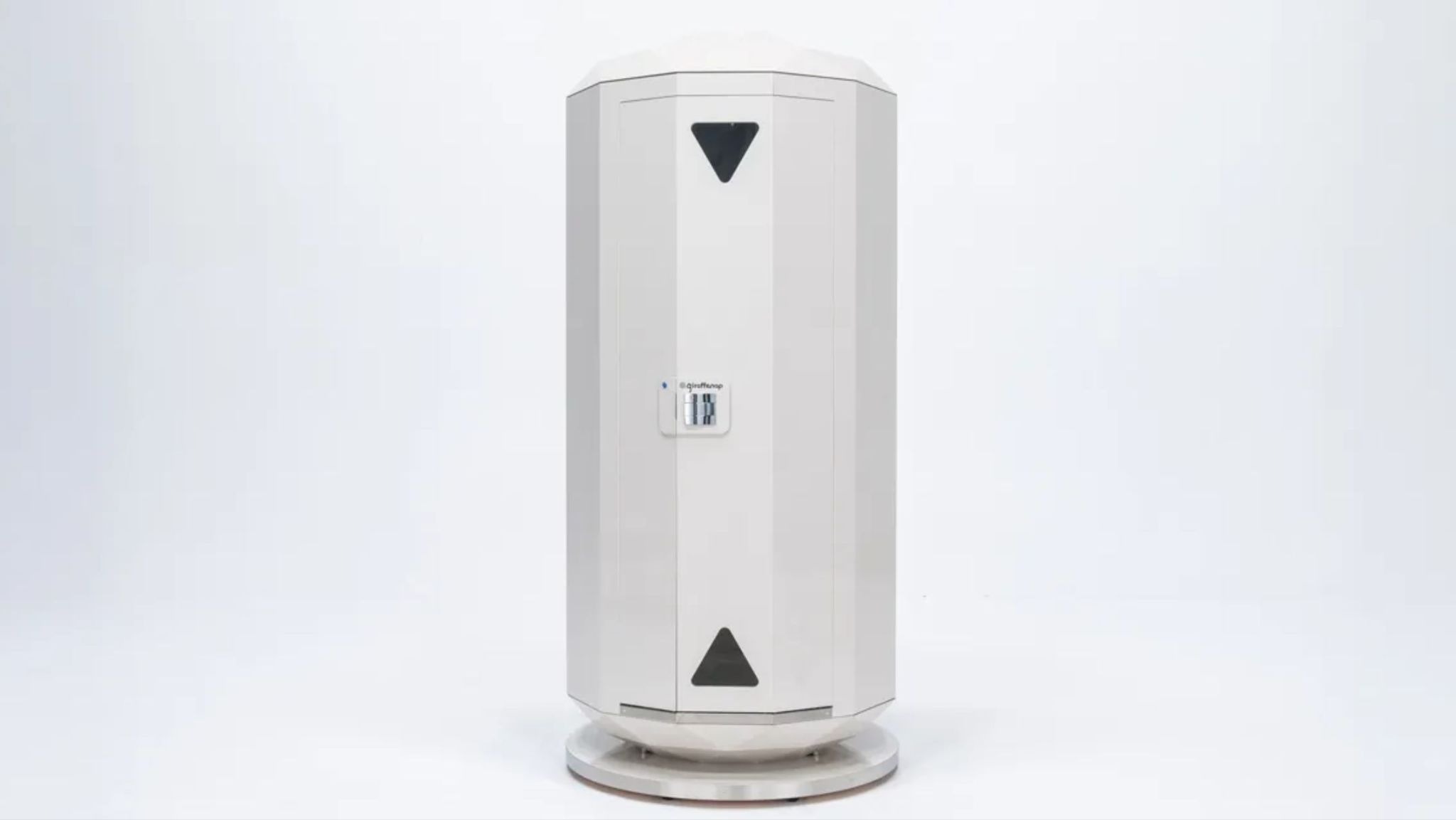
Source: Giraffenap Homepage
Giraffenap is designed for environments where fatigue and reduced concentration are common challenges. Research has shown that short naps can help restore alertness and improve cognitive performance, particularly during the afternoon when energy levels naturally decline. Instead of simply providing a place to sleep, Giraffenap integrates brief recovery into the physical environment itself.
For businesses, installing the pods as part of employee wellness programs is one of the most practical applications. A unit can be placed inside a break room, wellness area, or even an underused meeting space, allowing employees to recharge without requiring a large dedicated nap room. Because the pod occupies a relatively small footprint, it is especially suitable for offices in dense urban areas where space is expensive.
From a business perspective, the potential benefits extend beyond employee comfort. Better concentration, improved productivity, reduced fatigue, and even higher employee retention may all contribute to the overall value of the investment.
Transportation hubs also present a compelling use case. Travelers often experience long layovers, extended commutes, or waiting periods between trains and flights. In airports and major railway stations, creating full-size sleeping facilities is not always practical, but a standing nap pod offers a compact alternative that fits into limited spaces.
Commercial facilities and event venues could also benefit. Visitors spending several hours shopping or attending exhibitions may appreciate a convenient place to briefly recover their energy, potentially increasing both customer satisfaction and the amount of time they spend at the venue.
The value of Giraffenap is therefore not measured by direct revenue generation alone. Instead, it improves the overall user experience by providing a visible commitment to employee wellbeing and customer comfort. In this sense, it functions less like a consumer product and more like infrastructure that enhances the quality of public and commercial spaces.
Ergonomic Engineering Inspired by Medical and Care Industry Expertise
Giraffenap is fundamentally an ergonomic support system rather than simply a nap booth. Its design reflects knowledge gained from fields such as healthcare and nursing care, where maintaining safe posture and reducing physical strain are essential considerations.
Keeping someone comfortably supported in a nearly upright position requires careful distribution of body weight and reliable protection against falls. Rather than relying on a single support point, Giraffenap stabilizes the head, chest, pelvis, and knees simultaneously, creating balance across multiple contact areas.
The companies involved in manufacturing have experience producing products for healthcare and nursing environments, industries where equipment must meet demanding standards for safety, durability, hygiene, and long-term reliability. That background influences material selection, structural engineering, and quality control throughout the product.
The support surfaces are designed to balance cushioning with firm stability. Although the pod is intended for relatively short periods of use rather than extended sleeping, comfort during those brief sessions remains an important design priority. Stable construction, easy entry and exit, and measures to minimize the risk of falls all contribute to the overall user experience.
Because Giraffenap is intended for public spaces and workplaces where it may be used by many different people throughout the day, operational considerations are equally important. Cleaning procedures, hygiene standards, maintenance schedules, and long-term durability all become part of the overall service quality rather than simply the product itself.
For these reasons, Giraffenap is better understood as a specialized body-support system than as conventional furniture or sleep equipment.
A Rest Solution Born From Japan's Work Culture and Urban Environment
Giraffenap reflects several characteristics unique to Japan's working culture and densely populated cities. Long working hours, extended commuting times, and chronic sleep deprivation have been recognized as social challenges for many years. At the same time, office space in major cities is often limited, making traditional nap rooms difficult to accommodate.
These conditions helped shape the idea of allowing people to rest while standing.
Anyone who has spent time in Japan has likely noticed commuters sleeping while standing on crowded trains, supported only by handrails or packed passengers. The idea that short periods of sleep are possible without lying down already exists as part of everyday urban life. Giraffenap transforms this familiar experience into a deliberately engineered recovery solution.
Broader workplace reforms have also played a role. As companies place greater emphasis on employee wellbeing and health management, there is increasing interest in providing physical spaces that support rest rather than relying solely on policies or flexible work arrangements.
Although Giraffenap is not directly connected to traditional Japanese living styles such as tatami rooms or floor seating, it does reflect another longstanding Japanese design principle: making efficient use of limited space. Its compact footprint makes it especially well suited to high-density urban environments where every square meter matters.
Ultimately, Giraffenap is more than a sleep device. It is a practical response to the challenges created by modern urban life and Japan's evolving approach to work.
The Value of Feeling Refreshed After Just a Few Minutes
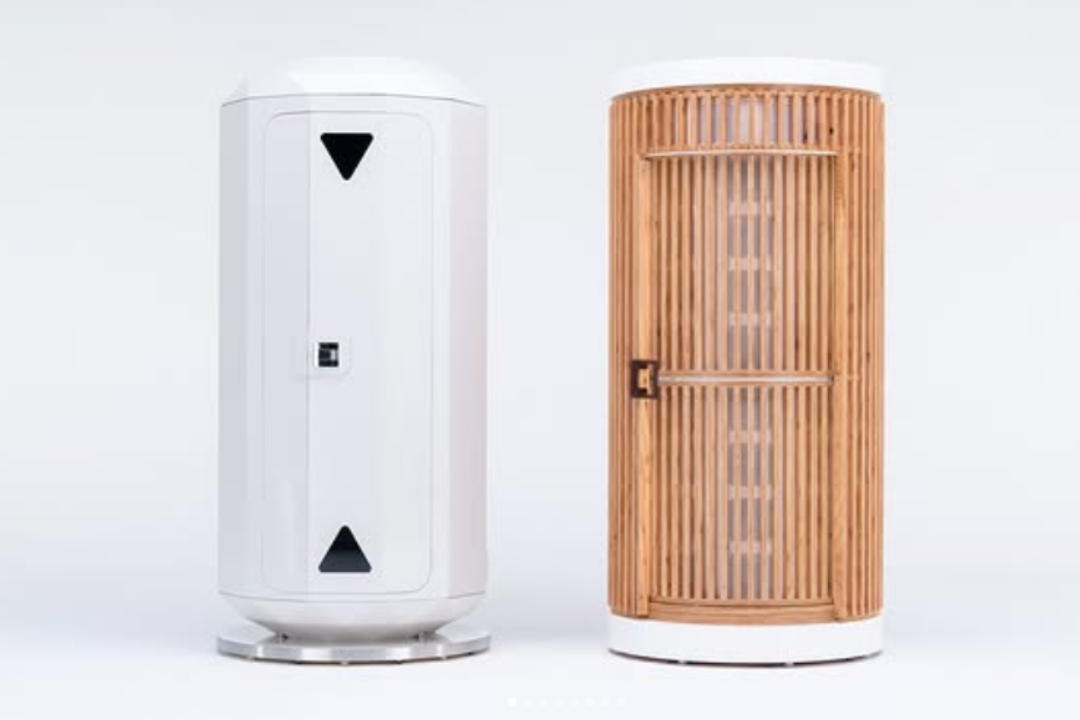
Source: Giraffenap Homepage
One of the most common themes among users is how refreshed they feel after only a brief session. Because Giraffenap is designed to prevent users from entering deep sleep, many people report waking without the grogginess that can sometimes follow a conventional nap. This makes it particularly useful before returning to work or continuing a journey.
Rethinking Naps Without Lying Down
In workplace settings, employees often describe the pod as a useful way to regain focus before an important meeting or to overcome the post-lunch energy slump. Rather than being viewed as a leisure activity, these short breaks are appreciated as a practical tool for maintaining productivity throughout the day. From a business perspective, user satisfaction and improved work performance become key indicators of the system's value.
Some first-time users are initially skeptical about the idea of sleeping while standing. However, after trying the pod, many are surprised by how stable and comfortable it feels. Because the body is supported at multiple points, users can relax without actively engaging their muscles to remain upright.
Media coverage and social media discussions often focus on the pod's unusual appearance, but actual user feedback tends to center on how they feel after using it. Even a short session can create a noticeable sense of mental reset, encouraging repeat use.
Giraffenap is not designed for long periods of luxurious comfort. Its purpose is to maximize recovery in a limited amount of time, and its value lies in practical performance rather than novelty.
Adapting Standing Nap Pods for Sleep Deprived Cities Around the World
Although Giraffenap was developed in Japan, the concept is far from being relevant only to the Japanese market. Studies by organizations such as the World Health Organization have highlighted chronic sleep deprivation and stress as global urban challenges. In many major cities, long commutes, demanding workloads, and increasingly busy lifestyles have created a growing need for spaces where people can recover quickly during the day.
Cities that rely heavily on public transportation, including those across Asia and Europe, are particularly well suited for this type of solution. Business travelers, commuters, and office workers often have limited opportunities to rest between meetings or during long journeys. In densely populated urban areas where floor space is expensive, a standing nap pod provides a far more space efficient alternative than traditional sleeping rooms.
Cultural attitudes toward daytime napping differ across countries, but the concept of the "power nap" has gained widespread acceptance in recent years. Many technology companies, creative industries, and progressive employers now encourage short naps as a way to improve concentration and cognitive performance. Giraffenap naturally aligns with this growing movement.
Countries that prioritize employee wellbeing, corporate wellness, and ESG initiatives may also find value in installing dedicated recovery spaces. From a B2B perspective, standing nap pods offer companies a visible investment in employee health while supporting workplace productivity and wellbeing goals.
Rather than focusing on Japanese sleeping habits alone, Giraffenap addresses a universal challenge by providing an efficient way for people to recover energy in a short amount of time. Any city with a fast paced business environment could potentially benefit from this approach.
Current International Expansion
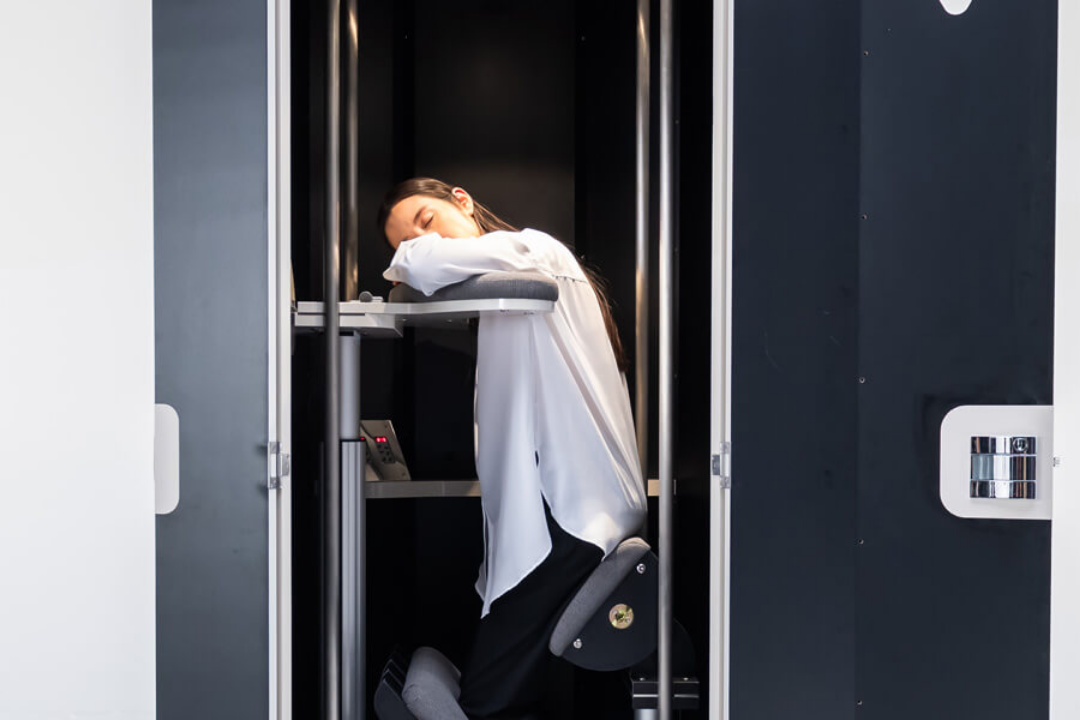
Source: Giraffenap Homepage
Based on publicly available information, Giraffenap is currently focused primarily on the Japanese market. At the time of writing, there have been no official announcements confirming large scale permanent installations or commercial operations overseas.
However, the concept has attracted attention from international media outlets and has been showcased at exhibitions highlighting workplace innovation and urban wellbeing. Its unusual standing sleep design has generated interest as an example of how future offices and public spaces could incorporate dedicated recovery areas.
While there is currently limited public information regarding exports, licensing agreements, or overseas commercial deployments, the product serves as an interesting proof of concept developed in Japan. As demand for workplace wellness infrastructure continues to grow worldwide, partnerships with airports, office developers, and transportation hubs could create opportunities for future expansion.
Although still in its domestic rollout phase, Giraffenap has been designed with challenges that extend well beyond Japan, making international adoption a realistic possibility.
Addressing Sleep Deprivation Through Workplace Infrastructure
Giraffenap was developed in response to a broader social issue in Japan, chronic sleep deprivation. International comparisons conducted by organizations such as the OECD have consistently shown that Japan ranks among the countries with the shortest average sleep duration. Long working hours, lengthy commutes, and the pressures of urban living all contribute to reduced daytime alertness and lower workplace productivity.
A Hokkaido Manufacturer Bringing Standing Nap Technology to Life
Although the importance of taking short breaks has long been recognized, many workplaces have struggled to provide practical spaces for employees to rest. Traditional nap rooms require significant floor space, making them difficult to install in compact city offices. As a result, workers often resort to informal solutions such as sleeping at their desks or temporarily occupying meeting rooms.
Giraffenap was designed to overcome both physical space limitations and the social discomfort some people feel about taking naps during work hours. By supporting the body in an upright position, the pod minimizes its footprint while making short recovery breaks practical. The design also helps users avoid entering deep sleep, making it easier to return to work feeling refreshed.
Rather than functioning as a product designed to improve sleep quality at home, Giraffenap is intended as workplace infrastructure that helps people recover energy within the constraints of busy urban environments. It transforms rest from a personal responsibility into something that can be intentionally built into office design.
Expanding Traditional Manufacturing Into New Markets
The development of Giraffenap also reflects a broader effort to apply existing manufacturing expertise to new industries. Koyoju Gohan has spent decades specializing in plywood production and processing, but the company has also explored opportunities beyond conventional construction materials.
Plywood is commonly associated with architecture and interior design, yet its core strength lies in providing structural stability. Engineers involved in Giraffenap recognized that these same characteristics could be applied to a human support system rather than a building component. Instead of simply following market trends, the company sought new applications that naturally aligned with its existing technical capabilities.
The growing emphasis on workplace wellbeing and healthier working environments also influenced this direction. Rather than expanding into unrelated consumer products, the company used its engineering expertise to address a real societal challenge through innovative product design.
This makes Giraffenap more than a publicity driven concept. It demonstrates how traditional manufacturing knowledge can be adapted to solve modern workplace problems while opening opportunities for business diversification.
Ultimately, Giraffenap illustrates how long established industrial technologies can find new purpose when connected to changing social needs.
Looking Ahead: Integrating Standing Nap Pods Into Future Workplace Design
Source: Giraffenap Homepage
Looking ahead, Giraffenap's greatest potential may lie not only in selling individual units but also in becoming a standard feature of future office design. As companies increasingly incorporate wellness facilities into new office developments, standing nap pods offer a compact solution that fits within space constrained urban environments.
Corporate priorities are also evolving. Employee wellbeing, human capital management, and workplace health have become increasingly important indicators of business performance. Investing in dedicated recovery spaces can support productivity while strengthening employer branding and recruitment efforts.
Bringing Short Recovery Breaks Into Urban Life
There is also room for continued product development. Future improvements could include refined support structures, quieter operation, enhanced aesthetics, and multiple models tailored to different installation environments. Integration with reservation systems and usage analytics could also help organizations better understand how employees use workplace recovery spaces.
Internationally, cities with dense office districts and extensive public transportation networks represent promising markets. Partnerships with local manufacturers, property developers, and transportation operators could help adapt the concept to regional requirements while maintaining its core design principles.
Giraffenap has the potential to become more than a niche sleep product. As workplace design increasingly recognizes the value of rest, dedicated recovery infrastructure could become a standard feature of modern offices.
Growing Recognition Through Media Coverage and Pilot Installations
Giraffenap has attracted significant attention within Japan because of its distinctive standing sleep concept. Television programs, online news outlets, and business media have featured the product as an example of innovation in workplace wellbeing and modern office design. While its unusual appearance often captures headlines, discussions increasingly focus on its practical purpose of helping users recover quickly during the workday.
Although official production numbers and total installations have not been publicly disclosed, awareness has expanded through trade shows, pilot projects, and demonstration installations. Office design exhibitions and healthcare related events have been particularly important venues where businesses can experience the product firsthand.
Many installations have been introduced as temporary pilot programs rather than permanent deployments. This approach allows organizations to evaluate user feedback, measure utilization, and determine how well the pods fit within different workplace environments before making larger investments. Such phased adoption is common for new workplace technologies in the B2B sector.
The project has also drawn attention as an example of how a traditional manufacturing company can enter the workplace wellness industry. By applying expertise from the construction materials sector to a completely different application, Giraffenap represents a broader trend of industrial innovation.
Although it has not yet reached large scale commercial deployment, Giraffenap has established itself as one of Japan's leading examples of next generation workplace recovery infrastructure.
Conclusion
Giraffenap rethinks what a nap can look like in modern cities. Instead of requiring users to lie down, it supports the body in an upright position, making efficient use of limited space while accommodating the realities of busy office environments. As sleep deprivation continues to affect workers around the world, the product shifts recovery from something left to personal discipline into infrastructure that organizations can intentionally provide.
The concept, developed and tested in Japan, has relevance for many countries with dense office districts and public transportation based cities. As businesses place greater emphasis on employee wellbeing and workplace wellness, dedicated recovery spaces may become an increasingly valuable investment.
For companies overseas, Giraffenap offers more than a sleep pod. Its combination of space efficiency and rapid recovery makes it particularly attractive for office buildings, transportation hubs, airports, and other high traffic facilities where maximizing available space is essential.
International partnerships could further expand its potential. By combining Japanese engineering with local market expertise, the concept could be adapted to meet the needs of different cities while preserving its core focus on efficient recovery.
Ultimately, Giraffenap is not designed for long periods of sleep. It is designed to help people recharge in just a few minutes. As workplaces continue to evolve, integrating short recovery opportunities into everyday environments may become an increasingly practical part of healthier and more productive urban living.
FAQ About Graffenap
1. What Is Giraffenap?
Giraffenap is a standing nap pod designed to let users take short, restorative breaks while remaining in an upright position. Its unique support system stabilizes the body at multiple points, allowing people to rest comfortably in compact spaces such as offices, train stations, and other urban environments.
2. How Does Giraffenap Allow Users To Rest While Standing?
Giraffenap supports the head, back, waist, and knees to keep the body stable throughout the rest period. By distributing body weight across several support points, it reduces physical strain while maintaining a near-standing posture, making it easier to relax during short breaks.
3. Where Is Giraffenap Designed To Be Installed?
Giraffenap is intended for locations where people often need a quick break, including offices, train stations, airports, commercial facilities, and other high-traffic spaces where short periods of rest can improve comfort and productivity.
4. When Is Giraffenap Most Useful?
Giraffenap is ideal for people who want to recharge between meetings, during work breaks, while commuting, or before continuing a long journey. It is designed for situations where users want an efficient rest without lying down.
5. What Makes Giraffenap Different From Traditional Nap Pods?
Unlike conventional nap pods that require users to lie flat, Giraffenap supports the body in a near-standing position. This design helps users take short breaks while making it easier to return to work or travel without feeling overly groggy after resting.
6. What Is Koyoju Gohan Co., Ltd., The Company That Manufactures Giraffenap?
Koyoju Gohan Co., Ltd. is a plywood manufacturer headquartered in Asahikawa, Hokkaido. The company has decades of experience in wood processing and structural engineering, and it applies this expertise to the manufacturing of Giraffenap's innovative standing support system.
7. Can Businesses Install Giraffenap?
Yes. Giraffenap is designed with business users in mind and is suitable for offices, commercial buildings, transportation hubs, and other public facilities. It can be introduced as part of employee wellness programs, customer services, or broader workplace wellbeing initiatives.
8. Is Giraffenap Available Outside Japan?
Based on publicly available information, Giraffenap is currently focused on the Japanese market. While permanent overseas installations remain limited, the product has been showcased at international exhibitions and has attracted attention from global media as an innovative workplace wellness solution.
9. What Problem Is Giraffenap Designed To Solve?
Giraffenap aims to address challenges such as chronic sleep deprivation and the lack of convenient rest spaces in densely populated cities. It offers a practical way for people to recover energy efficiently, even when space and time are limited.
10. Why Was Giraffenap Developed?
Giraffenap was developed in response to issues such as long working hours, insufficient sleep, and limited space in urban environments. Rather than relying solely on individuals to manage their own rest, it seeks to make short recovery breaks a built-in part of modern workplaces and public spaces.
Related Videos
If you're interested in innovative workplace solutions, the video below explores a standing rest system designed to help office workers recharge without lying down. This video shows how Japan is rethinking workplace wellness by creating practical ways to rest in busy urban environments.