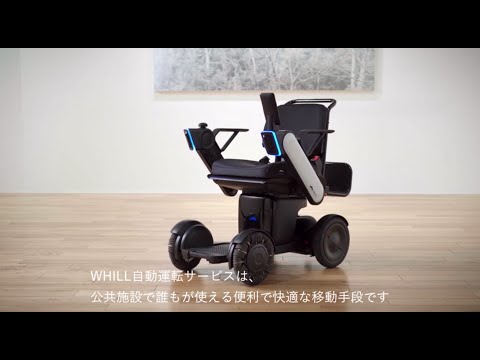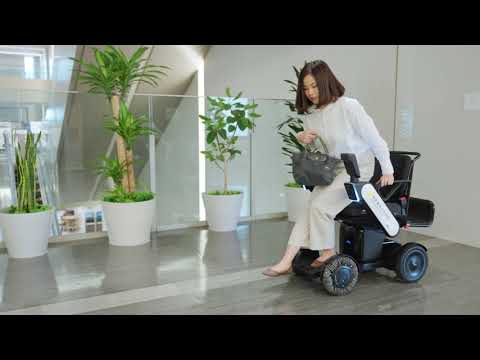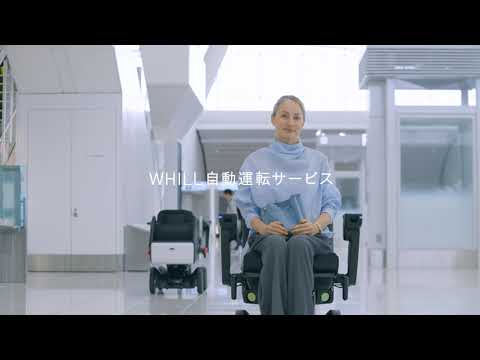
When people think about electric wheelchairs, they often picture medical equipment designed for individuals with mobility impairments. Japan's WHILL Inc. has challenged that assumption by reimagining what personal mobility can be. Rather than simply building a better wheelchair, the company has created a new category of sidewalk-ready personal mobility that combines thoughtful design, advanced engineering, and increasingly, autonomous driving technology.
Today, WHILL's autonomous mobility solutions are being introduced in airports, hospitals, and commercial facilities, where they function not simply as assistive devices but as part of the infrastructure that helps people move through large public spaces. Instead of manually controlling the vehicle, users can select their destination, allowing the mobility device to navigate there autonomously.
This represents far more than a technological upgrade. It reflects a broader shift in how mobility is viewed. Rather than treating mobility assistance as an extension of healthcare, WHILL approaches movement itself as a service that should be naturally integrated into everyday environments.
As populations continue to age around the world, mobility has become increasingly tied to independence, dignity, and social participation. The challenge is often not whether someone can walk, but whether they have practical transportation options that allow them to participate fully in daily life. WHILL recognized this distinction early. Instead of designing products solely within the framework of disability support, the company set out to create mobility solutions that anyone could use comfortably and naturally.
Its autonomous driving platform is particularly significant. Large facilities such as airports often require visitors to walk considerable distances, creating physical strain for many travelers. Traditionally, these situations depended heavily on staff assistance. WHILL's technology complements human support by allowing users to travel independently while simultaneously reducing the operational burden on facility operators.
Why did WHILL choose to expand beyond the traditional electric wheelchair market into autonomous mobility?
And why did this idea emerge from Japan?
The answer lies in the company's founding philosophy and its ambition to rethink what mobility means in modern society fundamentally.
WHILL's Autonomous Mobility Model Overview
WHILL's autonomous mobility model is a next-generation personal mobility solution that combines an electric mobility platform with self-driving technology. While conventional powered wheelchairs require users to operate a joystick, WHILL's autonomous system allows passengers to select a destination before the vehicle transports them automatically simply.
The technology is currently being deployed primarily in large facilities such as airports, hospitals, and shopping centers. Rather than serving only as a mobility aid, it has become part of the customer service infrastructure offered by these facilities. Users select their destination using a touchscreen or designated terminal, and the vehicle autonomously navigates while detecting obstacles and slowing or stopping when necessary to maintain safety.
Unlike consumer mobility products sold directly to individuals, WHILL's autonomous solutions are primarily designed for corporate and institutional customers. Pricing depends on factors such as facility size, fleet scale, and system configuration. In many cases, organizations are not simply purchasing vehicles. They are implementing a complete mobility service that includes mapping, navigation systems, fleet management, and operational support.
Another defining characteristic is the intended user base. The autonomous model is not designed exclusively for people with permanent disabilities. It also serves older adults who struggle with long walking distances, travelers recovering from injuries, and visitors who may feel uncomfortable navigating large facilities on foot. By broadening the definition of who benefits from mobility support, WHILL has expanded the potential role of personal mobility far beyond its traditional market.
How WHILL's Autonomous Mobility Platform Works

Source: WHILL Homepage
WHILL's autonomous model builds upon the company's established personal mobility platform while adding self-driving capabilities designed specifically for controlled environments. Unlike conventional powered wheelchairs that rely on continuous joystick operation, users simply choose their destination and allow the vehicle to handle the journey.
Its greatest strength is not higher speed or greater power, but the ability to transport passengers safely without requiring manual operation. Large airports, hospitals, and commercial complexes often involve long walking distances that can be exhausting for older adults or visitors with temporary mobility limitations. WHILL addresses this challenge by digitally mapping facilities in advance and managing predefined travel routes. During operation, onboard sensors continuously detect obstacles, automatically slowing down or stopping whenever people or objects appear in its path.
The system is primarily intended as an internal transportation service. Users check in at reception or use dedicated terminals to select destinations before boarding the vehicle, which then transports them to boarding gates, hospital departments, retail stores, or other designated locations. Because operation requires virtually no technical knowledge, accessibility depends less on physical ability or driving skills and more on simply selecting where to go.
Why Japan’s WHILL is Leading the Mobility Revolution
The commercial model also differs significantly from consumer products. Rather than selling standalone vehicles, WHILL typically provides an integrated mobility solution tailored to each facility. This includes digital mapping, fleet management systems, operational support, and ongoing maintenance, effectively making autonomous mobility part of the building's infrastructure instead of just another piece of equipment.
Current deployments are concentrated in airports, theme parks, hospitals, and large commercial complexes, all environments where visitors routinely travel long distances. Facility operators benefit through reduced staffing requirements for mobility assistance while simultaneously improving customer satisfaction and accessibility.
Perhaps most importantly, WHILL's autonomous platform is not intended only for people who cannot walk. It also serves individuals who can walk but struggle with extended distances, travelers recovering from injuries, older adults with reduced stamina, and anyone who would benefit from a more comfortable way to move through expansive public spaces. The company's philosophy is simple: increasing mobility options allows more people to participate fully in society.
Why Combine Autonomous Driving With Personal Mobility?
What truly distinguishes WHILL is that it did not simply automate an electric wheelchair. Instead, it reimagined what personal mobility should look like in pedestrian environments.
Traditional powered wheelchairs have historically evolved as medical devices. While improvements in battery life and driving performance have continued over the years, their fundamental purpose has remained the same: providing manually operated mobility assistance for individuals.
WHILL questioned that assumption. The company recognized that mobility challenges often have less to do with operating a vehicle and more to do with the environments people are expected to navigate. Walking long distances through airports, moving between floors in shopping malls, or traveling across sprawling medical campuses places a burden on many visitors regardless of whether they identify as wheelchair users.
That insight led to the development of WHILL's autonomous platform. By creating detailed digital maps of individual facilities and combining them with sensors and cameras that continuously monitor the surrounding environment, the system can safely transport passengers to their destinations without requiring constant manual input.
WHILL’s Vision for Self-Navigating Travel
Unlike autonomous cars designed for public roads, WHILL's technology is optimized for controlled environments. Airports, hospitals, and commercial facilities offer predictable operating conditions that make it possible to deliver reliable autonomous transportation while maintaining high safety standards.
Another competitive advantage lies in the company's integrated engineering approach. WHILL had already established expertise in designing highly maneuverable personal mobility devices with excellent stability, smooth ride quality, and tight turning capabilities. Rather than attaching autonomous technology to an existing wheelchair, the company engineered both hardware and software as a unified platform.
The concept also represents a cultural shift. In many countries, mobility assistance has traditionally relied on people rather than technology. Airport staff escort passengers, family members provide support, and caregivers fill mobility gaps. WHILL complements these services by allowing users to travel independently while simultaneously reducing demands on support personnel.
Viewed this way, WHILL's autonomous platform extends beyond disability assistance. It represents a broader answer to how mobility should be designed as part of modern urban infrastructure. Instead of treating transportation as an individual challenge, the company approaches it as a question of how public spaces themselves should function.
Moving Mobility Beyond Healthcare and Into Infrastructure
WHILL's autonomous mobility platform represents more than a technological advancement. It also challenges one of the most deeply rooted assumptions surrounding electric wheelchairs: that they exist solely as medical equipment.
One of the company's founders has spoken about how living alongside a family member who used a wheelchair shaped this perspective. The greatest challenge was not simply the inability to walk. It was the fact that leaving home often became an exceptional event requiring advance planning and assistance from others. Traditional wheelchairs prioritized medical functionality, but they rarely emphasized attractive design or seamless integration into everyday public life. In many situations, using one could unintentionally make the user feel singled out.
Redefining Personal Mobility Beyond Physical Limitations
WHILL set out to change that perception. Its first objective was to create personal mobility devices that people would genuinely want to ride by combining modern styling with strong driving performance. Rather than positioning its products strictly as medical equipment, the company introduced them as personal mobility solutions designed for public spaces.
As the business expanded, another issue became increasingly clear. In aging societies, reduced mobility affects far more people than those who identify as wheelchair users. Many older adults can still walk, but covering long distances through airports, shopping centers, or hospitals becomes physically demanding. These individuals occupy a large middle ground that traditional mobility solutions often overlook.
For this growing population, conventional powered wheelchairs may feel psychologically intimidating or unnecessarily medical. At the same time, facilities cannot realistically provide staff assistance for every visitor who needs help. Autonomous mobility emerged as a practical solution that addresses both challenges simultaneously.
WHILL reframed mobility as a question of environmental design rather than individual limitation. Instead of asking how to make wheelchairs more convenient, the company asked whether airports, hospitals, and other large public spaces should be designed to make movement itself easier. Its answer was to integrate autonomous personal mobility directly into facility operations as a standard service.
The company's goal has never been simply to improve wheelchairs. It is to transform mobility from a specialized form of assistance into an everyday service that anyone can use naturally. The autonomous platform represents the clearest expression of that vision, moving beyond devices that only experienced users can operate toward infrastructure that supports everyone equally.
Engineering Autonomous Mobility for Public Spaces
Source: WHILL Homepage
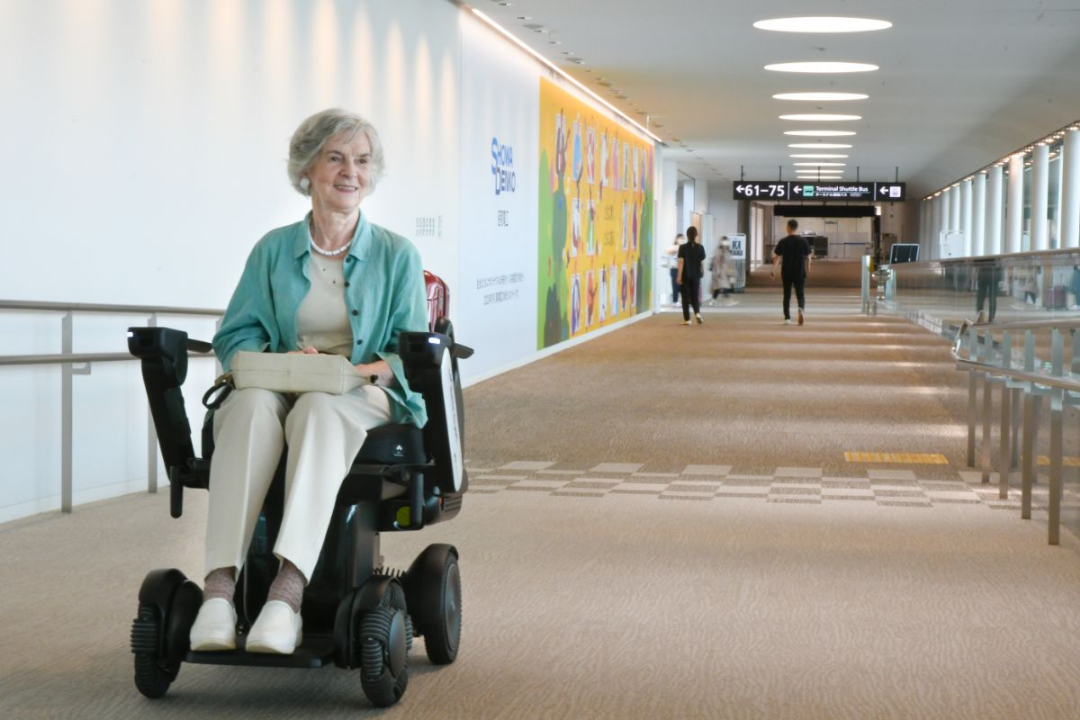
WHILL's autonomous mobility platform is far more than an electric wheelchair equipped with software. It was designed from the ground up to operate safely and reliably in busy public environments where people move every day. To succeed in those settings, the technology must deliver not only innovation but also exceptional consistency, stability, and safety.
A key part of that strategy is designing the system for controlled environments rather than public roads. Unlike autonomous cars that must navigate unpredictable streets, WHILL's vehicles operate in mapped spaces such as airports, shopping centers, hospitals, and other large facilities. Because these environments are digitally mapped in advance, travel routes, stopping points, and designated safety zones can all be carefully planned. This significantly reduces uncertainty while allowing the autonomous system to operate with greater precision.
The hardware itself also plays an important role. Long before developing autonomous mobility, WHILL had established a reputation for building compact electric mobility devices with excellent stability, strong driving performance, and remarkably tight turning radii. Those capabilities remain essential in the autonomous models, allowing the vehicles to navigate narrow corridors, crowded walkways, and busy public spaces safely.
Safety systems extend well beyond navigation. Integrated sensors continuously monitor the surroundings, detecting obstacles in front of and beside the vehicle. When pedestrians, luggage carts, or other moving objects enter its path, the system automatically slows or stops as needed. Rather than prioritizing speed, WHILL designed its autonomous platform around the principle that safe stopping is the foundation of autonomous mobility.
Reliability also depends on the system as a whole rather than the vehicle alone. Facility maps require regular updates, operating parameters must be adjusted for each location, and software receives ongoing improvements as part of routine operation. Instead of simply selling vehicles, WHILL provides an ongoing mobility service supported by continuous maintenance and operational management.
The Infrastructure of Independence
As a global company, WHILL also designs its products to meet the safety standards and regulatory requirements of multiple countries. Models that qualify as medical devices comply with local regulations, while the autonomous platform is developed specifically to meet the expectations required for safe operation in public environments.
Ultimately, the value of WHILL's autonomous mobility system is not based solely on cutting-edge technology. Its greatest achievement is transforming advanced engineering into a solution that can operate reliably in everyday public spaces. Rather than leaving autonomous mobility in the experimental stage, the company has focused on making it practical enough for real-world deployment through careful engineering, rigorous quality control, and long-term operational support.
Is Limited Mobility Really a Physical Problem?
WHILL's origins differ from those of many technology startups. The company was not founded simply because autonomous technology seemed commercially promising. Instead, its philosophy grew from the personal experiences of one of its founders, whose family included a wheelchair user.
What stood out was not simply the inability to walk. The deeper issue was that people with mobility limitations often had very few practical transportation options. Going out required planning, assistance, and accommodations from others. Although traditional wheelchairs fulfilled their medical purpose, they were rarely designed to integrate naturally into everyday public life. Too often, users were expected to adapt to their surroundings rather than having environments designed around their needs.
WHILL challenged that assumption by asking a simple but transformative question:
What if mobility itself could be redesigned to feel natural instead of exceptional?
That question first led to stylish personal mobility devices that people would genuinely enjoy using. It later evolved into the autonomous mobility platform that represents the next stage of the company's vision.
Why Your Next "Ride" Might Be an Intelligent Chair
As societies continue to age, more people are finding themselves in a gray area between complete mobility and permanent disability. Many can still walk but struggle with long distances. Others want to remain independent without relying on assistance but lack practical alternatives. These individuals may never identify as wheelchair users, yet they face mobility challenges every day.
WHILL recognized this growing population and designed its autonomous platform accordingly. Rather than creating a tool that only experienced users can operate, the company sought to eliminate the operational barrier. The goal is not simply to provide assistance but to restore the ability to choose how and when to move independently.
From the beginning, WHILL has not viewed its mission as improving welfare equipment. Instead, it seeks to redefine mobility as part of everyday infrastructure. Technology becomes the means to ensure that freedom of movement is available to everyone, not something reserved for those who qualify for specialized support.
For that reason, WHILL's autonomous platform represents more than technological progress. It is a product designed around human dignity, making independence feel ordinary rather than exceptional. That philosophy elevates the company beyond traditional mobility manufacturing and into the broader conversation about how cities should enable people to participate fully in society.
A Mobility Innovation Born From an Aging Society
Source: WHILL Homepage
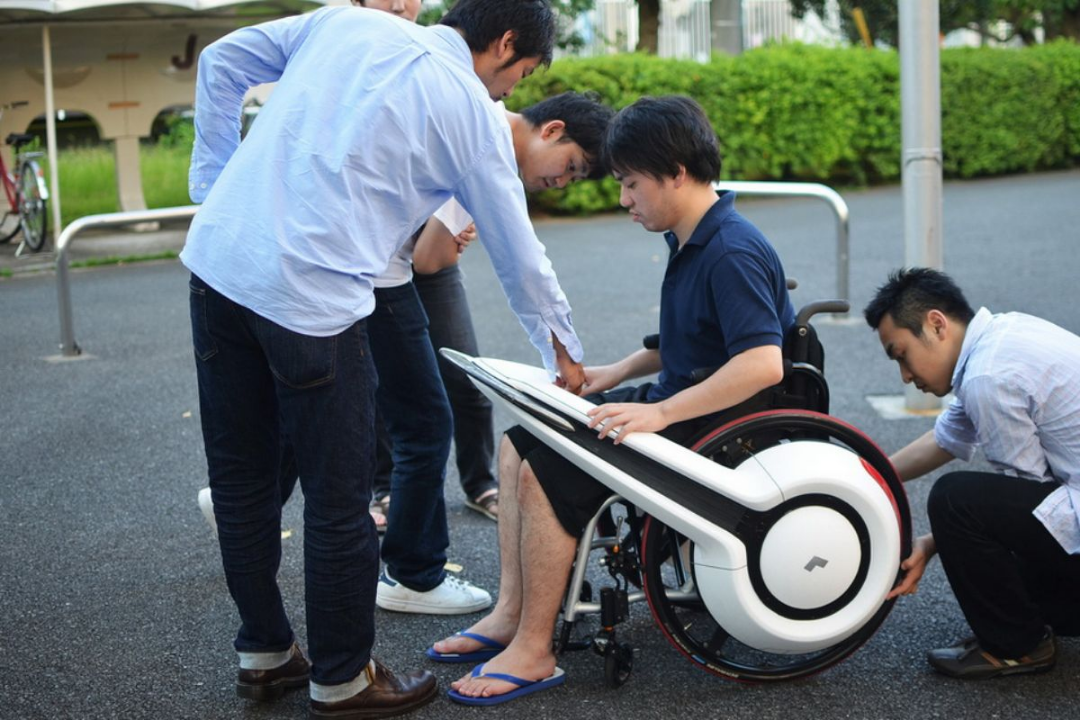
WHILL's autonomous mobility platform is not rooted in a traditional Japanese craft or regional specialty. Its origins instead reflect the realities of modern Japanese society.
Japan is one of the world's most rapidly aging countries. While its cities are supported by highly developed public transportation networks, major train stations, airports, hospitals, and shopping complexes have also grown significantly in size. Although accessibility improvements continue to expand, the physical distance people must travel within these facilities has quietly become another barrier for many older adults.
WHILL recognized this challenge long before it became a global conversation. An aging population does not simply produce demographic statistics. It creates millions of everyday situations where long walks through airports, shopping centers, or hospitals become physically demanding despite people remaining largely independent.
This approach also reflects a broader characteristic of Japanese manufacturing. Rather than focusing only on dramatic breakthroughs, Japanese companies have often excelled at identifying small but meaningful inconveniences and solving them through thoughtful design. WHILL's autonomous mobility platform follows that tradition by addressing an often overlooked problem that affects daily life rather than treating mobility limitations as exceptional circumstances.
Japan's orderly urban environments have also helped support this approach. Autonomous operation inside controlled spaces aligns well with a society that places a strong emphasis on safety, organization, and public trust. These conditions have made it easier to test, refine, and deploy autonomous mobility within airports and other public facilities.
Although the concept emerged from Japan's demographic realities, its relevance extends far beyond the country itself. Many nations are now moving toward similar population trends, making Japan's current challenges a preview of issues other societies are likely to face in the coming decades.
Viewed in that context, WHILL's autonomous mobility platform is not simply a Japanese innovation. It is a potential model for addressing one of the defining infrastructure challenges of aging societies around the world.
Transforming Mobility From a Product Into Infrastructure
One of the most important aspects of WHILL's long-term strategy is that its autonomous mobility platform is not intended to remain a standalone product. Rather than focusing solely on selling more electric mobility devices, the company aims to redesign mobility itself as a service.
Today, autonomous operation is primarily available within controlled environments such as airports and commercial facilities. However, these deployments represent the beginning rather than the destination. Every mapped facility, operational dataset, and optimized routing system contributes to the foundation of a much broader mobility network.
How WHILL Solved the "Large Facility" Navigation Problem
WHILL views mobility as a complete platform that combines hardware, software, and ongoing operations. The vehicles are only one component. Digital mapping, fleet management, software updates, and continuous service support are equally important parts of the overall solution.
International expansion is another major pillar of the company's vision. Although Japan entered the aging society era earlier than many countries, Europe, North America, and much of Asia are facing similar demographic changes. Large airports, hospitals, and commercial complexes exist around the world, making long-distance movement inside public facilities a shared challenge. Because WHILL's autonomous system operates within controlled environments, it can often be adapted to different countries while accommodating local regulations and infrastructure requirements.
The platform could also play a larger role within the broader Mobility as a Service, or MaaS, ecosystem. Beyond helping people move inside buildings, future deployments could connect indoor mobility with public transportation networks, bridging the gap between transit systems and final destinations. Such services would benefit not only older adults but also tourists, pregnant travelers, people recovering from injuries, and anyone experiencing temporary mobility limitations.
Ultimately, WHILL's vision is not to create mobility devices exclusively for people with disabilities. Instead, it seeks to normalize personal mobility as a transportation option available to everyone whenever the situation calls for it.
If that vision becomes reality, mobility assistance will no longer be viewed primarily as a welfare service. It will become a standard component of urban design. WHILL's autonomous platform represents an important step toward that transition, redefining mobility from a manually operated device into an integrated public service.
From Being Assisted to Moving Independently
One of the most notable aspects of user feedback surrounding WHILL's autonomous mobility platform is that many people focus less on technical specifications and more on how the experience changes the way they feel.
Traditional wheelchair use often depends on assistance from others. At airports, for example, passengers typically rely on staff to escort them to their gate. With WHILL's autonomous platform, users simply select their destination and travel independently. For many people, the most memorable part of the experience is realizing they reached their destination without having to ask for help.
Airport users have described the satisfaction of completing the trip to their departure gate on their own, without searching for staff assistance. The value extends beyond convenience. It transforms mobility from something provided by others into something individuals actively control themselves.
Facility operators have also reported significant benefits. Airports and commercial complexes have found that autonomous mobility can both reduce staffing demands and improve customer satisfaction. During peak travel seasons or large international events, demand for mobility assistance often increases dramatically. Autonomous vehicles provide additional flexibility while helping facilities serve more visitors efficiently.
International exhibitions and overseas deployment sites have generated similar reactions. Many visitors no longer view WHILL simply as an advanced electric wheelchair. Instead, they see it as a glimpse of how people and technology can coexist in future public spaces. The combination of attractive design, compact maneuverability, and autonomous operation creates an experience that feels both practical and forward-looking.
Ultimately, WHILL's autonomous mobility platform is not defined by technical specifications alone. Its greatest value lies in the confidence users feel when they arrive at their destination independently. Returning control of movement to the individual is the experience that truly distinguishes the product.
Moving From Pilot Programs to Everyday Infrastructure
WHILL's autonomous mobility platform has gradually progressed beyond demonstration projects in Japan and is entering routine daily operation. Airports provide some of the clearest examples, with deployments at major facilities such as Haneda Airport and Narita International Airport demonstrating that the technology can function within environments that demand exceptionally high standards of safety and operational reliability.
Trials and permanent installations have also expanded into hospitals and large commercial facilities. These locations share a common challenge: visitors often need to travel long distances through complex buildings. The system has proven valuable not only for older adults but also for travelers recovering from injuries, pregnant visitors, and anyone who finds extended walking physically demanding.
Within Japan, the conversation has shifted beyond viewing autonomous mobility as an experimental technology. Increasingly, it is being treated as an everyday service integrated into normal facility operations rather than a temporary demonstration or promotional attraction. This transition represents an important milestone, suggesting that autonomous mobility is beginning to establish itself as part of public infrastructure.
WHILL's work has also expanded through collaborations with government organizations and local municipalities. As aging populations and barrier-free accessibility become increasingly important policy priorities, autonomous mobility is being evaluated as a practical addition to public transportation and accessibility initiatives. The company is positioning itself not simply as a manufacturer but as a partner in designing more accessible public spaces.
The significance of these deployments extends beyond the number of vehicles installed. What truly matters is that autonomous mobility is being operated continuously in high-traffic public environments. Successful social implementation requires three essential elements: safety, reliability, and sustainable operational management. WHILL is steadily building all three within Japan.
Aging Populations Are a Global Challenge
Although Japan's rapidly aging society inspired WHILL's autonomous mobility platform, the underlying need is becoming increasingly global. According to projections from the World Health Organization, populations around the world are expected to continue aging over the coming decades. At the same time, airports, shopping centers, and other public facilities are expanding, making long walking distances an increasingly common challenge.
Airports provide one of the clearest examples. International hubs continue to grow larger, increasing the distance passengers must travel between terminals and departure gates. Supporting older travelers and passengers with mobility limitations has become a shared challenge for airports worldwide. Relying solely on staff assistance is becoming increasingly difficult, making autonomous mobility an attractive solution that improves both operational efficiency and the passenger experience.
WHILL's strategy differs significantly from companies pursuing fully autonomous road vehicles. By focusing on controlled environments rather than public streets, the company can adapt its technology more easily to varying regulatory conditions across different countries. Deploying autonomous mobility within airports, hospitals, and commercial facilities lowers many of the barriers associated with large-scale autonomous transportation.
The company also enters international markets with an established global presence. WHILL already operates overseas, including in the United States, where it provides mobility products and services. That international experience gives the company the flexibility to tailor deployments to local market needs while leveraging its existing support network.
Design also contributes to global acceptance. By moving beyond the appearance of conventional medical equipment, WHILL's products feel approachable to a much wider audience. Rather than emphasizing disability, they present mobility support as another transportation option available whenever it is useful.
As tourism grows and international events continue to expand, accessible mobility is likely to become an increasingly important part of destination competitiveness. In that context, WHILL's autonomous platform represents more than another mobility product. It has the potential to become valuable infrastructure that enhances the overall visitor experience.
Why International Businesses Should Pay Attention to WHILL
Source: WHILL Official Website
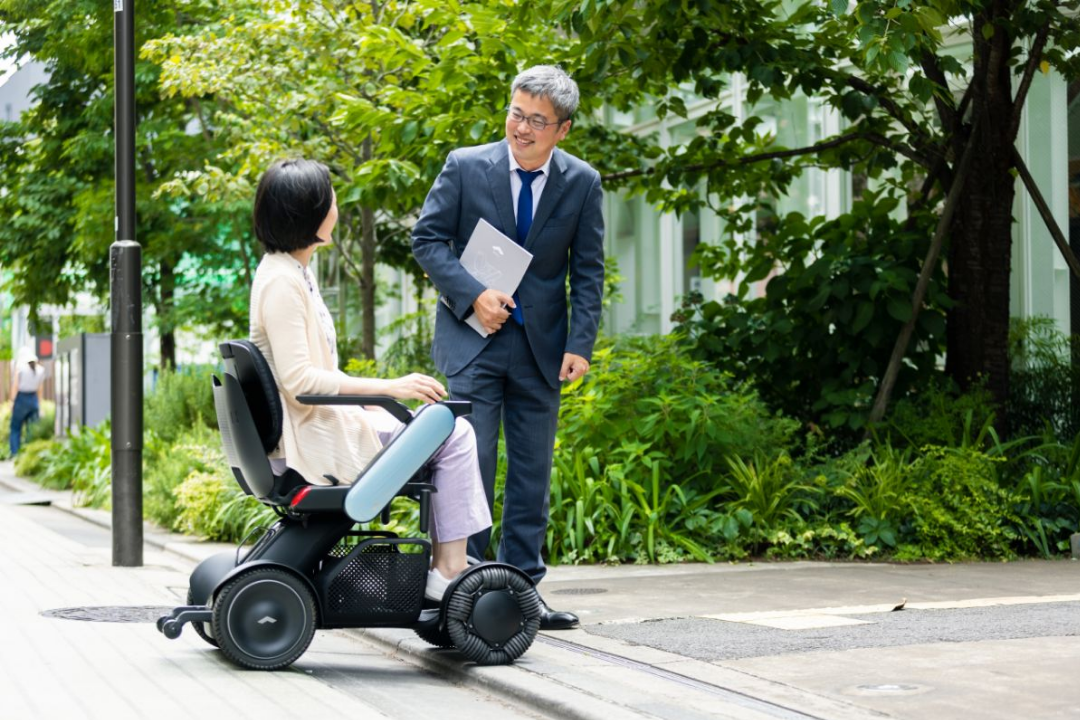
WHILL's autonomous mobility platform is not simply the next generation of electric wheelchairs. It represents a broader effort to redefine mobility itself, shifting it from specialized assistance to a standard public service. Rather than creating equipment exclusively for people who cannot walk, the company has designed mobility infrastructure that can be used naturally by anyone who needs it.
From its earliest days, WHILL sought to move beyond the traditional image of wheelchairs as welfare equipment. The addition of autonomous technology allowed that philosophy to expand into airports, shopping centers, hospitals, and other public spaces where mobility can be integrated directly into everyday operations. This is not technology searching for a purpose. It is technology designed to create a society where independent movement is treated as something ordinary.
Global demographic trends make this increasingly relevant. As populations age and cities continue to expand, walking long distances inside large facilities is becoming a growing barrier to social participation. WHILL offers a practical solution that both increases personal independence and improves operational efficiency for facility operators, creating value for users and businesses alike.
For international organizations, the opportunity extends beyond purchasing vehicles. WHILL provides an integrated platform that combines hardware, software, mapping, fleet management, and operational services. This makes partnerships possible not simply through product sales but through the development of complete mobility services tailored to individual facilities.
The future of autonomous technology will not be shaped exclusively by self-driving cars. Controlled public environments offer a realistic pathway for large-scale deployment, and WHILL is among the few companies already operating successfully in that space.
Perhaps the company's greatest contribution is the question it asks. Instead of treating mobility as an individual's challenge, it encourages cities and organizations to view movement as part of environmental design. Those that embrace this perspective will play an important role in shaping the next generation of urban infrastructure, and WHILL's autonomous mobility platform offers a compelling example of what that future may look like.
Conclusion
WHILL's autonomous mobility model is more than an evolution of the electric wheelchair. It represents a new approach to mobility that shifts the focus from assisting to creating accessible, user-friendly transportation services that anyone can use. By combining autonomous driving technology, thoughtful design, and service-based operations, WHILL is redefining mobility as part of everyday public infrastructure rather than a specialized welfare solution.
Born from Japan's experience as one of the world's most rapidly aging societies, WHILL's innovations address challenges that are becoming increasingly relevant worldwide. As airports, hospitals, shopping centers, and other public spaces continue to grow in size, providing safe and independent mobility will become an essential part of creating inclusive environments.
For businesses, facility operators, and public organizations, WHILL demonstrates how autonomous mobility can improve both user experience and operational efficiency. Rather than simply introducing new technology, it offers a practical model for making public spaces more accessible, efficient, and welcoming for everyone.
FAQ About The WHILL Autonomous Mobility Model
1. What Is The WHILL Autonomous Mobility Model?
The WHILL autonomous mobility model is a Japanese-developed personal mobility device equipped with autonomous driving technology. After a user selects their destination, the vehicle automatically navigates through controlled environments such as airports, shopping malls, and other large facilities. Unlike traditional powered wheelchairs, it is designed as a shared short-distance mobility service that anyone can use when needed.
2. How Is It Different From A Traditional Powered Wheelchair?
The biggest difference is that users do not need to control the vehicle throughout the journey manually. While conventional powered wheelchairs require continuous operation by the user, the WHILL autonomous model automatically transports passengers to their selected destination. It serves not only as a mobility aid but also as a solution for improving transportation throughout an entire facility.
3. Why Is Autonomous Mobility Becoming More Important?
Mobility challenges are not caused solely by physical disabilities. In large airports, hospitals, and commercial complexes, even people who can normally walk may find long distances exhausting. The WHILL autonomous model provides an accessible mobility option that anyone can use whenever walking becomes difficult, regardless of age or physical condition.
4. Why Is WHILL Trying To Change The Image Of Wheelchairs?
WHILL believes mobility should be viewed as a universal right rather than a form of special assistance. Traditional wheelchairs have often been perceived as medical devices intended only for people receiving support. Through modern design and advanced technology, WHILL aims to create mobility solutions that people actively choose because they are convenient, comfortable, and empowering.
5. Where Is The WHILL Autonomous Model Being Used?
The autonomous model is primarily deployed in airports, large shopping centers, hospitals, and other facilities where visitors often need to travel long distances indoors. Users simply select a destination while facility operators benefit from reduced demand for staff-assisted transportation. The system improves both user independence and operational efficiency.
6. Is The Autonomous Model Safe To Use?
Yes. The WHILL autonomous model is specifically designed for operation within managed indoor environments. Using detailed facility maps, sensors, and obstacle detection technology, it continuously monitors its surroundings while traveling. Rather than prioritizing speed, the system is designed to transport users safely through spaces shared with pedestrians.
7. Is The WHILL Autonomous Model Only For Older Adults?
No. While older adults are a major user group, the mobility service is also designed for people recovering from injuries, travelers who find long walks difficult, pregnant individuals, and anyone who may temporarily need mobility assistance. Its goal is to make mobility support an everyday service available to everyone when needed.
8. Why Is The WHILL Autonomous Model Attracting Global Attention?
It addresses challenges that are becoming increasingly common around the world, including aging populations and the growing size of public facilities. Rather than treating mobility as an individual problem, WHILL views it as an issue that can be solved through better facility design and public infrastructure. This makes it an attractive solution for airports, hospitals, and urban developments worldwide.
9. What Is WHILL's Vision For The Future Of Mobility?
WHILL envisions a society where people's freedom of movement is not limited by age or physical ability. Instead of viewing mobility devices as products people must own, the company aims to provide mobility as an accessible service that is available wherever it is needed. The goal is to create environments where everyone can move independently and naturally.
10. What Is The Greatest Strength Of The WHILL Autonomous Model?
Its greatest strength is that it transforms mobility from something people depend on others for into something they can control themselves. By reducing the need for manual operation and eliminating the burden of long-distance walking, it enables users to travel independently and confidently. Expanding personal freedom of movement is the core value that defines the WHILL autonomous mobility model.
Related Videos
If you're interested in the future of accessible transportation, the video below explores Japan's next-generation mobility innovations designed to give people greater freedom of movement. This video highlights how advanced technology is creating more inclusive and convenient travel experiences for people of all ages and abilities.