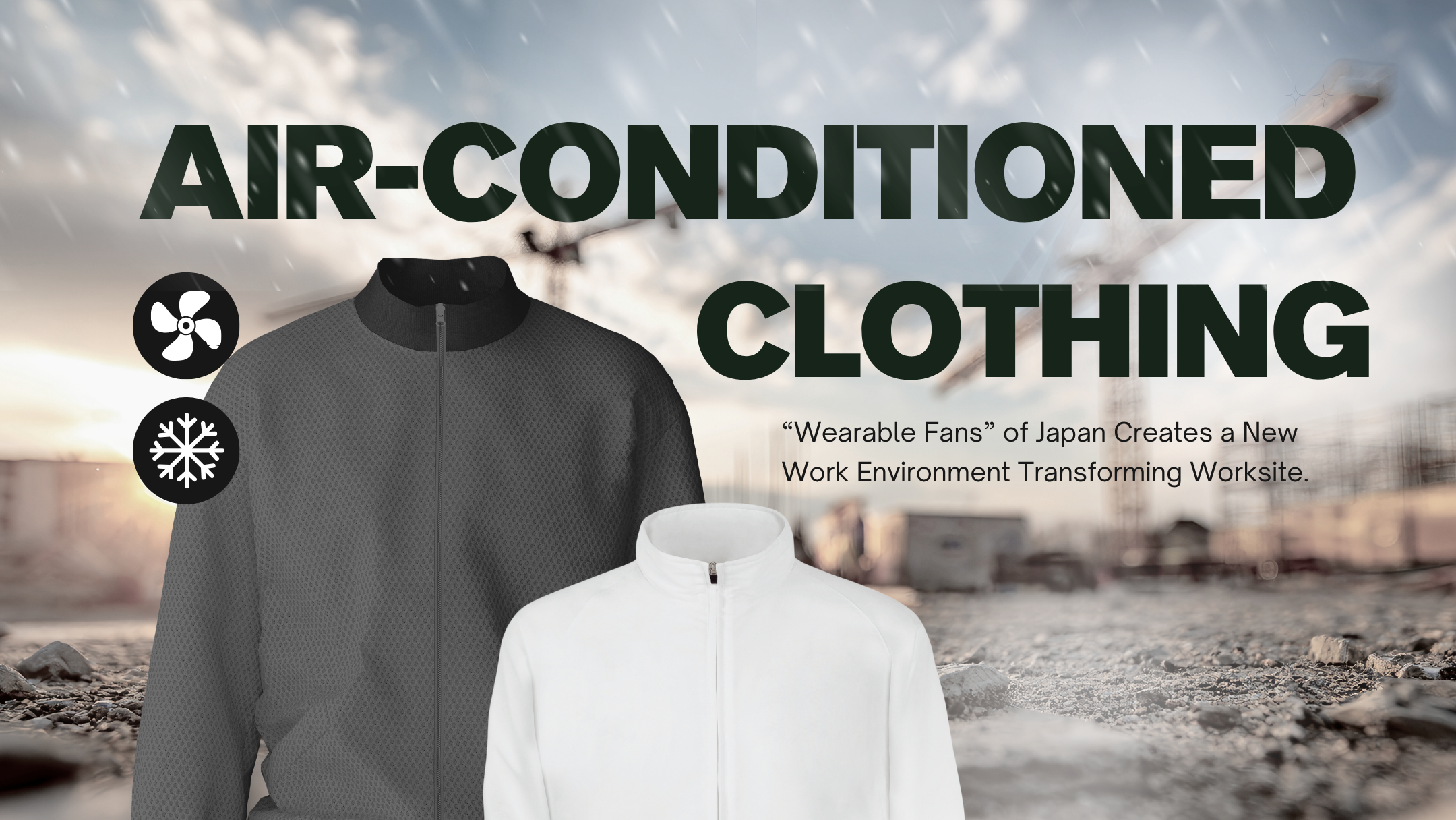
In recent years, rising global temperatures have become a significant concern, making the safety of outdoor workers a critical issue across all industries. In fields such as construction, logistics, and agriculture, where outdoor work cannot be avoided, the risk of heatstroke has been increasing yearly.
In response to these challenges, growing attention is being drawn to a Japanese innovation developed by the company Kuchofuku Co. Ltd. This product, known as air-conditioned clothing, features small fans and a battery built directly into the garment. Blowing air across the surface of the body helps sweat evaporate efficiently and prevents body temperature from rising. It is a genuinely innovative product described as wearable air conditioning. Using very little electricity to keep the body cool, this technology is gaining global attention as a perfect solution for the increasingly severe heat in today’s world.
This article will explore how air-conditioned clothing was developed, its value to society, and why it is now a product that international companies should pay attention to. It will also offer insights into creating safe and comfortable working environments across borders and cultures.
Air-Conditioned Clothing Kuchofuku Overview
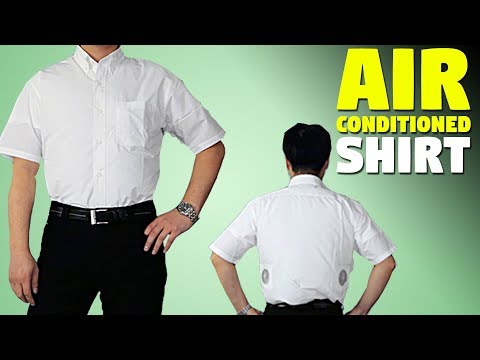
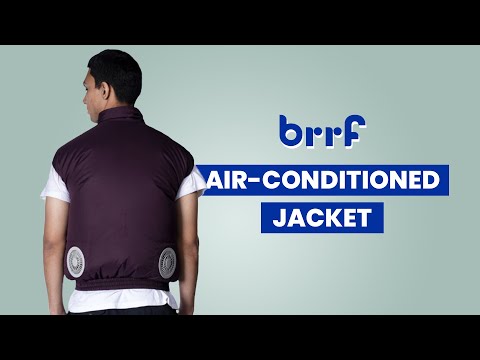
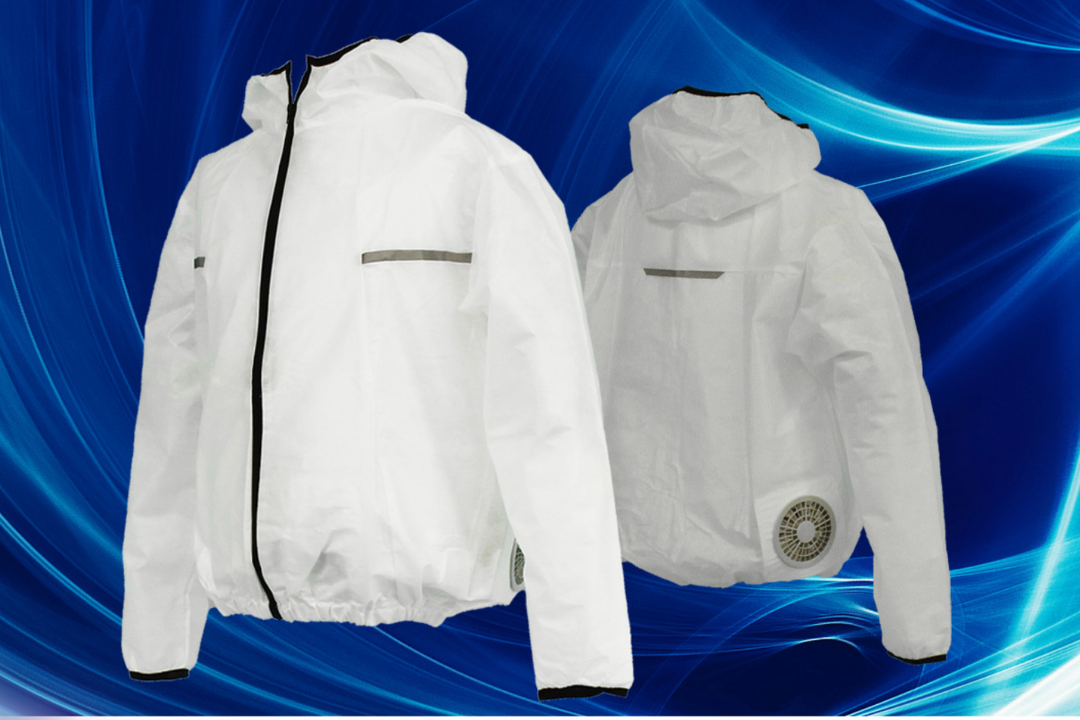
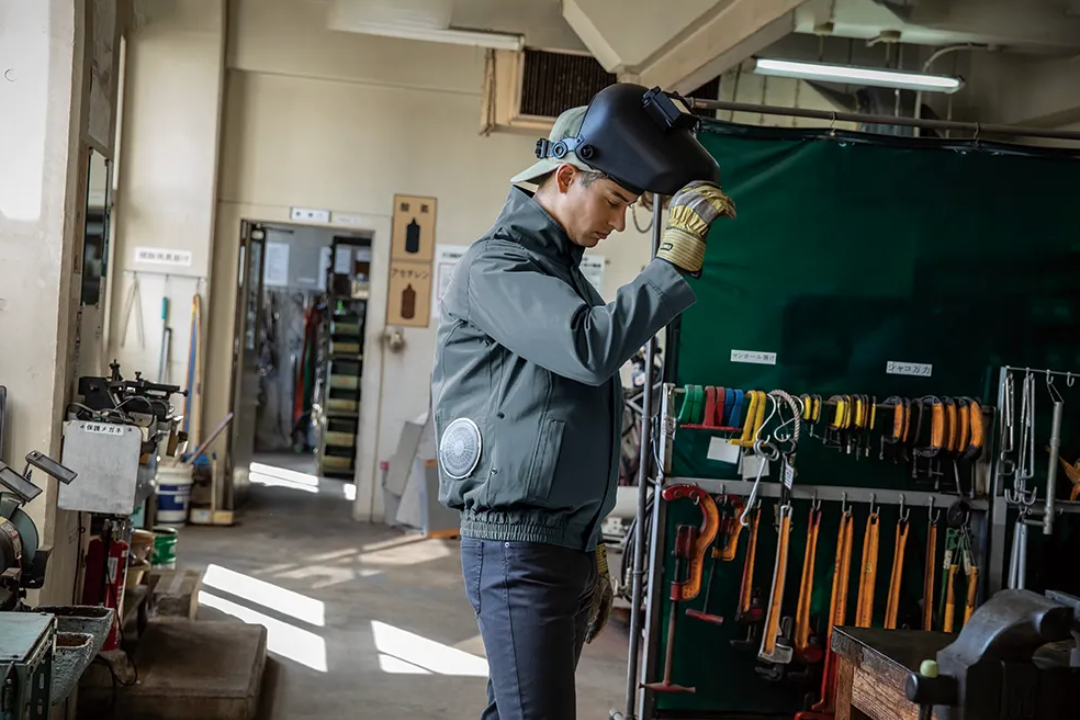
The “air-conditioned clothing” developed by Kuchofuku Co., Ltd. is a wearable garment that uses built-in fans to draw in outside air and cool the body by promoting sweat evaporation. Adjustable cords at the neck and elastic bands at the hem optimize airflow for improved comfort. The battery can be stored in a dedicated pocket, and the design keeps cables out of the way.
The product lineup includes various styles, such as vests, long-sleeved jackets, and disposable options.
Some models also offer features like water resistance, waterproofing, anti-static properties, and heat shielding. Prices vary by model and features, starting at around 6,000 yen. In addition to boosting work efficiency, the clothing is cost-effective, with an estimated electricity cost of only about 55 yen per month. It is widely used in various fields as a practical solution for heat.
Long-Sleeve Blouson (KU92500) by Kuchofuku Co., Ltd.
The long-sleeve air-conditioned blouson is a simple yet highly functional piece of workwear designed to accommodate cooling fans, helping workers stay comfortable in a wide range of environments. Suitable for both indoor and outdoor use, it adapts easily to various job sites and supports activities across many settings, from worksites to business-related environments.
This item is priced at 6,490 yen and is designed for people working in hot or outdoor environments, such as construction, warehouses, delivery services, and road work, as well as in active roles like traffic control and event staff, where the risk of heat exhaustion is high. It is also suitable for farming, factory work in high-temperature settings, and outdoor activities such as fishing.
What Makes Kuchofuku Co., Ltd. Different
When choosing air-conditioned workwear, most people place the greatest importance on the device components, such as the fans and battery. While the design and materials of the garment itself are important, device performance is usually the top priority. This is because cooling effectiveness depends largely on the power and quality of the battery and fans. Even the most breathable garment cannot deliver sufficient cooling if the device's performance is inadequate.
In this regard, devices from the Kuchofuku Co. Ltd. have earned strong trust and continue to sell consistently year after year. One key reason is their exceptionally low defect rate, which reflects strict quality control throughout the manufacturing process.
In addition, the batteries comply with the JIS IP55 dust- and water-resistant standard, making them suitable for use in demanding outdoor and industrial environments. Most products also come with a standard one-year manufacturer’s warranty, providing added peace of mind. Supported by numerous patented technologies, Kuchofuku’s devices demonstrate reliability and technical expertise that clearly set them apart from other options on the market.
The Story Behind the Invention of Wearable Air Conditioning
In Japan, summer temperatures have risen yearly, with heatwaves frequently exceeding 35 degrees Celsius. In such extreme conditions, people working outdoors in construction, logistics, and agriculture are at constant risk of heatstroke. It was out of a strong desire to solve these workplace challenges that air-conditioned clothing was born fundamentally.
In 2004, the founder of Kuchofuku Co., Ltd. introduced a groundbreaking idea to create a wearable cooling device. A system was developed to draw in outside air using fans and circulate it inside the garment. The wearable fans helped cool the body by evaporating sweat and were specifically designed for those working in environments without air conditioning.
Unlike traditional air conditioners, which consume large amounts of electricity, this technology uses only fans and a battery to deliver powerful cooling. Today, it is used not only at job sites but also in factories, outdoor events, and other settings.
More than just a way to beat the heat, air-conditioned clothing was created with a mission to protect lives. Behind its invention lies a deep understanding of on-site conditions and a passionate spirit of engineering innovation.
Collaborations and Expansions into the Fashion, Sports, and Various Industries
The use of air-conditioned clothing goes beyond work sites. A joint development with the sports brand ASICS released a model for users engaging in outdoor sports, viewing, or training in extreme heat. Additionally, a collaboration with the popular Japanese fashion brand BAYCREW’S has resulted in stylish, air-conditioned clothing for everyday city wear.
The Power of Patented Technology Behind The “Portable Air Conditioner”
Source: Kuchofuku Homepage
The strength of air-conditioned clothing lies not only in the comfort of feeling cool while wearing it. What is truly impressive is the sophisticated technology built into it. The company holds 72 patents and 26 utility models; every component, including the fan structure, airflow control, and battery system, is developed in-house. All of the aforementioned technology results in a level of quality and precision that other companies cannot easily replicate.
For example, the structure that evenly distributes air throughout the clothing employs advanced aerodynamics, and the adjustable features at the neck, cuffs, and hem allow cooling tailored to individual body shapes and movements.
The battery is designed to withstand long hours of use, with some models capable of operating for up to 24 hours on a single charge. Another major strength is the product’s exceptional reliability. The fan has a defect rate of only 0.020 percent, and the battery just 0.053 percent. High durability and strict quality control enable the clothing to be used with confidence even in the harshest work environments.
"Once you use it, there's no going back." Many users say these exact words, and there is a good reason.
Creating Clothing That Protects Lives: The Founder’s Unwavering Commitment to the Worksite

Source: Kuchofuku Homepage
The founder of air-conditioned clothing had previously worked at Sony, where he developed various electronic devices. His next goal was to create technology that could protect human lives. In Japan, where the population is aging rapidly, heatstroke incidents during outdoor work continue to claim lives. Such a harsh reality deeply affected him and became the starting point for his product development.
Instead of using large air conditioning systems to cool entire spaces, he envisioned a device that would allow individuals to stay cool and comfortable while moving freely. His vision led to an unprecedented idea that combined fans and a battery to transform clothing into a personal cooling system.
Of course, the path to turning the idea into a product was not easy. However, guided by the founder’s firm belief that “if it is not something professionals working on-site can truly rely on, it is meaningless,” the development team refused to compromise on quality and continued to make improvements. Through constant research and development, the product gradually reached a high level of completion. As a result, air-conditioned clothing came to be seen not just as a convenient gadget but as essential gear for protecting lives, earning widespread acceptance.
Air-Conditioned Clothing Evolving Alongside Regional Challenges
Air-conditioned clothing is more than just a product. It has evolved through close collaboration with professionals in the field to address region-specific challenges. For example, in a joint development with Chugoku Electric Power Transmission & Distribution Co., Inc., materials were specially selected to reduce the risk of electric shock, meeting the strict demands of power infrastructure maintenance. Special attention has been paid to mobility and durability in regions where agriculture, forestry, and traditional manual labor are common, resulting in product improvements tailored to local needs.
Mountain guides on Mount Fuji and workers in high-altitude environments have also adopted the clothing. It has earned praise for helping to manage body temperature in elevated conditions. In other words, air-conditioned clothing is not limited to factory use. It has flexibly adapted to suit different regions and cultures.
Thanks to their flexibility, adaptation, and approach, the product and its maker have been recognized for their commitment to listening to local voices and meeting modern-day challenges.
Future Outlook for Technology-Integrated Apparel
Internationally, interest is growing in the fusion of technology with fashion, healthcare, and lifestyle, as consumers increasingly seek products that enhance both comfort and quality of life. This trend is particularly appealing to urban affluent consumers who value innovation and design, as well as outdoor enthusiasts who prioritize functionality and performance.
In addition, there is strong potential for market expansion among younger generations in Asia, where awareness of health, personal comfort, and quality of life continues to rise. Next-generation apparel that seamlessly combines comfort, functionality, and style is well-positioned to meet these evolving needs, suggesting significant opportunities for long-term growth in global markets.
Growing Trust and Adoption Across Japan
Since its launch, air-conditioned clothing has been adopted across many industries in Japan, including construction companies, electric power providers, manufacturers, and agricultural organizations. To date, more than 10 million units have been sold. Especially during summer work at job sites, it has become an essential piece of equipment. It is highly valued as part of corporate efforts to reduce the risk of heatstroke among employees.
In 2022, a survey conducted by the Japan Marketing Research Organization ranked air-conditioned clothing number one across three categories: most trusted quality in fan-equipped apparel, most preferred by industry professionals, and highest customer satisfaction. The product has been featured in numerous media outlets, including newspapers, television, and industry magazines, rapidly increasing public recognition. The hashtag #air-conditioned clothing even trended on social media during the summer. Many consumers have praised it for its versatility, saying it is helpful for commuting or ideal for outdoor activities. These achievements clearly show that air-conditioned clothing is more than just workwear. It has established a strong presence and earned widespread trust.
From Japan to the World
Source: Kuchofuku Homepage
Air-conditioned clothing is now gaining attention as a promising solution for hot regions worldwide, including Asia, the Middle East, Europe, and Africa. It is especially attracting interest in emerging countries, where air conditioning is not yet widespread, and in developed countries, where reducing energy costs is a priority. It is considered an effective and practical personal cooling method.
Maintaining comfort while reducing environmental impact is also a significant advantage in today’s world, where SDGs (Sustainable Development Goals) and ESG (Environmental, Social, and Governance) focused management are increasingly emphasized. Additionally, the technology behind air-conditioned clothing, developed to withstand Japan’s harsh, hot, and humid climate, offers the durability and reliability needed to perform well in countries with similar conditions, such as Southeast Asia, South America, India, and Africa.
Currently, the company is also exploring global distributor networks and partnerships with local partners. It is taking comprehensive steps toward international expansion as a new approach to improving working conditions worldwide.
Conclusion
The extreme heat brought on by climate change is no longer a problem limited to specific regions. Around the world, protecting both human lives and productivity has become a shared challenge. However, air-conditioned clothing is gaining international attention as one potential solution, backed by a strong track record and trust built in Japan.
With a foundation in Japan’s high-quality manufacturing tradition and continual improvements based on honest feedback from the field, the “wearable fan” has evolved from being “just workwear” into recognized “life-saving equipment.” For international companies as well, introducing air-conditioned clothing offers more than just improved safety. It can also enhance work efficiency and help retain skilled workers.
If your company struggles with heat-related challenges, partnering with this Japanese technology could be a valuable step toward a safer and more sustainable future.
FAQ About Kuchofuku
1. How Does Air-Conditioned Clothing Work?
Air-Conditioned clothing draws in outside air using built-in compact fans and cools the body by evaporating sweat. Circulating air inside the clothing helps evaporate more efficiently, which reduces the rise in body temperature. Unlike an air conditioner that cools an entire space, it is designed to cool the wearer directly.
2. How Cool Does Air-Conditioned Clothing Feel?
Air-conditioned clothing cools the body by evaporating sweat, allowing you to stay relatively cool and comfortable even outdoors. The built-in fans circulate outside air inside the garment, promoting faster sweat evaporation and reducing the sensation of heat. Because it can also help limit excessive sweating, it is considered effective for preventing heat-related illnesses.
In outdoor work settings, many users report that it feels ‘significantly more comfortable than wearing nothing at all.’ However, in high-humidity environments where sweat does not evaporate easily, the cooling effect may be reduced.
3. How Long Does The Battery Last?
Battery life varies by model, but some can operate for up to 24 hours. They are designed to support long workdays, allowing use throughout an entire shift. The battery can also be stored in a dedicated pocket, so it does not interfere with movements during work.
4. Is The Running Cost Expensive?
The electricity cost of air-conditioned clothing is extremely low, estimated at around ¥55 per month. Compared to large systems like air conditioners, it is significantly more energy-efficient. It is an option that reduces operational costs while supporting environmental initiatives.
5. What Situations Is It Used In?
It is used across a wide range of settings, including factories, warehouses, event venues, outdoor activities, and commuting. They are also effective in indoor spaces with poor ventilation or limited air conditioning. In recent years, they have also gained significant traction among the general public.
6. Are There Any Safety Concerns?
Air-conditioned clothing is designed with durability and safety in mind, and the failure rate of components like fans and batteries is very low. Depending on the application, features such as anti-static materials and reduced risk of electric shock are also available, allowing it to be used in environments such as electrical infrastructure worksites.
7. Are There Any Drawbacks Or Things To Be Aware Of?
The main limitation is that the cooling effect can weaken when the outside temperature is extremely high. In addition, the airflow causes the garment to inflate slightly, which may make it difficult in tight spaces or in situations where appearance matters. However, these drawbacks are often outweighed by its overall performance benefits.
8. What Makes It Different From Other Cooling Wear?
Air-conditioned clothing uses evaporative cooling, so it does not require ice packs or water and can maintain a stable cooling effect over long periods. Its specially designed airflow system and high durability also make it especially reliable in demanding work environments.
Related Videos
If you want to better understand how air-conditioned clothing works in real-world conditions, watch the video below. This video clearly demonstrates how built-in fans circulate air and regulate body temperature.